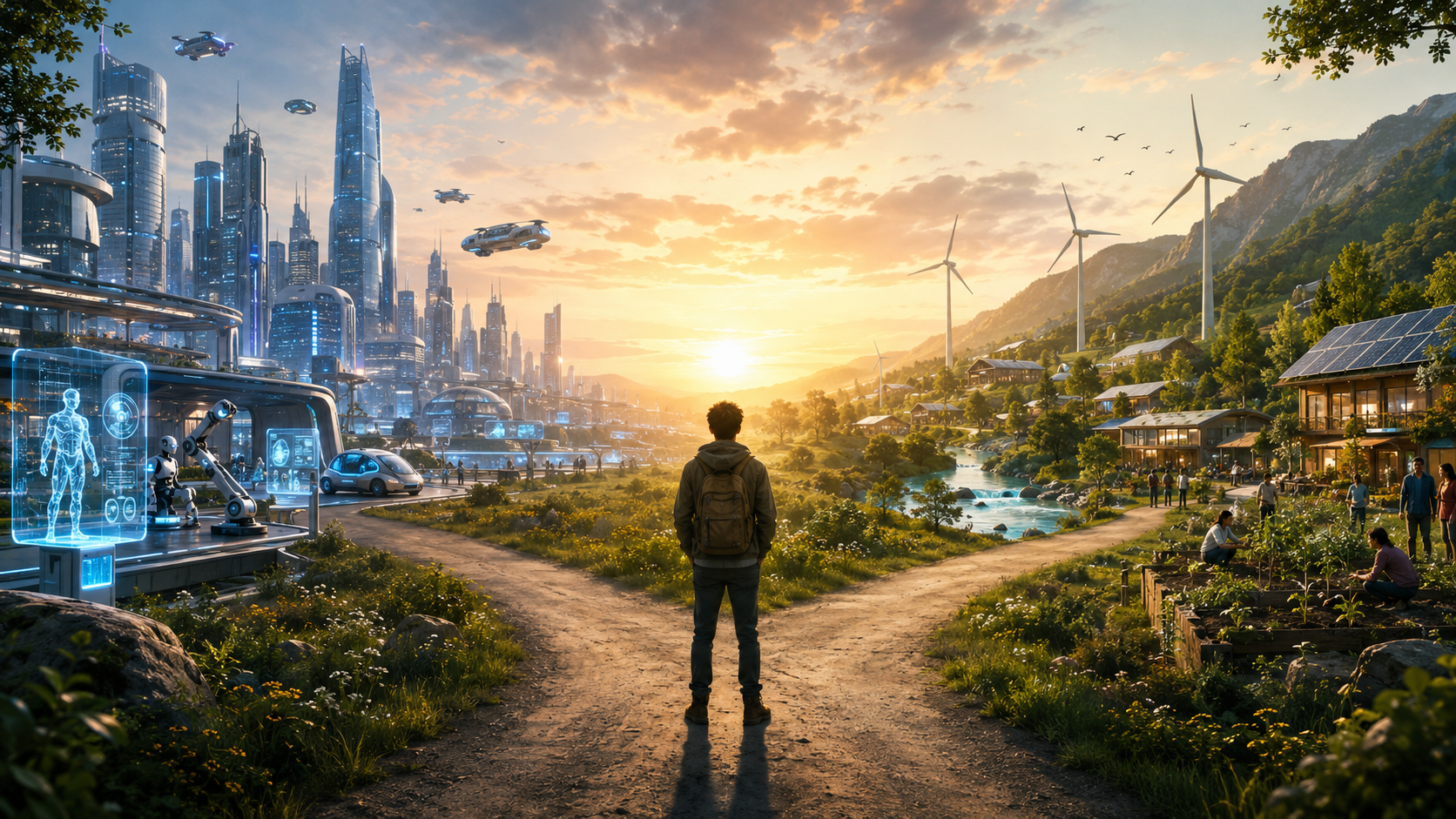
How Will We Define Happiness in the Age of AI and Climate Change?
For thousands of years, philosophers, religious thinkers, scientists, and ordinary people have asked the same question: What does it mean to live a happy life?
The answers have never remained the same. Every generation has redefined happiness according to its own social values, economic conditions, technological progress, and cultural beliefs.
Today, humanity stands at another turning point. Artificial intelligence is transforming work, digital technology is reshaping relationships, and climate change is altering how we think about the future. These forces are raising an important question: Will future generations define happiness differently from us?
Perhaps happiness will no longer depend primarily on wealth or personal achievement. Instead, it may increasingly involve digital well-being, environmental sustainability, meaningful human relationships, and the ability to adapt to constant change.
1. Happiness Has Always Evolved

Changing Ideas Across History
Ideas about happiness have never been fixed.
Aristotle described happiness (eudaimonia) as living a virtuous and meaningful life rather than pursuing temporary pleasure. Epicurus emphasized peace of mind, friendship, and freedom from unnecessary desire.
Centuries later, industrial societies increasingly associated happiness with economic success, stable employment, and family security.
Modern psychology has shifted attention toward subjective well-being, emphasizing emotional health, life satisfaction, resilience, and positive relationships.
Each period reflects the priorities of its own society.
Why the Definition Continues to Change
As societies change, so do people’s expectations.
Longer life expectancy, globalization, technological innovation, and environmental uncertainty are reshaping what people value most. Happiness is becoming less about accumulating possessions and more about achieving balance, purpose, and sustainability.
2. Artificial Intelligence and the Automation of Happiness

Technology as a Source of Well-Being
Artificial intelligence already helps people organize daily life, monitor health, recommend entertainment, and automate repetitive work.
Personalized healthcare, intelligent assistants, and smart homes may reduce stress while giving people more time for creativity, learning, and relationships.
Technology could become a powerful tool for improving quality of life.
When Convenience Replaces Meaning
However, greater convenience does not automatically produce greater happiness.
If algorithms make every decision, people may gradually lose opportunities to develop independence, overcome challenges, and experience personal growth.
Many psychologists argue that genuine happiness often emerges from effort, purpose, and meaningful achievement—not simply from comfort.
3. Digital Well-Being in a Virtual Society
A New Definition of Human Connection
Virtual reality, augmented reality, and digital communities will likely become increasingly important parts of everyday life.
People may attend concerts, classrooms, workplaces, and even family gatherings in immersive digital environments.
These technologies could expand access to experiences previously limited by geography or physical ability.
The Risk of Digital Isolation
Yet digital life also creates new challenges.
Excessive dependence on virtual experiences may weaken face-to-face relationships, increase loneliness, and blur the boundary between authentic and simulated experiences.
The future of happiness may depend not on rejecting technology but on using it wisely.
4. Climate Change and the Meaning of Well-Being
Living Well on a Changing Planet
Climate change is no longer only an environmental issue—it is increasingly becoming a psychological and social one.
Extreme weather, ecological uncertainty, and concerns about future generations influence how people think about security and happiness.
As environmental awareness grows, many people are redefining success in terms of sustainability rather than consumption.
From Consumption to Sustainability
Communities around the world are investing in green cities, renewable energy, and nature-based lifestyles.
Rather than asking, “How much can we own?” future generations may increasingly ask, “How can we live well while protecting the planet?”
5. Measuring Happiness Beyond Economic Growth
Lessons from Bhutan
Bhutan’s concept of Gross National Happiness (GNH) challenged the assumption that economic growth alone defines national success.
The model considers psychological well-being, environmental conservation, cultural preservation, good governance, and community vitality alongside economic development.
Many researchers believe future societies may adopt broader measures of human flourishing instead of relying solely on GDP.
Smart Cities and Human-Centered Innovation
Cities such as Singapore increasingly integrate digital technology with environmental planning to improve quality of life.
Smart transportation, efficient energy systems, public green spaces, and digital public services demonstrate how technology can support—not replace—human well-being.
Conclusion
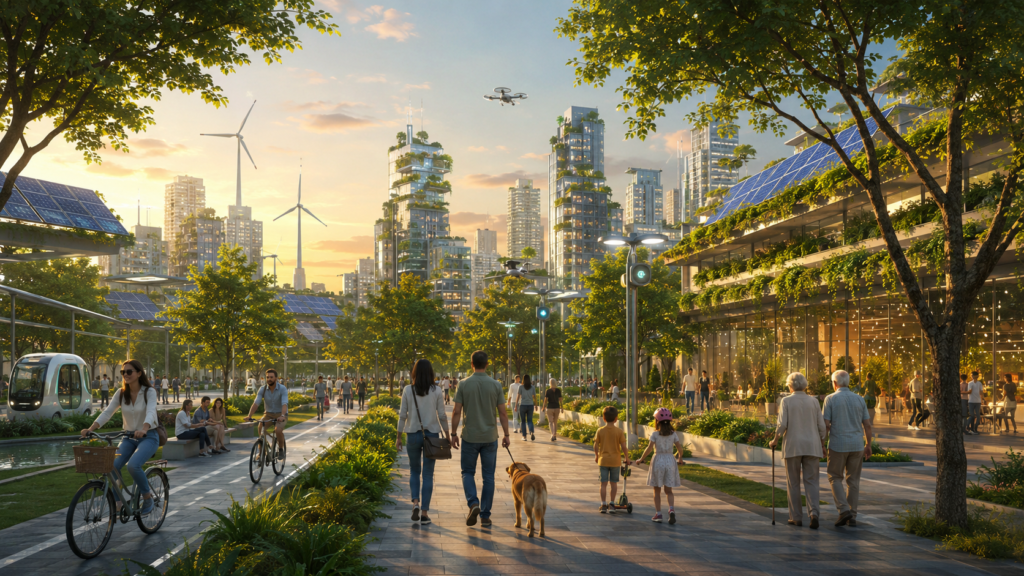
The future of happiness will likely become more complex than ever before.
Artificial intelligence may make life easier, but not necessarily more meaningful. Digital technology may connect people globally while simultaneously increasing loneliness. Climate change may threaten traditional lifestyles while encouraging societies to rediscover sustainability and community.
Ultimately, happiness will continue evolving because humanity itself continues evolving.
Perhaps the most important challenge is not asking whether technology will make us happier, but asking what kind of life we believe is worth living in the first place.
In the future, happiness may be measured less by what we possess and more by how wisely we balance innovation, relationships, purpose, and responsibility toward one another and the planet.
Reader Question
As AI becomes increasingly capable of improving convenience and solving everyday problems, do you think future happiness will depend more on technology—or on meaningful human relationships?
If society eventually measures success by well-being rather than economic growth alone, what do you think should be included in the definition of a truly happy life?
Related Reading
If artificial intelligence and digital technologies increasingly influence how we live, work, and connect with others, can they also redefine what it truly means to be happy?
In Can Experiences in Dreams Become Real Knowledge?, we explore how emerging technologies, virtual experiences, and human perception may reshape our understanding of reality—and perhaps even our definition of happiness.
If happiness is shaped not only by personal choices but also by society, culture, and the people around us, how much of our emotional well-being truly belongs to us?
In Are Our Emotions Truly Ours—or Socially Constructed?, we examine how social norms, cultural expectations, and collective experiences influence human emotions and our pursuit of a meaningful life.
References
1. Aristotle. (2009). Nicomachean Ethics (Translated by W. D. Ross). Oxford University Press.
One of the foundational works in Western philosophy, Nicomachean Ethics introduces the concept of eudaimonia, describing happiness as living a life of virtue, purpose, and human flourishing rather than pursuing temporary pleasure. It remains central to modern discussions of well-being.
2. Seligman, M. E. P. (2011). Flourish: A Visionary New Understanding of Happiness and Well-being. Free Press.
Martin Seligman expands positive psychology beyond happiness alone, introducing the PERMA model—Positive Emotion, Engagement, Relationships, Meaning, and Accomplishment. The book argues that genuine well-being is multidimensional and extends beyond momentary pleasure.
3. World Happiness Report. (2024). World Happiness Report 2024. Sustainable Development Solutions Network.
The annual World Happiness Report examines how income, social support, health, freedom, generosity, and trust influence life satisfaction across countries. It demonstrates that strong relationships and social trust consistently contribute more to happiness than economic wealth alone.
4. Schwab, K. (2016). The Fourth Industrial Revolution. World Economic Forum.
Klaus Schwab explores how artificial intelligence, robotics, biotechnology, and digital technologies are transforming work, society, and human life. He argues that technological progress should ultimately serve human well-being rather than becoming an end in itself.
5. United Nations. (2015). Transforming Our World: The 2030 Agenda for Sustainable Development. United Nations.
The UN’s Sustainable Development Goals (SDGs) connect human well-being with environmental sustainability, social inclusion, and economic development. The report highlights that future prosperity depends on balancing technological innovation with responsibility toward people and the planet.
Leave a Reply