
Dreams, Consciousness, and the Blurred Boundary Between Imagination and Reality
“Dreams are just dreams.”
Most of us grow up hearing this phrase.
We are taught that dreams belong to a separate world—
a world disconnected from reality, logic, and knowledge.
Yet dreams can feel astonishingly real.
In dreams, we:
- run
- fall
- cry
- love
- fear
- remember
And sometimes, we wake up changed by what we experienced.
This raises a fascinating philosophical question:
If something learned in a dream can influence reality,
can that dream become a form of knowledge?
This question forces us to rethink not only dreams,
but also the meaning of experience itself.
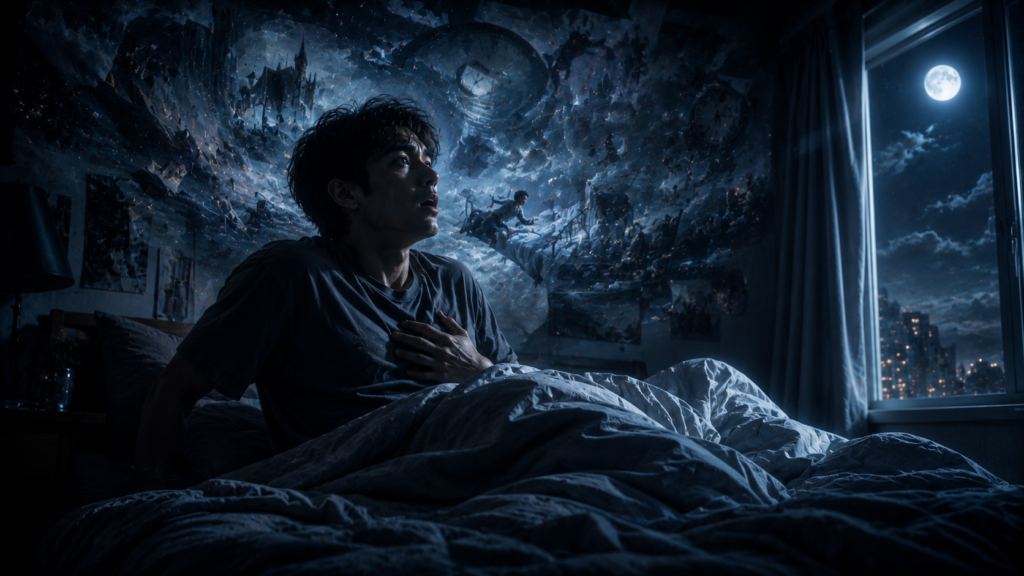
1. Why Dreams Feel Real
Emotional Reality Inside Dreams
Almost everyone has experienced intense emotions during dreams.
For example:
- falling from a cliff and waking in panic
- failing an exam and feeling genuine anxiety
- meeting a lost loved one and waking in tears
During those moments, the body reacts as if the experience were real.
The heart races.
Muscles tense.
Emotions surge.
The Brain Treats Dreams Seriously
Neuroscience suggests that many brain systems involved in waking experience also remain active during dreaming.
In other words, the brain does not always sharply separate dream experience from emotional reality.
As a result, dreams can produce:
- real emotional responses
- lasting memories
- psychological insight
Even if the external events never physically occurred.
2. When Dreams Lead to Knowledge
Famous Historical Examples
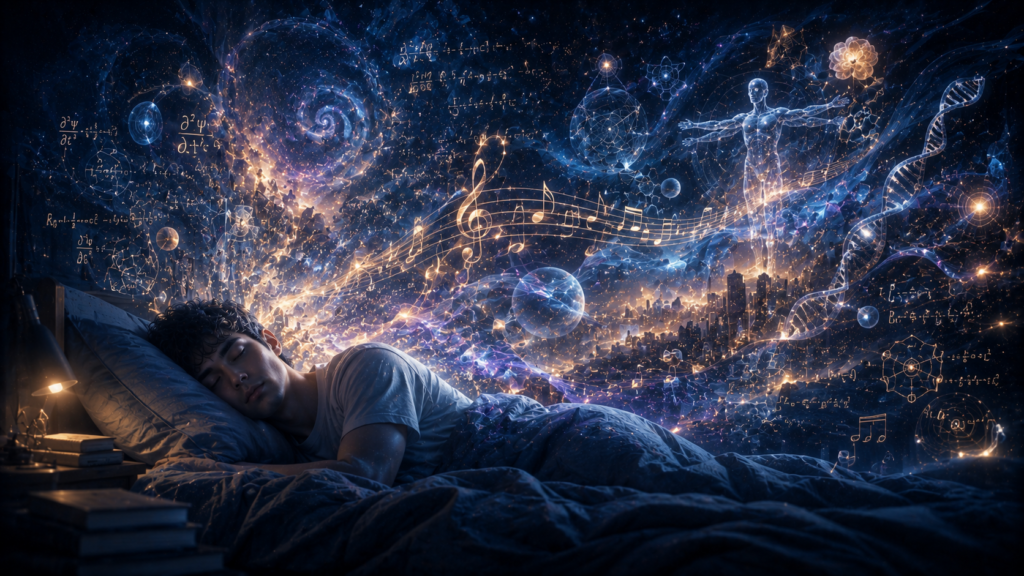
Throughout history, dreams have sometimes inspired scientific and artistic breakthroughs.
One famous example involves August Kekulé.
Kekulé reportedly imagined a snake biting its own tail during a dream, which inspired his insight into the ring structure of benzene.
Similarly, Paul McCartney claimed that the melody for the song Yesterday first came to him in a dream.
The mathematician Srinivasa Ramanujan also described receiving mathematical formulas through dreams and visions.
Dreams as Starting Points
Of course, dream experiences alone do not automatically become verified knowledge.
Scientific testing, logical analysis, and real-world validation are still necessary.
However, dreams may function as:
- sources of intuition
- creative triggers
- symbolic problem-solving tools
In this sense, dreams can become the beginning of knowledge.
3. What Counts as Knowledge?
Traditional Definitions of Knowledge
Philosophers often define knowledge using three conditions:
- truth
- belief
- justification
A person must:
- believe something
- have justification for it
- and the belief must be true
This creates a problem for dreams.
Dreams are not usually considered objective reality.
Emotional and Existential Truth
However, dreams may still contain another kind of truth.
For example, imagine someone dreams about reconciling with a person they deeply resent.
After waking, they feel emotionally transformed and decide to forgive that person in real life.
Did the dream provide factual information?
Perhaps not.
But it may have revealed emotional knowledge or psychological insight that genuinely affected reality.
This suggests that knowledge may not always be limited to objective facts alone.
4. The Blurring Boundary Between Reality and Imagination
Living in Simulated Worlds
In the 21st century, the boundary between reality and simulation is becoming increasingly unclear.
Virtual reality, AI interaction, and digital environments can produce experiences that feel emotionally authentic.
For example:
- VR horror experiences can raise heart rates
- AI conversations can create emotional attachment
- digital environments can trigger real memories and fears
Rethinking Experience Itself
As technology advances, the old assumption that “unreal experiences cannot produce real knowledge” becomes harder to defend.
Perhaps the more important question is not whether an experience is physically real—
But whether it meaningfully transforms understanding, behavior, or self-awareness.
Conclusion: Dreams May Become Inner Knowledge
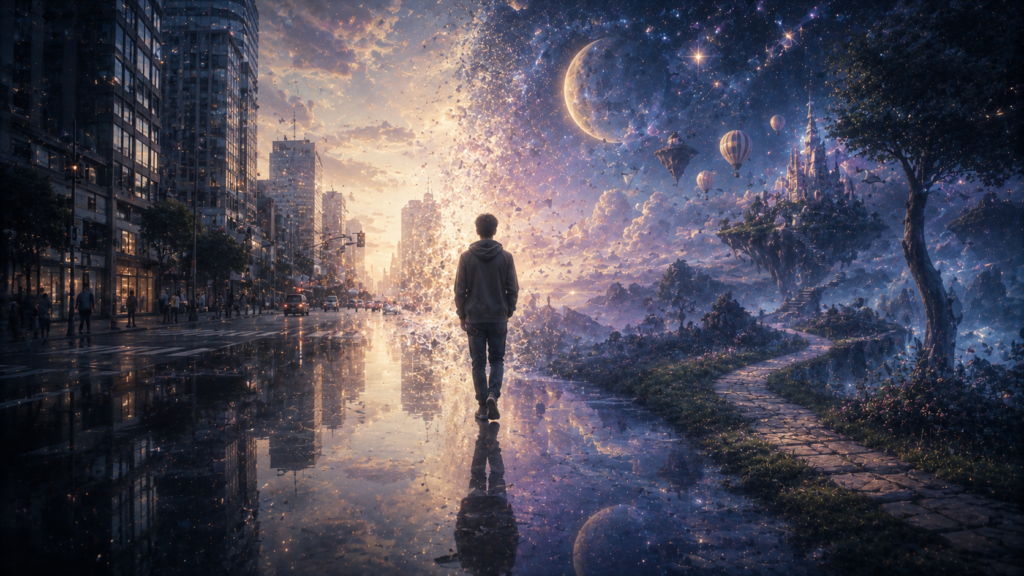
Dream experiences do not occur in physical reality.
Yet their emotions, symbols, and insights can still influence how we live.
Dreams may:
- inspire creativity
- awaken suppressed emotions
- encourage personal decisions
- reveal hidden fears or desires
For this reason, perhaps knowledge should not be limited only to objective facts.
Perhaps it should also include forms of inner truth that guide human life.
Ultimately, we are left with one final question:
What do we choose to recognize as a “real” experience—
and what wisdom are we willing to gain from it?
Perhaps the answer will emerge again
in the next dream we remember.
Reader Question
Have you ever experienced a dream that changed the way you thought, felt, or acted in real life?
If a dream can influence your decisions, emotions, or creativity after waking—
can it still be dismissed as “unreal”?
Related Reading
The broader question of whether knowledge requires direct experience or can emerge through artificial systems is explored further in The Paradox of AI Education, which examines the opportunities and limitations of AI in learning and human understanding. This wider perspective provides an essential framework for asking whether experiences that feel real—whether in dreams, simulations, or virtual environments—can become genuine knowledge.
If virtual reality, AI interaction, and digital simulations can create emotionally authentic experiences, how different are they from dreams that feel real while we are inside them? If AI Could Dream, Would It Be Imagination—or Calculation? explores whether artificial intelligence could ever move beyond computation into something resembling imagination, consciousness, or inner experience.
If human memory, emotion, and perception can reshape reality itself, can any experience ever be considered completely objective? Is There a Single Historical Truth, or Many Narratives? examines how interpretation, memory, and perspective influence what humans accept as truth—and why reality may be more subjective than we often assume.
References
- Norman Malcolm (1957). Dreaming.
Malcolm distinguishes dreams from genuine perception and argues that dream experiences cannot function as true knowledge in the traditional philosophical sense. His work represents one of the classic skeptical positions on dreaming and epistemology. - Antti Revonsuo (2000). The Reinterpretation of Dreams.
Revonsuo proposes that dreaming may function as an evolutionary simulation system that helps humans rehearse threats and experiences. His theory suggests that dreams can contribute to learning and adaptive knowledge. - Jonathan Ichikawa (2009). Dreaming and Imagination.
Ichikawa compares dreams and imagination, analyzing how dream experiences may hold epistemological significance despite lacking direct physical reality. - Jennifer M. Windt (2015). Dreaming: A Conceptual Framework for Philosophy of Mind and Empirical Research.
This influential work explores dreaming through both philosophy and neuroscience, examining how dream experiences may produce meaningful forms of cognition and self-awareness. - Ernest Sosa (2007). A Virtue Epistemology.
Sosa argues that knowledge requires not only belief but also proper justification and reliable cognitive processes. From this perspective, dream-based beliefs may remain incomplete unless verified through reflective reasoning.
Leave a Reply