Tag: climate change

  • Arctic and Antarctic Ice Loss: Why the Changing Poles Matter to the World

    Arctic and Antarctic Ice Loss: Why the Changing Poles Matter to the World

    How Melting Ice at Earth’s Poles Can Affect Sea Levels, Climate, and Ecosystems Worldwide

    The Arctic and Antarctica may seem remote from everyday life. Yet these frozen regions are deeply connected to the climate system that supports life across the planet.

    They reflect sunlight, influence ocean and atmospheric circulation, store enormous quantities of freshwater, and provide habitats for highly specialized ecosystems. What happens at the poles, therefore, does not necessarily stay at the poles.

    Today, both regions are undergoing significant changes as the planet warms. But the Arctic and Antarctica are not identical. The Arctic is largely an ocean surrounded by continents, while Antarctica is a continent covered by a vast ice sheet and surrounded by ocean.

    Understanding this difference is essential to understanding why polar ice loss matters—and why its consequences can reach far beyond the frozen ends of the Earth.

    1. What Is Happening to Arctic Ice?
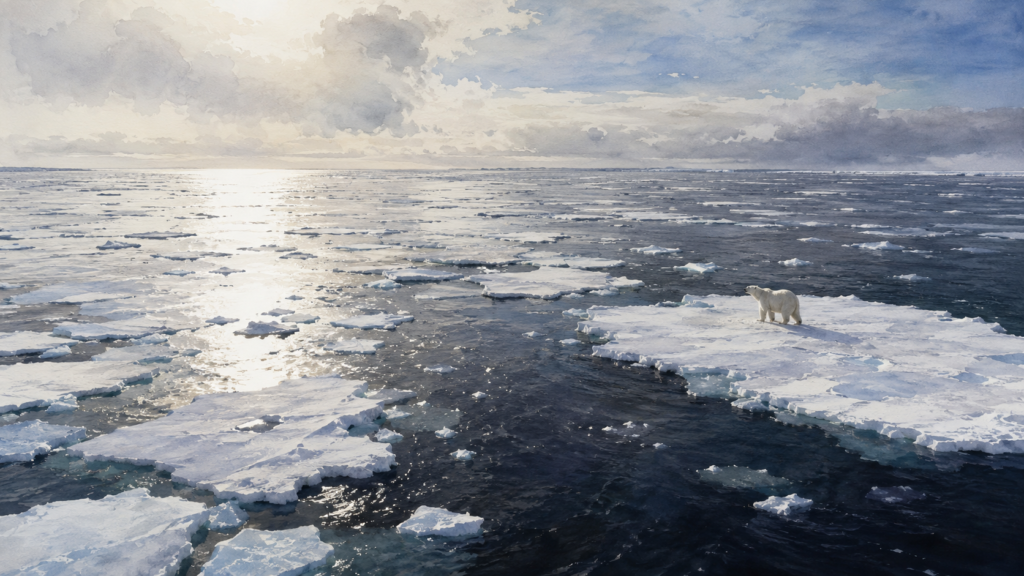
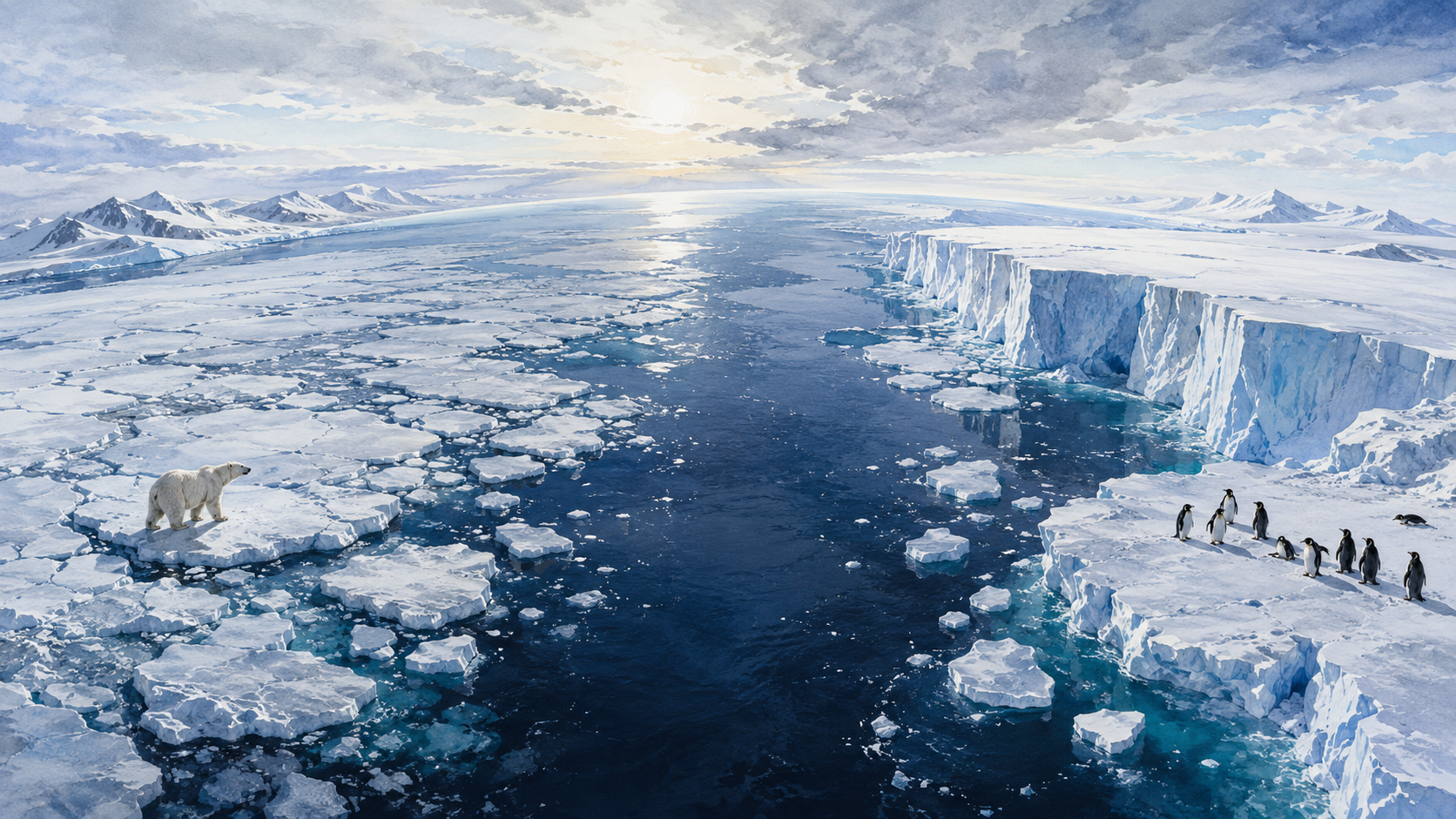
    declining Arctic sea ice exposing darker ocean water

    Arctic Sea Ice Is Shrinking

    Much of the Arctic Ocean is covered by sea ice, which expands during winter and retreats during summer.

    Satellite observations since 1979 have revealed a clear long-term decline, especially during the late-summer minimum. NASA currently estimates that September Arctic sea-ice extent has been decreasing by about 12.2 percent per decade relative to the 1981–2010 average.

    The decline is not simply about the area covered by ice. Older, thicker multiyear ice has also become less common, leaving more of the Arctic covered by younger and thinner ice that is more vulnerable to summer melting.

    The Arctic is therefore becoming a different physical environment from the one observed only a few decades ago.

    Why Is the Arctic Warming So Quickly?

    The Arctic is warming substantially faster than the planet as a whole, a phenomenon known as Arctic amplification.

    One important mechanism behind this process is the ice-albedo feedback. Bright snow and ice reflect much of the Sun’s energy back into space. When sea ice disappears, darker ocean water is exposed. The ocean absorbs more solar energy, warms further, and can contribute to additional melting.

    Recent assessments indicate that, after accounting for natural variability, Arctic temperatures have been rising roughly three times faster than the global average since 1980, although estimates vary depending on the period and method used.

    Why Does Arctic Ice Loss Matter?

    One important distinction is often misunderstood: melting floating sea ice does not significantly raise global sea level, just as melting ice already floating in a glass does not substantially raise the water level.

    However, Arctic warming still has major global consequences.

    Loss of reflective sea ice allows the ocean to absorb more heat, reinforcing regional warming. Changes in sea ice also transform habitats used by polar bears, seals, walruses, seabirds, and other species.

    Meanwhile, the Arctic also includes large amounts of land ice, most importantly the Greenland Ice Sheet. Unlike floating sea ice, melting land ice adds new water to the ocean and therefore contributes directly to global sea-level rise.


    2. What Is Happening in Antarctica?
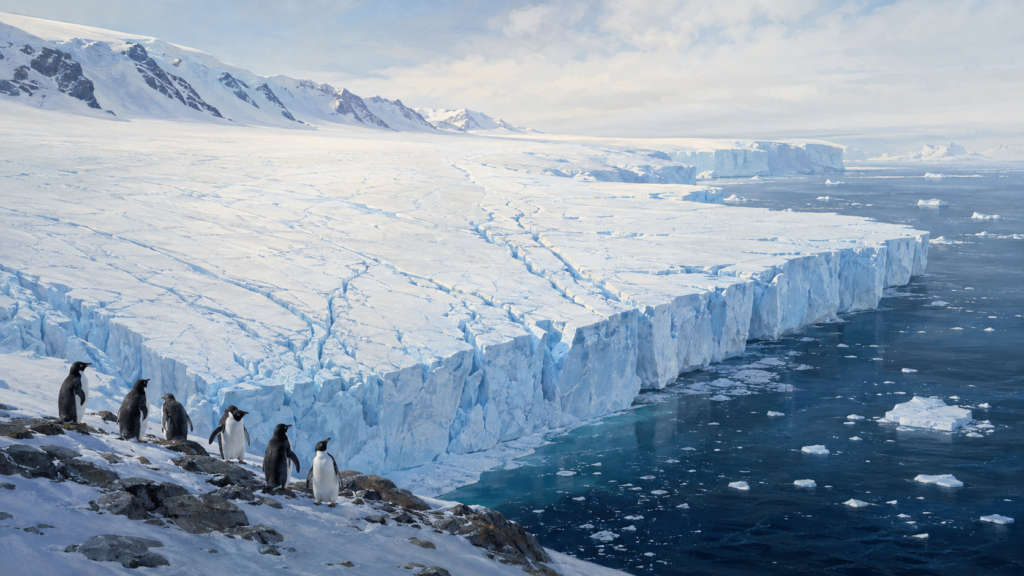
    Antarctic land ice and ice shelf meeting the Southern Ocean

    Antarctica Is Fundamentally Different from the Arctic

    Antarctica is not primarily an ice-covered ocean. It is a continent covered by an enormous land-based ice sheet.

    This distinction makes Antarctic ice loss especially important for future sea levels.

    The Antarctic Ice Sheet contains enough frozen water to raise global mean sea level by approximately 58 meters (190 feet) if it were to melt completely. Such total melting is not a near-term scenario, but the figure demonstrates the enormous amount of water stored there.

    Scientists are therefore closely monitoring even comparatively small changes in Antarctica’s ice mass.

    Why Is West Antarctica a Major Concern?

    Antarctica does not respond uniformly to climate change.

    Some of the greatest concerns involve West Antarctica, where glaciers are particularly vulnerable to warming ocean water. Many glaciers there rest on bedrock below sea level, allowing relatively warm seawater to reach beneath floating ice shelves.

    Ice shelves themselves already float and therefore do not directly cause substantial sea-level rise when they melt. However, they can act like buttresses that slow the movement of glaciers behind them.

    When an ice shelf thins or retreats, land-based ice can flow more rapidly toward the ocean. That process can increase Antarctica’s contribution to global sea-level rise. NASA estimates that the Antarctic Ice Sheet has recently been losing on average around 150 billion metric tons of ice per year.

    Antarctic Ecosystems Are Changing Too

    The consequences extend beyond ice and sea level.

    Antarctic ecosystems have evolved under extremely specialized environmental conditions. Penguins, seals, krill, seabirds, and other organisms depend directly or indirectly on sea ice, ocean temperature, and seasonal cycles.

    When the timing or extent of ice changes, feeding grounds and breeding habitats can also change.

    This reminds us that polar climate change is not merely a story about frozen water. It is also a story about interconnected living systems.


    3. How Can Changes at the Poles Affect the Rest of the World?
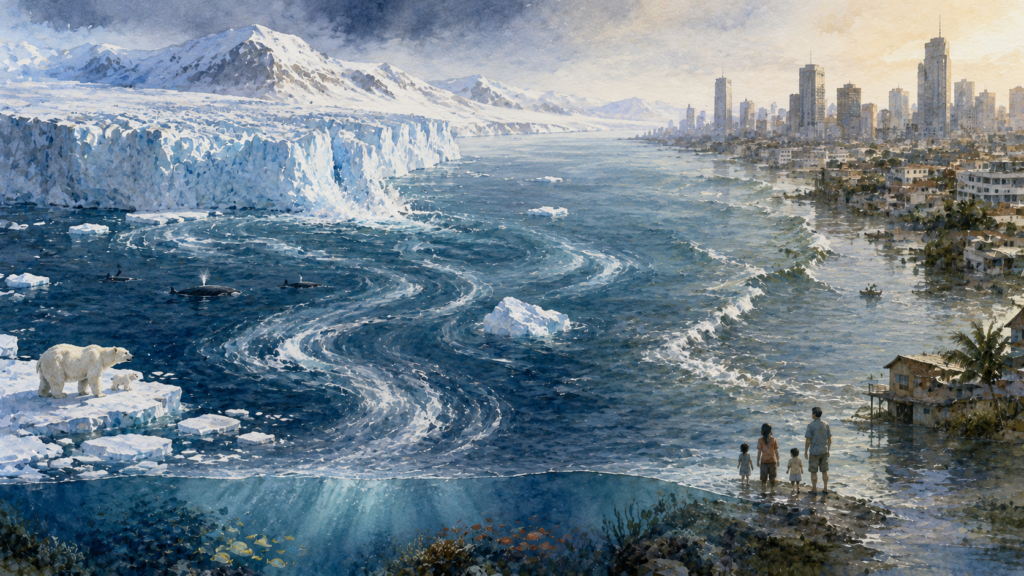
    global effects of polar land ice loss and rising sea levels

    Rising Sea Levels

    Perhaps the clearest global connection is sea-level rise.

    Again, the distinction between floating and land-based ice matters. Melting Arctic sea ice itself contributes little directly to sea-level rise. By contrast, ice lost from Greenland, Antarctica, and mountain glaciers adds water to the world’s oceans.

    For coastal cities, islands, deltas, and low-lying communities, even relatively modest increases in average sea level can make storm surges and coastal flooding more damaging.

    The future of distant ice sheets is therefore directly connected to the future of human settlements thousands of kilometers away.

    Changes in the Climate System

    The polar regions are also part of a much larger system of atmospheric and ocean circulation.

    Changes in Arctic temperature gradients, sea ice, and ocean conditions can interact with weather patterns at lower latitudes. Researchers continue to investigate precisely how Arctic change influences phenomena such as the jet stream and extreme weather, and some proposed connections remain scientifically debated.

    Antarctic changes can likewise affect Southern Ocean circulation and the exchange of heat and carbon between the ocean and atmosphere.

    The safest conclusion is not that every unusual weather event is caused by melting polar ice. Rather, it is that rapid polar change alters important components of the global climate system.


    4. What Happens to Polar Wildlife?

    For animals adapted to life around ice, climate change can mean the transformation of the habitat on which they depend.

    In the Arctic, sea-ice loss can affect species that use ice for hunting, resting, breeding, or escaping predators. Polar bears are perhaps the best-known example, but the ecological consequences extend through marine food webs.

    In Antarctica, changes in sea ice and ocean conditions can affect krill and the animals that depend on them, including penguins, seals, whales, and seabirds.

    Not every species will respond in the same way. Some populations may decline, others may move, and some may temporarily benefit from changing conditions.

    What matters is that rapid environmental change can disrupt relationships that evolved over very long periods.


    5. Why Should People Far from the Poles Care?

    It is easy to think of melting polar ice as a distant environmental problem.

    It is not.

    The poles help regulate Earth’s energy balance, influence oceans and atmosphere, store enormous quantities of freshwater, and support ecosystems found nowhere else.

    Their transformation can eventually be felt through rising seas, changing ecosystems, economic costs, and greater pressure on coastal communities.

    Polar change also demonstrates an important feature of climate change: environmental systems are connected across enormous distances.

    A change beginning in a remote glacier or ice sheet can eventually become relevant to a family living beside an ocean thousands of kilometers away.


    Conclusion: The Poles Are Part of Our World

    The Arctic and Antarctica are very different places, and their ice behaves in different ways. Yet both reveal how rapidly Earth’s climate system is changing.

    Declining Arctic sea ice is reducing one of the planet’s great reflective surfaces and transforming Arctic ecosystems. The loss of land-based ice from Greenland and Antarctica is contributing directly to rising global sea levels. Antarctica’s enormous ice reserves make its long-term stability especially important for future generations.

    Protecting the polar regions therefore does not mean protecting distant landscapes that have little connection to us.

    It means recognizing that Earth is one interconnected system.

    The changing poles are not simply warning signs at the edges of the planet. They are part of a global story—and the consequences of that story will ultimately reach far beyond the ice.

    Reader Question

    The Arctic and Antarctica may feel distant from our everyday lives, yet changes in these regions can eventually affect sea levels, ecosystems, and climate systems around the world.

    Does knowing how closely the polar regions are connected to the rest of the planet change the way you think about climate change—and our responsibility to respond to it?

    Related Reading

    Changes in the polar regions remind us that ecosystems far from our daily lives can still play an essential role in maintaining the stability of the planet. A related perspective appears in Why Wetlands Matter, which explores how wetlands support biodiversity, regulate water, reduce flood risks, and contribute to the resilience of natural systems in a changing climate.

    Understanding climate change also requires us to look beyond environmental science and consider who bears the costs of responding to it. This broader social dimension is explored in The Unequal Cost of Going Green, which examines how the transition toward a low-carbon economy can affect communities differently and why climate action is increasingly connected to questions of fairness and climate justice.

    References

    1. Serreze, Mark C. Brave New Arctic: The Untold Story of the Melting North. Princeton University Press, 2018.

    Serreze explains how the Arctic has shifted from a relatively stable frozen environment toward a rapidly warming climate system. Drawing on decades of polar research, the book is particularly useful for understanding Arctic amplification, declining sea ice, and why changes in the far north matter beyond the Arctic itself.

    2. Moon, Twila. What the Ice Gets: Shackleton, the Antarctic, and the Geography of Ice. W. W. Norton & Company, 2024.

    Moon explores ice not simply as frozen water but as a dynamic part of Earth’s environmental system. Her perspective helps readers understand how glaciers and ice sheets interact with landscapes, oceans, climate, and human understanding of the polar world.

    3. Alley, Richard B. The Two-Mile Time Machine: Ice Cores, Abrupt Climate Change, and Our Future. Princeton University Press, 2000.

    Alley explains how scientists use ancient ice cores to reconstruct Earth’s climate history. The book demonstrates why polar ice is also a record of past atmospheric and climatic conditions, helping us understand current warming within a much longer history of climate change.

    4. Rignot, Eric. Ice and Climate. Cambridge University Press, 2024.

    This work examines the relationship between glaciers, ice sheets, oceans, and the changing climate. It is especially relevant to understanding why the loss of land-based ice in Greenland and Antarctica contributes to sea-level rise and why scientists closely monitor the stability of major ice sheets.

    5. Nielsen, Henry, and Kristian H. Nielsen. Camp Century: The Untold Story of America’s Secret Arctic Military Base Under the Greenland Ice. Columbia University Press, 2017.

    Although centered on the history of Camp Century in Greenland, the book also reveals how scientific exploration of the Greenland Ice Sheet contributed to our understanding of past climates. It offers an interesting connection between polar history, ice-core science, geopolitics, and modern climate research.
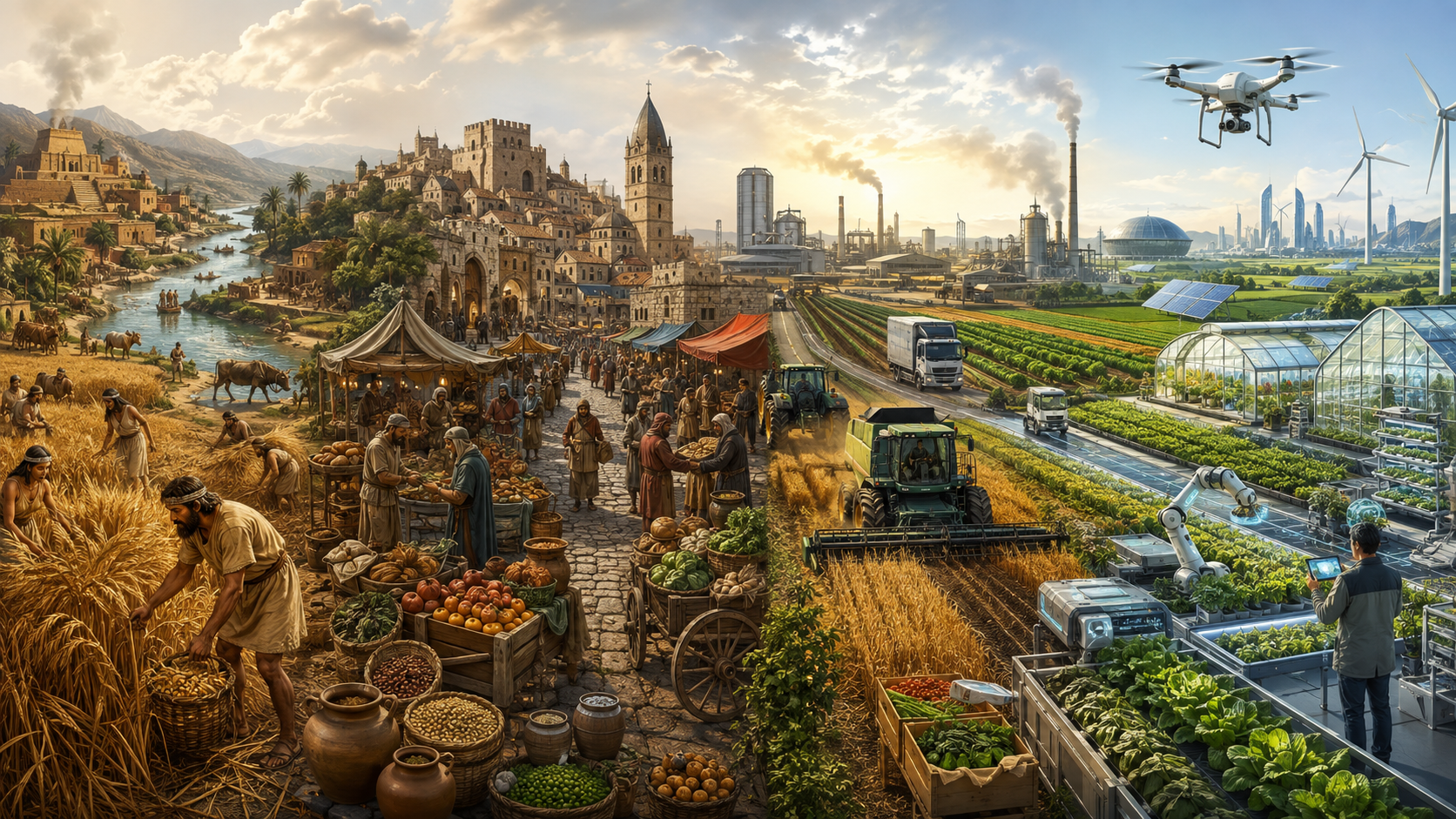
  • Food and the Course of History

    Food and the Course of History

    Has Food Been the Hidden Force Behind Civilization?

    Food is one of humanity’s most basic necessities. Yet throughout history, it has been far more than a means of survival. The ability to produce, store, distribute, and control food has shaped civilizations, determined the outcomes of wars, influenced political revolutions, and transformed economic systems. Entire empires have risen because they secured reliable food supplies, while others have collapsed after prolonged famine or agricultural failure.

    Even in the twenty-first century, food remains a strategic resource. Climate change, population growth, armed conflicts, and global supply chains have made food security one of the world’s most urgent concerns. The war in Ukraine disrupted grain exports, extreme weather threatens harvests across multiple continents, and millions still suffer from hunger despite unprecedented agricultural productivity.

    These realities raise an important historical question: Has food been the hidden force behind civilization, or has it simply reflected deeper political, technological, and social changes?

    The answer lies somewhere between these two perspectives. Food has rarely acted alone, but history repeatedly demonstrates that no civilization can thrive for long without a stable food system.


    1. Food Built Civilization

    The Agricultural Revolution: Humanity’s First Great Transformation

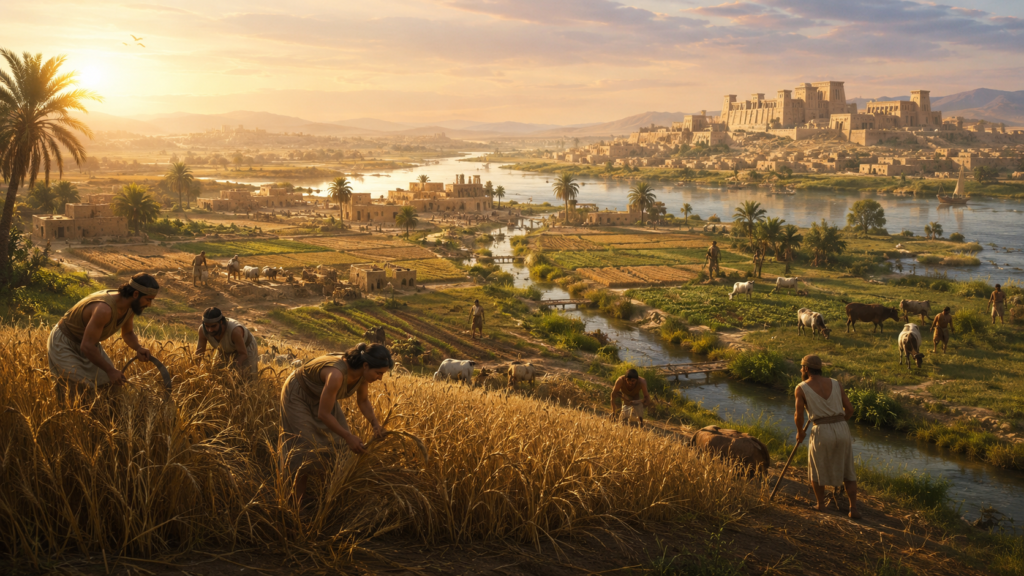
    Around 10,000 years ago, the Agricultural Revolution fundamentally changed the course of human history.

    Before agriculture, most people lived as hunter-gatherers whose survival depended on seasonal resources. Population growth remained limited because food supplies were unpredictable. Once humans learned to cultivate crops and domesticate animals, however, food production became more reliable, allowing permanent settlements to emerge.

    This transformation produced food surpluses that changed society in profound ways.

    Instead of spending every day searching for food, people could specialize in new occupations such as pottery, metalworking, administration, trade, religion, and military service. Villages expanded into cities, governments developed, and organized civilizations appeared for the first time.

    In many ways, civilization began when food became more predictable.

    Surplus Food Created Complex Societies

    Agricultural surplus did far more than feed growing populations.

    It supported taxation, financed armies, enabled long-distance trade, and encouraged technological innovation. Governments could collect grain, redistribute resources during difficult years, and maintain political authority.

    Ancient Egypt offers one of history’s clearest examples. The annual flooding of the Nile River created fertile farmland capable of producing abundant grain harvests. These reliable food supplies allowed Egypt to sustain large populations, construct monumental architecture, and maintain centralized political power for centuries.

    Similarly, Mesopotamia, the Indus Valley, and early Chinese civilizations all depended on successful agricultural systems.

    Food was not merely an economic resource—it became the foundation upon which civilizations were built.

    the Agricultural Revolution laying the foundation of civilization

    2. When Food Becomes Scarce

    The Collapse of Civilizations

    History also reveals the devastating consequences of food shortages.

    Agricultural failure caused by drought, environmental degradation, war, or poor governance has repeatedly destabilized societies.

    The Classic Maya civilization illustrates this relationship. Although the Maya developed advanced mathematics, astronomy, and architecture, prolonged droughts combined with environmental overuse weakened agricultural production. As food supplies declined, political authority weakened, cities were abandoned, and much of the civilization eventually collapsed.

    Food shortages alone did not destroy the Maya, but they intensified existing social and political problems until the system could no longer survive.

    The Great Famine in Medieval Europe

    Food insecurity transformed medieval Europe as well.

    During the Great Famine of 1315–1317, unusually cold and wet weather devastated harvests across much of Northern Europe. Crop failures led to widespread hunger, rising food prices, disease, and social unrest.

    Only a few decades later, the Black Death struck an already weakened population, dramatically reshaping European society.

    These crises exposed the vulnerability of agricultural economies that depended almost entirely on favorable weather and local food production.

    History repeatedly demonstrates that food shortages rarely remain agricultural problems alone—they quickly become political, economic, and humanitarian crises.


    3. Food as a Weapon of War

    Victory Depends on Supply

    Military history is filled with examples showing that armies march not only on courage but also on food.

    Successful military campaigns require reliable supply lines capable of feeding soldiers over long periods. Without food, even the strongest armies eventually lose their effectiveness.

    Napoleon’s invasion of Russia in 1812 remains one of the best-known examples.

    Rather than confronting Napoleon’s army directly, Russian forces adopted a scorched-earth strategy, destroying crops, villages, and food supplies during their retreat. As winter approached, French soldiers suffered starvation, disease, and exhaustion.

    The campaign ended in disaster, illustrating how food logistics can determine military outcomes as much as battlefield tactics.

    Food and Modern Conflict

    Food continues to influence geopolitical conflicts today.

    During World War II, securing agricultural resources and transportation networks became strategic priorities for many nations.

    More recently, the war between Russia and Ukraine demonstrated how modern conflicts affect global food systems.

    Ukraine is one of the world’s largest exporters of wheat, corn, and sunflower oil. Disruptions to grain exports caused sharp increases in global food prices, particularly affecting countries in Africa and the Middle East that rely heavily on imported grain.

    In today’s interconnected world, a regional conflict can rapidly become a global food crisis.

    food shortages influencing the outcome of military campaigns

    4. Food, Politics, and Global Stability

    Food Prices and Political Change

    Food has often influenced political stability.

    When basic necessities become unaffordable, public frustration frequently turns into political protest.

    During the Arab Spring, rising food prices contributed to growing dissatisfaction in several countries. Although political repression, unemployment, and corruption were major causes, rapidly increasing bread prices intensified economic hardship and helped fuel widespread demonstrations.

    Food insecurity often exposes deeper structural problems within society.

    Food Security in a Changing Climate

    Today, climate change represents one of the greatest long-term challenges to global food production.

    More frequent droughts, floods, heatwaves, and unpredictable weather reduce crop yields and threaten agricultural livelihoods.

    Regions such as the Sahel in Africa have already experienced declining agricultural productivity due to desertification and prolonged drought.

    Meanwhile, rising sea levels threaten fertile coastal farmland in many parts of Asia.

    Food security has therefore become closely connected to environmental sustainability.

    The challenge is no longer producing enough food globally but ensuring that food remains available, affordable, and accessible under changing environmental conditions.

    The Paradox of Hunger and Waste

    One of the greatest contradictions of modern society is that hunger and food waste exist simultaneously.

    Each year, enormous quantities of edible food are discarded while hundreds of millions of people remain undernourished.

    This imbalance demonstrates that food scarcity is often not simply a production problem but also a problem of distribution, infrastructure, poverty, and political priorities.

    Improving global food systems therefore requires addressing inequality as much as increasing agricultural output.


    5. Is Food the Driving Force Behind History?

    The Case in Favor

    Many historians argue that food has been one of history’s most influential forces.

    Without stable food production, populations cannot grow, cities cannot expand, governments cannot collect taxes, and armies cannot remain effective.

    Agricultural productivity has repeatedly determined economic prosperity, political stability, and national power.

    From this perspective, food is the invisible foundation supporting nearly every major civilization.

    The Counterargument

    Others argue that food alone cannot explain historical change.

    Political leadership, technological innovation, religion, trade, education, and cultural values also shape civilizations.

    Countries with similar agricultural conditions have often experienced very different historical outcomes because of differences in institutions and governance.

    Likewise, technological advances—including irrigation systems, fertilizers, mechanized farming, and biotechnology—have repeatedly transformed humanity’s relationship with food.

    History is therefore shaped by multiple interacting forces rather than a single determining factor.


    6. The Future of Food

    Technology and Sustainable Agriculture

    Agriculture is entering another period of profound transformation.

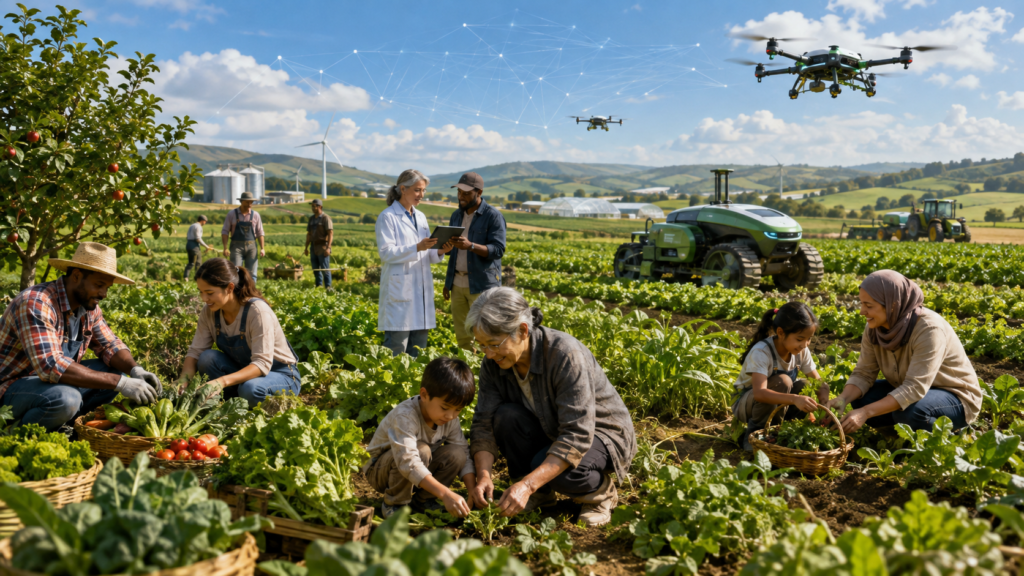
    Artificial intelligence, satellite monitoring, precision farming, autonomous machinery, and gene-editing technologies are helping farmers increase productivity while reducing environmental impact.

    These innovations may allow humanity to produce more food using fewer natural resources.

    However, technological progress also raises ethical questions regarding access, affordability, biodiversity, and environmental sustainability.

    The challenge is ensuring that innovation benefits both wealthy and developing nations.

    Food Security as a Global Responsibility

    Food security can no longer be viewed solely as a national issue.

    Global trade, climate change, migration, pandemics, and armed conflicts connect food systems across continents.

    Governments, international organizations, scientists, farmers, and consumers all share responsibility for building resilient food systems capable of feeding future generations.

    Achieving this goal will require sustainable agriculture, reduced food waste, international cooperation, and policies that promote both productivity and fairness.


    Conclusion

    sustainable agriculture and global food security in the future

    Food has never been merely a biological necessity. Throughout history, it has shaped civilizations, influenced political systems, determined military success, and transformed economic development.

    The Agricultural Revolution laid the foundation for organized societies. Famines contributed to the collapse of civilizations. Wars have often been won or lost because of supply lines rather than battlefield strength alone. Even today, climate change, global conflicts, and economic inequality continue to demonstrate that food remains one of humanity’s most strategic resources.

    Yet food does not act independently.

    Its historical influence is inseparable from politics, technology, geography, economics, and culture. Civilizations succeed not simply because they produce enough food, but because they manage food systems wisely, distribute resources fairly, and adapt to changing conditions.

    As humanity confronts climate change, population growth, and technological transformation, the debate over food’s role in history becomes increasingly relevant.

    Perhaps the most important lesson history offers is this: the future of civilization will depend not only on producing more food, but on creating food systems that are sustainable, resilient, and equitable for everyone.

    Reader Question

    If food shortages have repeatedly transformed civilizations throughout history, do you believe future conflicts will be driven more by food security than by traditional political rivalries?

    As climate change and population growth place increasing pressure on global agriculture, what responsibilities should governments, businesses, and individuals share in building a more sustainable food system?


    Related Reading

    If population growth has historically depended on stable food production, how closely are demographic change and food security connected in shaping civilizations?

    In Population and the Course of History: Is Demographic Change the Driving Force Behind Civilizations? we explore how population growth, aging societies, migration, and technological innovation have influenced the rise and transformation of human civilizations.


    If climate change increasingly threatens global agriculture, can technological innovation secure humanity’s future without compromising environmental sustainability?

    In The Future of Happiness: How Will We Define Happiness in the Age of AI and Climate Change? we examine how technology, sustainability, and changing human values may redefine prosperity and well-being in the decades ahead.

    References

    1. Diamond, J. (1997). Guns, Germs, and Steel: The Fates of Human Societies. W. W. Norton & Company.

    Jared Diamond argues that geography, agriculture, and food production played decisive roles in shaping civilizations. The book explains how access to domesticable plants and animals influenced the development of societies, political institutions, and global power.


    2. Standage, T. (2009). An Edible History of Humanity. Walker & Company.

    Standage traces world history through the lens of food, showing how agriculture, trade, exploration, war, and industrialization were all profoundly influenced by the production and distribution of food. It provides a highly accessible historical perspective on civilization.


    3. Food and Agriculture Organization of the United Nations (FAO). (2024). The State of Food Security and Nutrition in the World 2024. FAO.

    This annual FAO report examines global hunger, malnutrition, food insecurity, and sustainable agriculture. It highlights how climate change, conflict, and economic inequality continue to threaten global food systems despite advances in agricultural productivity.


    4. Sen, A. (1981). Poverty and Famines: An Essay on Entitlement and Deprivation. Oxford University Press.

    Amartya Sen challenges the idea that famines are caused only by food shortages. He argues that political institutions, economic inequality, and failures in food distribution often play a greater role than agricultural production itself.


    5. United Nations. (2015). Transforming Our World: The 2030 Agenda for Sustainable Development. United Nations.

    The United Nations emphasizes that ending hunger is central to achieving sustainable development. Sustainable agriculture, resilient food systems, and equitable food distribution are presented as essential foundations for global peace, prosperity, and environmental sustainability.

  • Why Wetlands Matter

    Why Wetlands Matter

    Nature’s Life-Support System for Water, Wildlife, and Climate

    Wetlands are among the most valuable yet often overlooked ecosystems on Earth. Found where land and water meet, they include marshes, swamps, peatlands, mangrove forests, floodplains, and shallow lakes. Although they occupy only a small portion of the planet’s surface, wetlands support an extraordinary diversity of life while providing essential services that benefit both nature and humanity.

    Scientists often describe wetlands as “the kidneys of the Earth” because they naturally filter water, and as “nature’s sponges” because they absorb and slowly release floodwaters. They also store large amounts of carbon, helping to reduce the impacts of climate change. In recognition of their global importance, the Ramsar Convention on Wetlands encourages countries around the world to protect and wisely manage these unique ecosystems.

    Despite these remarkable benefits, wetlands continue to disappear due to urban development, pollution, agricultural expansion, and climate change. Understanding why wetlands matter is therefore not simply an environmental issue—it is about protecting the natural systems that make life possible.


    1. A Home for Extraordinary Biodiversity

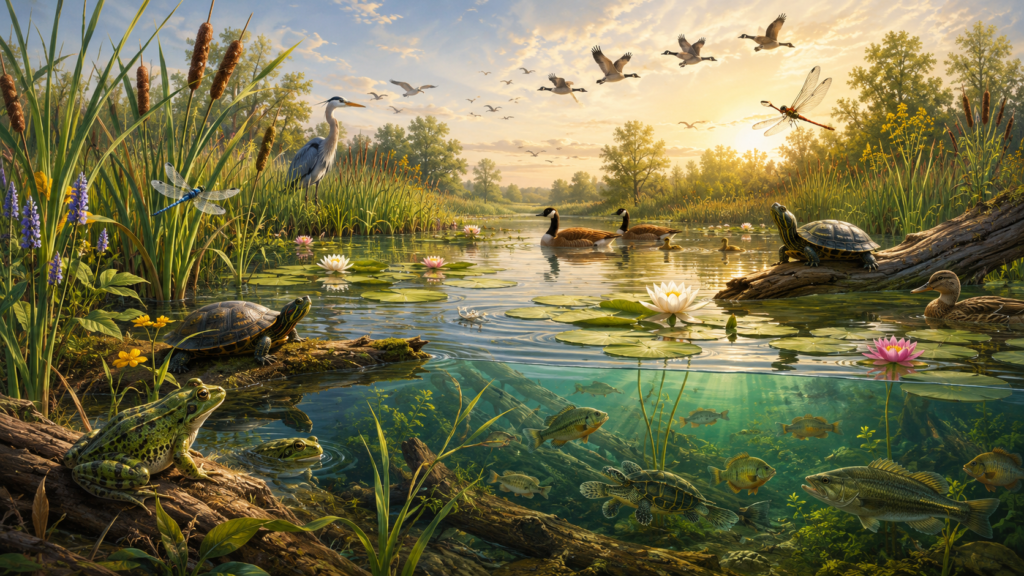
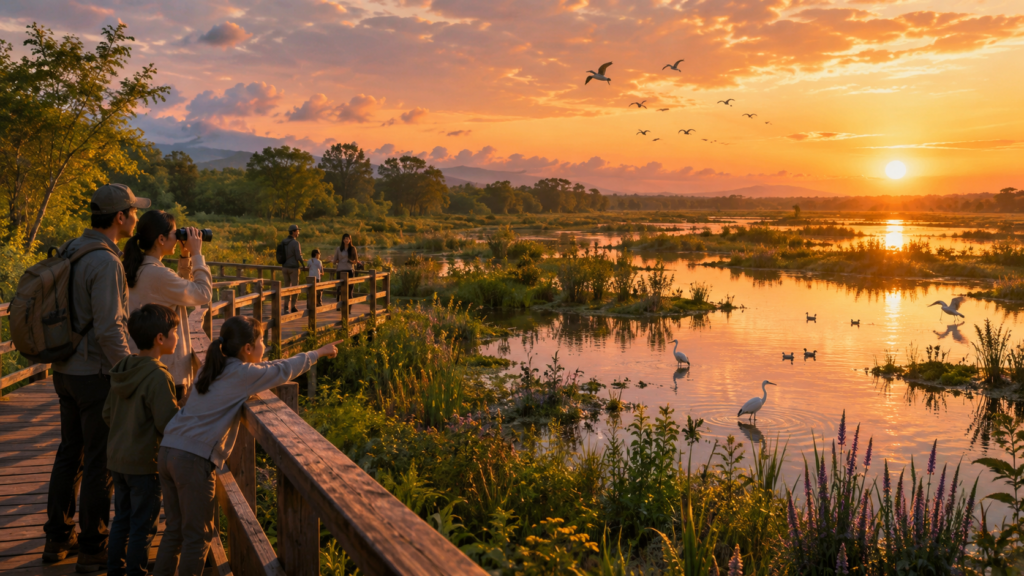
    diverse wildlife living in a healthy wetland ecosystem

    Wetlands are unique because they exist where water and land interact. This constantly changing environment creates ideal conditions for an incredible variety of plants and animals.

    Unlike many other ecosystems, wetlands experience regular changes in water levels throughout the year. Some areas remain permanently flooded, while others become wet only during certain seasons. These changing conditions create numerous habitats that support different species, making wetlands among the most biologically productive ecosystems on Earth.

    Wetland plants such as reeds, cattails, water lilies, sedges, and mangroves have evolved remarkable adaptations that allow them to thrive in waterlogged soils. Their roots stabilize the ground, reduce erosion, and provide shelter for countless organisms. These plants also produce oxygen, absorb nutrients from the water, and form the foundation of complex food webs.

    Animal life in wetlands is equally diverse. Frogs, turtles, otters, fish, dragonflies, insects, and countless microorganisms depend on wetlands for food, breeding, or shelter. Many endangered species survive only because healthy wetlands still exist.

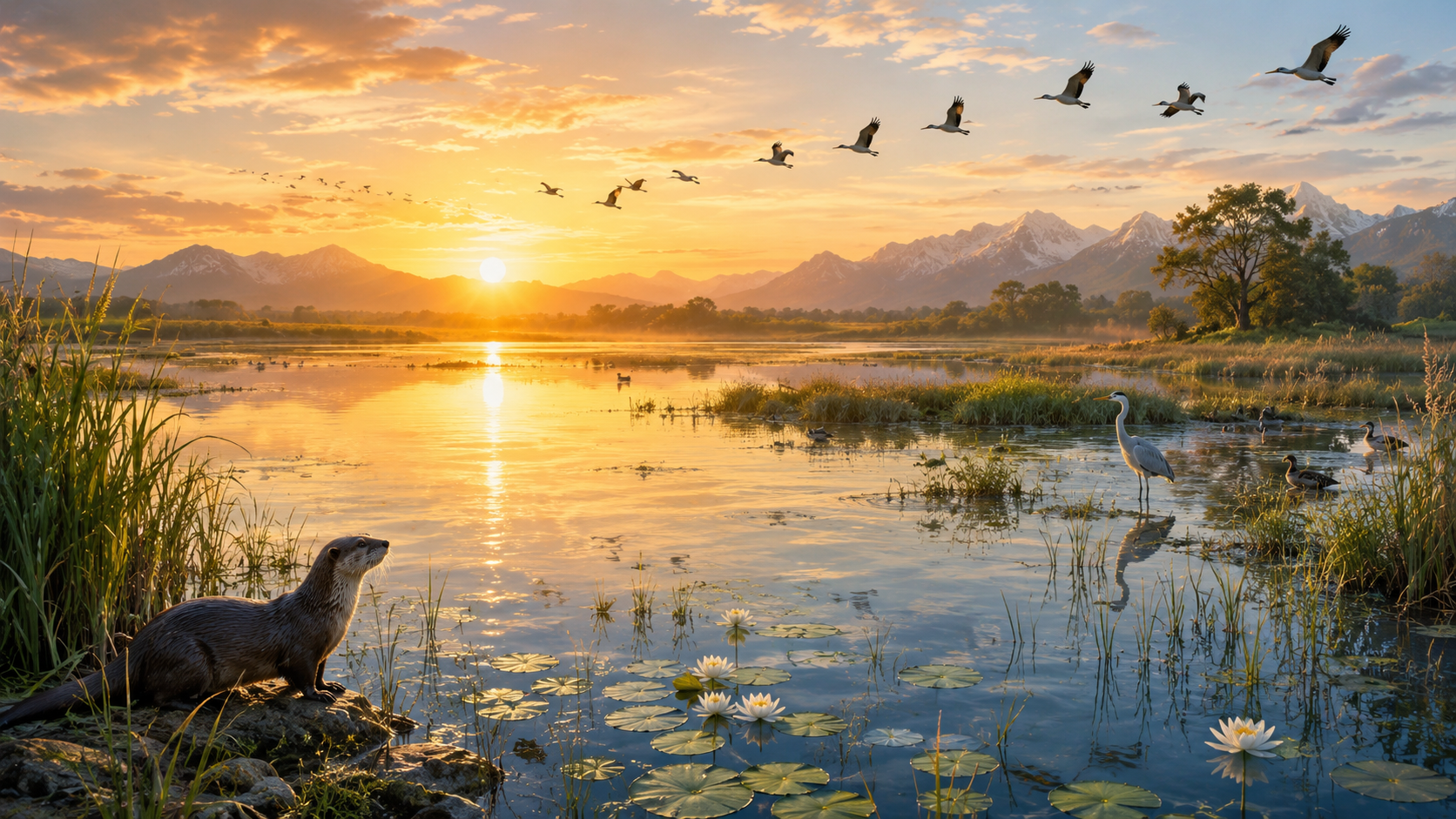
    Perhaps the most famous visitors are migratory birds. Every year, millions of birds travel thousands of kilometers between continents, relying on wetlands as safe places to rest and feed during their journeys. Without these stopover habitats, many migratory species would struggle to complete their migrations successfully.

    Because wetlands support such a remarkable concentration of biodiversity, protecting them helps conserve entire ecological communities rather than individual species alone.


    2. Nature’s Water Purification System

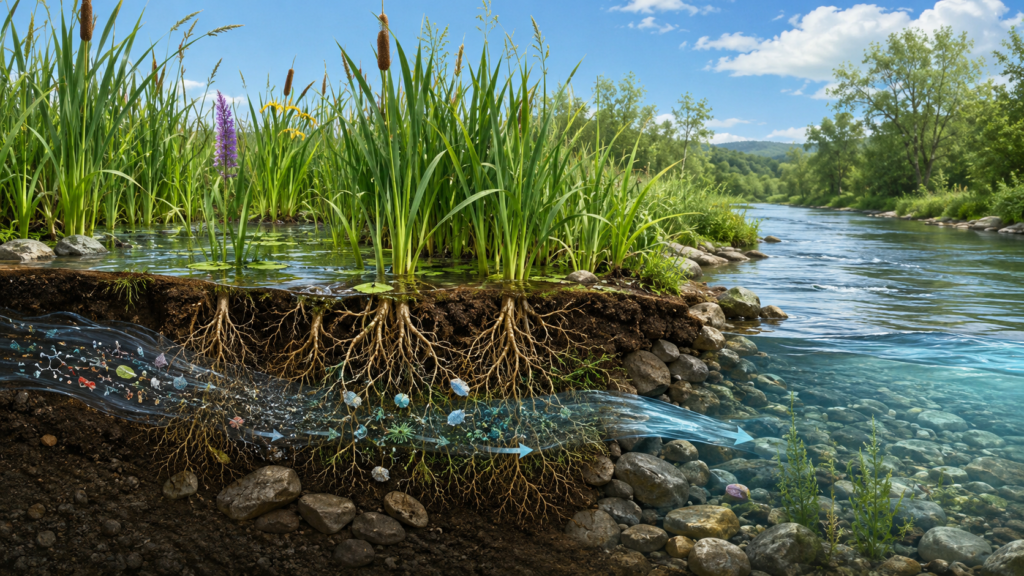
    wetlands naturally filtering and purifying freshwater

    One of the most valuable services wetlands provide is their natural ability to improve water quality.

    As water flows through a wetland, it slows down. Suspended sediments gradually settle to the bottom, while wetland plants absorb excess nutrients such as nitrogen and phosphorus that could otherwise pollute rivers and lakes.

    At the same time, bacteria and other microorganisms living in wetland soils break down organic matter and help remove harmful pollutants through natural biological processes.

    Together, plants, soil, and microorganisms create an efficient natural filtration system.

    For this reason, wetlands are often compared to living water treatment facilities. Unlike artificial treatment plants, however, wetlands perform this work continuously without consuming electricity or requiring expensive infrastructure.

    The benefits extend far beyond wildlife. Cleaner rivers improve drinking water supplies, support healthier fisheries, reduce water treatment costs, and create safer environments for both people and ecosystems.

    In many parts of the world, restoring wetlands has become an effective and sustainable strategy for improving freshwater quality while reducing environmental management costs.


    3. Nature’s Protection Against Floods

    Wetlands are also one of nature’s most effective defenses against floods.

    During periods of heavy rainfall, rivers can rise rapidly and overflow into surrounding communities. Wetlands help reduce this risk by temporarily storing enormous amounts of water.

    Rather than allowing rainwater to rush downstream immediately, wetlands absorb excess water much like a giant natural sponge. As rainfall decreases, they slowly release the stored water back into rivers and groundwater systems.

    This gradual release reduces flood peaks, limits soil erosion, and protects homes, farmland, and infrastructure from severe damage.

    As climate change increases the frequency of extreme rainfall events in many regions, governments are increasingly recognizing wetlands as an important part of disaster prevention strategies.

    Instead of relying only on dams, levees, or concrete flood barriers, many countries now restore wetlands as nature-based solutions that work with natural processes rather than against them.

    This approach often provides long-term environmental and economic benefits while strengthening ecosystem resilience.


    4. Wetlands and Climate Change

    In recent decades, scientists have discovered another remarkable function of wetlands: their ability to store carbon.

    Healthy wetlands remove carbon dioxide from the atmosphere through photosynthesis. Instead of releasing this carbon quickly back into the air, waterlogged soils slow decomposition, allowing large amounts of carbon to remain stored underground for centuries or even thousands of years.

    Peatlands are particularly important because they contain one of the largest carbon reserves on Earth despite covering only a small percentage of the planet’s surface.

    Coastal wetlands—including mangrove forests, salt marshes, and seagrass meadows—are equally valuable. These ecosystems store what scientists call blue carbon, carbon captured and stored by coastal vegetation and marine ecosystems.

    When wetlands are drained, burned, or converted into farmland or urban areas, much of this stored carbon is released into the atmosphere as greenhouse gases, accelerating global warming.

    Protecting wetlands therefore contributes not only to biodiversity conservation but also to international efforts to reduce climate change.

    Increasingly, environmental policies recognize that conserving wetlands is one of the most cost-effective ways to protect both ecosystems and the global climate.


    5. Why Wetland Conservation Matters More Than Ever

    Despite their enormous ecological value, wetlands remain among the most threatened ecosystems in the world.

    Expanding cities often reclaim wetlands for housing, roads, and industrial development. Agricultural projects frequently drain wetlands to create farmland, while pollution from fertilizers, chemicals, and plastic waste damages delicate ecological balances.

    Climate change adds further pressure through rising sea levels, changing rainfall patterns, prolonged droughts, and stronger storms.

    The loss of wetlands affects far more than local wildlife. It reduces water quality, increases flood risks, weakens natural carbon storage, and threatens the countless ecosystem services upon which human societies depend.

    Protecting wetlands therefore requires more than setting aside protected areas. Sustainable land management, pollution control, ecological restoration, responsible water use, and international cooperation are all essential.

    Around the world, governments, scientists, conservation organizations, and local communities are working together to restore degraded wetlands. These restoration projects not only bring wildlife back but also improve water security, strengthen climate resilience, and create healthier environments for future generations.

    Every restored wetland represents an investment in both nature and humanity.


    Conclusion: Nature’s Life-Support System

    people protecting wetlands for future generations

    Wetlands may appear quiet and ordinary, but they perform some of nature’s most extraordinary work. They support countless species, purify water, reduce flood risks, and help regulate the Earth’s climate—all while quietly sustaining the natural balance on which life depends.

    As environmental challenges continue to grow, protecting wetlands becomes more than an act of conservation. It is an investment in clean water, biodiversity, climate resilience, and the well-being of future generations. By preserving these remarkable ecosystems, we are ultimately protecting one of nature’s most effective life-support systems.

    A Question for Readers

    Wetlands quietly provide clean water, protect wildlife, reduce floods, and help slow climate change—often without us noticing.

    If a wetland near your community disappeared tomorrow, which of its benefits do you think people would miss first, and why?


    Related Reading

    Our understanding of wetlands begins with understanding water itself. In The Origins of Medicine, we explored how clean water and healthy environments have shaped human health throughout history. Wetlands continue to play that same life-supporting role by naturally filtering water and maintaining healthy ecosystems.

    Wetlands also remind us that scientific progress depends on understanding complex natural systems. This idea connects naturally with The New Space Age: From Moon Missions to the Space Economy, which shows how scientific exploration—whether on Earth or beyond—helps humanity better understand and protect our shared future.

    References

    1. Mitsch, William J., and James G. Gosselink. Wetlands. 5th ed., Wiley, 2015.

    Widely regarded as one of the definitive textbooks on wetland ecology, this book explains how wetlands function, why they support exceptional biodiversity, and how they contribute to water purification, flood control, and climate regulation. It is a foundational reference for both students and environmental professionals.


    2. Keddy, Paul A. Wetland Ecology: Principles and Conservation. 2nd ed., Cambridge University Press, 2010.

    Keddy provides a comprehensive introduction to wetland ecosystems, exploring their ecological processes, biodiversity, and the challenges of conservation. The book emphasizes the importance of wetlands for maintaining ecological balance in a rapidly changing world.


    3. Millennium Ecosystem Assessment. Ecosystems and Human Well-being: Wetlands and Water Synthesis. World Resources Institute, 2005.

    This landmark international assessment explains how wetlands provide essential ecosystem services, including clean water, flood mitigation, food production, and biodiversity conservation. It remains one of the most influential reports linking healthy ecosystems to human well-being.


    4. Ramsar Convention Secretariat. The Ramsar Convention Manual: A Guide to the Convention on Wetlands. 7th ed., Ramsar Convention Secretariat, 2022.

    This official guide introduces the Ramsar Convention, the world’s leading international agreement for wetland conservation. It explains the ecological importance of wetlands and outlines global efforts to promote their wise use and long-term protection.


    5. IPCC. Climate Change 2023: Synthesis Report. Intergovernmental Panel on Climate Change, 2023.

    The IPCC highlights the importance of protecting natural ecosystems, including wetlands, as part of climate mitigation and adaptation strategies. The report emphasizes that conserving carbon-rich ecosystems is essential for achieving long-term climate resilience.

  • The Future of Happiness

    The Future of Happiness

    How Will We Define Happiness in the Age of AI and Climate Change?

    For thousands of years, philosophers, religious thinkers, scientists, and ordinary people have asked the same question: What does it mean to live a happy life?

    The answers have never remained the same. Every generation has redefined happiness according to its own social values, economic conditions, technological progress, and cultural beliefs.

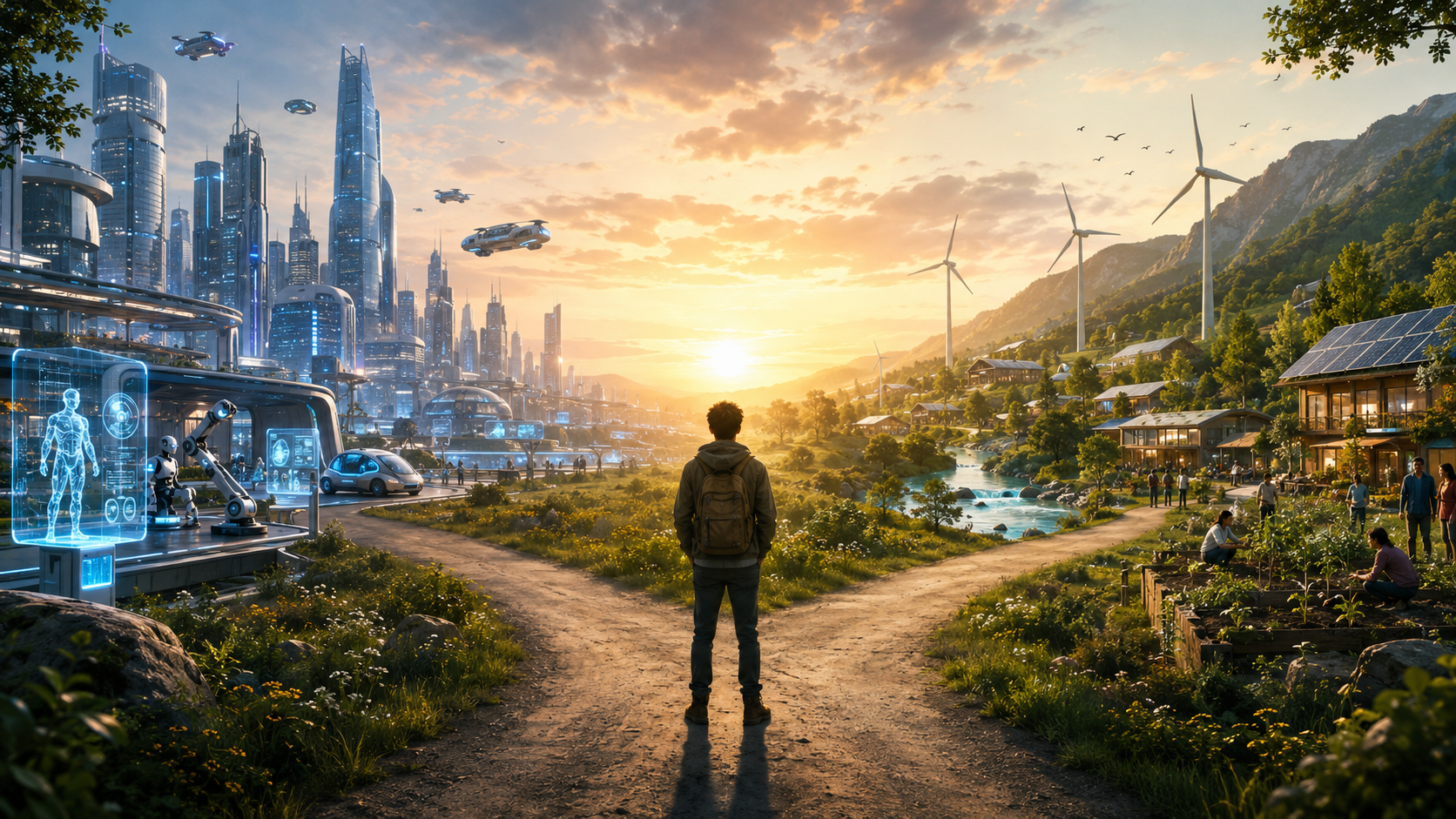
    Today, humanity stands at another turning point. Artificial intelligence is transforming work, digital technology is reshaping relationships, and climate change is altering how we think about the future. These forces are raising an important question: Will future generations define happiness differently from us?

    Perhaps happiness will no longer depend primarily on wealth or personal achievement. Instead, it may increasingly involve digital well-being, environmental sustainability, meaningful human relationships, and the ability to adapt to constant change.


    1. Happiness Has Always Evolved

    changing ideas of happiness across different historical periods

    Changing Ideas Across History

    Ideas about happiness have never been fixed.

    Aristotle described happiness (eudaimonia) as living a virtuous and meaningful life rather than pursuing temporary pleasure. Epicurus emphasized peace of mind, friendship, and freedom from unnecessary desire.

    Centuries later, industrial societies increasingly associated happiness with economic success, stable employment, and family security.

    Modern psychology has shifted attention toward subjective well-being, emphasizing emotional health, life satisfaction, resilience, and positive relationships.

    Each period reflects the priorities of its own society.

    Why the Definition Continues to Change

    As societies change, so do people’s expectations.

    Longer life expectancy, globalization, technological innovation, and environmental uncertainty are reshaping what people value most. Happiness is becoming less about accumulating possessions and more about achieving balance, purpose, and sustainability.


    2. Artificial Intelligence and the Automation of Happiness

    AI technology supporting everyday life while preserving human relationships

    Technology as a Source of Well-Being

    Artificial intelligence already helps people organize daily life, monitor health, recommend entertainment, and automate repetitive work.

    Personalized healthcare, intelligent assistants, and smart homes may reduce stress while giving people more time for creativity, learning, and relationships.

    Technology could become a powerful tool for improving quality of life.

    When Convenience Replaces Meaning

    However, greater convenience does not automatically produce greater happiness.

    If algorithms make every decision, people may gradually lose opportunities to develop independence, overcome challenges, and experience personal growth.

    Many psychologists argue that genuine happiness often emerges from effort, purpose, and meaningful achievement—not simply from comfort.


    3. Digital Well-Being in a Virtual Society

    A New Definition of Human Connection

    Virtual reality, augmented reality, and digital communities will likely become increasingly important parts of everyday life.

    People may attend concerts, classrooms, workplaces, and even family gatherings in immersive digital environments.

    These technologies could expand access to experiences previously limited by geography or physical ability.

    The Risk of Digital Isolation

    Yet digital life also creates new challenges.

    Excessive dependence on virtual experiences may weaken face-to-face relationships, increase loneliness, and blur the boundary between authentic and simulated experiences.

    The future of happiness may depend not on rejecting technology but on using it wisely.


    4. Climate Change and the Meaning of Well-Being

    Living Well on a Changing Planet

    Climate change is no longer only an environmental issue—it is increasingly becoming a psychological and social one.

    Extreme weather, ecological uncertainty, and concerns about future generations influence how people think about security and happiness.

    As environmental awareness grows, many people are redefining success in terms of sustainability rather than consumption.

    From Consumption to Sustainability

    Communities around the world are investing in green cities, renewable energy, and nature-based lifestyles.

    Rather than asking, “How much can we own?” future generations may increasingly ask, “How can we live well while protecting the planet?”


    5. Measuring Happiness Beyond Economic Growth

    Lessons from Bhutan

    Bhutan’s concept of Gross National Happiness (GNH) challenged the assumption that economic growth alone defines national success.

    The model considers psychological well-being, environmental conservation, cultural preservation, good governance, and community vitality alongside economic development.

    Many researchers believe future societies may adopt broader measures of human flourishing instead of relying solely on GDP.

    Smart Cities and Human-Centered Innovation

    Cities such as Singapore increasingly integrate digital technology with environmental planning to improve quality of life.

    Smart transportation, efficient energy systems, public green spaces, and digital public services demonstrate how technology can support—not replace—human well-being.


    Conclusion

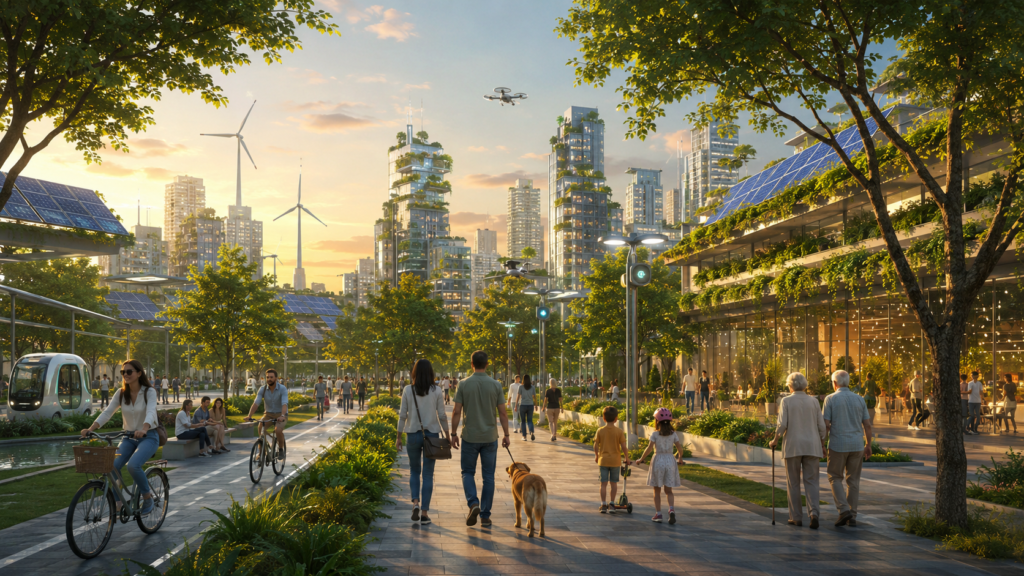
    people enjoying a sustainable smart city where technology and nature coexist

    The future of happiness will likely become more complex than ever before.

    Artificial intelligence may make life easier, but not necessarily more meaningful. Digital technology may connect people globally while simultaneously increasing loneliness. Climate change may threaten traditional lifestyles while encouraging societies to rediscover sustainability and community.

    Ultimately, happiness will continue evolving because humanity itself continues evolving.

    Perhaps the most important challenge is not asking whether technology will make us happier, but asking what kind of life we believe is worth living in the first place.

    In the future, happiness may be measured less by what we possess and more by how wisely we balance innovation, relationships, purpose, and responsibility toward one another and the planet.

    Reader Question

    As AI becomes increasingly capable of improving convenience and solving everyday problems, do you think future happiness will depend more on technology—or on meaningful human relationships?

    If society eventually measures success by well-being rather than economic growth alone, what do you think should be included in the definition of a truly happy life?

    Related Reading

    If artificial intelligence and digital technologies increasingly influence how we live, work, and connect with others, can they also redefine what it truly means to be happy?

    In Can Experiences in Dreams Become Real Knowledge?, we explore how emerging technologies, virtual experiences, and human perception may reshape our understanding of reality—and perhaps even our definition of happiness.


    If happiness is shaped not only by personal choices but also by society, culture, and the people around us, how much of our emotional well-being truly belongs to us?

    In Are Our Emotions Truly Ours—or Socially Constructed?, we examine how social norms, cultural expectations, and collective experiences influence human emotions and our pursuit of a meaningful life.

    References

    1. Aristotle. (2009). Nicomachean Ethics (Translated by W. D. Ross). Oxford University Press.

    One of the foundational works in Western philosophy, Nicomachean Ethics introduces the concept of eudaimonia, describing happiness as living a life of virtue, purpose, and human flourishing rather than pursuing temporary pleasure. It remains central to modern discussions of well-being.


    2. Seligman, M. E. P. (2011). Flourish: A Visionary New Understanding of Happiness and Well-being. Free Press.

    Martin Seligman expands positive psychology beyond happiness alone, introducing the PERMA model—Positive Emotion, Engagement, Relationships, Meaning, and Accomplishment. The book argues that genuine well-being is multidimensional and extends beyond momentary pleasure.


    3. World Happiness Report. (2024). World Happiness Report 2024. Sustainable Development Solutions Network.

    The annual World Happiness Report examines how income, social support, health, freedom, generosity, and trust influence life satisfaction across countries. It demonstrates that strong relationships and social trust consistently contribute more to happiness than economic wealth alone.


    4. Schwab, K. (2016). The Fourth Industrial Revolution. World Economic Forum.

    Klaus Schwab explores how artificial intelligence, robotics, biotechnology, and digital technologies are transforming work, society, and human life. He argues that technological progress should ultimately serve human well-being rather than becoming an end in itself.


    5. United Nations. (2015). Transforming Our World: The 2030 Agenda for Sustainable Development. United Nations.

    The UN’s Sustainable Development Goals (SDGs) connect human well-being with environmental sustainability, social inclusion, and economic development. The report highlights that future prosperity depends on balancing technological innovation with responsibility toward people and the planet.