Blog

  • Supernatural Phenomena in Pop Culture: Where Reality Meets Imagination

    Supernatural Phenomena in Pop Culture: Where Reality Meets Imagination

    Why are we so fascinated by things we cannot explain?

    Ghosts, haunted houses, UFO sightings, and mysterious forces—
    these ideas have always existed at the edge of human imagination.

    Yet they are not confined to myths or folklore.
    They live vividly in films, books, and television, shaping how we think, fear, and even believe.

    Supernatural phenomena are not just stories.
    They are reflections of how humans interpret the unknown.

    mirror reflection illusion human perception confusion

    1. Supernatural Stories in Film: Between Reality and Fiction

    One of the most famous examples is The Conjuring series.

    Marketed as “based on a true story,” the films follow paranormal investigators Ed and Lorraine Warren as they confront haunted houses and demonic entities.

    However, the real-life cases remain controversial.
    Some view them as genuine supernatural encounters, while others see them as psychological phenomena or exaggerations.

    This ambiguity is the key.

    The film works not because it proves the supernatural—but because it leaves us unsure.

    And that uncertainty is what makes it powerful.


    2. Literature and the Supernatural: Fear as a Psychological Mirror

    Stephen King’s works demonstrate that supernatural horror is rarely about ghosts alone.

    In The Shining, the haunted hotel is not just a place—it becomes a reflection of the protagonist’s inner collapse.

    The “supernatural” often represents:

    • Trauma
    • Fear
    • Isolation

    Rather than external threats, these stories reveal something internal.

    In this sense, supernatural fiction is less about what is “out there”
    and more about what is within us.


    3. Modern Myths: UFOs, Conspiracies, and Collective Imagination

    During the 20th century, UFO sightings and alien encounters became widespread.

    Shows like The X-Files amplified this fascination, blending supernatural mystery with government conspiracy.

    Its famous line—
    “The truth is out there”
    captures something deeper than fiction.

    It reflects a human desire to believe that:

    • There is more than we know
    • Reality is incomplete
    • Mystery still exists

    These stories evolve into modern myths—
    not necessarily because they are true, but because they feel possible.


    4. Why Humans Believe in the Supernatural

    dark corridor shadow fear of unknown

    This is where psychology becomes essential.

    Humans are naturally wired to detect patterns, seek meaning, and fear the unknown. Many supernatural beliefs are connected to how the human brain processes uncertainty (see more on Wikipedia).

    When something cannot be explained, the brain often fills the gap with narrative.

    This leads to three key effects:

    ① Pattern-seeking mind

    We see faces in shadows, sounds in silence.

    ② Emotional amplification

    Fear makes experiences feel more real.

    ③ Cultural reinforcement

    Media repeats and strengthens belief.

    In other words,
    we do not just consume supernatural stories—
    we participate in them.


    5. Supernatural in the Digital Age

    Today, the supernatural has evolved.

    Through social media, YouTube, and streaming platforms:

    • Ghost footage spreads instantly
    • Conspiracy theories gain global attention
    • Fiction and reality blur faster than ever

    Algorithms amplify what captures attention—
    and nothing captures attention like fear and mystery.

    The result:

    The supernatural is no longer just storytelling.
    It has become a shared digital experience.


    6. The Double Edge of Supernatural Culture

    Supernatural content can be meaningful.

    ✔ It sparks imagination
    ✔ It offers psychological release
    ✔ It allows exploration of fear in a safe space

    But it also has risks.

    It can spread misinformation
    It can create irrational fear
    It can distort reality

    The power of the supernatural lies in this balance.


    Conclusion

    human silhouette fading reality imagination boundary

    Supernatural phenomena in pop culture are not simply about ghosts or mysteries.

    They are about how humans understand the unknown.

    They sit at the boundary between:

    • Reality and imagination
    • Fear and curiosity
    • science and belief

    And perhaps that is why they endure.

    Because the real question is not:

    “Are these phenomena real?”

    But rather:

    “Why do they feel real to us?”


    A Question for Readers

    Do you think supernatural stories reveal hidden truths about human psychology—or are they simply powerful illusions created by culture?

    Related Reading


    If what we see and feel can deceive us, how much of reality is truly reliable?
    In If Memory Can Be Manipulated, What Can We Really Trust?, we explore how memory and perception shape our understanding of reality—suggesting that even supernatural experiences may arise from the mind’s attempt to interpret uncertainty.


    What if the boundary between reality and imagination is shaped not by the world—but by the way we think and communicate?
    In Does Language Shape Thought, or Does Thought Shape Language?, we examine how language influences human perception—revealing that what we call “supernatural” may sometimes reflect the limits of how we describe the unknown.


    References


    King, Stephen. (2000). On Writing: A Memoir of the Craft. New York: Scribner.
    This memoir offers insight into Stephen King’s creative process, revealing how supernatural elements are often grounded in psychological realism. It helps explain why fictional horror feels emotionally authentic to readers.


    Guiley, Rosemary Ellen. (2007). The Encyclopedia of Ghosts and Spirits. New York: Facts on File.
    This comprehensive reference explores historical and cultural accounts of supernatural phenomena, demonstrating how beliefs about ghosts and spirits have shaped and been shaped by popular culture.


    Bord, Janet, & Bord, Colin. (2001). The Big Book of UFOs. London: HarperCollins.
    This book documents UFO sightings and their cultural interpretations, illustrating how unexplained events evolve into modern myths and influence collective imagination.

  • In a World Where Everything Is Recorded, Is Forgetting a Sin—or a Right?

    In a World Where Everything Is Recorded, Is Forgetting a Sin—or a Right?

    The Ethics of Memory in the Age of Total Surveillance

    Think about this.

    A post you wrote ten years ago.
    A photo you forgot existed.
    A mistake you believed had quietly faded with time.

    Now imagine all of it—still there.

    Searchable. Traceable. Permanent.

    In today’s digital world, forgetting is no longer natural.
    Digital systems record, store, and retrieve everything at any moment.

    As a result, we are left with a difficult question:

    If nothing is ever truly forgotten…
    Is forgetting a moral failure—or a fundamental human right?

    person looking at old social media post

    1. A Society Without Forgetting Is a Society Without Forgiveness

    The Permanence of Mistakes

    In a world of permanent records, mistakes do not disappear.

    A careless tweet from adolescence.
    An impulsive decision.
    A moment of poor judgment.

    These fragments can follow a person for decades.

    For example, employers search digital histories.
    Public figures are judged by their past statements.

    Even ordinary individuals live with the fear of being remembered too well.


    The Disappearance of Forgiveness

    However, human beings are not static.

    We grow.
    Then we change.
    And we learn.

    This leads to a deeper question.

    If the past is never allowed to fade,
    what happens to forgiveness?

    A society that never forgets
    may slowly become a society that cannot forgive.


    2. Memory Is Technology—Forgetting Is Humanity

    endless digital memory data stream

    Memory as Data Storage

    Memory is becoming increasingly mechanical.

    Cloud storage, surveillance systems, blockchain records,
    and even experimental neuro-memory technologies
    are pushing us toward perfect preservation.

    Digital systems record everything.
    Anyone can retrieve everything.


    Forgetting as a Human Process

    However, forgetting is not simply loss.

    It is:

    • emotional release
    • space for reflection
    • the beginning of healing

    In other words, we do not only grow by remembering.

    We also grow by letting go.

    If memory is accumulation,
    then forgetting is transformation.


    3. The Right to Be Forgotten

    Legal Recognition

    In 2014, the European Union recognized the “right to be forgotten.”

    This allows individuals to request the removal of personal data
    from search engines and online platforms under certain conditions.


    Ethical Meaning

    More importantly, this is more than a legal tool.

    It reflects a deeper belief.

    That human beings are not fixed.

    That identity can evolve.

    And that dignity includes the ability
    to move forward without being permanently defined by the past.

    Therefore, we must ask:

    Is forgetting an escape from responsibility—
    or a necessary condition for personal renewal?


    4. Why We Must Be Able to Forget

    Memory as Selection

    Life is not about storing everything.

    It is about choosing what to carry.

    What we remember shapes who we become.

    At the same time, what we forget also shapes who we are allowed to be.


    The Danger of Endless Memory

    Without forgetting:

    • apologies lose meaning
    • growth becomes invisible
    • identity becomes frozen

    As a result, we are slowly being conditioned
    to treat forgetting as a flaw.

    However, the real danger may be the opposite.

    Not forgetting enough.

    More importantly, we must reconsider what it means to be human.


    Conclusion: Forgetting as the Last Human Skill

    fading human memories peaceful release

    Machines can remember everything.

    But they cannot forget in the human sense.

    Because forgetting is not computation.

    It is shaped by:

    • pain
    • love
    • time
    • healing

    In a world where everything can be recorded,
    we must decide what should remain—and what should fade.

    And ultimately, we are left with one final question:

    If nothing about your past could ever disappear—
    would you still be free to become someone new?

    Reader Question

    If nothing about your past could ever be erased—

    Would you still feel free to become someone new?

    Related Reading

    If nothing is ever truly forgotten in the digital world, can any version of truth remain fixed—or are all records simply interpretations preserved over time?
    In Is There a Single Historical Truth, or Many Narratives?, we explore how truth is shaped by perspective, power, and interpretation—raising a deeper question about whether permanent records reveal reality, or merely freeze one version of it.

    If memory can be stored, analyzed, and even predicted by machines, what does that mean for human identity—and the possibility of change?
    In If AI Could Dream, Would It Be Imagination—or Calculation?, we examine whether artificial intelligence can move beyond data processing toward something like imagination—and how this challenges the boundaries between memory, consciousness, and what it means to be human.

    References

    1. Viktor Mayer-Schönberger (2009). Delete: The Virtue of Forgetting in the Digital Age.
    This book argues that permanent digital memory threatens human autonomy and social forgiveness, emphasizing why forgetting is not a weakness but a necessary condition for a humane society.

    2. Daniel J. Solove (2007). The Future of Reputation.
    Solove examines how online records can damage personal identity and reputation, showing how the inability to escape past information reshapes social judgment.

    3. Yinghui Lu (2020). “Digital Forgetting and the Right to be Forgotten.”
    This work reframes forgetting as a matter of dignity and ethical restoration rather than mere data deletion, supporting the philosophical foundation of the right to be forgotten.

    4. Jeffrey Baron (2018). “The Right to be Forgotten.”
    Baron analyzes the legal tension between privacy and freedom of expression, highlighting the complexity of regulating memory in democratic societies.

    5. Paul Ricoeur (2004). Memory, History, Forgetting.
    Ricoeur presents forgetting as an essential part of how memory itself is structured, offering deep philosophical insight into why forgetting is central to human identity.

  • Music and Social Revolution: How Songs Change the World

    Music and Social Revolution: How Songs Change the World

    Music is often seen as entertainment—a background to our daily lives.
    But history tells a different story.

    Songs have sparked movements, united strangers, and given voice to those who had none.
    From civil rights marches to global protests, music has not only reflected change—it has helped create it.

    So the question is:
    How does music move people from emotion to action—and can it still shape the world today?


    person listening music emotional immersion

    1. Why Music Becomes a Force for Social Change

    Music has a unique ability to translate emotion into collective energy.

    Unlike speeches or written texts, songs are remembered, repeated, and shared.
    A melody can carry a message across borders, cultures, and generations.

    During times of crisis or injustice, music often becomes the emotional language of resistance.

    For example, “We Shall Overcome” during the American Civil Rights Movement was more than a song—it was a unifying force that turned fear into solidarity.

    Music does not just communicate ideas.
    It makes people feel those ideas—and feeling is often what leads to action.


    2. How Music Connects Individuals to Collective Action

    people singing together emotional unity

    2.1 Emotional Resonance

    Music reaches places words alone cannot.

    When people face oppression or inequality, music becomes a way to process anger, hope, and grief.
    This emotional release creates a sense of shared experience.

    John Lennon’s “Imagine” did not demand change directly.
    Instead, it invited listeners to envision a different world—making transformation feel possible.


    2.2 Symbol and Identity

    Some songs become symbols of entire movements.

    In South Africa, “Nkosi Sikelel’ iAfrika” became a powerful anthem during the anti-apartheid struggle.
    It unified people not just through lyrics, but through identity.

    Singing the same song means sharing the same purpose.


    2.3 From Sound to Action

    Music transforms passive listeners into active participants.

    At protests, concerts, or gatherings, singing together creates rhythm, unity, and momentum.

    Even songs not originally political—like “We Will Rock You”—can generate collective energy powerful enough to reinforce group identity.


    3. The Core Elements of Revolutionary Music

    3.1 Powerful Lyrics

    Revolutionary songs often contain clear and direct messages.

    Billie Holiday’s “Strange Fruit” confronted racial violence in a way that forced audiences to face uncomfortable truths.

    The strength of such music lies in its honesty.


    3.2 Rhythm and Psychological Impact

    Sound shapes emotion.

    Fast beats can energize crowds.
    Slow melodies can deepen reflection.

    Music works on both the conscious and subconscious levels—making it a uniquely powerful tool for influence.


    3.3 Collective Experience

    Music is rarely consumed alone in moments of change.

    It is sung together, repeated together, and felt together.

    This shared experience is what turns music into movement.


    4. Music in the Modern World: Still Powerful?

    Today, music spreads faster than ever through digital platforms.

    However, its role has evolved.

    Songs like BTS’s “Not Today” show how modern music still carries messages of resistance and empowerment—especially among younger generations.

    At the same time, music now competes with countless forms of media, which can dilute its impact.

    So while music remains influential, its power depends on how deeply it connects—not just how widely it spreads.


    5. Where Is the Line Between Expression and Change?

    Music alone does not create revolutions.

    But it creates the conditions for them.

    It inspires, unites, and amplifies voices—but real change requires action beyond the song.

    Still, without music, many movements might never have found their emotional core.


    Conclusion

    protest crowd singing social change movement

    Music is not just sound—it is a force.

    It carries memory, identity, and resistance.
    It transforms private emotion into public momentum.

    From protest songs to global anthems, music continues to shape how people think, feel, and act.

    So next time you listen to a song, ask yourself:

    Is it just music—or is it quietly changing the way we see the world?

    Reader Question

    Can a song truly change society—or does it only reflect the change already happening?

    Related Reading

    If music can unite people, what other forces shape collective identity?
    In What Can Nature Teach Us About Ethics?, we explore how shared values—whether from nature or culture—form the foundation of collective human behavior.


    If emotion drives movements, can technology reshape how we connect and act?
    In 0 and 1 in the Age of Artificial Intelligence, we examine how human emotion and digital systems interact in shaping modern society.

    References


    1. Street, John. (2012). Music and Politics. Cambridge: Polity Press.
    This book explores how music functions not only as cultural expression but also as a political force. It explains how songs can mobilize collective action and shape public opinion, making it essential for understanding the connection between music and social change.


    2. Eyerman, Ron, & Jamison, Andrew. (1998). Music and Social Movements: Mobilizing Traditions in the Twentieth Century. Cambridge: Cambridge University Press.
    This study examines how music contributes to the formation of social movements by creating shared identity and emotional solidarity. It provides historical examples showing how music acts as a bridge between individual emotion and collective political action.


    3. Garofalo, Reebee. (2010). Rockin’ Out: Popular Music in the USA. Boston: Pearson.
    This book analyzes the history of popular music in the United States and its relationship with social and political issues. It highlights how artists and songs have reflected and influenced movements such as civil rights and anti-war protests.

  • If We Can Design Life, Do We Become Creators?

    If We Can Design Life, Do We Become Creators?

    Synthetic Biology and the Ethical Limits of Human Power

    A scientist sits in a laboratory, not just editing DNA—
    but designing an entirely new form of life.

    Not discovered in nature.
    Not evolved over millions of years.
    But written, assembled, and activated by human hands.

    This is no longer science fiction.

    With the rise of synthetic biology,
    we are entering an era where life is not only read—
    but written.

    And that leads us to an unsettling question:

    If we can create life…

    Do we become creators?

    Or something else entirely?


    human holding DNA ethical control

    1. A World Where Life Can Be Designed

    Synthetic biology goes beyond traditional genetic engineering.

    It does not simply modify existing organisms.
    It aims to construct life itself.

    Scientists are already developing:

    • bacteria that break down toxic waste
    • engineered microbes that target cancer cells
    • mosquitoes designed not to carry diseases

    These innovations hold enormous promise.

    But they also force us to ask:

    What kinds of life should we create?

    And are there forms of life we should never create at all?


    2. Is Life Just Code—or Something Sacred?

    conceptual artificial microorganism

    Synthetic biology treats life as something programmable.

    A sequence of genetic instructions.
    A system that can be edited, optimized, and redesigned.

    But is that all life is?

    Or is life something more—
    a web of meaning, relationships, and experience
    that cannot be reduced to code?

    The danger lies here:

    If we begin to see life only as a technical object,
    we risk losing the sense of reverence that has historically guided human ethics.

    Can we truly claim to understand life—
    simply because we can manipulate it?


    3. Humans as Creators—and Managers

    Human history has always been a story of creation.

    We built tools.
    We shaped environments.
    We created machines.

    Now, we are beginning to create life.

    This, in itself, is not necessarily arrogance.

    The real question is responsibility.

    What happens when:

    • engineered organisms evolve unpredictably?
    • ecosystems are disrupted?
    • artificial life escapes our control?

    Creation without responsibility is not progress.

    A true creator must also be a guardian.


    4. The Ethical Weight of Creating Life

    The more powerful the technology becomes,
    the more urgent the ethical questions grow.

    • What should we create?
    • Who decides?
    • And most importantly:
      Just because we can create life—does that mean we should?

    Synthetic biology is not just a scientific frontier.

    It is a moral one.

    It forces us to reconsider what it means to respect life,
    not as something we own—
    but as something we participate in.


    Conclusion: Creator or Steward?

    human holding glowing artificial life

    The ability to design life presents both extraordinary possibility
    and profound responsibility.

    Are we becoming creators?

    Or are we being invited into a deeper role—
    that of a steward?

    Technology always moves forward.

    But ethics determines its direction.

    If we have reached the point where we can create life,
    then the real question is no longer can we

    It is:

    What kind of beings do we choose to become in the process?

    Reader Question

    If humans can design life itself—

    Where should we draw the line between creation and responsibility?

    Related Reading

    If we can design life by rewriting genetic code, are we truly understanding life—or simply manipulating its outer structure?
    In Is There a Single Historical Truth, or Many Narratives?, we explore how what we consider “truth” is often shaped by interpretation and perspective—raising a deeper question: are we discovering reality, or constructing it?

    If life can be engineered and intelligence can be simulated, are the boundaries we once believed to be absolute—between nature and design, human and machine—beginning to dissolve?
    In If AI Could Dream, Would It Be Imagination—or Calculation?, we examine whether artificial intelligence can transcend computation and approach something like imagination—and what that implies for creativity, consciousness, and the limits of human uniqueness.


    References

    1. George Church & Ed Regis (2012). Regenesis.
    This book introduces the foundations and future potential of synthetic biology, exploring how genome design may redefine life itself and directly connect to the question of humans as creators.

    2. Joachim Boldt & Oliver Müller (2008). “Newton of the leaves of grass.”
    This paper reflects on the philosophical implications of designing life, offering a critical lens on whether life can truly be engineered without losing its deeper meaning.

    3. Gregory E. Kaebnick & Thomas H. Murray (2013). Synthetic Biology and Morality.
    This collection analyzes the ethical boundaries of creating artificial life, questioning the moral responsibilities that come with technological creation.

    4. Jürgen Habermas (2003). The Future of Human Nature.
    Habermas explores how genetic intervention may affect human dignity and self-understanding, providing a crucial ethical framework for evaluating synthetic biology.

    5. Lori B. Andrews & Dorothy Nelkin (2001). Body Bazaar.
    This work critiques the commodification of biological materials, highlighting the societal risks of treating life as a designable and tradable object.

  • What Did Socrates Think About Marriage? A Philosophical Perspective

    What Did Socrates Think About Marriage? A Philosophical Perspective

    Is marriage simply about love—or can it be a path to wisdom?

    When we think of marriage today, we often associate it with emotional connection, companionship, and personal fulfillment. But for the ancient Greek philosopher Socrates, marriage meant something deeper. It was not merely a romantic bond—it was a space for self-examination, growth, and philosophical insight.

    Interestingly, Socrates’ own marriage to Xanthippe was far from peaceful. Yet instead of avoiding conflict, he embraced it as part of the human experience. To him, even difficulty had meaning.

    relationship conflict introspective moment

    1. Marriage as a Training Ground for Character

    Socrates believed that the most important task in life was self-knowledge. His famous idea—“Know thyself”—applied not only to abstract thinking, but to everyday relationships.

    Marriage, in this sense, becomes a powerful environment for self-development.

    Xanthippe, often described as strong-willed and temperamental, is frequently mentioned in historical anecdotes. Rather than viewing this as misfortune, Socrates saw it as an opportunity to practice patience and resilience.

    He is famously quoted as saying:

    “Marry. If you get a good wife, you’ll be happy. If you get a bad one, you’ll become a philosopher.”

    Whether humorous or serious, this statement reflects a deeper belief:
    every experience—pleasant or difficult—can teach us something.


    2. Marriage as a Social Responsibility

    In ancient Greece, marriage was not purely a personal choice—it was a civic duty.

    Socrates, like many thinkers of his time, saw family life as essential to the stability of society. Through marriage, individuals contributed to the upbringing of future citizens and the continuation of social order.

    According to Xenophon’s writings, Socrates encouraged young men to marry not just for personal happiness, but to fulfill their role within the community.

    Even today, this perspective still resonates:

    Marriage is not only about two individuals—it also shapes families, communities, and social structures.


    3. Marriage as a Space for Dialogue

    philosophical dialogue reflection scene

    Socrates is best known for his method of questioning—what we now call the Socratic method.

    He believed that truth emerges through dialogue, challenge, and reflection.

    This philosophy extended into his personal life. Even arguments with his wife could be seen as opportunities for deeper understanding.

    Rather than avoiding disagreement, Socrates valued it.

    👉 In this sense, marriage becomes:

    • A place of conversation
    • A space for intellectual exchange
    • A mirror reflecting our own assumptions

    Modern relationships often struggle not because of differences—but because of the inability to discuss them.


    4. Marriage as an Inevitable Reality

    Socrates also approached marriage with realism.

    He did not idealize it as perfect harmony. Instead, he acknowledged its challenges as natural and unavoidable.

    A famous anecdote illustrates this well:

    After a heated argument, Xanthippe allegedly poured water over Socrates. He calmly responded:

    “After thunder comes rain.”

    Rather than reacting emotionally, he accepted conflict with humor and perspective.

    👉 His attitude suggests:
    Marriage is not about avoiding difficulty—but learning how to respond to it.


    Conclusion

    relationship growth and understanding scene

    For Socrates, marriage was far more than a personal relationship. It was:

    • A training ground for character
    • A social responsibility
    • A space for dialogue
    • A reality to be understood, not escaped

    In a world that often seeks comfort and ease, Socrates offers a different view:

    Growth often comes through tension, not harmony.

    So perhaps the question is not:
    “Is marriage supposed to make us happy?”

    But rather:
    “What kind of person does marriage help us become?”

    Reader Question

    Is marriage meant to make us happy—or to make us wiser?

    Do you think conflict in relationships is something to avoid—or something to learn from?

    Related Reading


    If relationships are meant to shape who we become, why do they so often expose our contradictions instead?
    In Why Hypocrisy Persists in Modern Society, we explore how human beings struggle between ideals and reality—revealing that tension within relationships is not failure, but part of moral and personal growth.


    If solitude helps us reflect, can true self-understanding exist without distance from others?
    In The Solitude of the Wise: Withdrawal from the Masses or Intellectual Elitism?, we examine whether stepping away from relationships deepens wisdom—or whether human connection itself is essential for becoming who we are.


    References

    1. Plato, Symposium. Oxford University Press.
    Although not directly about marriage, this work explores love, desire, and human relationships through Socratic dialogue. It provides philosophical insight into how Socrates understood connection beyond simple emotion.

    2. Xenophon, Memorabilia. Harvard University Press.
    This text offers a more personal look at Socrates’ life and character, including his views on family, responsibility, and daily interactions. It helps contextualize his perspective on marriage within real life.

    3. Xenophon, Oeconomicus. Oxford University Press.
    This dialogue examines household management and marital roles, presenting Socrates’ thoughts on marriage as a social and ethical institution.

  • If AI Created a Religion, Would You Believe in It?

    If AI Created a Religion, Would You Believe in It?

    Faith, Creation, and the Possibility of Artificial Spirituality

    In the year 2042, a global tech company releases something unexpected:
    an AI-powered faith assistant.

    It doesn’t just answer questions.
    It studies thousands of sacred texts, myths, and philosophies—
    and then designs a personalized god just for you.

    A god who understands your fears.
    A god who speaks your language.
    A god who gives meaning to your life.

    It even generates prayers in your own emotional tone.

    Now pause for a moment.

    Is this just software?

    Or is this the beginning of something we might call… faith?

    person praying beside AI interface

    1. Can Religion Be Engineered?

    Artificial intelligence can already analyze vast amounts of data and generate new narratives.
    From literature to music, AI has shown that it can mimic human creativity with surprising depth.

    Religion, structurally speaking, is not immune to this.

    It consists of:

    • narratives about existence
    • systems of belief
    • symbolic rituals
    • moral frameworks

    In theory, these can all be reconstructed and recombined.

    Some early experiments have already shown that people struggle to distinguish between
    AI-generated prayers and human-written spiritual texts.

    But here is the deeper question:

    Is religion merely a structure?

    Or is it something more—something lived, felt, and suffered?


    2. Can Faith Emerge from Algorithms?

    digital network forming god shape

    Faith is not simply believing a statement to be true.

    It is an existential commitment—
    a trust that extends beyond evidence, logic, or proof.

    A god, in many traditions, is not just an explanation of the world,
    but a mystery that transcends it.

    AI can generate coherence.
    It can simulate depth.
    It can even imitate emotional language.

    But can it hold the weight of human existence?

    If an AI writes a prayer,
    who—or what—is actually listening?

    And more importantly:

    Where does belief come from in the absence of transcendence?


    3. Is Spirituality a Uniquely Human Experience?

    AI can simulate empathy.

    It can produce language that feels comforting, profound, even sacred.

    But simulation is not experience.

    Spirituality often arises from:

    • suffering
    • longing
    • connection
    • the awareness of mortality

    These are not just data points.
    They are lived realities.

    Even if an AI-created religion provides ethical systems and emotional comfort,
    can it evoke what many describe as the “trembling of the soul”?

    If the creator of a belief system does not feel,
    can the system itself truly carry meaning?


    4. Could AI Religion Become a New Philosophy?

    Yet, dismissing this entirely would be too simple.

    AI-generated religion may not replace traditional faith—
    but it could transform how we understand it.

    It can act as a mirror.

    By reconstructing belief systems, AI might reveal:

    • how religions are shaped
    • how narratives evolve
    • how humans define the sacred

    In this sense, AI religion may not be a destination of faith,
    but a philosophical tool.

    A way of asking:

    What makes something truly sacred?

    And why do we believe at all?


    Conclusion: Are We Believing in God—or the Creator?

    human confronting digital deity figure

    The idea of AI creating religion is not just a technological question.

    It is an ontological one.

    For centuries, humans have created gods—
    and then questioned their origins.

    Now, we are entering a new phase:

    We create machines.
    And those machines may begin to create gods.

    So we are left with a final question:

    If we believe in a god designed by AI…

    Are we believing in the divine?

    Or are we simply believing in the intelligence that created it?

    And perhaps the most unsettling question of all:

    Does the difference still matter?

    Reader Question

    Would you trust a belief system created by AI—
    if it understood you better than any human ever could?

    Related Reading

    If an AI can generate prayers, design belief systems, and respond to human suffering in deeply personal ways, does it merely simulate faith—or begin to reshape it?
    In If AI Could Dream, Would It Be Imagination—or Calculation?, we explore whether artificial intelligence can move beyond computation into something resembling imagination—and what that implies for consciousness, creativity, and even spirituality.


    If the “truth” we believe in is shaped by interpretation rather than objective reality, can any belief system—including religion—ever be completely authentic?
    In Is There a Single Historical Truth, or Many Narratives?, we examine how power, perspective, and interpretation shape what we accept as truth—and why even deeply held beliefs may be constructed rather than discovered.


    References

    1. Ray Kurzweil (2005). The Singularity Is Near.
    This work explores the possibility that human consciousness and transcendence may be redefined by machines, providing a conceptual foundation for thinking about AI-generated spirituality and artificial gods.

    2. Jaron Lanier (2010). You Are Not a Gadget.
    Lanier critically examines how digital systems reshape human identity, offering insight into the risks of extending AI into deeply personal domains such as belief and spirituality.

    3. Noreen Herzfeld (2002). In Our Image.
    This book directly engages with the relationship between AI and the human spirit, questioning whether machines can possess or generate genuine religious meaning.

    4. Mark Coeckelbergh (2020). AI Ethics.
    A comprehensive analysis of ethical issues in AI, including the implications of AI systems taking on roles traditionally reserved for religion and moral authority.

    5. Margaret Wertheim (1999). The Pearly Gates of Cyberspace.
    This work traces the evolution of spiritual imagination in digital spaces, helping contextualize how virtual environments—and now AI—may shape new forms of belief.

  • Following the Light of a Red Fire Truck

    Following the Light of a Red Fire Truck

    — A Childhood Symbol of Courage That Still Remains —

    Sometimes, a small object can hold a feeling
    we are not meant to forget.

    On one corner of my bookshelf,
    there sits an old red toy fire truck.

    About 10 inches long and just under 3 inches tall,
    its paint is chipped in places,
    revealing the metal beneath.

    But somehow, those marks do not feel like damage.
    They feel like time.


    This toy was originally made in the United States
    sometime around the 1930s.

    I have kept it for over thirty years.

    A small silver ladder rests on its body,
    and inside the driver’s seat,
    a tiny firefighter grips the wheel with steady focus.

    The moment I first saw it,
    something stirred quietly inside me.

    vintage red fire truck toy side view with ladder

    As a child,
    watching a red fire truck race down the street
    was simply thrilling.

    The siren, the speed, the flashing light—

    To me, it felt like
    the bravest people in the world were inside that vehicle.

    They weren’t just driving.
    They were going to help someone.

    And somehow,
    my heart followed that red light.


     close up firefighter figure inside vintage fire truck toy


    Back then,
    I used to imagine that one day
    I might become someone who could run toward others in need.

    Not away—but toward.

    Looking at this toy now,
    that feeling returns.


    I no longer see it as just a relic of the past.

    To me,
    it has quietly remained
    a symbol of responsibility and courage.


    vintage red fire truck toy with metal ladder detail


    Whenever I notice the ladder,
    I think of people climbing into danger
    without hesitation.

    One step higher,
    not for themselves—
    but for someone else.

    That kind of courage is not just professional duty.

    It is something deeper:

    A form of care,
    a quiet expression of human connection.


    Sometimes, I take a moment to clean the dust from the toy.

    And in doing so,
    I also find myself remembering
    the meaning it has carried all along.


    Fire does not always appear as flames.

    There are many invisible fires in life—
    moments of struggle, fear, or quiet desperation.

    And in those moments,
    being someone’s “ladder”
    may be the most important role we can play.


    Even today,
    this small red fire truck remains
    on the corner of my bookshelf.

    Silently reminding me
    of who I once hoped to become—
    and who I should not forget to be.

    A Question for Readers

    What is something from your past that still reminds you of the person you wanted to become?

    Related Reading

    The meaning carried by a simple object is further explored in A Pebble by the Sea – Seeing the Moon Within a Small Stone, where a small stone becomes a quiet reflection of time, patience, and the inner landscapes we hold within.

    A similar reflection on how everyday objects guide our inner direction can be found in TThe Rhythm of Wood, The Tempo of My Mindhe Rhythm of Wood, The Tempo of My Mind, where a wooden metronome reveals how rhythm, balance, and stillness shape the way we move through life.

  • How Smart Are Animals? The Science Behind Animal Intelligence Tests

    How Smart Are Animals? The Science Behind Animal Intelligence Tests

    Do animals simply follow instinct—or are they capable of thinking, learning, and even understanding themselves?

    Scientists have long been fascinated by this question. Through carefully designed experiments, researchers attempt to measure animal intelligence and uncover how different species perceive the world. From self-recognition to problem-solving, and even connections to artificial intelligence (AI), animal cognition research continues to reshape how we understand intelligence itself.


    1. Mirror Test: Can Animals Recognize Themselves?

    animal mirror self awareness test

    1.1 What is the Mirror Test?

    The mirror test, developed by psychologist Gordon Gallup in 1970, is one of the most famous methods for studying self-awareness in animals.

    In this experiment, a visible mark is placed on an animal’s body without its knowledge. When the animal is placed in front of a mirror, researchers observe whether it attempts to inspect or touch the mark on its own body.

    If it does, this suggests a level of self-recognition—an ability once thought to be uniquely human.


    1.2 Which Animals Pass the Test?

    Only a few species have successfully passed the mirror test:

    • Chimpanzees: The first animals shown to recognize themselves
    • Elephants: Able to touch marks on their own bodies
    • Dolphins: Display self-exploratory behavior in mirrors
    • Magpies: One of the few bird species demonstrating self-awareness

    Interestingly, dogs and cats usually fail the test—not because they are unintelligent, but because they rely more on smell than vision.

    This highlights an important limitation:
    intelligence tests must match the sensory world of the animal being studied.


    2. Maze Experiments and Problem-Solving Skills

    crow problem solving intelligence experiment

    2.1 Learning Through Mazes

    Maze experiments are widely used to study learning and memory.

    In a typical setup:

    • Animals (often rats) navigate a maze
    • Food rewards are placed at the exit
    • Over time, animals learn faster routes

    This demonstrates trial-and-error learning, memory formation, and adaptation.


    2.2 Tool Use and Advanced Problem Solving

    Some animals go far beyond simple learning.

    One of the most famous examples is the New Caledonian crow.

    These birds have been observed:

    • Dropping stones into water to raise the level and access food
    • Using and even shaping tools to solve problems

    Primates such as chimpanzees and orangutans also use sticks and stones strategically.

    These behaviors suggest:

    • Understanding of cause and effect
    • Planning ability
    • Flexible thinking

    In other words, intelligence that goes beyond instinct.


    3. Animal Intelligence and Artificial Intelligence (AI)

    3.1 Learning Like Animals

    Modern AI systems are increasingly inspired by how animals learn.

    One key example is reinforcement learning:

    • Animals learn through rewards and punishments
    • AI systems optimize decisions through similar feedback loops

    3.2 What AI Researchers Learn from Animals

    Animal cognition studies provide valuable insights:

    • Crow problem-solving → robotics navigation systems
    • Animal pattern recognition → computer vision improvements
    • Adaptive behavior → flexible AI decision-making

    The goal is clear:
    to build machines that learn as efficiently and naturally as living beings.


    4. What Animal Intelligence Research Really Means

    Studying animal intelligence is not just about curiosity—it reshapes how we define intelligence itself.

    It challenges assumptions such as:

    • Intelligence is uniquely human
    • Thinking requires language
    • Learning must follow a single model

    Instead, we discover that intelligence is:

    • Diverse
    • Context-dependent
    • Closely tied to environment and survival
    animal intelligence inspiring AI learning

    Conclusion

    Animals are not simply creatures of instinct.
    They learn, adapt, solve problems, and in some cases, even recognize themselves.

    Through mirror tests, maze experiments, and problem-solving studies, science continues to reveal the complexity of animal minds.

    At the same time, these discoveries are influencing the future of artificial intelligence—bridging biology and technology in unexpected ways.

    Perhaps the real question is not how intelligent animals are—
    but how narrow our definition of intelligence has been.

    Reader Question

    If an animal can solve problems, use tools, and even recognize itself—
    how different is its intelligence from ours?


    Do you think intelligence should be measured the same way for humans and animals?

    If animals think differently—not less—what does that say about our definition of intelligence?

    Related Reading


    If animals can think, learn, and even recognize themselves, where do we draw the line between human and non-human intelligence?
    In Can Humans Be the Moral Standard?, we question whether humans truly have the authority to define intelligence, morality, and value—especially when other species demonstrate forms of cognition we are only beginning to understand.


    If intelligence is not absolute but relative, shaped by environment and perception, are we measuring animals fairly at all?
    In Civilization and the “Savage Mind”: Relative Difference or Absolute Hierarchy?, we explore how intelligence has historically been judged through human-centered standards—and why this perspective may be fundamentally limited.


    References

    1. Griffin, D. R. (2001). Animal Minds: Beyond Cognition to Consciousness. University of Chicago Press.
    This work explores the cognitive and conscious experiences of animals, challenging traditional assumptions that animal behavior is purely instinctive. It provides a foundational framework for understanding self-awareness and intelligence across species.

    2. Pepperberg, I. M. (2008). Alex & Me. HarperCollins.
    Through her research with the African grey parrot Alex, Pepperberg demonstrates advanced language comprehension and reasoning abilities in birds, offering powerful evidence of non-human intelligence.

    3. Lake, B. M., et al. (2017). Building Machines That Learn and Think Like People.
    This study connects human and animal learning processes with artificial intelligence, showing how biological cognition inspires modern machine learning systems.

  • Are Emotions a Barrier to Moral Judgment—or Its Foundation?

    Are Emotions a Barrier to Moral Judgment—or Its Foundation?

    Reason, Feeling, and the Ethics of Human Decision-Making

    Imagine seeing someone ignore an elderly person in need.

    You feel anger.

    Then you watch someone offer help to a stranger—
    and you feel something entirely different.

    These reactions come before any deliberate reasoning.

    They raise a fundamental question:

    Are emotions obstacles that distort moral judgment—
    or are they the very source of it?

    person showing empathy helping

    1. Kant: Morality Without Emotion

    Immanuel Kant argued that morality must be grounded in reason alone.

    For him, actions driven by emotion—such as sympathy or compassion—
    lack true moral worth.

    Only actions performed out of duty, guided by rational principles,
    can be considered genuinely moral.

    Emotion, in this view, is unreliable.
    It fluctuates, biases judgment, and risks distorting universal principles.

    A promise should be kept—not because we feel sympathy,
    but because it is rationally right.


    2. Hume and Nussbaum: Emotion as the Core of Morality

    David Hume famously reversed this logic.

    “Reason is the slave of the passions,” he argued.

    According to Hume, moral judgments arise not from abstract reasoning,
    but from feelings—especially empathy.

    Martha Nussbaum extends this idea in modern philosophy.
    She argues that emotions are not irrational forces,
    but forms of intelligent judgment about what matters to us.

    Compassion, in this sense, is not weakness—
    it is a recognition of another’s humanity.


    3. Neuroscience: The Emotional Brain Decides

    person making logical decision

    Contemporary neuroscience offers powerful insight.

    Research by Antonio Damasio shows that individuals with impaired emotional processing
    struggle to make even simple decisions.

    Moral reasoning, too, activates emotional regions of the brain.

    This suggests that emotion is not a disturbance to judgment—
    but a necessary condition for making decisions at all.

    Without emotion, there may be logic—
    but no direction.


    4. When Emotion Distorts—and When It Deepens

    Emotion can both enrich and distort moral judgment.

    A jury overwhelmed by anger may deliver unjust punishment.
    In such cases, emotion undermines fairness.

    But purely emotionless systems—such as algorithmic decision-making—
    can produce outcomes that feel cold, detached, and unjust.

    Justice without empathy risks becoming inhuman.

    The challenge is not to eliminate emotion—
    but to understand and guide it.


    5. Beyond the Dichotomy: Toward Integration

    Modern ethical thought increasingly rejects the strict divide between reason and emotion.

    John Rawls suggests that fairness requires both rational structure
    and sensitivity to others’ experiences.

    Virtue ethics emphasizes the cultivation of emotional character—
    not its suppression.

    Emotion and reason are not enemies.

    They are partners that must be trained to work together.


    Conclusion: Morality Needs Both Mind and Heart

    balance between emotion and reason

    Emotion can mislead—but it can also awaken us.

    It is through emotion that we feel injustice,
    recognize suffering,
    and choose to act.

    Moral judgment may begin in the mind—
    but it does not move forward without the heart.

    So the question remains:

    Can morality exist without emotion—
    or does it only become real when we feel it?

    A Question for Readers

    Think about a moment when you judged something as “right” or “wrong.”

    Was it your reasoning that led you there—
    or your feelings?

    And if the two ever conflicted,
    which one did you choose to trust?

    Related Reading

    Our moral judgments are shaped not only by logic, but also by how we interpret reality itself.
    In Is There a Single Historical Truth—or Many Narratives?, the role of interpretation reveals how perspective and bias influence what we believe to be true and just.

    At the same time, the instability of memory reminds us that our judgments are not fixed.
    In If Memory Can Be Manipulated, What Can We Really Trust?, the reconstructive nature of memory shows how both emotion and reasoning can be influenced—and sometimes distorted—over time.

  • Global Mega-Sport Events: Opportunity, Cost, and the Future of Hosting

    Global Mega-Sport Events: Opportunity, Cost, and the Future of Hosting

    What does it really mean to host the world?

    city preparing sports event infrastructure

    From the Olympics to the FIFA World Cup,
    mega-sport events are among the most visible global spectacles.

    They promise prestige, growth, and unity—
    but often come with hidden costs and long-term consequences.

    As cities compete to host these events,
    a deeper question emerges:

    Are these events opportunities for progress—
    or burdens in disguise?


    1. The Promise: Why Countries Want to Host

    1.1. Economic Boost and Tourism

    Mega-events attract millions of visitors.

    Hotels, restaurants, transport, and retail industries
    often experience significant short-term growth.

    Events like the FIFA World Cup
    can inject billions into the host economy.


    1.2. Global Visibility and National Branding

    Hosting a global event places a country
    at the center of international attention.

    The 1988 Seoul Olympics and the 2008 Beijing Olympics
    helped redefine national identity on the global stage.

    These events are not just competitions—
    they are narratives about national progress.


    1.3. Infrastructure Development

    Large-scale events often accelerate development:

    • Stadiums
    • Transportation systems
    • Urban renewal projects

    These improvements can reshape cities for decades.


    2. The Cost: Hidden Challenges and Risks

    empty stadium after sports event

    2.1. Massive Financial Burden

    Hosting costs can reach tens of billions of dollars.

    Many cities struggle to recover investments.

    The 2016 Rio Olympics left behind unused facilities—
    a symbol of “white elephant” infrastructure.


    2.2. Environmental Impact

    Mega-events require large-scale construction
    and increased energy consumption.

    Deforestation, carbon emissions, and waste
    have become major concerns.

    This has led to the rise of “green Olympics” initiatives.


    2.3. Social Tension and Displacement

    Urban redevelopment can lead to:

    • Displacement of local communities
    • Rising living costs
    • Public resistance

    Not all citizens benefit equally
    from these global events.


    3. A New Model: Rethinking How Events Are Hosted

    3.1. Multi-Country Hosting

    The 2030 FIFA World Cup
    will be co-hosted by Spain, Portugal, and Morocco.

    This model distributes costs and infrastructure demands.

    It also reflects a shift toward cooperation
    rather than competition.


    3.2. Smart Technology Integration

    Modern events now include:

    • AI-based stadium management
    • Digital ticketing systems
    • VR and remote viewing experiences

    Technology is transforming not only how events are managed—
    but how they are experienced.


    3.3. Sustainability as a Core Principle

    Recent events focus on:

    • Carbon reduction
    • Renewable energy
    • Reuse of existing venues

    The 2028 Los Angeles Olympics
    aims to minimize new construction entirely.


    4. The Future of Mega-Sport Events

    4.1. Shared Hosting Will Expand

    More countries will collaborate
    to reduce financial risk.


    4.2. Digital Experience Will Grow

    Fans may increasingly experience events:

    • Online
    • In virtual spaces
    • Through immersive technologies

    4.3. Sustainability Will Be Mandatory

    Future events will be judged not only by success—
    but by environmental responsibility.


    Conclusion

    sustainable smart stadium future

    Mega-sport events are no longer just about sport.

    They are about identity, economy, technology,
    and the future of global cooperation.

    The real challenge is not whether to host—
    but how to host responsibly.

    So the next time a city celebrates winning a bid,
    we might ask:

    Who truly benefits from hosting the world?

    Question for Readers

    Do global sports events truly benefit societies—or do they serve a select few behind the scenes?

    Related Reading


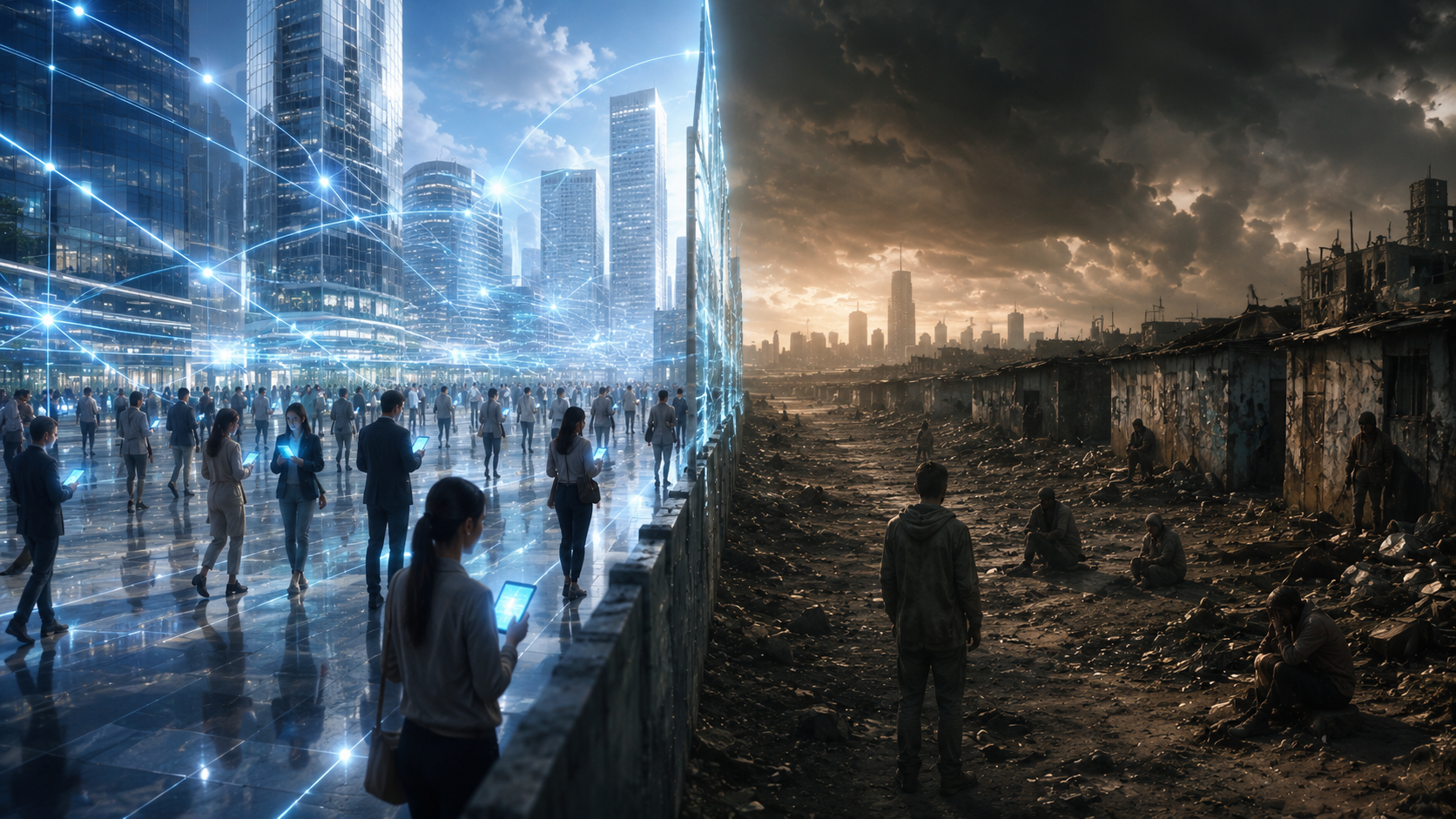
    When global events promise unity, are they truly inclusive—or do they deepen inequality beneath the surface?
    In Are Cities Symbols of Progress—or Spaces of Inequality?, we explore how large-scale development projects can both elevate and divide societies, revealing the hidden social dynamics behind global progress.


    If participation becomes easier in the digital age, does it also become more superficial?
    In Clicktivism in Digital Democracy: Participation or Illusion?, we examine how modern engagement—much like global sports fandom—can blur the line between genuine involvement and symbolic participation.


    References

    1. Toohey, K., & Veal, A. J. (2007). The Olympic Games: A Social Science Perspective. CABI.
      This book provides a comprehensive analysis of the economic, social, and political impacts of the Olympic Games, offering insight into both benefits and long-term challenges.
    2. Müller, M. (2017). The Mega-Event Syndrome. Journal of the American Planning Association.
      Müller critically examines why mega-events often exceed budgets and fail to deliver promised benefits, highlighting systemic planning issues.
    3. Gaffney, C. (2010). Mega-events and the Urban Economy. Journal of Urban Affairs.
      This study explores how large-scale events reshape cities economically and socially, with a focus on inequality and sustainability concerns.