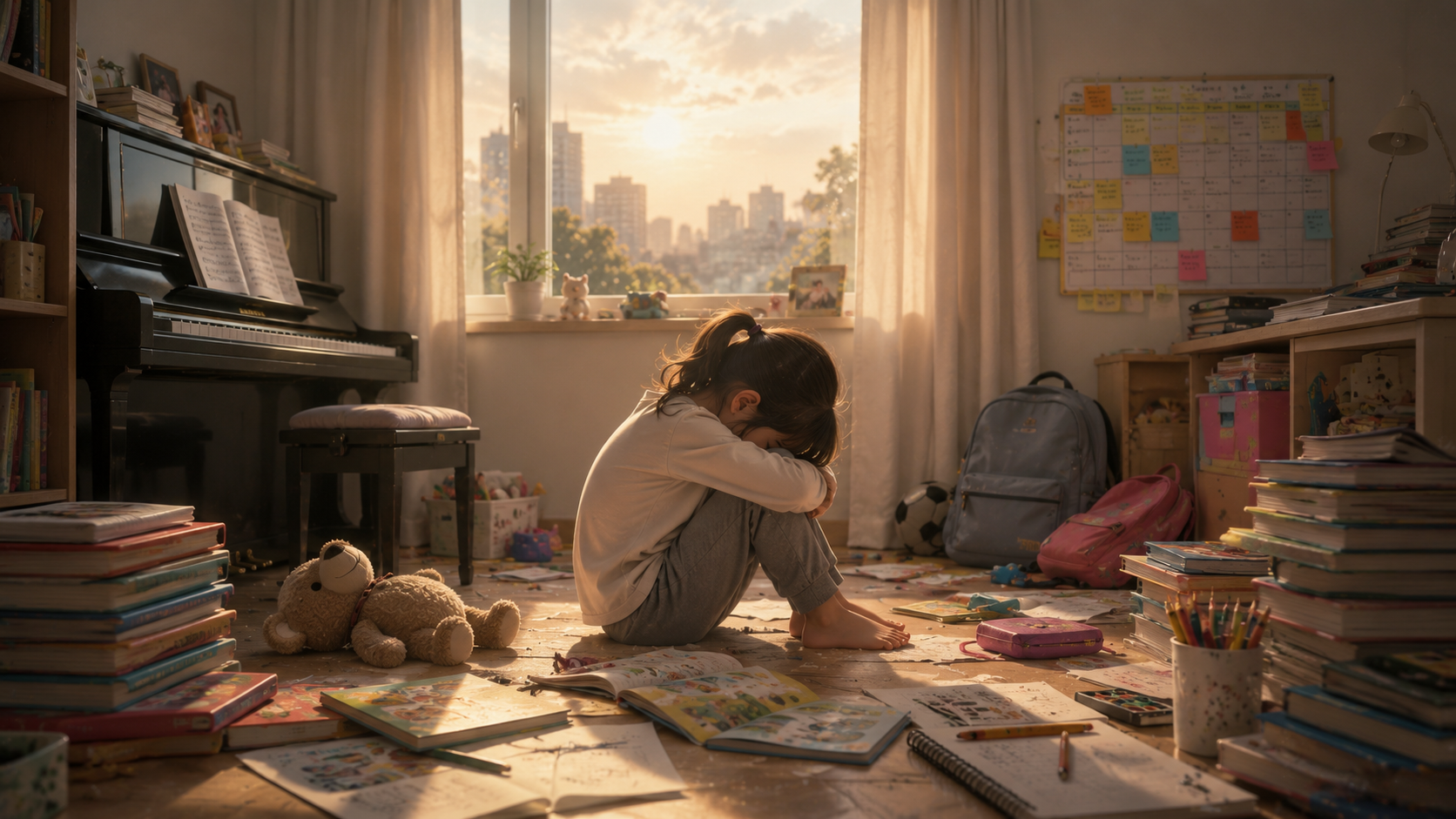
When Even Childhood Starts Feeling Exhausting
Burnout is usually associated with exhausted adults struggling under workplace pressure and emotional stress.
But what happens when a five-year-old suddenly says:
“Why do I have to do all of this?”
Some children lose interest in play, become emotionally overwhelmed during homework, or react with irritation and tears to activities they once enjoyed.
Surprisingly, psychologists and educators are increasingly recognizing that young children can also experience forms of burnout.
Modern childhood is often filled with tightly scheduled activities, constant expectations, and emotional pressure. As a result, many children experience exhaustion long before they fully understand their own emotions.
Childhood burnout is not laziness or lack of motivation. It is often emotional exhaustion hidden beneath frustration, silence, or sudden behavioral changes.
1. What Is Childhood Burnout?
Childhood burnout refers to a state in which children become emotionally and physically overwhelmed by excessive demands, activities, and expectations.
Unlike adults, children usually cannot clearly explain feelings such as stress, emotional fatigue, or mental overload. Instead, burnout often appears through changes in behavior and attitude.
A child who once enjoyed drawing, sports, or music lessons may suddenly lose interest and say:
“I don’t want to do anything anymore.”
In many cases, the child is not refusing effort itself. They may simply be exhausted from constantly trying to meet expectations.
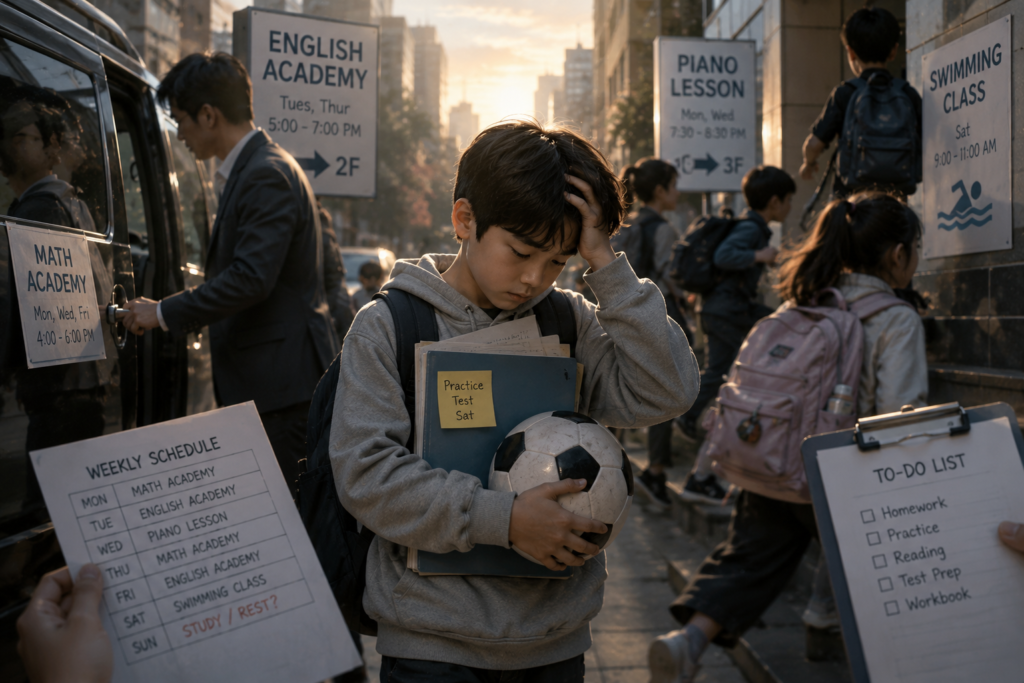
Modern childhood has become increasingly structured around performance, achievement, and productivity. Even playtime can begin to feel scheduled and pressured.
2. Why Are More Children Experiencing Burnout?
There is rarely a single cause.
Instead, childhood burnout often develops gradually through a combination of emotional and environmental pressures.
Overloaded Schedules
Many children move from school to tutoring, sports, music lessons, language classes, and homework with almost no unstructured rest.
Without enough free time, children lose opportunities to recover emotionally and mentally.
High Expectations
Parents and teachers often want children to succeed and grow.
However, when expectations become too intense, children may begin to feel that love or approval depends on performance.
This can create anxiety even at a very young age.
Lack of Emotional Communication
Some children do not know how to express stress openly.
If emotional communication at home is limited, children may internalize pressure instead of asking for help.
Over time, emotional exhaustion accumulates silently.
3. Signs of Childhood Burnout
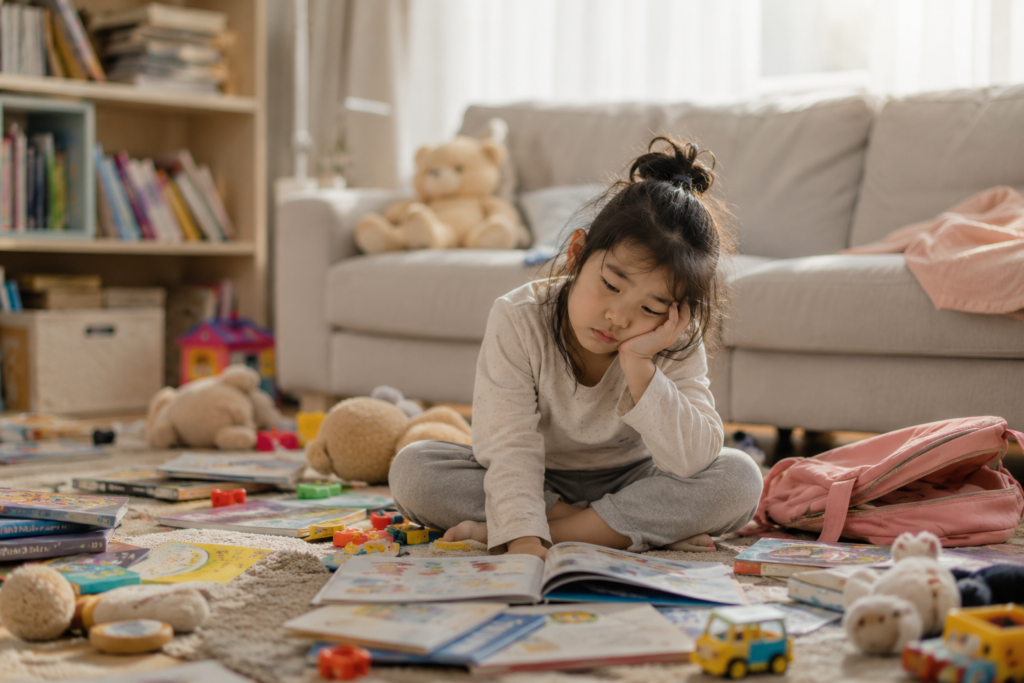
Children experiencing burnout often react differently from adults.
Recognizing the signs early is extremely important.
Emotional Irritability
Children may become unusually sensitive, angry, or emotionally explosive over small situations.
Loss of Interest
Activities they once enjoyed may suddenly feel tiring or meaningless.
Fatigue and Low Energy
Some children appear constantly tired even after sleeping.
Sleep Problems
Difficulty falling asleep, nightmares, or restless sleep may appear.
Physical Symptoms
Children sometimes express emotional stress physically by complaining about headaches or stomachaches.
For example, a child who once loved going to amusement parks may suddenly respond:
“I just want to stay home.”
This does not always mean laziness. Sometimes it means emotional exhaustion.
4. How Parents Can Help Prevent Burnout
Childhood burnout can often be reduced when adults focus not only on achievement, but also on emotional well-being.
Give Children Real Rest
Children need time without goals, schedules, or performance pressure.
Unstructured play and quiet rest are essential for emotional recovery.
Sometimes the healthiest day for a child is a day where nothing is expected from them.
Adjust Expectations
Encouragement is healthy.
Constant pressure is not.
Children develop more confidently when they feel accepted regardless of perfect performance.
Simple messages such as:
“Doing your best is enough.”
can reduce emotional anxiety significantly.
Create Emotional Conversations
Children need safe emotional spaces.
Questions like:
“How was your day?”
“Was anything difficult today?”
can help children express emotions before stress becomes overwhelming.
Emotional support is often more important than immediate solutions.
Simplify the Schedule
Not every activity is necessary.
Reducing unnecessary lessons and allowing children to make small choices about their own time can restore emotional balance.
Even simple activities such as walking together, drawing, or quietly spending time outdoors can help children recover psychologically.
Conclusion: Children Also Need Space to Breathe

Modern society often treats childhood as preparation for future success.
But children are not machines designed only for achievement.
They also experience stress, emotional fatigue, pressure, and exhaustion.
Sometimes a child’s anger, silence, or loss of motivation is not defiance—it is a quiet signal that they are overwhelmed.
Perhaps children do not always need more motivation, more lessons, or more productivity.
Sometimes, they simply need space to breathe, rest, and feel understood.
A Question for Readers
Have you ever noticed a child becoming emotionally tired, even when surrounded by opportunities and activities?
Perhaps modern childhood does not always need more productivity and achievement—sometimes it simply needs more rest, freedom, and understanding.
Related Reading
The growing pressure placed on children today reflects a broader cultural belief that constant achievement leads to happiness and success. This relationship between performance and emotional exhaustion connects naturally with Can Pets Improve Your Health? The Science of the Human–Animal Bond, which explores how emotional stability, comfort, and psychological healing often emerge not through competition, but through simple moments of connection and rest.
At the same time, the emotional fatigue experienced by children also raises deeper questions about modern society’s obsession with productivity and self-worth. This perspective is further explored in The Solitude of the Wise: Withdrawal from the Masses or Intellectual Elitism?, which examines how contemporary social pressure and performance culture can gradually distance people from emotional balance, reflection, and inner peace.
References
- American Academy of Pediatrics
Research and guidance from the American Academy of Pediatrics examine emotional stress and burnout in children, emphasizing the importance of emotional support, balanced schedules, and healthy developmental environments. - Kenneth R. Ginsburg
Kenneth R. Ginsburg’s work on childhood stress management explores how emotional resilience develops in children and why supportive communication is essential for mental well-being. - The Over-Scheduled Child
This book analyzes how excessive scheduling and achievement-focused parenting can emotionally exhaust children, offering practical approaches for healthier childhood balance.
Leave a Reply