Tag: knowledge and insight

  • Classical and Modern Art

    Classical and Modern Art

    How Artists Have Expressed Human Emotion Across the Ages

    Art has always been more than decoration.

    Long before written history, people painted on cave walls, carved figures from stone, and created symbols that reflected fear, hope, love, and faith. Across every civilization, art has served as one of humanity’s oldest languages—a language capable of expressing emotions that words alone often cannot capture.

    Although artistic styles have changed dramatically over thousands of years, one purpose has remained remarkably constant: to explore the inner world of human experience.

    Classical art sought harmony, balance, and timeless beauty. Modern art, by contrast, embraced uncertainty, individuality, and emotional complexity.

    At first glance, these two artistic worlds appear completely different.

    Yet both ask the same timeless question:

    What does it mean to be human?


    1. Classical Art: The Pursuit of Ideal Beauty and Universal Emotion

    classical artist creating harmonious and idealized human beauty

    Classical art, particularly in ancient Greece, Rome, and later during the Renaissance, emphasized harmony, proportion, and idealized human beauty.

    Artists believed that beauty reflected order, and that order revealed deeper truths about humanity and nature.

    Rather than portraying temporary emotions, classical artists often sought to express universal human virtues such as courage, compassion, wisdom, dignity, and love.

    Michelangelo’s David is one of the finest examples.

    Although the sculpture depicts the biblical hero before his battle with Goliath, it is not merely a representation of physical strength. David’s calm expression and poised body communicate confidence, determination, and self-control.

    Similarly, Leonardo da Vinci’s Mona Lisa continues to fascinate audiences because of its subtle emotional ambiguity.

    Her mysterious smile seems to shift between serenity, warmth, confidence, and melancholy depending on how each viewer interprets it.

    The painting reminds us that even quiet emotions can possess extraordinary depth.

    Rather than overwhelming viewers with dramatic feelings, classical art invites contemplation through balance and elegance.


    2. From Ideal Beauty to Personal Experience

    As society changed, so did artistic priorities.

    The nineteenth century marked an important transition.

    Instead of portraying idealized perfection, artists increasingly focused on individual perception and personal experience.

    The Impressionists, including Claude Monet and Pierre-Auguste Renoir, were less concerned with precise realism than with capturing fleeting moments of light, atmosphere, and emotion.

    A sunrise, reflections on water, or sunlight passing through trees became worthy artistic subjects.

    These paintings suggested that emotion does not always emerge from dramatic events.

    Sometimes it appears quietly—in ordinary moments that pass almost unnoticed.

    This shift prepared the way for modern art, where personal experience would become even more central.


    3. Modern Art: Exploring the Inner Mind

    artist expressing complex human emotions through modern painting

    Modern art expanded the emotional range of artistic expression far beyond classical ideals.

    Rather than searching for universal perfection, many modern artists explored anxiety, loneliness, fear, identity, and psychological conflict.

    The goal was no longer simply to create beauty.

    It was to reveal emotional truth.

    Edvard Munch’s The Scream remains one of the most recognizable examples.

    The distorted figure, swirling sky, and intense colors do not represent physical reality.

    Instead, they visualize inner psychological distress.

    Viewers often recognize something deeply human within the painting because fear and uncertainty are emotions shared across cultures.

    Modern artists increasingly accepted that emotional honesty could be more important than visual perfection.


    4. Pablo Picasso: A Bridge Between Classical and Modern Art

    Few artists transformed art as dramatically as Pablo Picasso.

    Although famous for Cubism, Picasso received rigorous classical training during his youth.

    Rather than rejecting tradition entirely, he reimagined it.

    His masterpiece Guernica demonstrates how modern artistic techniques can express timeless human emotions.

    Created in response to the bombing of the Spanish town of Guernica during the Spanish Civil War, the painting does not depict war realistically.

    Instead, fragmented forms, distorted faces, and broken bodies communicate chaos, suffering, and despair.

    The emotional impact comes not from accurate representation, but from psychological intensity.

    In this way, Picasso connected classical themes—human tragedy and moral reflection—with modern visual language.

    His work reminds us that while artistic styles evolve, human suffering and compassion remain constant.


    5. Abstract Expressionism: When Emotion Became the Subject

    As the twentieth century progressed, some artists moved even further away from recognizable images.

    Abstract Expressionists believed that emotion itself could become the artwork.

    Jackson Pollock’s famous action paintings abandoned traditional composition altogether.

    Instead of carefully arranging subjects, Pollock allowed movement, rhythm, and spontaneous gestures to become central elements of creation.

    At first glance, these paintings may appear chaotic.

    Yet many viewers experience powerful emotional responses precisely because there is no predetermined story.

    Each person is invited to interpret the work through personal memories, emotions, and imagination.

    Modern art increasingly shifted from providing answers to encouraging questions.

    Instead of asking,

    “What is this painting about?”

    it asks,

    “What do you feel when you look at it?”


    6. Different Artistic Languages, Shared Human Questions

    Classical and modern art often appear to stand at opposite ends of artistic history.

    One celebrates order.

    The other embraces uncertainty.

    One searches for timeless ideals.

    The other welcomes individuality and emotional complexity.

    Yet beneath these differences lies a remarkable similarity.

    Both seek to understand human existence.

    Whether through the graceful proportions of Renaissance painting or the fragmented forms of modern expressionism, artists continue exploring love, fear, hope, loss, courage, loneliness, and joy.

    The artistic language changes.

    Human emotion does not.

    Throughout history, art has served as a mirror reflecting not only society, but also the emotional landscape within ourselves.


    Conclusion: Art as the Memory of Human Emotion

    people exploring the evolution of art across different historical periods

    Every civilization leaves behind monuments, buildings, and written records.

    Perhaps its greatest legacy, however, is the art through which it expressed its emotions.

    Classical art teaches us the beauty of harmony, dignity, and timeless ideals.

    Modern art reminds us that vulnerability, uncertainty, and emotional honesty are equally meaningful parts of being human.

    Together, they tell a continuous story.

    The story is not merely about changing artistic styles.

    It is about humanity’s endless attempt to understand itself.

    As cultures evolve and technologies transform the way we live, art continues to preserve something that remains unchanged:

    our desire to express what cannot always be spoken.

    Perhaps that is why great works of art never truly become old.

    Although created centuries apart, they continue speaking to people across generations because the emotions they portray are, ultimately, our own.

    A Question for Readers

    When you stand before a great work of art, what moves you more—the harmony and balance of classical masterpieces, or the emotional honesty and bold experimentation of modern art?

    Perhaps the answer says as much about our own experiences as it does about the artwork itself.


    Related Reading

    Related Reading

    Art has always reflected humanity’s search for meaning, beauty, and a deeper understanding of life. This enduring pursuit of human wisdom connects naturally with The Origins of Medicine, which explores how different ancient civilizations sought to understand the human body, health, and the relationship between people and the natural world.

    At the same time, works of art often invite viewers to interpret reality from different perspectives rather than offering a single definitive answer. This philosophical dimension is further explored in The Nature of Truth, which examines how perception, interpretation, and context shape the way we understand both truth and the world around us.

  • Confirmation Bias in Investing

    Confirmation Bias in Investing

    Why We Believe What We Want to Believe in Financial Markets

    Financial markets are oceans of information.

    Every day, investors are exposed to earnings reports, economic indicators, analyst opinions, news headlines, social media discussions, and countless predictions about the future.

    Yet despite having access to more information than ever before, investors do not always make better decisions.

    One reason is a psychological tendency known as confirmation bias.

    Confirmation bias is the tendency to seek, interpret, and remember information that supports our existing beliefs while ignoring or dismissing evidence that challenges them.

    Although this bias is a natural part of human psychology, it can become a costly trap in investing and financial decision-making.

    Understanding confirmation bias is not merely about understanding markets—it is about understanding ourselves.


    1. What Is Confirmation Bias?

    investor focusing only on information that supports existing beliefs

    Confirmation bias occurs when people favor information that reinforces what they already believe.

    Rather than objectively evaluating all available evidence, individuals often pay greater attention to information that confirms their expectations.

    Imagine an investor who strongly believes a particular company will become a future market leader.

    When positive news appears, the investor eagerly shares it and feels increasingly confident.

    When negative news emerges, however, it is often dismissed as temporary, exaggerated, or irrelevant.

    The investor is not necessarily being irrational on purpose. Human beings naturally seek consistency between their beliefs and the information they consume.

    The problem arises when this tendency prevents objective decision-making.


    2. How Confirmation Bias Operates in Financial Decisions

    Confirmation bias affects investors in several subtle but powerful ways.

    Selective Information Gathering

    Investors often search for information that supports their existing positions.

    For example, someone who owns a technology stock may search for:

    • “Why this company will dominate the future”
    • “Analysts bullish on the stock”
    • “Reasons to buy now”

    while avoiding critical reports or bearish analyses.

    In the age of algorithms, this tendency becomes even stronger.

    Social media platforms, investment communities, and recommendation systems often show users content similar to what they already engage with.

    As a result, investors can become trapped inside informational echo chambers.


    Selective Interpretation

    Even when investors encounter the same data, they may interpret it differently.

    Suppose a company reports disappointing quarterly earnings.

    An investor who already believes in the company might conclude:

    “The long-term outlook is still excellent.”

    Another investor may view the same report as evidence of deeper problems.

    The data is identical.

    The interpretation is not.


    The Combination of Confirmation Bias and Loss Aversion

    Confirmation bias becomes especially dangerous when combined with loss aversion—the tendency to fear losses more than we value equivalent gains.

    When investments decline in value, many investors become emotionally attached to their original decisions.

    Rather than accepting that they may have been wrong, they search for information that justifies holding the position.

    In some cases, they invest even more money into a losing asset simply to reinforce their original belief.

    This behavior can transform a manageable loss into a much larger one.


    3. The Hidden Costs of Confirmation Bias

    investor ignoring warning signs during market decline

    Poor Investment Decisions

    When investors ignore contradictory evidence, they are less likely to assess risks accurately.

    This can lead to excessive optimism and unrealistic expectations.

    Markets often punish overconfidence.


    Concentrated Portfolios

    Confirmation bias can encourage investors to become overly committed to a particular company, sector, or investment theme.

    Believing strongly in a single narrative may reduce diversification and increase vulnerability to market volatility.


    Escalating Losses

    One of the most damaging consequences occurs when investors refuse to admit mistakes.

    Instead of reevaluating their thesis, they continue searching for reasons to remain invested.

    The longer this process continues, the larger the potential losses can become.


    4. A Lesson from the 2008 Financial Crisis

    Confirmation bias affects not only individual investors but also professionals and institutions.

    The global financial crisis of 2008 provides a powerful example.

    For years, many investors, banks, and financial institutions believed that housing prices would continue rising indefinitely.

    Evidence supporting this belief received widespread attention.

    Warning signs received far less consideration.

    Even as problems in the subprime mortgage market became increasingly visible, many organizations continued relying on models and assumptions that reinforced their existing confidence.

    The result was one of the most severe financial crises in modern history.

    The lesson is clear:

    Intelligence and expertise do not eliminate confirmation bias.

    In fact, strong confidence can sometimes make it even harder to recognize.


    5. Strategies for Overcoming Confirmation Bias

    Although confirmation bias is deeply rooted in human psychology, investors can reduce its influence.

    Seek Opposing Views

    Before making an investment decision, actively search for the strongest argument against your position.

    Instead of asking:

    “Why am I right?”

    ask:

    “What if I am wrong?”

    This simple shift can reveal risks that might otherwise be overlooked.


    Create Objective Rules

    Successful investors often rely on predefined rules rather than emotional reactions.

    Examples include:

    • Stop-loss thresholds
    • Position size limits
    • Diversification requirements
    • Valuation criteria

    Objective frameworks reduce the influence of psychological biases during stressful market conditions.


    Keep an Investment Journal

    Recording investment decisions can be surprisingly powerful.

    Write down:

    • Why you entered the investment
    • What assumptions you made
    • What evidence supported your decision

    Later, reviewing these notes can reveal patterns of biased thinking and improve future decision-making.


    Welcome Disconfirming Evidence

    Many investors view contradictory information as a threat.

    The most effective investors often view it as an opportunity.

    Information that challenges our beliefs may be uncomfortable, but it is frequently the most valuable information we receive.


    Conclusion: The Greatest Opponent May Be Ourselves

    investor reflecting on past financial decisions and biases

    Many people believe investing is primarily about understanding companies, markets, and economic trends.

    Those things matter.

    But successful investing also requires understanding human psychology.

    Confirmation bias reminds us that the greatest risks do not always come from market crashes, economic recessions, or unexpected events.

    Sometimes they come from our own minds.

    The market does not reward what we hope is true.

    It responds to reality.

    The ability to question our assumptions, seek opposing perspectives, and remain intellectually flexible may be one of the most valuable investment skills of all.

    In the end, better investing often begins with a simple realization:

    The most important analysis is not only of the market—but of ourselves.

    A Question for Readers

    Have you ever held onto an investment longer than you should have—not because the evidence supported it, but because you wanted your original decision to be right?

    Perhaps the greatest challenge in investing is not predicting the market, but recognizing when our own beliefs are shaping the way we see it.

    Related Reading

    Financial decisions are shaped not only by data, but also by the way our minds interpret information and construct beliefs. This relationship between human reasoning and the limits of objective judgment is explored further in 0 and 1 in the Age of Artificial Intelligence: The Symbolic Philosophy of the Digital World, which examines how information, logic, and human interpretation interact in an increasingly data-driven world.

    At the same time, financial markets often reward those who can question their assumptions and adapt to changing realities. This broader theme of uncertainty, risk, and long-term thinking is further explored in The New Space Age: From Moon Missions to the Rise of the Space Economy, which discusses how major investments in the future require balancing optimism with critical analysis and evidence-based decision-making.


    References

    1. Kahneman, Daniel. Thinking, Fast and Slow. Farrar, Straus and Giroux, 2011.

    One of the most influential books on human decision-making and cognitive biases. Kahneman explains how mental shortcuts, including confirmation bias, affect judgment in finance, business, and everyday life.


    2. Montier, James. The Little Book of Behavioral Investing. John Wiley & Sons, 2010.

    This book explores the psychological mistakes investors commonly make, including confirmation bias, overconfidence, and emotional decision-making. It offers practical strategies for becoming a more rational investor.


    3. Thaler, Richard H., and Cass R. Sunstein. Nudge: Improving Decisions About Health, Wealth, and Happiness. Penguin Books, 2009.

    A landmark work in behavioral economics that demonstrates how human decisions are often influenced by predictable psychological tendencies. The book provides valuable insights into financial behavior and decision-making.


    4. Shefrin, Hersh. Beyond Greed and Fear: Understanding Behavioral Finance and the Psychology of Investing. Oxford University Press, 2007.

    An accessible introduction to behavioral finance that explains how emotions and cognitive biases shape investment outcomes. The book examines many real-world examples from financial markets.


    5. Lewis, Michael. The Big Short: Inside the Doomsday Machine. W. W. Norton & Company, 2010.

    This bestselling account of the 2008 financial crisis illustrates how widespread confirmation bias and groupthink contributed to one of the largest market failures in modern history.

  • The Origins of Medicine

    The Origins of Medicine

    Ancient Healing Traditions That Still Influence Us Today

    Modern medicine is often associated with advanced technology, scientific research, and sophisticated hospitals.

    Yet the foundations of healing began thousands of years ago.

    Long before laboratories and pharmaceuticals existed, people sought ways to understand illness, relieve pain, and preserve health. Ancient civilizations experimented with herbs, observed the human body, developed medical theories, and created surprisingly sophisticated systems of healthcare.

    Although these traditions emerged in different parts of the world, many shared a common goal: understanding the relationship between human beings, nature, and health.

    The story of ancient medicine is not merely a history of treatments. It is a story of humanity’s enduring effort to understand life itself.


    1. Ancient Egypt: Where Science and Spirituality Met

    ancient Egyptian physician practicing early medicine

    Ancient Egyptian medicine was deeply connected to religion.

    Many Egyptians believed illness could result from spiritual forces or divine displeasure. As a result, healing often combined practical treatments with religious rituals.

    Yet Egyptian medicine was also remarkably advanced for its time.

    The famous Edwin Smith Papyrus contains detailed descriptions of injuries, surgical procedures, and anatomical observations. Unlike purely mystical texts, it demonstrates a surprisingly rational approach to diagnosing and treating patients.

    Egyptian healers used natural substances such as:

    • Honey
    • Garlic
    • Opium
    • Plant extracts

    Many of these ingredients possess genuine medicinal properties recognized even today.

    Archaeological evidence also suggests that Egyptians practiced early forms of dentistry, including dental prosthetics found in mummies.

    One particularly fascinating aspect of Egyptian medicine was its emphasis on the heart and blood vessels. Egyptian physicians recognized the importance of pulse observation, laying foundations for diagnostic methods still used in modern healthcare.


    2. Ancient India and Ayurveda: The Balance of Body and Mind

    ancient Indian and Chinese healing traditions

    While Egyptian medicine focused on anatomy and practical treatment, ancient Indian medicine developed a broader philosophy of health.

    Ayurveda, one of the world’s oldest medical systems, views health as a balance between body, mind, and environment.

    According to Ayurvedic principles, every individual possesses a unique combination of three fundamental energies, known as doshas:

    • Vata
    • Pitta
    • Kapha

    Illness occurs when these forces become imbalanced.

    Rather than treating disease alone, Ayurveda emphasizes prevention through lifestyle choices, nutrition, exercise, and mental well-being.

    Treatment often included:

    • Herbal medicine
    • Dietary guidance
    • Meditation
    • Yoga

    Interestingly, many Ayurvedic practices have gained global popularity in recent decades.

    Yoga, once part of an ancient healing philosophy, is now practiced worldwide as a method of promoting physical and mental health.


    3. Ancient China: Harmony and Preventive Medicine

    Traditional Chinese Medicine developed around the concepts of balance, energy, and harmony.

    According to Chinese medical philosophy, health depends on the proper flow of Qi (life energy) and the balance of Yin and Yang.

    Disease was viewed not simply as a physical problem, but as a disruption of the body’s natural equilibrium.

    This perspective gave rise to treatments such as:

    • Acupuncture
    • Herbal medicine
    • Therapeutic exercise
    • Dietary regulation

    One of the most influential texts in Chinese medical history is the Huangdi Neijing (The Yellow Emperor’s Inner Canon).

    Written over two thousand years ago, it established many principles that continue to influence Traditional Chinese Medicine today.

    Perhaps one of its most modern ideas was the emphasis on prevention.

    Ancient Chinese physicians believed the best doctor was not the one who cured disease, but the one who prevented illness before it appeared.

    This philosophy continues to resonate strongly in modern public health and preventive medicine.


    4. Ancient Greece and Rome: The Beginning of Scientific Medicine

    Ancient Greece introduced one of the most important shifts in medical history.

    Rather than explaining disease primarily through divine intervention, Greek physicians increasingly sought natural causes.

    At the center of this transformation was Hippocrates, often called the “Father of Medicine.”

    Hippocrates argued that illness resulted from natural processes rather than supernatural punishment.

    This seemingly simple idea fundamentally changed medical thinking.

    His ethical principles continue to influence healthcare today through the Hippocratic Oath, which remains a symbol of medical responsibility.

    The Romans later expanded these ideas by focusing on public health.

    They constructed:

    • Aqueducts
    • Sewage systems
    • Public baths
    • Urban sanitation infrastructure

    These innovations significantly improved hygiene and reduced the spread of disease.

    Long before modern epidemiology existed, the Romans recognized that public health depended on clean water and healthy living environments.


    5. What Ancient Medicine Still Teaches Us

    Although modern medicine relies heavily on scientific evidence and advanced technology, many ancient insights remain surprisingly relevant.

    Prevention Matters

    Egyptian, Indian, Chinese, and Greek traditions all emphasized preventing illness rather than merely treating it.

    Today, preventive medicine remains one of the most effective healthcare strategies.

    Health Is More Than the Absence of Disease

    Ancient medical systems often viewed health as a state of balance involving body, mind, and environment.

    Modern wellness research increasingly supports this broader perspective.

    Nature Continues to Inspire Medicine

    Many modern drugs originated from plants and natural substances first used in traditional healing practices.

    Ancient experimentation laid the groundwork for future pharmaceutical discoveries.

    Medicine Is Also a Cultural Story

    Different civilizations developed unique ways of understanding health, yet many arrived at remarkably similar conclusions about balance, prevention, and healthy living.


    Conclusion: Ancient Wisdom in a Modern World

    the connection between ancient medicine and modern healthcare

    Ancient medicine is far more than a collection of outdated remedies.

    It represents humanity’s first attempts to understand the body, relieve suffering, and improve quality of life.

    Although modern medicine has transformed healthcare through scientific discovery, many of its fundamental questions remain the same:

    What causes illness?

    How can health be preserved?

    What does it mean to live well?

    Across Egypt, India, China, Greece, and Rome, ancient healers sought answers to these questions using the knowledge available to them.

    Their ideas continue to echo through modern hospitals, wellness practices, preventive medicine, and healthcare ethics.

    The history of medicine reminds us that progress is rarely created from nothing.

    It is often built upon thousands of years of observation, curiosity, and human wisdom.

    A Question for Readers

    If you could travel back in time and observe one ancient medical tradition firsthand, which would you choose: Egyptian healing practices, Ayurveda, Traditional Chinese Medicine, or Greek medicine?

    Perhaps understanding how past civilizations approached health can help us reflect on how we define well-being in the modern world.

    Related Reading

    Ancient medical traditions reveal that people across different civilizations sought not only to cure disease, but also to understand what it means to live a healthy and meaningful life. This broader relationship between well-being, nature, and human experience connects naturally with Can Pets Improve Your Health? The Science of the Human–Animal Bond, which explores how physical and emotional health can be influenced by our connections with the living world around us.

    At the same time, ancient healing systems often reflected deeper cultural beliefs about human nature, knowledge, and the organization of society. This perspective is further explored in Can Humans Be the Moral Standard?, which examines how different civilizations have defined value, wisdom, and humanity, and whether human-centered assumptions remain sufficient in an increasingly interconnected world.

    References

    1. Majno, Guido. The Healing Hand: Man and Wound in the Ancient World. Harvard University Press, 1975.

    This classic work explores medical practices in ancient Egypt, Greece, and Rome. It demonstrates how early physicians relied on observation, surgery, and practical experience, laying foundations for many principles of modern medicine.


    2. David, Rosalie. Medicine in Ancient Egypt. British Museum Press, 2000.

    An in-depth examination of Egyptian medical knowledge, including surgery, herbal remedies, and religious healing practices. The book highlights the surprisingly sophisticated nature of healthcare in one of the world’s earliest civilizations.


    3. Kaptchuk, Ted J. The Web That Has No Weaver: Understanding Chinese Medicine. McGraw-Hill, 2000.

    One of the most influential introductions to Traditional Chinese Medicine. It explains concepts such as Qi, Yin-Yang balance, and holistic healing from both historical and cultural perspectives.


    4. Jouanna, Jacques. Greek Medicine: From Hippocrates to Galen. Brill, 2012.

    This book examines the development of Greek medical thought and the transition from supernatural explanations of disease to naturalistic and observational approaches that shaped Western medicine.


    5. Lad, Vasant. The Complete Book of Ayurvedic Home Remedies. Three Rivers Press, 1998.

    A practical introduction to Ayurveda and its principles of balance, prevention, and holistic health. The book illustrates how ancient Indian medicine continues to influence modern wellness practices worldwide.

  • The New Space Age: From Moon Missions to the Space Economy

    The New Space Age: From Moon Missions to the Space Economy

    For centuries, humanity has looked toward the night sky with curiosity and wonder.

    Space exploration represents more than scientific discovery. It reflects humanity’s desire to push beyond its limits, develop new technologies, and better understand its place in the universe.

    For a time, space exploration seemed to slow after the historic Apollo Moon landings. Yet today, a new era has begun.

    Governments are returning to the Moon. Private companies are developing reusable rockets. Discussions about Mars, asteroid mining, and even space tourism are becoming increasingly realistic.

    The modern space race is no longer limited to a handful of superpowers. It has become a global effort involving nations, businesses, scientists, and entrepreneurs around the world.

    international lunar exploration on the Moon

    1. The Return of the Moon Race

    The Moon has once again become the center of global space ambitions.

    After Apollo 11 successfully landed astronauts on the Moon in 1969, many believed humanity would quickly continue deeper into space. Instead, progress slowed for several decades.

    Today, however, interest in the Moon has returned.

    NASA’s Artemis Program aims to send humans back to the lunar surface and establish a long-term presence there. Scientists are particularly interested in the Moon’s south pole, where water ice may exist in permanently shadowed regions.

    Water could become a valuable resource for future lunar bases, supporting life and even producing rocket fuel.

    The Moon is no longer viewed as a final destination. Instead, it is increasingly seen as a stepping stone toward Mars and deeper exploration of the solar system.

    Meanwhile, China has successfully completed several lunar missions and continues expanding its space capabilities. India has also gained international attention through its Chandrayaan missions, demonstrating that space exploration is becoming more globally diverse.

    The new Moon race is not only about science. It is also about technological leadership, national prestige, and future strategic advantages.


    2. Private Companies and the Birth of the Space Economy

    private companies shaping the future of space

    One of the most significant changes in modern space exploration is the rise of private companies.

    Traditionally, governments funded and controlled most space programs. Today, private businesses are helping reshape the future of space travel.

    SpaceX, founded by Elon Musk, has revolutionized launch technology through reusable rockets that dramatically reduce launch costs.

    Its Starship system is being designed for missions to the Moon, Mars, and beyond.

    Blue Origin, founded by Jeff Bezos, is focusing on commercial spaceflight and the long-term development of a space-based economy.

    As launch costs decrease, entirely new industries are becoming possible.

    Potential future markets include:

    • Space tourism
    • Satellite communication networks
    • Asteroid mining
    • Lunar resource extraction
    • Orbital manufacturing

    What once belonged only to science fiction is gradually entering the realm of economic reality.


    3. Cooperation and Challenges Beyond Earth

    Although competition drives innovation, long-term space exploration also requires cooperation.

    The International Space Station (ISS) remains one of the greatest examples of international scientific collaboration. Researchers from many countries have worked together for decades to conduct experiments and prepare for future deep-space missions.

    Future lunar bases and Mars missions will likely require similar cooperation.

    However, significant challenges remain.

    Questions surrounding ownership, resource extraction, and environmental protection in space are becoming increasingly important.

    Who owns resources mined from asteroids?

    How should lunar resources be shared?

    Can humanity avoid repeating geopolitical conflicts beyond Earth?

    International agreements will play a critical role in answering these questions.


    4. How Space Exploration Could Change Life on Earth

    Space exploration is often viewed as something distant from everyday life.

    In reality, many technologies developed for space missions already influence modern society.

    Satellite communications, GPS navigation, weather forecasting, and advanced materials all emerged from space-related research.

    Future exploration may bring even greater benefits.

    The Growth of the Space Economy

    Space resources could provide access to rare materials while creating entirely new industries.

    Environmental Insights

    Observing Earth from space helps scientists monitor climate change, deforestation, ocean conditions, and natural disasters.

    Scientific Discovery

    Research conducted in microgravity environments may contribute to advances in medicine, biology, and engineering.

    In many ways, exploring space helps humanity better understand Earth itself.


    Conclusion: Why Humanity Looks Up Again

    astronaut looking toward humanitys future in space

    The new age of space exploration is about far more than rockets and distant planets.

    It represents humanity’s continuing effort to overcome limitations, expand knowledge, and imagine new possibilities.

    The Moon, Mars, and the vast reaches of space are no longer distant dreams reserved for a few scientists. They are becoming part of a shared global vision for the future.

    Yet perhaps the most important question is not whether we can reach other worlds.

    It is what kind of civilization we hope to become when we get there.

    As humanity takes its first steps into a larger cosmic future, the story of space exploration is ultimately a story about ourselves.

    A Question for Readers

    If humanity succeeds in building permanent settlements on the Moon or even reaches Mars, what should be our primary goal there—scientific discovery, economic opportunity, or the survival of our species?

    Perhaps the future of space exploration will reveal not only what exists beyond Earth, but also what kind of civilization we hope to become.

    Related Reading

    The renewed global interest in space exploration reflects humanity’s enduring desire to push beyond known boundaries and imagine new possibilities. This drive to explore the unknown connects naturally with Dreams, Utopia, and the Impossible, which examines how visions of ideal futures inspire scientific innovation, social change, and ambitious projects that once seemed impossible.

    At the same time, the emerging space economy raises profound ethical questions about ownership, responsibility, and the use of resources beyond Earth. This perspective is further explored in Can Humans Be the Moral Standard?, which challenges human-centered assumptions and asks whether our existing ethical frameworks are sufficient for addressing new frontiers and shared global responsibilities.


    References

    1. The Case for Space
      This book argues that expanding into space is essential for humanity’s long-term future. It explores lunar exploration, Mars colonization, private spaceflight, and the economic opportunities emerging from the new space age.
    2. NASA Artemis Program
      NASA’s Artemis initiative outlines plans to return humans to the Moon and establish sustainable lunar exploration, creating a foundation for future missions to Mars.
    3. Astrobiology and Space Exploration: Exploring the Universe and Ourselves
      This work examines the scientific, technological, and ethical dimensions of future space exploration, including planetary science, resource utilization, and the search for life beyond Earth.
  • Childhood Burnout: Can Young Children Experience Burnout Too?

    Childhood Burnout: Can Young Children Experience Burnout Too?

    When Even Childhood Starts Feeling Exhausting

    Burnout is usually associated with exhausted adults struggling under workplace pressure and emotional stress.

    But what happens when a five-year-old suddenly says:

    “Why do I have to do all of this?”

    Some children lose interest in play, become emotionally overwhelmed during homework, or react with irritation and tears to activities they once enjoyed.

    Surprisingly, psychologists and educators are increasingly recognizing that young children can also experience forms of burnout.

    Modern childhood is often filled with tightly scheduled activities, constant expectations, and emotional pressure. As a result, many children experience exhaustion long before they fully understand their own emotions.

    Childhood burnout is not laziness or lack of motivation. It is often emotional exhaustion hidden beneath frustration, silence, or sudden behavioral changes.

    child overwhelmed by too many activities

    1. What Is Childhood Burnout?

    Childhood burnout refers to a state in which children become emotionally and physically overwhelmed by excessive demands, activities, and expectations.

    Unlike adults, children usually cannot clearly explain feelings such as stress, emotional fatigue, or mental overload. Instead, burnout often appears through changes in behavior and attitude.

    A child who once enjoyed drawing, sports, or music lessons may suddenly lose interest and say:

    “I don’t want to do anything anymore.”

    In many cases, the child is not refusing effort itself. They may simply be exhausted from constantly trying to meet expectations.

    Modern childhood has become increasingly structured around performance, achievement, and productivity. Even playtime can begin to feel scheduled and pressured.


    2. Why Are More Children Experiencing Burnout?

    There is rarely a single cause.

    Instead, childhood burnout often develops gradually through a combination of emotional and environmental pressures.

    Overloaded Schedules

    Many children move from school to tutoring, sports, music lessons, language classes, and homework with almost no unstructured rest.

    Without enough free time, children lose opportunities to recover emotionally and mentally.

    High Expectations

    Parents and teachers often want children to succeed and grow.

    However, when expectations become too intense, children may begin to feel that love or approval depends on performance.

    This can create anxiety even at a very young age.

    Lack of Emotional Communication

    Some children do not know how to express stress openly.

    If emotional communication at home is limited, children may internalize pressure instead of asking for help.

    Over time, emotional exhaustion accumulates silently.


    3. Signs of Childhood Burnout

    emotionally exhausted child at home

    Children experiencing burnout often react differently from adults.

    Recognizing the signs early is extremely important.

    Emotional Irritability

    Children may become unusually sensitive, angry, or emotionally explosive over small situations.

    Loss of Interest

    Activities they once enjoyed may suddenly feel tiring or meaningless.

    Fatigue and Low Energy

    Some children appear constantly tired even after sleeping.

    Sleep Problems

    Difficulty falling asleep, nightmares, or restless sleep may appear.

    Physical Symptoms

    Children sometimes express emotional stress physically by complaining about headaches or stomachaches.

    For example, a child who once loved going to amusement parks may suddenly respond:

    “I just want to stay home.”

    This does not always mean laziness. Sometimes it means emotional exhaustion.


    4. How Parents Can Help Prevent Burnout

    Childhood burnout can often be reduced when adults focus not only on achievement, but also on emotional well-being.


    Give Children Real Rest

    Children need time without goals, schedules, or performance pressure.

    Unstructured play and quiet rest are essential for emotional recovery.

    Sometimes the healthiest day for a child is a day where nothing is expected from them.


    Adjust Expectations

    Encouragement is healthy.

    Constant pressure is not.

    Children develop more confidently when they feel accepted regardless of perfect performance.

    Simple messages such as:

    “Doing your best is enough.”

    can reduce emotional anxiety significantly.


    Create Emotional Conversations

    Children need safe emotional spaces.

    Questions like:

    “How was your day?”
    “Was anything difficult today?”

    can help children express emotions before stress becomes overwhelming.

    Emotional support is often more important than immediate solutions.


    Simplify the Schedule

    Not every activity is necessary.

    Reducing unnecessary lessons and allowing children to make small choices about their own time can restore emotional balance.

    Even simple activities such as walking together, drawing, or quietly spending time outdoors can help children recover psychologically.


    Conclusion: Children Also Need Space to Breathe

    parent and child resting together outdoors

    Modern society often treats childhood as preparation for future success.

    But children are not machines designed only for achievement.

    They also experience stress, emotional fatigue, pressure, and exhaustion.

    Sometimes a child’s anger, silence, or loss of motivation is not defiance—it is a quiet signal that they are overwhelmed.

    Perhaps children do not always need more motivation, more lessons, or more productivity.

    Sometimes, they simply need space to breathe, rest, and feel understood.

    A Question for Readers

    Have you ever noticed a child becoming emotionally tired, even when surrounded by opportunities and activities?
    Perhaps modern childhood does not always need more productivity and achievement—sometimes it simply needs more rest, freedom, and understanding.

    Related Reading

    The growing pressure placed on children today reflects a broader cultural belief that constant achievement leads to happiness and success. This relationship between performance and emotional exhaustion connects naturally with Can Pets Improve Your Health? The Science of the Human–Animal Bond, which explores how emotional stability, comfort, and psychological healing often emerge not through competition, but through simple moments of connection and rest.

    At the same time, the emotional fatigue experienced by children also raises deeper questions about modern society’s obsession with productivity and self-worth. This perspective is further explored in The Solitude of the Wise: Withdrawal from the Masses or Intellectual Elitism?, which examines how contemporary social pressure and performance culture can gradually distance people from emotional balance, reflection, and inner peace.


    References

    1. American Academy of Pediatrics
      Research and guidance from the American Academy of Pediatrics examine emotional stress and burnout in children, emphasizing the importance of emotional support, balanced schedules, and healthy developmental environments.
    2. Kenneth R. Ginsburg
      Kenneth R. Ginsburg’s work on childhood stress management explores how emotional resilience develops in children and why supportive communication is essential for mental well-being.
    3. The Over-Scheduled Child
      This book analyzes how excessive scheduling and achievement-focused parenting can emotionally exhaust children, offering practical approaches for healthier childhood balance.

  • Fashion and Film: How Movies Shaped the Way We Dress

    Fashion and Film: How Movies Shaped the Way We Dress

    The Style Icons That Changed Global Fashion

    Movies do more than tell stories.

    They shape dreams, define generations, and often influence the way people dress, speak, and imagine themselves. Throughout cinematic history, certain costumes have become more than wardrobe choices—they have evolved into cultural symbols.

    A single dress, a pair of sunglasses, or a trench coat seen on screen can transform into a global fashion trend lasting for decades.

    Fashion in film is not merely decoration. It helps define characters, express emotions, and communicate cultural ideals. In many cases, the most unforgettable scenes in cinema are remembered not only for dialogue, but for style.

    Even today, countless people own a little black dress, dream of elegant Hollywood glamour, or associate confidence with iconic movie fashion. The influence of cinema quietly continues inside everyday wardrobes around the world.

    classic Hollywood inspired fashion

    1. Audrey Hepburn and the Timeless Elegance of Breakfast at Tiffany’s

    One of the most influential fashion moments in cinematic history appeared in Breakfast at Tiffany’s (1961).

    Audrey Hepburn’s black Givenchy dress instantly became legendary.

    Combined with pearl necklaces, oversized sunglasses, and long black gloves, the look created an image of sophisticated urban elegance that still defines classic fashion today.

    But the dress represented more than beauty.

    Hepburn’s style symbolized independence, confidence, and modern femininity during a time when women’s social roles were rapidly changing. The “Little Black Dress,” often called the LBD, eventually became an essential fashion item across generations.

    More than sixty years later, its influence remains visible in weddings, formal events, and minimalist fashion trends worldwide.


    2. Marilyn Monroe’s White Dress: When Fashion Became Pop Culture

    vintage cinematic glamour style

    Few movie costumes are as instantly recognizable as Marilyn Monroe’s white dress from The Seven Year Itch (1955).

    Designed by William Travilla, the flowing pleated dress became iconic during the famous subway ventilation scene that permanently entered pop culture history.

    The scene transformed Monroe into more than a movie star—she became a symbol of Hollywood glamour itself.

    What made the dress powerful was not only its visual beauty, but the way cinema, celebrity culture, and fashion merged into a single unforgettable image.

    Even today, the dress continues to appear in advertisements, fashion photography, parodies, and tributes around the world.

    It demonstrates how film can turn clothing into cultural mythology.


    3. The Devil Wears Prada and the Modern Fashion Industry

    While classic Hollywood created glamorous fashion icons, The Devil Wears Prada (2006) revealed the reality behind the modern fashion world.

    The film introduced audiences to the pressures, hierarchies, and creative energy inside high fashion culture.

    Andrea Sachs, played by Anne Hathaway, undergoes a dramatic style transformation throughout the story. Her changing appearance reflects not only fashion itself, but also personal growth, ambition, and self-discovery.

    Meanwhile, Miranda Priestly, portrayed by Meryl Streep, represents power, control, and elegance through carefully selected designer clothing.

    The film helped many viewers understand that fashion is not simply vanity or luxury—it is also communication, identity, and professional image.

    For modern audiences, fashion became something psychological and symbolic, rather than merely decorative.


    4. The Princess Diaries and the Fantasy of Transformation

    For younger audiences, The Princess Diaries (2001) offered a different kind of fashion fantasy.

    Anne Hathaway’s transformation from an ordinary teenager into a princess captured the imagination of an entire generation.

    The dresses, tiaras, and royal styling represented more than luxury. They symbolized confidence, self-worth, and the possibility of personal transformation.

    The movie suggested that fashion can influence how people see themselves emotionally.

    This idea remains deeply connected to modern culture, where clothing often becomes part of personal identity and self-expression.


    5. Other Films That Quietly Changed Fashion History

    movie inspired fashion in everyday life

    Many films have shaped fashion trends in subtle but lasting ways.

    In Casablanca (1942), Ingrid Bergman’s elegant trench coat helped establish the timeless appeal of classic outerwear.

    In Sex and the City (2008), Carrie Bradshaw’s Manolo Blahnik heels became dream items for fashion lovers worldwide.

    From old Hollywood glamour to modern luxury branding, cinema has continuously shaped public taste and aspiration.

    Fashion trends may change rapidly, but film preserves certain styles forever.


    Conclusion: Fashion as Cinematic Memory

    Movie costumes are never just pieces of fabric.

    They help create characters, define emotions, and shape cultural imagination. In many cases, fashion becomes one of the most powerful storytelling tools in cinema.

    Audrey Hepburn’s black dress, Marilyn Monroe’s white dress, and the luxury styling of The Devil Wears Prada each represent more than trends. They capture the spirit of entire generations.

    Perhaps that is why cinematic fashion remains timeless.

    Sometimes, the clothes we remember most are not simply fashion items, but emotions frozen in cinematic history.

    A Question for Readers

    Is there a movie outfit or cinematic style that has stayed in your memory for years?
    Perhaps the clothes we admire on screen reveal not only changing fashion trends, but also the identities and emotions we quietly aspire to in our own lives.

    Related Reading

    The influence of cinematic fashion goes far beyond clothing itself—it reflects how culture, identity, and aspiration are visually constructed through media. This relationship between appearance and emotional meaning connects naturally with The Cultural Meaning Between Companion Animals and Livestock, which explores how everyday symbols and cultural perceptions shape the way societies assign value and meaning to familiar things.

    At the same time, the transformation of movie costumes into timeless cultural icons also relates to a deeper philosophical question about modern identity and social perception. This perspective is further explored in Living with Virtual Beings: Companionship, Comfort, or Replacement?, which examines how media and technology increasingly influence the ways people construct emotional connection, aspiration, and self-image in contemporary society.


    References

    1. Audrey Hepburn: The Exhibition
      This exhibition catalog explores Audrey Hepburn’s influence on fashion history and examines how her collaboration with Hubert de Givenchy shaped modern elegance and cinematic style. It provides deep insight into the cultural significance of the Little Black Dress in Breakfast at Tiffany’s.
    2. Hollywood Costume
      This book analyzes the historical importance of film costumes and explains how clothing in cinema helps construct identity, symbolism, and emotional storytelling. It includes iconic examples from classic Hollywood and contemporary fashion films.
    3. Queen of Fashion: What Marie Antoinette Wore to the Revolution
      Although centered on historical fashion, this work explores how clothing reflects power, identity, and social change—concepts that strongly connect with fashion-centered films such as The Devil Wears Prada.
  • Can Fish Recognize Each Other?

    Can Fish Recognize Each Other?

    The Hidden Social World Beneath the Water

    Can fish recognize each other?
    Modern science increasingly suggests the answer is yes.
    Fish remember individuals, form social relationships, and even build systems of cooperation beneath the water.

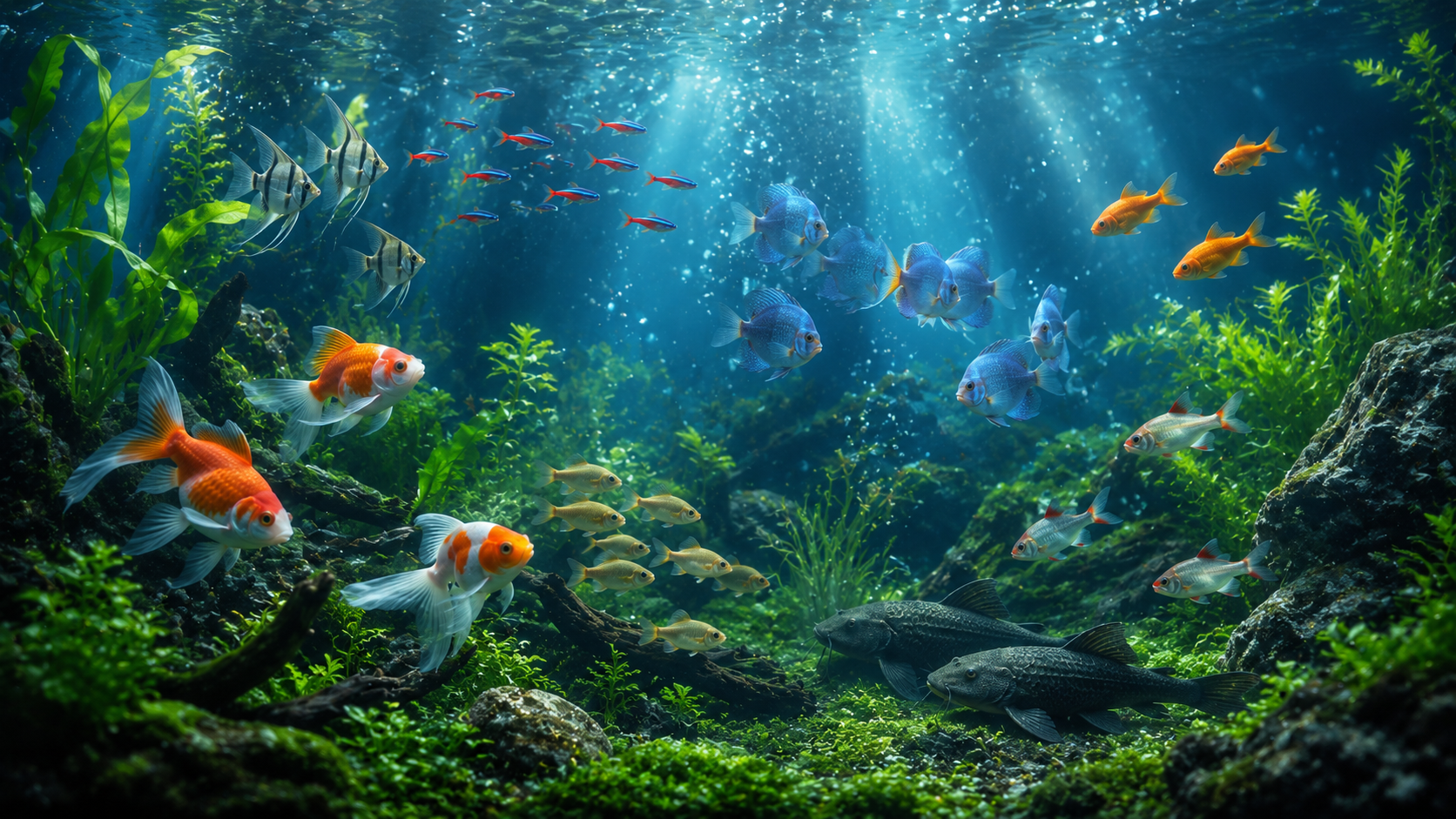
    There was a time when I kept five goldfish and three loaches in a small aquarium.

    Whenever food appeared, they gathered together immediately.
    Sometimes, it even felt as though they were greeting one another.

    At first glance, fish may seem like simple creatures drifting silently through water. But modern research suggests something far more fascinating:

    Fish can recognize individuals, remember past interactions, protect territories, and even form surprisingly complex social relationships.

    In other words, beneath the quiet surface of the aquarium exists a hidden social world.


    1. Fish Can Recognize Specific Individuals

    Fish do more than simply distinguish members of their own species. Many species can identify and remember particular individuals.

    For example, clownfish can recognize members of their own group and respond differently depending on whether another fish has previously behaved cooperatively or aggressively.

    Scientists have discovered that fish use both visual cues—such as color patterns and body shapes—and chemical signals in the water to recognize others.

    Some fish even remember specific markings and later respond consistently when encountering the same individual again. This ability demonstrates not only perception, but also learning and memory.

    This challenges the old assumption that fish act only through instinct. Their behavior often reflects experience-based decision making.


    2. Territorial Fish: Guardians of Their Own Space

    betta fish defending territory

    Many fish species establish territories and actively defend them.

    One of the best-known examples is the betta fish. When another betta enters its territory, it immediately displays aggressive behavior to protect its space.

    But this is not merely random aggression.

    Territorial behavior increases survival chances by protecting food resources, shelter, and breeding opportunities. In nature, space often means survival.

    A useful way to imagine this is:

    Betta fish behave like underwater guardians, patrolling invisible borders and warning intruders to stay away.

    Interestingly, researchers have also observed that some territorial fish adjust their aggression based on past encounters. Fish that repeatedly lose fights may become more cautious later, suggesting social memory and adaptive learning.


    3. Cooperation and Mutual Benefit Underwater

    Fish are not always competitors. Many species cooperate with one another in remarkable ways.

    Cleaner fish provide one of the most famous examples.

    These small fish remove parasites and dead tissue from the bodies of much larger fish. The larger fish allow them to approach safely, despite easily being able to eat them.

    This relationship benefits both sides:

    • Cleaner fish receive food.
    • Larger fish stay healthier.

    What makes this especially fascinating is that cleaner fish appear to maintain “honest” behavior to preserve trust. If they cheat by biting healthy tissue instead of parasites, larger fish may avoid them in future interactions.

    This suggests a surprisingly sophisticated social system involving memory, reputation, and repeated interaction.

    In some ways, this resembles human business partnerships built on trust and mutual benefit.


    4. Fish Learn from Social Experience

    The social lives of fish are shaped not only by instinct, but also by learning.

    Studies involving guppies have shown that fish remember the previous behavior of others and modify future interactions accordingly.

    For example, fish that displayed aggressive behavior in earlier encounters were later treated more cautiously or avoided by others.

    This indicates that fish can develop social strategies based on experience.

    Researchers studying animal cognition increasingly argue that intelligence exists on a spectrum across species. Fish may not think like humans, but they clearly process information, adapt behavior, and respond to social environments in meaningful ways.

    Modern neuroscience has even revealed that fish possess surprisingly capable nervous systems that support learning, navigation, stress responses, and social recognition.

    cooperative behavior between fish

    Conclusion: Fish Are More Social Than We Think

    An aquarium may appear peaceful and simple from the outside.

    But beneath the surface, fish are constantly communicating, remembering, negotiating, competing, and cooperating.

    They recognize familiar individuals.
    They defend territories.
    They build cooperative relationships.
    They learn from past social experiences.

    The more scientists study fish behavior, the clearer it becomes that fish are not passive creatures driven only by instinct.

    They are social beings living within dynamic underwater communities.

    Perhaps the next time we watch fish swimming quietly through water, we may begin to notice something deeper:

    a hidden society moving silently beneath the surface.

    A Question for Readers

    Have you ever watched an animal closely enough to feel that it recognized you back?
    Perhaps intelligence appears in more forms than we usually imagine.

    Related Reading

    The growing recognition that fish possess memory, cooperation, and social awareness challenges the traditional assumption that only humans and higher mammals form emotionally meaningful bonds. This broader understanding of interspecies relationships connects naturally with Can Pets Improve Your Health? The Science of the Human–Animal Bond, which explores how interactions between humans and animals can profoundly influence emotional stability, stress reduction, and overall well-being.

    At the same time, the question of whether fish possess forms of social intelligence also relates to a deeper philosophical issue: how humans define intelligence, morality, and superiority among living beings. This ethical perspective is further explored in Can Humans Be the Moral Standard?, which examines whether human-centered definitions of value and intelligence are sufficient for understanding the wider living world.


    References

    1. Fish Cognition and Behavior
      This academic volume explores learning, memory, problem-solving, and social behavior in fish. It challenges the traditional belief that fish possess only primitive cognitive abilities and demonstrates that many fish species show advanced behavioral flexibility and social recognition.
    2. Sociality: The Behaviour of Group-Living Animals
      This book examines how animals living in groups develop communication systems, cooperation, and social hierarchies. The sections involving fish behavior help explain how underwater social networks emerge through repeated interactions and adaptive learning.
    3. Cleaner Fish Mutualism Research
      This influential research analyzes the cooperative relationship between cleaner fish and larger fish species. It highlights concepts such as trust, reputation, and reciprocal benefit, suggesting that social intelligence exists even in relatively small-brained animals.
  • The Cultural Meaning Between Companion Animals and Livestock

    The Cultural Meaning Between Companion Animals and Livestock

    How culture determines whether animals become companions or commodities?

    1. How Culture Draws the Line Between Animals

    A pet dog indoors contrasted with farm animals in the distance

    The animals we live alongside often fall into two broad categories.
    Some share our homes and emotional lives, while others provide food, labor, or materials essential for survival.

    At first glance, this difference seems purely functional.
    However, culture plays a far greater role than biology alone.

    In many societies, people treat the same animal as a beloved companion,
    while in others, they raise it as livestock.
    As a result, animals do not carry fixed meanings by nature.

    Instead, humans assign them value through social norms and cultural choices.
    In this sense, the distinction between companion animals and farm animals reveals the cultural meaning of pets and livestock, shaped not by biology, but by social values.


    2. Companion Animals: Animals as Family Members

    In many contemporary societies, companion animals—especially dogs and cats—are treated as members of the family rather than as property.

    Emotional Bonds

    Companion animals offer emotional comfort, reduce loneliness, and contribute to psychological well-being.
    Numerous studies show that interaction with pets lowers stress hormones and increases feelings of happiness and security.

    Social Identity

    For some people, the type of animal they keep—and even the animal’s personality—becomes a way of expressing their own identity and lifestyle.
    In this sense, companion animals function as an extension of the self.

    Legal and Institutional Change

    In several countries, animals are no longer legally defined as mere property, but as living beings deserving protection.
    This shift reflects changing moral attitudes toward animals and their place in society.


    3. Livestock: The Foundation of Survival and Economy

    The same animal shown as a pet in one culture and livestock in another

    Livestock, by contrast, have played a central role in the development of human civilization.

    Food Production

    Animals such as cattle, pigs, and chickens have long served as vital sources of protein, forming the backbone of agricultural societies.

    Labor and Energy

    Before industrialization, animals like horses, oxen, and donkeys were essential sources of labor—plowing fields, transporting goods, and powering economies.

    Materials for Daily Life

    Wool, leather, milk, and other animal-derived resources have shaped clothing, housing, and everyday necessities.

    Livestock have historically been valued for their productivity and economic function. Yet even this meaning is now being questioned and reshaped.


    4. Blurred Boundaries: One Animal, Different Cultures

    One of the most revealing aspects of human–animal relationships is how dramatically meanings shift across cultures.

    Dogs

    In many Western societies, dogs are celebrated as “humanity’s best friend.”
    In other regions, they have historically been raised for food.

    Rabbits

    In parts of Europe, rabbits exist simultaneously as pets, food animals, and storybook characters—occupying multiple symbolic roles at once.

    Cattle

    In India, cows are sacred and protected. Elsewhere, they are central livestock animals raised primarily for meat and dairy.

    These examples illustrate a crucial point: animals do not carry fixed meanings. Culture assigns their status.


    5. Contemporary Shifts: Rethinking the Boundary

    In modern societies, the line between companion animals and livestock is increasingly unstable.

    Animal Welfare Movements

    There is growing recognition that livestock are sentient beings capable of suffering.
    “Animal welfare farming” reflects an effort to balance production with ethical responsibility.

    New Forms of Companionship

    Animals once considered strictly livestock—such as pigs or chickens—are now sometimes kept as companions, especially in urban settings.

    Ethical Consumption

    As emotional bonds with companion animals deepen, some people begin questioning the moral implications of consuming other animals.


    This has contributed to the rise of vegetarian and vegan lifestyles.

    Human–animal relationships are no longer merely practical—they are ethical and philosophical.


    Conclusion: Animals as Cultural Mirrors

    A human quietly facing an animal, reflecting on coexistence

    The distinction between companion animals and livestock is not rooted in the animals themselves, but in human culture, values, and historical context.

    Some animals become friends.
    Some become resources.
    Some occupy both roles at once.

    As societies evolve, so do these categories.

    Today, we are increasingly called to reconsider what it means to live alongside animals—not only as users of their labor or bodies, but as co-inhabitants of a shared world.

    When we encounter a dog on the street or a cow on a farm, we are not simply seeing an animal.
    We are seeing a reflection of our own culture, ethics, and choices.

    A Question for Readers

    Why do some animals become beloved family members while others become sources of food or labor?

    And if these distinctions are shaped largely by culture, what does that reveal about human values and moral boundaries?

    Related Reading

    Human societies continuously redefine the moral status of non-human life.
    Can Nature Have Rights Above Humans? explores how ecological ethics challenges traditional human-centered perspectives.

    The way societies classify living beings often shapes how they are treated and valued.
    The Power of Naming examines how language and categorization influence social perception and power.

    References

    Serpell, J. (1996). In the Company of Animals: A Study of Human–Animal Relationships. Cambridge: Cambridge University Press.
    → Explores the historical and cultural diversity of human–animal relationships, offering a foundational framework for understanding why animals occupy different social roles.

    Digard, J.-P. (1988). L’homme et les animaux domestiques: Anthropologie d’une passion. Paris: Fayard.
    → An anthropological study of domestication, emphasizing that animals hold symbolic and social meanings beyond their economic functions.

    Franklin, A. (1999). Animals and Modern Cultures: A Sociology of Human–Animal Relations in Modernity. London: SAGE Publications.
    → Examines how modern societies assign animals different statuses—companions, livestock, or commodities—within changing cultural contexts.