We believe our choices are our own.
What to wear in the morning, what to eat for lunch, even life-changing decisions—
we trust that they come from our inner will.
Yet today, artificial intelligence analyzes our search histories, purchases, and online behavior with startling accuracy.
It often knows what we want before we consciously decide.
If AI can predict our desires almost perfectly,
is free will still real—or merely a convincing illusion?
1. The Age of Predictive Algorithms
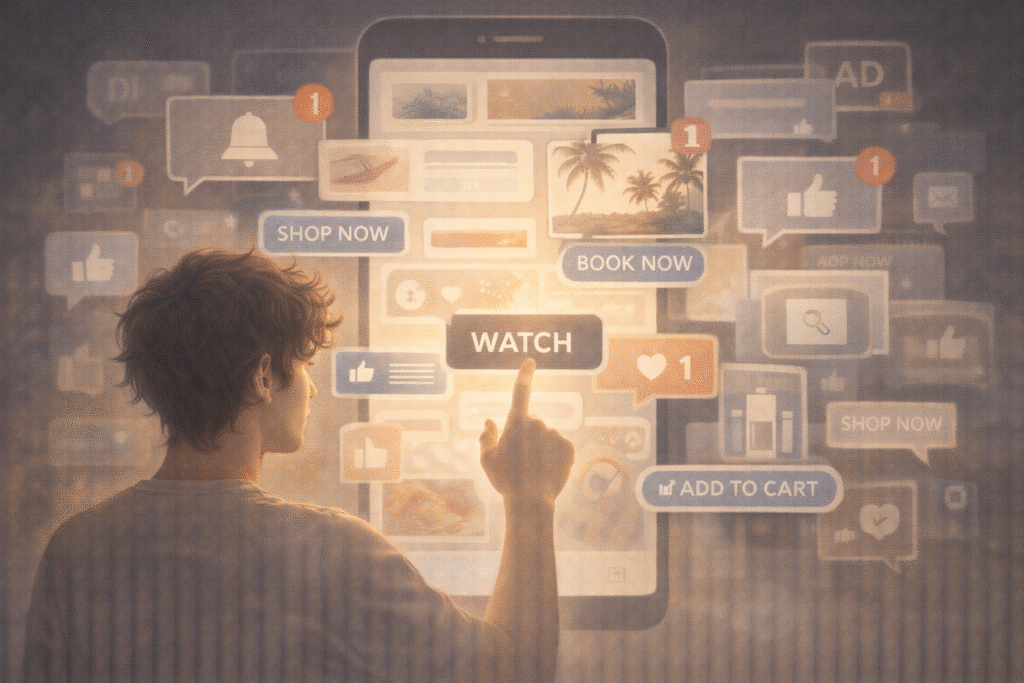
Recommendation systems already guide much of our everyday decision-making.
Streaming platforms anticipate which films we will enjoy, online stores predict what we might buy next, and social media curates content tailored to our emotional responses.
In many cases, we believe we choose freely,
but what we encounter has already been filtered, ranked, and presented by algorithms.
This raises a disturbing possibility:
our decisions may not be independent acts of will, but statistically predictable outcomes embedded in data patterns.
2. Free Will and Determinism Revisited
Philosophically, this dilemma is not new.
If human behavior is shaped by genetics, environment, and past experiences, does free will truly exist?
In a deterministic universe, AI does not eliminate freedom—it merely reveals how predictable our choices already are.
However, if free will is not absolute independence from all causes,
but rather the capacity to reflect, assign meaning, and take responsibility within given conditions,
then prediction does not necessarily negate freedom.
Human freedom may lie not in escaping patterns,
but in interpreting and responding to them consciously.
3. The Danger of Desire Manipulation
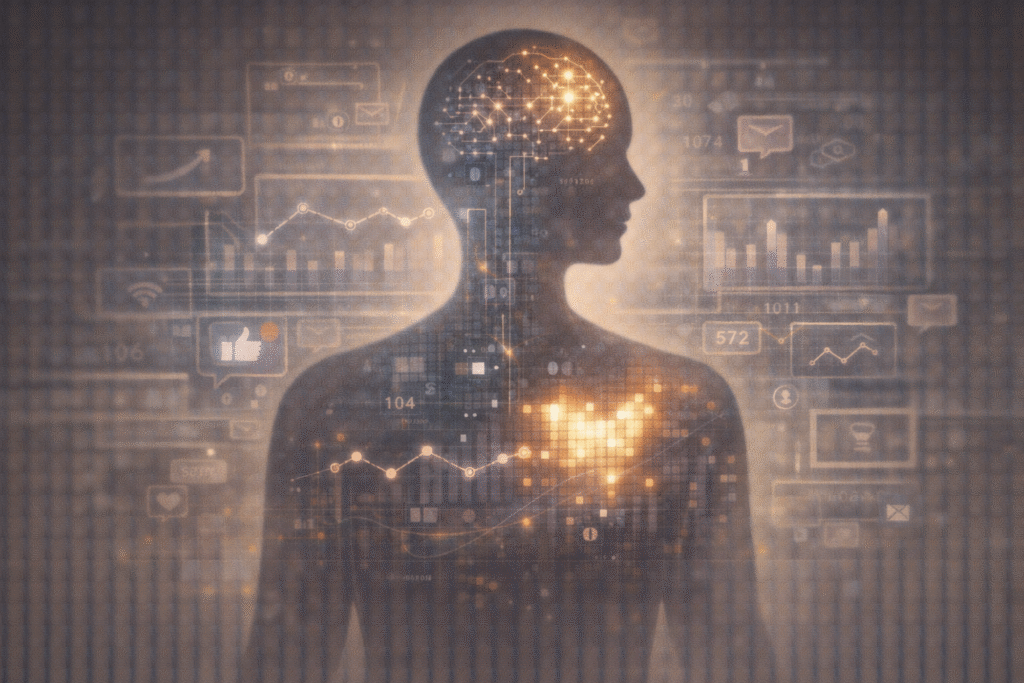
The real danger emerges when prediction turns into manipulation.
Targeted advertising, emotionally optimized content, and data-driven political messaging no longer merely anticipate desire—they actively shape it.
In such cases, individuals feel autonomous while unknowingly following pre-designed behavioral paths.
When desire is engineered rather than chosen,
free will risks becoming a carefully maintained illusion,
and societies become vulnerable to subtle forms of control.
4. Rethinking Freedom in the AI Era
If freedom depends on unpredictability alone,
then AI threatens its very existence.
But if freedom means the ability to reflect on one’s desires,
to accept or reject them,
and to act with responsibility despite external influence,
then human agency remains intact.
AI may predict our impulses,
but it cannot replace the reflective capacity to question them.
5. Reclaiming Your Agency: Practicing Freedom in an Algorithmic World
If freedom is not the absence of prediction, but the capacity for reflection,
then freedom must be practiced, not assumed.
You do not need to abandon technology to protect your agency.
What you need is deliberate friction — moments that interrupt automated desire.
One way to do this is through what might be called strategic randomness:
small, intentional disruptions that remind us we are not merely reactive beings.
Conclusion

The rise of AI prediction forces us to confront an uncomfortable question:
Is free will an illusion, or simply misunderstood?
Even if our desires follow recognizable patterns,
the human capacity to interpret, resist, and redefine those desires has not disappeared.
Perhaps the real question is not
“Can AI predict human desire?”
but rather,
“How will we redefine freedom in a world where prediction is everywhere?”
Related Reading
This concern naturally extends to a broader philosophical question about human agency and technological superiority, explored further in Can Technology Surpass Humanity?
On a practical level, similar issues appear in everyday algorithmic systems discussed in Algorithmic Bias: How Recommendation Systems Narrow Our Worldview.
References
1.Libet, B. (1985). Unconscious cerebral initiative and the role of conscious will in voluntary action. Behavioral and Brain Sciences, 8(4), 529–566.
→ A foundational experiment suggesting that neural activity precedes conscious awareness of decision-making, igniting modern debates on free will.
2.Dennett, D. C. (2003). Freedom Evolves. New York: Viking.
→ Argues that free will is compatible with determinism and emerges through evolutionary and social complexity rather than metaphysical independence.
3.Zuboff, S. (2019). The Age of Surveillance Capitalism. New York: PublicAffairs.
→ Analyzes how data-driven prediction and behavioral modification threaten autonomy and democratic agency.
4.Frankfurt, H. G. (1971). Freedom of the will and the concept of a person. Journal of Philosophy, 68(1), 5–20.
→ Introduces the idea of second-order desires, redefining freedom as reflective endorsement rather than mere choice.
5.Bostrom, N. (2014). Superintelligence: Paths, Dangers, Strategies. Oxford: Oxford University Press.
→ Explores how advanced AI could reshape human autonomy, control, and moral responsibility.
Leave a Reply