Tag: surveillance capitalism

  • How Much Surveillance Is Too Much?

    How Much Surveillance Is Too Much?

    Technology, Privacy, and the Future of Civil Liberties

    Every day, we trade privacy for convenience.

    Our phones track where we go.
    Our purchases reveal what we want.
    Cameras record how we move through the world.

    It all feels efficient—almost invisible.

    But this raises a deeper question:

    Are we becoming more free through technology—
    or more closely watched than ever before?

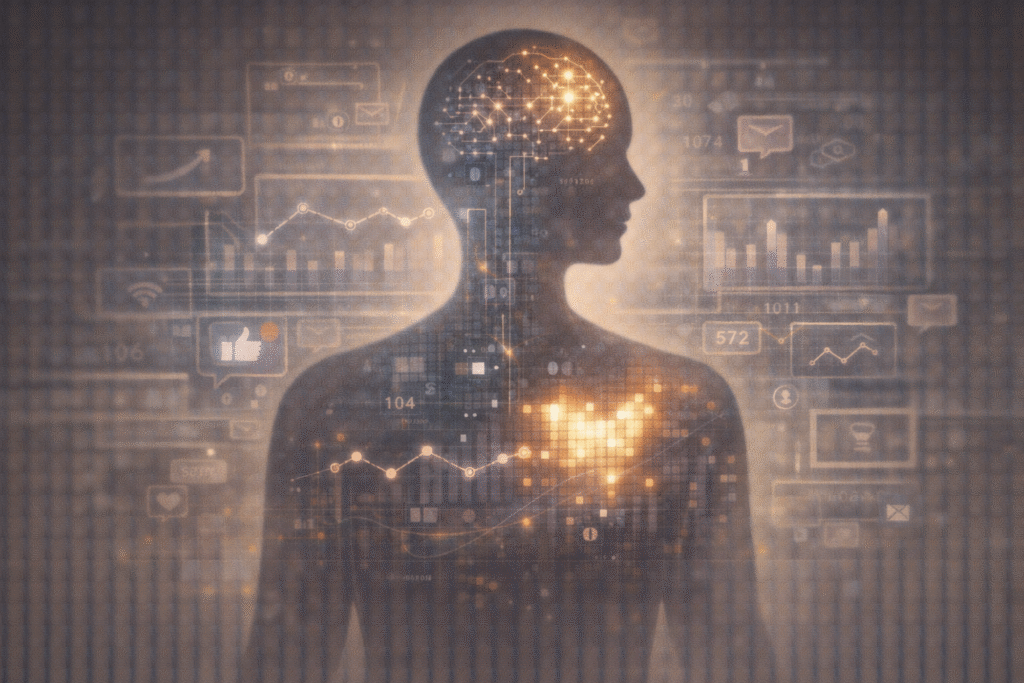
    smartphone tracking user data

    1. Technology Is Not Neutral

    1.1. It Depends on Who Uses It

    Technology itself is neither good nor bad—
    but its use is never neutral.

    Facial recognition can help find missing persons
    or prevent crime.

    Yet the same system can track everyday movements,
    monitor expressions, and build detailed personal profiles.


    1.2. Infrastructure or Control System?

    Smart cities promise efficiency—
    better traffic flow, optimized energy use, safer streets.

    But they also risk becoming invisible surveillance networks,
    where control is embedded into daily life.

    At its core, the question is not just about technology—
    but about who holds power.


    2. The Evolution of Privacy

    2.1. “I Have Nothing to Hide”

    Many people say,
    “I have nothing to hide, so surveillance doesn’t matter.”

    But surveillance is not only about detecting wrongdoing—
    it is about predicting and shaping behavior.


    2.2. From Observation to Influence

    Data collected from searches, purchases, and social media
    can reveal political views, emotional states, and personal habits.

    Over time, surveillance shifts from watching behavior
    to influencing it.

    Privacy, then, is not just about secrecy—
    but about freedom of thought.


    3. Surveillance Capitalism and Democracy
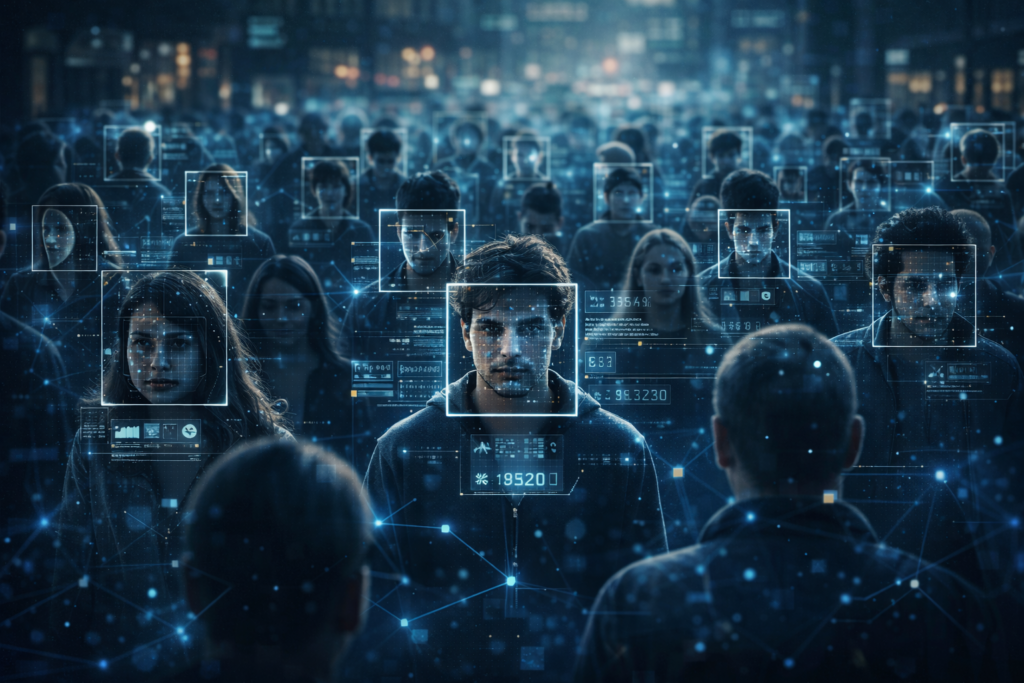
    facial recognition tracking people

    3.1. Data as a Commodity

    Scholar Shoshana Zuboff describes this system
    as “surveillance capitalism.”

    Personal data is extracted, analyzed,
    and transformed into predictive models.


    3.2. The Democratic Risk

    This creates two major tensions:

    • Self-censorship:
      When people feel watched, they may limit expression.
    • Power imbalance:
      Governments and tech companies accumulate data,
      while individuals lose control over their own information.

    This imbalance can quietly erode democratic systems.


    4. Where Should We Draw the Line?

    4.1. The Expansion of Surveillance

    AI-powered monitoring, real-time tracking,
    and predictive algorithms are rapidly expanding.

    The question is no longer whether surveillance exists—
    but how far we allow it to go.


    4.2. Citizens, Not Just Users

    In this context, people are not just users of technology—
    they are citizens with rights.

    The challenge is to move from passive acceptance
    to active questioning.

    Who watches?
    Who is watched?
    And who holds the watchers accountable?


    Conclusion: Progress Without Losing Freedom

    person choosing between surveillance and freedom

    Technological progress is inevitable.
    But the erosion of rights should not be.

    The true measure of a society
    is not how efficiently it processes data—
    but how carefully it protects human dignity.

    Convenience can be seductive.
    But freedom, once lost, is difficult to recover.

    If we do not question surveillance today,
    we may one day find that the choice has already been made for us.


    A Question for Readers

    How much surveillance are you willing to accept
    in exchange for safety and convenience?


    Related Reading

    The tension between surveillance and individual autonomy becomes even more complex when we consider how transparency itself can reshape society.
    In The Transparency Society: Foundation of Trust or Culture of Surveillance?, the idea of openness reveals how visibility can both strengthen trust and expand mechanisms of control.

    At a deeper level, the influence of technology extends beyond observation to cognition itself.
    In How Search Boxes Shape the Way We Think, the role of algorithms highlights how digital systems not only monitor behavior but subtly guide how we form thoughts and decisions.


    References


    1. Zuboff, S. (2019). The Age of Surveillance Capitalism. New York: PublicAffairs.
    → Zuboff analyzes how digital platforms extract and monetize personal data, revealing how surveillance becomes an economic system that reshapes autonomy and privacy.

    2. Cohen, J. E. (2012). Configuring the Networked Self. New Haven: Yale University Press.
    → Cohen explores how legal and technological systems shape individual identity, arguing that privacy is essential for maintaining personal agency.

    3. Solove, D. J. (2008). Understanding Privacy. Cambridge: Harvard University Press.
    → Solove provides a comprehensive framework for understanding privacy, emphasizing its role in protecting freedom and dignity in modern societies.

    4. Nissenbaum, H. (2009). Privacy in Context. Stanford: Stanford University Press.
    → Nissenbaum introduces the concept of contextual integrity, explaining how privacy depends on appropriate information flow within social contexts.

    5. Morozov, E. (2011). The Net Delusion. New York: PublicAffairs.
    → Morozov critiques the assumption that technology inherently promotes freedom, highlighting its potential use in surveillance and authoritarian control.

  • If AI Can Predict Human Desire, Is Free Will an Illusion?

    If AI Can Predict Human Desire, Is Free Will an Illusion?

    We believe our choices are our own.
    What to wear in the morning, what to eat for lunch, even life-changing decisions—
    we trust that they come from our inner will.

    Yet today, artificial intelligence analyzes our search histories, purchases, and online behavior with startling accuracy.
    It often knows what we want before we consciously decide.

    If AI can predict our desires almost perfectly,
    is free will still real—or merely a convincing illusion?


    1. The Age of Predictive Algorithms

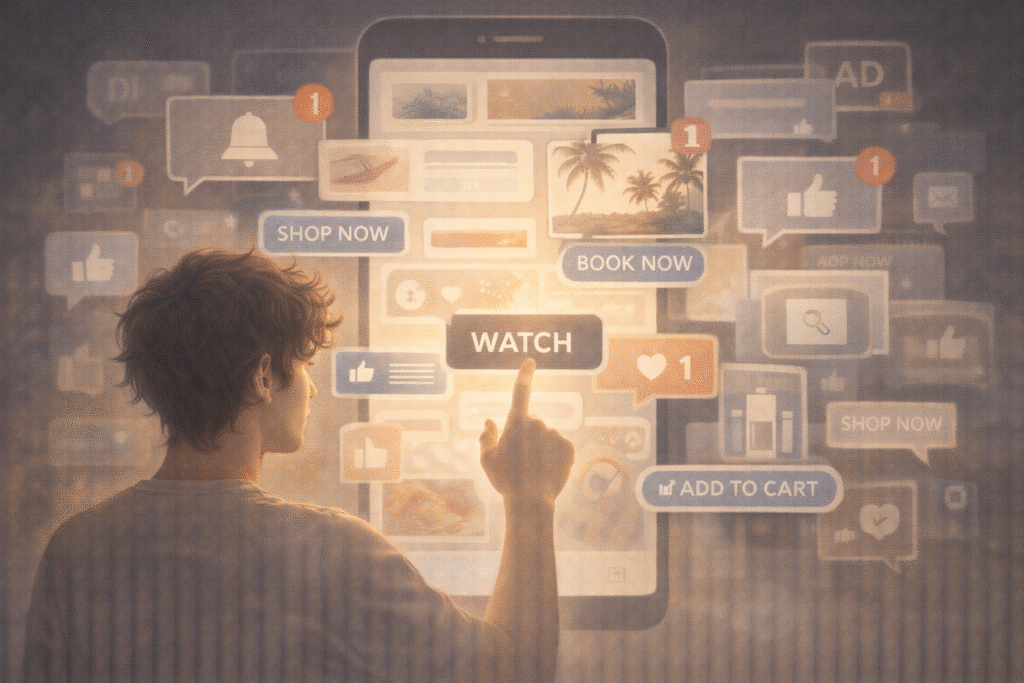
    Individual facing algorithm-driven choices on a digital screen

    Recommendation systems already guide much of our everyday decision-making.
    Streaming platforms anticipate which films we will enjoy, online stores predict what we might buy next, and social media curates content tailored to our emotional responses.

    In many cases, we believe we choose freely,
    but what we encounter has already been filtered, ranked, and presented by algorithms.

    This raises a disturbing possibility:
    our decisions may not be independent acts of will, but statistically predictable outcomes embedded in data patterns.


    2. Free Will and Determinism Revisited

    Philosophically, this dilemma is not new.
    If human behavior is shaped by genetics, environment, and past experiences, does free will truly exist?

    In a deterministic universe, AI does not eliminate freedom—it merely reveals how predictable our choices already are.

    However, if free will is not absolute independence from all causes,
    but rather the capacity to reflect, assign meaning, and take responsibility within given conditions,
    then prediction does not necessarily negate freedom.

    Human freedom may lie not in escaping patterns,
    but in interpreting and responding to them consciously.


    3. The Danger of Desire Manipulation

    Visualization of human desire shaped by algorithms and data patterns

    The real danger emerges when prediction turns into manipulation.

    Targeted advertising, emotionally optimized content, and data-driven political messaging no longer merely anticipate desire—they actively shape it.
    In such cases, individuals feel autonomous while unknowingly following pre-designed behavioral paths.

    When desire is engineered rather than chosen,
    free will risks becoming a carefully maintained illusion,
    and societies become vulnerable to subtle forms of control.


    4. Rethinking Freedom in the AI Era

    If freedom depends on unpredictability alone,
    then AI threatens its very existence.

    But if freedom means the ability to reflect on one’s desires,
    to accept or reject them,
    and to act with responsibility despite external influence,
    then human agency remains intact.

    AI may predict our impulses,
    but it cannot replace the reflective capacity to question them.

    5. Reclaiming Your Agency: Practicing Freedom in an Algorithmic World

    If freedom is not the absence of prediction, but the capacity for reflection,
    then freedom must be practiced, not assumed.

    You do not need to abandon technology to protect your agency.
    What you need is deliberate friction — moments that interrupt automated desire.

    One way to do this is through what might be called strategic randomness:
    small, intentional disruptions that remind us we are not merely reactive beings.


    Conclusion

    Human agency emerging within an algorithmic world

    The rise of AI prediction forces us to confront an uncomfortable question:
    Is free will an illusion, or simply misunderstood?

    Even if our desires follow recognizable patterns,
    the human capacity to interpret, resist, and redefine those desires has not disappeared.

    Perhaps the real question is not
    “Can AI predict human desire?”
    but rather,

    “How will we redefine freedom in a world where prediction is everywhere?”

    A Question for You

    If your desires can be predicted, do you still feel they are truly yours?


    Related Reading

    This concern naturally extends to a broader philosophical question about human agency and technological superiority, explored further in Can Technology Surpass Humanity?

    On a practical level, similar issues appear in everyday algorithmic systems discussed in Algorithmic Bias: How Recommendation Systems Narrow Our Worldview.

    The role of AI in shaping human understanding becomes even more complex in education, where learning may occur without human teachers (see The Paradox of AI Education).

    References

    1.Libet, B. (1985). Unconscious cerebral initiative and the role of conscious will in voluntary action. Behavioral and Brain Sciences, 8(4), 529–566.
    → A foundational experiment suggesting that neural activity precedes conscious awareness of decision-making, igniting modern debates on free will.

    2.Dennett, D. C. (2003). Freedom Evolves. New York: Viking.
    → Argues that free will is compatible with determinism and emerges through evolutionary and social complexity rather than metaphysical independence.

    3.Zuboff, S. (2019). The Age of Surveillance Capitalism. New York: PublicAffairs.
    → Analyzes how data-driven prediction and behavioral modification threaten autonomy and democratic agency.

    4.Frankfurt, H. G. (1971). Freedom of the will and the concept of a person. Journal of Philosophy, 68(1), 5–20.
    → Introduces the idea of second-order desires, redefining freedom as reflective endorsement rather than mere choice.

    5.Bostrom, N. (2014). Superintelligence: Paths, Dangers, Strategies. Oxford: Oxford University Press.
    → Explores how advanced AI could reshape human autonomy, control, and moral responsibility.