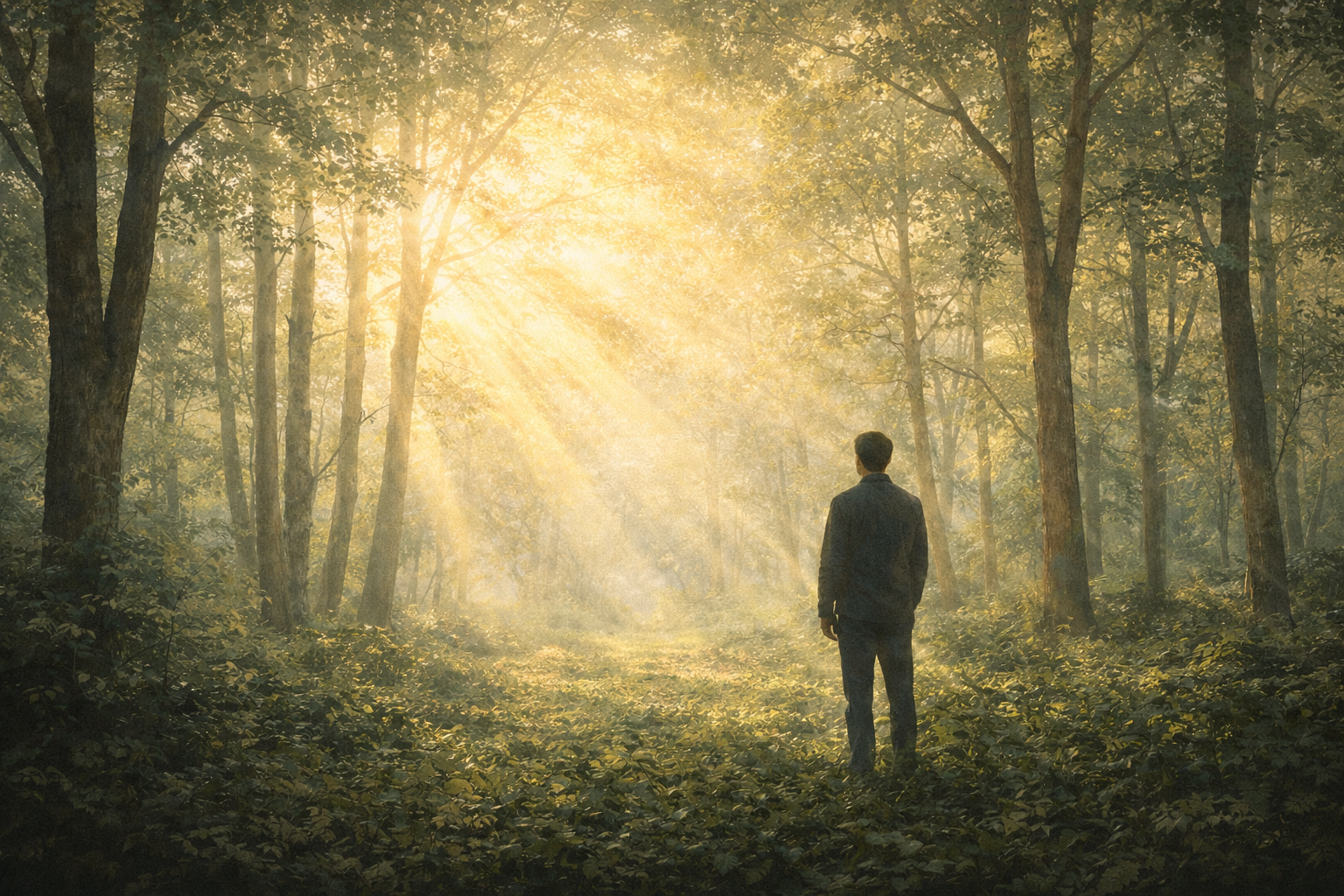
When people discuss morality or ethics, they often look to religion, philosophy, law, or social agreements.
But there is another question worth asking:
Could nature itself offer ethical guidance for human life?
If human beings are part of nature, then perhaps the patterns we observe in the natural world—balance, cycles, restraint, and coexistence—can provide subtle hints about how we should live.
Nature may not speak in words, but it often teaches through patterns.
1. Where Do Human Moral Standards Come From?
Ethical standards have traditionally been derived from philosophical reasoning, religious teachings, or social rules.
However, long before formal moral systems existed, humans lived within ecosystems that already followed certain patterns of order.
The natural world operates through cycles—birth and decay, growth and renewal, balance and limitation.
Observing these patterns raises an intriguing possibility: perhaps ethical reflection can also emerge from the structure of nature itself.
2. Ethical Clues Hidden in Everyday Nature

Nature quietly demonstrates several principles that resemble ethical ideas.
The sun rises in the morning and sets at night.
Trees grow leaves in spring and release them in autumn without resistance.
Animals hunt for survival, not for endless accumulation.
From these patterns we may notice ideas such as restraint, balance, and coexistence.
Imagine a wolf in a forest that begins hunting far beyond what it needs for survival.
If it were to eliminate large numbers of deer without restraint, the ecosystem would collapse.
Nature functions through equilibrium.
When one part of the system exceeds its limits, the entire system becomes unstable.
In this sense, nature silently warns against excess.
3. How Natural Ethics Differ from Human Ethics
Nature does not issue moral commands.
It does not tell us directly what we “should” do.
Instead, it reveals consequences.
When humans exploit natural resources without limits—through deforestation, pollution, or excessive consumption—the results appear in the form of climate change and ecological disruption.
It can almost feel as if nature is saying:
“You have taken more than the system can sustain.”
The American philosopher and naturalist Henry David Thoreau believed that nature could teach humans how to live more wisely.
Through his time living near Walden Pond, Thoreau argued that simplicity and closeness to nature could help humans rediscover moral clarity beyond material excess.
4. Natural Harmony as an Ethical Model
One of the most powerful lessons in nature is coexistence.
Bees collect nectar while pollinating flowers.
Forests grow through networks of cooperation among plants, fungi, and animals.
Each organism survives while contributing to the stability of the whole system.
In modern society, many ethical discussions revolve around balancing individual benefit with collective well-being.
Nature has been demonstrating such balance for millions of years.
Movements such as Zero Waste reflect attempts to imitate nature’s cycles.
Instead of producing endless waste, these philosophies encourage human systems to function more like ecosystems—where outputs from one process become inputs for another.
5. Are Humans Part of Nature—or Opposed to It?

Interestingly, humans possess the ability to understand nature deeply and even imitate its systems.
Yet modern societies often organize life in ways that move against natural rhythms.
Nature moves slowly, but modern life emphasizes speed.
Nature is interconnected, while modern culture often prioritizes individualism.
These differences sometimes lead to consequences such as environmental crises, social isolation, and psychological burnout.
Some environmental philosophers therefore argue that ethics must move beyond purely human-centered thinking.
Instead of seeing humans as rulers of nature, they propose redefining humanity as participants within an ecological community.
From that perspective, ethical living may mean learning to live as a part of nature rather than above it.

Conclusion
Nature rarely speaks in words.
Yet over long stretches of time, it communicates through patterns and consequences.
It quietly suggests moderation, balance, and coexistence.
If humans are willing to listen, nature can become a profound ethical teacher.
Perhaps the most important lesson is simple:
We are not masters of nature.
We are part of it.
Related Reading
The search for ethical guidance in everyday life is explored further in Why Lighting a Candle Feels Like a Ritual — The Cultural Meaning of Candlelight, where simple human practices reveal how symbolic acts and natural elements help people reflect on values such as humility, reflection, and moral awareness. Just as candlelight invites quiet contemplation, nature itself often serves as a silent teacher of balance, restraint, and interconnectedness.
At a broader philosophical level, questions about how human systems interact with larger forces are examined in Fusion Culture: Creative Exchange or Cultural Imperialism?, where debates about cultural exchange reveal tensions between cooperation and dominance in global society. Similar to ecosystems in nature, human cultures constantly interact, adapt, and influence one another—raising deeper questions about responsibility, power, and ethical coexistence.
Question for Readers
Do you think nature can teach humans ethical lessons?
For example, can ideas like balance, restraint, and coexistence in nature guide how we live and make decisions?
Or do you believe that ethics should come only from human culture, philosophy, and social agreements?
Share your thoughts in the comments.
References
1. Thoreau, H. D. (1854). Walden; or, Life in the Woods. Boston: Ticknor and Fields.
→ In this classic work, Thoreau reflects on simple living in natural surroundings near Walden Pond. He argues that modern society’s obsession with wealth and speed distracts people from deeper moral reflection. By reconnecting with nature, individuals can rediscover simplicity, self-awareness, and ethical clarity.
2. Leopold, A. (1949). A Sand County Almanac. Oxford University Press.
→ Leopold introduces the influential concept of the “land ethic,” which expands ethical consideration to include soils, waters, plants, and animals. He argues that humans should see themselves as members of an ecological community rather than conquerors of it, forming one of the foundations of modern environmental ethics.
3. Carson, R. (1962). Silent Spring. Boston: Houghton Mifflin.
→ Carson’s groundbreaking book exposed the ecological damage caused by pesticides such as DDT. By revealing the interconnectedness of ecosystems, the work sparked the modern environmental movement and emphasized the ethical responsibility humans have toward the natural world.
Leave a Reply