Why Nations Resist Global Authority in an Increasingly Connected World
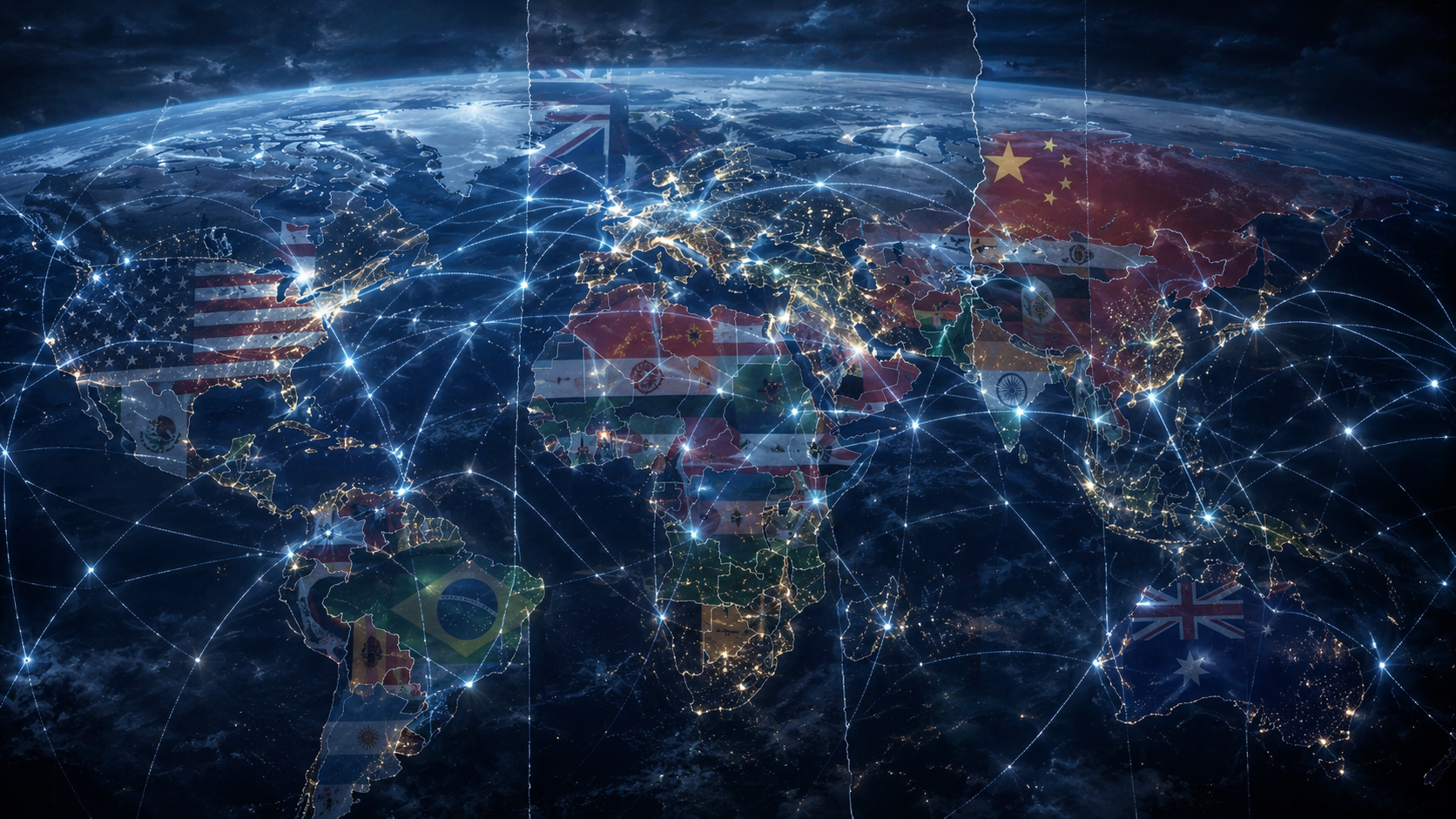
The world has never been more connected.
Global trade links economies.
Climate change crosses borders.
Pandemics spread internationally within days.
And digital technology allows billions of people to communicate instantly.
Because of this, some people ask an ambitious question:
Should humanity eventually create a world government?
At first glance, the idea sounds reasonable.
A unified global authority could potentially:
- reduce war
- coordinate climate action
- manage global crises more efficiently
Yet despite globalization, the world is not moving toward political unity.
In fact, conflicts over national sovereignty are becoming even stronger.
Why?
Because sovereignty remains one of the most powerful ideas in modern politics.

1. What Is Sovereignty?
The Meaning of Sovereignty
Sovereignty refers to the supreme authority of a state to govern itself without external interference.
It is one of the foundational principles of the modern international system.
In simple terms, sovereignty means:
- controlling national territory
- governing citizens
- creating laws independently
- resisting outside control
Without sovereignty, a nation risks losing political autonomy and identity.
Sovereignty as National Identity
However, sovereignty is not only a legal concept.
It is also emotional.
For many societies, sovereignty represents:
- historical survival
- cultural identity
- political dignity
As a result, giving up sovereignty often feels like giving up part of the nation itself.
2. Why Nations Resist Global Authority
The Protection of Self-Determination
Most countries strongly defend the idea of self-determination.
The belief is simple:
“Our country should decide its own future.”
This principle remains deeply influential in global politics.
The Fear of External Control
More importantly, sovereignty is connected to power.
No government wants external institutions making decisions about:
- national laws
- military policy
- economic systems
- immigration rules
As a result, even countries that support international cooperation often resist deeper political integration.
3. Is Sovereignty Negotiable?
Shared Sovereignty in Practice
In reality, sovereignty is not always absolute.
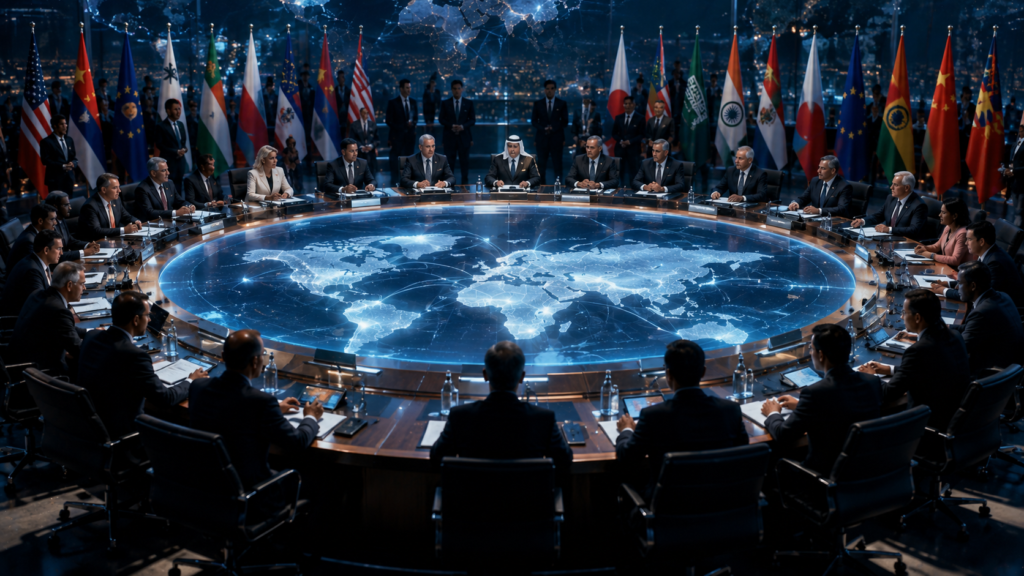
Countries frequently negotiate or partially share sovereignty when cooperation provides mutual benefits.
The best example is the European Union.
EU member states share:
- trade policies
- parts of financial regulation
- a common currency in many cases
However, they still maintain independent control over:
- military affairs
- national identity
- foreign policy
This shows that sovereignty can be flexible rather than completely fixed.
International Agreements and Cooperation
Countries also limit parts of their sovereignty through international treaties.
Examples include:
- climate agreements
- human rights conventions
- trade organizations
In these cases, nations accept certain restrictions in exchange for broader collective goals.
Therefore, sovereignty often functions less like an absolute right
and more like a negotiated balance.
4. The Debate Between Nations and Humanity
The Appeal of a World Government
Supporters of global governance argue that many modern problems are transnational.
Climate change, cybercrime, pandemics, and nuclear weapons cannot be solved by one country alone.
A stronger global political structure could theoretically:
- coordinate international responses
- reduce conflict
- promote global equality
For this reason, some thinkers view world government as a long-term necessity.
The Risks of Global Centralization
However, critics remain skeptical.
A world government could become:
- overly centralized
- dominated by powerful nations
- dismissive of cultural diversity
Many fear that global authority could evolve into a system of large-scale political control rather than genuine cooperation.
As a result, tension continues between:
- national sovereignty
- global responsibility
And that tension may define international politics for decades to come.
5. Real-World Examples of Sovereignty Conflicts
The International Criminal Court (ICC)
The International Criminal Court prosecutes war crimes and crimes against humanity.
Yet major powers such as:
- the United States
- China
- Russia
have either refused to join or limited cooperation.
The reason is closely tied to sovereignty.
These governments resist the idea of allowing external courts to judge their citizens or military personnel.
Climate Agreements and National Interests
Climate policy provides another example.
The Paris Agreement requires international cooperation to reduce emissions.
However, domestic political and economic priorities often conflict with global commitments.
For example, the United States temporarily withdrew from the agreement during the administration of Donald Trump.
This demonstrated how national interests can override global cooperation.
Conclusion: Is Sovereignty Absolute?

In theory, sovereignty appears absolute.
In practice, it is constantly negotiated, adjusted, and challenged.
As the world becomes increasingly interconnected, humanity faces a difficult task:
How can nations preserve independence
while also cooperating on problems that no country can solve alone?
Perhaps the future will not involve a single world government.
Instead, it may require something more realistic:
A balance between national identity and global responsibility.
Because sovereignty may protect nations—
But cooperation may ultimately protect humanity itself.
Reader Question
As global problems become increasingly interconnected, should nations continue to prioritize absolute sovereignty—
Or is humanity moving toward a future where some responsibilities must be shared beyond borders?
Related Reading
If global problems such as climate change and pandemics increasingly cross national borders, can traditional sovereignty still function the way it once did?
In In a World Where Everything Is Recorded, Is Forgetting a Sin—or a Right?, we explore how digital technology is reshaping privacy, autonomy, and human rights beyond national boundaries—raising deeper questions about whether states can fully control information in an interconnected world.
If nations refuse to surrender sovereignty even for global cooperation, is humanity ultimately too divided to form a single political community?
In Is There a Single Historical Truth, or Many Narratives?, we examine how identity, interpretation, and collective memory shape political and cultural divisions—revealing why universal global unity may be far more complicated than it first appears.
References
- Janis Pohle (2024). Global Media and Communication Governance: The Role of Nation States.
This work explores how nation-states continue to shape global communication governance despite increasing globalization. It also discusses how sovereignty can become flexible within international cooperation frameworks. - Stephen D. Krasner (1999). Sovereignty: Organized Hypocrisy.
Krasner argues that sovereignty is frequently violated in practice despite being treated as a foundational political principle. His work critically examines the gap between legal theory and geopolitical reality. - David Held (2004). Global Covenant.
Held discusses the possibility of global democracy and the need to rethink sovereignty in an interconnected world. His work provides philosophical foundations for debates about global governance. - James N. Rosenau (2002). Governance in a Globalizing World.
Rosenau analyzes how globalization weakens the traditional dominance of sovereign states while increasing the influence of international organizations and non-state actors. - Richard Falk (2014). Human Governance and the Crisis of Legitimacy.
Falk explores the relationship between global civil society, international law, and national sovereignty. He argues that humanity may need new forms of governance beyond traditional state-centered politics.
Leave a Reply