Tag: political philosophy

  • Do We Fear Freedom or Desire It?

    The Paradox of Human Liberty

    The Double Face of Freedom

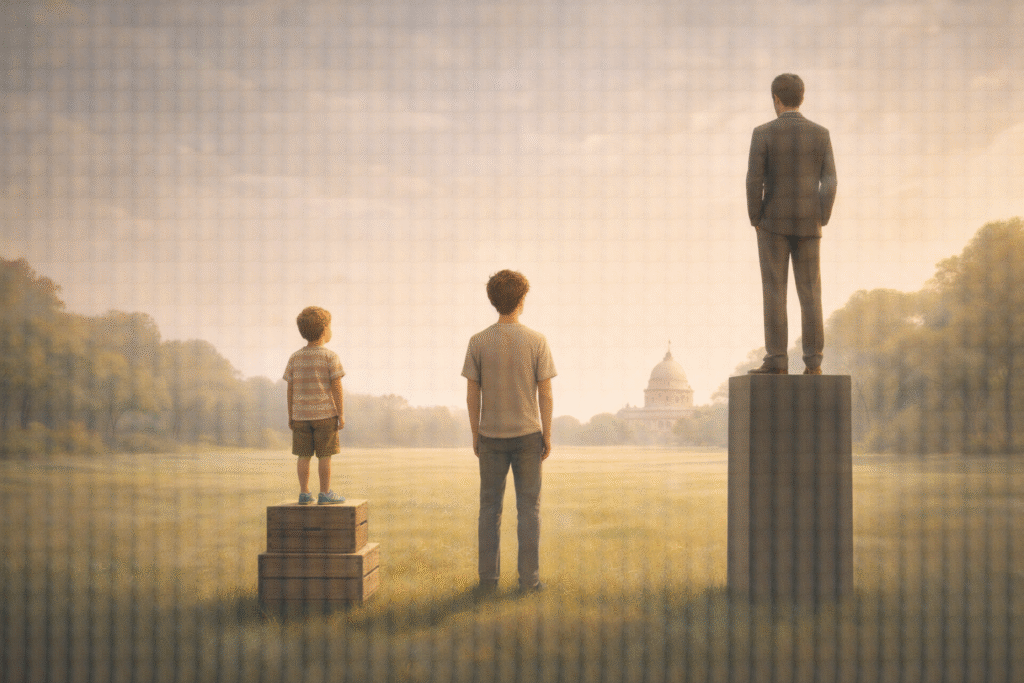
    Person standing in an open landscape symbolizing human freedom

    Freedom has long been one of humanity’s most celebrated ideals.

    Revolutions have been fought in its name.
    Movements for civil rights, democracy, and independence have all been driven by the promise of freedom.

    Yet freedom has always carried a hidden tension.

    For some, it represents possibility, self-determination, and the chance to shape one’s own life.
    For others, freedom brings anxiety, responsibility, and the burden of choosing.

    This raises a difficult question:

    Do human beings truly desire freedom, or do we secretly fear it?


    1. The Philosophical Paradox: Freedom and Anxiety

    1.1 Sartre and the Burden of Freedom

    The existentialist philosopher Jean-Paul Sartre famously claimed that human beings are “condemned to be free.”

    For Sartre, freedom is unavoidable.
    We cannot escape the responsibility of choosing, and every decision becomes an act through which we define ourselves.

    But this freedom is not always liberating.
    Because if we are truly free, we must also accept full responsibility for the consequences of our actions.

    In this sense, freedom is both possibility and burden.


    1.2 The Fear of Unrestricted Freedom

    Other philosophers approached freedom with caution.

    Plato worried that unrestrained freedom could lead to chaos within a political community.
    Thomas Hobbes warned that without strong authority, society would collapse into a “war of all against all.”

    From this perspective, freedom requires limits in order to preserve social order.

    Thus, the philosophical tradition reveals a recurring tension:
    freedom is both a cherished value and a potential danger.


    2. The Social Dimension: Freedom and Order

    2.1 Freedom within Rules

    Freedom rarely exists in isolation.

    Democratic societies aim to protect individual liberty, yet they also establish laws and institutions that restrict certain actions.

    Freedom of expression, for example, cannot justify harming others through defamation or incitement.
    Similarly, personal freedom must coexist with collective security.

    Freedom therefore exists not as absolute independence, but as a negotiated balance between liberty and order.


    2.2 Unequal Access to Freedom

    Another complication is that freedom is rarely distributed equally.

    Social class, gender, race, and nationality all influence how much freedom individuals actually experience.

    In one society, expressing political opinions may be protected speech.
    In another, the same act could result in punishment.

    Thus, while freedom is often described as a universal value, its reality is deeply shaped by social and political conditions.


    3. The Psychological Dimension: The Burden of Choice

    Person standing at multiple crossroads representing the burden of freedom

    3.1 The Paradox of Choice

    Psychological research suggests that freedom can sometimes undermine happiness.

    When individuals are confronted with too many options, they may feel overwhelmed by the pressure to make the “right” choice.
    This phenomenon has been described as the paradox of choice.

    More freedom can mean more responsibility — and more potential regret.


    3.2 The Comfort of Authority

    Because of this burden, many people willingly accept systems of authority and structure.

    Rules in schools and workplaces provide stability.
    Traditions and religious practices offer guidance and certainty.

    In some cases, these frameworks may function as psychological shelters from the anxiety of unlimited freedom.


    4. Freedom in the Digital Age

    Digital algorithms influencing human decisions on a smartphone

    4.1 The Expansion of Expression

    In the digital age, the question of freedom has become even more complex.

    The internet has dramatically expanded freedom of expression, allowing individuals across the world to share ideas instantly.

    Yet the same digital platforms have also produced misinformation, online harassment, and new forms of manipulation.

    Governments and societies increasingly debate how much regulation is necessary — and how much freedom should remain unrestricted.


    4.2 Algorithmic Influence

    Another challenge comes from the growing influence of algorithms.

    Artificial intelligence and data-driven platforms shape what we see, read, and purchase.
    In many cases, they subtly guide our decisions.

    This raises an unsettling possibility:

    Are we still exercising genuine freedom, or are our choices quietly being steered by invisible systems?


    Conclusion: Between Desire and Fear

    Freedom is never a simple gift.

    It is inseparable from responsibility, uncertainty, and the weight of decision.

    Some people embrace that burden.
    Others seek the safety of rules, traditions, or authority.

    Perhaps the truth is that human beings both desire freedom and fear it at the same time.

    The real question, then, is not simply whether we possess freedom.

    It is whether we are prepared to live with everything that freedom demands.

    Related Reading

    The subtle psychological tension between autonomy and social perception is further explored in Why It Feels Like Everyone Is Watching You: The Spotlight Effect, where the human tendency to overestimate how closely others observe us reveals how internal pressure can quietly shape our sense of freedom.

    At a broader technological and political level, the invisible constraints shaping modern choice are examined in Algorithmic Bias: How Recommendation Systems Narrow Our Worldview, where digital systems increasingly guide what we see, think, and ultimately decide.

    References

    1. Fromm, Erich. (1941). Escape from Freedom. New York: Farrar & Rinehart.
    In this influential work, Fromm argues that modern individuals often experience freedom as a source of anxiety rather than liberation. Faced with the burden of responsibility, many people seek psychological refuge in authority, conformity, or submission. His analysis reveals the paradox that humans may escape from the very freedom they claim to desire.

    2. Berlin, Isaiah. (1969). Two Concepts of Liberty. Oxford: Oxford University Press.
    Berlin distinguishes between “negative liberty,” the absence of external constraints, and “positive liberty,” the capacity to be one’s own master. This distinction has become central to modern political philosophy, highlighting how freedom can be understood both as protection from interference and as the realization of self-governance.

    3. Mill, John Stuart. (1859). On Liberty. London: John W. Parker & Son.
    Mill defends individual liberty as a fundamental condition for human progress and social development. At the same time, he introduces the “harm principle,” arguing that freedom should only be limited to prevent harm to others. His work remains one of the most influential philosophical defenses of liberal freedom.

    4. Arendt, Hannah. (1958). The Human Condition. Chicago: University of Chicago Press.
    Arendt interprets freedom not simply as independence from constraint but as the capacity for action within a shared public world. For her, genuine freedom emerges when individuals participate in collective life and take responsibility for their actions within the political sphere.

    5. Taylor, Charles. (1991). The Ethics of Authenticity. Cambridge, MA: Harvard University Press.
    Taylor examines the modern pursuit of authenticity and personal freedom, arguing that contemporary individualism often produces both empowerment and alienation. His work explores how the modern ideal of self-expression can deepen personal meaning while also creating new forms of social and psychological tension.

  • Is the State a Guardian of Freedom—or a Leviathan of Control?

    Liberalism and Social Contract Theory on Trial

    1. The Boundary Between Freedom and Power

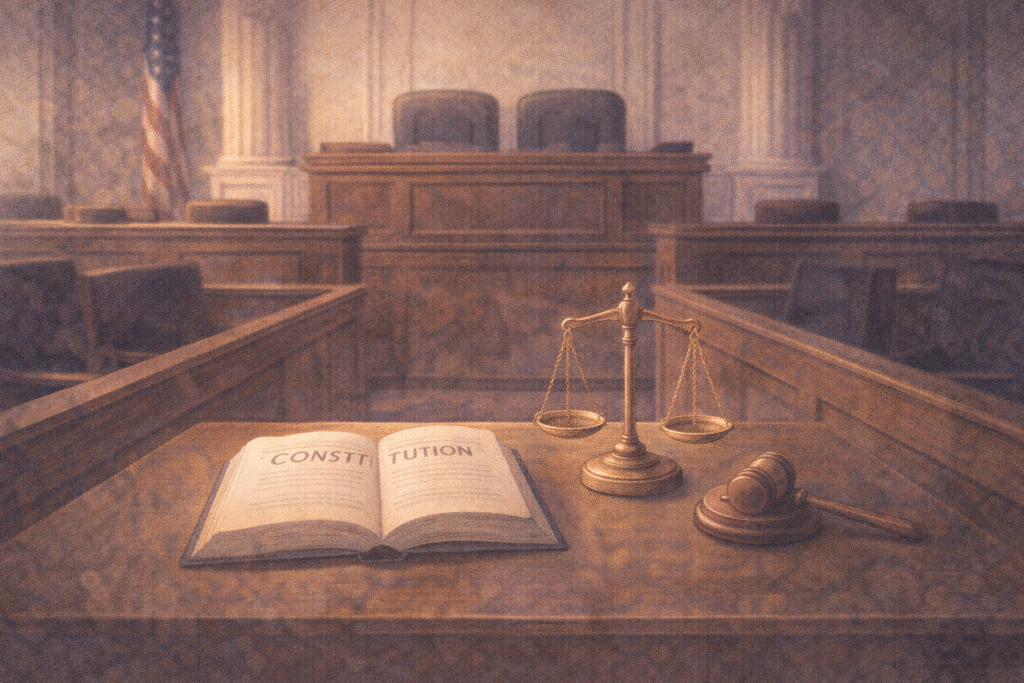
    A symbolic courtroom representing the state as a protector of individual freedom

    The state is one of the most powerful institutions humanity has ever created.

    It makes laws, guarantees rights, and maintains social order. At the same time, it surveils, regulates, and sometimes legitimizes violence in the name of security. We live under its protection—and under its authority.

    This raises a persistent and unsettling question:

    Should the state be understood as a guardian of individual freedom, or as a Leviathan that justifies control?

    Today’s inquiry stages this question not as a verdict to be delivered, but as a trial of ideas—a stage of reflection where competing philosophies confront one another.


    2. The Plaintiff’s Case: The State as Guardian of Freedom

    The Liberal Conception of the State

    Modern liberal thinkers have long argued that the state exists primarily to protect individual rights.

    John Locke, in Two Treatises of Government, maintained that human beings are born free and equal, possessing natural rights to life, liberty, and property. According to this view, the state is a minimal mechanism created solely to secure these rights—not to override them.

    John Stuart Mill reinforced this position in On Liberty, insisting that state interference must be kept to an absolute minimum. For Mill, individual autonomy is not merely a private good; it is the engine of social progress. A society flourishes when individuals are free to think, speak, and live according to their own convictions, so long as they do not harm others.

    From this perspective, the state resembles a watchful guardian: present, but restrained. It is not a master of citizens, but a protector of their freedom. Contemporary democratic institutions—freedom of speech, freedom of assembly, freedom of religion—are often cited as evidence that the liberal vision of the state remains alive.

    The plaintiff’s argument is clear: the state’s legitimacy rests on its ability to safeguard freedom, not to manage lives.

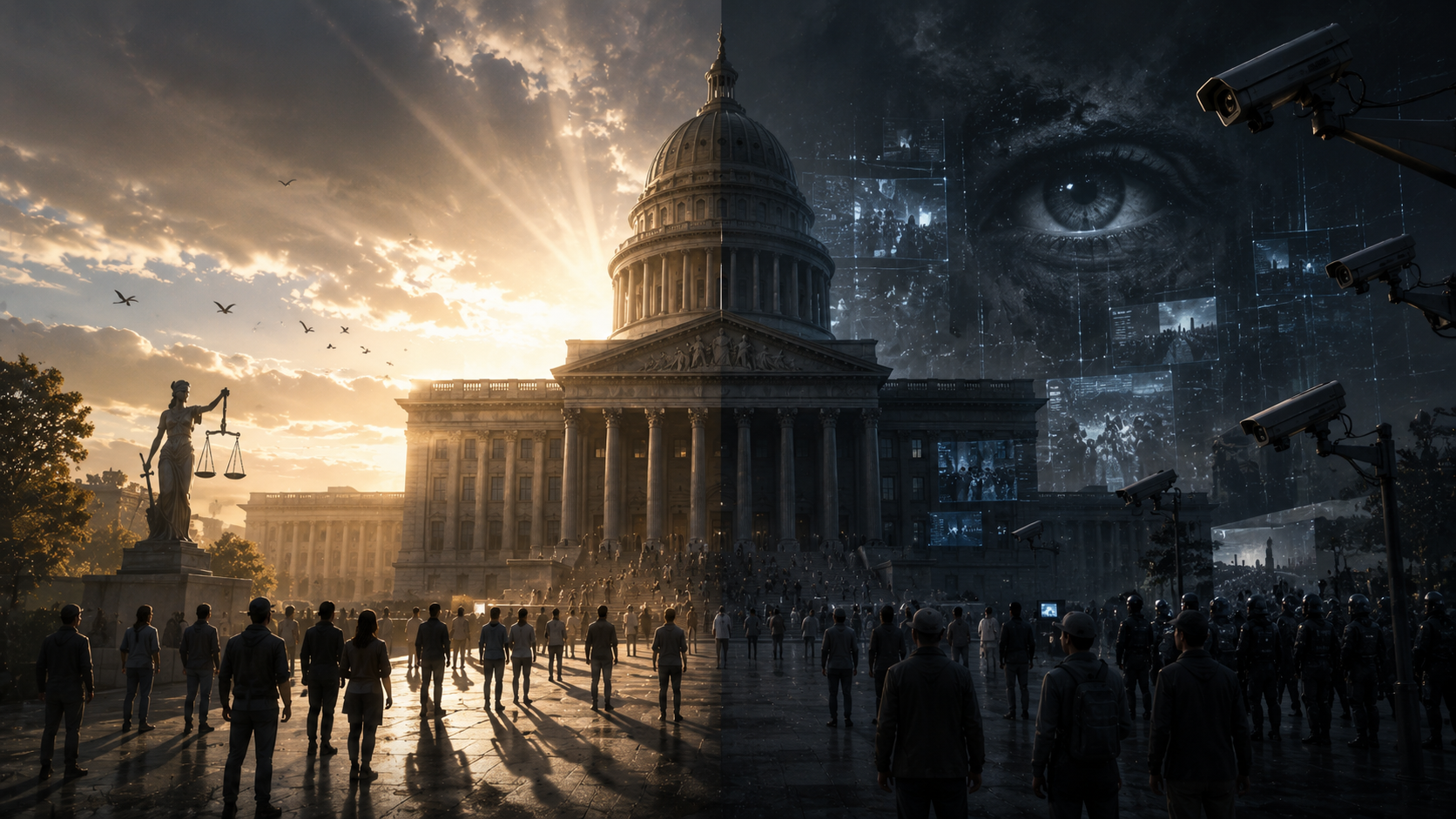
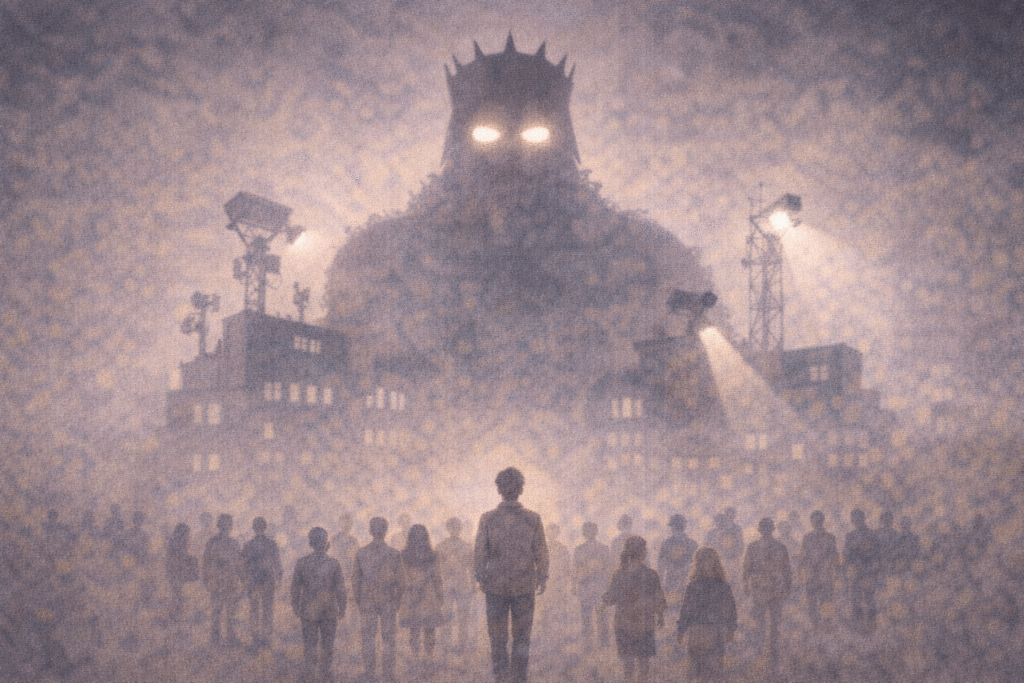
    The state portrayed as a Leviathan symbolizing authority, control, and security

    3. The Defendant’s Case: The State as Leviathan

    Control as a Condition of Order

    The opposing view, however, paints a far darker picture of human nature—and a far stronger role for the state.

    Thomas Hobbes, in Leviathan, famously described life in the state of nature as a condition of perpetual insecurity: a war of all against all. In such a world, life is “solitary, poor, nasty, brutish, and short.”

    To escape this chaos, individuals enter a social contract, surrendering portions of their freedom to a sovereign authority capable of enforcing order. That authority is the state—powerful, centralized, and uncompromising when necessary.

    From this standpoint, the state is not merely a guardian of freedom; it is a mechanism that legitimizes control in order to prevent collapse. Freedom without authority, Hobbes argued, leads not to harmony but to fear.

    Modern history offers many examples that echo this logic. During pandemics, governments restrict movement. In the name of security, states monitor borders, communications, and data flows. These actions undeniably limit individual freedom, yet they are often defended as necessary for collective survival.

    The defendant’s case insists that control is not the enemy of freedom, but its precondition.


    4. Evidence and Counterarguments

    The tension between these positions becomes most visible when state power expands.

    From the liberal perspective, growing surveillance capabilities—especially in digital societies—pose a serious threat to freedom. When governments collect personal data, monitor online behavior, or justify intrusion through vague security concerns, the boundary between protection and domination begins to blur. History offers many reminders that extraordinary powers, once granted, are rarely surrendered voluntarily.

    The defense responds by questioning the feasibility of unrestricted freedom. Absolute liberty, it argues, can undermine the freedom of others. Disinformation, hate speech, and unregulated digital platforms can erode democratic trust and social cohesion. In such cases, state intervention is framed not as oppression, but as a means of preserving the conditions under which freedom can exist.

    What emerges is not a simple opposition, but a paradox: freedom seems to require both restraint and protection, both limits and guarantees.


    5. Contemporary Implications: A Persistent Tension

    In practice, modern states embody both roles.

    Democratic governments protect civil liberties while simultaneously exercising extensive regulatory and surveillance powers. National security measures restrict privacy. Public health policies limit movement. Data-driven governance promises efficiency but risks turning citizens into transparent subjects.

    The state oscillates between guardian and Leviathan, often wearing both masks at once.

    As technology advances and crises multiply—climate, health, security—the tension between freedom and control is unlikely to fade. Instead, it will intensify, demanding continual negotiation rather than definitive resolution.


    Conclusion: An Unfinished Trial

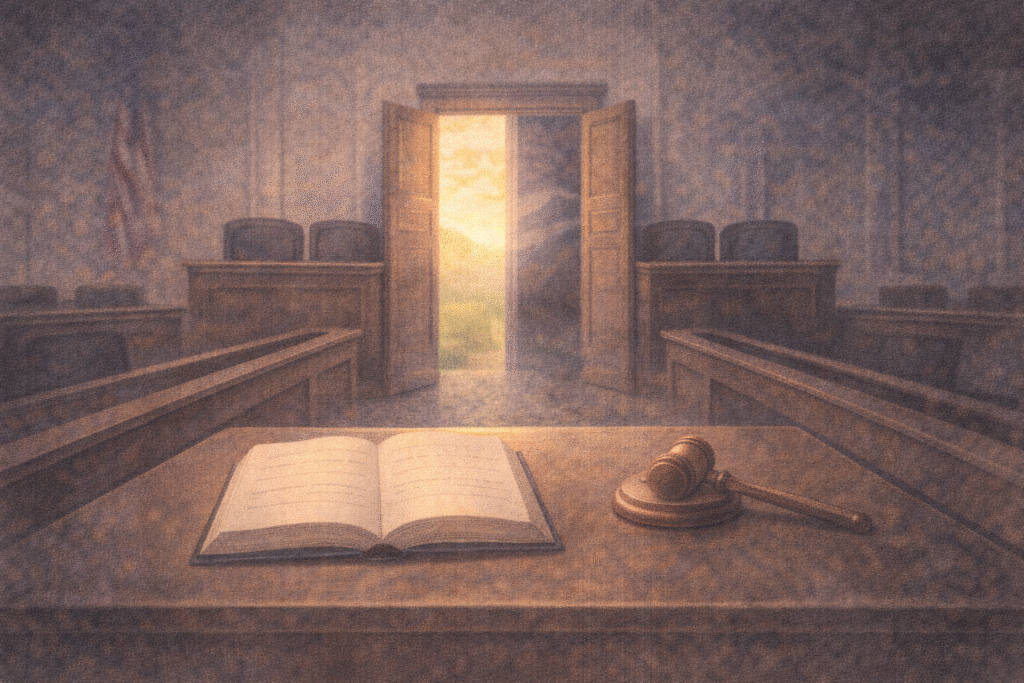
    An empty courtroom verdict symbolizing unresolved tension between freedom and control

    Is the state a shield that protects our freedom, or a Leviathan that disciplines and controls us?

    The plaintiff argues for restraint, warning that unchecked power corrodes liberty. The defense insists that authority is indispensable in an uncertain world. Both present compelling evidence. Neither delivers a final answer.

    The courtroom remains open. The verdict is deferred.

    Perhaps this question cannot—and should not—be settled once and for all. Instead, it must remain alive, shaping our political choices and institutional designs.

    The state stands before us, neither purely protector nor purely monster, but a reflection of how we choose to balance freedom and control.


    Related Reading

    This political dilemma resonates with deeper questions about moral authority raised in Can Humans Be the Moral Standard?.

    Economic assumptions behind freedom and responsibility are also examined in The Illusion of “Free”: How Zero Price Changes Our Decisions.

    References

    1. Hobbes, T. (1651/1996). Leviathan. Cambridge: Cambridge University Press.
      Hobbes presents the state as a powerful sovereign created to escape the chaos of the state of nature. His conception of Leviathan remains foundational for arguments that justify strong authority in the name of order and security.
    2. Locke, J. (1689/1988). Two Treatises of Government. Cambridge: Cambridge University Press.
      Locke articulates the liberal vision of the state as a protector of natural rights. His work forms the philosophical basis for constitutional government and limits on political power.
    3. Mill, J. S. (1859/1977). On Liberty. Indianapolis: Hackett Publishing.
      Mill defends individual autonomy against state interference, emphasizing freedom as a condition for personal and social development. His arguments remain central to modern liberal thought.
    4. Berlin, I. (1969/2002). Four Essays on Liberty. Oxford: Oxford University Press.
      Berlin’s distinction between negative and positive liberty provides a conceptual framework for understanding the tension between freedom and authority in modern political life.
    5. Foucault, M. (1975/1995). Discipline and Punish: The Birth of the Prison. New York: Vintage Books.
      Foucault analyzes how modern states exercise power through surveillance and discipline, revealing how control can expand even within systems that formally endorse freedom.
  • The Minimal State: An Ideal of Liberty or a Neglect of the Common Good?

    A question at the heart of political philosophy

    Few political ideas provoke as much controversy as the notion of the minimal state.
    Should the state exist only to protect individual liberty, or does it bear responsibility for promoting social justice and the common good?

    In modern political philosophy, this question is most famously associated with Robert Nozick, a leading libertarian thinker. His defense of the minimal state continues to shape debates about freedom, inequality, welfare, and the moral limits of government power.


    1. The Idea of the Minimal State

    An individual standing freely with a minimal state in the background, symbolizing libertarian political philosophy

    1.1 Nozick’s libertarian foundation

    In Anarchy, State, and Utopia (1974), Robert Nozick confronts the question of state legitimacy head-on.
    According to Nozick, the only morally justified state is a minimal one—limited to protecting individuals against force, theft, fraud, and breach of contract.

    Any state that goes beyond these functions—by redistributing wealth, providing welfare, or promoting collective goals—violates individual rights. For Nozick, such interventions amount to unjust coercion.

    1.2 The “night-watchman state”

    Nozick famously likens the legitimate state to a night-watchman:
    its role is narrow but essential—police, courts, and national defense.
    Education, healthcare, and economic redistribution, by contrast, should remain matters of voluntary choice and private association.

    This raises a fundamental question:
    Is the protection of liberty enough to justify the state’s existence?


    2. The Minimal State as an Ideal of Liberty

    2.1 Absolute respect for property rights

    At the core of Nozick’s argument lies a strong conception of property rights.
    Justice, he argues, is procedural rather than distributive. If holdings are acquired justly and transferred voluntarily, the resulting distribution—however unequal—is morally legitimate.

    From this perspective, taxation for redistributive purposes resembles forced labor, as it compels individuals to surrender the fruits of their labor for others.

    2.2 Freedom without coercion

    For libertarians, freedom is defined by the absence of coercion.
    Markets, when left alone, reflect voluntary exchanges among individuals pursuing their own ends.

    The state’s role, therefore, is not to engineer outcomes but to ensure that exchanges remain free from violence and fraud.

    2.3 Limiting state power

    Because the state monopolizes legitimate force, libertarians argue that its power must be minimized.
    The less authority the state holds, the more space individuals have to live according to their own values.

    From this viewpoint, the minimal state represents the purest institutional expression of liberty.


    3. Critiques: The Neglect of the Common Good

    Social inequality emerging within a minimal state, questioning justice and the common good

    Despite its appeal, the minimal state faces powerful objections.

    3.1 Deepening social inequality

    Critics argue that voluntary exchange does not occur on a level playing field.
    Economic inequality shapes bargaining power, meaning that “free” transactions often reproduce structural injustice.

    Without redistributive mechanisms, the most vulnerable members of society may lack access to basic necessities—education, healthcare, or even physical security.

    3.2 The problem of public goods

    Markets struggle to provide public goods such as national defense, environmental protection, and public health.
    These goods are vulnerable to free-rider problems, making collective action unavoidable.

    In such cases, state intervention appears not as a threat to liberty but as a condition for social stability.

    3.3 Erosion of social solidarity

    A state that recognizes only individual rights risks undermining social cohesion.
    Communities depend on shared responsibilities, not merely contractual relations.

    Paradoxically, neglecting the common good may ultimately weaken the very freedoms libertarians seek to protect.


    4. Nozick and Rawls: A Philosophical Tension

    4.1 Justice as procedure vs. justice as fairness

    Nozick’s theory stands in sharp contrast to John Rawls’s A Theory of Justice.
    Rawls argues that inequalities are acceptable only if they benefit the least advantaged members of society.

    While Nozick prioritizes the fairness of procedures, Rawls emphasizes the moral significance of outcomes.

    4.2 Two visions of the state

    • Nozick: The state should never violate individual rights, regardless of social consequences.
    • Rawls: The state has a duty to secure fair opportunities and protect the vulnerable.

    This tension captures a central dilemma of modern political philosophy.


    5. Is the Minimal State Viable Today?

    5.1 Contemporary relevance

    The minimal state remains attractive as a critique of bureaucratic excess and paternalism.
    It reminds us that unchecked state power can threaten autonomy and creativity.

    5.2 Structural limitations

    Yet modern challenges—climate change, global pandemics, digital monopolies—cannot be addressed through individual action alone.
    Powerful corporations and transnational forces often exceed the regulatory capacity of a minimal state.

    In such contexts, non-intervention may amount to tacit injustice.

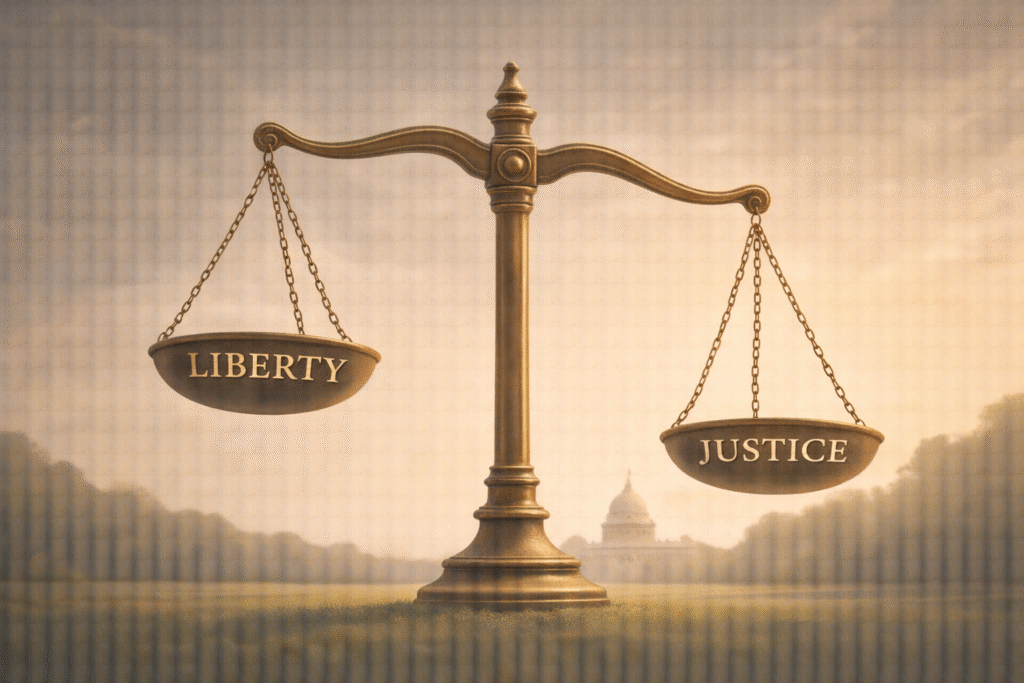
    A balance scale between liberty and justice, representing the debate over the minimal state

    Conclusion: Between Ideal and Reality

    The minimal state offers a compelling vision of liberty grounded in respect for individual rights.
    At the same time, it risks overlooking the social conditions that make freedom meaningful in practice.

    The enduring question remains:

    Should the state be merely a guardian of liberty, or an active agent of the common good?

    In confronting this question, Nozick’s philosophy continues to serve not as a final answer, but as a powerful lens through which to examine freedom, justice, and responsibility in modern society.


    Related Reading

    This debate overlaps with deeper moral boundary questions raised in Can Humans Be the Moral Standard?

    Economic assumptions behind freedom, choice, and responsibility are explored more concretely in The Illusion of “Free”: How Zero Price Changes Our Decisions.

    References

    1. Nozick, R. (1974). Anarchy, State, and Utopia. New York: Basic Books.
      → The foundational text of libertarian political philosophy, offering the most systematic defense of the minimal state and absolute property rights.
    2. Rawls, J. (1971). A Theory of Justice. Cambridge, MA: Harvard University Press.
      → A landmark work proposing justice as fairness and providing the most influential critique of libertarian minimalism.
    3. Sandel, M. J. (1982). Liberalism and the Limits of Justice. Cambridge University Press.
      → Explores the moral and communal limits of liberal theories that prioritize individual rights over shared values.
    4. Cohen, G. A. (1995). Self-Ownership, Freedom, and Equality. Cambridge University Press.
      → A rigorous philosophical challenge to Nozick’s conception of self-ownership and libertarian justice.
    5. Sen, A. (1999). Development as Freedom. Oxford University Press.
      → Expands the notion of freedom beyond non-interference, emphasizing capabilities, social conditions, and public responsibility.
  • The Transparency Society: Foundation of Trust or Culture of Surveillance?

    The Transparency Society: Foundation of Trust or Culture of Surveillance?

    In today’s digital world, transparency is often praised as a foundation of trust.

    From governments to social media, being visible and open is seen as a virtue.

    But what if transparency does not always create trust—
    and instead turns into a subtle form of surveillance?

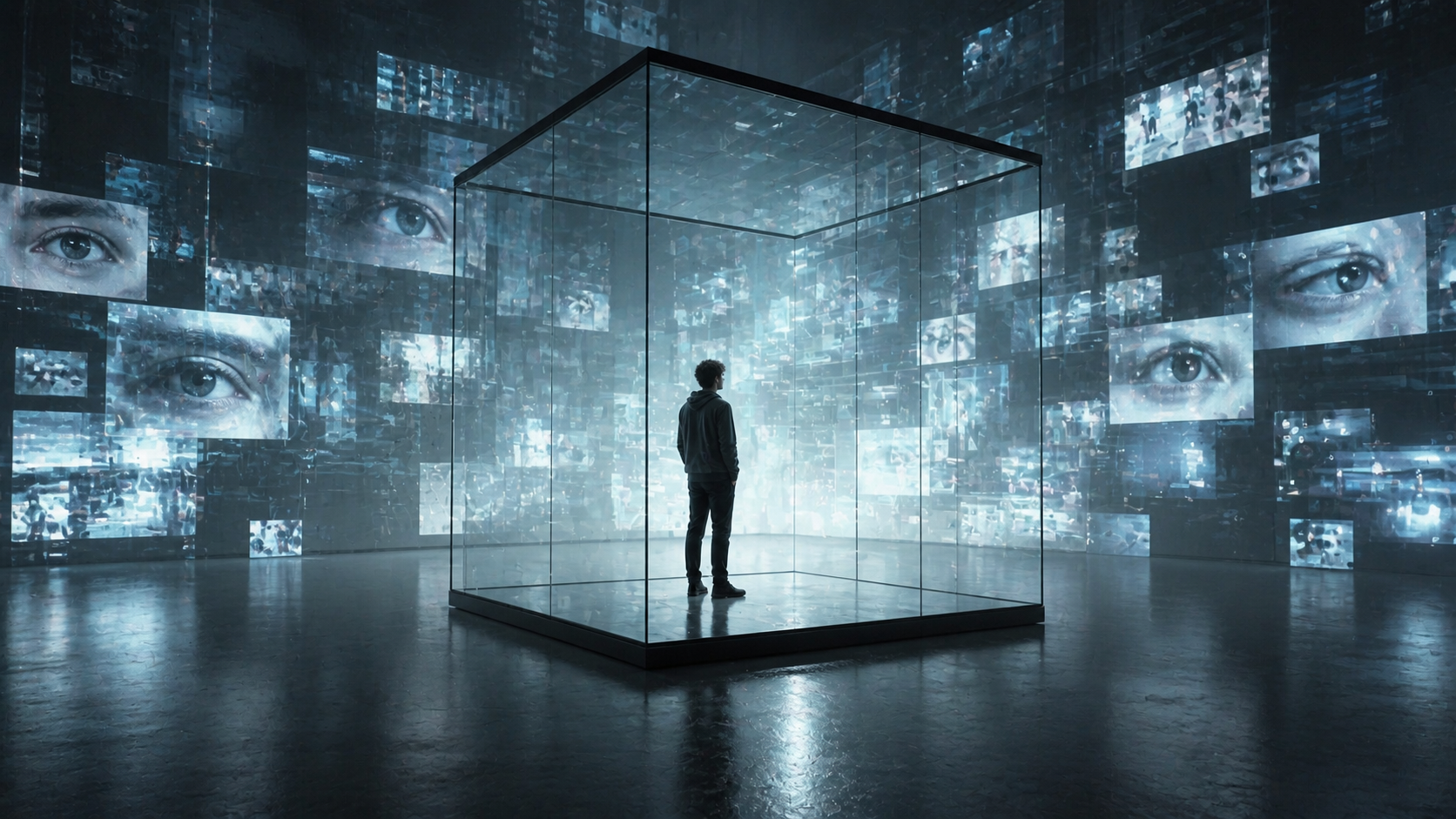
    Transparent society symbolized by open glass architecture

    1. The Two Faces of Transparency

    In contemporary society, transparency has become a central keyword across politics, economics, and everyday life. Government transparency is expected to reduce corruption, corporate transparency is believed to strengthen investor confidence, and personal transparency is often praised as a foundation of social trust. Information disclosure, public participation, and accountability are widely celebrated as democratic ideals rooted in transparency.

    However, the philosopher Byung-Chul Han presents a radically different perspective in The Transparency Society. For Han, transparency is not merely a democratic virtue but a new form of power operating in modern society. A world in which everything must be visible and disclosed does not necessarily generate trust; instead, it can produce constant surveillance and self-censorship.


    2. The Structure of the Transparency Society: The Compulsion to Reveal

    Han describes contemporary society as a “society of positivity.” While Michel Foucault analyzed disciplinary societies based on repression and prohibition, today’s social order operates through encouragement, exposure, and voluntary participation. Digital platforms—especially social media—continuously invite individuals to reveal themselves.

    Within this structure, transparency becomes not a choice but a condition of social existence. Likes, shares, and visibility function as social currencies. Individuals are compelled to expose their lifestyles, emotions, and preferences to remain socially relevant.

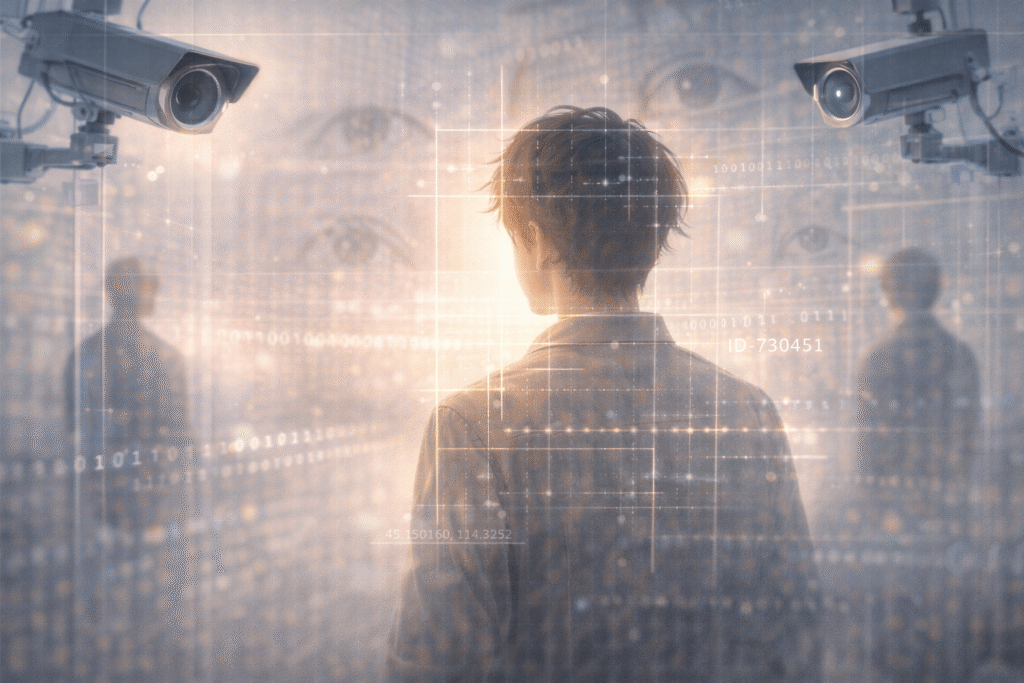
    As a result, people become both the objects and agents of surveillance. Fear of exclusion leads individuals to internalize the gaze of others, transforming society into a system of self-monitoring rather than external coercion.

    Digital surveillance emerging from enforced transparency

    3. Democratic Ideals and the Paradox of Transparency

    Transparency originally aimed to restrain power and protect citizens’ rights. Public asset disclosures, open decision-making processes, and accessible records are essential democratic mechanisms designed to prevent abuse and corruption.

    Yet Han warns that when transparency expands indiscriminately, society becomes vulnerable to the violence of overexposure. In a world where every action and statement may be permanently recorded, spaces for political reflection and genuine debate shrink.

    Citizens begin to practice self-censorship, choosing “safe” opinions over critical or unconventional ones. Paradoxically, excessive transparency weakens democracy by undermining pluralism, dissent, and deliberative freedom.


    4. Trust or Surveillance Culture?

    The belief that transparency automatically produces trust is deeply flawed. Trust does not arise from knowing everything about others; rather, it emerges from accepting uncertainty within relationships. Trust between parents and children, friends, or partners exists precisely because not everything is visible or controllable.

    A society that demands total transparency risks cultivating suspicion instead of trust. Any undisclosed information becomes grounds for doubt, and individuals feel compelled to reveal more while experiencing greater anxiety. In this sense, the transparency society becomes a variation of the surveillance society.


    5. The Politics of Transparency in the Digital Age

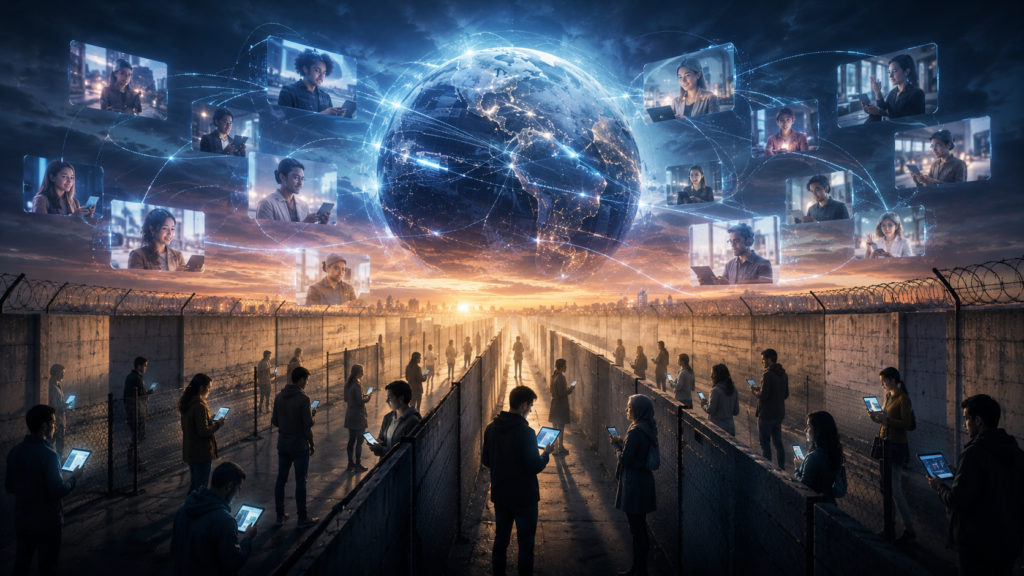
    Digital platforms represent the most concrete manifestation of the transparency society. Location data, consumption habits, and social networks are constantly collected, analyzed, and monetized. Although this process appears voluntary, it is deeply embedded in the structure of surveillance capitalism.

    Sharing daily life on platforms such as Facebook or Instagram is not merely self-expression; it is also a form of data production that fuels corporate profit. Transparency shifts from democratic communication to an economic instrument, expanding platform power rather than strengthening citizenship.


    6. The Right to Opacity and Democratic Survival

    What alternatives exist? Han argues that democracy requires a right to opacity. Informal political discussions, protected private spaces, and relational ambiguity do not signify corruption or dishonesty. Instead, they preserve freedom, creativity, and reflection.

    Critiquing the transparency society does not mean rejecting transparency altogether. It means resisting its elevation into an absolute moral value. Genuine trust does not grow from total visibility but from the willingness to coexist with uncertainty.

    Opacity as a space for reflection and democratic freedom

    Conclusion

    Is the transparency society a foundation of trust, or has it evolved into a culture of surveillance and self-censorship? Han’s analysis offers a crucial warning. A society that demands unlimited transparency in the name of democracy risks becoming a democracy with the face of surveillance.

    Respecting transparency while defending the right to opacity may be the only way to protect trust, freedom, and democratic life in the digital age.

    A Question for You

    In a world where everything is visible,
    do you feel more secure—or more watched?

    Related Reading

    The influence of digital systems on human perception and behavior is further explored in
    How Search Boxes Shape Thinking,
    which examines how algorithmic structures shape the way we think and process information.

    The emotional impact of constant visibility and comparison is also reflected in
    How Social Media Amplifies Feelings of Lack and Comparison,
    highlighting how exposure and curated content influence self-perception in everyday life.


    References

    1. Han, B.-C. (2012). The Transparency Society. Stanford University Press.
      → This foundational work critiques the modern obsession with transparency and explains how constant visibility fosters self-surveillance rather than trust.
    2. Foucault, M. (1975/1995). Discipline and Punish: The Birth of the Prison. Vintage Books.
      → Foucault’s concept of the panopticon provides a theoretical foundation for understanding surveillance as a mechanism of power.
    3. Bauman, Z. (2000). Liquid Modernity. Polity Press.
      → Bauman analyzes social insecurity and fluidity, offering insights into how transparency intensifies modern anxiety.
    4. Lyon, D. (2018). The Culture of Surveillance. Polity Press.
      → This work shows how surveillance has become normalized as a way of life, closely aligning with transparency discourse.
    5. Zuboff, S. (2019). The Age of Surveillance Capitalism. PublicAffairs.
      → Zuboff examines how digital transparency feeds corporate control and reshapes democratic power structures.
  • Automation of Politics: Can Democracy Survive AI Governance?

    If AI can govern more efficiently than humans, does democracy still need human judgment?

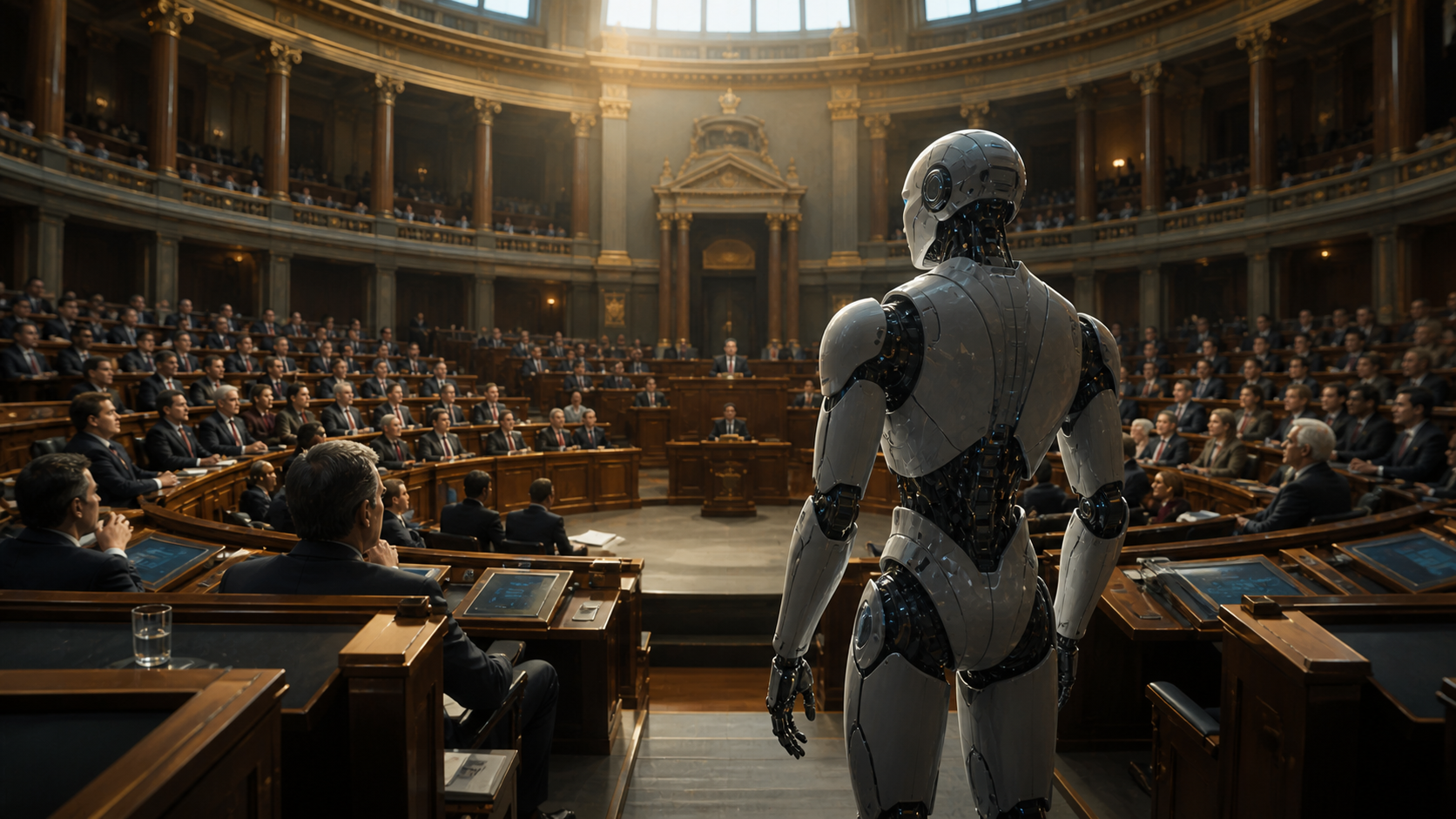
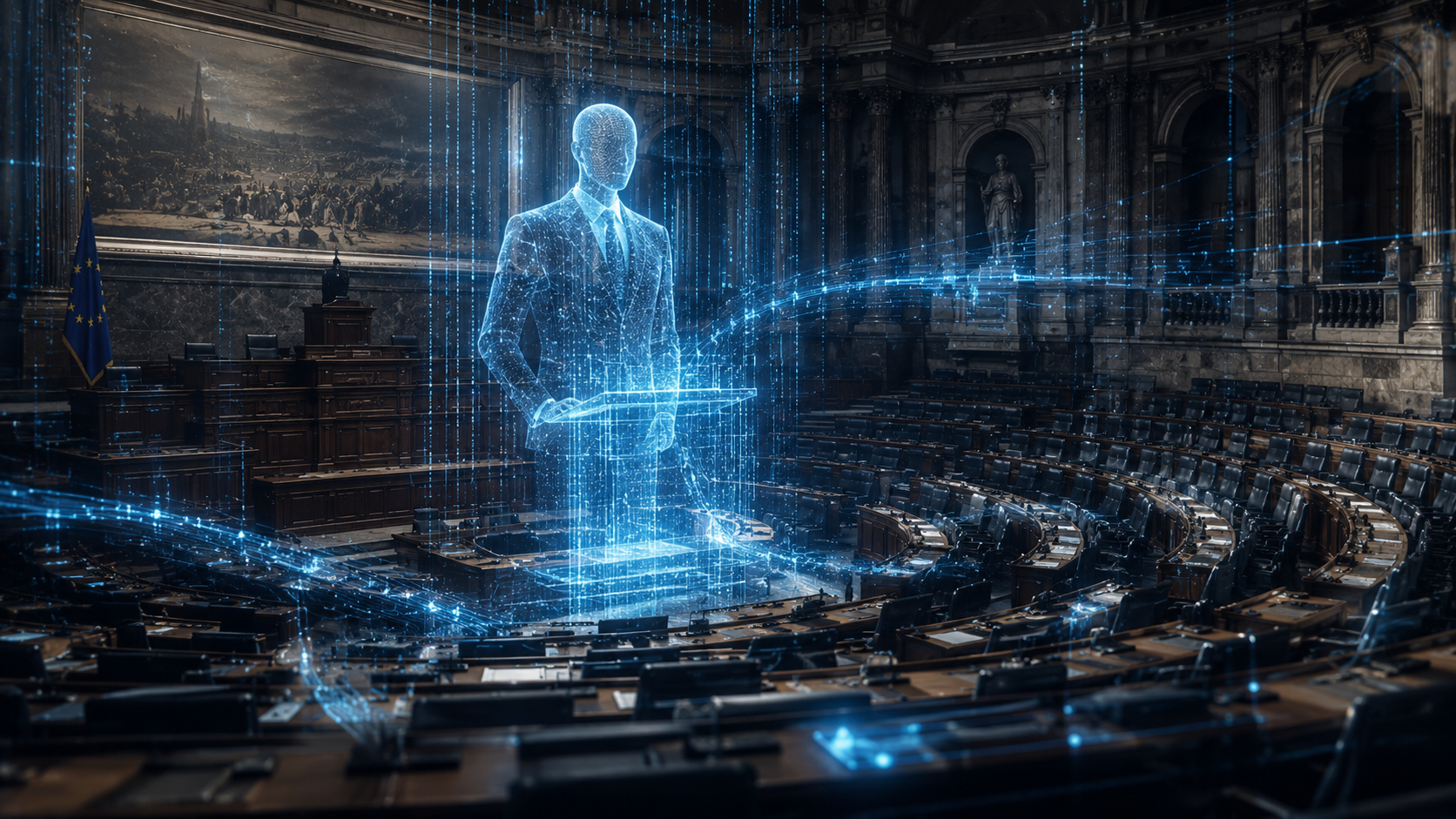
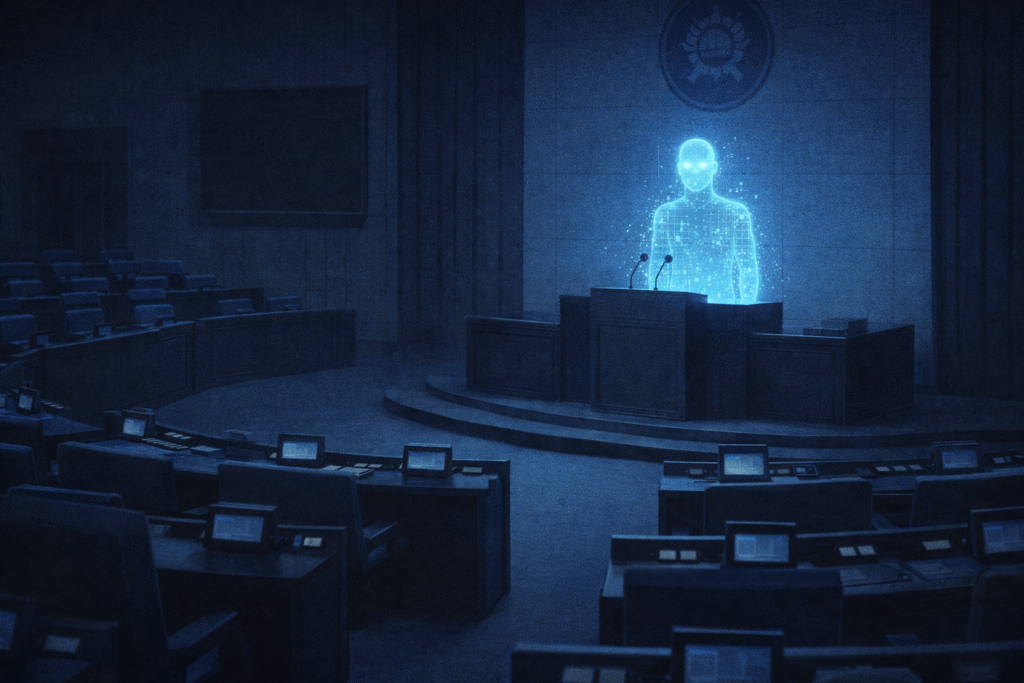
    AI hologram standing in an empty parliament chamber

    As artificial intelligence advances, the idea of automated governance is no longer science fiction.

    From policy prediction to algorithmic decision-making, technology is gradually entering the core of political systems.

    But this raises a fundamental question:

    Can democracy survive when decisions are no longer made by humans?

    1. The Temptation of Automated Politics

    In recent years, a curious sentiment has become increasingly common on social media:
    “Perhaps an AI president would be better.”

    As frustration with corruption, inefficiency, and political dishonesty deepens, many people begin to imagine an alternative—one in which algorithms replace politicians, and data replaces debate. In such a vision, democracy appears faster, cleaner, and more rational. Voting feels slow; a click feels immediate.

    This is the quiet temptation of what might be called automated politics—a form of governance that promises decisions faster than ballots and calculations more precise than deliberation.

    In practice, artificial intelligence is already embedded in the machinery of the state. Governments analyze public opinion through social media data, predict the outcomes of policy proposals, optimize welfare distribution, and even experiment with algorithmic sentencing tools in judicial systems.

    At first glance, the advantages seem undeniable.
    Human bias and emotional judgment appear to fade, replaced by “objective” data-driven decisions. Declining voter participation and distorted public opinion seem less threatening when algorithms promise accuracy and efficiency.

    Yet beneath this efficiency lies a heavier question.

    If politics becomes merely a technology for producing correct outcomes, where does political freedom reside?
    If algorithms calculate every decision in advance, do citizens remain thinking participants—or do they become residents of a pre-decided society?


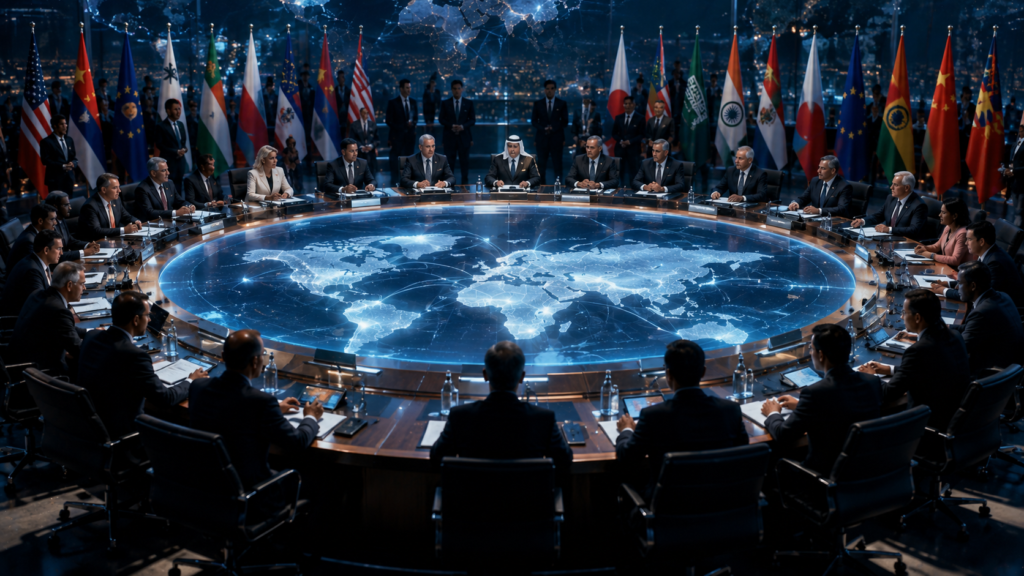
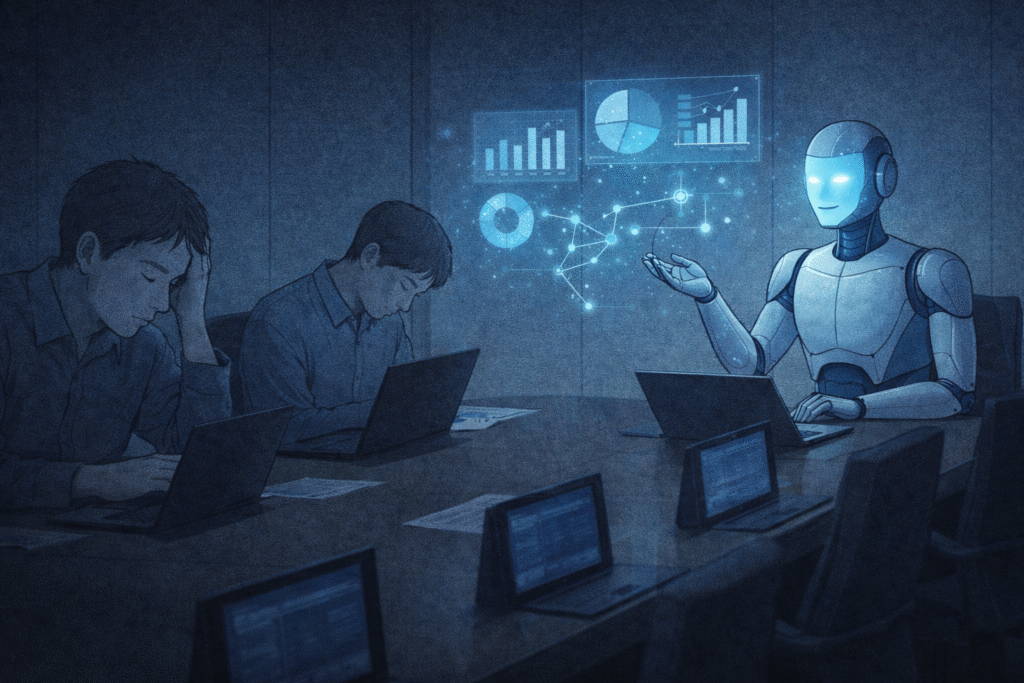
    Humans and AI debating governance in a modern conference room

    2. Technology and the New Political Order

    Under the banner of data democracy, AI has become an active political actor.

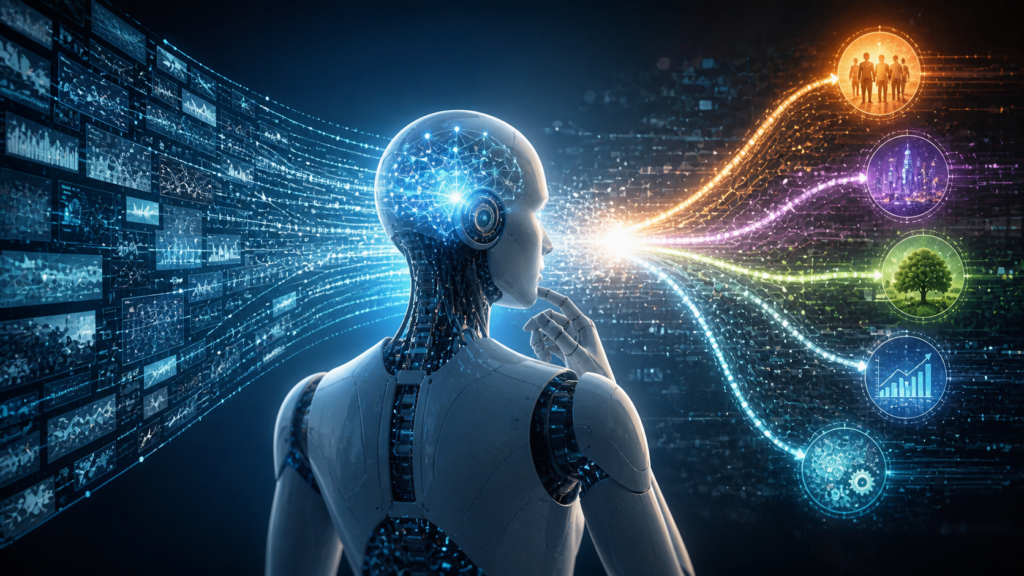
    Algorithms map public sentiment more quickly than opinion polls, forecast electoral behavior, and design policy simulations that claim to minimize risk. Administrative systems increasingly rely on “policy algorithms” to distribute resources, while predictive models guide policing and judicial decisions.

    On the surface, this appears to resolve a long-standing crisis of political trust. Technology presents itself as a neutral solution to flawed human governance.

    But technology is never neutral.

    Algorithms learn from historical data—data shaped by social inequality, exclusion, and bias. A welfare optimization model may quietly exclude marginalized groups in the name of efficiency. Crime prediction systems may reinforce existing prejudices by labeling entire communities as “high risk.”

    In such cases, objectivity becomes a mask.
    Under the language of rational calculation, political power risks transforming into a new form of invisible domination—one that is harder to contest precisely because it claims to be impartial.


    3. Can Rationality Replace Justice?

    The logic of automated governance rests on rational optimization: calculating the best possible outcome among countless variables.

    Yet democracy is not sustained by efficiency alone.

    As Jürgen Habermas argued, democratic legitimacy arises from communicative rationality—from public reasoning, debate, and mutual justification. Democracy depends not only on outcomes, but on the process through which decisions are reached.

    Automated politics bypasses this process.
    Human emotions, ethical dilemmas, historical memory, and moral disagreement are pushed outside the domain of calculation.

    When laws are enforced by algorithms, taxes distributed by models, and policies generated by data systems, citizens risk becoming passive recipients of technical decisions rather than active participants in political life.

    Hannah Arendt famously described politics as the space where humans appear before one another. Politics begins not with calculation, but with plurality—with the unpredictable presence of others.

    No matter how accurate an algorithm may be, the ethical weight of its decisions must still be borne by humans.


    4. The Crisis of Representation and Post-Human Politics

    Automated politics introduces a deeper structural rupture: the erosion of representation.

    Democracy rests on the premise that someone speaks on behalf of others. But when AI systems aggregate the data of millions and generate policies automatically, representatives appear unnecessary.

    Politics shifts from dialogue to administration—governance without conversation.

    Political philosopher Pierre Rosanvallon described this condition as the paradox of transparency: a society in which everything is visible, yet no one truly speaks. All opinions are collected, but none are articulated as meaningful political voices.

    In such a system, dissent becomes statistical noise.
    Ethical resistance, moral imagination, and collective protest lose their place.

    The automation of politics risks reducing moral autonomy to computational output—an experiment not merely in governance, but in redefining humanity’s political existence.


    Conclusion – Politics Without Humans Is Not Democracy

    A young person reflecting on democracy at sunset

    The pace at which AI enters political systems is accelerating.
    But democracy is not measured by speed.

    Its foundation lies in responsibility, empathy, and shared judgment. Political decision-making is not simply information processing—it is an ethical act grounded in understanding human vulnerability.

    AI may help govern a state.
    But can it govern a society worth living in?

    Politics is not merely a technique for managing populations.
    It is an art of understanding people.

    Artificial intelligence is a tool, not a political subject.
    What we must prepare for is not the arrival of AI politics, but the challenge of remaining human political beings in an age of automation.


    A Question for You

    If an AI could make more efficient and accurate decisions than humans,
    would you still want to participate in democracy?

    Related Reading

    The transformation of human judgment under intelligent systems is further explored in
    The Paradox of AI Education,
    which questions whether meaning can survive when decisions and learning are automated.

    The tension between freedom and technological control is also examined in
    If AI Can Predict Human Desire, Is Free Will an Illusion?,
    highlighting how human autonomy may be reshaped in algorithmic systems.

    References

    Arendt, H. (1958). The Human Condition. Chicago, IL: University of Chicago Press.
    → Explores political action as a uniquely human domain, emphasizing responsibility and plurality beyond technical governance.

    Danaher, J. (2019). Automation and Utopia. Cambridge, MA: Harvard University Press.
    → Philosophically examines how automation reshapes human autonomy, meaning, and governance.

    Morozov, E. (2013). To Save Everything, Click Here. New York: PublicAffairs.
    → Critiques technological solutionism and warns against reducing democracy to data efficiency.

    Rosanvallon, P. (2008). Counter-Democracy: Politics in an Age of Distrust. Cambridge: Cambridge University Press.
    → Analyzes representation, surveillance, and the erosion of political voice in modern democracies.

    Floridi, L. (2014). The Fourth Revolution: How the Infosphere Is Reshaping Human Reality. Oxford: Oxford University Press.
    → Discusses the ethical implications of information technologies for political and civic life.