Can Art Break Free from Gender Stereotypes?
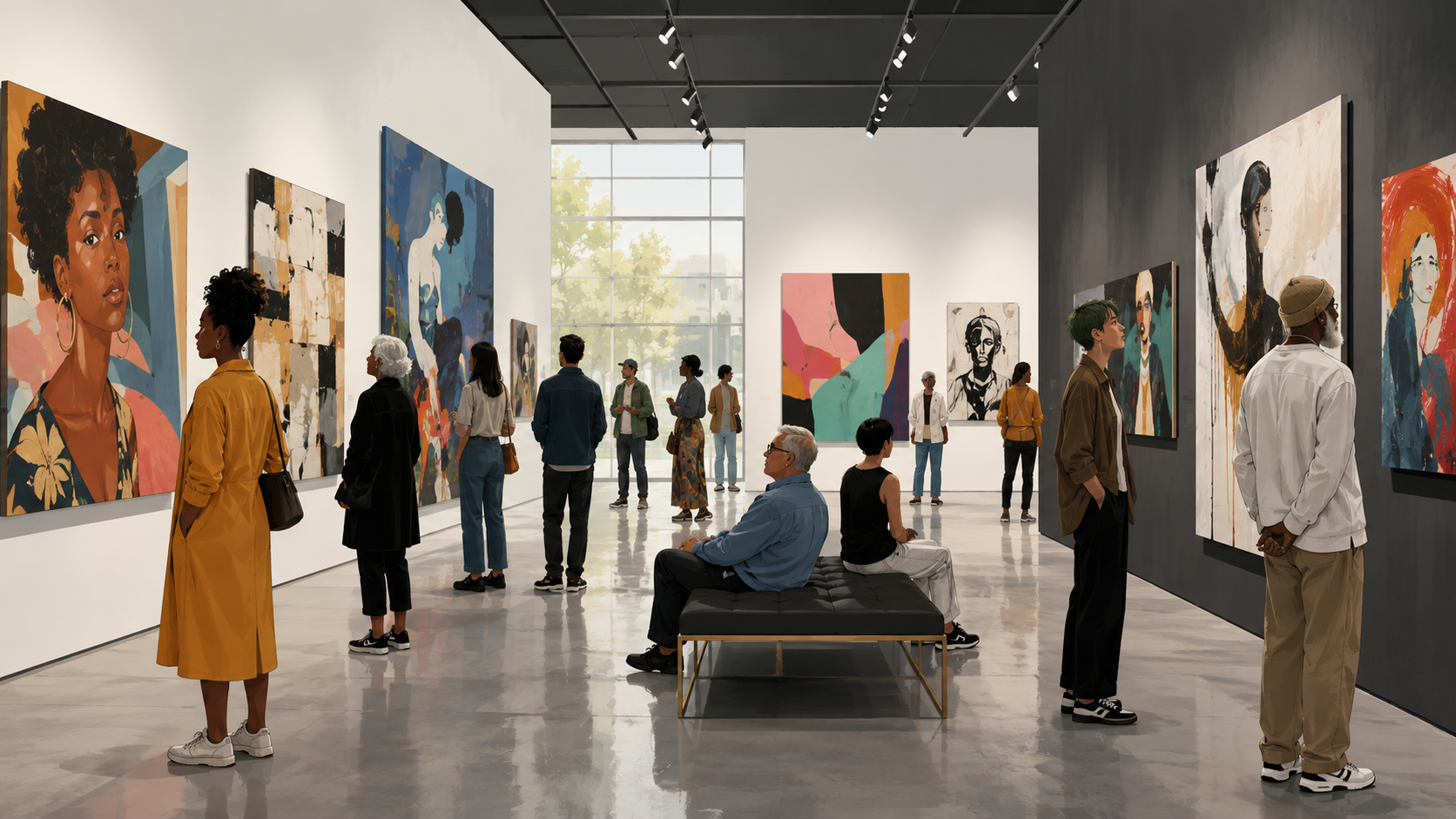
Art has always been one of humanity’s most powerful ways of expressing emotion, identity, and imagination. Yet artistic expression has never existed in complete isolation from society. Throughout history, cultural norms have influenced who was allowed to become an artist, what subjects were considered acceptable, and whose work was celebrated.
In recent decades, growing awareness of gender equality, LGBTQ+ rights, and cultural diversity has transformed conversations about art. Museums, galleries, and audiences increasingly ask whether artistic institutions have fairly represented diverse voices—or whether historical biases continue to shape today’s art world.
Rather than being merely a cultural debate, this discussion challenges us to reconsider how creativity, identity, and social justice intersect.
1. Gender Stereotypes in the History of Art
Who Was Allowed to Become an Artist?
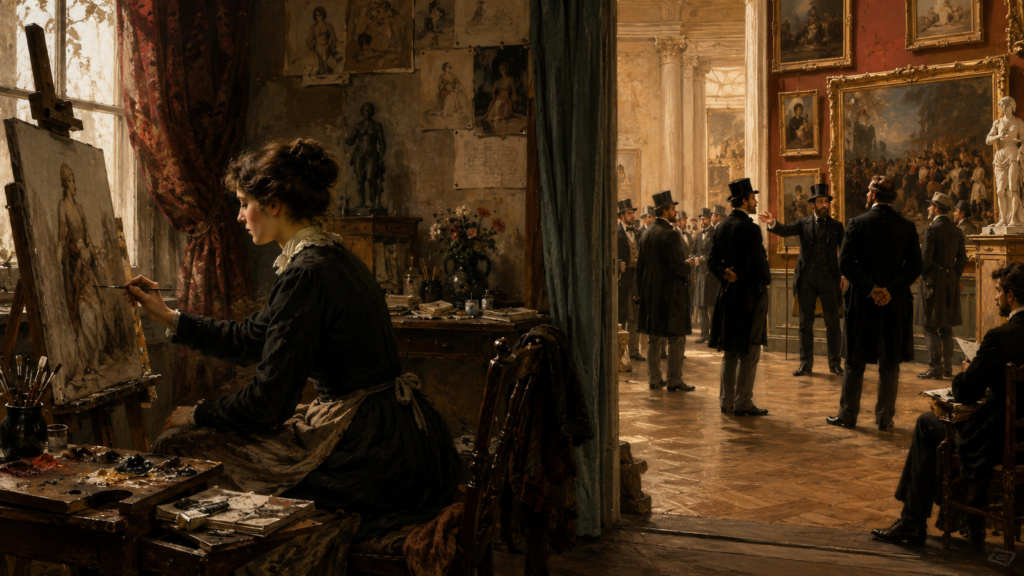
For much of history, professional artistic careers were largely reserved for men. Women often faced limited access to formal education, apprenticeships, and professional academies, making it difficult to pursue art as a lifelong profession.
Despite these obstacles, artists such as Berthe Morisot, Mary Cassatt, and Artemisia Gentileschi produced remarkable works that challenged the assumptions of their time. Yet many female artists received less recognition than their male contemporaries, and numerous works remained overlooked for generations.
This historical imbalance raises an important question: how many talented artists were excluded not because of ability, but because of social expectations?
Beyond Women: LGBTQ+ Artists and Visibility
Gender stereotypes also affected LGBTQ+ artists.
Throughout much of the twentieth century, many artists concealed their identities to avoid discrimination or censorship. Some works containing themes of sexuality or gender diversity were marginalized despite their artistic significance.
Today, many museums and cultural institutions are actively reexamining these overlooked contributions, recognizing that artistic history becomes richer when previously marginalized voices are included.
2. Breaking Stereotypes Through Contemporary Art
Art as a Space for Inclusion
Modern artists increasingly challenge conventional ideas about gender, identity, and representation.
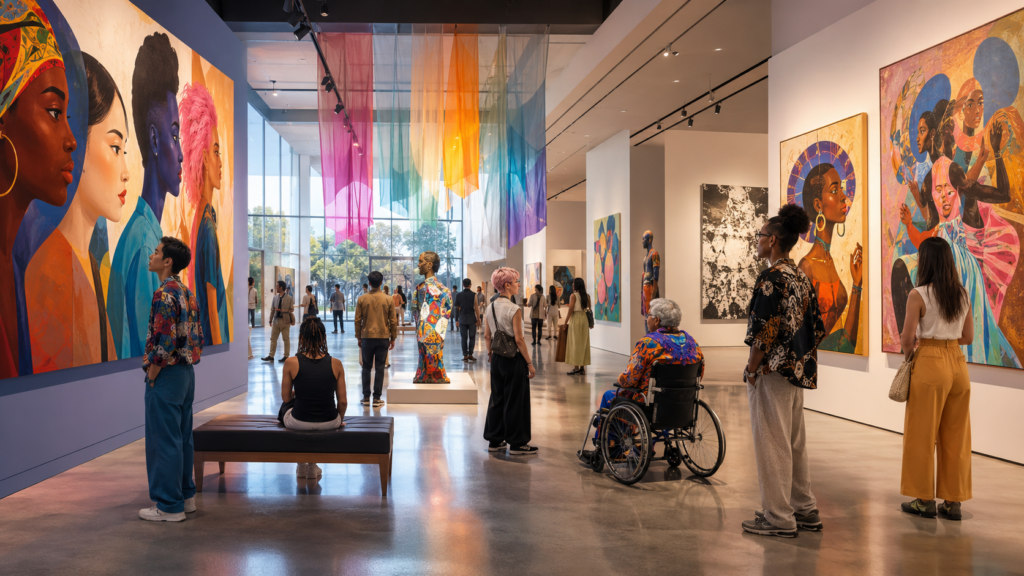
Contemporary exhibitions often explore questions surrounding masculinity, femininity, non-binary identities, and cultural diversity. Rather than reinforcing traditional categories, many artists intentionally blur boundaries, encouraging audiences to reconsider assumptions about identity.
Groups such as the Guerrilla Girls have drawn international attention by exposing gender inequality within major museums and galleries. Their campaigns have highlighted the underrepresentation of women artists and questioned how artistic value has historically been determined.
Representation Matters
Greater diversity among artists also changes what audiences see.
When creators from different backgrounds share their experiences, the range of artistic narratives expands. Viewers encounter stories, emotions, and perspectives that may previously have been absent from mainstream institutions.
In this sense, diversity is not simply about fairness—it also enriches artistic culture itself.
3. Should Art Be Judged by the Artist or the Artwork?
Separating Identity from Creativity
One of today’s most debated questions concerns the relationship between an artist’s identity and their work.
Some argue that understanding an artist’s gender, culture, or personal experiences deepens appreciation of the artwork. Others believe that once a work is created, it should stand on its own, independent of the creator’s background.
Neither perspective is entirely sufficient. Context can illuminate meaning, yet reducing art solely to the identity of its creator may overlook the universal qualities that allow people across cultures to connect with it.
Finding balance between these viewpoints remains one of contemporary art’s greatest challenges.
4. New Challenges in the Age of Artificial Intelligence
Can AI Reproduce Gender Bias?
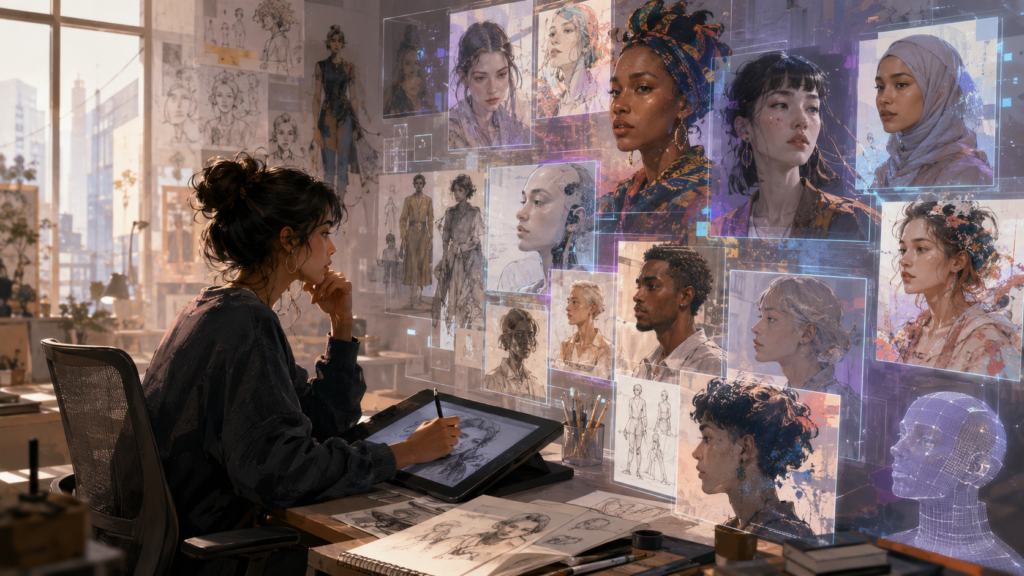
Artificial intelligence is beginning to influence artistic creation through image generation, music composition, and digital design.
However, AI systems learn from existing human-created data. If historical datasets contain gender stereotypes, AI-generated artworks may unintentionally reproduce those same biases.
Researchers have already observed examples where AI consistently associates certain professions, appearances, or emotional expressions with particular genders.
Ironically, technologies designed to expand creativity may also inherit the prejudices of the societies that created them.
This makes ethical oversight increasingly important as AI becomes a more influential creative partner.
5. Looking Toward a More Inclusive Future
Education and Cultural Change
Creating a more inclusive artistic environment requires more than simply increasing representation.
Art education can encourage students to explore diverse perspectives without imposing rigid expectations based on gender. Museums and cultural institutions can broaden collections, exhibitions, and acquisition policies to ensure that artistic excellence is recognized across diverse communities.
At the same time, societies should continue supporting open conversations about artistic freedom, identity, and equal opportunity.
The goal is not to erase differences but to create conditions in which creativity can flourish regardless of gender.
Conclusion
The debate surrounding gender and artistic expression extends far beyond galleries and museums. It reflects broader questions about equality, cultural values, and the ways societies recognize human creativity.
History demonstrates that many talented artists were constrained by social expectations rather than artistic ability. Contemporary movements have helped expand opportunities, yet discussions about representation, identity, and fairness continue to evolve.
Ultimately, art becomes stronger when it welcomes multiple perspectives. Creativity flourishes not because every artist shares the same identity, but because different voices contribute unique ways of seeing the world.
Perhaps the most meaningful future for art is not one in which gender disappears, but one in which gender no longer determines whose creativity deserves to be seen, valued, and remembered.
Reader Question
Can art ever be completely separated from the identity of the person who creates it, or do gender, culture, and personal experience inevitably shape how we create and interpret artistic expression?
As societies become more diverse, should artistic institutions focus primarily on equal representation, or should they judge every artwork independently of the artist’s identity?
Related Reading
Creative expression often reflects changing social values and cultural expectations. Fashion and Animal Ethics: Should Tradition Give Way to Ethical Fashion? explores how artistic industries adapt as ethical concerns, cultural traditions, and public values continue to evolve. Together, these discussions reveal that artistic expression is shaped not only by creativity, but also by society’s changing moral landscape.
If gender norms shape not only art but also everyday identity, how can modern societies move beyond traditional categories of “masculine” and “feminine”? Gender and Identity: Can Society Move Beyond the Binary? examines how gender identity, social norms, and diverse perspectives are reshaping contemporary understandings of inclusion, expression, and belonging. This broader discussion provides an essential framework for understanding how artistic expression both reflects and challenges social ideas about gender.
References
1. Nochlin, L. (1988). Why Have There Been No Great Women Artists? New York: Thames & Hudson.
A landmark work in feminist art history, this book argues that the historical absence of recognized women artists resulted not from a lack of talent but from unequal access to education, institutions, and professional opportunities. It remains a foundational text for discussions of gender in the arts.
2. Chadwick, W. (2020). Women, Art, and Society (6th ed.). London: Thames & Hudson.
Chadwick traces the history of women artists from antiquity to the present, examining how social structures and cultural expectations shaped artistic careers. The book offers a comprehensive overview of gender inequality in art history and its continuing evolution.
3. hooks, bell. (1995). Art on My Mind: Visual Politics. New York: The New Press.
bell hooks explores how art intersects with gender, race, class, and identity. She argues that artistic expression can challenge dominant cultural narratives while giving voice to marginalized communities.
4. Guerrilla Girls. (1998). The Guerrilla Girls’ Bedside Companion to the History of Western Art. New York: Penguin Books.
Written by the influential feminist artist collective, this book exposes gender inequality in museums and the art market through research, satire, and visual storytelling. It remains one of the most widely cited critiques of institutional bias in the arts.
5. Jones, A. (1998). Body Art/Performing the Subject. Minneapolis: University of Minnesota Press.
Jones examines how body art and performance challenge conventional ideas about identity, gender, and representation. Her work demonstrates how contemporary artists use the body itself to question traditional social and cultural boundaries.
Leave a Reply