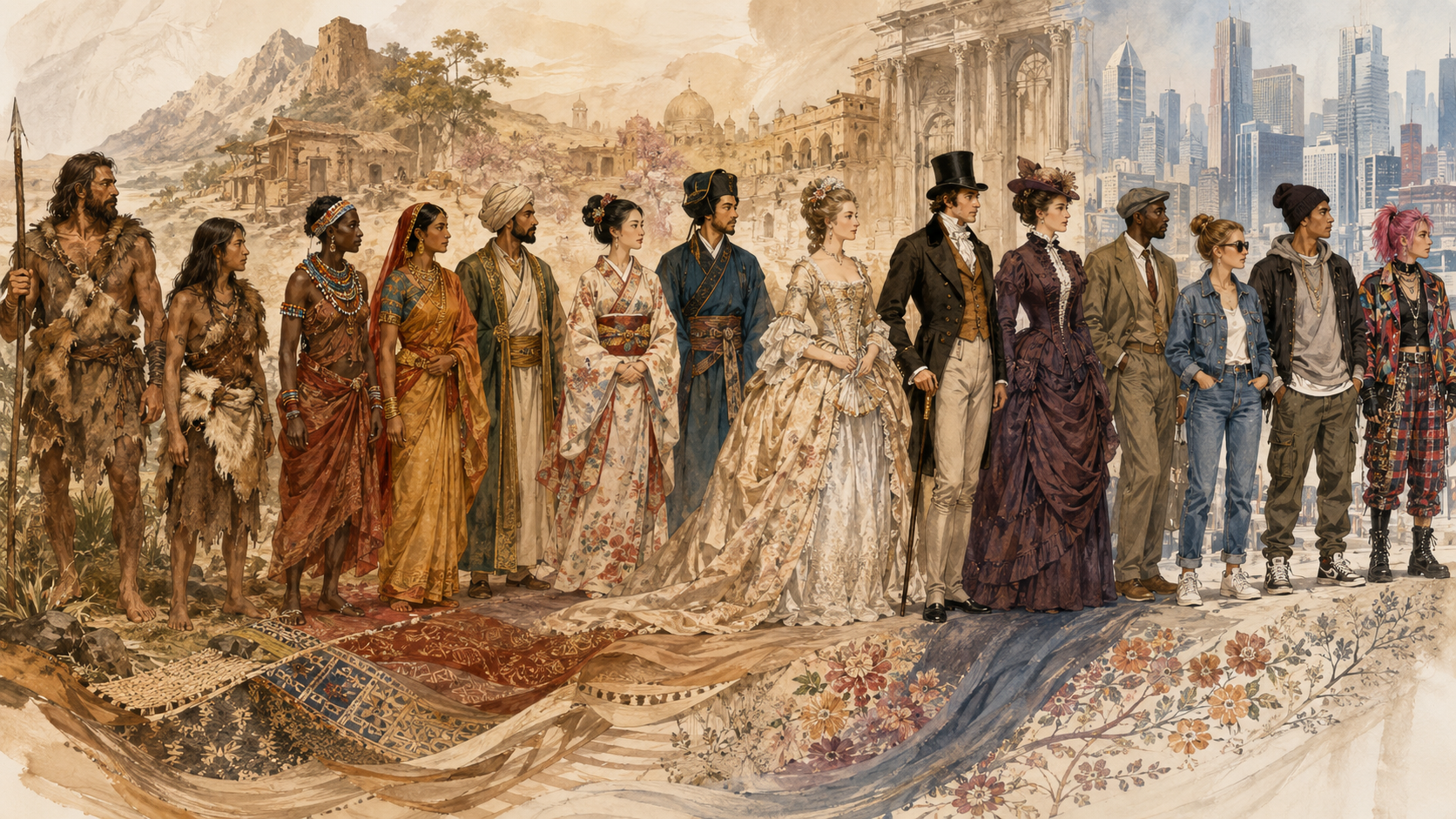
Tag: cultural identity

  • Cultural Tourism and Commercialization

    Cultural Tourism and Commercialization

    Preserving Heritage or Turning Tradition into a Product?

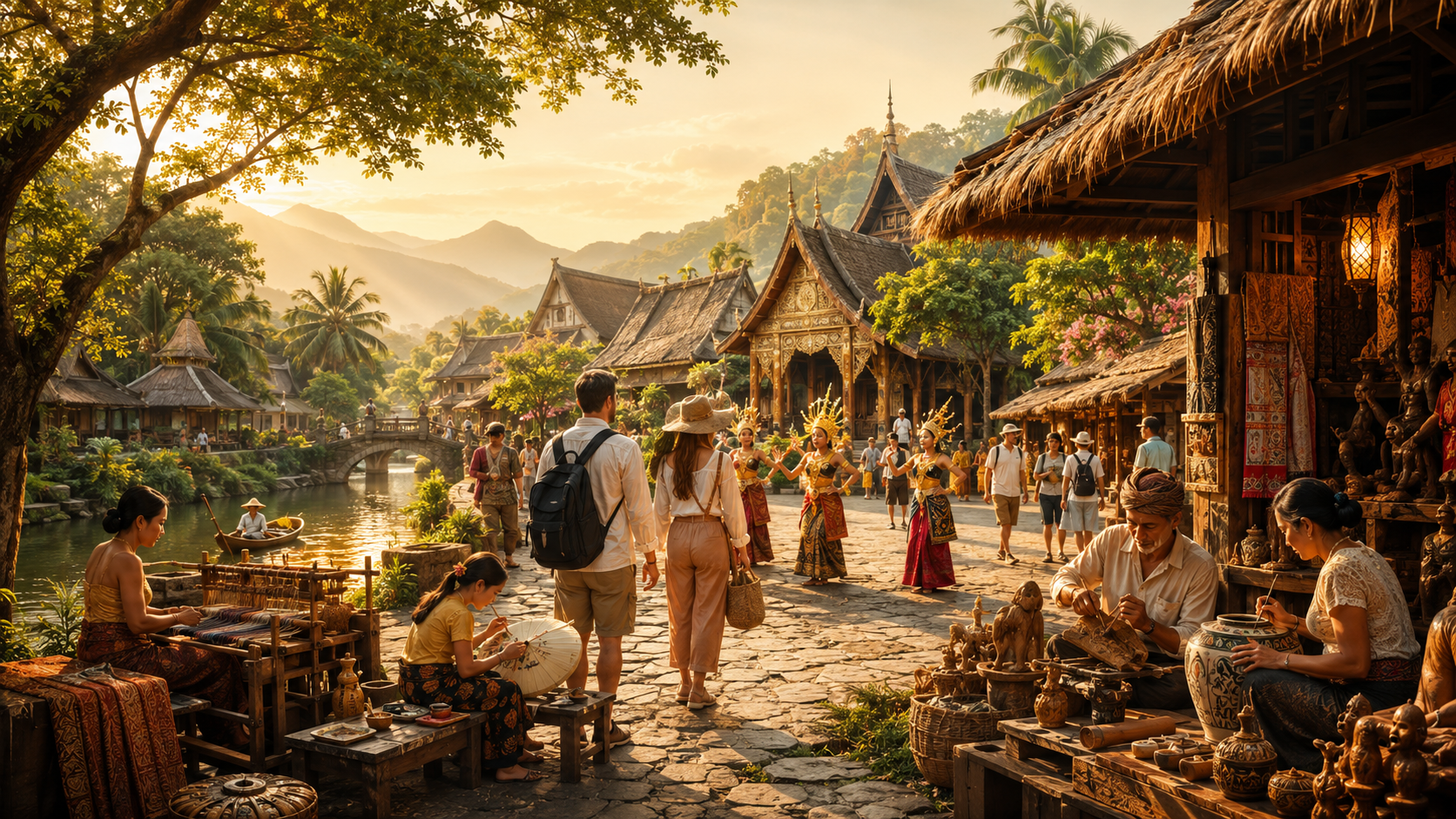
    Every year, millions of travelers cross borders not simply to see famous landmarks but to experience cultures different from their own. Traditional festivals, historic villages, local crafts, music, cuisine, and rituals have become powerful attractions that shape the global tourism industry.

    Cultural tourism creates jobs, supports local businesses, and encourages the preservation of heritage. Yet its rapid growth also raises an important question: When culture becomes a tourist attraction, does it remain authentic, or does it gradually become a commercial product?

    From Venice struggling with overtourism to Kyoto balancing visitor demand with local traditions, communities around the world are searching for ways to protect cultural identity while benefiting from tourism. The debate is not whether tourism is good or bad, but how economic opportunity and cultural integrity can coexist.


    1. Why Cultural Tourism Matters

    More Than Sightseeing

    Cultural tourism allows visitors to engage with history, traditions, architecture, performing arts, and everyday local life. Unlike conventional tourism, it encourages deeper understanding between people from different cultures.

    UNESCO has repeatedly emphasized that cultural heritage is not only about preserving old buildings but also about protecting living traditions passed from one generation to another.

    An Economic Lifeline for Communities

    For many regions, cultural tourism provides a significant source of income.

    Historic towns, traditional markets, museums, and festivals generate employment for artisans, performers, guides, restaurants, and small businesses. Tourism often supplies the financial resources needed to maintain historical sites that might otherwise deteriorate.

    For example, South Korea’s Andong Hahoe Folk Village and Japan’s Gion Festival both demonstrate how cultural heritage can become an important economic asset while introducing local traditions to international visitors.


    2. The Case for Commercialization

    Economic Growth and Employment

    Supporters argue that tourism transforms cultural heritage into sustainable economic opportunities.

    Communities that once depended on declining traditional industries may find new sources of income through cultural experiences, handicrafts, local cuisine, and heritage-based tourism.

    Rather than replacing tradition, tourism can provide the financial support necessary to preserve it.

    Greater Global Appreciation

    International visitors often leave with a deeper understanding of cultures different from their own.

    Cultural exchange reduces stereotypes, encourages mutual respect, and strengthens international relationships through shared experiences rather than political narratives.

    Investment in Preservation

    Governments and private organizations are more likely to invest in restoring historical sites when tourism generates long-term economic value.

    Without visitors, many heritage sites might struggle to secure adequate funding for conservation.

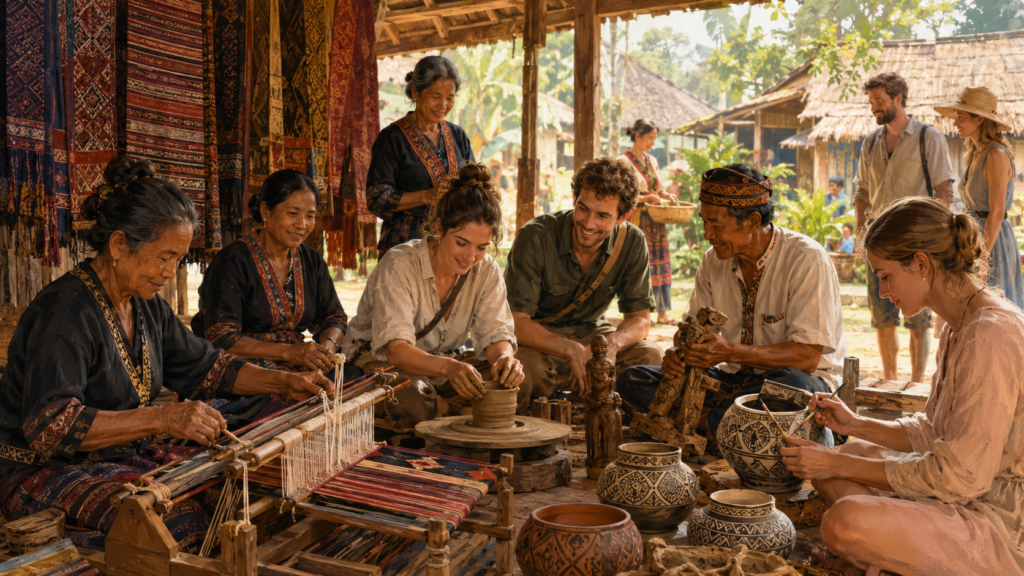
    local artisans sharing traditional culture with international visitors

    3. The Risks of Turning Culture into a Product

    When Authenticity Becomes Performance

    Critics argue that traditions sometimes change to satisfy tourist expectations.

    Traditional ceremonies may be shortened, modified, or performed outside their original cultural context simply because visitors prefer entertainment over authenticity.

    As a result, culture risks becoming a staged performance rather than a living tradition.

    Overtourism and Community Displacement

    Successful destinations can also become victims of their own popularity.

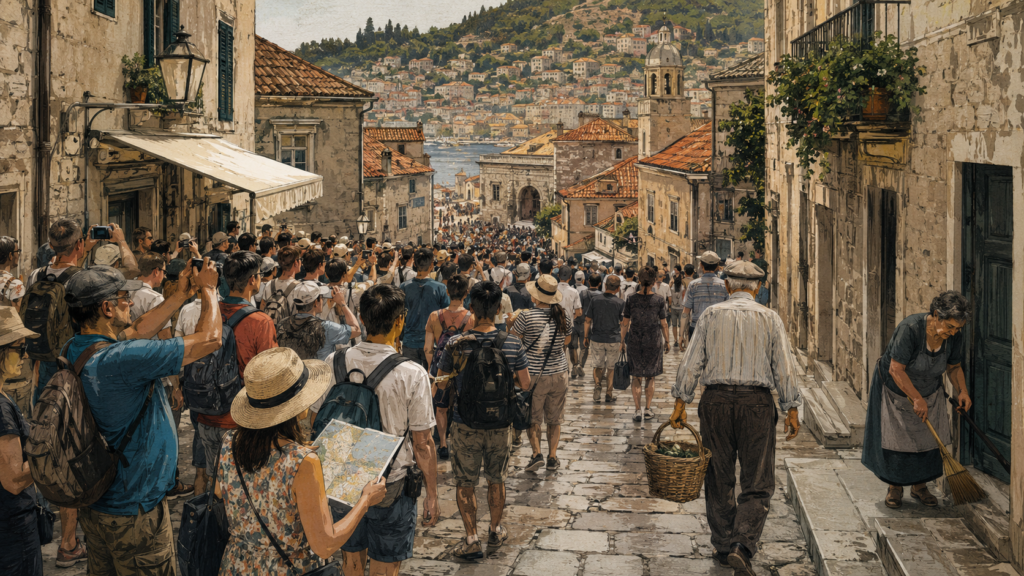
    Venice, Barcelona, Kyoto, and Mont Saint-Michel have all experienced tensions between tourism growth and residents’ quality of life. Rising housing costs, overcrowding, and commercialization may gradually push local communities away from the very places that represent their cultural identity.

    Environmental Costs

    Heavy tourist traffic increases waste, pollution, and pressure on fragile historical environments.

    Natural landscapes surrounding cultural sites also suffer when visitor numbers exceed sustainable limits.

    Economic success without environmental responsibility ultimately threatens the long-term survival of tourism itself.

    historic town experiencing overtourism and pressure on local communities

    4. Finding a Sustainable Balance

    Community-Based Tourism

    Many experts argue that local residents should remain the primary decision-makers in tourism development.

    When communities control how their culture is presented, tourism is more likely to benefit local people while respecting traditional values.

    Protecting Living Heritage

    Culture should not simply be displayed—it should continue to evolve naturally within the community.

    Educational programs, traditional apprenticeships, and local participation help preserve heritage beyond commercial performances.

    Responsible Travelers Matter Too

    Sustainable tourism is not only the responsibility of governments or businesses.

    Visitors also influence whether destinations remain authentic.

    Respecting local customs, supporting family-owned businesses, reducing waste, and learning about cultural history all contribute to preserving the places people travel to experience.


    5. The Future of Cultural Tourism

    Beyond Profit Toward Partnership

    Increasingly, tourism is shifting away from mass consumption toward meaningful cultural experiences.

    Travelers today often seek authentic interactions rather than simply collecting photographs or checking famous landmarks off a list.

    This shift offers an opportunity to redefine tourism as a partnership between visitors and host communities rather than a purely commercial transaction.


    Conclusion

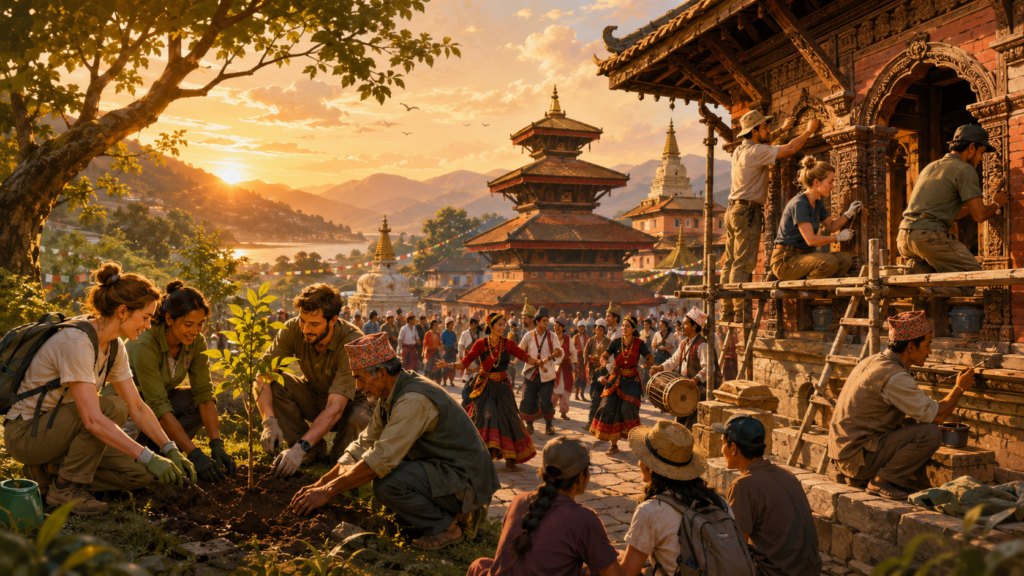
    local communities and travelers supporting sustainable cultural tourism together

    Cultural tourism offers remarkable opportunities for economic development, cultural exchange, and heritage preservation.

    At the same time, excessive commercialization can weaken the authenticity that makes cultural traditions meaningful in the first place.

    The challenge is not to stop tourism but to guide it responsibly.

    When local communities remain at the center of decision-making, governments invest in sustainable policies, businesses act ethically, and travelers respect the places they visit, tourism becomes more than an industry.

    It becomes a bridge between cultures—one that preserves the past while creating opportunities for the future.

    Rather than asking whether culture should generate economic value, perhaps the better question is how economic value can strengthen rather than replace cultural identity.

    Reader Question

    Can cultural traditions remain authentic when they become major tourist attractions, or does commercialization inevitably change their original meaning?

    How can travelers support local communities while enjoying meaningful cultural experiences without contributing to overtourism?


    Related Reading

    If history is interpreted differently across cultures and generations, how should we preserve cultural heritage without losing its original meaning?

    In Is There a Single Historical Truth, or Many Narratives?, we explore how history is shaped by evidence, memory, and interpretation—and why preserving cultural identity requires more than protecting historic sites.

    If local traditions become increasingly influenced by global markets and modern lifestyles, can cultural identity survive rapid social change?

    In Are Our Emotions Truly Ours—or Socially Constructed?, we examine how society, culture, and collective experience shape human identity, traditions, and the values communities choose to preserve.


    References

    1. Richards, G., & Munsters, W. (2010). Cultural Tourism Research Methods. CABI.

    This book provides comprehensive research methods for understanding cultural tourism and examines how tourism influences local heritage, identity, and community development. It offers valuable insights into balancing economic benefits with cultural preservation.


    2. UNESCO. (2012). Culture: A Driver and an Enabler of Sustainable Development. UNESCO Publishing.

    UNESCO explains how cultural heritage contributes to sustainable development while emphasizing that local communities should remain central to tourism planning. The report highlights the importance of protecting both tangible and intangible cultural heritage.


    3. MacCannell, D. (1999). The Tourist: A New Theory of the Leisure Class. University of California Press.

    A classic work in tourism studies, MacCannell argues that modern tourism often transforms authentic cultural experiences into staged performances for visitors. His analysis remains highly influential in debates about authenticity and commercialization.


    4. Smith, M. K., & Robinson, M. (Eds.). (2006). Cultural Tourism in a Changing World: Politics, Participation and (Re)Presentation. Channel View Publications.

    This collection explores how politics, community participation, and globalization shape cultural tourism. It examines the challenges of representing local traditions while responding to the demands of an international tourism market.

    5. UN Tourism (formerly World Tourism Organization). (2018). Tourism and Culture Synergies. UN Tourism.

    This report presents international case studies showing how tourism and cultural heritage can support one another through sustainable policies. It emphasizes cooperation among governments, local communities, and the tourism industry to ensure long-term cultural preservation.

  • Gender and Artistic Expression

    Gender and Artistic Expression

    Can Art Break Free from Gender Stereotypes?

    Art has always been one of humanity’s most powerful ways of expressing emotion, identity, and imagination. Yet artistic expression has never existed in complete isolation from society. Throughout history, cultural norms have influenced who was allowed to become an artist, what subjects were considered acceptable, and whose work was celebrated.

    In recent decades, growing awareness of gender equality, LGBTQ+ rights, and cultural diversity has transformed conversations about art. Museums, galleries, and audiences increasingly ask whether artistic institutions have fairly represented diverse voices—or whether historical biases continue to shape today’s art world.

    Rather than being merely a cultural debate, this discussion challenges us to reconsider how creativity, identity, and social justice intersect.


    1. Gender Stereotypes in the History of Art

    Who Was Allowed to Become an Artist?

    For much of history, professional artistic careers were largely reserved for men. Women often faced limited access to formal education, apprenticeships, and professional academies, making it difficult to pursue art as a lifelong profession.

    Despite these obstacles, artists such as Berthe Morisot, Mary Cassatt, and Artemisia Gentileschi produced remarkable works that challenged the assumptions of their time. Yet many female artists received less recognition than their male contemporaries, and numerous works remained overlooked for generations.

    This historical imbalance raises an important question: how many talented artists were excluded not because of ability, but because of social expectations?

    Beyond Women: LGBTQ+ Artists and Visibility

    Gender stereotypes also affected LGBTQ+ artists.

    Throughout much of the twentieth century, many artists concealed their identities to avoid discrimination or censorship. Some works containing themes of sexuality or gender diversity were marginalized despite their artistic significance.

    Today, many museums and cultural institutions are actively reexamining these overlooked contributions, recognizing that artistic history becomes richer when previously marginalized voices are included.

    woman artist working despite historical barriers in the art world

    2. Breaking Stereotypes Through Contemporary Art

    Art as a Space for Inclusion

    Modern artists increasingly challenge conventional ideas about gender, identity, and representation.

    Contemporary exhibitions often explore questions surrounding masculinity, femininity, non-binary identities, and cultural diversity. Rather than reinforcing traditional categories, many artists intentionally blur boundaries, encouraging audiences to reconsider assumptions about identity.

    Groups such as the Guerrilla Girls have drawn international attention by exposing gender inequality within major museums and galleries. Their campaigns have highlighted the underrepresentation of women artists and questioned how artistic value has historically been determined.

    Representation Matters

    Greater diversity among artists also changes what audiences see.

    When creators from different backgrounds share their experiences, the range of artistic narratives expands. Viewers encounter stories, emotions, and perspectives that may previously have been absent from mainstream institutions.

    In this sense, diversity is not simply about fairness—it also enriches artistic culture itself.

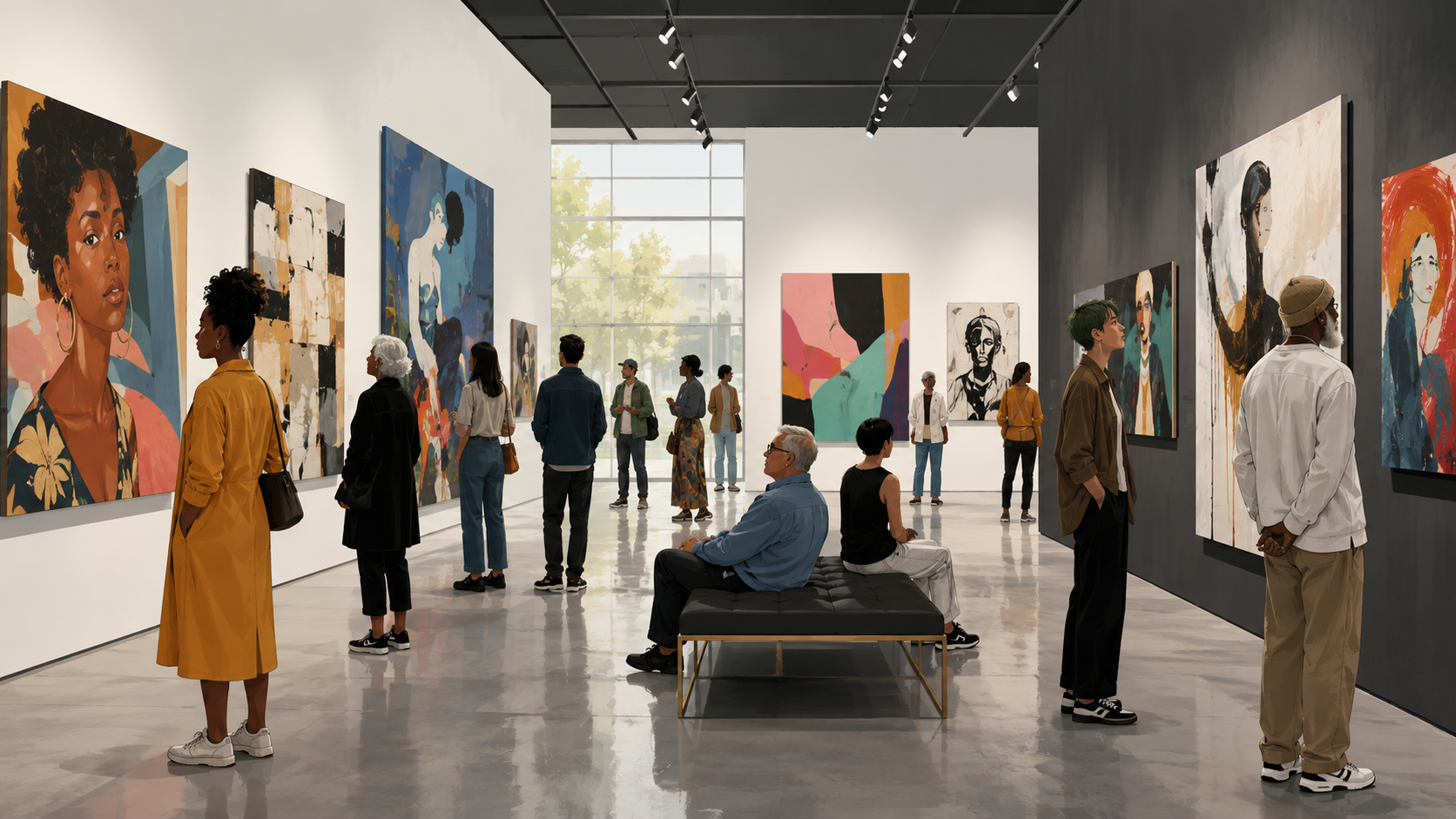
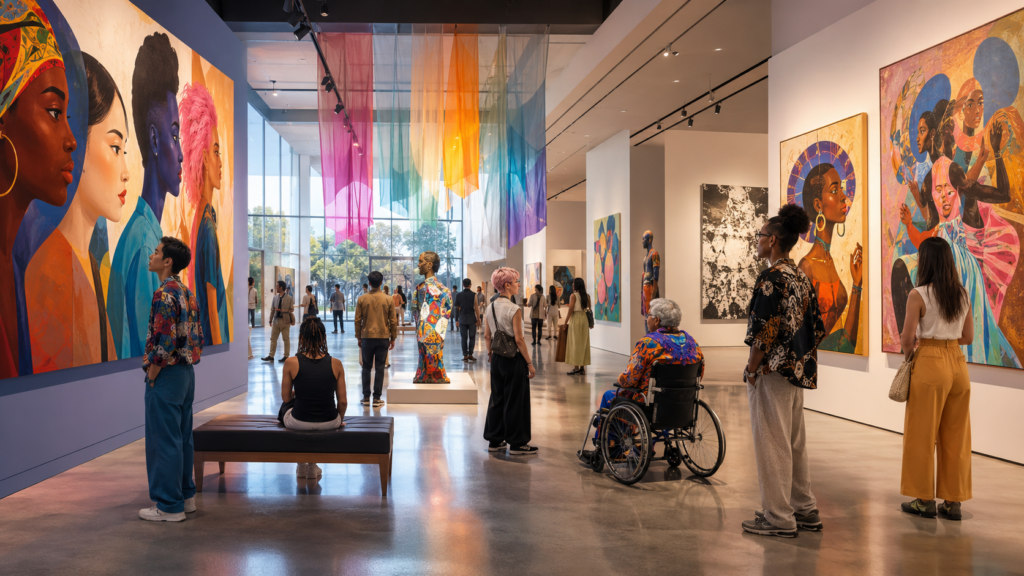
    inclusive contemporary art exhibition celebrating diversity and creativity

    3. Should Art Be Judged by the Artist or the Artwork?

    Separating Identity from Creativity

    One of today’s most debated questions concerns the relationship between an artist’s identity and their work.

    Some argue that understanding an artist’s gender, culture, or personal experiences deepens appreciation of the artwork. Others believe that once a work is created, it should stand on its own, independent of the creator’s background.

    Neither perspective is entirely sufficient. Context can illuminate meaning, yet reducing art solely to the identity of its creator may overlook the universal qualities that allow people across cultures to connect with it.

    Finding balance between these viewpoints remains one of contemporary art’s greatest challenges.


    4. New Challenges in the Age of Artificial Intelligence

    Can AI Reproduce Gender Bias?

    Artificial intelligence is beginning to influence artistic creation through image generation, music composition, and digital design.

    However, AI systems learn from existing human-created data. If historical datasets contain gender stereotypes, AI-generated artworks may unintentionally reproduce those same biases.

    Researchers have already observed examples where AI consistently associates certain professions, appearances, or emotional expressions with particular genders.

    Ironically, technologies designed to expand creativity may also inherit the prejudices of the societies that created them.

    This makes ethical oversight increasingly important as AI becomes a more influential creative partner.


    5. Looking Toward a More Inclusive Future

    Education and Cultural Change

    Creating a more inclusive artistic environment requires more than simply increasing representation.

    Art education can encourage students to explore diverse perspectives without imposing rigid expectations based on gender. Museums and cultural institutions can broaden collections, exhibitions, and acquisition policies to ensure that artistic excellence is recognized across diverse communities.

    At the same time, societies should continue supporting open conversations about artistic freedom, identity, and equal opportunity.

    The goal is not to erase differences but to create conditions in which creativity can flourish regardless of gender.


    Conclusion

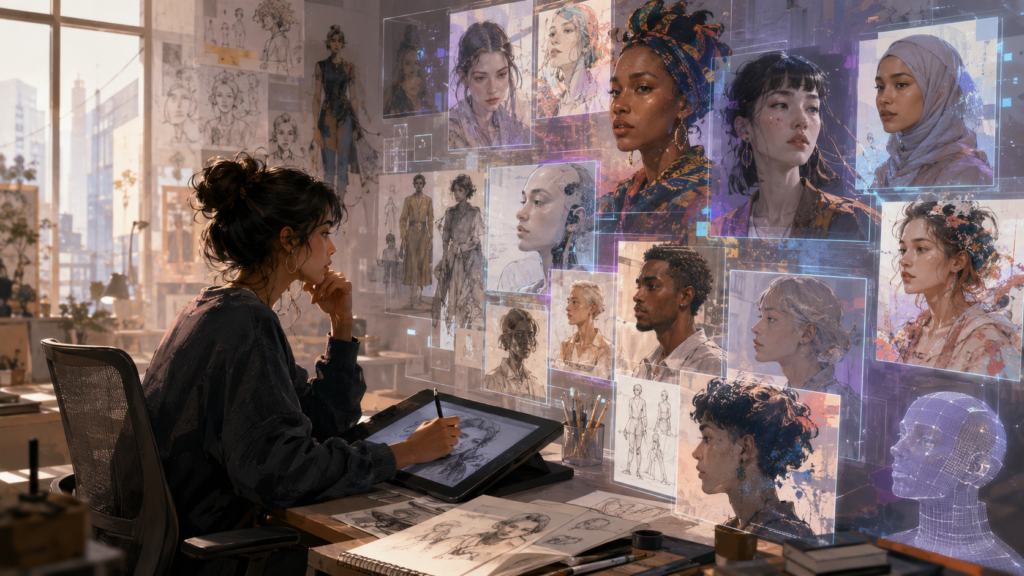
    human artist and AI creating artwork while exploring gender bias and creativity

    The debate surrounding gender and artistic expression extends far beyond galleries and museums. It reflects broader questions about equality, cultural values, and the ways societies recognize human creativity.

    History demonstrates that many talented artists were constrained by social expectations rather than artistic ability. Contemporary movements have helped expand opportunities, yet discussions about representation, identity, and fairness continue to evolve.

    Ultimately, art becomes stronger when it welcomes multiple perspectives. Creativity flourishes not because every artist shares the same identity, but because different voices contribute unique ways of seeing the world.

    Perhaps the most meaningful future for art is not one in which gender disappears, but one in which gender no longer determines whose creativity deserves to be seen, valued, and remembered.

    Reader Question

    Can art ever be completely separated from the identity of the person who creates it, or do gender, culture, and personal experience inevitably shape how we create and interpret artistic expression?

    As societies become more diverse, should artistic institutions focus primarily on equal representation, or should they judge every artwork independently of the artist’s identity?

    Related Reading

    If creative expression increasingly reflects changing social values, how should societies balance artistic freedom with evolving ideas about identity, inclusion, and cultural diversity?

    In Fashion and Animal Ethics: Should Tradition Give Way to Ethical Fashion?, we explore how cultural traditions, ethical values, and changing public expectations continue to reshape creative industries.

    If gender norms shape not only art but also everyday identity, how can modern societies move beyond fixed categories of “masculine” and “feminine”?

    In Gender and Identity: Can Society Move Beyond the Binary? we examine how gender identity, social norms, and non-binary perspectives are reshaping contemporary society.

    References

    1. Nochlin, L. (1988). Why Have There Been No Great Women Artists? New York: Thames & Hudson.

    A landmark work in feminist art history, this book argues that the historical absence of recognized women artists resulted not from a lack of talent but from unequal access to education, institutions, and professional opportunities. It remains a foundational text for discussions of gender in the arts.


    2. Chadwick, W. (2020). Women, Art, and Society (6th ed.). London: Thames & Hudson.

    Chadwick traces the history of women artists from antiquity to the present, examining how social structures and cultural expectations shaped artistic careers. The book offers a comprehensive overview of gender inequality in art history and its continuing evolution.


    3. hooks, bell. (1995). Art on My Mind: Visual Politics. New York: The New Press.

    bell hooks explores how art intersects with gender, race, class, and identity. She argues that artistic expression can challenge dominant cultural narratives while giving voice to marginalized communities.


    4. Guerrilla Girls. (1998). The Guerrilla Girls’ Bedside Companion to the History of Western Art. New York: Penguin Books.

    Written by the influential feminist artist collective, this book exposes gender inequality in museums and the art market through research, satire, and visual storytelling. It remains one of the most widely cited critiques of institutional bias in the arts.


    5. Jones, A. (1998). Body Art/Performing the Subject. Minneapolis: University of Minnesota Press.

    Jones examines how body art and performance challenge conventional ideas about identity, gender, and representation. Her work demonstrates how contemporary artists use the body itself to question traditional social and cultural boundaries.

  • Fusion Culture: Creative Exchange or Cultural Imperialism?

    Fusion Culture: Creative Exchange or Cultural Imperialism?

    Cultural fusion is everywhere today.

    From food and music to fashion and architecture, cultures mix and blend in ways that would have been unimaginable just decades ago.

    But when cultures merge, are they truly meeting as equals?

    In the twenty-first century, cultural boundaries appear more fluid than ever before. Foods travel across continents, music circulates instantly through digital platforms, and fashion trends move from one culture to another at unprecedented speed.

    This environment has produced what is often called fusion culture. Different cultural elements—culinary traditions, musical styles, aesthetic forms—combine to create something new. Korean bulgogi appears in tacos, traditional instruments blend with electronic beats, and historical clothing styles are reimagined in contemporary design.

    To many observers, fusion represents creativity and cultural dialogue. It demonstrates how cultures learn from one another and generate new artistic possibilities.

    Yet not everyone celebrates this phenomenon.

    Critics argue that fusion often emerges within unequal power relations shaped by globalization. When dominant cultures absorb elements from weaker ones, the result may not be genuine exchange but a form of cultural imperialism, in which local traditions are simplified, commodified, or erased.

    This raises a central question for the global age:

    Is cultural fusion a creative form of exchange, or is it a new expression of cultural domination?


    1. Fusion as Creative Cultural Exchange

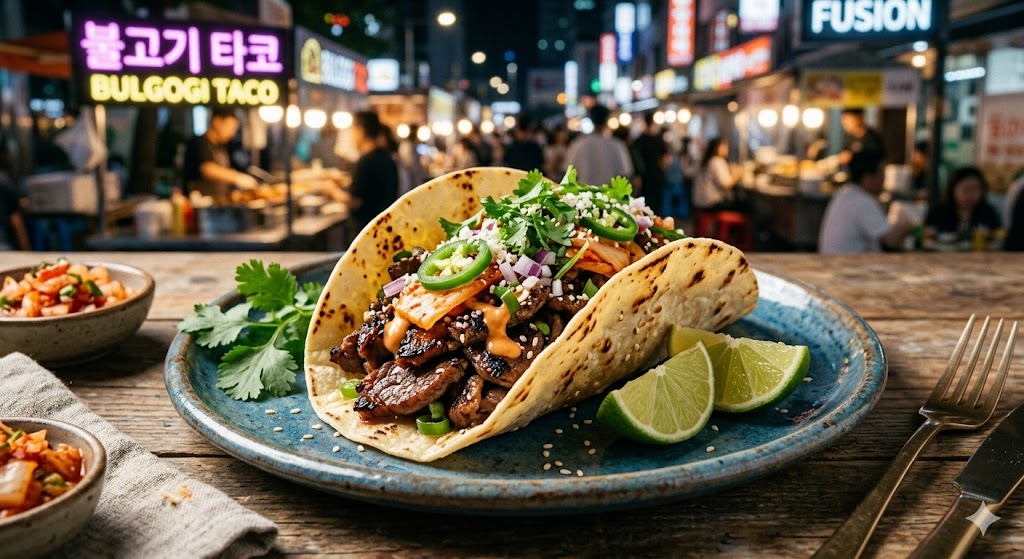
    bulgogi taco representing Korean Mexican cultural fusion

    Supporters of cultural fusion emphasize its potential to generate creativity and expand cultural understanding.

    Cultural traditions have never been completely isolated. Throughout history, societies have exchanged ideas, technologies, and artistic forms through migration, trade, and communication.

    Fusion culture can therefore be understood as a continuation of this long historical process.

    One important benefit of fusion is creative innovation. When different traditions interact, they often produce new artistic forms that would not have existed otherwise. For example, musicians who combine traditional instruments with contemporary electronic sounds create new aesthetic experiences that attract global audiences.

    Fusion can also contribute to expanding cultural identities. In an increasingly interconnected world, individuals often belong to multiple cultural contexts simultaneously. Fusion culture reflects this reality by allowing people to express hybrid identities rather than rigid cultural boundaries.

    Finally, fusion may function as a medium of global communication. Food, music, and fashion often serve as accessible entry points through which people encounter unfamiliar cultures. Fusion forms can therefore act as bridges between societies, encouraging curiosity and dialogue.

    From this perspective, fusion is not simply a mixture of elements but a creative space where cultures interact and evolve.


    2. The Shadow of Cultural Imperialism

    symbolic illustration representing cultural imperialism and cultural dominance

    Despite these positive interpretations, critics argue that fusion culture cannot be separated from the power dynamics of globalization.

    Global cultural exchange rarely occurs on equal terms. Economic power, media influence, and global markets often favor certain cultures over others.

    In such contexts, fusion may become a process in which dominant cultures selectively appropriate elements from marginalized traditions.

    This phenomenon can take several forms.

    First, cultural appropriation may occur when elements of a minority culture are adopted without understanding their historical or symbolic meanings. Cultural symbols may be transformed into aesthetic objects detached from their original context.

    Second, fusion often involves commercialization. Cultural elements become products designed for global markets. Traditional cuisines, for instance, may be modified to suit international tastes, sometimes losing their historical significance in the process.

    Third, there is the risk of cultural homogenization. When global markets favor certain cultural styles, local traditions may gradually adapt to dominant global aesthetics in order to remain commercially viable.

    In these cases, fusion does not necessarily represent equal cultural dialogue. Instead, it may reflect deeper inequalities within global cultural systems.


    3. Real-World Examples of Cultural Fusion

    The debate surrounding fusion culture becomes clearer when examining concrete examples.

    In cuisine, the globalization of food has produced numerous fusion dishes. Korean-Mexican tacos, sushi burritos, and bulgogi pizza illustrate how culinary traditions can blend across cultures. These creations often introduce new audiences to unfamiliar ingredients and cooking techniques.

    However, critics note that such dishes sometimes simplify complex culinary traditions into easily marketable forms.

    Music provides another example. Contemporary popular music frequently combines elements from multiple traditions. The global success of genres such as K-pop reflects a mixture of Western pop structures with Korean language and cultural aesthetics.

    Supporters see this as evidence of cultural innovation and global creativity. Critics argue that global music markets often privilege Western production styles, influencing how local musical traditions evolve.

    Fashion offers similar examples. Traditional garments are frequently redesigned in modern styles and marketed internationally. While these reinterpretations can renew interest in historical clothing, they may also transform cultural symbols into commercial commodities.

    These cases illustrate that fusion culture is neither purely creative nor purely exploitative. Instead, it often contains both possibilities simultaneously.


    4. Theoretical Perspectives: Hybridity and Cultural Power

    Cultural theorists have proposed different frameworks for understanding these dynamics.

    Homi K. Bhabha introduced the concept of cultural hybridity, emphasizing how interactions between cultures create a “third space” where new identities and meanings emerge. In this perspective, cultural fusion is not simply imitation or domination but a productive site of negotiation and creativity.

    Hybridity challenges the idea that cultures are fixed or pure. Instead, it highlights how cultural identities are continuously reshaped through interaction.

    In contrast, the theory of cultural imperialism, developed by scholars such as Herbert Schiller, emphasizes the role of global power structures in shaping cultural exchange. According to this view, media systems and global markets often spread dominant cultural forms across the world, influencing local traditions and creating patterns of cultural dependency.

    These two theoretical perspectives offer contrasting interpretations of fusion culture.

    One emphasizes creativity and hybridity.
    The other highlights power, inequality, and domination.

    Understanding fusion culture requires acknowledging both dimensions.


    5. Toward a More Balanced Cultural Exchange

    Recognizing the dual nature of fusion culture invites a more nuanced approach.

    Fusion does not automatically lead to either cultural enrichment or cultural domination. Its outcomes depend largely on how cultural interactions are structured.

    Several principles may help encourage more balanced forms of cultural exchange.

    First, cultural interaction should involve mutual participation rather than one-sided appropriation. Genuine dialogue requires that multiple cultural voices contribute to the process.

    Second, it is important to respect cultural context. Cultural elements should not be treated merely as aesthetic resources but as expressions of historical traditions and social meanings.

    Third, fusion should emphasize creative authenticity rather than purely commercial motives. When cultural exchange is driven solely by market logic, the risk of cultural simplification increases.

    By recognizing these principles, societies may foster fusion practices that encourage creativity while respecting cultural diversity.


    Conclusion

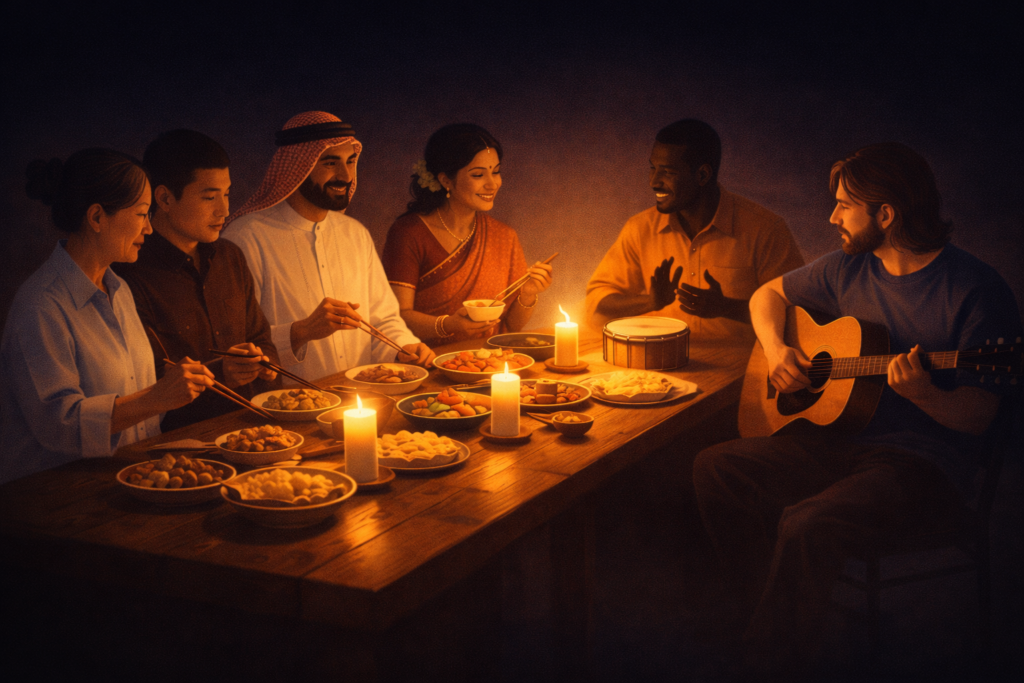
    people from different cultures sharing food representing cultural dialogue

    Fusion culture is one of the defining cultural phenomena of globalization.

    It reflects the increasing interconnectedness of societies and the creative possibilities that emerge when traditions meet and interact.

    At the same time, fusion culture cannot be separated from the economic and political structures that shape global cultural exchange.

    Whether fusion becomes a space of genuine dialogue or a vehicle for cultural domination depends largely on how cultural interactions are organized and interpreted.

    Ultimately, the question is not simply whether fusion is good or bad.

    The more important question is this:

    Does fusion represent a conversation between cultures, or does it conceal unequal power behind the language of creativity?

    The answer may determine whether fusion becomes a force for cultural diversity or a pathway toward cultural uniformity.

    A Question for Readers

    When you encounter a fusion culture — in food, music, or fashion — do you see it as creative dialogue or cultural domination?

    Can fusion ever be completely equal, or will power differences always shape it?

    Related Reading

    The psychological foundations of how people interpret others and their actions are explored further in Why We Excuse Ourselves but Blame Others: Understanding the Actor–Observer Bias, where differences in perspective shape how individuals assign responsibility, judge intentions, and interpret behavior across social contexts.

    At a broader political and ethical level, similar questions about power, influence, and participation in global systems appear in Clicktivism in Digital Democracy: Participation or Illusion?, where debates about digital activism raise deeper concerns about whether global cultural and technological exchanges create genuine participation—or reproduce new forms of dominance and influence.

    What appears as cultural exchange may sometimes reflect deeper structures of influence and dependency (see Buena Vista Social Club: Cultural Diversity or a New Form of Dependency?).


    References

    1. Bhabha, H. K. (1994). The Location of Culture. London: Routledge.
    This influential work introduces the concept of cultural hybridity and the “third space,” emphasizing how interactions between cultures produce new meanings and identities. Bhabha’s theory provides a foundation for interpreting fusion culture as a creative process of negotiation rather than simple cultural imitation.

    2. Schiller, H. I. (1976). Communication and Cultural Domination. New York: International Arts and Sciences Press.
    Schiller’s classic study develops the theory of cultural imperialism, arguing that powerful nations spread their cultural products globally through media and economic systems. His analysis highlights how cultural exchange can reproduce global inequalities and influence local traditions.

    3. Tomlinson, J. (1999). Globalization and Culture. Chicago: University of Chicago Press.
    Tomlinson examines the complex relationship between globalization and cultural identity. The book explores how global cultural flows produce both hybrid cultural forms and new forms of cultural dependency.

    4. Iwabuchi, K. (2002). Recentering Globalization: Popular Culture and Japanese Transnationalism. Durham: Duke University Press.
    Iwabuchi analyzes how Japanese popular culture circulates globally, illustrating the interplay between cultural exchange, national identity, and global cultural markets.

    5. Marcus, G. E., & Myers, F. R. (1995). The Traffic in Culture: Refiguring Art and Anthropology. Berkeley: University of California Press.
    This edited volume explores how cultural artifacts move through global markets and institutions. The essays examine how traditions are reinterpreted, commodified, and transformed in transnational cultural exchanges.