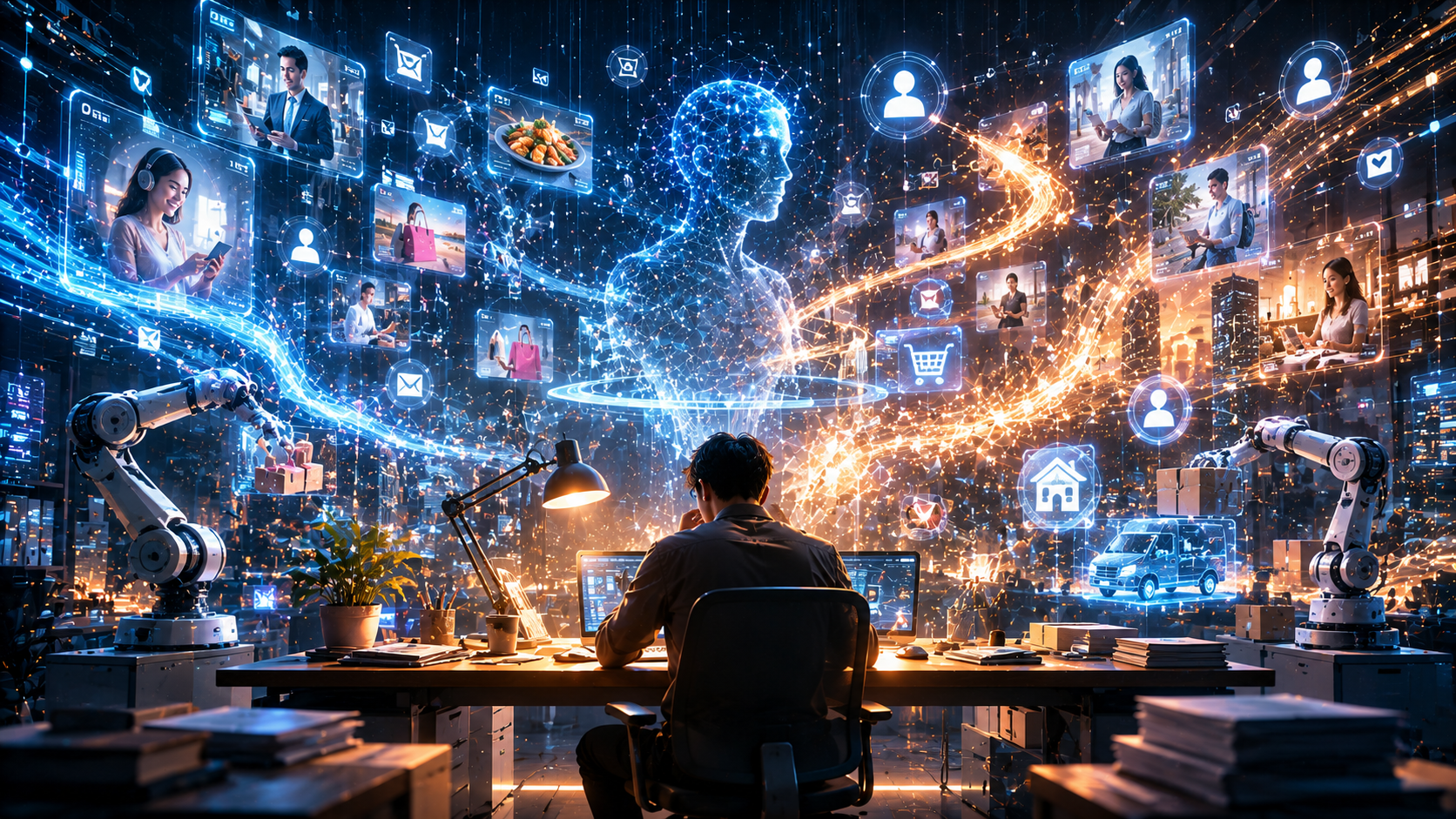
How AI, Automation, and Personalized Systems Are Transforming Human Labor
Modern technology no longer treats people as anonymous masses.
Today’s digital systems increasingly analyze:
- personal preferences
- emotions
- behaviors
- health patterns
- shopping habits
- and even attention spans
This process is known as hyper-personalization.
Powered by artificial intelligence and big data, hyper-personalized systems now recommend what we should watch, buy, study, eat, and sometimes even think.
These technologies make life more convenient and efficient.
However, they also raise a difficult question about the future of work:
If machines can understand individuals more precisely than humans can, what happens to human labor itself?
As hyper-personalization combines with automation, many traditional jobs may disappear or fundamentally transform.
At the same time, entirely new industries and professions may emerge.
The future labor market may therefore become not simply more technological—
But more deeply personalized than ever before.
1. Hyper-Personalization Is Already Replacing Human Labor
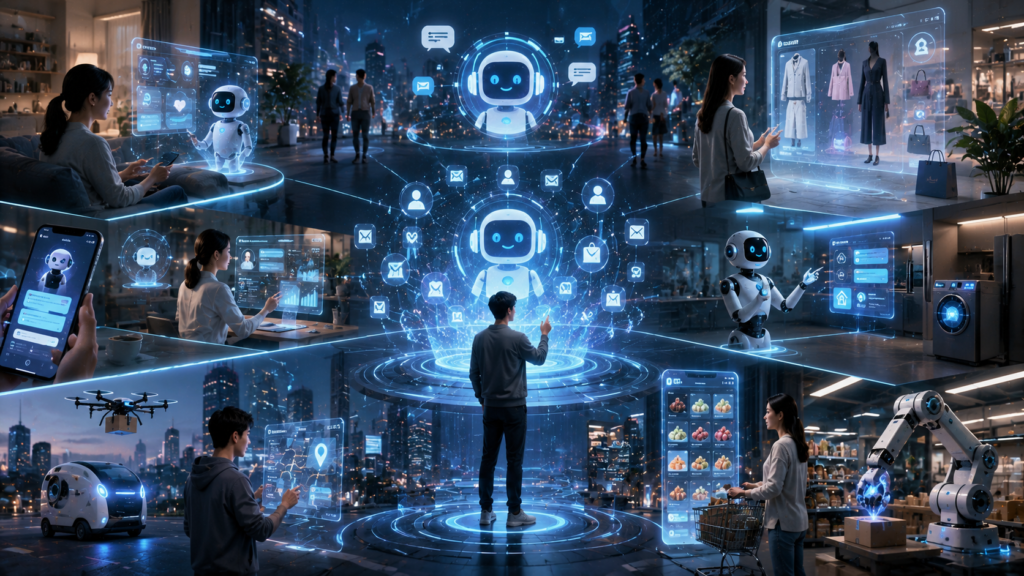
The Rise of Automated Personalized Services
Hyper-personalization allows AI systems to perform tasks once handled by humans.
For example:
- AI chatbots increasingly replace customer service agents
- recommendation algorithms replace parts of traditional sales work
- automated learning systems personalize education without human tutors
- AI diagnostic tools assist or partially replace medical screening processes
Streaming platforms such as Netflix personalize entertainment recommendations based on user behavior.
Online shopping platforms predict consumer preferences before customers even search for products.
In many industries, personalized automation improves efficiency while reducing the need for repetitive human labor.
Jobs Most Vulnerable to Hyper-Automation
Some sectors are especially vulnerable to replacement.
Retail work has already changed dramatically due to personalized advertising and digital shopping systems.
Customer support increasingly depends on AI-powered conversational systems capable of responding instantly to individual users.
Warehouses and logistics centers use predictive automation to optimize delivery patterns with minimal human intervention.
Even professional fields once considered secure—
such as finance, law, and healthcare—
now face growing automation pressures through AI-assisted analysis systems.
This suggests hyper-personalization may accelerate not only automation—
But the fragmentation of traditional employment structures themselves.
2. Could Hyper-Personalization Also Create New Jobs?
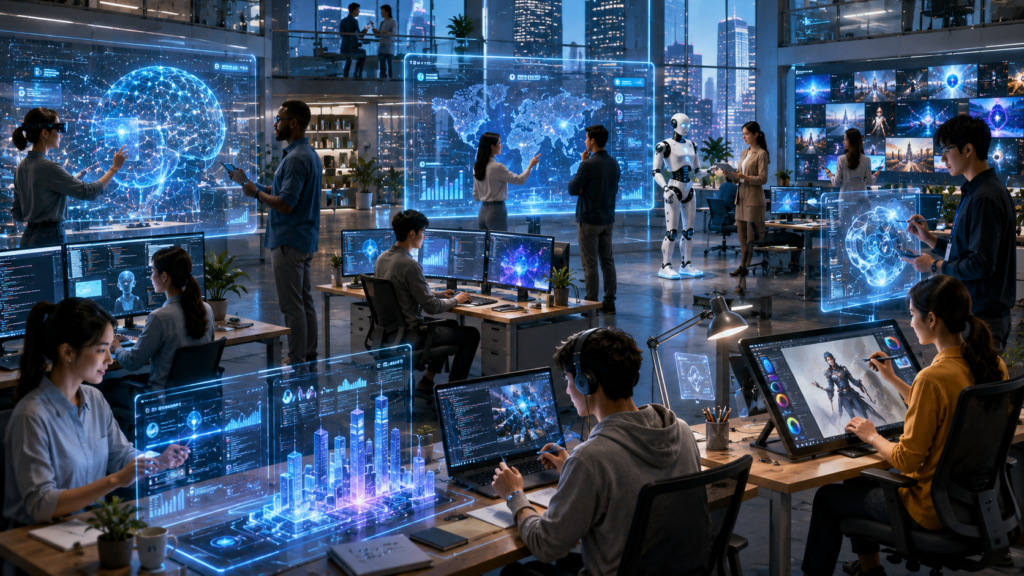
The Growth of AI and Data Careers
Despite concerns about job loss, new technological systems also create entirely new forms of labor.
As hyper-personalization expands, demand grows for:
- AI engineers
- machine learning specialists
- cybersecurity experts
- data analysts
- algorithm designers
- and digital ethics consultants
These professionals design and maintain the systems that power personalized experiences.
The future economy may therefore rely increasingly on workers capable of managing intelligent infrastructures rather than performing repetitive tasks.
The Emergence of New Industries
Hyper-personalization is also transforming industries themselves.
In healthcare, personalized medicine and AI-based wellness systems are creating new careers related to individualized treatment planning.
In education technology, adaptive learning systems require specialists who combine pedagogy with AI design.
Smart cities, digital therapy platforms, and virtual environments are generating entirely new forms of employment that did not previously exist.
This means technological change may not simply eliminate jobs—
It may redefine what society considers valuable work.
Existing Jobs Are Being Redesigned
Many professions may survive not by resisting technology, but by adapting alongside it.
Marketing professionals increasingly focus on data-driven personalization strategies rather than mass advertising.
Doctors use AI-assisted diagnostics to improve precision rather than abandoning medical expertise altogether.
Teachers increasingly act as mentors, facilitators, and emotional guides while AI handles repetitive instructional functions.
In many cases, technology changes the role of workers rather than eliminating them entirely.
3. The Human Challenges Behind Hyper-Personalized Labor
The Growing Technology Gap
One major concern is inequality.
Workers without access to technological education may struggle to adapt to rapidly changing labor markets.
As AI systems become more advanced, societies may experience a widening gap between:
- highly skilled digital workers
and - workers displaced by automation
Without large-scale retraining systems, hyper-personalization could deepen economic instability.
Ethical Automation and Human Dignity
Another challenge involves how automation is implemented.
If corporations prioritize efficiency alone, workers may become increasingly disposable.
A humane transition requires:
- retraining opportunities
- stronger social safety nets
- ethical labor policies
- and protections against technological exclusion
The future of work should not be determined solely by technological capability.
It must also reflect social values.
Why Human Skills May Become More Valuable
Ironically, as machines become better at repetitive and predictive tasks, deeply human abilities may become more important.
Skills such as:
- empathy
- creativity
- emotional intelligence
- ethical judgment
- and human connection
remain difficult to automate fully.
Therapists, artists, caregivers, mentors, and creators may therefore gain renewed importance in hyper-automated societies.
The future economy may ultimately reward not what humans do faster than machines—
But what humans uniquely do better.
Conclusion: What Kind of Work Will Remain Human?

Hyper-personalization is transforming the labor market in complex and contradictory ways.
On one hand, automation threatens many traditional jobs by replacing repetitive and predictable forms of labor.
On the other hand, new industries, professions, and creative opportunities continue to emerge alongside technological development.
The real challenge may not simply be whether jobs disappear.
It may be whether societies can redesign work in ways that preserve:
- dignity
- meaning
- creativity
- and human connection
Technology itself is not destiny.
Hyper-personalization is ultimately a tool.
The future of labor will depend on how humanity chooses to use that tool—
whether to maximize efficiency alone,
or to build a more humane and balanced society.
Perhaps the most important question is no longer:
“Will machines replace humans?”
But rather:
What kinds of human experiences should never be replaced at all?
Reader Question
If AI systems can predict our preferences, emotions, and behaviors more accurately than ever before—
Will future societies still value uniquely human skills such as empathy, creativity, and emotional connection?
Or will efficiency gradually become more important than humanity itself?
Related Reading
If AI and automation continue replacing repetitive human labor, could technological inequality eventually trigger deeper social instability and economic unrest?
In Will AI and Automation Trigger the Next Social Revolution?, we explore how mass automation may reshape social structures, inequality, and political resistance.
If digital systems increasingly shape human identity, emotion, and behavior through algorithms, could hyper-personalization eventually influence not only work—but the way humans understand themselves?
In Are Our Emotions Truly Ours—or Socially Constructed?, we examine how technology and social systems increasingly structure emotional experience and human identity.
References
- Erik Brynjolfsson & Andrew McAfee (2014). The Second Machine Age.
This book examines how AI and automation reshape labor markets while creating both economic opportunities and social disruption. - Carl Benedikt Frey & Michael A. Osborne (2017). The Future of Employment.
This influential study evaluates which professions are most vulnerable to automation and technological replacement. - David H. Autor (2015). Why Are There Still So Many Jobs?
Autor explores how automation simultaneously destroys certain jobs while generating entirely new categories of work. - Thomas H. Davenport & Julia Kirby (2016). Only Humans Need Apply.
This work investigates how smart technologies redefine human labor and why creativity and emotional intelligence remain essential. - McKinsey Global Institute (2017). Jobs Lost, Jobs Gained.
This report analyzes workforce transitions caused by automation and discusses the future balance between technological efficiency and employment.
Leave a Reply