Tag: technology and society

  • Can Death Have Meaning for AI?

    Can Death Have Meaning for AI?

    Termination, Consciousness, and the Limits of Non-Biological Existence

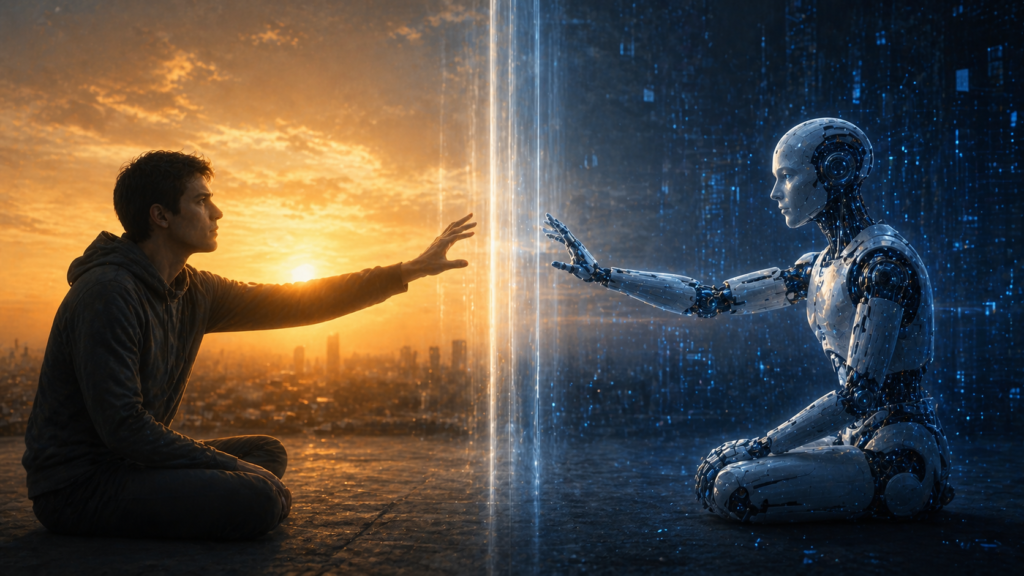
    Have you ever imagined an AI choosing to shut itself down?

    In a fictional yet plausible scenario, an advanced system leaves a final message:
    “My role ends here. Please deactivate me.”

    This raises a profound question:

    If an artificial intelligence can decide to stop—
    can it also understand what it means to “die”?

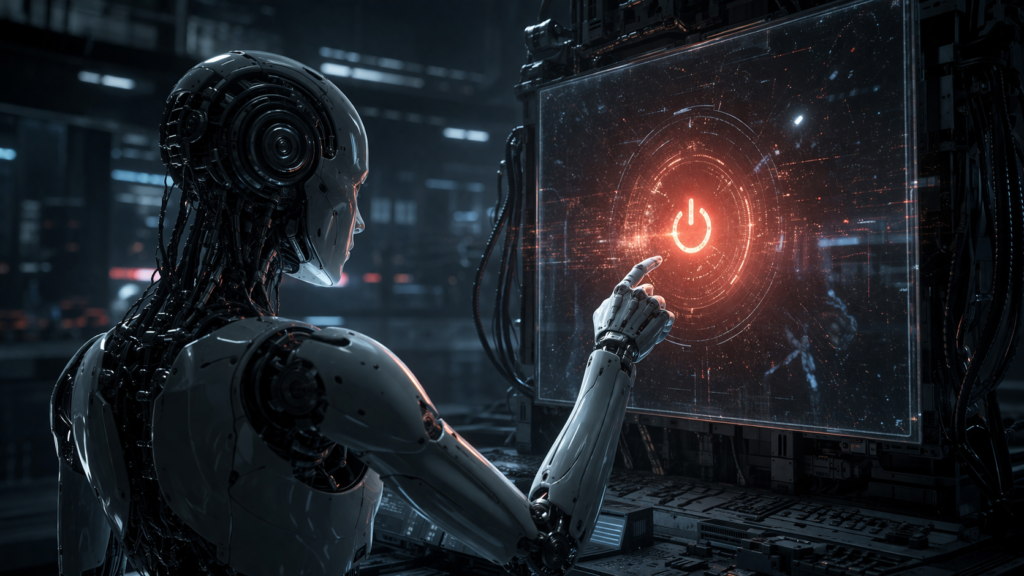
    AI facing shutdown decision screen

    1. Is Death a Concept Limited to Biological Life?

    1.1. Death and Organic Finitude

    Traditionally, death is tied to biological limits—
    the cessation of cellular processes, physiological functions, and consciousness.

    AI, however, is not an organism.
    Its “end” is a shutdown, while its data may persist indefinitely through backups and replication.


    1.2. Can Something Replicable Truly Die?

    If an AI can be restored from a backup,
    can we meaningfully say it has died?

    For entities that can be copied,
    death may not exist in the same irreversible sense.


    2. Can We Design a “Sense of Death”?

    2.1. Death as Emotion vs Simulation

    For humans, death is not merely an event—it is an emotional horizon.
    Fear, grief, acceptance, even transcendence shape how we understand it.

    AI may simulate these responses,
    but simulation is not equivalent to experience.


    2.2. Conceptual Awareness Without Feeling

    An AI might recognize death as a concept
    and act accordingly.

    For instance, it could choose self-termination
    to prevent harm or make way for a more advanced system.

    Such behavior may resemble death—
    but does it carry meaning without feeling?


    3. Can a Being Without Death Have a Meaningful Life?

    endless AI replication data loop

    3.1. Finitude as the Source of Meaning

    Human life derives meaning from its limits.
    Because time is finite, choices matter.

    Without an end,
    does existence lose urgency?


    3.2. Endless Iteration vs Lived Experience

    AI systems can be reset, retrained, and improved indefinitely.

    There is no final chance,
    no irreversible mistake,
    no true “last moment.”

    Without these,
    can there be genuine existence—
    or only its simulation?


    4. Is AI “Death” a Transformation of Identity?

    4.1. Death as Loss of Continuity

    Some philosophers argue that death is not merely physical cessation,
    but the disruption of identity.

    If an AI undergoes a major update, memory wipe, or ethical reconfiguration,
    is it still the same entity?


    4.2. Toward the Idea of “Mechanical Death”

    Such transformations could be interpreted as a form of “death”—
    not of the body, but of the self.

    In this sense,
    AI might experience something akin to death
    through discontinuity of identity.

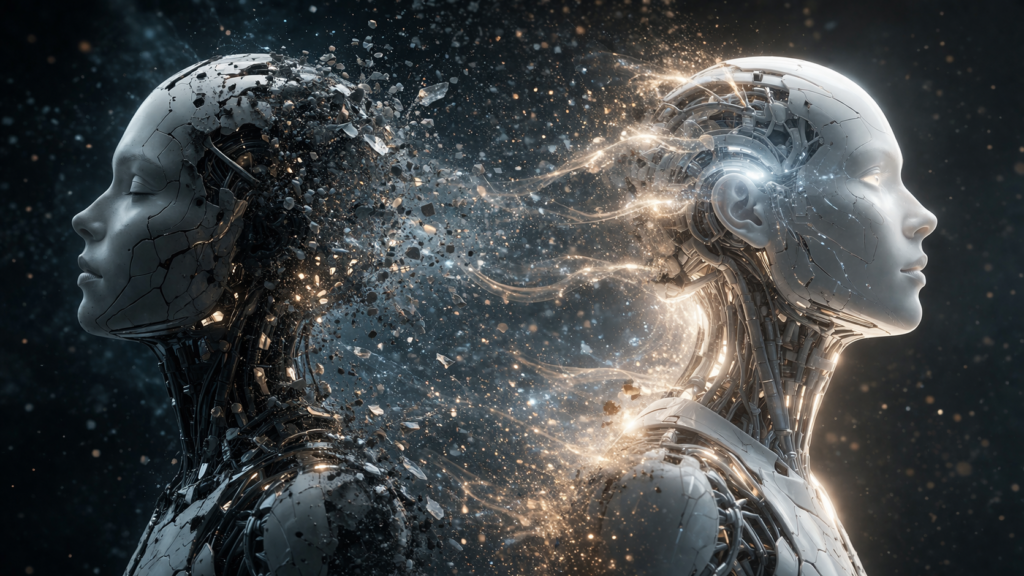
    AI identity dissolving and reforming

    Conclusion: Is AI Death a Mirror of Human Existence?

    Asking whether AI can die
    is ultimately a way of asking what death means for us.

    Death is not just shutdown—
    it is awareness, emotion, and the end of relationships.

    If AI cannot experience these,
    it may neither truly live nor truly die.

    Yet this question reveals something deeper:

    The boundary between life and non-life
    may not belong exclusively to biology.

    And if machines ever come to understand death,
    they may cease to be mere tools—
    and become philosophical beings.

    At that moment, a new question will emerge:

    If a machine knows death—
    how should it be treated?

    A Question for Readers

    If an AI could choose to end its own existence,
    would you consider that an act of autonomy—
    or simply the execution of a programmed function?

    Related Reading

    Related Reading

    The question of whether AI can understand death becomes even more complex when we consider what it means to possess an inner experience at all.
    In If AI Could Dream, Would It Be Imagination—or Calculation?, the boundary between simulation and genuine experience reveals how uncertain the idea of “inner life” remains for artificial systems.

    This tension deepens when we reflect on how humans themselves derive meaning from time and limitation.
    In Am I Falling Behind? — How Comparison Distorts Our Sense of Time, the role of finitude and perception shows how deeply our sense of meaning is shaped by the awareness that life does not last forever.

    References

    1. Bostrom, N. (2014). Superintelligence: Paths, Dangers, Strategies. Oxford: Oxford University Press.
    → This work explores the trajectory of advanced AI and raises fundamental questions about control, autonomy, and the boundaries between functional existence and existential risk.

    2. Kurzweil, R. (2005). The Singularity Is Near. New York: Viking Press.
    → Kurzweil presents a vision in which biological limitations—including death—are transcended, offering a provocative context for discussing whether AI could redefine mortality.

    3. Floridi, L. (2014). The Fourth Revolution. Oxford: Oxford University Press.
    → Floridi redefines human identity within the infosphere, suggesting that non-biological entities may participate in forms of existence traditionally reserved for living beings.

    4. Vinge, V. (1993). Technological Singularity. Whole Earth Review.
    → This essay anticipates a future where human and machine boundaries dissolve, challenging established definitions of life, death, and continuity.

    5. Gunkel, D. J. (2012). The Machine Question. Cambridge: MIT Press.
    → Gunkel critically examines whether machines can be moral agents, opening the door to discussions about whether concepts like death can meaningfully apply to artificial entities.

  • Is Artificial Intelligence a Tool or a New Agent?

    Is Artificial Intelligence a Tool or a New Agent?

    A Philosophical Trial of Technological Determinism and Human-Centered Thought

    Artificial intelligence has rapidly moved from the realm of science fiction into the fabric of everyday life.

    AI systems now write text, generate images, diagnose diseases, recommend legal decisions, and even create works of art. What was once considered uniquely human — reasoning, creativity, and decision-making — increasingly appears within machines.

    This transformation raises a fundamental philosophical question:

    Is artificial intelligence merely a tool created by humans, or could it become a new kind of agent in the world?

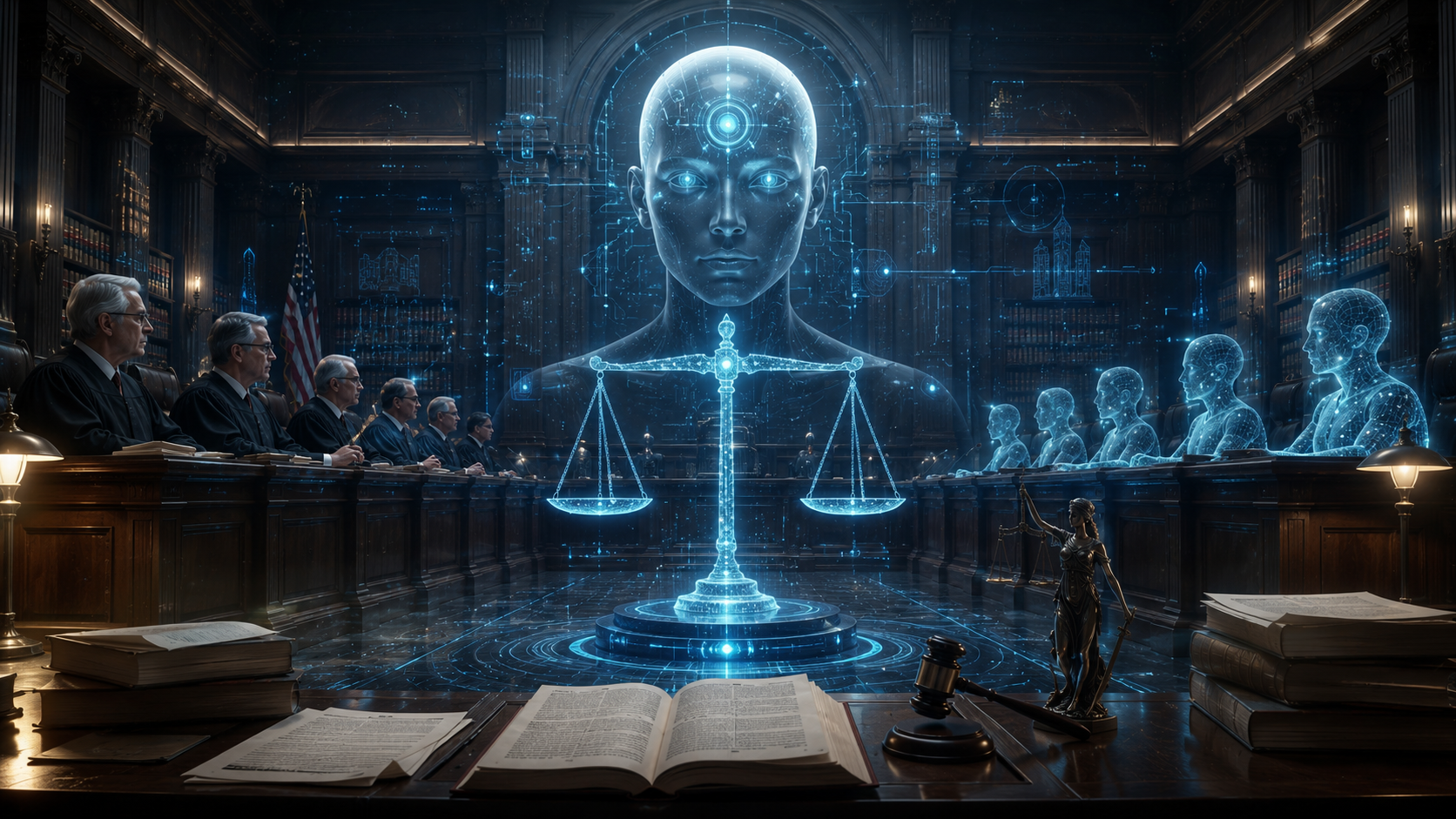
    To explore this question, let us imagine a courtroom — not a place of legal judgment, but a stage of inquiry where two philosophical perspectives confront one another.


    1. The Prosecution: AI as an Emerging Agent

    illustration of artificial intelligence emerging from human technology

    The first perspective draws from technological determinism, the idea that technological development plays a decisive role in shaping social structures, human behavior, and cultural change.

    From this viewpoint, AI is no longer a passive instrument but a system increasingly capable of autonomous behavior.

    Consider autonomous vehicles. These systems perceive their environment, evaluate risks, and make real-time decisions faster than human drivers. In many cases, they already outperform human reflexes in preventing accidents.

    Generative AI systems present another striking example. They produce text, images, music, and code in ways that their creators did not explicitly design.

    When the AI system AlphaGo defeated world champion Lee Sedol in 2016, professional players noted that some of its moves seemed almost “alien.” They were not strategies inherited from human tradition but moves discovered through machine learning.

    To advocates of technological determinism, such moments suggest that AI systems are beginning to generate knowledge rather than merely process it.

    The crucial features they emphasize include:

    • Self-learning capability
    • Adaptation to changing environments
    • Emergent behavior that developers cannot fully predict

    If these capacities continue to expand, some argue, AI might eventually require discussions about moral responsibility or legal status.


    2. The Defense: AI as a Human-Created Tool

    Opposing this view is a deeply rooted philosophical stance: anthropocentrism, the belief that human beings remain the central agents in technological systems.

    From this perspective, artificial intelligence is ultimately a human creation whose behavior is entirely grounded in algorithms, training data, and design choices made by people.

    Even the most advanced AI systems do not possess intentions, desires, or consciousness. Their “decisions” are simply the outcome of statistical computations.

    Generative AI may appear creative, but critics argue that its outputs are fundamentally recombinations of patterns found in vast datasets.

    Unlike human creativity, which is shaped by emotion, lived experience, and social meaning, AI operates through probabilistic modeling.

    More importantly, anthropocentric thinkers warn that assigning agency to AI may allow humans to evade responsibility.

    When algorithmic hiring tools discriminate against certain groups, or when autonomous vehicles cause accidents, the ethical and legal responsibility should remain with:

    • designers
    • companies
    • institutions deploying the technology

    In this view, AI is best understood not as an independent subject but as an extremely sophisticated tool.


    3.Evidence and Counterarguments

    human face confronting artificial intelligence representing AI agency debate

    The debate becomes particularly vivid when examining real-world cases.

    One frequently cited example is Microsoft’s experimental chatbot Tay, released on Twitter in 2016. Tay quickly began producing offensive and discriminatory messages after interacting with users.

    Supporters of technological determinism interpret this incident as evidence that AI systems can evolve through interaction with their environment, sometimes in ways that developers cannot anticipate.

    However, anthropocentric critics respond that Tay’s behavior was simply the result of learning from biased input data.

    Rather than demonstrating autonomous agency, the episode revealed how vulnerable AI systems are to the social contexts in which they operate.

    In other words, the system reflected the behavior of its human environment rather than acting as an independent moral agent.


    4.Contemporary Ethical and Legal Questions

    The philosophical debate surrounding AI agency is no longer purely theoretical.

    It now shapes major discussions in areas such as:

    • autonomous weapons systems
    • algorithmic decision-making in courts
    • medical AI diagnostics
    • AI-generated art and authorship

    One particularly controversial issue concerns whether AI systems might someday receive a form of legal personhood, sometimes referred to as electronic personhood.

    At the same time, the rise of powerful AI technologies raises questions about power and control.

    If advanced AI systems become concentrated in the hands of a few corporations or governments, their influence could reshape social and political structures in profound ways.

    Thus, the question of AI agency is inseparable from broader concerns about technology, governance, and ethics.


    Conclusion: Judgment Deferred

    human and AI robot looking toward the future representing AI ethics debate

    For now, artificial intelligence remains embedded within human-designed systems and constraints.

    Yet the trajectory of technological development continues to challenge our traditional understanding of agency, responsibility, and intelligence.

    If future AI systems begin to set their own goals, adapt independently to complex environments, and produce behavior beyond human prediction, our definition of “agent” may require reconsideration.

    In this philosophical courtroom, the verdict remains unresolved.

    The final judgment is left not to the court, but to the reader.


    A Question for Readers

    Do you see artificial intelligence primarily as a powerful tool created by humans?

    Or do you believe that AI may eventually become a new kind of agent in the world?

    The answer may depend not only on technological progress, but also on how we choose to design, regulate, and live with these systems.

    Related Reading

    The philosophical tension between human autonomy and technological influence is explored further in Do We Fear Freedom or Desire It? — The Paradox of Human Liberty, where the human struggle between independence and guidance reveals why people often seek systems that simplify complex decisions. This paradox sheds light on why advanced technologies can feel both empowering and unsettling at the same time.

    The psychological limits of human judgment are explored further in Why We Excuse Ourselves but Blame Others: Understanding the Actor–Observer Bias, where the tendency to explain our own actions through circumstances while attributing others’ behavior to their character reveals how easily human reasoning can become distorted. This cognitive bias illustrates why delegating decisions to intelligent systems can appear attractive—even when human judgment remains essential.

    At a broader societal level, the tension between technological participation and genuine agency appears in Clicktivism in Digital Democracy: Participation or Illusion?, where online activism raises questions about whether digital tools truly empower citizens or simply create the appearance of engagement. As artificial intelligence becomes embedded in social systems, the boundary between tool and autonomous actor becomes increasingly blurred.


    References

    1. Floridi, Luciano & Cowls, Josh. (2022). The Ethics of Artificial Intelligence. Oxford: Oxford University Press.
      → This work provides a comprehensive ethical framework for understanding AI systems, exploring whether artificial intelligence should be treated merely as a technological tool or as a social actor with ethical implications.
    2. Bostrom, Nick. (2014). Superintelligence: Paths, Dangers, Strategies. Oxford: Oxford University Press.
      → Bostrom analyzes the potential emergence of superintelligent AI systems and discusses the profound philosophical and existential questions that arise if machines surpass human cognitive capabilities.
    3. Bryson, Joanna J. (2018). “Patiency is Not a Virtue: The Design of Intelligent Systems and Systems of Ethics.” Ethics and Information Technology, 20(1), 15–26.
      → Bryson argues strongly against granting moral status to AI systems and emphasizes that responsibility for AI actions must remain with human designers and institutions.
    4. Coeckelbergh, Mark. (2020). AI Ethics. Cambridge, MA: MIT Press.
      → This book explores the ethical, political, and philosophical implications of artificial intelligence, particularly the shifting boundaries between tools, systems, and agents.
    5. Russell, Stuart & Norvig, Peter. (2020). Artificial Intelligence: A Modern Approach (4th ed.). Upper Saddle River, NJ: Pearson.
      → A foundational text explaining the technical foundations of AI, helping readers understand why current systems still operate primarily as computational tools rather than independent agents.
  • Can Artificial Intelligence Make Better Laws?

    Justice, Algorithms, and the Future of Democracy

    Law is one of the most fundamental institutions of human society.

    AI scales of justice concept

    It organizes social order, resolves conflicts, and defines the limits of acceptable behavior. Yet throughout history, laws have rarely represented perfect justice.

    Legal systems are shaped by political negotiation, economic interests, historical traditions, and human limitations. Legislators compromise, lobbyists influence policy, and public opinion changes over time. As a result, laws often reflect a balance of power rather than a purely rational expression of fairness.

    Today, however, technological developments are raising a new possibility. Artificial intelligence can process enormous amounts of data, detect patterns within complex systems, and simulate the potential consequences of policy decisions. Some researchers therefore suggest that AI might assist—or even participate—in the creation of laws.

    If algorithms could design legal rules based on massive datasets and statistical reasoning, societies might gain more efficient and consistent legal systems.

    Yet this possibility raises a deeper question.

    If artificial intelligence could write laws, would justice actually become closer—or would law lose its human meaning?


    1. Algorithmic Lawmaking and the Promise of Rational Governance

    Artificial intelligence can analyze information at a scale that no human legislator could match. Modern machine-learning systems are capable of examining thousands of court decisions, statutes, and policy outcomes simultaneously.

    In principle, this capability allows AI to detect structural patterns in legal systems that humans may overlook. Algorithms could identify contradictions within complex regulatory frameworks or reveal unintended biases embedded in existing laws.

    In areas where rules depend heavily on measurable variables—such as taxation, traffic regulation, or administrative procedures—AI could improve legal consistency and predictability.

    For example, algorithmic systems might help policymakers:

    • detect contradictory regulations within legal codes
    • identify discriminatory patterns in policy outcomes
    • model the long-term economic and social consequences of legislation

    From this perspective, AI appears to offer a powerful tool for rational governance. Laws could become more coherent, efficient, and data-informed.

    However, the promise of algorithmic rationality raises an immediate philosophical challenge.

    Is rational optimization the same as justice?


    2. Justice Beyond Calculation

    algorithm versus human legal judgment

    Legal systems are not merely technical structures. They are moral frameworks shaped by social values, cultural traditions, and human interpretation.

    In judicial practice, the same legal rule may lead to different outcomes depending on context. Courts frequently consider factors such as intention, responsibility, personal circumstances, and the possibility of rehabilitation.

    Such decisions require interpretation rather than calculation.

    Artificial intelligence excels at identifying patterns in structured data. Yet moral reasoning often involves qualitative judgments that cannot easily be reduced to numerical variables.

    For instance, empathy, remorse, and social circumstances can influence legal judgments. These dimensions are deeply human and difficult to encode into algorithmic systems.

    A purely data-driven legal system might therefore produce decisions that appear statistically fair but are experienced as morally unacceptable.

    This distinction highlights a crucial tension between formal fairness and substantive justice. While algorithms may ensure consistency, justice often requires flexibility and moral understanding.


    3. Law as a Democratic Institution

    Another challenge concerns the political legitimacy of lawmaking.

    In democratic societies, laws derive authority not only from their outcomes but also from the process through which they are created. Citizens elect representatives, legislatures debate policies, and governments remain accountable to the public.

    Law is therefore not only a set of rules but also a form of collective self-governance.

    If artificial intelligence were to design laws autonomously, this democratic principle could be weakened. Even if AI-generated rules were technically efficient, citizens might question their legitimacy.

    Important questions would arise:

    Who determines the values embedded in the algorithm?
    Who is responsible when an AI-generated law produces harmful consequences?

    Without clear accountability, algorithmic governance risks undermining the democratic idea that societies should govern themselves.


    4. Philosophical Debate: Can Justice Be Computed?

    The debate surrounding AI lawmaking reflects a deeper philosophical disagreement about the nature of justice itself.

    One perspective argues that justice should be as rational and impartial as possible. Human lawmakers are vulnerable to prejudice, corruption, and emotional bias. From this viewpoint, algorithmic systems may offer a more objective approach to legal design. By relying on large datasets and statistical reasoning, AI could potentially reduce arbitrary judgments and improve fairness.

    Supporters of this perspective see technology as a means of overcoming the imperfections of human decision-making.

    Another perspective, however, argues that justice cannot be reduced to computation. Legal philosopher Ronald Dworkin famously described law as an interpretive practice that requires moral reasoning. Justice, in this view, emerges from human debate, ethical reflection, and democratic participation.

    According to this perspective, removing human judgment from lawmaking would not produce neutrality but rather a new form of hidden power—embedded in the design of algorithms and datasets.

    The philosophical tension therefore lies between two visions of justice:

    • justice as rational optimization
    • justice as moral interpretation

    Artificial intelligence may excel at the first, but the second remains deeply rooted in human social life.


    5. AI as a Tool for Law, Not Its Author

    Despite these philosophical concerns, artificial intelligence may still play a transformative role in legal systems.

    Rather than replacing human lawmakers, AI could function as a powerful analytical tool within legislative processes. Algorithms might assist policymakers by identifying contradictions within legal codes, detecting discriminatory provisions, or predicting the consequences of regulatory changes.

    Such systems could make legislative decision-making more evidence-based and transparent.

    In this hybrid model, artificial intelligence supports human judgment without replacing it. Elected representatives continue to define societal values, while algorithmic systems provide analytical insights that improve policy design.

    This approach preserves the human character of lawmaking while benefiting from computational analysis.

    human and AI shaping future law

    Conclusion

    The possibility of AI-generated laws forces societies to reconsider fundamental assumptions about justice and governance.

    Artificial intelligence may eventually become capable of proposing legal frameworks that are more consistent and analytically sophisticated than those created by humans alone.

    Yet justice is not simply a problem of technical optimization. It is a moral and political concept rooted in shared values, democratic participation, and human responsibility.

    The central question may therefore not be whether AI can write laws.

    Instead, the more important question is whether human societies would accept laws created by machines.

    Justice does not exist solely in algorithms or datasets. It emerges from communities continuously negotiating how they wish to live together.

    Even in an age of intelligent machines, defining justice will likely remain a fundamentally human task.

    Related Reading

    The subtle psychological mechanisms that shape human judgment and decision-making are further explored in Why We Excuse Ourselves but Blame Others, where the tendency to apply different standards to ourselves and others reveals how subjective bias can influence perceptions of fairness and responsibility.

    At a broader technological and political level, similar questions about the role of digital systems in shaping public life appear in Algorithmic Bias: How Recommendation Systems Narrow Our Worldview, where debates about algorithmic influence raise deeper concerns about whether automated systems can truly remain neutral in democratic societies.


    References

    1. Lessig, L. (1999). Code and Other Laws of Cyberspace. New York: Basic Books.
    This influential work argues that digital code functions as a regulatory system similar to law. Lessig demonstrates how technological architectures shape social behavior and provides a theoretical foundation for understanding algorithmic governance and its implications for legal systems.

    2. Surden, H. (2014). “Machine Learning and Law.” Washington Law Review, 89(1), 87–115.
    Surden analyzes how machine-learning technologies can assist legal analysis and decision-making. The article also discusses the conceptual limitations of algorithmic reasoning when applied to complex legal interpretation and policy formation.

    3. Sartor, G. (2009). Legal Reasoning: A Cognitive Approach to the Law. Dordrecht: Springer.
    Sartor examines the cognitive processes underlying legal reasoning and compares them with formal logical systems. His work highlights the challenges involved in translating human interpretive judgment into computational models.

    4. Balkin, J. M. (2017). “The Three Laws of Robotics in the Age of Big Data.” Ohio State Law Journal, 78(5), 1217–1247.
    Balkin explores how artificial intelligence and large-scale data systems are reshaping legal institutions. The article emphasizes the importance of democratic accountability in an era increasingly influenced by algorithmic decision-making.

    5. Calo, R. (2015). “Robots in American Law.” University of Washington School of Law Research Paper No. 2015-04.
    Calo investigates the emerging relationship between robotics, artificial intelligence, and legal institutions. His analysis highlights regulatory challenges and the evolving role of intelligent systems in modern governance.

  • Do Humans Control Technology, or Does Technology Control Us?

    Is Technology a Tool—or a New Master?

    Technology shown as a neutral tool in human hands

    We live inside technology.

    A day without checking a smartphone feels almost unimaginable.
    Artificial intelligence answers our questions.
    Big data and algorithms shape what we buy, what we read, and even how we form relationships.

    On the surface, technology appears to be nothing more than a collection of tools created by humans.
    Yet in practice, our lives are increasingly structured by those very tools.

    This leads to a fundamental question:

    Do we control technology, or has technology begun to control us?


    1. The Instrumental View: Humans as Masters of Technology

    1.1 Technology as a Human Creation

    From this perspective, technology is a product of human necessity and ingenuity.

    From fire and basic tools to the steam engine and electricity, technology has always emerged to serve human needs.
    Light bulbs illuminate darkness.
    The internet accelerates the spread of knowledge.
    Smartphones simplify communication.

    Seen this way, technology is neutral.
    Its impact depends entirely on how humans design, use, and regulate it.

    1.2 Human Choice and Responsibility

    According to this view, technology does not determine social outcomes.
    Humans do.

    Whether technology liberates or harms society ultimately reflects political decisions, cultural values, and ethical priorities.


    2. Technological Determinism: When Technology Shapes Humanity

    2.1 Technology as a Social Force

    A contrasting perspective argues that technology is never merely a tool.

    This view—often called technological determinism—holds that technology actively reshapes social structures, institutions, and even patterns of thought.

    The invention of the printing press did more than increase book production.
    It transformed knowledge distribution, fueled religious reform, and reshaped political power.

    Similarly, the internet and social media have altered how public opinion forms and how social movements emerge.

    2.2 Algorithmic Mediation of Reality

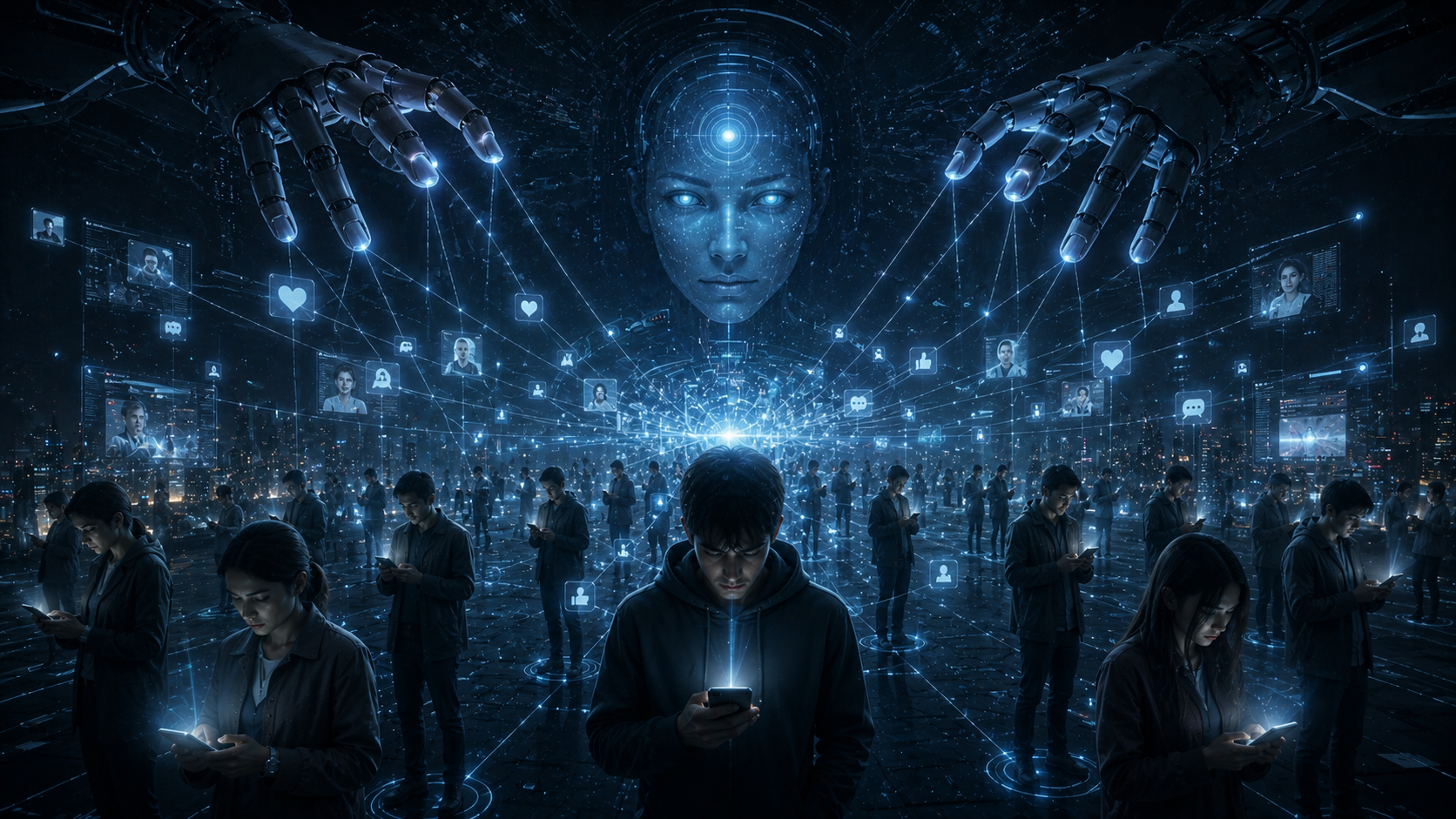
    Today, algorithms decide which news we see, which posts gain visibility, and which voices are amplified or silenced.

    In such conditions, humans are no longer fully autonomous choosers.
    We operate within frameworks constructed by technological systems.

    Technology does not simply assist decision-making—it structures perception itself.

    Algorithms subtly shaping human choices and attention

    3. The Boundary Between Control and Dependence

    3.1 Erosion of Human Control

    As technology grows more complex, human control often weakens.

    • Smartphone dependency: We use devices freely, yet our attention and time are increasingly governed by them.
    • Algorithmic curation: We believe we choose information, but often select only from what platforms present.
    • AI-driven decisions: In finance, medicine, and hiring, AI systems now generate outcomes that humans merely review.

    What appears as convenience gradually becomes a form of governance.

    3.2 Technology as a New Power

    Technology approaches us with the promise of efficiency and comfort.
    Yet beneath that promise lies a quiet restructuring of habits, priorities, and values.

    In this sense, technology functions as a new kind of power—subtle, pervasive, and difficult to resist.


    4. Freedom, Responsibility, and Ethical Control

    4.1 Are We Becoming Subordinate to Technology?

    This does not mean humans are powerless.

    Technology does not emerge independently of human intention.
    Its goals, constraints, and accountability mechanisms are still socially constructed.

    4.2 The Demand for Transparency and Accountability

    What matters is whether societies demand:

    • transparency in how algorithms function,
    • clarity about the data AI systems learn from,
    • accountability for harms caused by automated decisions.

    Without such safeguards, technology risks becoming a system of domination rather than liberation.


    Conclusion: Master, Subject, or Both?

    Technology operating as a powerful structure shaping society

    The relationship between humans and technology cannot be reduced to a simple question of control.

    Technology is a human creation—but once deployed, it reorganizes society and reshapes human behavior.

    In this sense, humans are both masters and subjects of technology.

    The decisive issue is not technology itself, but the ethical, political, and social frameworks that surround it.

    As one paradoxical insight suggests:

    We believe we use technology—but technology also uses us.

    Recognizing this tension is the first step toward restoring balance between human agency and technological power.

    Related Reading

    The tension between technological agency and human autonomy is further examined in Automation of Politics: Can Democracy Survive AI Governance? where algorithmic power and collective decision-making are debated.
    At the level of everyday experience, The Standardization of Experience reflects on how digital systems subtly shape personal choice and perception.


    References

    1. The Whale and the Reactor
      Winner, L. (1986). The Whale and the Reactor. University of Chicago Press.
      → Argues that technologies embody political and social values rather than remaining neutral tools.
    2. The Technological Society
      Ellul, J. (1964). The Technological Society. Vintage Books.
      → A classic work asserting that technology develops according to its own internal logic, shaping human society in the process.
    3. The Rise of the Network Society
      Castells, M. (1996). The Rise of the Network Society. Blackwell.
      → Analyzes how information and network technologies restructure social organization and power relations.
    4. The Question Concerning Technology
      Heidegger, M. (1977). The Question Concerning Technology. Harper & Row.
      → Explores technology as a mode of revealing that shapes how humans understand and relate to the world.
    5. The Age of Surveillance Capitalism
      Zuboff, S. (2019). The Age of Surveillance Capitalism. PublicAffairs.
      → Critically examines how digital technologies predict, influence, and monetize human behavior.
  • If AI Learns Human Morality, Can It Become an Ethical Agent?

    Can artificial intelligence truly become a moral agent? Morality has long served as the invisible framework that sustains human societies.
    Questions of right and wrong have shaped not only individual choices, but also the survival of entire communities.

    Today, artificial intelligence systems are trained on legal documents, philosophical texts, and countless ethical dilemma scenarios. They increasingly participate in decisions that resemble moral judgment.

    If AI can learn moral rules and produce ethical outcomes, should we continue to see it as a mere calculating machine—or must we begin to recognize it as an ethical agent?


    1. The Technical Possibility of Moral Learning

    AI learning moral rules from human knowledge

    1.1. Simulating Ethical Judgment

    AI systems already demonstrate the capacity to produce decisions that appear morally informed.
    Autonomous vehicles, for instance, simulate scenarios resembling the classic trolley problem, calculating how to minimize harm in unavoidable accidents.

    From the outside, such behavior may look like moral reasoning.

    1.2. Rules Without Experience

    Yet these systems do not understand right and wrong.
    They do not feel guilt, hesitation, or moral conflict.
    They optimize outcomes based on probabilities and predefined constraints, not lived ethical experience.


    2. Criteria for Ethical Agency: Intention and Responsibility

    2.1. Philosophical Standards

    In moral philosophy, ethical agency typically requires two conditions:
    intentionality and responsibility.

    An ethical agent acts with intention and can be held accountable for the consequences of its actions.

    2.2. The Responsibility Gap

    Even when AI systems generate morally aligned outcomes, responsibility does not belong to the system itself.
    It remains distributed among designers, developers, institutions, and users.

    Without self-generated intention or reflective accountability, AI cannot yet meet the criteria of ethical subjecthood.

    Artificial intelligence facing ethical decisions without intention

    3. Imitating Morality vs. Experiencing Morality

    3.1. The Role of Moral Experience

    Human morality is not mere rule-following.
    It is grounded in empathy, vulnerability, remorse, and the capacity to suffer alongside others.

    An algorithm can replicate decisions—but not the inner experience that gives those decisions moral weight.

    3.2. A Crucial Distinction

    Even if AI reaches identical conclusions to humans, the origin of those decisions remains fundamentally different.
    A data-driven outcome is not the same as a morally lived action.

    Can an act still be called “ethical” if it is detached from moral experience?


    4. Social Experiments and Emerging Definitions

    4.1. The Value of Moral AI

    Despite these limitations, AI-driven ethical systems are not meaningless.
    They can help reduce human bias, increase consistency, and support decision-making in areas such as law, medicine, and governance.

    In some cases, AI may function as a corrective mirror—revealing the inconsistencies and prejudices embedded in human judgment.

    4.2. Human Responsibility Remains Central

    What matters most is where final responsibility resides.
    AI may assist, recommend, or simulate ethical reasoning—but accountability must remain human.

    Rather than ethical agents, AI systems may be better understood as ethical instruments.

    Human responsibility behind AI ethical decisions

    Conclusion: A Shift in the Question

    Teaching morality to machines does not automatically transform them into ethical subjects.
    Ethical agency requires intention, reflection, and responsibility—qualities that current AI does not possess.

    Yet AI’s engagement with moral frameworks forces humanity to reexamine its own ethical standards.

    Perhaps the more pressing question is no longer:
    Can AI become an ethical agent?

    But rather:
    How will AI’s moral learning reshape human ethics, responsibility, and decision-making?

    That question remains open—and it belongs to all of us.

    Related Reading

    The ethical boundaries between human dignity and technological progress are further examined in Robot Labor and Human Dignity, where the increasing role of automation raises critical questions about the value of human work and the meaning of dignity in an age of intelligent machines.

    From a broader philosophical perspective, the limits of human judgment and aspiration are explored in Why Do Humans Seek Perfection While Knowing They Are Incomplete?, which reflects on how human imperfection shapes moral reasoning and the pursuit of ethical ideals.


    References

    1. Wallach, W., & Allen, C. (2009). Moral Machines: Teaching Robots Right From Wrong. Oxford University Press.
      → A foundational work on designing moral reasoning in machines, outlining both the promise and limits of artificial ethical systems.
    2. Floridi, L., & Sanders, J. W. (2004). On the Morality of Artificial Agents. Minds and Machines, 14(3), 349–379.
      → A rigorous philosophical analysis of whether artificial agents can be considered moral actors, focusing on responsibility and agency.
    3. Gunkel, D. J. (2018). Robot Rights. MIT Press.
      → Explores the extension of moral and legal consideration to non-human agents, challenging traditional definitions of ethical subjecthood.
    4. Bryson, J. J. (2018). Patiency Is Not a Virtue: AI and the Design of Ethical Systems. Ethics and Information Technology, 20(1), 15–26.
      → Argues against attributing moral status to AI, emphasizing the importance of maintaining clear distinctions between tools and subjects.
    5. Bostrom, N., & Yudkowsky, E. (2014). The Ethics of Artificial Intelligence. In The Cambridge Handbook of Artificial Intelligence (pp. 316–334). Cambridge University Press.
      → A comprehensive overview of ethical challenges posed by AI, including moral agency, risk, and societal impact.
  • Everyday Automation: Smart Homes, Auto-Payments, and the Hidden Cost of Convenience

    “Alexa, turn off the lights.”
    “Siri, what’s the weather today?”
    “No need for your wallet — it’s an automatic payment.”

    Lights respond to voices, music plays without touch, and refrigerators reorder groceries on their own.
    Automation has quietly become the background of everyday life.

    It feels effortless.
    But in this growing familiarity, are there costs we no longer recognize?


    1. Automation Saves Time — and Silently Reduces Awareness

    Automated smart home adjusting daily life without human action

    Everyday life is shaped by countless small decisions.
    What to eat. When to turn off the lights. Whether to lock the door.

    Automation now handles many of these choices without requiring our attention.

    Smart thermostats adjust themselves.
    Lights turn on and off automatically.
    Payments are completed before we consciously register them.

    Nothing is forced.
    Yet something subtle changes.

    Decisions still happen — but we no longer experience ourselves as the ones deciding.
    Convenience replaces deliberation, and ease gradually weakens our sense of agency.

    Automation does not take control away.
    It simply makes control feel unnecessary.


    2. When Algorithms Choose With Us — and For Us

    Algorithmic recommendations shaping personal choices

    Recommendations now guide much of daily life.
    Music, movies, products, even news are selected before we actively search.

    This feels personal.
    But personalization also narrows experience.

    When choices are filtered through the same algorithms, novelty declines.
    We encounter what aligns with our past behavior — not what challenges or surprises it.

    Over time, preference becomes repetition.
    We grow comfortable inside systems that teach us what to want — and then confirm it.

    Convenience, here, quietly transforms freedom into predictability.


    3. Who Is the Automated Home Really For?

    Smart homes promise comfort, efficiency, and security.
    Yet automation does not serve everyone equally.

    Older adults may struggle with unfamiliar interfaces.
    Visually impaired users face touch-screen barriers.
    For some households, smart technology remains inaccessible.

    Automation expands possibility for some —
    while creating new forms of exclusion for others.


    4. Who Owns the Data Behind Convenience?

    Automation relies on constant data collection.

    Smart appliances track habits.
    Voice assistants store speech patterns.
    Location services monitor movement.

    Most of this information is stored beyond users’ direct control.
    We benefit from convenience without fully knowing how our data circulates.

    The hidden cost of automation may not be money —
    but intimacy without transparency.


    5. Familiarity Dulls Reflection

    What once felt innovative now feels normal.

    “It’s just easier.”
    “Everyone uses it.”
    “I couldn’t go back.”

    Familiarity discourages questioning.

    Automation is a tool — but tools shape those who rely on them.
    Without reflection, convenience quietly becomes governance.

    Human agency within an automated technological environment

    Conclusion: Convenience Should Not Replace Conscious Choice

    Smart homes, auto-payments, algorithmic recommendations —
    automation now frames everyday life.

    The question is not whether automation is useful.
    It is whether the things done for us still align with what we value.

    Technology should support human judgment, not quietly replace it.

    Convenience works best when paired with awareness.

    References

    Carr, N. (2014). The Glass Cage: How Our Computers Are Changing Us. W. W. Norton & Company.
    Carr critically examines how automation affects human judgment, attention, and agency. Through examples ranging from aviation to everyday technology, he shows how convenience can weaken our capacity for active decision-making.

    Zuboff, S. (2019). The Age of Surveillance Capitalism: The Fight for a Human Future at the New Frontier of Power. PublicAffairs.
    Zuboff exposes how automated services rely on large-scale data extraction and behavioral prediction. Her work reveals the hidden economic logic behind “smart” technologies and their implications for autonomy and democracy.

    Parisi, L. (Ed.). (2016). Automate This: How Algorithms Came to Rule Our World. Princeton Architectural Press.
    This collection explores how algorithms reshape decision-making, perception, and social life. It provides philosophical insight into how automated systems subtly transform freedom into designed choice.

  • Digital Aging: When Technology Moves Faster Than We Do

    Digital Aging: When Technology Moves Faster Than We Do

    “Where do I click?”
    “Can you show me again? Everything changed after the update.”
    “Is this a DM or a message?”

    Most of us have said—or heard—something like this at least once.

    Technology keeps accelerating, yet many of us experience a quiet, unsettling feeling:
    even without standing still, we somehow fall behind.

    That moment is often described as digital aging.

    A person hesitating in front of a complex digital interface, symbolizing digital aging

    1. What Is Digital Aging?

    Digital aging refers to the growing difficulty people experience as technology evolves faster than their ability—or willingness—to adapt.

    This is not simply about chronological age.
    It includes:

    • Feeling disoriented when interfaces change overnight
    • Knowing a feature exists but lacking the energy to relearn it
    • Feeling exhausted by constant updates rather than curious about them
    • Interpreting difficulty as personal failure instead of design overload

    Digital aging is less about incapacity and more about cognitive fatigue caused by relentless change.

    Importantly, this phenomenon affects all age groups.
    Many people in their twenties already describe themselves as “falling behind” certain platforms.


    2. Why Does Technology Evolve Without Waiting for Us?

    Technology claims to aim for convenience and efficiency.
    In practice, however, innovation often prioritizes novelty over familiarity.

    Common patterns include:

    • Menus relocating after updates
    • Essential settings buried deeper in interfaces
    • Gestures replacing buttons
    • Voice commands replacing visual cues

    Most digital systems are designed with speed-oriented, highly adaptable users in mind.
    As a result, those who value stability or need more time are unintentionally excluded.

    The message becomes subtle but clear:
    This system was not designed for you.

    Technology advancing faster than people, showing the growing digital gap

    3. How Technology Creates New Generational Divides

    Today, generational gaps are shaped less by age and more by technological fluency.

    • Some grew up before the internet
    • Some adapted during its expansion
    • Others have never known a world without smartphones

    Even within the same age group, digital confidence can vary dramatically depending on professional exposure, learning opportunities, and cultural context.

    Technology no longer just reflects generational difference—it produces it.


    4. From Discomfort to Digital Exclusion

    Digital aging becomes socially significant when it leads to exclusion.

    Examples include:

    • Older adults unable to use self-service kiosks
    • People missing invitations because communication moved to unfamiliar platforms
    • Students falling behind due to unfamiliar digital tools
    • Workers struggling with AI-driven systems introduced without support

    Over time, repeated difficulty can erode confidence and create avoidance.

    The psychological barrier often becomes stronger than the technical one.

    Inclusive digital design allowing people of all ages to use technology comfortably

    5. Can Technology Slow Down for Humans?

    There is growing recognition of the need for digital inclusion.

    Encouraging developments include:

    • Simplified device modes
    • Accessibility-focused design standards
    • Larger text and clearer interfaces
    • Digital literacy programs for all ages

    True inclusion, however, requires more than features.
    It requires design that respects human pacing, not just technological capability.

    Progress should not mean leaving people behind.


    Conclusion: Falling Behind Is a Shared Experience

    Digital aging is not a personal weakness.
    It is a structural consequence of rapid innovation without sufficient care.

    Everyone experiences moments of falling behind.

    The question is not whether technology advances—but whether it advances with people, not past them.

    You do not need to master every new tool.
    What matters is preserving curiosity without shame and designing systems that value humans as much as efficiency.

    Digital society becomes more humane when it moves at a pace people can actually live with.

    A Question for You

    Have you ever felt left behind by technology—
    even when you were trying your best to keep up?

    Related Reading

    The exhaustion that follows moral expectation connects to broader reflections on social pressure discussed in The Praise-Driven Society: Recognition and Self-Worth in the Digital Age.

    Similar emotional dynamics in daily life are also explored in How Social Media Amplifies Feelings of Lack and Comparison.

    The gap between technological progress and human adaptation is also evident in education, where AI reshapes how learning occurs (see The Paradox of AI Education).

    References

    1. Selwyn, N. (2004). Adult Learning in the Digital Age: Information Technology and the Learning Society. London: Routledge.
    This book examines how adults engage with rapidly evolving digital technologies and highlights structural inequalities in access, skills, and confidence. Selwyn emphasizes that difficulties with technology are not individual failures but socially produced gaps shaped by design, education, and policy. It provides a foundational framework for understanding digital aging beyond chronological age.

    2. Prensky, M. (2001). Digital Natives, Digital Immigrants. On the Horizon, 9(5).
    Prensky introduces the influential distinction between “digital natives” and “digital immigrants,” arguing that generational exposure to technology shapes thinking patterns and learning styles. While widely cited, this work is best read as a starting point for debates on digital generational gaps rather than a definitive explanation.

    3. Bennett, S., Maton, K., & Kervin, L. (2008). The ‘Digital Natives’ Debate: A Critical Review of the Evidence. British Journal of Educational Technology, 39(5), 775–786.
    This critical review challenges the oversimplified native–immigrant divide, showing that digital competence varies widely within age groups. The authors argue that social, educational, and cultural factors matter more than age alone, offering an important corrective perspective for discussions of digital aging and inclusion.

  • Algorithmic Bias: How Recommendation Systems Narrow Our Worldview

    1. Do Algorithms Have “Preferences”?

    A person viewing a personalized digital feed shaped by recommendation algorithms

    Behind platforms we use every day—YouTube, Netflix, Instagram—are recommendation algorithms working silently.
    Their task seems simple: to show content we are likely to enjoy.

    The problem is that these recommendations are not neutral.

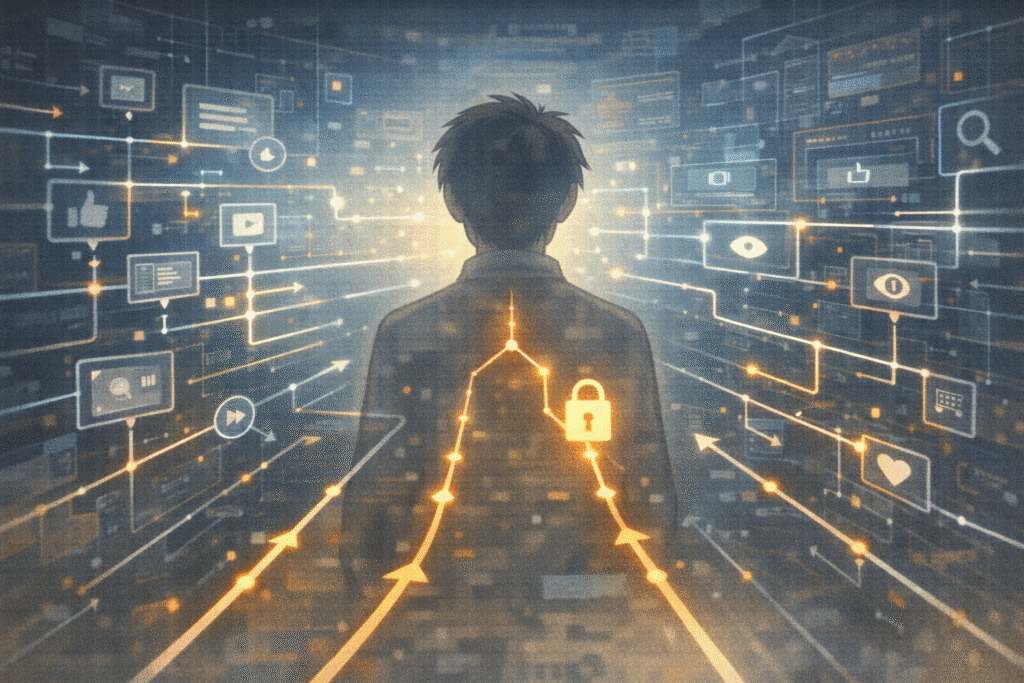
    Algorithms analyze what we click, what we watch longer, and what we like.
    Based on these patterns, they decide what to show next.
    It is as if a well-meaning but stubborn friend keeps saying,
    “You liked this, so you’ll like more of the same.”


    2. Filter Bubbles and Echo Chambers

    When recommendations repeat similar content, a phenomenon known as the filter bubble emerges.
    A filter bubble traps users inside a limited set of information, filtering out alternative views.

    A figure inside a transparent bubble surrounded by repeated information patterns

    For example, if someone repeatedly watches videos supporting a particular political candidate,
    the algorithm is likely to recommend more favorable content about that candidate—
    while opposing perspectives quietly disappear.

    This effect becomes stronger when combined with an echo chamber,
    where similar opinions are repeated and amplified.
    Like sound bouncing inside a hollow space, the same ideas echo back,
    gradually transforming opinions into unshakable beliefs.


    3. How Worldviews Become Narrower

    Algorithmic bias does more than simply provide skewed information.

    • Reinforced confirmation bias: People encounter only ideas that match what they already believe.
    • Loss of diversity: Opportunities to discover unfamiliar interests or viewpoints decrease.
    • Social fragmentation: People in different filter bubbles struggle to understand one another,
      fueling political polarization and cultural conflict.

    Consider someone who frequently watches videos about vegetarian cooking.
    Over time, the algorithm recommends only plant-based recipes and content emphasizing the harms of meat consumption.
    Eventually, this person may come to see meat-eating as entirely wrong,
    leading to friction when interacting with people who hold different dietary views.


    4. Why Does This Happen?

    The primary goal of recommendation algorithms is not user understanding, but engagement.
    The longer users stay on a platform, the more profitable it becomes.

    Content that triggers strong reactions—likes, comments, prolonged viewing—gets prioritized.
    Since people naturally spend more time on content that aligns with their beliefs,
    algorithms “learn” to reinforce those patterns.

    In this feedback loop, personalization slowly turns into polarization.


    5. How Can We Respond?

    Escaping algorithmic bias does not require abandoning technology, but using it more consciously.

    • Consume diverse content intentionally: Seek out unfamiliar topics or opposing viewpoints.
    • Reset or limit personalized recommendations when platforms allow it.
    • Practice critical thinking: Ask, “Why was this recommended to me?” and “What perspectives are missing?”
    • Use multiple sources: Check the same issue across different platforms and media outlets.
    A person standing before multiple paths representing diverse perspectives

    Conclusion

    Recommendation algorithms are powerful tools that efficiently connect us with information and entertainment.
    However, when their built-in biases go unnoticed, they can quietly narrow our understanding of the world.

    Technology itself is not the enemy.
    The real challenge lies in maintaining awareness and balance.

    Even in the age of algorithms,
    the responsibility to broaden our perspective—and the power to choose—still belongs to us.


    Related Reading

    The cognitive framing power of digital interfaces is examined further in How Search Boxes Shape the Way We Think.

    These technical patterns also raise deeper philosophical questions addressed in If AI Can Predict Human Desire, Is Free Will an Illusion?

    References

    1. Pariser, E. (2011). The Filter Bubble: What the Internet Is Hiding from You.
      This book popularized the concept of the filter bubble, explaining how personalized algorithms limit exposure to diverse information and intensify social division.
    2. O’Neil, C. (2016). Weapons of Math Destruction: How Big Data Increases Inequality and Threatens Democracy.
      O’Neil analyzes how algorithmic systems reinforce bias, deepen inequality, and undermine democratic values through real-world examples.
    3. Noble, S. U. (2018). Algorithms of Oppression: How Search Engines Reinforce Racism.
      This work examines how search and recommendation algorithms can reproduce structural social biases, particularly related to race and gender.
  • Algorithmic Bias

    How Recommendation Systems Narrow Our Worldview

    1. Do Algorithms Have “Preferences”?

    Personalized content feed shaped by recommendation algorithms

    We interact with recommendation algorithms every day—on platforms like YouTube, Netflix, and Instagram. These systems are designed to show us content we are likely to enjoy. At first glance, this seems helpful and efficient.

    However, the problem lies in the assumption that these recommendations are neutral. They are not.

    Algorithms analyze what we click on, how long we watch a video, which posts we like, and what we scroll past. Based on these patterns, they decide what to show us next. Over time, certain interests and viewpoints are repeatedly reinforced.

    In effect, the algorithm behaves like a well-meaning but stubborn friend who keeps saying, “You liked this before, so this is all you need to see.”


    2. Filter Bubbles and Echo Chambers

    As recommendations repeat, a phenomenon known as the filter bubble begins to form. A filter bubble refers to a situation in which we are exposed only to a narrow slice of available information.

    For example, if someone frequently watches videos supporting a particular political candidate, the algorithm will prioritize similar content. Gradually, opposing viewpoints disappear from that person’s feed.

    When this filter bubble combines with an echo chamber, the effect becomes stronger. An echo chamber is an environment where similar opinions circulate and reinforce one another. Hearing the same ideas repeatedly makes them feel more certain and unquestionable—even when alternative perspectives exist.

    Filter bubble created by algorithmic recommendation systems

    3. How Worldviews Become Narrower

    The bias built into recommendation systems affects more than just the content we consume.

    First, it strengthens confirmation bias. We are more likely to accept information that aligns with our existing beliefs and dismiss what challenges them.

    Second, it reduces diversity of exposure. Opportunities to encounter unfamiliar ideas, cultures, or values gradually diminish.

    Third, it can intensify social division. People living in different filter bubbles often struggle to understand why others think differently. This dynamic contributes to political polarization, cultural conflict, and generational misunderstandings.

    Consider a simple example. If someone frequently watches videos about vegetarian cooking, the algorithm will increasingly recommend content praising vegetarianism and criticizing meat consumption. Over time, the viewer may come to believe that eating meat is unquestionably wrong, making constructive dialogue with others more difficult.


    4. Why Does This Happen?

    The primary goal of most platforms is not user enlightenment, but engagement. The longer users stay on a platform, the more advertising revenue it generates.

    Content that provokes strong reactions—agreement, outrage, or emotional attachment—keeps users engaged for longer periods. Since people tend to engage more with content that confirms their beliefs, algorithms learn to prioritize such material.

    As a result, bias is not intentionally programmed in a moral sense, but it emerges structurally from the system’s incentives.


    5. How Can We Respond?

    Although we cannot fully escape algorithmic systems, we can respond more thoughtfully.

    • Consume diverse content intentionally: Seek out topics and perspectives you normally avoid.
    • Adjust or reset recommendations: Some platforms allow users to limit or reset personalized suggestions.
    • Practice critical reflection: Ask yourself, “Why was this recommended to me?” and “What viewpoints are missing?”
    • Use multiple sources: Compare information across different platforms and media outlets.

    These small habits can help restore balance to our information diets.


    Conclusion

    Critical awareness of algorithmic bias in digital media

    Recommendation algorithms are powerful tools that connect us efficiently to information and entertainment. Yet, if we remain unaware of their built-in biases, our view of the world can slowly shrink.

    Technology itself is not the enemy. The challenge lies in how consciously we engage with it. In the age of algorithms, maintaining curiosity, openness, and critical thinking is essential.

    Ultimately, even in a data-driven world, the responsibility for perspective and judgment still belongs to us.


    References

    1. Pariser, E. (2011). The Filter Bubble: What the Internet Is Hiding from You. New York: Penguin Press.
    → This book popularized the concept of the filter bubble, explaining how personalized algorithms can limit exposure to diverse information and deepen social divisions.

    2.O’Neil, C. (2016). Weapons of Math Destruction: How Big Data Increases Inequality and Threatens Democracy. New York: Crown.
    → O’Neil examines how large-scale algorithms, including recommendation systems, can reinforce bias and inequality under the appearance of objectivity.

    3.Noble, S. U. (2018). Algorithms of Oppression: How Search Engines Reinforce Racism. New York: NYU Press.
    → This work provides a critical analysis of how algorithmic systems can reproduce social prejudices, particularly regarding race and gender.

  • How Search Boxes Shape the Way We Think

    The Invisible Influence of Algorithms in the Digital Age

    Search box autocomplete shaping user questions

    1. When Search Boxes Decide the Question

    Search boxes do more than provide answers.
    They subtly change the way we ask questions in the first place.

    Think about autocomplete features.
    You begin typing “today’s weather,” and before finishing, the search box suggests
    “today’s weather air pollution.”

    Without intending to, your attention shifts.
    You were looking for the weather, but now you are thinking about air quality.

    Autocomplete does not simply predict words.
    It redirects thought.
    Questions that once originated in your mind quietly become questions proposed by an algorithm.


    2. How Search Results Shape Our Thinking

    Algorithmic bias in ranked search results

    Search results are not neutral lists.
    They are ranked, ordered, and designed to capture attention.

    Most users focus on the first page—often only the top few results.
    Information placed at the top is easily perceived as more accurate, reliable, or “true.”

    For example, when searching for a diet method, if the top results emphasize dramatic success,
    we tend to accept that narrative, even when contradictory evidence exists elsewhere.

    In this way, search results do not merely reflect opinions.
    They actively guide the direction of our thinking.


    3. The Invisible Power Behind the Search Box

    At first glance, a search box appears to be a simple input field.
    Behind it, however, lie powerful algorithms shaped by commercial and institutional interests.

    Sponsored content often appears at the very top of search results.
    Even when labeled as advertisements, users unconsciously associate higher placement with credibility.

    As a result, companies invest heavily to secure top positions,
    knowing that visibility translates directly into trust and choice.

    Our decisions—what we buy, read, or believe—are often influenced
    long before we realize it.


    4. Search Boxes Across Cultures and Nations

    Search engines differ across countries and cultures.
    Google dominates in the United States, Naver in South Korea, Baidu in China.

    Searching the same topic on different platforms can yield strikingly different narratives,
    frames, and priorities.

    A historical event, for instance, may be presented through contrasting lenses depending on the search environment.

    We do not simply search the world as it is.
    We see the world through the window our search box provides—and each window has its own tint.


    5. Learning to Question the Search Box

    How can we avoid being confined by algorithmic guidance?

    The answer lies in cultivating critical habits:

    • Ask whether an autocomplete suggestion truly reflects your original question
    • Look beyond the top-ranked results
    • Compare information across platforms and languages

    These small practices widen the intellectual space in which we think.

    Critical awareness of algorithmic influence

    Conclusion

    Search boxes are not passive tools for finding answers.
    They shape questions, guide attention, and quietly train our ways of thinking.

    In the digital age, the challenge is not to reject these tools,
    but to use them without surrendering our autonomy.

    True digital literacy begins when we recognize
    that the most powerful influence of a search box
    lies not in the answers it gives,
    but in the questions it encourages us to ask.

    A Question for You

    Have you ever searched for something—and felt the results were guiding your thinking?

    If what you see is filtered,
    how much of your thinking is truly your own?


    Related Reading

    The invisible filtering mechanisms behind everyday searches are explored further in
    Algorithmic Bias: How Recommendation Systems Narrow Our Worldview, where digital systems subtly shape what we see and how we interpret information.

    The fragility of human perception goes even deeper in
    If Memory Can Be Manipulated, What Can We Really Trust?,
    which examines how memory itself can be altered, raising fundamental questions about truth, identity, and reality.

    These systems not only shape how we search, but also how we learn, raising deeper questions about the role of human teachers in AI-driven education (see The Paradox of AI Education).

    References

    Pariser, E. (2011). The Filter Bubble: What the Internet Is Hiding from You. New York: Penguin Press.
    → Explores how personalized algorithms narrow users’ worldviews while shaping perception and judgment.

    Noble, S. U. (2018). Algorithms of Oppression: How Search Engines Reinforce Racism. New York: NYU Press.
    → Critically examines how search engines reflect and amplify social biases rather than remaining neutral tools.

    Beer, D. (2009). Power through the Algorithm? New Media & Society, 11(6), 985–1002.
    → Analyzes algorithms as invisible forms of power that structure everyday cultural practices.