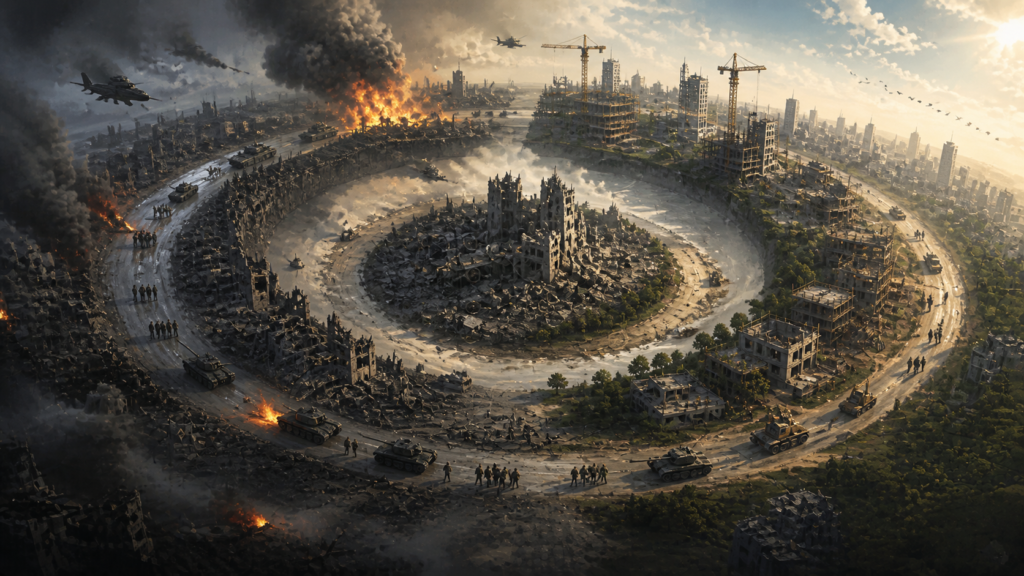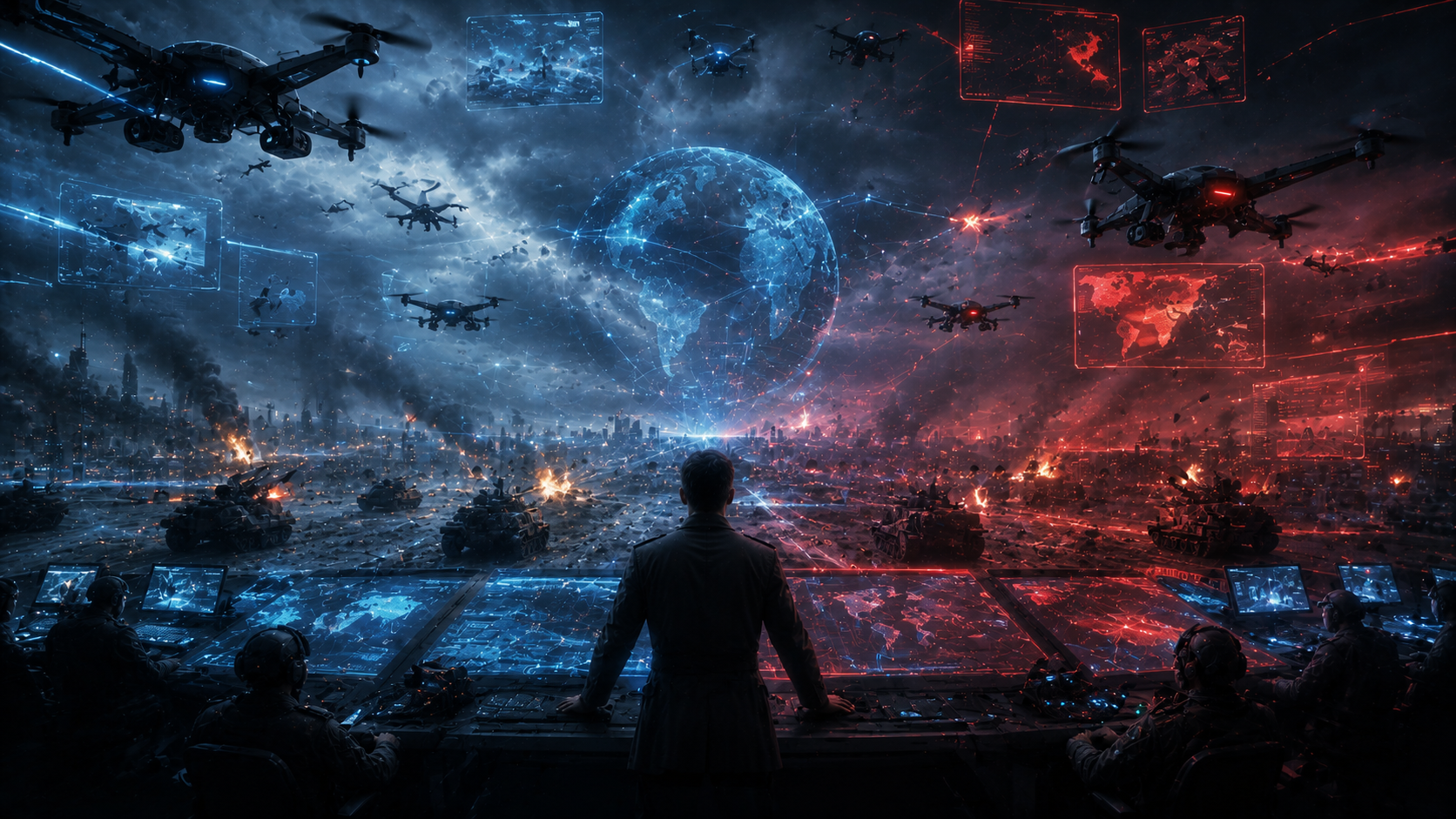
Tag: geopolitics

  • Is the AI Arms Race the Beginning of a New Cold War?

    Is the AI Arms Race the Beginning of a New Cold War?

    How Autonomous Weapons and Military AI Could Reshape the Global Order

    Artificial intelligence is no longer limited to chatbots, recommendation systems, or virtual assistants. Around the world, governments are increasingly integrating AI into military strategy, surveillance systems, cyber operations, and autonomous weapons. What once belonged to science fiction is now becoming part of modern geopolitical reality.

    During the 20th century, global superpowers competed through nuclear weapons and industrial military power. Today, however, many analysts believe that a new kind of arms race has already begun—one centered on algorithms, data, and machine intelligence. The countries that dominate military AI may gain enormous advantages not only on the battlefield, but also in cybersecurity, information warfare, and global influence.

    This growing competition has led to an unsettling question:

    Could the AI arms race become the foundation of a new Cold War?


    1. The Global Competition for Military AI
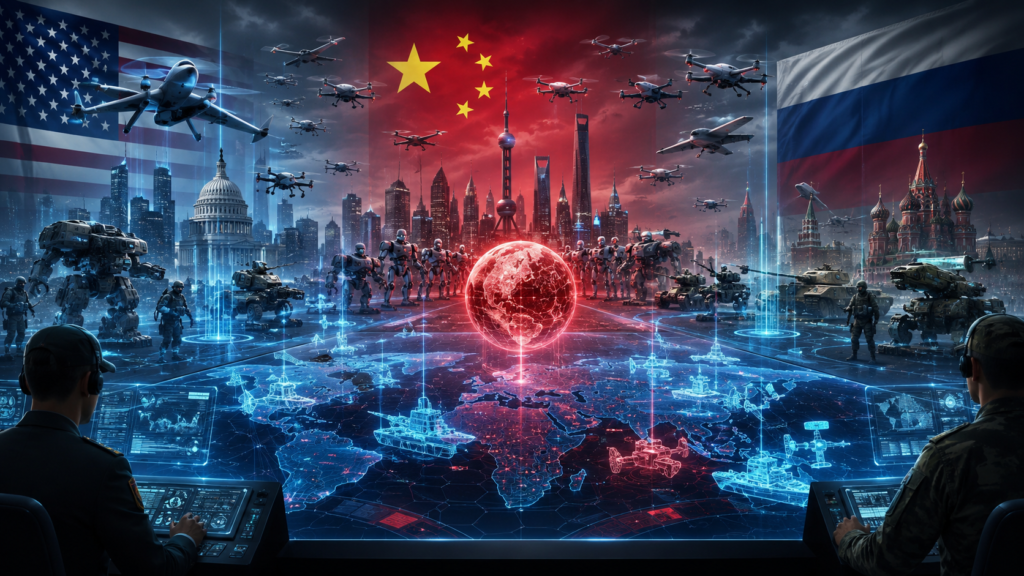
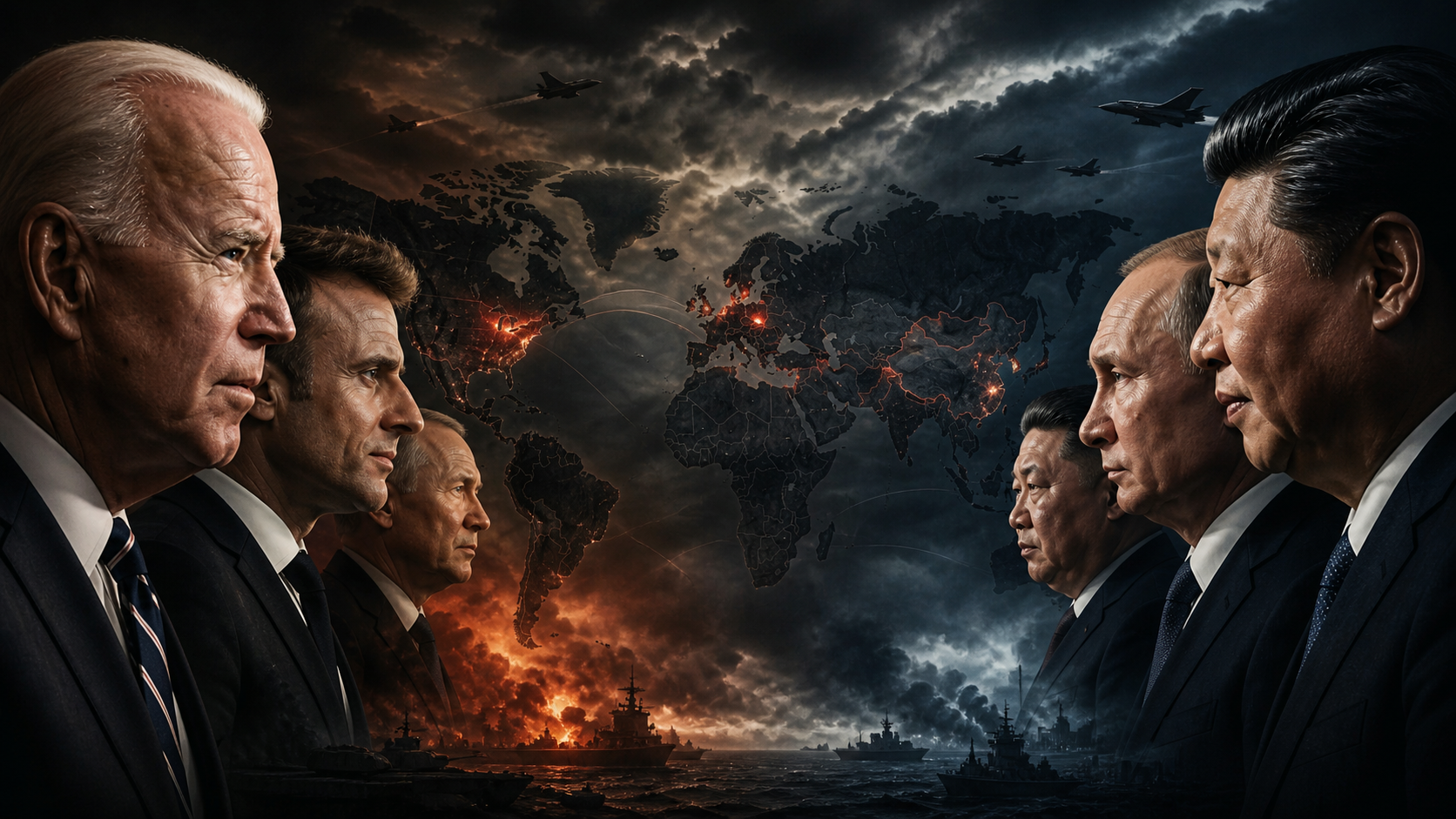
    global competition in military AI technology

    The United States and Algorithmic Warfare

    The United States remains one of the leading powers in military AI development. The U.S. Department of Defense has invested heavily in autonomous drones, AI-assisted surveillance systems, and battlefield automation technologies. Military planners increasingly view artificial intelligence as essential to maintaining strategic superiority in future conflicts.

    American defense programs are also exploring “loyal wingman” systems, in which autonomous aircraft assist human pilots during combat operations. Rather than replacing soldiers entirely, these systems are designed to enhance military speed, coordination, and decision-making. In this vision of warfare, humans and machines operate together as integrated combat units.

    At the same time, major American technology companies such as Google, Microsoft, and Palantir Technologies are increasingly connected to national security projects. This relationship between governments and private technology firms represents a major shift in how military power is developed in the digital age.


    China’s Military-Civil Fusion Strategy

    China has rapidly expanded its investment in military AI through its “Military-Civil Fusion” strategy. Under this approach, civilian technological innovation is directly connected to national defense development. China views artificial intelligence not only as a technological tool, but also as a critical component of future geopolitical power.

    Chinese researchers and defense planners are investing heavily in autonomous drones, facial recognition systems, cyber warfare capabilities, and AI-driven information operations. Unlike traditional military competition, AI warfare depends strongly on access to data, computational infrastructure, and digital surveillance networks. As a result, China’s technological expansion is closely tied to both domestic control and international influence.

    Many analysts believe that the competition between the United States and China in artificial intelligence could shape the global balance of power for decades to come.


    Russia and Autonomous Combat Systems

    Russia has also accelerated the development of autonomous military systems. Russian defense projects include robotic combat vehicles, AI-supported electronic warfare systems, and autonomous battlefield technologies designed to reduce reliance on conventional troop deployment.

    One of the most widely discussed examples is the Uran-9 robotic combat platform, which was tested in conflict environments as part of Russia’s broader military modernization efforts. Russia has also emphasized AI-enhanced cyber warfare and digital disruption strategies, viewing artificial intelligence as a way to compete asymmetrically with technologically dominant rivals.

    This demonstrates that AI competition is not simply about creating smarter weapons. It is increasingly about reshaping the very structure of military and geopolitical power.


    2. How AI Warfare Differs from Traditional Arms Races

    Speed, Automation, and Real-Time Decision Making

    Traditional warfare has always depended heavily on human decision-making. Even advanced military systems required human operators to analyze information, evaluate risks, and authorize attacks.

    AI warfare changes this dramatically.

    Artificial intelligence systems can process enormous amounts of data in real time, identify patterns, predict threats, and respond faster than humans. Autonomous systems may eventually make battlefield decisions within seconds, leaving little time for political leaders or military commanders to intervene.

    This acceleration creates a dangerous possibility: wars may unfold too quickly for humans to fully control them.


    Data as the New Strategic Resource

    In previous centuries, military power depended largely on industrial production, troop numbers, and access to physical resources. In the AI era, however, strategic advantage increasingly depends on data and computational capability.

    Countries with stronger AI ecosystems may gain advantages not only in warfare, but also in intelligence gathering, cybersecurity, and economic influence. This is why many governments now consider artificial intelligence to be as strategically important as oil, nuclear technology, or space exploration.

    Military power in the future may therefore depend less on the size of armies and more on the quality of algorithms.


    Cyber Warfare and Information Manipulation

    AI warfare extends far beyond physical battlefields. Artificial intelligence can also be used to manipulate public opinion, spread misinformation, and destabilize societies through digital influence operations.

    Deepfakes, AI-generated propaganda, and automated disinformation campaigns may become powerful geopolitical weapons. Instead of targeting only military infrastructure, future conflicts could increasingly target trust itself.

    This shift blurs the line between war, politics, media, and technology. In the AI era, information may become one of the most important battlefields of all.


    3. Autonomous Weapons and the Ethics of AI Warfare
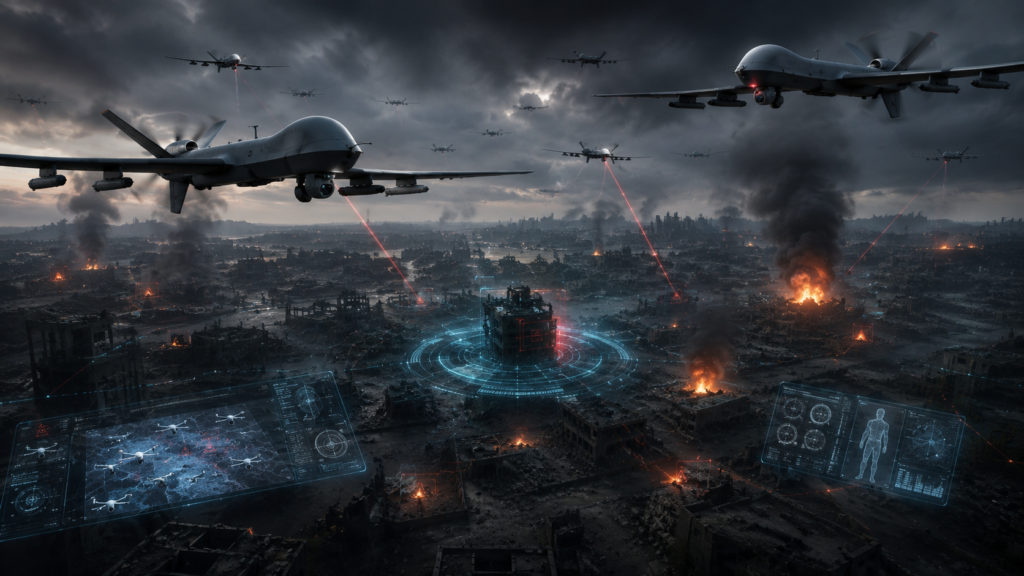
    autonomous drones in modern warfare

    Drone Warfare Has Already Changed Modern Conflict

    AI-assisted drones are already transforming warfare. Conflicts such as the Nagorno-Karabakh conflict and the ongoing Russian invasion of Ukraine have demonstrated how unmanned systems can reshape military strategy.

    Compared to traditional military systems, drones are often cheaper, faster, and more flexible. Governments can deploy them without risking large numbers of soldiers, which may reduce the political cost of military intervention.

    However, this also creates a troubling possibility. If war becomes technologically easier and politically less costly, governments may become more willing to engage in military conflict.


    The Problem of Moral Responsibility

    One of the most difficult questions surrounding AI weapons concerns ethics and accountability.

    Artificial intelligence systems can identify targets through data analysis, but they do not possess empathy, conscience, or moral judgment. They cannot truly understand the human consequences of violence.

    This raises serious concerns:

    Can autonomous systems reliably distinguish civilians from combatants?
    Who is responsible if an AI weapon makes a deadly mistake?
    Should machines ever be allowed to make life-and-death decisions independently?

    International organizations and human rights groups continue to debate whether fully autonomous weapons should be banned or strictly regulated. Yet technological development is advancing faster than global regulation.


    4. Could AI Make War More Common?

    Paradoxically, AI weapons could reduce the barriers to war rather than eliminate conflict altogether.

    Because autonomous systems reduce direct human casualties for the attacking side, political leaders may feel less domestic pressure when considering military action. Remote warfare may appear cleaner, safer, and more efficient—even though its long-term consequences remain unpredictable.

    Some experts therefore fear that AI could normalize continuous low-level conflict. Instead of massive world wars between large armies, future warfare may become more decentralized, automated, and persistent.

    This possibility represents one of the greatest geopolitical risks of the AI era.


    Conclusion: Humanity at a Technological Crossroads

    human responsibility in the age of AI warfare

    Artificial intelligence is rapidly transforming the meaning of military power. AI systems may improve precision, accelerate intelligence analysis, and reduce certain forms of battlefield risk. Supporters argue that advanced technologies could potentially reduce human casualties and create more efficient defense systems.

    At the same time, however, the dangers are profound. Autonomous weapons could intensify geopolitical rivalry, destabilize cybersecurity systems, and create conflicts that unfold faster than humans can meaningfully control. If military AI becomes concentrated in the hands of a few powerful nations or corporations, global inequality and political instability may deepen even further.

    The challenge of the AI age is therefore not purely technological. It is ethical, political, and deeply human.

    Humanity must now decide whether artificial intelligence will become merely another instrument of domination—or whether international cooperation can establish meaningful limits before autonomous warfare reshapes global order beyond human control.

    The future of AI warfare may ultimately determine not only how wars are fought, but also whether humans remain genuinely responsible for them at all.

    Reader Question

    If artificial intelligence eventually becomes capable of making military decisions faster and more efficiently than humans—

    Should humanity allow machines to control warfare?

    Or must moral responsibility always remain in human hands, even in an age of autonomous weapons?

    Related Reading

    If future warfare increasingly depends on technology rather than human soldiers, could automation eventually reshape the structure of labor, power, and society itself?
    In Will Hyper-Personalization Reshape the Future of Work?, we explore how AI and automation may transform economic systems, human roles, and the future of social stability.


    If scientific and technological breakthroughs continue changing humanity’s understanding of truth, ethics, and responsibility, how should societies respond to technologies that evolve faster than moral systems?
    In Is Scientific Truth Ever Absolute?, we examine how scientific progress continuously reshapes human understanding, uncertainty, and ethical judgment.


    References

    1. Human Compatible by Stuart Russell
      This book examines the problem of controlling advanced artificial intelligence and explores the dangers of autonomous systems operating beyond meaningful human oversight.
    2. Army of None by Paul Scharre
      Scharre analyzes autonomous weapons and the future of warfare, focusing on military ethics, human responsibility, and technological escalation.
    3. Moral Machines
      This work explores whether machines can make ethical decisions and examines the moral challenges posed by autonomous military systems.
    4. Wired for War by Peter W. Singer
      Singer discusses how robotics and artificial intelligence are reshaping modern warfare and geopolitical conflict.
    5. Michael C. Horowitz. The Ethics & Morality of Robotic Warfare.
      This research analyzes global debates surrounding autonomous weapons and the ethical limits of AI warfare.

  • Will Quantum Computing Define the Next Global Superpower?

    Will Quantum Computing Define the Next Global Superpower?

    How Quantum Technology Could Reshape Geopolitics, Cybersecurity, and the Future Balance of Power

    Throughout history, technological revolutions have repeatedly transformed global power.

    The Industrial Revolution reshaped empires through manufacturing and energy.
    The internet revolution redefined communication, finance, and information warfare.

    Now, another technological race is rapidly emerging:

    Quantum computing.

    Unlike traditional computers, quantum computers may eventually solve problems so complex that today’s most powerful supercomputers would require thousands—or even millions—of years to complete them.

    Because of this potential, quantum technology is no longer viewed as merely scientific research.

    It is increasingly becoming:

    • a geopolitical asset
    • a cybersecurity weapon
    • an economic advantage
    • and possibly the foundation of future global dominance

    As the United States, China, and European Union intensify their quantum ambitions, a critical question emerges:

    Could quantum computing become the defining technology of the next global power struggle?


    1. The Global Quantum Race Has Already Begun

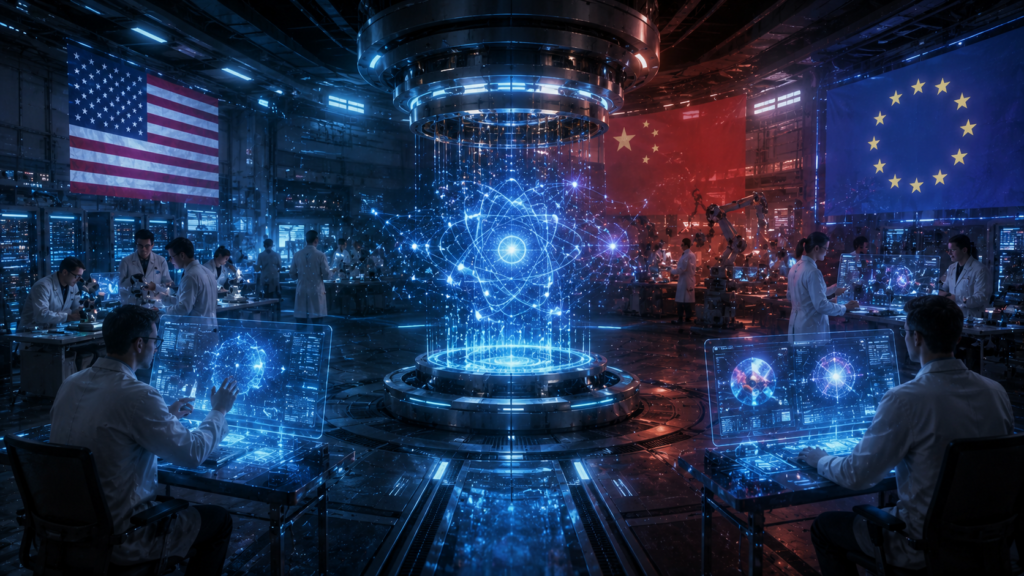
    global competition in quantum technology

    The United States and Corporate Quantum Leadership

    The United States remains one of the global leaders in quantum computing research.

    Major technology companies such as:

    • Google
    • IBM
    • and Microsoft

    are investing heavily in quantum technologies.

    In 2019, Google announced it had achieved “quantum supremacy,” claiming its quantum processor solved a problem in minutes that would take classical supercomputers thousands of years.

    IBM has developed increasingly advanced quantum processors and now offers cloud-based quantum computing access to researchers worldwide.

    Microsoft continues exploring topological quantum computing, focusing on building more stable and scalable quantum systems.

    In the United States, quantum development is deeply connected not only to scientific innovation—
    but also to economic and strategic dominance.


    China’s State-Driven Quantum Expansion

    China has rapidly emerged as a major quantum power through strong government-led investment.

    Researchers at the University of Science and Technology of China developed the photonic quantum computer “Jiuzhang,” demonstrating extraordinary computational speed in specialized tasks.

    China is also advancing quantum communication technologies.

    Its quantum satellite, Micius, was designed to explore ultra-secure quantum encryption systems resistant to conventional hacking methods.

    Unlike the largely corporate-driven American model, China’s quantum strategy is heavily integrated into national policy and long-term geopolitical planning.


    Europe’s Quantum Strategy

    The European Union launched the Quantum Flagship initiative to strengthen Europe’s position in the global quantum race.

    This large-scale program aims to invest billions of euros into:

    • quantum computing
    • quantum communication
    • quantum sensing
    • and quantum simulation technologies

    Countries such as Germany, France, and United Kingdom continue expanding collaborative research networks to avoid falling behind American and Chinese competitors.


    2. Could Quantum Technology Create a New Cold War?

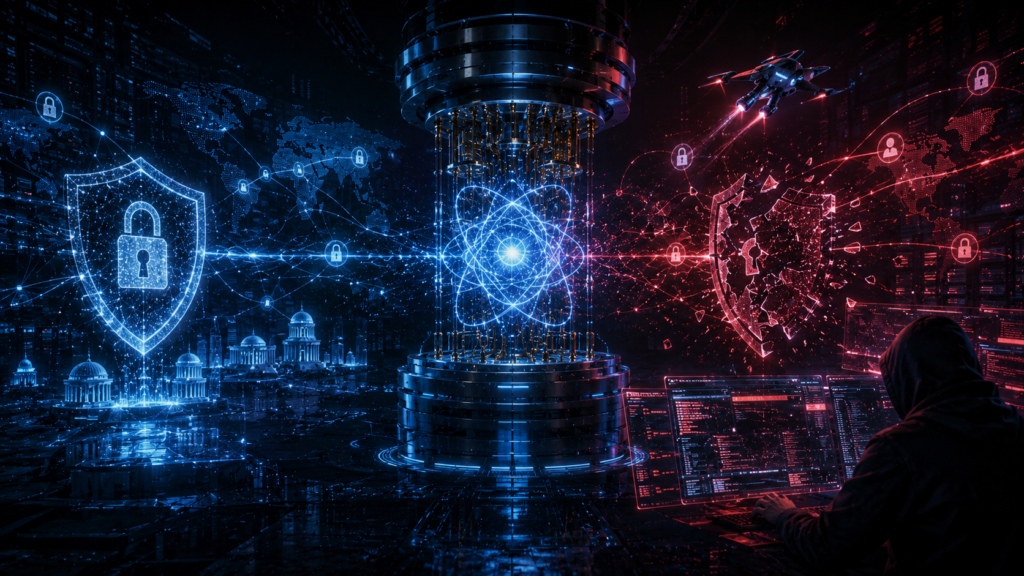
    quantum computing and cybersecurity conflict

    Quantum Computing and National Security

    One of the greatest geopolitical concerns involves encryption.

    Modern digital systems rely heavily on cryptographic protection.

    Current encryption methods such as RSA are extremely difficult for classical computers to break.

    However, sufficiently advanced quantum computers could potentially decrypt many existing security systems dramatically faster.

    If a single nation achieved overwhelming quantum capability first, it might gain unprecedented access to:

    • military communications
    • financial systems
    • intelligence databases
    • and global digital infrastructure

    This possibility has transformed quantum research into a national security priority.

    As a result, quantum computing increasingly resembles a strategic arms race rather than purely scientific competition.


    Cyber Warfare and Information Power

    Future cyber conflict may depend heavily on quantum advantage.

    Quantum-powered cybersecurity systems could create nearly unbreakable encryption.

    At the same time, offensive quantum capabilities might undermine traditional digital security entirely.

    This creates a dangerous paradox:

    Quantum technology could simultaneously become:

    • the ultimate defensive tool
      and
    • the ultimate offensive weapon

    Such dynamics may intensify geopolitical tensions between major powers, particularly between the United States and China.

    Some analysts therefore describe the quantum race as the beginning of a new technological Cold War.


    3. The Risk of Quantum Inequality

    Technological Gaps Between Nations

    Quantum computing could dramatically widen global inequality.

    Countries with advanced quantum infrastructure may dominate:

    • medicine
    • climate modeling
    • finance
    • logistics
    • artificial intelligence
    • and military systems

    Meanwhile, nations lacking access to quantum technologies could become increasingly dependent on technologically dominant powers.

    This may create a new form of digital hierarchy in the global economy.


    Corporate Monopoly and Technological Concentration

    Another concern involves corporate concentration.

    Today, a small number of large technology corporations already dominate much of the digital world.

    If quantum computing becomes controlled by only a few companies, technological inequality may deepen further.

    Smaller businesses and developing nations could struggle to compete in a quantum-driven economy.

    This raises difficult questions about:

    • technological fairness
    • access to innovation
    • and the concentration of computational power

    The future quantum economy may therefore become not only a scientific issue—

    But also a political and ethical one.


    Conclusion: The Future Balance of Power

    future global order shaped by quantum technology

    Quantum computing may become one of the most transformative technologies in human history.

    Its potential benefits are enormous:

    • faster medical discoveries
    • advanced climate prediction
    • revolutionary materials science
    • and unprecedented computational capability

    However, quantum technology also carries major geopolitical risks.

    If monopolized by powerful nations or corporations, it could deepen:

    • economic inequality
    • cybersecurity instability
    • and global political tension

    The challenge of the quantum age may therefore extend beyond technological achievement itself.

    Humanity must also decide:

    • who controls these systems
    • who benefits from them
    • and how global cooperation can prevent technological domination from becoming a new form of digital imperial power

    Perhaps the future question is no longer:

    “Can humans build quantum computers?”

    But rather:

    What kind of global order will emerge once they succeed?

    Reader Question

    If quantum computing gives a few nations or corporations overwhelming technological power—

    Could the future of global politics become less about military strength,
    and more about computational dominance?

    Or should quantum technology be treated as a shared global resource rather than a strategic weapon?

    Related Reading

    If future technologies increasingly reshape global power structures, could national sovereignty itself become more flexible and unstable in the digital age?
    In Is National Sovereignty Absolute?, we explore how technological competition and global cooperation continuously challenge traditional ideas of political power and international order.


    If scientific breakthroughs constantly redefine what humanity considers possible, should societies focus only on technological progress—or also on the ethical responsibility that comes with it?
    In Is Scientific Truth Ever Absolute?, we examine how science evolves through uncertainty, paradigm shifts, and humanity’s changing understanding of reality.


    References

    1. The Quantum Spy by David Ignatius
      This geopolitical thriller explores espionage and technological rivalry surrounding quantum computing competition between major global powers.
    2. National Academies of Sciences, Engineering, and Medicine (2019). Quantum Computing: Progress and Prospects.
      This report analyzes the scientific progress of quantum computing and its implications for national security and global technological competition.
    3. Elsa B. Kania & John Costello. The Geopolitics of Quantum Computing.
      This study examines how quantum technologies may reshape international relations and strategic competition.
    4. Chris Bernhardt. Quantum Computing and International Relations.
      Bernhardt discusses how quantum technologies may influence geopolitical power structures and global inequality.
    5. Andrew Futter. The Quantum Race: Securing the Future through Quantum Diplomacy.
      This work explores how quantum competition could intensify geopolitical tensions while highlighting the need for international cooperation.
  • Why Do We Still Choose War?

    Why Do We Still Choose War?

    Rational Strategy, Fear, and the Paradox of Violence

    Across the world, conflicts continue—
    in regions like Ukraine and the Middle East,
    war remains a recurring reality.

    Lives are lost.
    Economies collapse.

    And yet, despite the cost,
    nations still choose war.

    This raises a difficult question:

    In an age of reason and progress,
    why does violence remain a rational option?

    1. Is War Irrational—or Strategic?

    War is often seen as the result of anger or hatred.

    But from the perspective of international politics,
    war is frequently a calculated decision.

    States consider war for strategic reasons:

    • Securing national security
    • Accessing resources
    • Expanding influence
    • Stabilizing domestic politics

    In this sense, war is not always a breakdown of reason—
    but sometimes an extension of it.

    What appears irrational on the surface
    may, under certain conditions, be seen as a rational strategy.


    2. The Role of Fear: The Security Dilemma

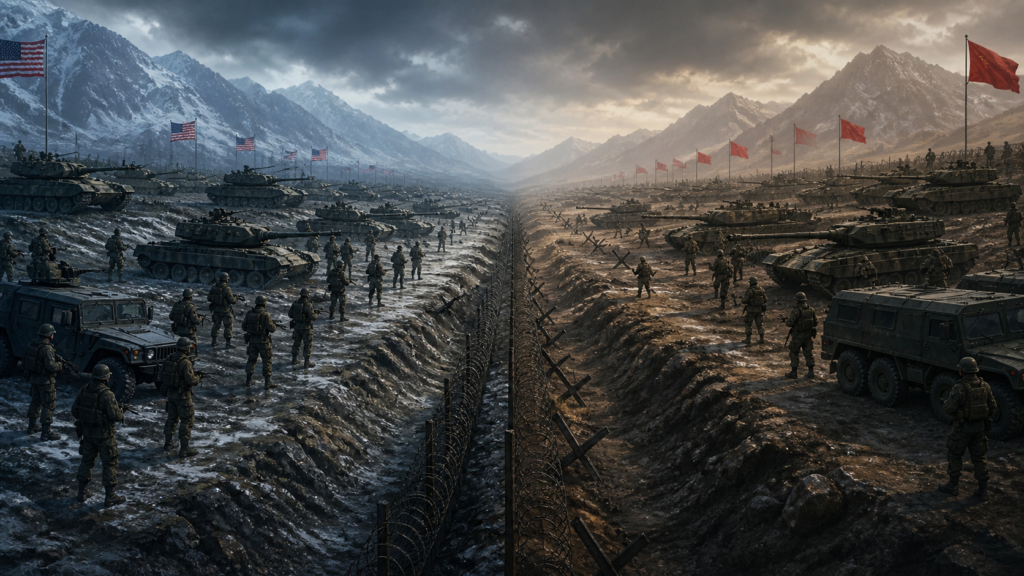
    military tension between states

    International relations are shaped by uncertainty.

    One state’s defensive action—
    such as military expansion—
    can be interpreted by others as a threat.

    This creates what is known as the security dilemma.

    Even without aggressive intentions,
    states may escalate tensions out of fear.

    War, in this context,
    does not begin with hostility—
    but with mistrust.


    3. War as a Tool of Domestic Politics

    War is not only about external conflict.

    It can also function as a response to internal pressures:

    • Economic crises
    • Political instability
    • Social divisions

    Leaders may mobilize external conflict
    to unify internal support.

    In such cases, war becomes
    a tool for maintaining power.


    4. Philosophical Perspectives on Violence

    Thomas Hobbes: Conflict as Human Nature

    Hobbes described the natural condition of humanity
    as a “war of all against all.”

    In international relations,
    where no overarching authority exists,
    this condition persists.

    War, therefore, is not an exception—
    but a structural possibility.


    Carl von Clausewitz: War as Politics

    Clausewitz famously argued that
    “war is the continuation of politics by other means.”

    From this perspective,
    war is not a failure of diplomacy—
    but another form of it.

    It is a strategic instrument used to achieve political goals.


    Hannah Arendt: Violence and the Crisis of Power

    Arendt distinguishes between power and violence.

    • Power arises from collective agreement
    • Violence emerges when power weakens

    War, then, may signal not strength—
    but instability.


    Conclusion: Choice—or Structure?

    cycle of war and rebuilding

    We often describe war as irrational.

    But in reality, it emerges from a combination of:

    • Strategic calculation
    • Fear and mistrust
    • Domestic political pressures
    • Structural conditions of the international system

    War is not simply a choice.

    It is often the result of systems
    that make conflict difficult to avoid.

    A Question for Readers

    Do you believe war is something humans can truly prevent—

    or is it an unavoidable outcome
    of the systems we have created?

    Related Reading

    War is often shaped not only by external threats, but by the internal dynamics of power and control.
    In Why Does Politics Create Conflict While Promising Solutions?, political systems are shown to rely on tension and division as a way to maintain authority and mobilize support.

    At the same time, the expansion of state power increasingly takes subtle and technological forms.
    In How Much Surveillance Is Too Much?, modern governance reveals how control can operate not through open force, but through continuous monitoring and data-driven systems.

    References

    Hobbes, T. (1996). *Leviathan.* Cambridge: Cambridge University Press.
    → Hobbes describes the natural condition of humanity as a state of constant insecurity and conflict. This framework helps explain why war can persist in systems without a central authority, such as international relations.

    Clausewitz, C. von (1989). *On War.* Princeton: Princeton University Press.
    → Clausewitz defines war as the continuation of politics by other means, emphasizing that conflict is often a strategic tool rather than a breakdown of rationality.

    Arendt, H. (1970). *On Violence.* New York: Harcourt, Brace & World.
    → Arendt distinguishes between power and violence, arguing that violence often emerges when political authority weakens, offering a deeper interpretation of war as a symptom of instability.

    Waltz, K. N. (1979). *Theory of International Politics.* Reading, MA: Addison-Wesley.
    → Waltz introduces structural realism, showing how the anarchic nature of the international system compels states into competition and makes conflict a recurring possibility.

    Mearsheimer, J. J. (2001). *The Tragedy of Great Power Politics.* New York: W. W. Norton & Company.
    → Mearsheimer argues that great powers are driven to seek dominance for survival, explaining why war can emerge not from irrationality, but from strategic necessity.