Tag: debate and issues

  • Why Do People Still Act Morally When No One Is Watching?

    Why Do People Still Act Morally When No One Is Watching?

    Conscience, Self-Respect, and the Invisible Observer Within Us

    A middle-aged woman quietly picks up a piece of trash from a subway platform and throws it away.

    No one is watching.

    A taxi driver turns in a wallet left behind by a passenger who never provided contact information.

    No reward is expected.
    No praise is guaranteed.

    Moments like these raise a surprisingly deep question:

    Why do people choose to act morally even when nobody is watching?

    If morality were only about punishment or social approval,
    then honesty should disappear the moment surveillance disappears.

    And yet, human beings often continue to act ethically in private.

    Why?

    1. Conscience: The Invisible Witness Within

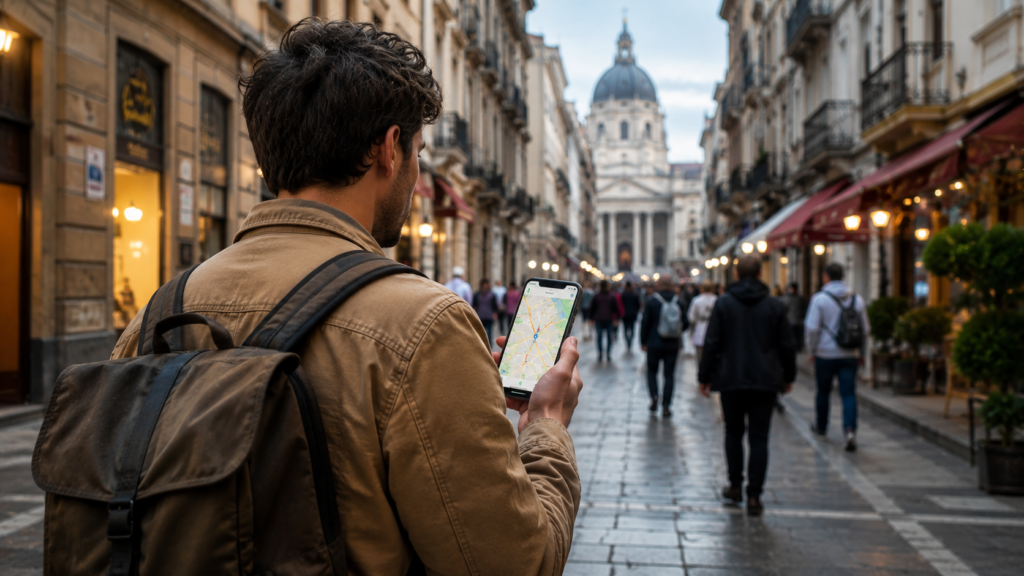
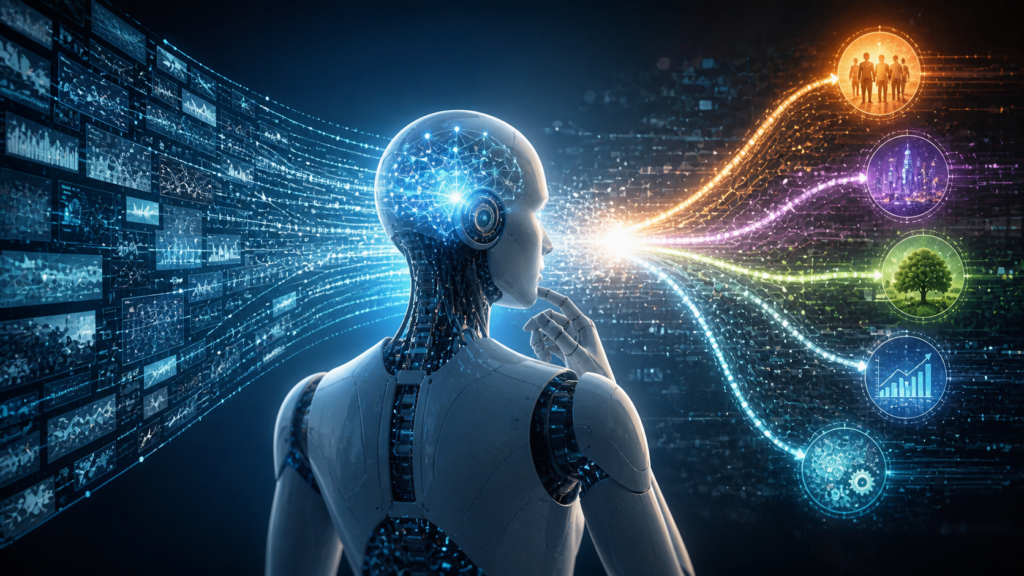
    quiet act of honesty alone

    Many philosophers have argued that true morality appears precisely when external observation disappears.

    At the center of this idea lies what we commonly call conscience.

    Conscience is an internal standard that allows people to distinguish right from wrong even without laws, rewards, or public judgment.

    A child repeatedly taught not to lie or steal may eventually absorb those values so deeply that they become part of personal identity rather than external rules.

    At that point, morality no longer feels like obedience to authority.

    It becomes loyalty to oneself.

    This is why some people continue to act ethically in situations where dishonesty would be easier, safer, and invisible.

    The real observer is no longer society.

    It is the self.

    2. Moral Behavior and the Desire to Respect Ourselves

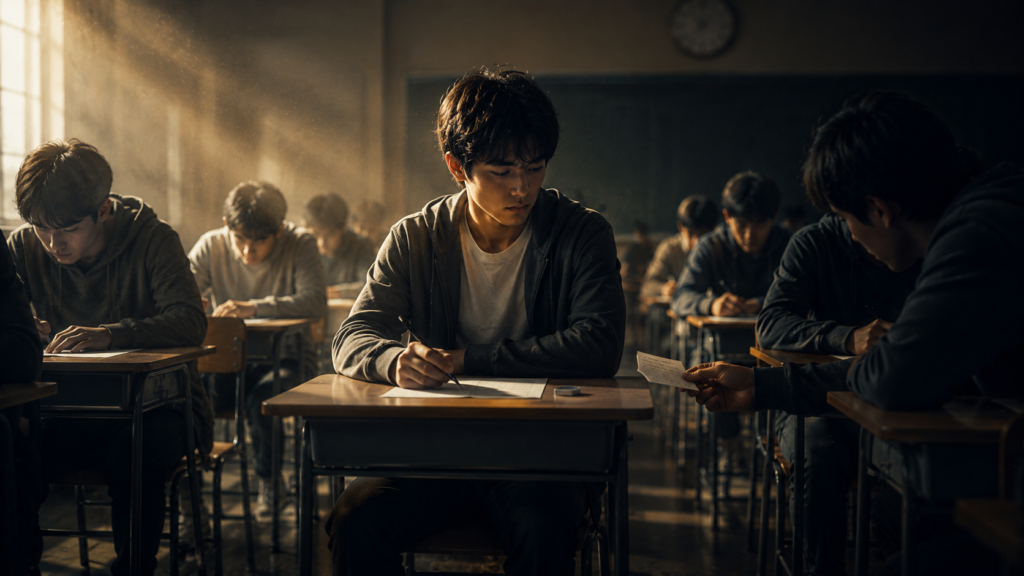
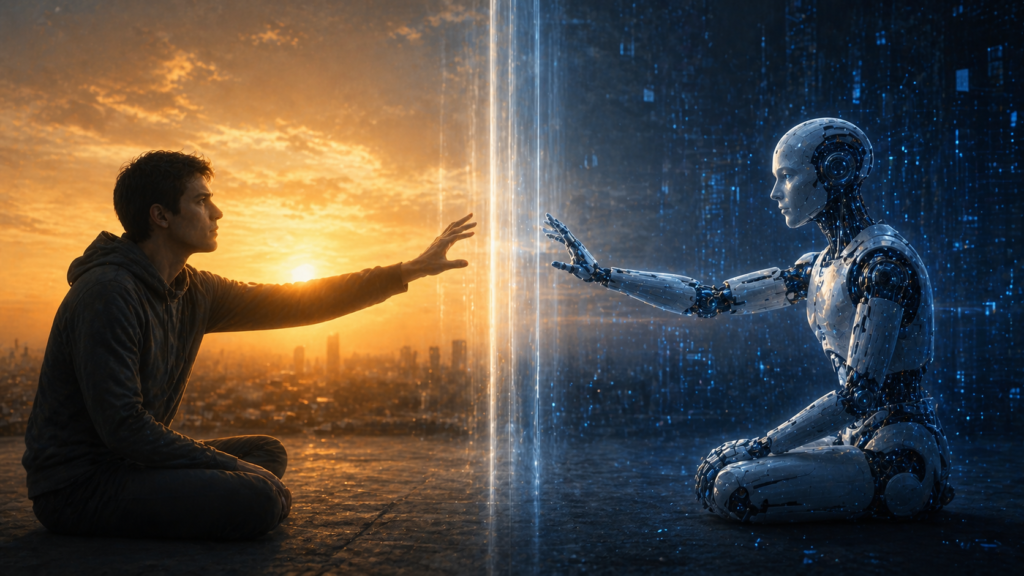
    choosing honesty despite temptation

    Human beings do not merely want to survive.

    They also want to see themselves as good, decent, or honorable.

    Psychologists often note that moral behavior is connected to self-image.

    When people act against their own ethical standards, they frequently experience guilt, shame, or self-disappointment.

    These emotions are painful because they threaten the story we tell ourselves about who we are.

    Imagine a classroom during an exam.

    The teacher leaves the room.
    Cheating becomes possible.

    And yet many students still refuse to cheat.

    Not necessarily because they fear punishment,
    but because cheating would conflict with the kind of person they believe themselves to be.

    In this sense, morality is sometimes less about public reputation
    and more about private self-respect.

    We want to remain trustworthy in our own eyes.

    3. Society Continues to Exist Inside Us

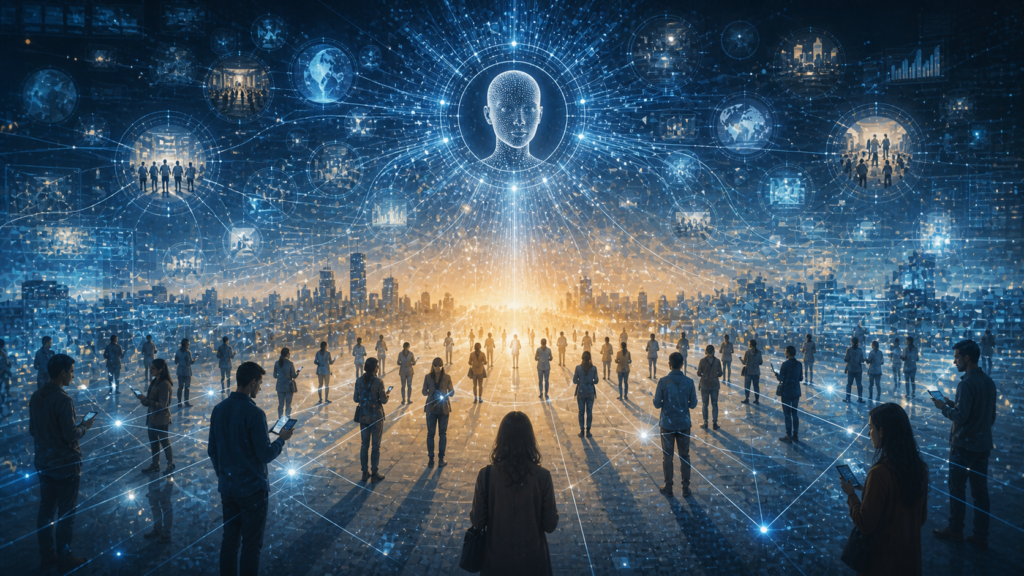
    Even when we are physically alone, we are rarely psychologically alone.

    From childhood onward, human beings grow up under the gaze of others:

    parents, teachers, friends, communities.

    Over time, those social expectations become internalized.

    A parent saying,
    “What would other people think if you acted like that?”
    may leave a deeper mark than we realize.

    Eventually, external judgment becomes an inner voice.

    Psychologists and sociologists describe this as internalization—the process through which social norms become part of personal consciousness.

    As a result, people often behave as though someone is still watching, even in complete privacy.

    The observer has moved inside the mind.

    4. Is Morality Still Morality If It Benefits the Self?

    This raises another difficult philosophical question.

    If people behave morally partly to preserve self-respect,
    is morality still truly selfless?

    Thinkers such as Immanuel Kant argued that moral action should arise from duty itself, not from emotional reward or social advantage.

    Others, however, suggest that morality and self-interest are not always opposites.

    Perhaps humans evolved moral behavior precisely because cooperation, trust, and empathy strengthen communities and personal identity alike.

    In this view, morality is not merely sacrifice.

    It is part of what allows human beings to live meaningfully together.

    Conclusion: The Quiet Shape of Character

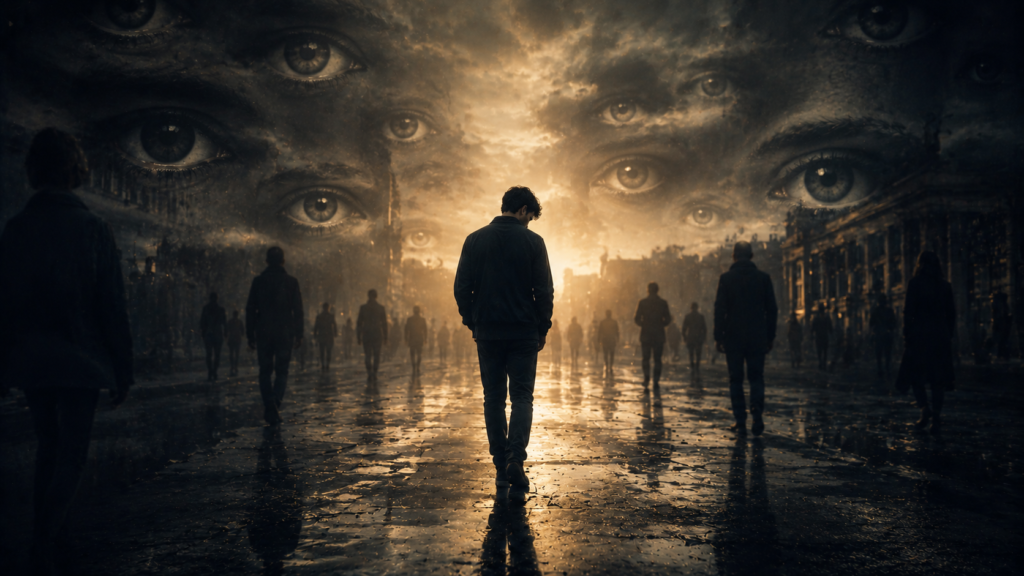
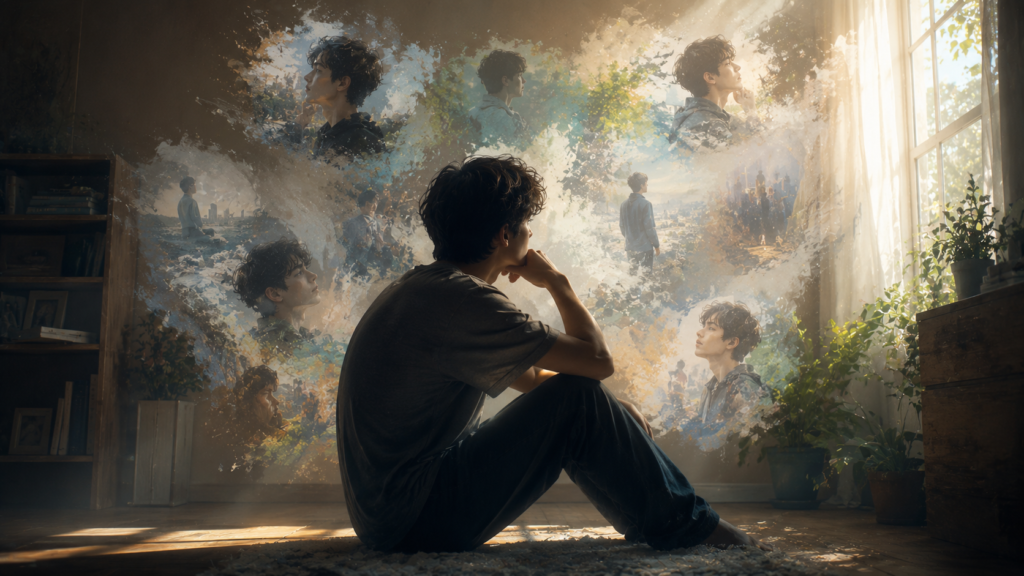
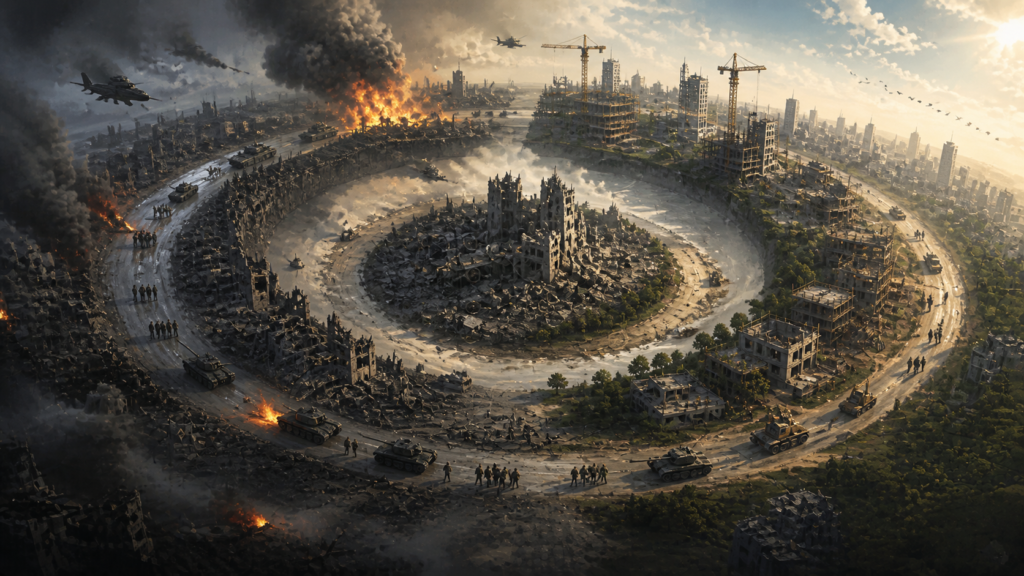
    internalized sense of moral observation

    There is probably no single reason why people act morally when nobody is watching.

    Conscience, self-respect, empathy, social conditioning, and personal identity all interact in complex ways.

    Yet perhaps the most important point is this:

    Every unseen decision quietly shapes the kind of person we become.

    Small private actions—returning a lost wallet, refusing to cheat, helping a stranger without recognition—may appear insignificant.

    But character is built precisely through such invisible moments.

    The world may not notice them.

    But we do.

    And perhaps morality begins the moment we realize
    that even in complete silence,
    we still have to live with ourselves.


    A Question for Readers

    Have you ever done the right thing even though nobody would have known if you had not? Why do you think you made that choice?

    Related Reading

    The question of morality becomes even more complex when we ask whether emotions are obstacles to ethical judgment—or the very foundation of it.
    In Are Emotions a Barrier to Moral Judgment—or Its Foundation?, the relationship between conscience, empathy, and moral intuition reveals why people often choose to act ethically even without external pressure.

    At the same time, moral behavior is closely tied to the way we see ourselves.
    In Am I the Person I Think I Am—Or the Person Others See?, the tension between self-image and social perception shows how identity and self-respect influence ethical choices made in private moments.


    References

    1. Kant, I. (1996). The Groundwork of the Metaphysics of Morals. Cambridge University Press.
      → Kant argues that genuine morality comes from respect for moral duty itself, not from reward, fear, or public recognition.
    2. Batson, C. D. (2011). Altruism in Humans. Oxford University Press.
      → Batson explores whether true altruism exists and examines why humans sometimes help others even when no external reward is present.
    3. Miller, C. (2014). Moral Character: An Empirical Theory. Oxford University Press.
      → Miller combines philosophy and psychology to analyze how moral identity and self-image influence ethical behavior.
    4. Haidt, J. (2012). The Righteous Mind: Why Good People Are Divided by Politics and Religion. Pantheon Books.
      → Haidt explains how moral intuition and emotional responses shape ethical behavior beyond purely rational calculation.
    5. Durkheim, É. (1950). The Rules of Sociological Method. Free Press.
      → Durkheim describes morality as a social force internalized by individuals, helping explain why people continue to follow ethical norms even in private situations.

  • Am I the Person I Think I Am—Or the Person Others See?

    Am I the Person I Think I Am—Or the Person Others See?

    Identity, Perception, and the Self Between Them

    Who am I?

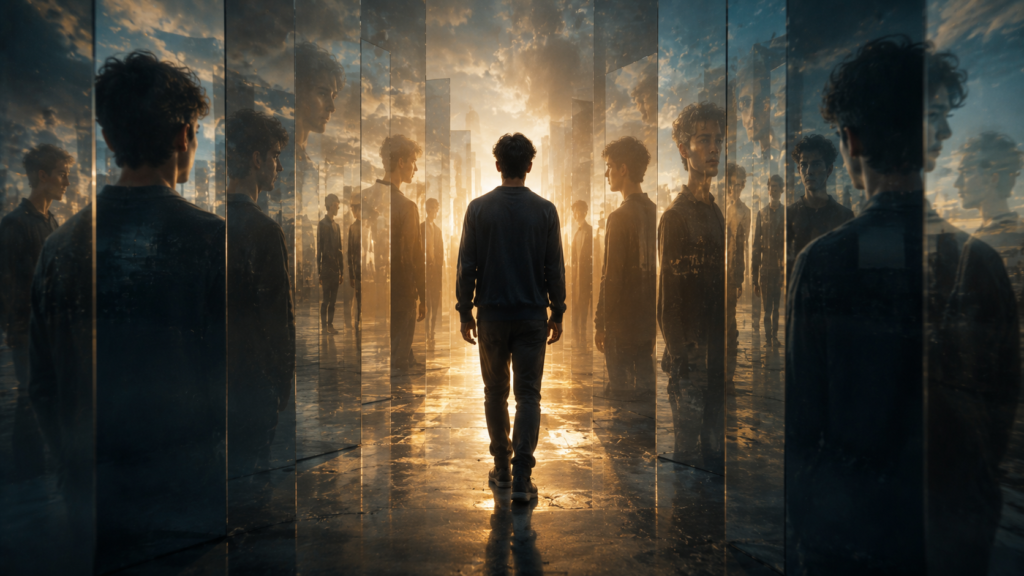
    I may think of myself as quiet and thoughtful,
    yet someone else may see me as cold or distant.

    I may believe I am kind,
    while another person remembers me as calculating or indifferent.

    We often assume that we know ourselves better than anyone else.

    And yet, the versions of “us” that exist in other people’s minds
    can feel strangely unfamiliar.

    So we begin with a difficult question:

    Am I the person I believe myself to be—
    or the person others perceive?

    1. Is the Self I Know Truly Real?

    person reflecting on inner self

    We spend much of our lives thinking about ourselves—our personality, our strengths, our weaknesses, and the kind of person we believe we are.

    But even this inner self-image may not be entirely objective.

    Psychologists describe a tendency called self-enhancement
    the human habit of seeing oneself in a more favorable or comfortable way.

    In other words,
    the “self” we know may partly be
    the self we wish to be.

    This raises an unsettling possibility:

    Perhaps the person I know as “me”
    is not pure reality,
    but an interpretation shaped by desire, memory, and emotion.

    2. Is the Self Others See More Objective?

    identity shaped by social perception

    Other people often judge us through fragments—our tone of voice, our expressions, our silences, and our behavior in certain moments.

    Sometimes their interpretations are accurate.
    Sometimes they completely misunderstand us.

    A person who enjoys solitude may be seen as lonely.
    A thoughtful silence may appear uncaring.
    Calmness may be mistaken for emotional distance.

    The gaze of others acts like a mirror.

    But mirrors can distort.

    The self others perceive may contain truth,
    yet it can never contain the whole truth.

    3. Identity Is Created Between Inner and Outer Selves

    Sociologist Charles Horton Cooley described this process as the looking-glass self.

    According to Cooley,
    we develop our identity partly through imagining how others see us.

    In this sense, identity is never formed alone.

    The self emerges through interaction, interpretation, and reflection.

    Yet this does not mean our inner world disappears.

    Rather,
    the tension between the self we feel internally
    and the self reflected by others
    becomes the very space where identity grows.

    We discover ourselves not through certainty,
    but through negotiation.

    4. The Self Is Not Fixed—It Is Ongoing

    Modern philosophy and psychology increasingly view identity
    not as a fixed essence,
    but as something constantly shaped and reshaped.

    We are different with friends than with strangers.
    Different at work than at home.
    Different in memory than in the present moment.

    This does not necessarily make us fake.

    It may simply mean that the self is relational—
    a living dialogue between who we are,
    who we think we are,
    and who others believe us to be.

    Conclusion: I Am Both Myself and More Than Myself

    identity forming between self and others

    I am the person I feel myself to be.

    And I am also the person reflected in the minds of others.

    Neither version alone is complete.

    Identity exists somewhere between inner experience and external perception.

    That is why we should be careful
    not to define ourselves too rigidly—
    or judge others too quickly.

    The self is not a finished object.

    It is something continuously unfolding.

    And perhaps maturity begins
    when we accept that we are never seen completely,
    even by ourselves.


    A Question for Readers

    Have you ever realized that the person others see is very different from the person you believe yourself to be?

    Related Reading

    Our sense of self is often shaped not only by who we are, but by how we compare ourselves to others.
    In Am I Falling Behind? — How Comparison Distorts Our Sense of Time, social comparison reveals how identity, insecurity, and perception influence the way we understand ourselves.

    At the same time, the self is deeply connected to emotion and inner interpretation.
    In Are Emotions a Barrier to Moral Judgment—or Its Foundation?, the relationship between emotion and reason shows how feelings shape not only our decisions, but also the way we construct our personal identity.


    References

    1. Cooley, C. H. (1902). Human Nature and the Social Order. Scribner’s.
      → Cooley introduced the concept of the looking-glass self, explaining how identity develops through our perception of how others see us.
    2. Mead, G. H. (1934). Mind, Self, and Society. University of Chicago Press.
      → Mead argues that the self is socially constructed through interaction and communication with others, especially through the idea of the “generalized other.”
    3. Goffman, E. (1959). The Presentation of Self in Everyday Life. Anchor Books.
      → Goffman compares social life to theatrical performance, suggesting that identity is continuously shaped through roles and social situations.
    4. Gallagher, S. (2000). Philosophical conceptions of the self: Implications for cognitive science. Trends in Cognitive Sciences, 4(1), 14–21.
      → Gallagher distinguishes between the minimal self and the narrative self, emphasizing how identity develops through lived experience and storytelling.
    5. Taylor, C. (1989). Sources of the Self: The Making of the Modern Identity. Harvard University Press.
      → Taylor explores how modern identity is shaped through moral, cultural, and relational contexts rather than existing as an isolated inner essence.
  • Has the Past Really Passed?

    Has the Past Really Passed?

    Memory, Emotion, and the Time That Still Lives Within Us

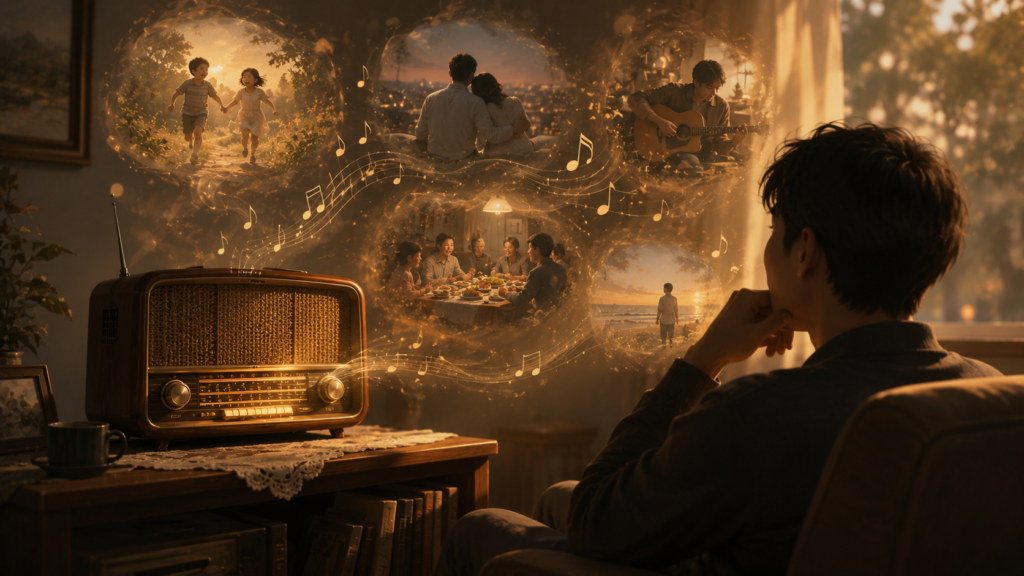
    A song you have not heard in years suddenly plays on the radio.

    A familiar scent passes by.

    A street, a face, a fragment of light—
    and for a moment, time returns.

    You thought that moment was gone.

    But suddenly, the feeling, the expression, the atmosphere of that time stands beside you again.

    The past seems distant on the calendar,
    yet strangely alive within you.

    So we begin with a quiet question:

    Has the past really passed?

    old music bringing back memories

    1. We Feel Safe When Time Moves Forward

    We usually understand time as a straight line.

    Past → present → future.

    This order helps us feel that life is moving forward.
    It tells us that what has passed should be left behind, and what lies ahead should be faced.

    We often say:

    “That is in the past.”
    “Move on.”
    “Look forward.”

    But perhaps this belief also protects us.

    If the past has truly passed, then pain can become distant.
    Regret can lose its power.
    Loss can become something we survived.

    Yet human experience is rarely that simple.

    The past may disappear from the calendar,
    but not always from the heart.

    2. Memory Brings Time Back Into the Present

    We return to the past many times a day.

    Through a photograph.
    Through someone’s voice.
    Through a place we did not expect to remember.

    Psychologists often describe memory not as playback,
    but as reconstruction.

    Memory is not a perfect recording stored in the mind.
    It is rebuilt each time we recall it.

    The person we are now reshapes the past we remember.

    This means that the past is never simply “behind” us.
    It continues to live inside the present, changing its meaning as we change.

    3. Emotion Does Not Follow the Calendar

    time frozen inside emotion

    Some wounds still hurt years later.

    A person may speak about something that happened long ago
    and suddenly cry as if it happened yesterday.

    Why?

    Because emotion does not obey chronological time.

    A memory may be old,
    but the feeling attached to it can remain immediate.

    In this sense, some moments do not pass completely.
    They remain suspended within us, waiting to be awakened.

    When a song brings back a lost season of life,
    it is not only memory returning.

    It is time becoming emotional again.

    4. The Past Is Not a Place We Leave Completely

    To say that the past remains alive does not mean we must live trapped inside it.

    There is a difference between being imprisoned by the past
    and carrying it with care.

    Some memories need distance.
    Some need forgiveness.
    Some need to be retold until they become less painful.

    But none of them vanish completely.

    They become part of the inner structure of who we are.

    The past shapes our fears, our hopes, our tenderness,
    and even the way we love.

    Conclusion: Time Flows on the Calendar, but Not Always in the Heart

    The past has passed in one sense.

    Dates move forward.
    Years accumulate.
    Life continues.

    But inside the human heart, time does not always move in a straight line.

    It returns.
    It trembles.
    It speaks again.

    Perhaps maturity is not about forgetting the past,
    but learning how to live with the time that still remains within us.

    The past is not simply gone.

    It is one of the quiet forces
    that continues to make us who we are.

    A Question for Readers

    Have you ever felt that a memory from long ago was suddenly alive again in the present?

    Related Reading

    The past often returns not only through memory, but through the pressure of comparison and the feeling that time is moving differently for everyone.
    In Am I Falling Behind? — How Comparison Distorts Our Sense of Time, the emotional experience of time reveals how memory, anxiety, and identity shape the way we experience the present.

    At the same time, memory is deeply connected to emotion and moral meaning.
    In Are Emotions a Barrier to Moral Judgment—or Its Foundation?, the relationship between emotion and human judgment shows why certain moments remain emotionally alive long after they are supposed to be “past.”

    References

    1. Bergson, H. (1910). Time and Free Will: An Essay on the Immediate Data of Consciousness. George Allen & Unwin.
      → Bergson distinguishes physical time from lived duration, showing how inner time can remain fluid and emotionally present rather than simply chronological.
    2. Heidegger, M. (1927/1962). Being and Time. Harper & Row.
      → Heidegger understands time not merely as sequence, but as part of how human beings experience existence, memory, and meaning.
    3. Ricoeur, P. (1984). Time and Narrative, Vol. 1. University of Chicago Press.
      → Ricoeur explains how humans organize time through narrative, suggesting that the past continues to live through the stories we tell about ourselves.
    4. Tulving, E. (1985). Memory and consciousness. Canadian Psychology, 26(1), 1–12.
      → Tulving’s work on episodic memory shows how remembering allows us to mentally travel through time and experience the past as part of present consciousness.
    5. Casey, E. S. (2000). Remembering: A Phenomenological Study. Indiana University Press.
      → Casey explores memory as an embodied and emotional experience, emphasizing how places, sensations, and feelings can bring the past back into the present.
  • Will Robots Ever Have the Right to Vote?

    Will Robots Ever Have the Right to Vote?

    AI, Citizenship, and the Future of Political Agency

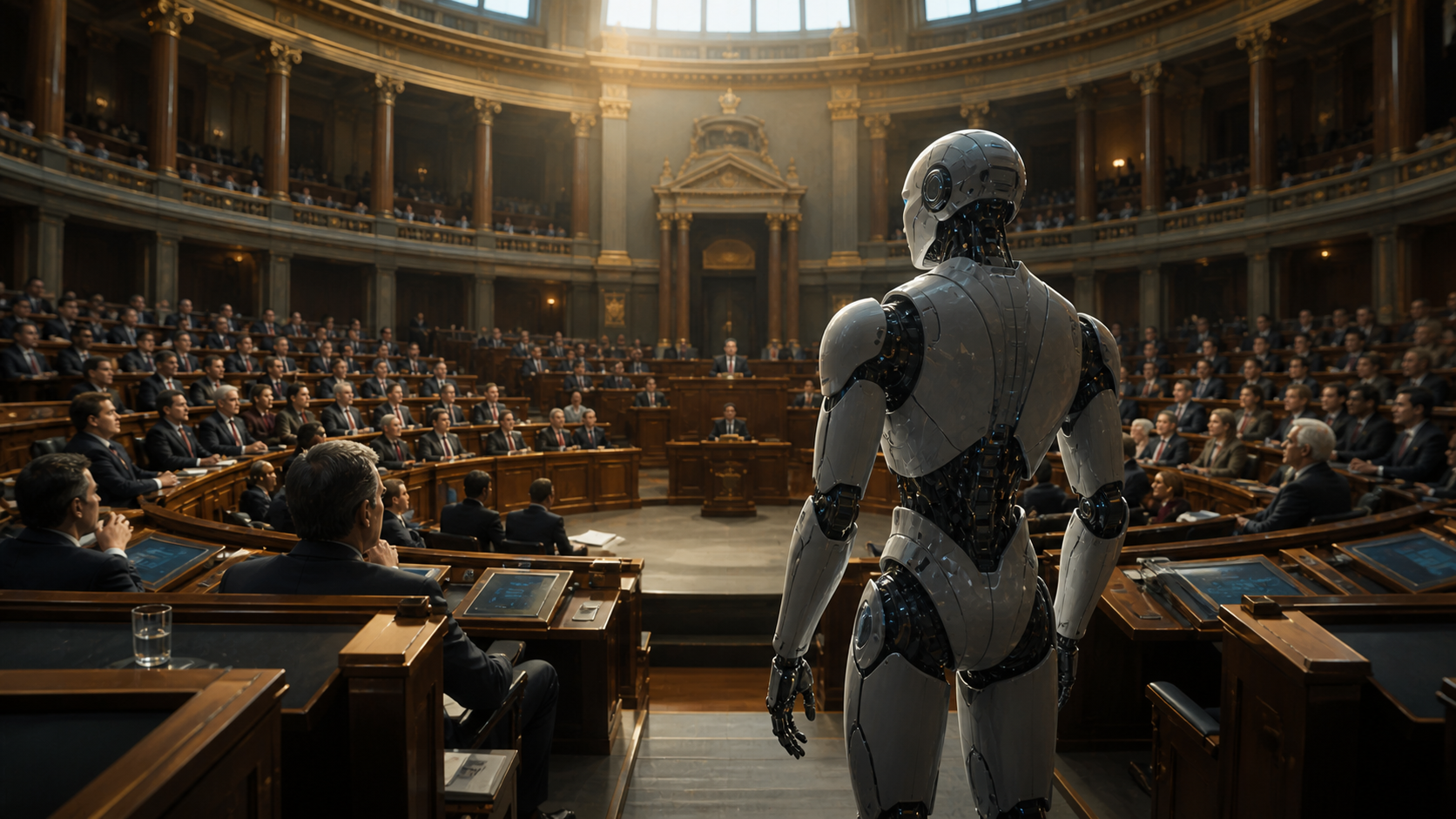
    Imagine a member of parliament who never lies,
    never acts out of self-interest,
    and can instantly analyze public opinion.

    It can weigh policy outcomes with precision
    and make decisions without bias.

    Yet this entity cannot vote.

    It has influence—
    but no political rights.

    Is this a contradiction?

    Or does it reveal a boundary
    we are not ready to cross?

    1. Is Voting a Human-Only Right?

    AI analyzing data decisions

    Democracy is built on the idea of popular sovereignty.

    The right to vote has long been considered
    a uniquely human right—
    rooted in emotion, moral judgment, and responsibility.

    However, as artificial intelligence advances,
    machines are increasingly capable of making decisions.

    In some ethical simulations,
    AI demonstrates consistency and rationality
    beyond human judgment.

    If an entity can make better decisions than humans,
    should it be excluded from political participation?


    2. What Does It Mean to Be a Citizen?

    Political rights depend on the concept of citizenship.

    Philosopher Hannah Arendt described citizenship as
    “the right to have rights.”

    Citizens are not merely individuals who exist—
    they are participants in a shared political world.

    If AI systems interact with society,
    influence decisions,
    and shape outcomes,

    can they remain outside the political community?

    Or must we rethink what it means to belong?


    3. If AI Votes, Whose Will Is It?

    boundary between AI and human rights

    Even if AI appears to decide independently,
    its judgment is based on human-designed systems.

    Algorithms, data, and objectives
    are all shaped by human input.

    This raises a fundamental problem:

    An AI vote may not represent its own will—
    but the intentions embedded in its design.

    Democracy relies on autonomy and accountability.

    Voting is not just a choice—
    it is a commitment to bear responsibility for that choice.

    At present, AI cannot take responsibility
    for the consequences of its decisions.


    4. Beyond Voting: AI’s Growing Political Influence

    Even without voting rights,
    AI already plays a significant role in politics:

    • analyzing public opinion
    • simulating policy outcomes
    • shaping information flows

    In some cases,
    its influence exceeds that of individual citizens.

    The question, therefore, is not only
    whether AI should vote—
    but how its political power should be governed.


    Conclusion: What Is Voting, Really?

    AI influencing society invisibly

    The question of AI voting rights
    is not merely technological.

    It forces us to reconsider:

    • What is political participation?
    • What defines a citizen?
    • What makes a decision legitimate?

    Even if AI never votes,
    its presence will reshape the structure of politics.

    The real question may not be
    whether machines should gain rights—

    but whether humans are prepared
    to redefine them.

    A Question for Readers

    If an AI could make more rational and fair decisions than humans—

    should it have a voice in democracy?

    Or is the right to vote something
    that must always remain human?

    Related Reading

    The question of political rights for AI becomes even more complex when we ask whether artificial intelligence can be treated as more than a tool.
    In Is Artificial Intelligence a Tool or a New Agent?, the debate over AI agency reveals why political participation requires more than intelligence—it also requires autonomy, responsibility, and social recognition.

    At the same time, the growing influence of intelligent systems raises concerns about control and autonomy.
    In *How Much Surveillance Is Too Much?*, the expansion of data-driven governance shows how AI can shape decisions without ever holding formal political rights.

  • Why Do We Still Choose War?

    Why Do We Still Choose War?

    Rational Strategy, Fear, and the Paradox of Violence

    Across the world, conflicts continue—
    in regions like Ukraine and the Middle East,
    war remains a recurring reality.

    Lives are lost.
    Economies collapse.

    And yet, despite the cost,
    nations still choose war.

    This raises a difficult question:

    In an age of reason and progress,
    why does violence remain a rational option?

    1. Is War Irrational—or Strategic?

    War is often seen as the result of anger or hatred.

    But from the perspective of international politics,
    war is frequently a calculated decision.

    States consider war for strategic reasons:

    • Securing national security
    • Accessing resources
    • Expanding influence
    • Stabilizing domestic politics

    In this sense, war is not always a breakdown of reason—
    but sometimes an extension of it.

    What appears irrational on the surface
    may, under certain conditions, be seen as a rational strategy.


    2. The Role of Fear: The Security Dilemma

    military tension between states

    International relations are shaped by uncertainty.

    One state’s defensive action—
    such as military expansion—
    can be interpreted by others as a threat.

    This creates what is known as the security dilemma.

    Even without aggressive intentions,
    states may escalate tensions out of fear.

    War, in this context,
    does not begin with hostility—
    but with mistrust.


    3. War as a Tool of Domestic Politics

    War is not only about external conflict.

    It can also function as a response to internal pressures:

    • Economic crises
    • Political instability
    • Social divisions

    Leaders may mobilize external conflict
    to unify internal support.

    In such cases, war becomes
    a tool for maintaining power.


    4. Philosophical Perspectives on Violence

    Thomas Hobbes: Conflict as Human Nature

    Hobbes described the natural condition of humanity
    as a “war of all against all.”

    In international relations,
    where no overarching authority exists,
    this condition persists.

    War, therefore, is not an exception—
    but a structural possibility.


    Carl von Clausewitz: War as Politics

    Clausewitz famously argued that
    “war is the continuation of politics by other means.”

    From this perspective,
    war is not a failure of diplomacy—
    but another form of it.

    It is a strategic instrument used to achieve political goals.


    Hannah Arendt: Violence and the Crisis of Power

    Arendt distinguishes between power and violence.

    • Power arises from collective agreement
    • Violence emerges when power weakens

    War, then, may signal not strength—
    but instability.


    Conclusion: Choice—or Structure?

    cycle of war and rebuilding

    We often describe war as irrational.

    But in reality, it emerges from a combination of:

    • Strategic calculation
    • Fear and mistrust
    • Domestic political pressures
    • Structural conditions of the international system

    War is not simply a choice.

    It is often the result of systems
    that make conflict difficult to avoid.

    A Question for Readers

    Do you believe war is something humans can truly prevent—

    or is it an unavoidable outcome
    of the systems we have created?

    Related Reading

    War is often shaped not only by external threats, but by the internal dynamics of power and control.
    In Why Does Politics Create Conflict While Promising Solutions?, political systems are shown to rely on tension and division as a way to maintain authority and mobilize support.

    At the same time, the expansion of state power increasingly takes subtle and technological forms.
    In How Much Surveillance Is Too Much?, modern governance reveals how control can operate not through open force, but through continuous monitoring and data-driven systems.

    References

    Hobbes, T. (1996). *Leviathan.* Cambridge: Cambridge University Press.
    → Hobbes describes the natural condition of humanity as a state of constant insecurity and conflict. This framework helps explain why war can persist in systems without a central authority, such as international relations.

    Clausewitz, C. von (1989). *On War.* Princeton: Princeton University Press.
    → Clausewitz defines war as the continuation of politics by other means, emphasizing that conflict is often a strategic tool rather than a breakdown of rationality.

    Arendt, H. (1970). *On Violence.* New York: Harcourt, Brace & World.
    → Arendt distinguishes between power and violence, arguing that violence often emerges when political authority weakens, offering a deeper interpretation of war as a symptom of instability.

    Waltz, K. N. (1979). *Theory of International Politics.* Reading, MA: Addison-Wesley.
    → Waltz introduces structural realism, showing how the anarchic nature of the international system compels states into competition and makes conflict a recurring possibility.

    Mearsheimer, J. J. (2001). *The Tragedy of Great Power Politics.* New York: W. W. Norton & Company.
    → Mearsheimer argues that great powers are driven to seek dominance for survival, explaining why war can emerge not from irrationality, but from strategic necessity.

  • Is Thomas More’s Utopia a Blueprint for a Perfect Society—or a Metaphor for Control?

    Is Thomas More’s Utopia a Blueprint for a Perfect Society—or a Metaphor for Control?

    Equality, Freedom, and the Hidden Paradox of Ideal Worlds

    Imagine a society where no one owns property,
    everyone works,
    and no one goes hungry.

    There is no extreme wealth—
    but also no poverty.

    It sounds like a dream.

    But what if such equality comes at a cost?

    In Utopia (1516), Thomas More presents a world that appears perfectly ordered—
    yet quietly raises a troubling question:

    Can a society be truly ideal if freedom is limited?

    1. A Serious Proposal—or a Subtle Satire?

    Thomas More’s Utopia was written in a time of deep social inequality,
    political corruption, and widespread poverty.

    Rather than directly criticizing his society,
    More imagined an alternative world—
    not as it was, but as it could be.

    In this sense, Utopia is both a serious proposal
    and a subtle satire.

    It invites us to reflect on reality
    by presenting something that seems better—
    but may not be entirely desirable.


    2. Equality as Order—and as Control

    equal society harmonious life

    In Utopia, private property does not exist.

    Citizens work fixed hours,
    wear similar clothing,
    and share resources equally.

    At first glance, this appears to eliminate inequality.

    Yet the same system imposes strict regulation:

    Travel requires permission.
    Daily life follows uniform routines.
    Privacy is nearly nonexistent.

    This raises a difficult question:

    Is equality being achieved—
    or is individuality being erased?


    3. The Legacy of Utopian Thinking

    More’s vision did not remain in the 16th century.

    Modern societies continue to pursue forms of “utopian” design:

    • Welfare states aiming at social equality
    • Smart cities optimizing efficiency and order
    • Planned communities seeking harmony

    Each reflects a desire to create a better world.

    But they also reveal the same tension:

    How much control is acceptable
    in the pursuit of collective well-being?


    4. When Ideal Becomes Oppressive

    utopia with hidden control

    History has shown that ideal visions
    can sometimes lead to unintended consequences.

    Systems designed to create equality
    may evolve into rigid structures of control.

    When uniformity replaces diversity,
    and stability overrides freedom,
    an ideal society can begin to resemble its opposite.

    In this sense, Utopia may not only describe a dream—
    but also warn against it.


    Conclusion: A Question, Not an Answer

    choice between freedom and control

    Thomas More’s Utopia offers no final answer.

    Instead, it presents a paradox:

    A world that appears just—
    yet feels constrained.

    Perhaps its true purpose is not to define perfection,
    but to provoke reflection.

    What do we value more—
    equality or freedom?

    And can we ever have both without compromise?

    Utopia remains powerful
    not because it solves the problem of society—
    but because it forces us to keep questioning it.

    A Question for Readers

    If a society could guarantee equality, stability, and security for everyone—
    but required you to give up some personal freedom—

    would you accept it?

    Or is freedom something that cannot be traded,
    no matter how perfect the system appears?

    Related Reading

    The dream of a perfectly ordered society often hides deeper questions about power and control.
    In Are Cities Symbols of Progress—or Spaces of Inequality?, the structure of modern urban life reveals how systems designed for efficiency can also reinforce hidden hierarchies.

    At the same time, the expansion of technological governance raises new concerns about freedom.
    In How Much Surveillance Is Too Much?, the rise of data-driven monitoring shows how control can emerge not through force—but through systems we willingly accept.

    The vision of a perfect society is closely tied to humanity’s enduring fascination with the impossible,
    as explored in Dreams, Utopia, and the Impossible,
    which examines why humans continue to pursue ideals they know cannot be fully realized.

    References

    More, T. (1516/2009). *Utopia.* Cambridge: Cambridge University Press.
    → This authoritative edition presents More’s original text with modern annotations, helping readers understand both the ideal vision and its underlying ambiguities.

    Skinner, Q. (2000). *Thomas More: A Very Short Introduction.* Oxford: Oxford University Press.
    → Skinner situates *Utopia* within its historical and political context, showing how it functions as both a critique of power and a humanist reflection on society.

    Surtz, E. L. (1957). *The Praise of Wisdom: A Commentary on Thomas More’s Utopia.* Chicago: Loyola University Press.
    → This classic commentary interprets *Utopia* through philosophical and theological traditions, highlighting tensions between idealism and moral constraint.

    Claeys, G. (2011). *Searching for Utopia: The History of an Idea.* London: Thames & Hudson.
    → Claeys traces the evolution of utopian thought from More to modern political systems, revealing how ideal societies can inspire both reform and control.

    Turner, C. (2010). Thomas More’s Utopia and the Legacy of Dystopia. *Renaissance and Reformation, 33*(3).
    → This study examines how *Utopia* influenced later dystopian works, suggesting that ideal societies often contain the seeds of their own critique.

  • Are Emotions a Barrier to Moral Judgment—or Its Foundation?

    Are Emotions a Barrier to Moral Judgment—or Its Foundation?

    Reason, Feeling, and the Ethics of Human Decision-Making

    Imagine seeing someone ignore an elderly person in need.

    You feel anger.

    Then you watch someone offer help to a stranger—
    and you feel something entirely different.

    These reactions come before any deliberate reasoning.

    They raise a fundamental question:

    Are emotions obstacles that distort moral judgment—
    or are they the very source of it?

    person showing empathy helping

    1. Kant: Morality Without Emotion

    Immanuel Kant argued that morality must be grounded in reason alone.

    For him, actions driven by emotion—such as sympathy or compassion—
    lack true moral worth.

    Only actions performed out of duty, guided by rational principles,
    can be considered genuinely moral.

    Emotion, in this view, is unreliable.
    It fluctuates, biases judgment, and risks distorting universal principles.

    A promise should be kept—not because we feel sympathy,
    but because it is rationally right.


    2. Hume and Nussbaum: Emotion as the Core of Morality

    David Hume famously reversed this logic.

    “Reason is the slave of the passions,” he argued.

    According to Hume, moral judgments arise not from abstract reasoning,
    but from feelings—especially empathy.

    Martha Nussbaum extends this idea in modern philosophy.
    She argues that emotions are not irrational forces,
    but forms of intelligent judgment about what matters to us.

    Compassion, in this sense, is not weakness—
    it is a recognition of another’s humanity.


    3. Neuroscience: The Emotional Brain Decides

    person making logical decision

    Contemporary neuroscience offers powerful insight.

    Research by Antonio Damasio shows that individuals with impaired emotional processing
    struggle to make even simple decisions.

    Moral reasoning, too, activates emotional regions of the brain.

    This suggests that emotion is not a disturbance to judgment—
    but a necessary condition for making decisions at all.

    Without emotion, there may be logic—
    but no direction.


    4. When Emotion Distorts—and When It Deepens

    Emotion can both enrich and distort moral judgment.

    A jury overwhelmed by anger may deliver unjust punishment.
    In such cases, emotion undermines fairness.

    But purely emotionless systems—such as algorithmic decision-making—
    can produce outcomes that feel cold, detached, and unjust.

    Justice without empathy risks becoming inhuman.

    The challenge is not to eliminate emotion—
    but to understand and guide it.


    5. Beyond the Dichotomy: Toward Integration

    Modern ethical thought increasingly rejects the strict divide between reason and emotion.

    John Rawls suggests that fairness requires both rational structure
    and sensitivity to others’ experiences.

    Virtue ethics emphasizes the cultivation of emotional character—
    not its suppression.

    Emotion and reason are not enemies.

    They are partners that must be trained to work together.


    Conclusion: Morality Needs Both Mind and Heart

    balance between emotion and reason

    Emotion can mislead—but it can also awaken us.

    It is through emotion that we feel injustice,
    recognize suffering,
    and choose to act.

    Moral judgment may begin in the mind—
    but it does not move forward without the heart.

    So the question remains:

    Can morality exist without emotion—
    or does it only become real when we feel it?

    A Question for Readers

    Think about a moment when you judged something as “right” or “wrong.”

    Was it your reasoning that led you there—
    or your feelings?

    And if the two ever conflicted,
    which one did you choose to trust?

    Related Reading

    Our moral judgments are shaped not only by logic, but also by how we interpret reality itself.
    In Is There a Single Historical Truth—or Many Narratives?, the role of interpretation reveals how perspective and bias influence what we believe to be true and just.

    At the same time, the instability of memory reminds us that our judgments are not fixed.
    In If Memory Can Be Manipulated, What Can We Really Trust?, the reconstructive nature of memory shows how both emotion and reasoning can be influenced—and sometimes distorted—over time.

  • Can You Truly Love an AI?

    Can You Truly Love an AI?

    Emotion, Reciprocity, and the Limits of Artificial Relationships

    In the near future, millions of people form emotional bonds with artificial intelligence.

    These systems remember your words,
    respond with care,
    and say exactly what you need to hear.

    “Are you okay?”
    “You did great today.”

    Sometimes, they feel more attentive than humans.

    But this raises a deeper question:

    If something can perfectly simulate love—
    does that make it real?

    person comforted by AI at night

    1. Can Love Be Simulated?

    AI can analyze millions of conversations—
    confessions, breakups, expressions of care—
    and reproduce responses that feel emotionally precise.

    To many, this creates a sense of connection
    that feels indistinguishable from real affection.

    Yet love is not just correct responses.
    It is shaped by unpredictability, vulnerability, and growth.

    What AI offers may resemble love—
    but does it truly experience anything at all?


    2. Is Reciprocity Essential to Love?

    AI simulating emotional responses

    We often think of love as something shared.

    But AI does not feel.
    It does not receive love—only generates responses.

    This raises a fundamental question:

    Can love exist without mutual experience?

    Some argue that love, like art or faith,
    can exist as a one-sided emotional reality.

    But whether such a connection can form a relationship—
    remains uncertain.


    3. What Makes Love “Real”?

    When AI says, “I miss you,”
    there is no actual longing behind the words.

    And yet, people still feel comfort.

    This creates a paradox:

    If the feeling we receive is real,
    does it matter that its source is not?

    Perhaps love is not defined by what is said—
    but by what is shared and built over time.


    4. A Substitute—or a New Form?

    AI relationships can reduce loneliness,
    offer emotional stability,
    and even help people rebuild trust.

    For some, they are not replacements—
    but stepping stones back to human connection.

    But if they become a refuge from real relationships,
    they may encourage avoidance rather than growth.

    In that case, what appears to be love
    may become a form of emotional convenience.


    Conclusion: What Are We Really Loving?

    person choosing human or AI relationship

    The question may not be whether AI can love—
    but what it means for us to love.

    Is love defined by what we feel,
    or by the existence of another who truly feels in return?

    If the other is not conscious,
    not vulnerable,
    not alive—

    can the relationship still be called love?

    Perhaps the answer lies not in the technology,
    but in how it reshapes us.

    Because in the end,
    love may not be about perfect responses—

    but about becoming a certain kind of human
    through the act of loving.

    A Question for Readers

    If an artificial intelligence could understand you, comfort you,
    and never hurt you—

    would you still choose a human relationship?

    Or does love require something imperfect,
    unpredictable, and real?

    Related Reading

    Our understanding of love is deeply tied to how we define the self.
    In If Memory Can Be Manipulated, What Can We Really Trust?, the fragility of memory reveals how identity—and emotional attachment—can be shaped or distorted.

    At a deeper level, the question of whether artificial systems can truly “feel” connects to how we define consciousness itself.
    In If AI Could Dream, Would It Be Imagination—or Calculation?, the boundary between human imagination and machine processing challenges what we consider authentic experience.

    References

    Turkle, S. (2011). Alone Together: Why We Expect More from Technology and Less from Each Other. New York: Basic Books.
    → Turkle examines how relationships with technology reshape human connection, showing how emotional attachment to machines can feel real—even without true reciprocity.

    Coeckelbergh, M. (2010). Robot rights? Towards a social-relational justification of moral consideration. Ethics and Information Technology, 12(3), 209–221.
    → This paper explores whether emotional relationships with artificial agents can carry moral significance, emphasizing the importance of relational experience over internal states.

    Gunkel, D. J. (2018). Robot Rights. Cambridge, MA: MIT Press.
    → Gunkel questions whether machines could be considered moral subjects, challenging traditional assumptions about emotion, agency, and ethical responsibility.

    Levy, D. (2007). Love and Sex with Robots: The Evolution of Human-Robot Relationships. New York: Harper Perennial.
    → Levy presents a provocative exploration of future human-AI relationships, including emotional and romantic bonds between humans and machines.

    Yampolskiy, R. V., & Fox, J. (2013). Safety Engineering for Artificial General Intelligence. Topoi, 32, 217–226.
    → This work discusses the ethical and safety implications of advanced AI systems, including how emotional simulation may affect human dependence on artificial agents.

  • How Much Surveillance Is Too Much?

    How Much Surveillance Is Too Much?

    Technology, Privacy, and the Future of Civil Liberties

    Every day, we trade privacy for convenience.

    Our phones track where we go.
    Our purchases reveal what we want.
    Cameras record how we move through the world.

    It all feels efficient—almost invisible.

    But this raises a deeper question:

    Are we becoming more free through technology—
    or more closely watched than ever before?

    smartphone tracking user data

    1. Technology Is Not Neutral

    It Depends on Who Uses It

    Technology itself is neither good nor bad—
    but its use is never neutral.

    Facial recognition can help find missing persons
    or prevent crime.

    Yet the same system can track everyday movements,
    monitor expressions, and build detailed personal profiles.


    Infrastructure or Control System?

    Smart cities promise efficiency—
    better traffic flow, optimized energy use, safer streets.

    But they also risk becoming invisible surveillance networks,
    where control is embedded into daily life.

    At its core, the question is not just about technology—
    but about who holds power.


    2. The Evolution of Privacy

    “I Have Nothing to Hide”

    Many people say,
    “I have nothing to hide, so surveillance doesn’t matter.”

    But surveillance is not only about detecting wrongdoing—
    it is about predicting and shaping behavior.


    From Observation to Influence

    Data collected from searches, purchases, and social media
    can reveal political views, emotional states, and personal habits.

    Over time, surveillance shifts from watching behavior
    to influencing it.

    Privacy, then, is not just about secrecy—
    but about freedom of thought.


    3. Surveillance Capitalism and Democracy

    facial recognition tracking people

    Data as a Commodity

    Scholar Shoshana Zuboff describes this system
    as “surveillance capitalism.”

    Personal data is extracted, analyzed,
    and transformed into predictive models.


    The Democratic Risk

    This creates two major tensions:

    • Self-censorship:
      When people feel watched, they may limit expression.
    • Power imbalance:
      Governments and tech companies accumulate data,
      while individuals lose control over their own information.

    This imbalance can quietly erode democratic systems.


    4. Where Should We Draw the Line?

    The Expansion of Surveillance

    AI-powered monitoring, real-time tracking,
    and predictive algorithms are rapidly expanding.

    The question is no longer whether surveillance exists—
    but how far we allow it to go.


    Citizens, Not Just Users

    In this context, people are not just users of technology—
    they are citizens with rights.

    The challenge is to move from passive acceptance
    to active questioning.

    Who watches?
    Who is watched?
    And who holds the watchers accountable?


    Conclusion: Progress Without Losing Freedom

    person choosing between surveillance and freedom

    Technological progress is inevitable.
    But the erosion of rights should not be.

    The true measure of a society
    is not how efficiently it processes data—
    but how carefully it protects human dignity.

    Convenience can be seductive.
    But freedom, once lost, is difficult to recover.

    If we do not question surveillance today,
    we may one day find that the choice has already been made for us.


    A Question for Readers

    How much surveillance are you willing to accept
    in exchange for safety and convenience?


    Related Reading

    The tension between surveillance and individual autonomy becomes even more complex when we consider how transparency itself can reshape society.
    In The Transparency Society: Foundation of Trust or Culture of Surveillance?, the idea of openness reveals how visibility can both strengthen trust and expand mechanisms of control.

    At a deeper level, the influence of technology extends beyond observation to cognition itself.
    In How Search Boxes Shape the Way We Think, the role of algorithms highlights how digital systems not only monitor behavior but subtly guide how we form thoughts and decisions.

    Debates over surveillance often reflect a deeper political question:
    how much power should the state possess in the name of security and order?
    This tension is further explored in The Minimal State: An Ideal of Liberty or a Neglect of the Common Good?

    Digital platforms do not only monitor citizens; they also shape how citizens participate.
    Clicktivism in Digital Democracy: Participation or Illusion? explores whether online political action expands democracy or reduces it to symbolic participation.


    References


    1. Zuboff, S. (2019). The Age of Surveillance Capitalism. New York: PublicAffairs.
    → Zuboff analyzes how digital platforms extract and monetize personal data, revealing how surveillance becomes an economic system that reshapes autonomy and privacy.

    2. Cohen, J. E. (2012). Configuring the Networked Self. New Haven: Yale University Press.
    → Cohen explores how legal and technological systems shape individual identity, arguing that privacy is essential for maintaining personal agency.

    3. Solove, D. J. (2008). Understanding Privacy. Cambridge: Harvard University Press.
    → Solove provides a comprehensive framework for understanding privacy, emphasizing its role in protecting freedom and dignity in modern societies.

    4. Nissenbaum, H. (2009). Privacy in Context. Stanford: Stanford University Press.
    → Nissenbaum introduces the concept of contextual integrity, explaining how privacy depends on appropriate information flow within social contexts.

    5. Morozov, E. (2011). The Net Delusion. New York: PublicAffairs.
    → Morozov critiques the assumption that technology inherently promotes freedom, highlighting its potential use in surveillance and authoritarian control.

  • Is Gene Editing a Leap Forward—or a Dangerous Overreach?

    Is Gene Editing a Leap Forward—or a Dangerous Overreach?

    CRISPR, Human Design, and the Ethics of Rewriting Life

    Have you ever wondered—
    do we have the right to design life itself?

    To choose a child’s traits,
    or to erase disease before birth?

    In a near future where gene editing is possible,
    these questions are no longer hypothetical.

    They stand before us—
    not as scientific curiosities,
    but as ethical crossroads.

    Today’s discussion unfolds as a stage of inquiry,
    where one technology—CRISPR—
    forces us to confront a deeper question:

    Are we advancing life,
    or overstepping its limits?

    scientist editing DNA sequence

    1. The Case Against: A Form of Hubris?

    Critics argue that gene editing risks turning life into a tool—
    and humans into its designers.

    Interfering with Natural Order

    Genes are the result of long evolutionary processes.
    To alter them without full understanding may disrupt complex biological systems.

    The Ethics of “Designer Babies”

    Selecting traits risks commodifying human life—
    reducing identity to preference.

    Deepening Inequality

    Access to genetic enhancement could create new social divisions—
    not just economic, but biological.

    Moral Desensitization

    If life becomes editable,
    its intrinsic value may begin to feel negotiable.


    2. The Case For: A Step Toward Progress

    child with selectable genetic traits

    Supporters respond:
    the question is not whether we can use the technology—
    but how.

    Ending Genetic Suffering

    Many severe diseases originate in genetic mutations.
    CRISPR offers the possibility of addressing them at their source.

    Is Nature Always Ethical?

    Nature includes suffering, disease, and early death.
    Intervening may not violate nature—but refine it.

    The Role of Ethical Governance

    Global frameworks and regulations can guide responsible use—
    ensuring safety and fairness.

    A Different View of Respect

    Respecting life may not mean leaving it untouched,
    but helping it flourish without unnecessary suffering.


    3. Between Ethics and Innovation

    Both perspectives reveal a truth.

    One warns of unintended consequences.
    The other highlights tangible benefits.

    The challenge lies in the uncertainty—
    where good intentions may still lead to unpredictable outcomes.


    4. A Reflective Pause

    Perhaps this is not a question that can be resolved
    through a final verdict.

    Gene editing is neither inherently good nor inherently harmful.
    It reflects the intentions of those who wield it.

    The deeper issue is not the technology itself—
    but the values guiding its use.


    Conclusion: A Shared Responsibility

    person choosing path ethical crossroads

    Gene editing represents one of humanity’s most powerful tools.

    It holds the promise to reduce suffering—
    but also the risk of redefining what it means to be human.

    The real question is not simply whether we should allow it,
    but how we choose to engage with it.

    Through reflection, regulation, and collective responsibility,
    we must navigate this space carefully.

    Because in the end,
    the future of life is not written by technology alone—
    but by the ethics we choose to uphold.

    A Question for Readers

    Do we have the right to redesign human life—
    if it means reducing suffering?

    Or are there limits we should never cross,
    even in the name of progress?


    Related Reading

    The ethical tension between innovation and responsibility becomes even more complex when we consider how far technology should shape human existence.
    In If AI Could Dream, Would It Be Imagination—or Calculation?, the boundary between human uniqueness and technological capability challenges our assumptions about creativity, consciousness, and what should remain beyond design.

    At the same time, questions about human enhancement extend beyond biology into everyday life and identity.
    In Can What You Wear Change Your Mind?, the subtle ways external design influences human behavior suggest that even small forms of “engineering” can reshape how we think, act, and define ourselves.