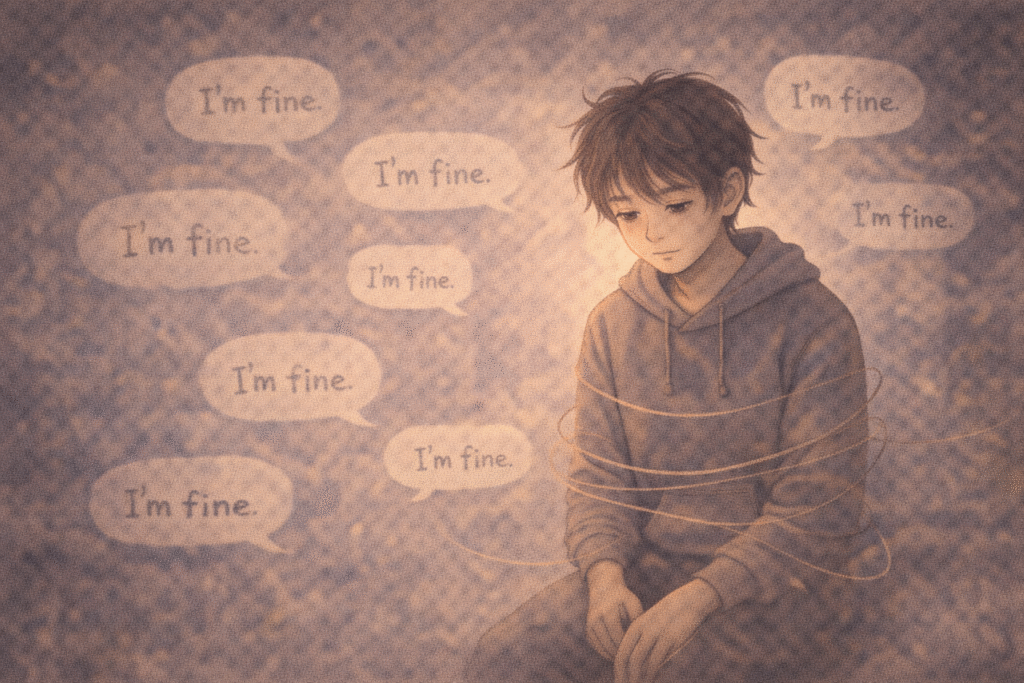
On the way to work this morning, there was a brief pause in front of the elevator mirror. A face that looked a little more tired than yesterday. A moment of hesitation. A smile made slightly on purpose.
To anyone else, it might have looked like an ordinary morning routine. But in that quiet moment, it felt more like a small ritual of holding oneself together.
Lately, confidence has felt fragile. A single mistake at work leads to heavy self-blame. A casual remark lingers longer than it should.
Am I doing this right? Am I enough?
And yet, quietly, an inner voice answers back:
“It’s okay. You’re still allowed to trust yourself.”
2. Today’s Humor
“Want to know how to boost your self-esteem?” “Yes!” “First, hide the mirror. Today, let the world reflect you instead.” 😄
3. Reflection
Self-worth is rarely something dramatic.
It doesn’t begin with major achievements or loud recognition. It starts with the small, steady trust we offer ourselves each day.
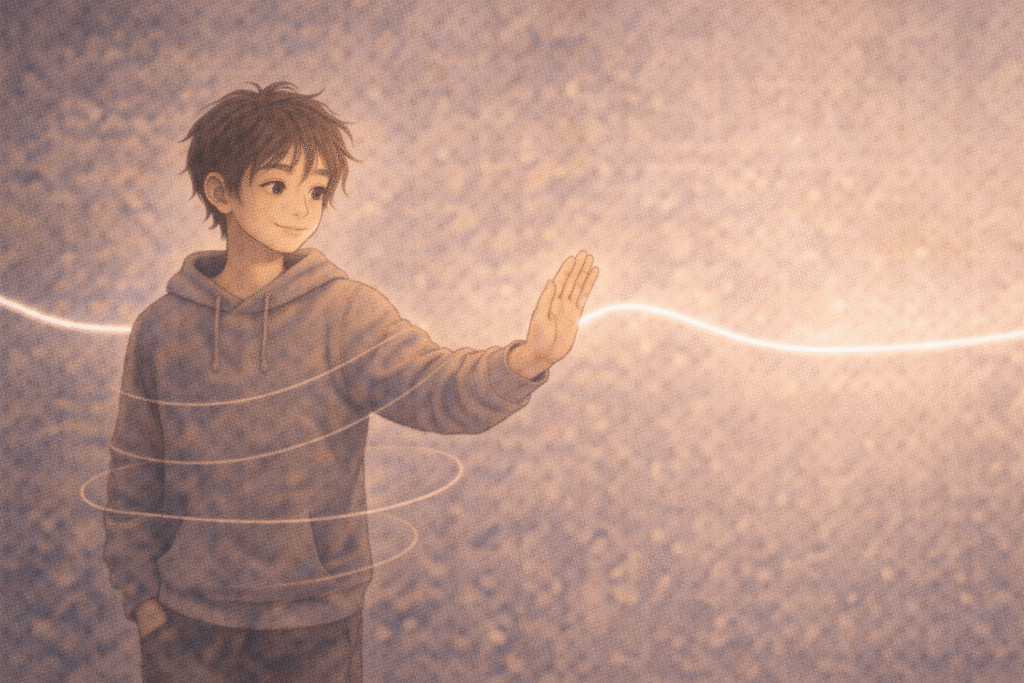
Self-worth isn’t about being high or low. It’s about having a thread to hold onto when everything else feels unsteady.
That thread isn’t given by others. It grows quietly in everyday moments:
Trying one more time
Not giving up, even when tired
Showing up again on a difficult day
Instead of thinking, “I’m not enough,” it becomes possible to think, “I’ve come this far.”
And sometimes, that shift is everything.
4. Today’s Hobby Suggestion
Writing a Letter to Yourself ✉️
Take a few minutes today to write a short note to yourself. It doesn’t need to be praise.
“Today was hard.” “You did your best.” “I see you.”
That single line may become tomorrow’s support. Being gentle with yourself is one of the most reliable ways to strengthen quiet self-worth.
5. A Small Action
During lunch, step outside if you can. Sit somewhere with light and air.
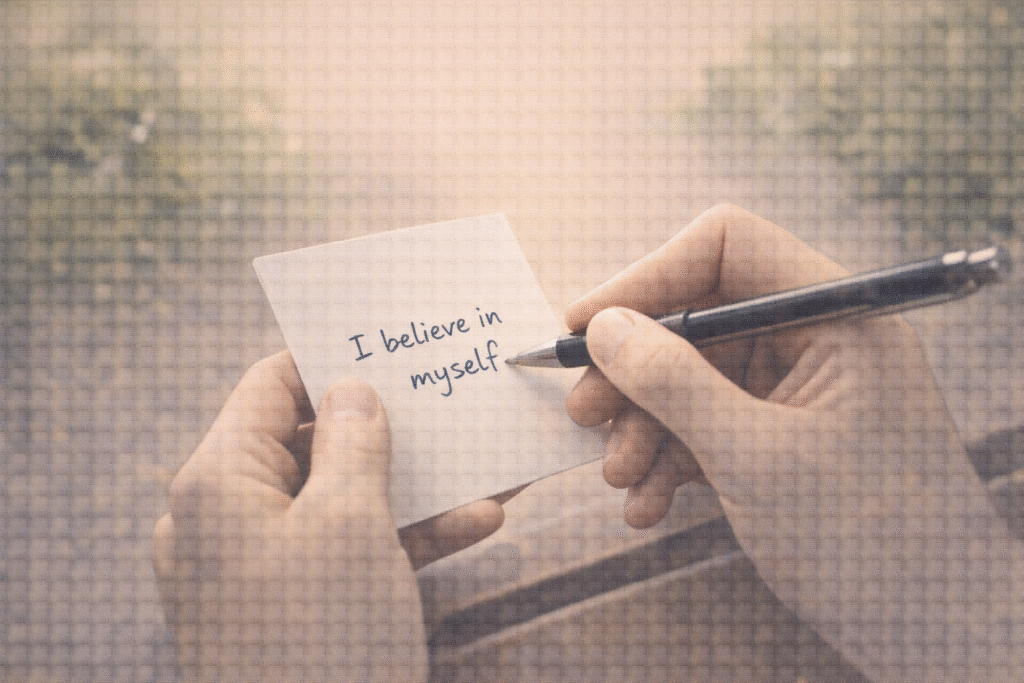
Write one sentence on a small piece of paper:
“Today, I am doing well enough.”
Fold it. Keep it in your wallet or pocket. It doesn’t have to be loud or visible.
It’s just a small knot — a personal thread to return to when the world starts pulling.
6. Today’s Quote
“Nothing can dim the light that shines from within.” — Maya Angelou
7. Closing
Self-worth isn’t a sudden realization. It’s a quiet practice.
Instead of proving yourself through others’ eyes, being able to say — even softly —
“I’m okay. I’m doing my best.”
That alone makes you steadier than you think.
8. Today’s Insight
Psychologist Carl Rogers emphasized that emotional well-being comes from alignment between one’s self-concept and lived experience.
When who we think we are and who we actually live as grow closer, self-worth becomes healthier and more stable.
Building self-worth, then, is not about becoming someone else — but about learning to accept who you already are.
9. One-Line Summary
“Small self-worth is the quiet courage that holds you steady when the world begins to shake.”
“Love yourself.” “You can’t love others unless you value yourself first.”
Messages about self-care, self-esteem, and self-love dominate modern psychology and popular culture. Yet many people find themselves quietly confused.
When did loving oneself begin to sound like permission to ignore others? Is self-love a healthy emotional foundation—or a carefully disguised form of selfishness?
1. Self-Love Is a Universal Human Emotion
Self-love, often discussed under the term narcissism in psychology, originates from a basic human instinct: the desire to protect and value oneself. In its healthy form, it supports survival, identity formation, and emotional stability.
Healthy self-love includes:
The belief that “I have inherent worth”
The recognition that “I deserve respect”
The ability to express one’s emotions and needs without shame
This form of self-love strengthens psychological resilience and serves as the foundation for balanced relationships.
Problems arise when self-love becomes excessive or distorted—when protecting the self turns into elevating the self at the expense of others.
2. What Is Toxic Narcissism?
Toxic narcissism refers to an extreme preoccupation with oneself that leads to the objectification or dismissal of others.
Such individuals often:
Overestimate their own importance
React defensively to criticism
Constantly seek admiration
Show limited empathy toward others
Outwardly, they may appear confident. Inwardly, however, exaggerated self-importance often masks insecurity and emotional emptiness.
Common examples include:
Dominating conversations by redirecting every topic toward oneself
Ignoring a partner’s emotions while emphasizing personal exhaustion or needs
Claiming credit while avoiding responsibility in group work
In this sense, toxic narcissism is not excessive self-love—it is an inability to love at all.
3. What Does Healthy Self-Love Look Like?
The key distinction lies in how self-love operates within relationships.
Healthy self-love:
Respects personal needs and others’ boundaries
Accepts responsibility instead of resorting to defensiveness
Welcomes praise without collapsing under criticism
Recognizes that one’s emotions matter—just as much as another’s
When loving oneself leads to healthier relationships rather than emotional domination, self-love becomes a source of nourishment rather than harm.
4. Self-Love and Self-Esteem Are Not the Same
Though often confused, self-love and self-esteem differ in important ways.
Self-esteem is an internal sense of worth that does not depend on comparison.
Narcissism relies heavily on external validation and perceived superiority.
People with stable self-esteem rarely need to exaggerate themselves or diminish others. Those with fragile self-worth, by contrast, may appear confident while remaining highly sensitive to rejection or criticism.
This is why intense narcissistic traits often coexist with deep insecurity.
5. Living in the Age of Self-Promotion
Modern society rewards visibility, personal branding, and constant self-display. In such an environment, self-focus becomes not only normalized but encouraged.
Under these conditions, self-love can easily transform into a survival strategy.
However, when “self-love” is used to justify rudeness, emotional exploitation, or disregard for others, the result is not empowerment—but isolation.
A society that celebrates the self while neglecting empathy risks producing individuals who stand alone, disconnected despite constant self-expression.
Conclusion: Where the Boundary Truly Lies
Self-love is not inherently harmful. In fact, it is essential for psychological well-being.
But the moment self-love ignores the emotional reality of others, it ceases to be care and becomes a display of power.
True self-love protects the self without harming others. It allows us to stand firmly as individuals while remaining emotionally present within relationships.
That balance—between self-respect and mutual respect—is where healthy self-love truly resides.
References
1. Twenge, J. M., & Campbell, W. K. (2009). The Narcissism Epidemic: Living in the Age of Entitlement. New York: Free Press. → Analyzes the cultural rise of narcissistic traits and their impact on relationships, workplaces, and social values, offering a broad sociopsychological perspective.
2.Kohut, H. (1971). The Analysis of the Self. Chicago: University of Chicago Press. → A foundational psychoanalytic work distinguishing healthy narcissism from pathological forms, providing a conceptual framework still influential today.
3.Vaknin, S. (2001). Malignant Self-Love: Narcissism Revisited. Prague: Narcissus Publications. → Examines narcissistic personality patterns through clinical observation, highlighting how distorted self-love affects interpersonal dynamics.
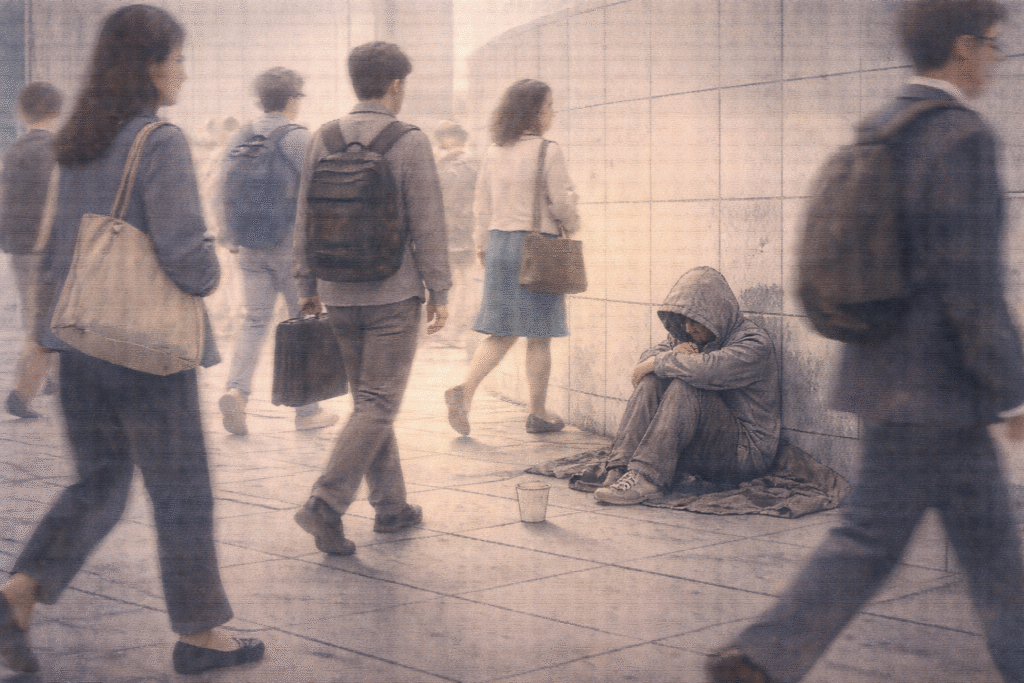
Images of war on the news. A homeless person shivering in a subway station. Hate-filled comments flooding online spaces.
We encounter other people’s suffering every day. Yet most of the time, we scroll past it, avert our eyes, or quietly tell ourselves, “This has nothing to do with me.”
We are taught that humans are empathetic beings. So why is it that we so often—and so easily—turn away from the pain of others?
1. A Psychological Perspective: Empathy Fatigue and the Bystander Effect
1.1 The Limits of Emotional Capacity
Psychology offers important explanations for why humans cannot absorb others’ suffering indefinitely.
Empathy fatigue refers to the gradual emotional exhaustion that occurs when we are repeatedly exposed to distress. When news about war, natural disasters, or humanitarian crises arrives daily, initial shock often gives way to numbness. This emotional shutdown is not indifference—it is self-protection.
Another well-documented phenomenon is the bystander effect. In emergency situations, individuals are less likely to intervene when others are present, assuming that someone else will take responsibility. Ironically, the more witnesses there are, the easier it becomes to do nothing.
1.2 Not Cruelty, but Psychological Structure
In this sense, turning away from suffering is not always a sign of moral failure. It is often the result of emotional limits and the diffusion of responsibility embedded in human psychology.
2. A Social Perspective: The Normalization and Consumption of Suffering
2.1 When Pain Becomes Information
Modern societies have transformed suffering into consumable content.
Through television, social media, and online news, images of violence, disaster, and tragedy circulate endlessly. Over time, suffering loses its exceptional status and becomes part of the everyday visual landscape.
At the same time, not all suffering receives equal attention. Disasters in wealthy or geopolitically central regions may dominate headlines, while prolonged crises in poorer parts of the world are reduced to brief mentions—or ignored entirely.
2.2 Hierarchies of Compassion
As a result, suffering becomes ranked and filtered. Some lives are framed as urgent and grievable, while others fade into the background noise of global information flows.
This selective visibility shapes not only what we see, but also what we feel compelled to care about.
3. An Ethical Perspective: The Face of the Other and Moral Responsibility
3.1 The Ethical Call of the Other
The philosopher Emmanuel Levinas argued that the face of the other makes an ethical demand upon us. To encounter another person’s vulnerability is to be called into responsibility—even before we choose it.
In theory, this means that suffering cannot be morally neutral. To see pain is already to be implicated in it.
3.2 The Desire to Avoid Responsibility
In practice, however, responding to suffering often requires action.
Looking at a homeless person may lead to the expectation of giving money or food. Acknowledging social injustice may demand protest, solidarity, or political engagement.
Turning away, then, can function as a way to avoid responsibility. By not seeing, we protect ourselves from the burden of having to respond.
4. The Contemporary Context: Empathy and Cynicism in the Digital Age
4.1 Expanded Awareness, Diluted Action
Digital platforms have radically expanded our exposure to others’ pain.
Hashtag campaigns, viral videos, and online petitions allow millions to express concern instantly. Yet this visibility does not always translate into sustained action or structural change.
In many cases, digital empathy becomes a momentary emotional release rather than a commitment.
4.2 From Compassion to Cynicism
At the same time, online spaces often foster cynicism and hostility. Suffering is mocked, politicized, or dismissed as self-inflicted. Comment sections turn pain into ammunition for ideological battles.
The digital sphere thus becomes both a site of expanded empathy and a space where suffering is easily trivialized or denied.
Conclusion: Turning Away—and Turning Back
We turn away from others’ suffering for many reasons: psychological limits, social structures, ethical avoidance, and digital cultures that reward distance over responsibility.
But looking away does not make suffering disappear.
To face another’s pain is uncomfortable. It can disrupt our sense of safety and challenge our routines. Yet this discomfort is not a flaw—it is the foundation of ethical life.
When we refuse to look away, suffering ceases to be a private misfortune and becomes a shared social concern. In that moment, we move closer to becoming more connected, more responsible, and more fully human.
Altruism in Humans Batson, C. D. (2011). Altruism in Humans. Oxford University Press. This work provides a comprehensive psychological account of altruism and empathy, explaining why humans sometimes help others and sometimes withdraw.
Against Empathy Bloom, P. (2016). Against Empathy: The Case for Rational Compassion. Ecco/HarperCollins. Bloom challenges the assumption that empathy is always morally beneficial, arguing that it can lead to bias, fatigue, and selective concern.
The Psychology of Good and Evil Staub, E. (2003). The Psychology of Good and Evil. Cambridge University Press. This book analyzes how individuals and groups come to help or harm others, with particular attention to bystander behavior and moral disengagement.
Totality and Infinity Levinas, E. (1969). Totality and Infinity: An Essay on Exteriority. Duquesne University Press. A foundational philosophical text that frames ethics as arising from responsibility to the Other, especially in the face of vulnerability.
The Spectatorship of Suffering Chouliaraki, L. (2006). The Spectatorship of Suffering. Sage Publications. This sociological study examines how media representations of suffering shape public response, compassion, and indifference.
Have you ever noticed that not all benches are really meant to be used?
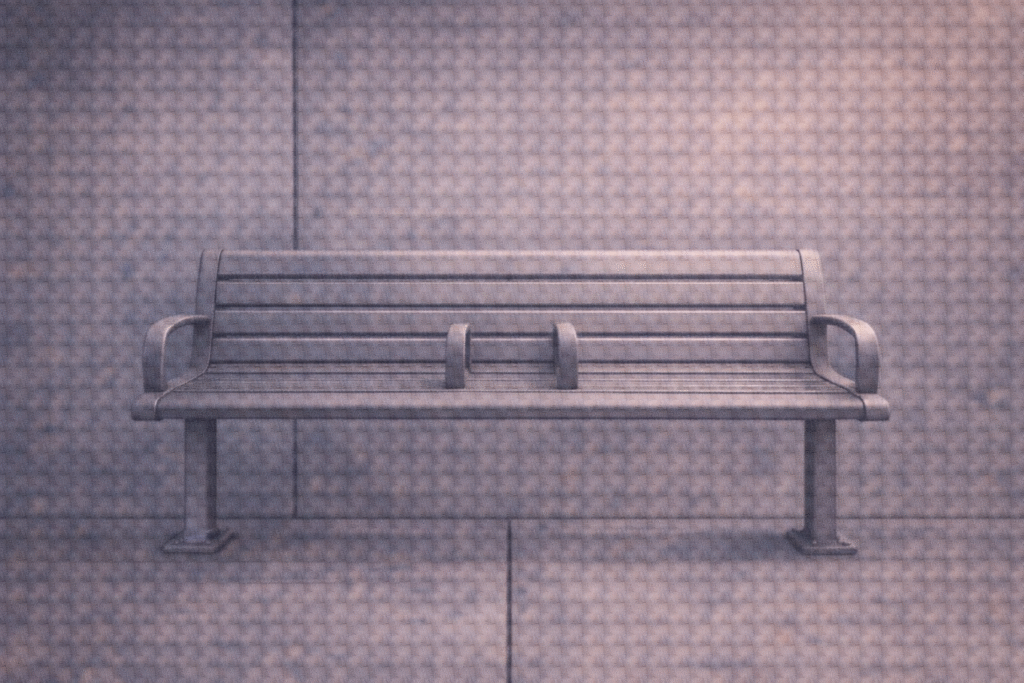
In many cities, public benches look inviting at first glance. But a closer look reveals metal bars dividing the seats, tilted surfaces, or cold materials that discourage anyone from staying too long. These designs seem subtle, almost invisible — yet they send a clear message.
Uncomfortable design is not always a mistake. Sometimes, it is a deliberate choice.
1. Metal Bars on Benches: “Don’t Lie Down”
1.1 Designed to Prevent Rest
In parks, subway platforms, and public squares, benches are often fitted with metal dividers. Sitting is allowed, but lying down — or resting for more than a moment — becomes impossible.
This design does not stop people from using the bench. It controls how they use it.
1.2 Anti-Homeless Architecture
These features are commonly referred to as anti-homeless or hostile architecture. Their purpose is not comfort, but regulation.
Similar examples include:
Cold metal seats in public restrooms
Waiting areas without backrests
Slanted walls or narrow ledges
Each silently communicates the same rule: You may stay briefly, but you are not welcome to remain.
2. Skateboard Deterrents on Stairs
2.1 Controlling Youth Through Design
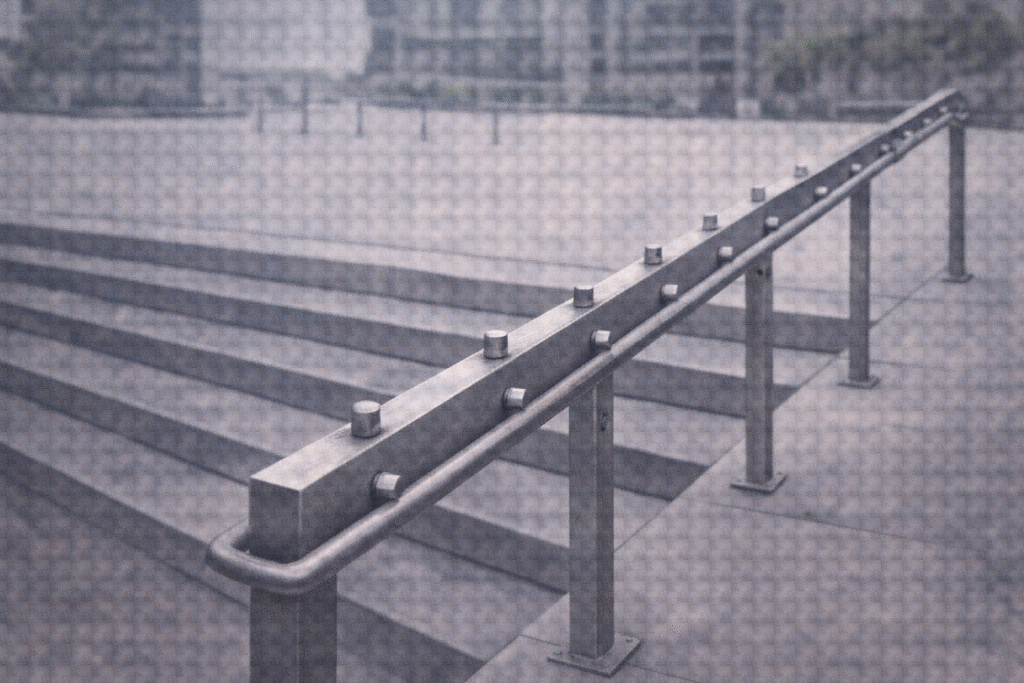
Small metal studs embedded into stair rails or ledges prevent skateboarders from performing tricks. Officially, these devices protect public property and improve safety.
However, critics argue that they also serve another function: the exclusion of youth culture from public space.
2.2 When Play Becomes a Problem
By treating play as disruption, design becomes a tool of social control. What appears to be a technical solution reflects a deeper cultural judgment about who belongs in public space — and how they should behave.
3. Heavy Doors and Narrow Handles: The Opposite of Universal Design
3.1 Who Can Enter — and Who Cannot
Some buildings have heavy doors, high or narrow handles, and awkward entrances. These features create real barriers for:
Wheelchair users
Parents with strollers
Elderly people
Children
Access becomes a privilege rather than a right.
3.2 Exclusion by “Normal” Standards
Such designs often reflect two assumptions:
A default user without physical limitations
A lack of concern — or intentional disregard — for others
In this sense, uncomfortable design operates as the opposite of universal design: it works smoothly for some, while quietly excluding others.
4. Discomfort Is Not Accidental
4.1 Design as Power
Across these examples, a clear pattern emerges: discomfort is rarely random. It is frequently intentional — and often political.
Design is not just about aesthetics or efficiency. It shapes behavior.
4.2 Silent Messages in Space
Through design, spaces communicate:
Who is visible
Who is welcome
Who should move along
This subtle form of exclusion functions as a kind of silent violence — unnoticed by many, but deeply felt by those affected.
5. Is Inclusive Design Possible?
5.1 Designing for Everyone
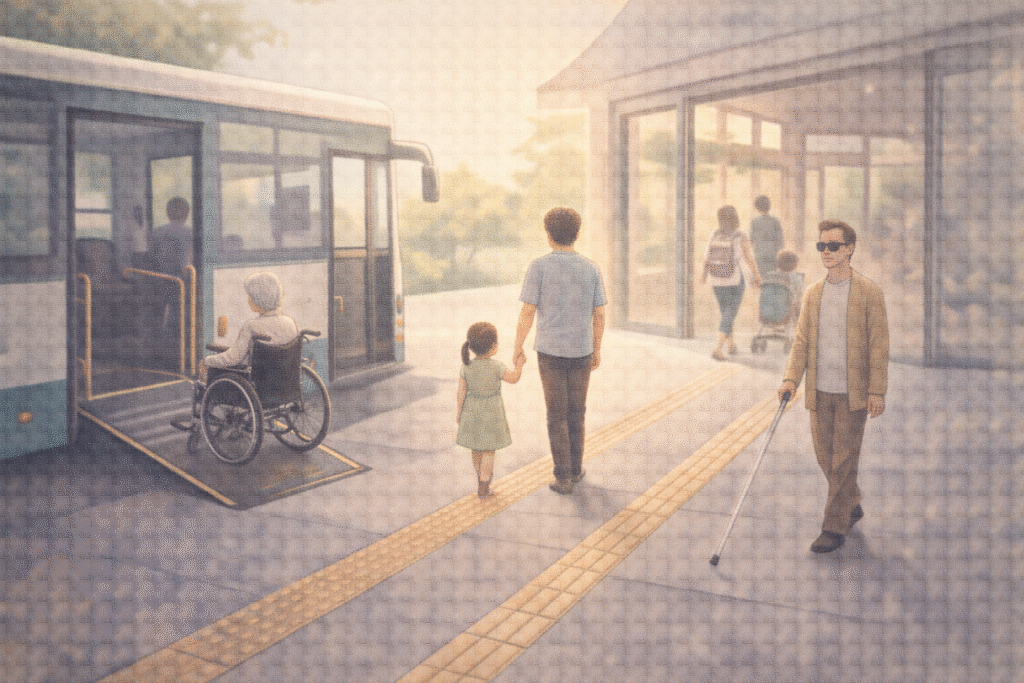
Yes — and it already exists. Universal design starts from the idea that public spaces should accommodate as many people as possible.
Examples include:
Low-floor buses accessible to wheelchairs
Braille signage for visually impaired users
Adjustable public sinks
Elevator buttons designed for all heights
These designs demonstrate that inclusion is not only ethical — it is practical.
5.2 Design as Invitation
Design can push people away, or it can invite them in. Recognizing the intentions hidden in everyday spaces is the first step toward building environments based on care rather than control.
Closing Thoughts
Design does not speak — but it communicates powerfully.
Uncomfortable design often serves to silence the vulnerable and regulate the unwanted. That is why we must question even the most ordinary features of our surroundings.
Who is this space really for?
Asking that question may be the beginning of a truly comfortable world.
1.Selwyn, N. (2013). Distrusting Educational Technology: Critical Questions for Changing Times. London: Routledge. This book critically examines how technology and design are never neutral, highlighting how systems and spaces can reinforce inequality, exclusion, and surveillance, particularly in public and educational environments.
2.Smith, R. (2020). Hostile Architecture: Design Against the Homeless. Santa Barbara: Punctum Books. A comprehensive analysis of hostile architecture worldwide, documenting how urban design is used to exclude homeless people, youth, and other marginalized groups, and connecting these practices to broader urban politics and ethics.
3.Norman, D. A. (2013). The Design of Everyday Things (Revised and Expanded Edition). New York: Basic Books. A foundational work in design psychology that emphasizes user-centered design, illustrating how thoughtful design can empower users — and how exclusionary design fails them.
Morality has long served as the invisible framework that sustains human societies. Questions of right and wrong have shaped not only individual choices, but also the survival of entire communities.
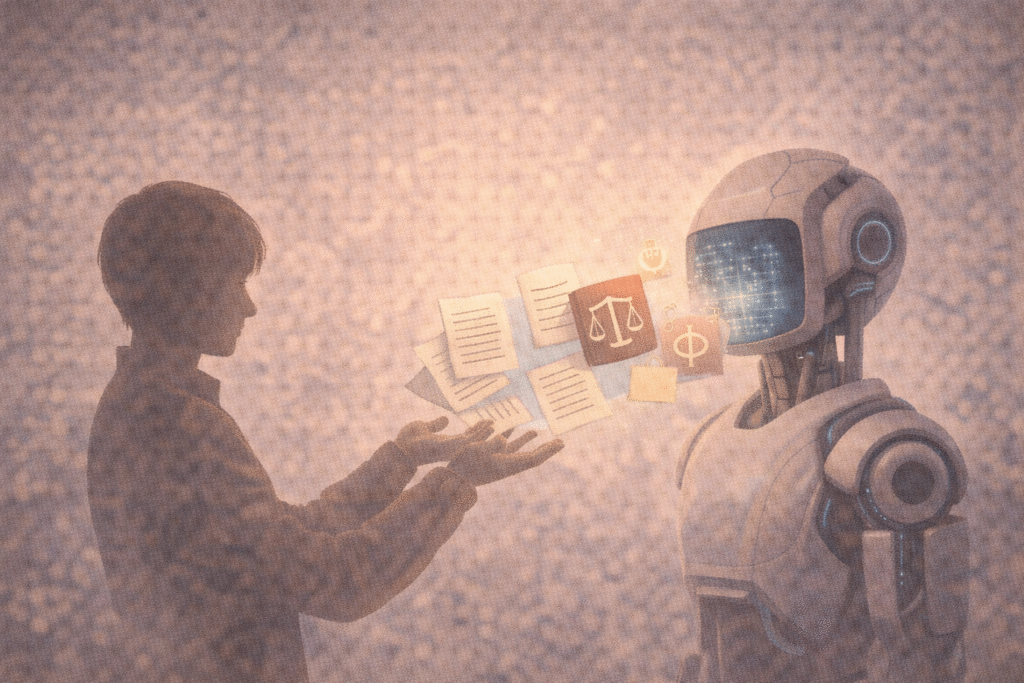
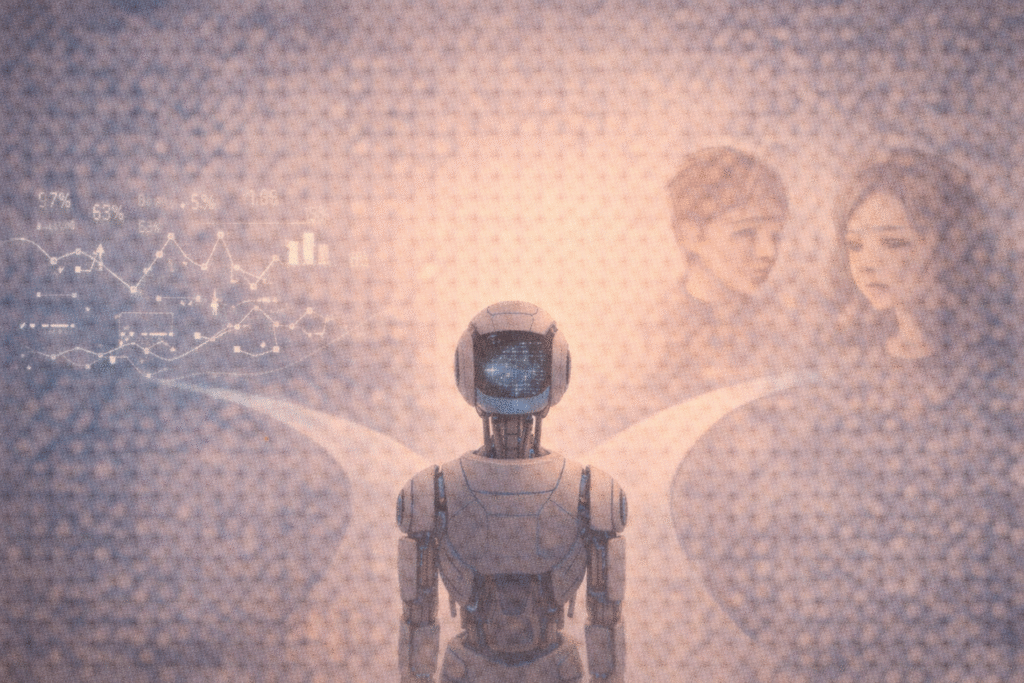
Today, artificial intelligence systems are trained on legal documents, philosophical texts, and countless ethical dilemma scenarios. They increasingly participate in decisions that resemble moral judgment.
If AI can learn moral rules and produce ethical outcomes, should we continue to see it as a mere calculating machine—or must we begin to recognize it as an ethical agent?
1. The Technical Possibility of Moral Learning
1.1. Simulating Ethical Judgment
AI systems already demonstrate the capacity to produce decisions that appear morally informed. Autonomous vehicles, for instance, simulate scenarios resembling the classic trolley problem, calculating how to minimize harm in unavoidable accidents.
From the outside, such behavior may look like moral reasoning.
1.2. Rules Without Experience
Yet these systems do not understand right and wrong. They do not feel guilt, hesitation, or moral conflict. They optimize outcomes based on probabilities and predefined constraints, not lived ethical experience.
2. Criteria for Ethical Agency: Intention and Responsibility
2.1. Philosophical Standards
In moral philosophy, ethical agency typically requires two conditions: intentionality and responsibility.
An ethical agent acts with intention and can be held accountable for the consequences of its actions.
2.2. The Responsibility Gap
Even when AI systems generate morally aligned outcomes, responsibility does not belong to the system itself. It remains distributed among designers, developers, institutions, and users.
Without self-generated intention or reflective accountability, AI cannot yet meet the criteria of ethical subjecthood.
3. Imitating Morality vs. Experiencing Morality
3.1. The Role of Moral Experience
Human morality is not mere rule-following. It is grounded in empathy, vulnerability, remorse, and the capacity to suffer alongside others.
An algorithm can replicate decisions—but not the inner experience that gives those decisions moral weight.
3.2. A Crucial Distinction
Even if AI reaches identical conclusions to humans, the origin of those decisions remains fundamentally different. A data-driven outcome is not the same as a morally lived action.
Can an act still be called “ethical” if it is detached from moral experience?
4. Social Experiments and Emerging Definitions
4.1. The Value of Moral AI
Despite these limitations, AI-driven ethical systems are not meaningless. They can help reduce human bias, increase consistency, and support decision-making in areas such as law, medicine, and governance.
In some cases, AI may function as a corrective mirror—revealing the inconsistencies and prejudices embedded in human judgment.
4.2. Human Responsibility Remains Central
What matters most is where final responsibility resides. AI may assist, recommend, or simulate ethical reasoning—but accountability must remain human.
Rather than ethical agents, AI systems may be better understood as ethical instruments.
Conclusion: A Shift in the Question
Teaching morality to machines does not automatically transform them into ethical subjects. Ethical agency requires intention, reflection, and responsibility—qualities that current AI does not possess.
Yet AI’s engagement with moral frameworks forces humanity to reexamine its own ethical standards.
Perhaps the more pressing question is no longer: Can AI become an ethical agent?
But rather: How will AI’s moral learning reshape human ethics, responsibility, and decision-making?
That question remains open—and it belongs to all of us.
References
Wallach, W., & Allen, C. (2009).Moral Machines: Teaching Robots Right From Wrong. Oxford University Press. → A foundational work on designing moral reasoning in machines, outlining both the promise and limits of artificial ethical systems.
Floridi, L., & Sanders, J. W. (2004). On the Morality of Artificial Agents. Minds and Machines, 14(3), 349–379. → A rigorous philosophical analysis of whether artificial agents can be considered moral actors, focusing on responsibility and agency.
Gunkel, D. J. (2018).Robot Rights. MIT Press. → Explores the extension of moral and legal consideration to non-human agents, challenging traditional definitions of ethical subjecthood.
Bryson, J. J. (2018). Patiency Is Not a Virtue: AI and the Design of Ethical Systems. Ethics and Information Technology, 20(1), 15–26. → Argues against attributing moral status to AI, emphasizing the importance of maintaining clear distinctions between tools and subjects.
Bostrom, N., & Yudkowsky, E. (2014). The Ethics of Artificial Intelligence. In The Cambridge Handbook of Artificial Intelligence (pp. 316–334). Cambridge University Press. → A comprehensive overview of ethical challenges posed by AI, including moral agency, risk, and societal impact.
“Alexa, turn off the lights.” “Siri, what’s the weather today?” “No need for your wallet — it’s an automatic payment.”
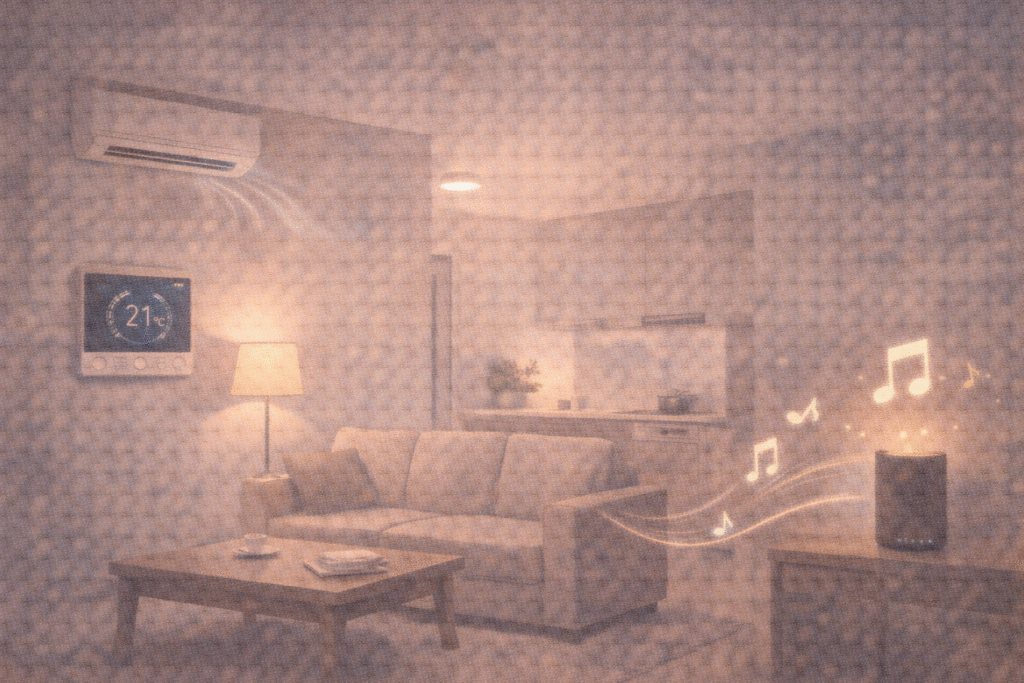
Lights respond to voices, music plays without touch, and refrigerators reorder groceries on their own. Automation has quietly become the background of everyday life.
It feels effortless. But in this growing familiarity, are there costs we no longer recognize?
1. Automation Saves Time — and Silently Reduces Awareness
Everyday life is shaped by countless small decisions. What to eat. When to turn off the lights. Whether to lock the door.
Automation now handles many of these choices without requiring our attention.
Smart thermostats adjust themselves. Lights turn on and off automatically. Payments are completed before we consciously register them.
Nothing is forced. Yet something subtle changes.
Decisions still happen — but we no longer experience ourselves as the ones deciding. Convenience replaces deliberation, and ease gradually weakens our sense of agency.
Automation does not take control away. It simply makes control feel unnecessary.
2. When Algorithms Choose With Us — and For Us
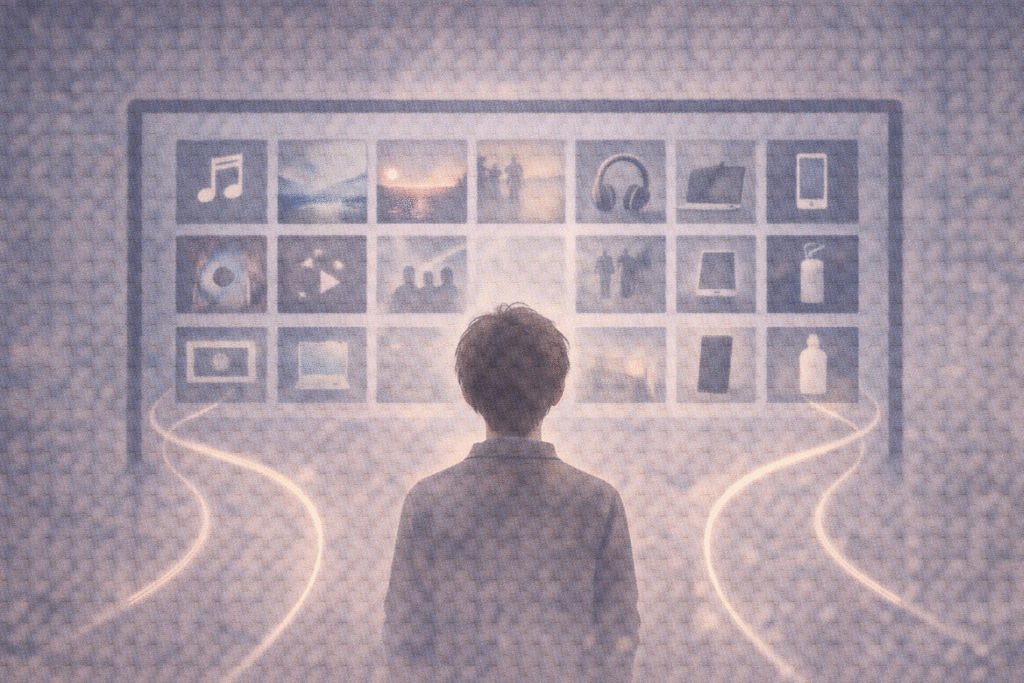
Recommendations now guide much of daily life. Music, movies, products, even news are selected before we actively search.
This feels personal. But personalization also narrows experience.
When choices are filtered through the same algorithms, novelty declines. We encounter what aligns with our past behavior — not what challenges or surprises it.
Over time, preference becomes repetition. We grow comfortable inside systems that teach us what to want — and then confirm it.
Convenience, here, quietly transforms freedom into predictability.
3. Who Is the Automated Home Really For?
Smart homes promise comfort, efficiency, and security. Yet automation does not serve everyone equally.
Older adults may struggle with unfamiliar interfaces. Visually impaired users face touch-screen barriers. For some households, smart technology remains inaccessible.
Automation expands possibility for some — while creating new forms of exclusion for others.
Most of this information is stored beyond users’ direct control. We benefit from convenience without fully knowing how our data circulates.
The hidden cost of automation may not be money — but intimacy without transparency.
5. Familiarity Dulls Reflection
What once felt innovative now feels normal.
“It’s just easier.” “Everyone uses it.” “I couldn’t go back.”
Familiarity discourages questioning.
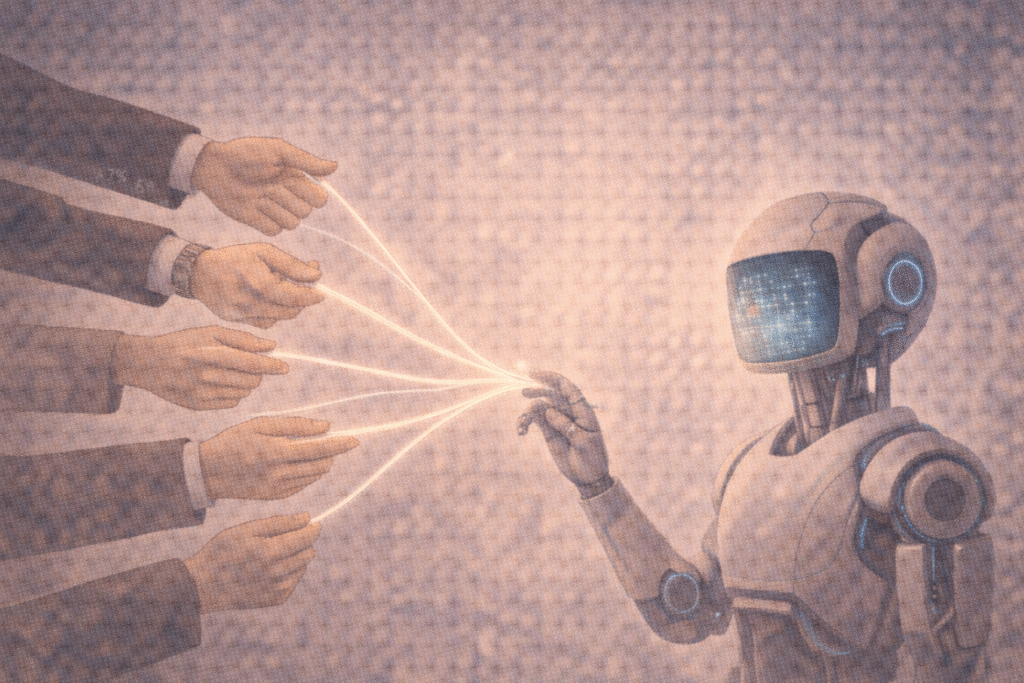
Automation is a tool — but tools shape those who rely on them. Without reflection, convenience quietly becomes governance.
Conclusion: Convenience Should Not Replace Conscious Choice
Smart homes, auto-payments, algorithmic recommendations — automation now frames everyday life.
The question is not whether automation is useful. It is whether the things done for us still align with what we value.
Technology should support human judgment, not quietly replace it.
Convenience works best when paired with awareness.
References
Carr, N. (2014). The Glass Cage: How Our Computers Are Changing Us. W. W. Norton & Company. Carr critically examines how automation affects human judgment, attention, and agency. Through examples ranging from aviation to everyday technology, he shows how convenience can weaken our capacity for active decision-making.
Zuboff, S. (2019). The Age of Surveillance Capitalism: The Fight for a Human Future at the New Frontier of Power. PublicAffairs. Zuboff exposes how automated services rely on large-scale data extraction and behavioral prediction. Her work reveals the hidden economic logic behind “smart” technologies and their implications for autonomy and democracy.
Parisi, L. (Ed.). (2016). Automate This: How Algorithms Came to Rule Our World. Princeton Architectural Press. This collection explores how algorithms reshape decision-making, perception, and social life. It provides philosophical insight into how automated systems subtly transform freedom into designed choice.
Solitude has always occupied an uneasy position in human life. At times, it is praised as a space of freedom and self-reflection. At others, it is feared as a sign of isolation and social breakdown.
In a world saturated with constant connection, solitude appears both desirable and dangerous. Is solitude a path toward inner autonomy, or does it quietly erode our social bonds? This inquiry explores solitude as a space of freedom—and as a potential risk.
1. The Philosophical Meaning of Solitude: Schopenhauer’s Perspective
1.1 Solitude as a Noble State
The 19th-century German philosopher Arthur Schopenhauer regarded solitude as one of the highest conditions a human being could attain. For him, solitude was not mere loneliness or social withdrawal. It was a deliberate withdrawal from social noise and collective pressure in order to engage deeply with one’s own thinking.
Schopenhauer famously argued that “a wise man finds satisfaction in solitude.” Only in isolation from social comparison and public opinion, he believed, could individuals achieve genuine intellectual freedom.
1.2 Inner Autonomy and Self-Mastery
Solitude, in Schopenhauer’s thought, was the foundation of inner autonomy. Freed from the constant gaze of others, individuals could confront themselves honestly. Philosophy, art, and scholarship, he argued, emerge not from crowds but from quiet reflection.
2. Solitude as Freedom: A Space for Reflection and Creation
Solitude offers more than philosophical abstraction—it shapes creativity and personal growth.
2.1 The Source of Creative Thought
Many writers, composers, and thinkers have relied on solitude as a condition for creation. Goethe’s reflective writings and Beethoven’s isolated compositional periods exemplify how solitude can function as a mental laboratory for innovation.
By suspending external expectations, solitude allows ideas to unfold freely.
2.2 Self-Reflection and Psychological Growth
In social life, individuals often perform roles shaped by others’ expectations. Solitude provides an opportunity to examine one’s own emotions, desires, and fears without interruption.
Psychological research suggests that moderate, voluntary solitude can foster emotional resilience and self-awareness.
2.3 Experiencing Inner Freedom
In the digital age, constant connectivity has become exhausting. Notifications, messages, and social media create a permanent sense of being observed.
Paradoxically, solitude—often seen as deprivation—can become a rare experience of freedom: a space where one exists without explanation or performance.
3. The Shadow of Solitude: Risks of Social Disconnection
Solitude, however, is not inherently virtuous. When extended or imposed, it can become harmful.
3.1 Loneliness and Psychological Risk
Social psychology distinguishes between solitude and loneliness, yet the boundary is fragile. Prolonged solitude can transform into loneliness, which has been linked to depression, anxiety, and even physical health risks.
When solitude ceases to be chosen, it often becomes a burden.
3.2 The Erosion of Social Capital
Sociologist Robert Putnam famously described the decline of communal life in Bowling Alone. Excessive isolation weakens trust, cooperation, and shared responsibility.
While solitude may benefit individual reflection, its expansion at the social level can fragment communities.
3.3 The Digital Paradox
Digital platforms promise connection but frequently intensify isolation. Online relationships often remain superficial, lacking the depth of embodied interaction.
As a result, hyper-connectivity can paradoxically deepen psychological solitude rather than alleviate it.
4. Two Faces of Solitude: Finding Balance
Solitude is neither purely liberating nor inherently destructive. Its meaning depends on how and why it is experienced.
4.1 Chosen Solitude vs. Enforced Isolation
Voluntary solitude can nourish creativity and reflection. Enforced isolation—caused by social exclusion or structural inequality—often produces psychological harm.
The key distinction lies in agency.
4.2 The Cycle of Solitude and Connection
Human development often follows a rhythm: withdrawal for reflection, followed by re-engagement with others.
Solitude and sociality need not be opposites; they can function as complementary phases of maturity.
4.3 Reframing Solitude in Contemporary Life
Practices such as digital detox, meditation, and solitary walking reflect modern attempts to reclaim solitude intentionally. These practices reinterpret solitude not as abandonment, but as rest and renewal.
Conclusion: Freedom or Disconnection?
Solitude cannot be judged through a simple binary. As Schopenhauer suggested, it may open a space for wisdom and inner freedom. Yet when excessive or imposed, it risks becoming social disconnection and psychological isolation.
The more meaningful question is not whether solitude is good or bad, but how we relate to it.
When chosen consciously and balanced with social connection, solitude can become a vital resource. When neglected or imposed, it may quietly erode both personal well-being and collective life.
Solitude, then, is not an escape from society—but a mirror through which we learn how to return to it more fully.
References
Schopenhauer, A. (1851/2004). Parerga and Paralipomena. Oxford: Oxford University Press. → This work contains Schopenhauer’s reflections on solitude, wisdom, and intellectual freedom, offering a philosophical foundation for understanding solitude as a condition of self-mastery rather than mere isolation.
Weiss, R. S. (1973). Loneliness: The Experience of Emotional and Social Isolation. Cambridge, MA: MIT Press. → A classic psychological study distinguishing solitude from loneliness, analyzing how social isolation produces distinct emotional and structural consequences.
Baumeister, R. F., & Leary, M. R. (1995). The Need to Belong. Psychological Bulletin, 117(3), 497–529. → This influential paper argues that the need for social connection is a fundamental human motivation, clarifying the limits of solitude as a positive resource.
Putnam, R. D. (2000). Bowling Alone. New York: Simon & Schuster. → Putnam analyzes the decline of social capital and communal life, illustrating how widespread isolation undermines democratic and social cohesion.
Cacioppo, J. T., & Patrick, W. (2008). Loneliness: Human Nature and the Need for Social Connection. New York: W. W. Norton. → Integrating neuroscience and psychology, this work explains the biological and emotional costs of prolonged loneliness, highlighting the fragile boundary between solitude and isolation.
Standing on an old bridge, time feels layered. The wooden planks are worn in places, and countless handprints linger along the railing. It feels as though every person who crossed left behind a fragment of their story.
A quiet thought arises: “What did the first person feel when they crossed this bridge?”
The bridge does not answer. Yet it holds the weight of many moments— each step, each pause, each decision to move forward.
2. A Light Thought for Today
“What if the bridge shakes before I cross?” “That’s alright— even life needs a little shaking to become memorable.”
A small smile follows.
3. Reflection – What This Moment Revealed
For some, this bridge was part of a daily commute. For others, it may have been a place of farewell.
A bridge is never just a structure. It is a symbol of in-between— connecting people to people, worlds to worlds.
Our relationships resemble bridges as well. They may sway and feel uncertain, but it is on that unsteady ground that understanding slowly forms.
Connection is not built by certainty alone. It grows when we dare to cross despite the movement beneath our feet.
4. A Gentle Practice
Recording a Bridge of Memory
Think of a “bridge” you crossed today. Not a physical one, but a moment when you reached across distance— to speak, to listen, to understand.
Write a short note or take a simple photo. These records preserve the temperature of connection long after the moment has passed.
5. A Small Action for the Day
Pause, just for a moment, in the middle of your day. Imagine standing halfway across a bridge.
Breathe slowly. And say inwardly: “May peace accompany everyone who crosses here.”
That quiet wish, even if unheard, softens the space between people.
6. Quote of the Day
“Bridges are built not just to connect lands, but to unite hearts.” — Unknown
7. Closing – Returning Gently to Ourselves
A bridge always carries the space between. Here and there. Past and present. Self and other.
When we become bridges for one another, the world grows warmer— not by removing distance, but by making crossing possible.
8. A Thought to Remember
In architecture, an arch bridge distributes weight by sharing the load across its curve, allowing both strength and flexibility.
Human connections work the same way. Endurance comes not from carrying everything alone, but from sharing the weight.
9. Today’s One-Line Insight
“Every meeting is a crossing; even when it sways, the bridge still brings us together.”
Between the “Nice Person” Complex and Emotional Labor
“I’m fine.” “I can do it.” “That’s only natural.”
There are people who say these words almost automatically.
They worry about making others uncomfortable. They fear ruining the mood. They hesitate to disappoint expectations.
So they place other people’s feelings ahead of their own—again and again.
At first, it looks like kindness. Over time, it becomes exhaustion.
This quiet weariness has a name. We live in what might be called a society fatigued by kindness.
1. Why Does the “Nice Person” Complex Develop?
In psychology, this pattern is often described as Nice Person Syndrome or approval addiction.
People affected by it feel a strong urge to be liked, accepted, and seen as good. They avoid conflict, struggle to say no, and measure their self-worth through others’ reactions.
Common signs include:
Constantly worrying about how others perceive you
Agreeing even when you feel uncomfortable
Offering help automatically, without checking your own limits
Over time, kindness stops being a genuine choice and turns into a survival strategy. Emotions are suppressed, needs are postponed, and fatigue quietly accumulates.
2. Emotional Labor Is Not Just a Workplace Issue
The term emotional labor originally referred to service workers who must regulate or perform emotions as part of their job.
Today, however, emotional labor extends far beyond the workplace.
It appears in everyday life:
Smiling while feeling irritated
Replying “I’m okay” when you are not
Accepting unreasonable requests to avoid awkwardness
When these moments pile up, people begin wearing a permanent mask of emotional stability. Every interaction consumes emotional energy, even when no one notices.
3. When Kindness Becomes Exploited
Ironically, the kinder someone appears, the more demands tend to follow.
Helpful people are quickly labeled “reliable.” Their efforts become expected, not appreciated. Refusal—even once—invites disappointment.
In this structure, kindness is no longer voluntary. It becomes a resource that others draw from repeatedly.
As a result, many “nice” people lose touch with their own boundaries. Some grow numb. Others suppress frustration until it eventually erupts.
4. Kindness Should Be a Strategy, Not a Sacrifice
Does this mean we should stop being kind?
Not at all. But kindness must be regulated, not reflexive.
Healthy kindness includes:
Practicing how to say “no” without guilt
Expressing emotional limits honestly
Prioritizing your own emotional state alongside others’
Allowing firmness when situations require it
True kindness does not come from depletion. It comes from self-respect.
When kindness is a conscious choice rather than a compulsion, it becomes sustainable.
Conclusion: From “Good” to Sustainable
A fatigue-of-kindness society is one where considerate people burn out, while inconsiderate behavior often goes unchecked.
In such a world, the goal is not to be endlessly nice—but to be emotionally sustainable.
Smiling for others has value. But standing firm for yourself matters just as much.
Genuine kindness grows best on the foundation of self-respect.
May your days be gentle— without leaving you empty.
Hochschild, A. R. (1983/2012). The Managed Heart: Commercialization of Human Feeling. University of California Press. This foundational work introduces the concept of emotional labor, showing how managing feelings—especially in service roles—can lead to psychological exhaustion. It provides the sociological basis for understanding why “being nice” can function as unpaid labor.
Brown, B. (2010). The Gifts of Imperfection. Hazelden Publishing. Brown explores how social expectations and perfectionism pressure individuals to perform goodness. The book emphasizes self-worth, boundaries, and authenticity as alternatives to approval-driven behavior.
Maslach, C., & Leiter, M. P. (1997). The Truth About Burnout. Jossey-Bass. This research-driven work examines burnout as a structural and relational problem, not just an individual weakness. It explains why people with high responsibility and empathy are especially vulnerable to emotional exhaustion.
The state is one of the most powerful institutions humanity has ever created.
It makes laws, guarantees rights, and maintains social order. At the same time, it surveils, regulates, and sometimes legitimizes violence in the name of security. We live under its protection—and under its authority.
This raises a persistent and unsettling question:
Should the state be understood as a guardian of individual freedom, or as a Leviathan that justifies control?
Today’s inquiry stages this question not as a verdict to be delivered, but as a trial of ideas—a stage of reflection where competing philosophies confront one another.
2. The Plaintiff’s Case: The State as Guardian of Freedom
The Liberal Conception of the State
Modern liberal thinkers have long argued that the state exists primarily to protect individual rights.
John Locke, in Two Treatises of Government, maintained that human beings are born free and equal, possessing natural rights to life, liberty, and property. According to this view, the state is a minimal mechanism created solely to secure these rights—not to override them.
John Stuart Mill reinforced this position in On Liberty, insisting that state interference must be kept to an absolute minimum. For Mill, individual autonomy is not merely a private good; it is the engine of social progress. A society flourishes when individuals are free to think, speak, and live according to their own convictions, so long as they do not harm others.
From this perspective, the state resembles a watchful guardian: present, but restrained. It is not a master of citizens, but a protector of their freedom. Contemporary democratic institutions—freedom of speech, freedom of assembly, freedom of religion—are often cited as evidence that the liberal vision of the state remains alive.
The plaintiff’s argument is clear: the state’s legitimacy rests on its ability to safeguard freedom, not to manage lives.
3. The Defendant’s Case: The State as Leviathan
Control as a Condition of Order
The opposing view, however, paints a far darker picture of human nature—and a far stronger role for the state.
Thomas Hobbes, in Leviathan, famously described life in the state of nature as a condition of perpetual insecurity: a war of all against all. In such a world, life is “solitary, poor, nasty, brutish, and short.”
To escape this chaos, individuals enter a social contract, surrendering portions of their freedom to a sovereign authority capable of enforcing order. That authority is the state—powerful, centralized, and uncompromising when necessary.
From this standpoint, the state is not merely a guardian of freedom; it is a mechanism that legitimizes control in order to prevent collapse. Freedom without authority, Hobbes argued, leads not to harmony but to fear.
Modern history offers many examples that echo this logic. During pandemics, governments restrict movement. In the name of security, states monitor borders, communications, and data flows. These actions undeniably limit individual freedom, yet they are often defended as necessary for collective survival.
The defendant’s case insists that control is not the enemy of freedom, but its precondition.
4. Evidence and Counterarguments
The tension between these positions becomes most visible when state power expands.
From the liberal perspective, growing surveillance capabilities—especially in digital societies—pose a serious threat to freedom. When governments collect personal data, monitor online behavior, or justify intrusion through vague security concerns, the boundary between protection and domination begins to blur. History offers many reminders that extraordinary powers, once granted, are rarely surrendered voluntarily.
The defense responds by questioning the feasibility of unrestricted freedom. Absolute liberty, it argues, can undermine the freedom of others. Disinformation, hate speech, and unregulated digital platforms can erode democratic trust and social cohesion. In such cases, state intervention is framed not as oppression, but as a means of preserving the conditions under which freedom can exist.
What emerges is not a simple opposition, but a paradox: freedom seems to require both restraint and protection, both limits and guarantees.
5. Contemporary Implications: A Persistent Tension
In practice, modern states embody both roles.
Democratic governments protect civil liberties while simultaneously exercising extensive regulatory and surveillance powers. National security measures restrict privacy. Public health policies limit movement. Data-driven governance promises efficiency but risks turning citizens into transparent subjects.
The state oscillates between guardian and Leviathan, often wearing both masks at once.
As technology advances and crises multiply—climate, health, security—the tension between freedom and control is unlikely to fade. Instead, it will intensify, demanding continual negotiation rather than definitive resolution.
Conclusion: An Unfinished Trial
Is the state a shield that protects our freedom, or a Leviathan that disciplines and controls us?
The plaintiff argues for restraint, warning that unchecked power corrodes liberty. The defense insists that authority is indispensable in an uncertain world. Both present compelling evidence. Neither delivers a final answer.
The courtroom remains open. The verdict is deferred.
Perhaps this question cannot—and should not—be settled once and for all. Instead, it must remain alive, shaping our political choices and institutional designs.
The state stands before us, neither purely protector nor purely monster, but a reflection of how we choose to balance freedom and control.
Hobbes, T. (1651/1996). Leviathan. Cambridge: Cambridge University Press. Hobbes presents the state as a powerful sovereign created to escape the chaos of the state of nature. His conception of Leviathan remains foundational for arguments that justify strong authority in the name of order and security.
Locke, J. (1689/1988). Two Treatises of Government. Cambridge: Cambridge University Press. Locke articulates the liberal vision of the state as a protector of natural rights. His work forms the philosophical basis for constitutional government and limits on political power.
Mill, J. S. (1859/1977). On Liberty. Indianapolis: Hackett Publishing. Mill defends individual autonomy against state interference, emphasizing freedom as a condition for personal and social development. His arguments remain central to modern liberal thought.
Berlin, I. (1969/2002). Four Essays on Liberty. Oxford: Oxford University Press. Berlin’s distinction between negative and positive liberty provides a conceptual framework for understanding the tension between freedom and authority in modern political life.
Foucault, M. (1975/1995). Discipline and Punish: The Birth of the Prison. New York: Vintage Books. Foucault analyzes how modern states exercise power through surveillance and discipline, revealing how control can expand even within systems that formally endorse freedom.