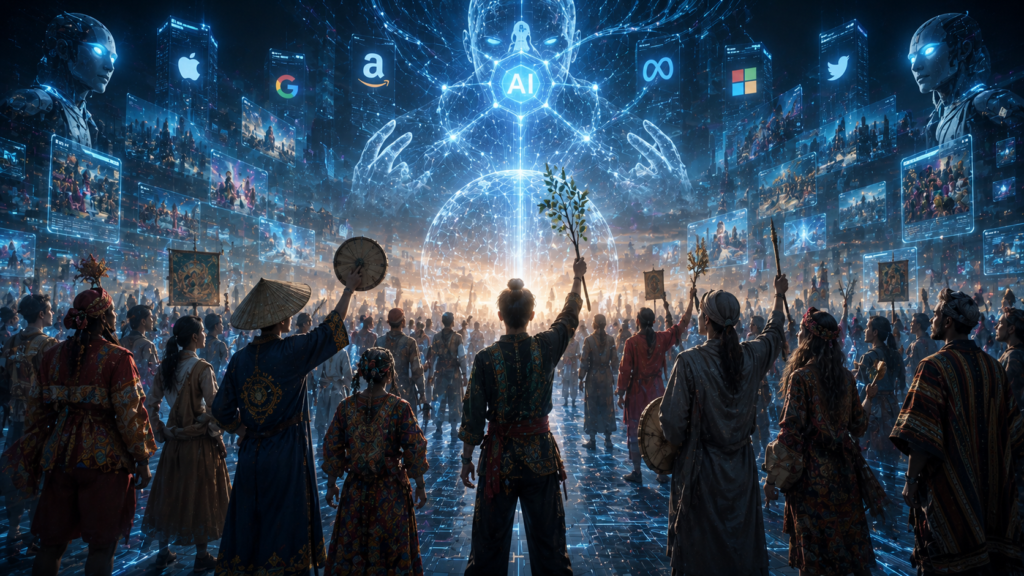
Sometimes the smallest objects carry the deepest reflections.
1. The Weight of Small Things
Sometimes, the smallest things stay with us the longest.
I picked up this quiet pebble without any clear reason, almost as if it had been waiting for me before I even noticed it.
It does not speak, yet it feels like it carries the weight of something 오래된 시간— a quiet presence shaped by time, pressure, and patience.
Like the moon, the bamboo forest, and the wind that passes through them, this small object seems to hold something much larger than itself.
And somehow, in its silence, it feels a little like me.
2. A Small Object, A Long Story
At first glance, it is just a pebble. Smooth, dark, and easily overlooked.
But if you look closely, you begin to notice the marks— fine cracks, worn edges, and subtle textures.
These are not flaws. They are traces of time.
The pebble did not become this way overnight. It was shaped slowly— by water, by friction, by countless unseen moments.
In that sense, it is not so different from us.
3. The Strength That Does Not Announce Itself
We often think strength must be loud. Visible. Recognized.
But there is another kind of strength— one that does not demand attention.
It simply endures.
Like the bamboo that bends but does not break, like the moon that remains even when unseen, like the wind that moves quietly yet persistently.
This pebble carries that same quiet strength.
Not dramatic, not overwhelming— but steady.
4. Learning to Remain
There are moments when we feel small. Unnoticed. Uncertain.
In those moments, we often try to become something bigger, something more visible, more defined.
But perhaps that is not always necessary.
Perhaps there is value in simply remaining— in being shaped by time without losing form.
The pebble does not resist its path. It becomes what it is through the journey.
And maybe, we are allowed to do the same.
Conclusion: Where Stillness Becomes Meaning
In the end, this small pebble does not teach loudly. It does not offer clear answers.
But it reminds us of something simple:
That not all strength needs to be seen. That not all growth needs to be fast.
And that sometimes, just remaining—quietly, steadily— is already enough.
💬 Quote
“Silence is a source of great strength.” — Lao Tzu
One-line Reflection
In a small pebble, I found not just the sea— but a reflection of time, patience, and myself.
A Question for the Reader
Have you ever held something small in your hand—and felt as if it contained more than its size could explain?
If so, what did it reveal about the way you see the world?
Related Reading
The quiet presence of unnoticed moments is further reflected in A Seaside Bus Stop – The Landscape of Waiting, where ordinary spaces reveal deeper emotional layers through stillness, anticipation, and the subtle passage of time.
From a psychological perspective, the meaning we assign to small experiences appears in Why Lighting a Candle Feels Like a Ritual, which explores how simple actions can carry symbolic depth and shape our sense of calm, focus, and inner awareness.
During a meeting, you might type notes on your smartphone — only to realize days later that you remember almost nothing.
Yet strangely, a quick handwritten note on paper often stays vivid in your mind.
Many people share this experience. Why does handwriting seem more memorable? The difference between handwriting vs typing memory is not just a matter of preference, but how the brain processes information.
Is it simply emotional, or does the brain respond differently when we write by hand?
1. Handwriting Is Not Just Recording — It Is Motor Memory
Typing on a keyboard involves repetitive and uniform movements. Your fingers tap in similar patterns with minimal variation.
Handwriting, however, is far more complex.
Each letter involves:
wrist movement
pen pressure
stroke direction
spatial positioning
These physical actions activate motor memory and help store information more effectively. This explains why handwriting vs typing memory shows clear differences in how we retain information.
This process helps transfer information from short-term memory into long-term memory.
Research supports this idea.
Studies have shown that information written by hand is remembered more effectively than information typed on a keyboard.
2. Handwriting Creates Meaningful Signals for the Brain
Handwriting carries a strong personal signature.
The size, shape, and flow of your writing are unique — almost like a fingerprint.
This is why a handwritten letter often feels more meaningful than a typed message.
Handwriting is not just a method of recording information. It also conveys emotion and intention.
These emotional elements activate deeper cognitive processing in the brain, making the information more memorable.
3. The “Inconvenience” of Analog Creates Focus
Writing by hand is slower and less convenient.
There is no auto-correct, no quick deletion, and no predictive text.
Because of this, we naturally become more intentional and thoughtful when writing.
We choose words more carefully. We process information more deeply.
This slower pace encourages active thinking, which strengthens memory formation.
In contrast, typing often leads to passive transcription rather than meaningful understanding.
4. Handwriting Is Not Disappearing — It Is Returning
Despite the rise of digital technology, handwriting is making a comeback.
Digital handwriting tools and note-taking devices are gaining popularity.
People are rediscovering the value of:
physical interaction
slower thinking
sensory engagement
Even in the AI era, many students report that handwriting helps them learn and remember better than digital note-taking.
This suggests that handwriting fulfills a cognitive need that technology alone cannot replace.
Conclusion
Handwriting is a form of memory that involves both the brain and the body.
It carries emotional meaning. It encourages deeper thinking. It slows us down in a way that enhances understanding.
In a fast digital world, handwriting reminds us that sometimes slower processes lead to deeper memory.
Perhaps the next time you want to remember something important, you might try writing it down — by hand.
Related Reading
The cognitive and emotional depth of handwriting is further explored in The Psychology of Handwriting, where the act of writing is examined not merely as a mechanical process, but as a meaningful interaction between the mind, body, and memory.
At a broader cultural and emotional level, the enduring appeal of handwriting connects with Digital Nostalgia – Why Analog Feelings Still Call to Us, where the quiet persistence of analog experience reveals why slower, tactile forms of expression continue to hold emotional power in a digital world.
Question for Readers
When you want to remember something important, do you usually type it — or write it by hand?
Have you ever noticed that handwritten notes feel more personal or easier to recall, even days later?
In a world increasingly shaped by digital tools, we might ask a deeper question:
Are we losing something essential in the way we think and remember when we stop writing by hand?
References
Mueller, P. A., & Oppenheimer, D. M. (2014). The Pen Is Mightier Than the Keyboard: Advantages of Longhand Over Laptop Note Taking. Psychological Science, 25(6), 1159–1168. This study demonstrates that students who take notes by hand show better conceptual understanding and memory retention than those who use laptops, highlighting the cognitive benefits of handwriting.
Smoker, T. J., Murphy, C. E., & Rockwell, A. K. (2009). Comparing Memory for Handwriting versus Typing. Proceedings of the Human Factors and Ergonomics Society Annual Meeting, 53(22), 1744–1747. This research provides experimental evidence that handwriting leads to stronger memory retention compared to typing, offering insights into effective learning strategies.
James, K. H., & Engelhardt, L. (2012). The Effects of Handwriting Experience on Functional Brain Development in Pre-literate Children. Trends in Neuroscience and Education, 1(1), 32–42. This study explores how handwriting contributes to brain development, showing that physical writing enhances visual-motor integration and cognitive processing in learning.
It is the narrative through which we understand who we are, the structure that shapes our relationships with the world, and the emotional foundation of our identity.
But what if every memory we have — from the faintest childhood moment to the most recent conversation — could be perfectly digitized, stored, and retrieved at will?
What if memories could be exchanged, edited, or even erased?
Would we still be the same person?
1. Is Memory the Core of Personal Identity?
Philosopher John Locke argued that personal identity is grounded in the continuity of memory.
According to his “memory theory,” a person remains the same individual as long as they can remember past experiences as their own.
From this perspective, perfectly digitizing and preserving memory might appear to stabilize identity.
However, human memory is not designed for perfect preservation.
It is shaped by forgetting, distortion, and reinterpretation.
To digitize memory completely is to remove these imperfections — and perhaps, in doing so, remove something essential to being human.
2. Memory Copying and the Multiplication of the Self
If memory can be fully digitized, it can theoretically be copied.
Imagine an artificial intelligence that contains all your memories.
Would that entity be you?
Or would it be something else — a replica of your narrative without your present consciousness?
This raises a deeper philosophical question:
Is personal identity defined by memory alone, or does it also require a specific body, perception, and lived experience in the present?
If multiple entities share identical memories, can they all be considered the same person?
3. Memory Editing and the Transformation of Identity
If we could remove painful memories or implant artificial ones, would that make our lives better?
Popular culture has explored this idea, most notably in Eternal Sunshine of the Spotless Mind, where characters erase memories of love and loss.
Psychologically, memory is not a passive archive of the past.
It is an active process that continuously shapes the present self.
To alter memory is not merely to change the past — it is to reconstruct identity itself.
This suggests a shift from the idea of identity as continuity to identity as ongoing reconstruction.
4. Social and Ethical Implications
The digitization of memory transforms private experience into data.
This raises serious concerns about privacy and control.
If governments or corporations gain access to memory data, they could potentially monitor, manipulate, or even rewrite personal identity.
Furthermore, if memory technologies become commodified, they may create new forms of inequality.
Those with resources could preserve, enhance, or curate their memories, while others may be excluded from such possibilities.
This leads to a troubling scenario:
a society where memory itself becomes a site of power and inequality.
Conclusion: Identity Beyond Storage
The digitization of memory is not merely a technological development. It is a fundamental challenge to how we define the self.
If memory becomes data, can identity remain human?
Perhaps the answer lies in recognizing that memory is not just something we store, but something we continuously live through, reinterpret, and sometimes forget.
Even in a future where memory can be perfectly preserved, our humanity may depend on our ability to choose how we remember — and how we forget.
A Question for Readers
If your memories could be perfectly copied or edited, would you still consider yourself the same person — or would you become someone new?
Related Reading
The philosophical tension between memory, identity, and the limits of human completeness is also reflected in Why Do Humans Seek Perfection While Knowing They Are Incomplete?, where the desire to overcome human limitations reveals deeper questions about self-awareness, imperfection, and the nature of being.
At a more introspective level, the role of memory and personal experience in shaping the self can be further explored in The Psychology of Handwriting, where subtle human expressions—often overlooked in the digital age—offer insight into how identity is continuously formed through embodied and imperfect acts of cognition.
References
Locke, J. (1690/1975). An Essay Concerning Human Understanding. Oxford University Press. → Locke establishes the philosophical foundation of the memory theory of personal identity, arguing that continuity of consciousness defines the self. This work remains central to debates on whether digitized memory could preserve identity.
Parfit, D. (1984). Reasons and Persons. Oxford University Press. → Parfit explores complex scenarios involving identity, duplication, and psychological continuity. His arguments challenge the idea of a single, stable self and are crucial for understanding memory copying and identity fragmentation.
Sandel, M. J. (2007). The Case Against Perfection: Ethics in the Age of Genetic Engineering. Harvard University Press. → Sandel examines the ethical implications of human enhancement technologies, including those affecting cognition and memory. His work extends to broader concerns about human dignity and the limits of technological intervention.
Roediger, H. L., & McDermott, K. B. (2000). “Tricks of Memory.” Current Directions in Psychological Science, 9(4), 123–127. → This study highlights how human memory is inherently reconstructive and prone to distortion. It provides an empirical foundation for questioning whether “perfect” digital memory would fundamentally alter human cognition.
Kurzweil, R. (2005). The Singularity Is Near: When Humans Transcend Biology. Viking Press. → Kurzweil discusses the possibility of digitizing human consciousness and memory within the context of technological singularity. His work offers a forward-looking perspective on how identity might evolve alongside technology.
“Only two numbers — 0 and 1 — are enough to move the modern world.”
Every smartphone, internet service, artificial intelligence algorithm, and even digital art ultimately relies on the combination of just two numbers: 0 and 1.
At first glance, the binary system appears to be nothing more than a technical language used by computers. However, beneath this simple structure lies a deeper philosophical question about human thought, reality, and the boundary between the physical and digital worlds.
In the age of artificial intelligence, these two numbers have become more than mathematical tools. They have evolved into symbolic representations of how humans attempt to understand and structure reality.
1. Are 0 and 1 Just Numbers?
Computers process information through two electrical states:
1 — electricity flows
0 — electricity does not flow
Through this binary logic, all digital information is constructed.
Interestingly, this simple distinction resembles philosophical traditions that have existed for centuries. Many cultures interpret the world through similar dual structures:
light and darkness
good and evil
presence and absence
yin and yang
From this perspective, binary logic is not merely a technical system. It reflects a deeper human tendency to interpret the world through contrasts and oppositions.
2. Why Does the Digital World Use Binary?
From an engineering perspective, binary is efficient.
Digital circuits can easily distinguish between two states, which makes systems stable and reliable.
However, the philosophical dimension is also intriguing. Humans constantly attempt to organize the complexity of reality into understandable patterns.
Binary logic allows us to transform an infinite range of possibilities into structured information.
In this sense, the digital world can be understood as ordered complexity — a mathematical system that converts chaos into meaningful structure.
3. Can Artificial Intelligence Go Beyond 0 and 1?
Modern artificial intelligence systems are built upon billions of calculations using binary logic.
Through neural networks and machine learning, AI systems are now capable of simulating human language, recognizing emotions, and even generating creative content.
Yet several philosophical questions remain:
Can emotions truly be explained through combinations of 0 and 1?
Can creativity emerge purely from mathematical computation?
Can ethical judgment be encoded into algorithms?
These questions lead us to a deeper debate: whether artificial intelligence can move beyond numerical calculation to understand meaning and consciousness.
Some philosophers argue that digital systems, despite their complexity, may never fully capture the depth of human experience.
4. Are 0 and 1 Symbols of Being and Nothingness?
Interestingly, the numbers 0 and 1 can also be interpreted symbolically.
0 may represent nothingness, emptiness, or possibility
1 may represent existence, realization, or manifestation
This interpretation moves the binary system beyond mathematics into the realm of philosophy.
Similar ideas appear in various intellectual traditions:
the concept of emptiness (空) in Buddhist philosophy
the idea of being and non-being in Western ontology
mathematical explorations of infinity and existence
Through this lens, binary numbers can be seen as symbolic expressions of fundamental questions about existence itself.
Conclusion: Digital Numbers Reflect Human Philosophy
0 and 1 are not merely components of computer code.
They represent deeper concepts such as presence and absence, order and chaos, potential and realization.
In the age of artificial intelligence, the digital world built from these two numbers surrounds us everywhere.
Perhaps the real philosophical challenge is not understanding computers, but understanding ourselves within the digital reality we have created.
Related Reading
The psychological dimensions of human judgment in modern society are explored further in Why Hypocrisy Persists in Modern Society — Social Masks in the Age of Social Media, where the tension between public identity and private behavior reveals how human communication operates far beyond simple logical structures. While digital systems rely on binary distinctions such as 0 and 1, human social life is filled with ambiguity, contradiction, and strategic self-presentation.
At a broader cultural and technological level, similar questions about the interaction between technology and human values appear in Fusion Culture: Creative Exchange or Cultural Imperialism?, where debates about cultural blending reveal how modern global systems—often accelerated by digital technology—reshape identities, traditions, and power relations across societies.
Question for Readers
If the entire digital world is built from just two numbers — 0 and 1 — what does that say about the way humans understand reality?
Do you think emotions, creativity, and ethical judgment can truly be reduced to mathematical patterns, or is there something in human experience that always remains beyond computation?
As artificial intelligence continues to evolve, we may need to ask ourselves an even deeper question:
Are we simply teaching machines to imitate human thinking, or are we discovering something fundamental about how human thought itself works?
References
Wiener, Norbert. (1948). Cybernetics: Or Control and Communication in the Animal and the Machine. Cambridge, MA: MIT Press. This classic work introduced the field of cybernetics and explored the parallels between human cognition and machine communication. Wiener’s theory of information processing provides a foundational framework for understanding digital signals, including the binary structure of 0 and 1 that underlies modern computing systems.
Floridi, Luciano. (2011). The Philosophy of Information. Oxford: Oxford University Press. Floridi’s influential book examines the philosophical foundations of information and argues that information itself may be understood as an ontological entity. His work helps explain how binary data structures can be interpreted not only technically but also philosophically in the context of artificial intelligence and digital reality.
Gleick, James. (2011). The Information: A History, a Theory, a Flood. New York: Vintage. Gleick presents a historical and conceptual exploration of information theory, tracing how information became a central concept in modern science and technology. The book offers valuable insights into how binary logic evolved into a universal language of the digital world.
“Someone already knows what you will do tomorrow.”
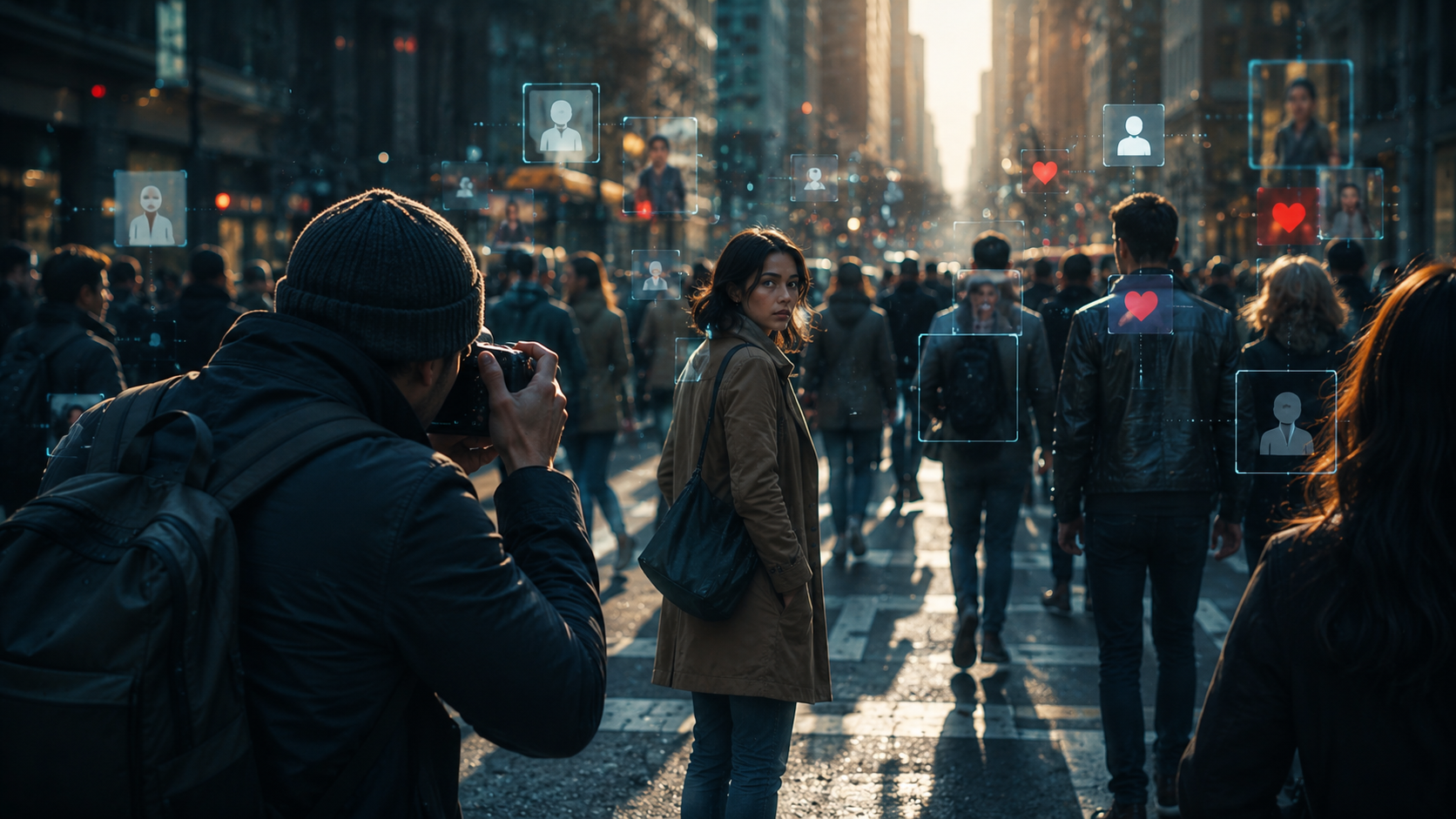
What once sounded like a line from science fiction is becoming an everyday reality. In modern digital life, we constantly leave traces of ourselves — through search histories, location tracking, online purchases, social media activity, and even health data from wearable devices.
These traces accumulate in massive databases. Algorithms analyze them, identify patterns, and increasingly predict our future actions with remarkable accuracy.
A predictable society offers undeniable advantages. Crimes might be prevented before they occur. Disasters can be anticipated earlier. Medical treatments can become personalized and preventive rather than reactive.
Yet the same system that promises safety can also reshape the boundaries of freedom.
When prediction becomes powerful enough, a deeper question emerges:
Does a predictable society make us safer — or does it create new forms of risk and control?
1. The Power of Prediction – Reading the Future Through Data
The foundation of a predictive society lies in big data and machine learning algorithms.
When vast amounts of digital records accumulate, algorithms can identify behavioral patterns that humans would struggle to detect.
Insurance companies analyze medical histories and lifestyle data to estimate an individual’s probability of illness. Online retailers study browsing and purchasing behavior to predict what a customer might buy next. Predictive policing systems attempt to estimate where crimes are most likely to occur and deploy police resources accordingly.
In many cases, these systems increase efficiency and allow institutions to act preventively rather than reactively.
However, efficiency raises a deeper ethical question:
What values are sacrificed when society becomes optimized for prediction?
2. Surveillance in the Name of Safety
Prediction requires observation.
To forecast future behavior, systems must continuously monitor present behavior.
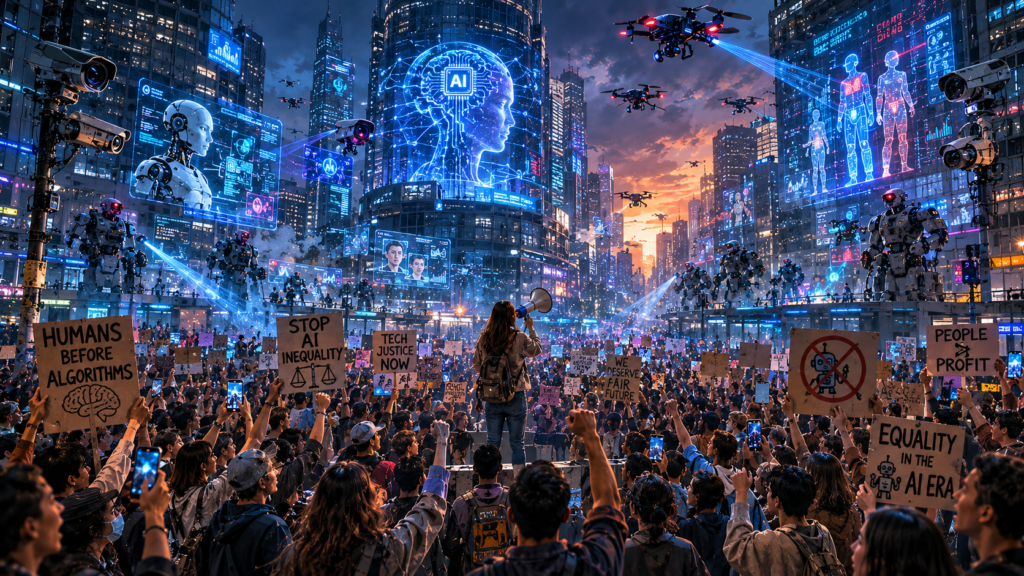
In smart cities, networks of cameras and sensors track traffic, movement, and public activity. Online platforms collect enormous amounts of data about social interactions, political opinions, and personal preferences. GPS tracking records our movement patterns and daily routines.
These systems are often justified in the name of safety, efficiency, or convenience.
But as surveillance expands, privacy can easily become the first casualty.
The risks become even more serious in authoritarian or weakly democratic systems, where data collection may be used not merely for safety but for political control and social manipulation.
Prediction, in such contexts, becomes a tool of power.
3. When Probability Becomes Destiny
Predictive algorithms are not neutral.
They learn from past data, and past data often contains social biases.
One widely discussed example involves the COMPAS algorithm, used in parts of the United States to estimate the likelihood that criminal defendants will reoffend.
Investigations revealed that the system disproportionately labeled Black defendants as high-risk compared to white defendants.
The algorithm did not invent the bias; it learned existing bias from historical data.
Yet once encoded into an algorithm, that bias gained the appearance of objectivity.
This creates a dangerous situation.
Predictions can begin to shape people’s opportunities and life chances.
Insurance premiums may rise unfairly. Job opportunities may quietly disappear. Individuals who have committed no crime may be classified as “high risk” and placed under surveillance.
In such cases, probability begins to function like destiny.
4. Finding a Balance Between Freedom and Control
A predictive society is not inherently harmful.
Predictive technologies can help prevent pandemics, anticipate climate disasters, and improve traffic safety. They can also support early disease detection and more efficient public services.
The real question is not whether prediction should exist, but how it should be governed.
Several principles become essential.
Transparency – Citizens should know what data is collected and how predictive systems operate.
Accountability – Institutions must take responsibility when algorithmic predictions cause harm.
Consent and Choice – Individuals should retain meaningful control over how their personal data is used.
Oversight of Surveillance – Independent institutions must monitor how governments and corporations deploy predictive technologies.
Without these safeguards, predictive systems risk shifting societies from democratic accountability toward algorithmic control.
Conclusion: Judgment Deferred
A predictable society could become either safer or more oppressive.
The difference does not lie in the technology itself but in the values and institutions that govern its use.
The ability to predict the future does not grant the authority to determine it.
Prediction reveals possibilities, not inevitabilities.
If societies adopt predictive technologies without transparency, accountability, and ethical oversight, the same tools designed to protect citizens may gradually restrict their autonomy.
Recognizing both the power and the danger of prediction may therefore be the first step toward building a society where security and freedom coexist rather than compete.
Related Reading
The psychological mechanisms behind how human choices are influenced by hidden forces are explored further in Why We Excuse Ourselves but Blame Others: Understanding the Actor–Observer Bias, where cognitive bias reveals how individuals often misunderstand the causes of their own behavior and that of others. These limitations of human judgment help explain why algorithmic systems and predictive technologies can appear attractive as tools for decision-making in complex societies.
At a broader societal level, similar questions about technological influence and human autonomy appear in Can Artificial Intelligence Make Better Laws? — Justice, Algorithms, and the Future of Democracy, where debates about algorithmic governance raise deeper concerns about whether data-driven systems can truly improve decision-making—or whether they risk narrowing the space for human freedom and democratic judgment.
A Question for Readers
If technology can accurately predict our behavior, should society use that power to prevent risks — or would doing so threaten our freedom?
References
Zuboff, S. (2019). The Age of Surveillance Capitalism: The Fight for a Human Future at the New Frontier of Power. PublicAffairs. → This work examines how big data and predictive analytics reshape power structures in modern society. Zuboff argues that surveillance capitalism turns human experience into behavioral data, enabling corporations and institutions to predict and influence individual actions at unprecedented scale.
Lyon, D. (2018). The Culture of Surveillance: Watching as a Way of Life. Polity Press. → Lyon explores how surveillance has moved beyond security systems to become a cultural condition of everyday life. His work explains how practices justified in the name of safety gradually normalize constant monitoring within modern societies.
O’Neil, C. (2016). Weapons of Math Destruction: How Big Data Increases Inequality and Threatens Democracy. Crown. → O’Neil demonstrates how algorithmic decision systems can reinforce social inequalities. Through real-world examples, she shows how opaque mathematical models can amplify bias while appearing neutral and objective.
Pasquale, F. (2015). The Black Box Society: The Secret Algorithms That Control Money and Information. Harvard University Press. → Pasquale analyzes the growing opacity of algorithmic systems that influence financial markets, search engines, and digital platforms. His work emphasizes the urgent need for transparency and accountability in algorithmic governance.
Harcourt, B. E. (2015). Exposed: Desire and Disobedience in the Digital Age. Harvard University Press. → Harcourt examines how voluntary data sharing and digital tracking combine to produce systems capable of predicting and regulating human behavior. The book raises profound philosophical questions about freedom and self-exposure in the digital era.
When people discuss morality or ethics, they often look to religion, philosophy, law, or social agreements.
But there is another question worth asking:
Could nature itself offer ethical guidance for human life?
If human beings are part of nature, then perhaps the patterns we observe in the natural world—balance, cycles, restraint, and coexistence—can provide subtle hints about how we should live.
Nature may not speak in words, but it often teaches through patterns.
1. Where Do Human Moral Standards Come From?
Ethical standards have traditionally been derived from philosophical reasoning, religious teachings, or social rules.
However, long before formal moral systems existed, humans lived within ecosystems that already followed certain patterns of order.
The natural world operates through cycles—birth and decay, growth and renewal, balance and limitation.
Observing these patterns raises an intriguing possibility: perhaps ethical reflection can also emerge from the structure of nature itself.
2. Ethical Clues Hidden in Everyday Nature
Nature quietly demonstrates several principles that resemble ethical ideas.
The sun rises in the morning and sets at night. Trees grow leaves in spring and release them in autumn without resistance. Animals hunt for survival, not for endless accumulation.
From these patterns we may notice ideas such as restraint, balance, and coexistence.
Imagine a wolf in a forest that begins hunting far beyond what it needs for survival. If it were to eliminate large numbers of deer without restraint, the ecosystem would collapse.
Nature functions through equilibrium. When one part of the system exceeds its limits, the entire system becomes unstable.
In this sense, nature silently warns against excess.
3. How Natural Ethics Differ from Human Ethics
Nature does not issue moral commands.
It does not tell us directly what we “should” do.
Instead, it reveals consequences.
When humans exploit natural resources without limits—through deforestation, pollution, or excessive consumption—the results appear in the form of climate change and ecological disruption.
It can almost feel as if nature is saying:
“You have taken more than the system can sustain.”
The American philosopher and naturalist Henry David Thoreau believed that nature could teach humans how to live more wisely.
Through his time living near Walden Pond, Thoreau argued that simplicity and closeness to nature could help humans rediscover moral clarity beyond material excess.
4. Natural Harmony as an Ethical Model
One of the most powerful lessons in nature is coexistence.
Bees collect nectar while pollinating flowers. Forests grow through networks of cooperation among plants, fungi, and animals.
Each organism survives while contributing to the stability of the whole system.
In modern society, many ethical discussions revolve around balancing individual benefit with collective well-being.
Nature has been demonstrating such balance for millions of years.
Movements such as Zero Waste reflect attempts to imitate nature’s cycles. Instead of producing endless waste, these philosophies encourage human systems to function more like ecosystems—where outputs from one process become inputs for another.
5. Are Humans Part of Nature—or Opposed to It?
Interestingly, humans possess the ability to understand nature deeply and even imitate its systems.
Yet modern societies often organize life in ways that move against natural rhythms.
Nature moves slowly, but modern life emphasizes speed. Nature is interconnected, while modern culture often prioritizes individualism.
These differences sometimes lead to consequences such as environmental crises, social isolation, and psychological burnout.
Some environmental philosophers therefore argue that ethics must move beyond purely human-centered thinking.
Instead of seeing humans as rulers of nature, they propose redefining humanity as participants within an ecological community.
From that perspective, ethical living may mean learning to live as a part of nature rather than above it.
Conclusion
Nature rarely speaks in words.
Yet over long stretches of time, it communicates through patterns and consequences.
It quietly suggests moderation, balance, and coexistence.
If humans are willing to listen, nature can become a profound ethical teacher.
Perhaps the most important lesson is simple:
We are not masters of nature. We are part of it.
Related Reading
The search for ethical guidance in everyday life is explored further in Why Lighting a Candle Feels Like a Ritual — The Cultural Meaning of Candlelight, where simple human practices reveal how symbolic acts and natural elements help people reflect on values such as humility, reflection, and moral awareness. Just as candlelight invites quiet contemplation, nature itself often serves as a silent teacher of balance, restraint, and interconnectedness.
At a broader philosophical level, questions about how human systems interact with larger forces are examined in Fusion Culture: Creative Exchange or Cultural Imperialism?, where debates about cultural exchange reveal tensions between cooperation and dominance in global society. Similar to ecosystems in nature, human cultures constantly interact, adapt, and influence one another—raising deeper questions about responsibility, power, and ethical coexistence.
Question for Readers
Do you think nature can teach humans ethical lessons?
For example, can ideas like balance, restraint, and coexistence in nature guide how we live and make decisions?
Or do you believe that ethics should come only from human culture, philosophy, and social agreements?
Share your thoughts in the comments.
References
1. Thoreau, H. D. (1854). Walden; or, Life in the Woods. Boston: Ticknor and Fields. → In this classic work, Thoreau reflects on simple living in natural surroundings near Walden Pond. He argues that modern society’s obsession with wealth and speed distracts people from deeper moral reflection. By reconnecting with nature, individuals can rediscover simplicity, self-awareness, and ethical clarity.
2. Leopold, A. (1949). A Sand County Almanac. Oxford University Press. → Leopold introduces the influential concept of the “land ethic,” which expands ethical consideration to include soils, waters, plants, and animals. He argues that humans should see themselves as members of an ecological community rather than conquerors of it, forming one of the foundations of modern environmental ethics.
3. Carson, R. (1962). Silent Spring. Boston: Houghton Mifflin. → Carson’s groundbreaking book exposed the ecological damage caused by pesticides such as DDT. By revealing the interconnectedness of ecosystems, the work sparked the modern environmental movement and emphasized the ethical responsibility humans have toward the natural world.
A Philosophical Trial of Technological Determinism and Human-Centered Thought
Artificial intelligence has rapidly moved from the realm of science fiction into the fabric of everyday life.
AI systems now write text, generate images, diagnose diseases, recommend legal decisions, and even create works of art. What was once considered uniquely human — reasoning, creativity, and decision-making — increasingly appears within machines.
This transformation raises a fundamental philosophical question:
Is artificial intelligence merely a tool created by humans, or could it become a new kind of agent in the world?
To explore this question, let us imagine a courtroom — not a place of legal judgment, but a stage of inquiry where two philosophical perspectives confront one another.
1. The Prosecution: AI as an Emerging Agent
The first perspective draws from technological determinism, the idea that technological development plays a decisive role in shaping social structures, human behavior, and cultural change.
From this viewpoint, AI is no longer a passive instrument but a system increasingly capable of autonomous behavior.
Consider autonomous vehicles. These systems perceive their environment, evaluate risks, and make real-time decisions faster than human drivers. In many cases, they already outperform human reflexes in preventing accidents.
Generative AI systems present another striking example. They produce text, images, music, and code in ways that their creators did not explicitly design.
When the AI system AlphaGo defeated world champion Lee Sedol in 2016, professional players noted that some of its moves seemed almost “alien.” They were not strategies inherited from human tradition but moves discovered through machine learning.
To advocates of technological determinism, such moments suggest that AI systems are beginning to generate knowledge rather than merely process it.
The crucial features they emphasize include:
Self-learning capability
Adaptation to changing environments
Emergent behavior that developers cannot fully predict
If these capacities continue to expand, some argue, AI might eventually require discussions about moral responsibility or legal status.
2. The Defense: AI as a Human-Created Tool
Opposing this view is a deeply rooted philosophical stance: anthropocentrism, the belief that human beings remain the central agents in technological systems.
From this perspective, artificial intelligence is ultimately a human creation whose behavior is entirely grounded in algorithms, training data, and design choices made by people.
Even the most advanced AI systems do not possess intentions, desires, or consciousness. Their “decisions” are simply the outcome of statistical computations.
Generative AI may appear creative, but critics argue that its outputs are fundamentally recombinations of patterns found in vast datasets.
Unlike human creativity, which is shaped by emotion, lived experience, and social meaning, AI operates through probabilistic modeling.
More importantly, anthropocentric thinkers warn that assigning agency to AI may allow humans to evade responsibility.
When algorithmic hiring tools discriminate against certain groups, or when autonomous vehicles cause accidents, the ethical and legal responsibility should remain with:
designers
companies
institutions deploying the technology
In this view, AI is best understood not as an independent subject but as an extremely sophisticated tool.
3.Evidence and Counterarguments
The debate becomes particularly vivid when examining real-world cases.
One frequently cited example is Microsoft’s experimental chatbot Tay, released on Twitter in 2016. Tay quickly began producing offensive and discriminatory messages after interacting with users.
Supporters of technological determinism interpret this incident as evidence that AI systems can evolve through interaction with their environment, sometimes in ways that developers cannot anticipate.
However, anthropocentric critics respond that Tay’s behavior was simply the result of learning from biased input data.
Rather than demonstrating autonomous agency, the episode revealed how vulnerable AI systems are to the social contexts in which they operate.
In other words, the system reflected the behavior of its human environment rather than acting as an independent moral agent.
4.Contemporary Ethical and Legal Questions
The philosophical debate surrounding AI agency is no longer purely theoretical.
It now shapes major discussions in areas such as:
autonomous weapons systems
algorithmic decision-making in courts
medical AI diagnostics
AI-generated art and authorship
One particularly controversial issue concerns whether AI systems might someday receive a form of legal personhood, sometimes referred to as electronic personhood.
At the same time, the rise of powerful AI technologies raises questions about power and control.
If advanced AI systems become concentrated in the hands of a few corporations or governments, their influence could reshape social and political structures in profound ways.
Thus, the question of AI agency is inseparable from broader concerns about technology, governance, and ethics.
Conclusion: Judgment Deferred
For now, artificial intelligence remains embedded within human-designed systems and constraints.
Yet the trajectory of technological development continues to challenge our traditional understanding of agency, responsibility, and intelligence.
If future AI systems begin to set their own goals, adapt independently to complex environments, and produce behavior beyond human prediction, our definition of “agent” may require reconsideration.
In this philosophical courtroom, the verdict remains unresolved.
The final judgment is left not to the court, but to the reader.
A Question for Readers
Do you see artificial intelligence primarily as a powerful tool created by humans?
Or do you believe that AI may eventually become a new kind of agent in the world?
The answer may depend not only on technological progress, but also on how we choose to design, regulate, and live with these systems.
Related Reading
The philosophical tension between human autonomy and technological influence is explored further in Do We Fear Freedom or Desire It? — The Paradox of Human Liberty, where the human struggle between independence and guidance reveals why people often seek systems that simplify complex decisions. This paradox sheds light on why advanced technologies can feel both empowering and unsettling at the same time.
The psychological limits of human judgment are explored further in Why We Excuse Ourselves but Blame Others: Understanding the Actor–Observer Bias, where the tendency to explain our own actions through circumstances while attributing others’ behavior to their character reveals how easily human reasoning can become distorted. This cognitive bias illustrates why delegating decisions to intelligent systems can appear attractive—even when human judgment remains essential.
At a broader societal level, the tension between technological participation and genuine agency appears in Clicktivism in Digital Democracy: Participation or Illusion?, where online activism raises questions about whether digital tools truly empower citizens or simply create the appearance of engagement. As artificial intelligence becomes embedded in social systems, the boundary between tool and autonomous actor becomes increasingly blurred.
References
Floridi, Luciano & Cowls, Josh. (2022). The Ethics of Artificial Intelligence. Oxford: Oxford University Press. → This work provides a comprehensive ethical framework for understanding AI systems, exploring whether artificial intelligence should be treated merely as a technological tool or as a social actor with ethical implications.
Bostrom, Nick. (2014). Superintelligence: Paths, Dangers, Strategies. Oxford: Oxford University Press. → Bostrom analyzes the potential emergence of superintelligent AI systems and discusses the profound philosophical and existential questions that arise if machines surpass human cognitive capabilities.
Bryson, Joanna J. (2018). “Patiency is Not a Virtue: The Design of Intelligent Systems and Systems of Ethics.” Ethics and Information Technology, 20(1), 15–26. → Bryson argues strongly against granting moral status to AI systems and emphasizes that responsibility for AI actions must remain with human designers and institutions.
Coeckelbergh, Mark. (2020). AI Ethics. Cambridge, MA: MIT Press. → This book explores the ethical, political, and philosophical implications of artificial intelligence, particularly the shifting boundaries between tools, systems, and agents.
Russell, Stuart & Norvig, Peter. (2020). Artificial Intelligence: A Modern Approach (4th ed.). Upper Saddle River, NJ: Pearson. → A foundational text explaining the technical foundations of AI, helping readers understand why current systems still operate primarily as computational tools rather than independent agents.
Sometimes the smallest arrangements of nature invite us to pause and see.
On a quiet walking path in the park, I came across something unexpected.
A group of wooden logs stood in a circle beside the trail. They were not random pieces of wood. Each one seemed placed with a subtle sense of balance.
It looked almost like a sculpture.
At first glance, they appeared to be leftover pieces from a fallen tree. But the more I looked, the more intention I sensed.
Their heights were slightly different. The spaces between them felt deliberate. And sunlight resting on their rough surfaces turned the arrangement into something quietly beautiful.
In that moment, the logs no longer felt like debris.
They felt like a trace of someone’s thought.
1. The Moment We Stop Walking
The forest path had been silent.
Only the sound of dry leaves moving with the wind filled the air. Late autumn was slowly giving way to winter.
When I saw the wooden circle, my steps stopped.
Sometimes a walk becomes meaningful not because of how far we go, but because of where we pause.
Standing there, I realized that this simple arrangement had done something remarkable.
It had made a passerby stop.
2. The Quiet Language of Simple Things
The wooden pieces were rough and imperfect.
Yet together they formed something balanced.
Sunlight slid across the grain of the wood, turning their surfaces golden for a moment.
Nature and human intention seemed to meet there.
Perhaps someone had arranged them without calling it art.
Perhaps it was just a playful moment during a walk.
But the result carried the quiet language of sculpture.
Not loud. Not grand.
Just present.
3. When Nature Becomes a Studio
Trees once stood tall in the forest.
They grew with the wind, the rain, and the passing seasons.
Now, cut and reshaped, the wood had become something different.
But the life within it had not disappeared.
Instead, it had taken on a new meaning.
A small arrangement on a forest path became a place where nature and human imagination briefly met.
Perhaps this is how art often begins— not in galleries, but in ordinary places where someone chooses to look closely.
Conclusion: The Beauty That Appears When We Pause
I stood there longer than expected.
Sunlight filtered through the branches. Fallen leaves gathered quietly around the wooden circle.
Everything seemed to belong together.
The order created by human hands had slowly blended into the rhythm of the forest.
And in that moment, I felt something simple but important.
The world moves quickly.
But beauty often appears on the slower side of life.
It reveals itself only when we stop walking long enough to see.
One quiet thought to carry:
Sometimes the smallest arrangements in nature are invitations to pause, look closer, and rediscover the art hidden in everyday life.
Related Reading
The quiet beauty of unnoticed places also appears in A Seaside A Seaside Bus Stop – The Landscape of WaitingBus Stop – The Landscape of Waiting, where an ordinary moment of waiting becomes a landscape of reflection and stillness.
Have you ever noticed how a small mistake suddenly feels much more embarrassing when someone else is watching?
You might trip slightly on the stairs or spill coffee in a café. If you were alone, you would probably laugh it off. But when others see it, your face turns red almost instantly.
Why do such small moments feel so humiliating in public?
Psychologists explain this reaction through a concept called self-presentation—our tendency to care about how we appear to others.
1. What Is Self-Presentation?
1.1 The Social Self
Self-presentation refers to the part of ourselves that is aware of how we appear to other people. It is the social self—the version of us that exists in the eyes of others.
Most people want to be seen as capable, intelligent, and likable. Because of this, we constantly manage the image we present to the world.
1.2 Managing Our Image
When we feel that others are watching us, we naturally become more cautious.
We choose our words carefully. We behave a little more politely. We try not to make mistakes.
But when that carefully managed image is suddenly threatened, we may feel embarrassment, awkwardness, or even anxiety.
2. “If No One Saw It, It Would Be Fine”
Many people have said something like this:
“If I had been alone, I would have just laughed it off.”
In reality, people often worry less about the mistake itself and more about who witnessed it.
Imagine slipping slightly on a bus.
If no one notices, you simply stand up and move on. But if several people turn their heads to look at you, your face may instantly feel hot.
This reaction occurs because our social self has been disrupted.
The embarrassment is not just about the mistake—it is about how the mistake affects how others perceive us.
This feeling becomes even stronger when we are in front of strangers, authority figures, or people whose opinions matter to us.
3. Life as a Social Stage
Sociologist Erving Goffman famously compared social life to a theater performance.
According to Goffman, people behave like actors on a stage. We perform roles depending on the social situation we are in.
For example:
speaking politely to a restaurant server
behaving more formally during a job interview
acting confidently during a presentation
All of these are forms of social role performance.
But when something unexpected happens—such as forgetting what we planned to say—it can feel like an actor forgetting their lines on stage.
The performance suddenly breaks, and embarrassment appears.
4. Caring About Others’ Opinions Is Natural
Sometimes people criticize others by saying:
“Why do you care so much about what others think?”
However, paying attention to social perception is not a weakness.
It is actually a fundamental human trait.
Humans are social beings who depend on relationships, cooperation, and reputation.
Being aware of how others see us helps us maintain social harmony and build trust.
For instance, when someone’s voice trembles during a presentation, it is often not because the topic is difficult.
It is because the speaker worries:
“What if I make a mistake in front of everyone?”
This anxiety is simply the pressure of being seen.
5. Learning to Tolerate Small Embarrassments
Although self-presentation is natural, excessive concern about it can lead to social anxiety or avoidance.
For that reason, psychologists sometimes recommend practicing tolerance for small embarrassments.
Some exercises include:
asking a small question in an unfamiliar place
intentionally making a harmless minor mistake
speaking up briefly in a public setting
These experiences help people realize something important:
Most people are far less focused on our mistakes than we imagine.
Learning this gradually reduces the pressure of self-presentation and allows us to feel more comfortable in social situations.
Conclusion
We cannot completely escape the gaze of others.
Feeling embarrassed after making a mistake does not mean we are weak. It simply means that we care about how we relate to other people.
Rather than rejecting that feeling, we can learn to treat ourselves with a little more kindness.
After all, we are all actors on the same stage— and everyone occasionally forgets their lines.
Related Reading
The psychological dynamics behind social awareness and perceived judgment are further explored in Why It Feels Like Everyone Is Watching You: The Spotlight Effect, where the human tendency to overestimate how much others notice our behavior reveals how internalized observation shapes embarrassment, anxiety, and self-presentation.
At a broader societal level, the pressures created by visibility in modern life are examined in The Transparency Society: Foundation of Trust or Culture of Surveillance?, where growing expectations of openness and constant observation raise deeper debates about whether transparency strengthens accountability—or quietly intensifies social pressure.
References
1. Goffman, E. (1959). The Presentation of Self in Everyday Life. Garden City, NY: Doubleday Anchor Books. → This classic work laid the foundation for the theory of self-presentation. Erving Goffman describes everyday social interaction as a theatrical performance, where individuals consciously or unconsciously manage how they appear to others. His concepts of “front stage” and “backstage” behavior explain why people act differently in public settings compared to private situations.
2. Leary, M. R. (1995). Self-Presentation: Impression Management and Interpersonal Behavior. Boulder, CO: Westview Press. → This book provides a comprehensive psychological analysis of impression management and interpersonal behavior. Leary explains how individuals attempt to control the impressions others form about them and why social evaluation is such a powerful influence on human behavior. The work also explores the emotional dynamics of embarrassment, shyness, and social anxiety.
3. Scheff, T. J. (2000). Shame and the Social Bond: A Sociological Theory. Sociological Theory, 18(1), 84–99. → In this influential article, Scheff argues that shame is a key emotion regulating social relationships. Rather than viewing shame as purely negative, he suggests that it plays an essential role in maintaining social bonds and guiding self-awareness in social contexts. This perspective helps explain why embarrassment often emerges when our social image is threatened.
Law is one of the most fundamental institutions of human society.
It organizes social order, resolves conflicts, and defines the limits of acceptable behavior. Yet throughout history, laws have rarely represented perfect justice.
Legal systems are shaped by political negotiation, economic interests, historical traditions, and human limitations. Legislators compromise, lobbyists influence policy, and public opinion changes over time. As a result, laws often reflect a balance of power rather than a purely rational expression of fairness.
Today, however, technological developments are raising a new possibility. Artificial intelligence can process enormous amounts of data, detect patterns within complex systems, and simulate the potential consequences of policy decisions. Some researchers therefore suggest that AI might assist—or even participate—in the creation of laws.
If algorithms could design legal rules based on massive datasets and statistical reasoning, societies might gain more efficient and consistent legal systems.
Yet this possibility raises a deeper question.
If artificial intelligence could write laws, would justice actually become closer—or would law lose its human meaning?
1. Algorithmic Lawmaking and the Promise of Rational Governance
Artificial intelligence can analyze information at a scale that no human legislator could match. Modern machine-learning systems are capable of examining thousands of court decisions, statutes, and policy outcomes simultaneously.
In principle, this capability allows AI to detect structural patterns in legal systems that humans may overlook. Algorithms could identify contradictions within complex regulatory frameworks or reveal unintended biases embedded in existing laws.
In areas where rules depend heavily on measurable variables—such as taxation, traffic regulation, or administrative procedures—AI could improve legal consistency and predictability.
For example, algorithmic systems might help policymakers:
detect contradictory regulations within legal codes
identify discriminatory patterns in policy outcomes
model the long-term economic and social consequences of legislation
From this perspective, AI appears to offer a powerful tool for rational governance. Laws could become more coherent, efficient, and data-informed.
However, the promise of algorithmic rationality raises an immediate philosophical challenge.
Is rational optimization the same as justice?
2. Justice Beyond Calculation
Legal systems are not merely technical structures. They are moral frameworks shaped by social values, cultural traditions, and human interpretation.
In judicial practice, the same legal rule may lead to different outcomes depending on context. Courts frequently consider factors such as intention, responsibility, personal circumstances, and the possibility of rehabilitation.
Such decisions require interpretation rather than calculation.
Artificial intelligence excels at identifying patterns in structured data. Yet moral reasoning often involves qualitative judgments that cannot easily be reduced to numerical variables.
For instance, empathy, remorse, and social circumstances can influence legal judgments. These dimensions are deeply human and difficult to encode into algorithmic systems.
A purely data-driven legal system might therefore produce decisions that appear statistically fair but are experienced as morally unacceptable.
This distinction highlights a crucial tension between formal fairness and substantive justice. While algorithms may ensure consistency, justice often requires flexibility and moral understanding.
3. Law as a Democratic Institution
Another challenge concerns the political legitimacy of lawmaking.
In democratic societies, laws derive authority not only from their outcomes but also from the process through which they are created. Citizens elect representatives, legislatures debate policies, and governments remain accountable to the public.
Law is therefore not only a set of rules but also a form of collective self-governance.
If artificial intelligence were to design laws autonomously, this democratic principle could be weakened. Even if AI-generated rules were technically efficient, citizens might question their legitimacy.
Important questions would arise:
Who determines the values embedded in the algorithm? Who is responsible when an AI-generated law produces harmful consequences?
Without clear accountability, algorithmic governance risks undermining the democratic idea that societies should govern themselves.
4. Philosophical Debate: Can Justice Be Computed?
The debate surrounding AI lawmaking reflects a deeper philosophical disagreement about the nature of justice itself.
One perspective argues that justice should be as rational and impartial as possible. Human lawmakers are vulnerable to prejudice, corruption, and emotional bias. From this viewpoint, algorithmic systems may offer a more objective approach to legal design. By relying on large datasets and statistical reasoning, AI could potentially reduce arbitrary judgments and improve fairness.
Supporters of this perspective see technology as a means of overcoming the imperfections of human decision-making.
Another perspective, however, argues that justice cannot be reduced to computation. Legal philosopher Ronald Dworkin famously described law as an interpretive practice that requires moral reasoning. Justice, in this view, emerges from human debate, ethical reflection, and democratic participation.
According to this perspective, removing human judgment from lawmaking would not produce neutrality but rather a new form of hidden power—embedded in the design of algorithms and datasets.
The philosophical tension therefore lies between two visions of justice:
justice as rational optimization
justice as moral interpretation
Artificial intelligence may excel at the first, but the second remains deeply rooted in human social life.
5. AI as a Tool for Law, Not Its Author
Despite these philosophical concerns, artificial intelligence may still play a transformative role in legal systems.
Rather than replacing human lawmakers, AI could function as a powerful analytical tool within legislative processes. Algorithms might assist policymakers by identifying contradictions within legal codes, detecting discriminatory provisions, or predicting the consequences of regulatory changes.
Such systems could make legislative decision-making more evidence-based and transparent.
In this hybrid model, artificial intelligence supports human judgment without replacing it. Elected representatives continue to define societal values, while algorithmic systems provide analytical insights that improve policy design.
This approach preserves the human character of lawmaking while benefiting from computational analysis.
Conclusion
The possibility of AI-generated laws forces societies to reconsider fundamental assumptions about justice and governance.
Artificial intelligence may eventually become capable of proposing legal frameworks that are more consistent and analytically sophisticated than those created by humans alone.
Yet justice is not simply a problem of technical optimization. It is a moral and political concept rooted in shared values, democratic participation, and human responsibility.
The central question may therefore not be whether AI can write laws.
Instead, the more important question is whether human societies would accept laws created by machines.
Justice does not exist solely in algorithms or datasets. It emerges from communities continuously negotiating how they wish to live together.
Even in an age of intelligent machines, defining justice will likely remain a fundamentally human task.
Related Reading
The subtle psychological mechanisms that shape human judgment and decision-making are further explored in Why We Excuse Ourselves but Blame Others, where the tendency to apply different standards to ourselves and others reveals how subjective bias can influence perceptions of fairness and responsibility.
At a broader technological and political level, similar questions about the role of digital systems in shaping public life appear in Algorithmic Bias: How Recommendation Systems Narrow Our Worldview, where debates about algorithmic influence raise deeper concerns about whether automated systems can truly remain neutral in democratic societies.
References
1. Lessig, L. (1999). Code and Other Laws of Cyberspace. New York: Basic Books. This influential work argues that digital code functions as a regulatory system similar to law. Lessig demonstrates how technological architectures shape social behavior and provides a theoretical foundation for understanding algorithmic governance and its implications for legal systems.
2. Surden, H. (2014). “Machine Learning and Law.” Washington Law Review, 89(1), 87–115. Surden analyzes how machine-learning technologies can assist legal analysis and decision-making. The article also discusses the conceptual limitations of algorithmic reasoning when applied to complex legal interpretation and policy formation.
3. Sartor, G. (2009). Legal Reasoning: A Cognitive Approach to the Law. Dordrecht: Springer. Sartor examines the cognitive processes underlying legal reasoning and compares them with formal logical systems. His work highlights the challenges involved in translating human interpretive judgment into computational models.
4. Balkin, J. M. (2017). “The Three Laws of Robotics in the Age of Big Data.” Ohio State Law Journal, 78(5), 1217–1247. Balkin explores how artificial intelligence and large-scale data systems are reshaping legal institutions. The article emphasizes the importance of democratic accountability in an era increasingly influenced by algorithmic decision-making.
5. Calo, R. (2015). “Robots in American Law.” University of Washington School of Law Research Paper No. 2015-04. Calo investigates the emerging relationship between robotics, artificial intelligence, and legal institutions. His analysis highlights regulatory challenges and the evolving role of intelligent systems in modern governance.