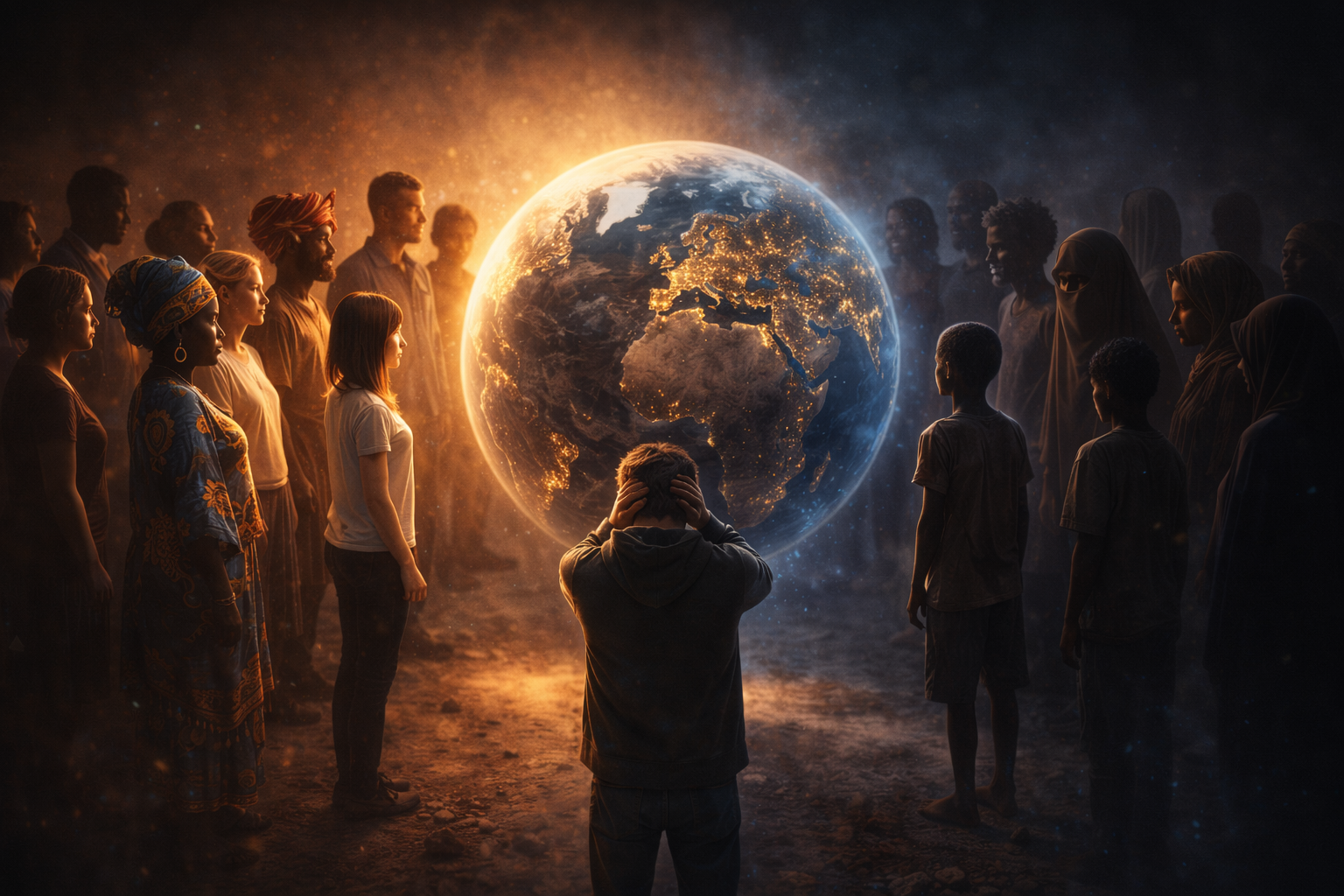
Human rights are no longer distant issues.
In today’s interconnected world, concerns about human rights—
from freedom of expression to labor conditions and minority protections—
are gaining global attention.
More people are speaking out.
More organizations are monitoring abuses.
And more institutions are being held accountable.
But why is this shift happening now—
and where is it leading us?
1. Why Global Awareness of Human Rights Is Increasing
In the past, human rights violations were often seen as local issues.
Today, they are global concerns.
The Role of Social Media
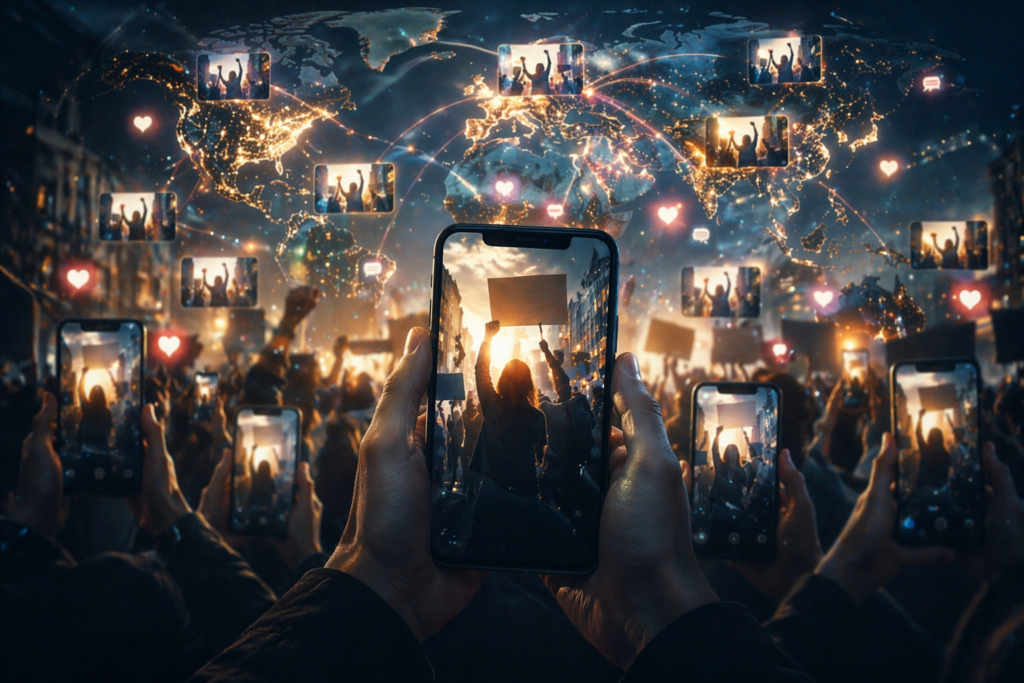
Social media has transformed visibility.
Events that once remained hidden
can now spread worldwide in real time.
The 2020 George Floyd case sparked the global expansion
of the Black Lives Matter movement,
leading to protests across continents.
Digital platforms have made it possible
for individuals to share experiences—
and for the world to respond.
The Growing Influence of Civil Society
Organizations such as Amnesty International
and Human Rights Watch play a critical role.
They:
- Monitor violations
- Publish reports
- Pressure governments and corporations
Civil society movements are also expanding,
making it harder for institutions
to ignore human rights issues.
Global Events as Turning Points
Major events often expose hidden problems.
The 2022 FIFA World Cup in Qatar
brought attention to migrant workers’ conditions,
forcing international scrutiny and response.
Human rights are no longer abstract—
they are increasingly visible and measurable.
2. Key Human Rights Issues Today
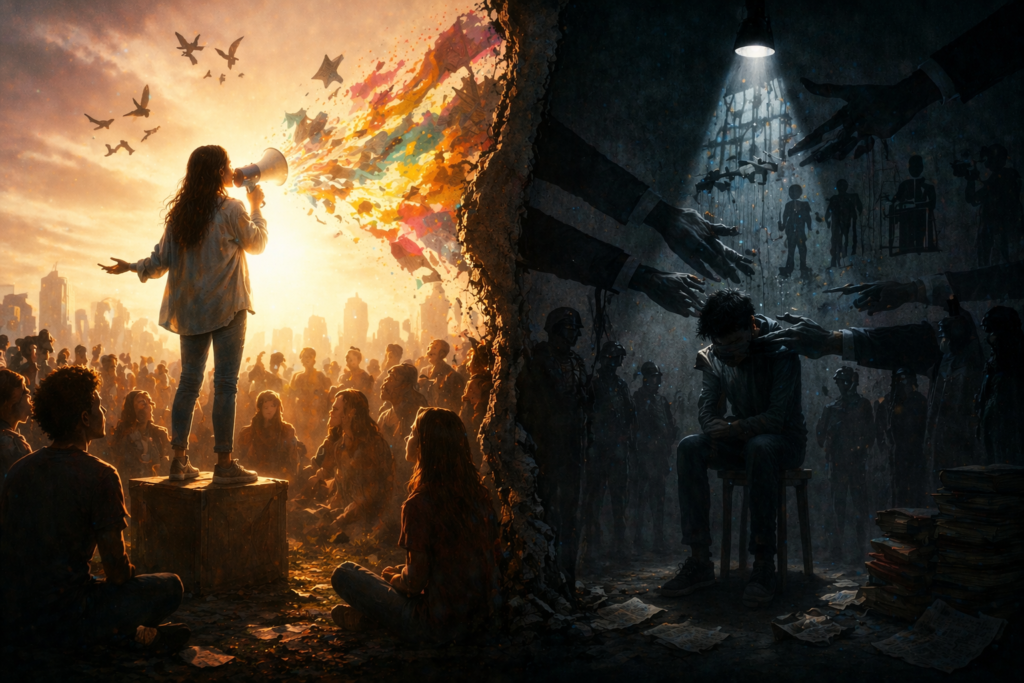
Human rights discussions now span multiple domains.
Minority Rights
This includes:
- LGBTQ+ rights
- Women’s rights
- Disability rights
While progress has been made in some regions,
significant disparities remain globally.
In some countries, same-sex relationships remain illegal.
In others, gender equality is still restricted by policy and culture.
Freedom of Expression
Freedom of speech is still under threat.
In several countries, journalists and activists face:
- Censorship
- Arrest
- Surveillance
Recent geopolitical conflicts have intensified concerns
about the suppression of dissenting voices.
Labor Rights and Corporate Responsibility
Despite progress, labor exploitation persists.
Issues include:
- Forced labor
- Unsafe working conditions
- Unfair wages
Industries such as fast fashion and electronics
continue to face scrutiny over supply chains.
Increasingly, global corporations are expected
to ensure ethical production.
3. How the Global System Is Responding
As awareness grows, responses are evolving.
Strengthening International Frameworks
Organizations like the United Nations
are expanding monitoring and enforcement efforts.
The International Criminal Court (ICC)
is also working to address war crimes
and crimes against humanity.
National Policy Changes
Countries are introducing new regulations:
- Human rights due diligence laws
- Corporate accountability measures
The EU and other regions are leading efforts
to link business practices with human rights standards.
Linking Human Rights and Sustainability
Human rights are increasingly connected
to environmental and economic issues.
Climate change, for example,
disproportionately affects vulnerable populations.
This has led to new discussions around:
- Climate justice
- Indigenous rights
- Ethical development
4. What This Means for the Future
Human rights are no longer optional considerations.
They are becoming central
to how societies evaluate progress.
But this shift also raises deeper questions:
Are we witnessing genuine change—
or simply greater visibility?
Is awareness enough—
or must it translate into structural transformation?
Conclusion

Global attention to human rights is growing.
This is a sign of progress—
but also a test.
Visibility creates accountability,
but it does not guarantee justice.
The future of human rights
depends not only on awareness,
but on action.
So the real question is:
What role do we play
in shaping a more just world?
Question for Readers
Do you think awareness alone can change the world—or does real change require something more?
Related Reading
As global awareness of human rights grows, are we truly understanding injustice—or simply reacting to what is most visible?
In Is There a Single Historical Truth, or Many Narratives?, we explore how truth itself can be shaped by power, perspective, and interpretation—suggesting that even human rights issues may be framed differently depending on who tells the story.
What if the way we perceive injustice is not entirely our own—but influenced by the systems around us?
In How Search Boxes Shape What We Think, we examine how algorithms guide attention and awareness, revealing that even global issues like human rights may be amplified—or overlooked—based on invisible digital structures.
References
- Donnelly, J. (2013). Universal Human Rights in Theory and Practice. Cornell University Press.
This book provides a comprehensive theoretical foundation for understanding human rights, explaining how universal principles are interpreted and applied across different cultural and political contexts. - Forsythe, D. P. (2017). Human Rights in International Relations. Cambridge University Press.
Forsythe examines how human rights operate within global politics, highlighting the roles of international organizations, states, and NGOs in shaping human rights discourse and enforcement. - Clapham, A. (2007). Human Rights: A Very Short Introduction. Oxford University Press.
This concise introduction outlines the evolution of human rights concepts and explores key contemporary issues, making it accessible while maintaining analytical depth.
Leave a Reply