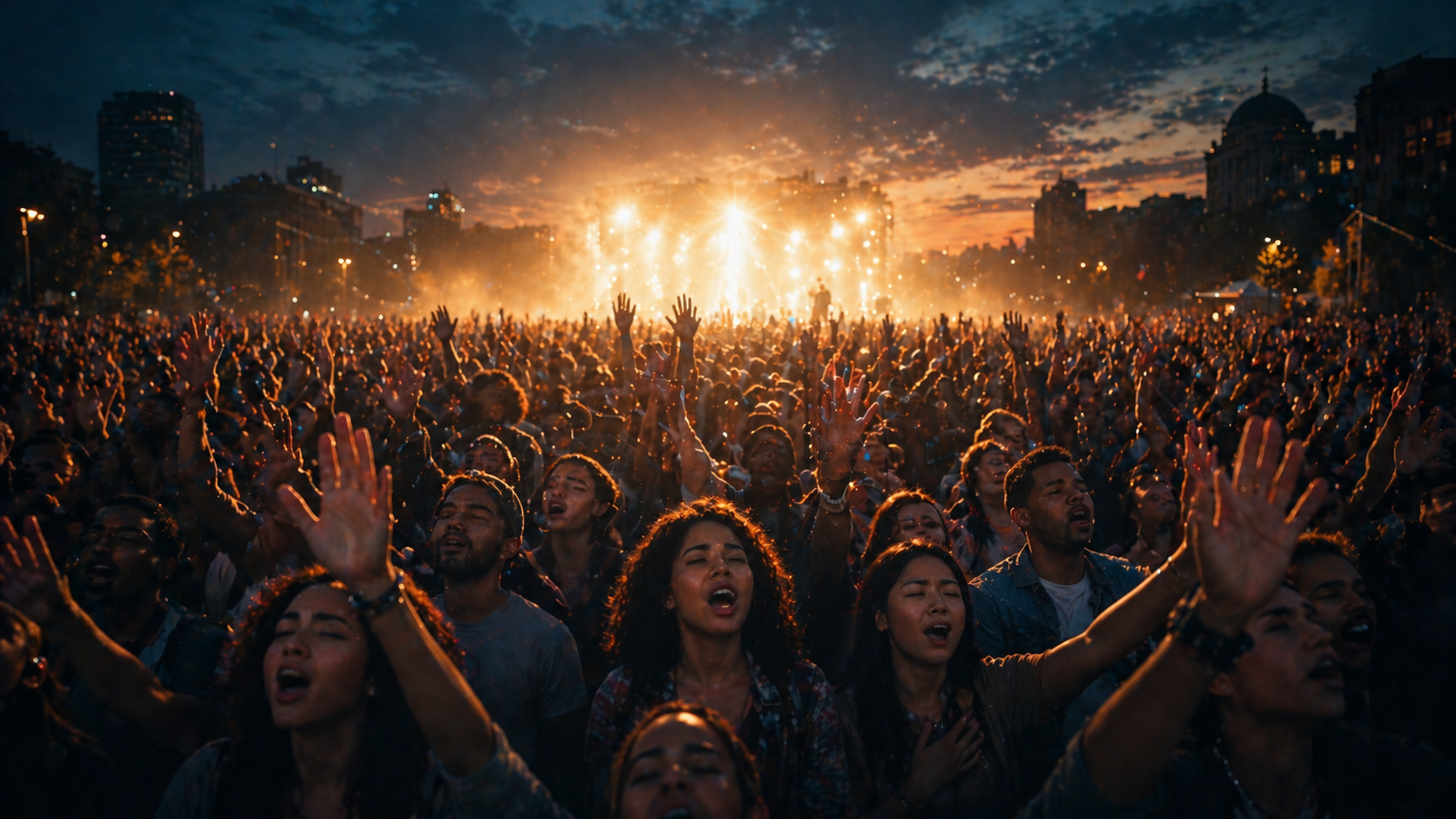
Music is often seen as entertainment—a background to our daily lives.
But history tells a different story.
Songs have sparked movements, united strangers, and given voice to those who had none.
From civil rights marches to global protests, music has not only reflected change—it has helped create it.
So the question is:
How does music move people from emotion to action—and can it still shape the world today?

1. Why Music Becomes a Force for Social Change
Music has a unique ability to translate emotion into collective energy.
Unlike speeches or written texts, songs are remembered, repeated, and shared.
A melody can carry a message across borders, cultures, and generations.
During times of crisis or injustice, music often becomes the emotional language of resistance.
For example, “We Shall Overcome” during the American Civil Rights Movement was more than a song—it was a unifying force that turned fear into solidarity.
Music does not just communicate ideas.
It makes people feel those ideas—and feeling is often what leads to action.
2. How Music Connects Individuals to Collective Action
Emotional Resonance
Music reaches places words alone cannot.
When people face oppression or inequality, music becomes a way to process anger, hope, and grief.
This emotional release creates a sense of shared experience.
John Lennon’s “Imagine” did not demand change directly.
Instead, it invited listeners to envision a different world—making transformation feel possible.
Symbol and Identity
Some songs become symbols of entire movements.
In South Africa, “Nkosi Sikelel’ iAfrika” became a powerful anthem during the anti-apartheid struggle.
It unified people not just through lyrics, but through identity.
Singing the same song means sharing the same purpose.
From Sound to Action
Music transforms passive listeners into active participants.
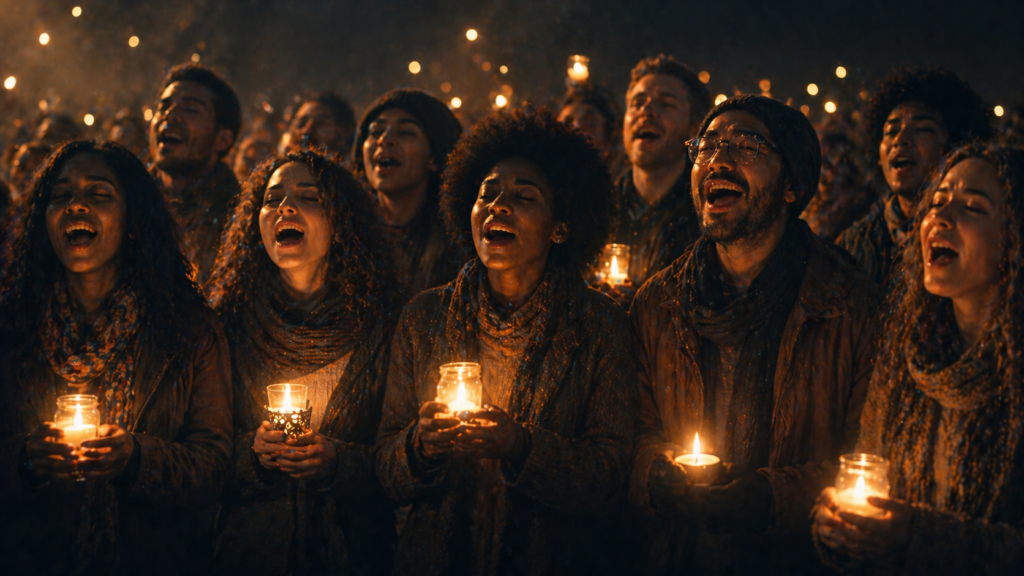
At protests, concerts, or gatherings, singing together creates rhythm, unity, and momentum.
Even songs not originally political—like “We Will Rock You”—can generate collective energy powerful enough to reinforce group identity.
3. The Core Elements of Revolutionary Music
Powerful Lyrics
Revolutionary songs often contain clear and direct messages.
Billie Holiday’s “Strange Fruit” confronted racial violence in a way that forced audiences to face uncomfortable truths.
The strength of such music lies in its honesty.
Rhythm and Psychological Impact
Sound shapes emotion.
Fast beats can energize crowds.
Slow melodies can deepen reflection.
Music works on both the conscious and subconscious levels—making it a uniquely powerful tool for influence.
Collective Experience
Music is rarely consumed alone in moments of change.
It is sung together, repeated together, and felt together.
This shared experience is what turns music into movement.
4. Music in the Modern World: Still Powerful?
Today, music spreads faster than ever through digital platforms.
However, its role has evolved.
Songs like BTS’s “Not Today” show how modern music still carries messages of resistance and empowerment—especially among younger generations.
At the same time, music now competes with countless forms of media, which can dilute its impact.
So while music remains influential, its power depends on how deeply it connects—not just how widely it spreads.
5. Where Is the Line Between Expression and Change?
Music alone does not create revolutions.
But it creates the conditions for them.
It inspires, unites, and amplifies voices—but real change requires action beyond the song.
Still, without music, many movements might never have found their emotional core.
Conclusion
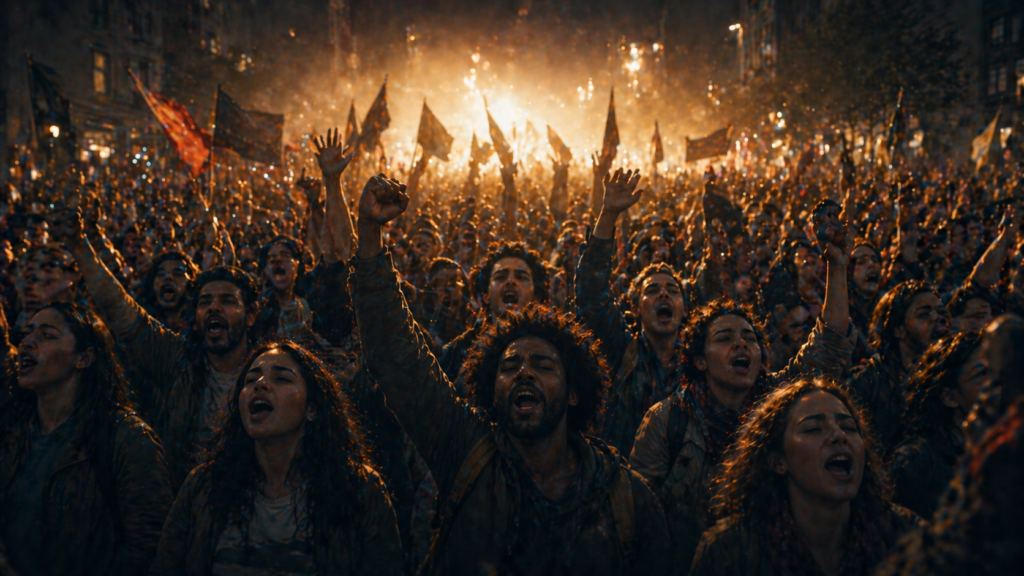
Music is not just sound—it is a force.
It carries memory, identity, and resistance.
It transforms private emotion into public momentum.
From protest songs to global anthems, music continues to shape how people think, feel, and act.
So next time you listen to a song, ask yourself:
Is it just music—or is it quietly changing the way we see the world?
Reader Question
Can a song truly change society—or does it only reflect the change already happening?
Related Reading
If music can unite people, what other forces shape collective identity?
In What Can Nature Teach Us About Ethics?, we explore how shared values—whether from nature or culture—form the foundation of collective human behavior.
If emotion drives movements, can technology reshape how we connect and act?
In 0 and 1 in the Age of Artificial Intelligence, we examine how human emotion and digital systems interact in shaping modern society.
References
1. Street, John. (2012). Music and Politics. Cambridge: Polity Press.
This book explores how music functions not only as cultural expression but also as a political force. It explains how songs can mobilize collective action and shape public opinion, making it essential for understanding the connection between music and social change.
2. Eyerman, Ron, & Jamison, Andrew. (1998). Music and Social Movements: Mobilizing Traditions in the Twentieth Century. Cambridge: Cambridge University Press.
This study examines how music contributes to the formation of social movements by creating shared identity and emotional solidarity. It provides historical examples showing how music acts as a bridge between individual emotion and collective political action.
3. Garofalo, Reebee. (2010). Rockin’ Out: Popular Music in the USA. Boston: Pearson.
This book analyzes the history of popular music in the United States and its relationship with social and political issues. It highlights how artists and songs have reflected and influenced movements such as civil rights and anti-war protests.
Leave a Reply