
1. The Two Faces of Transparency
In contemporary society, transparency has become a central keyword across politics, economics, and everyday life. Government transparency is expected to reduce corruption, corporate transparency is believed to strengthen investor confidence, and personal transparency is often praised as a foundation of social trust. Information disclosure, public participation, and accountability are widely celebrated as democratic ideals rooted in transparency.
However, the philosopher Byung-Chul Han presents a radically different perspective in The Transparency Society. For Han, transparency is not merely a democratic virtue but a new form of power operating in modern society. A world in which everything must be visible and disclosed does not necessarily generate trust; instead, it can produce constant surveillance and self-censorship.
2. The Structure of the Transparency Society: The Compulsion to Reveal
Han describes contemporary society as a “society of positivity.” While Michel Foucault analyzed disciplinary societies based on repression and prohibition, today’s social order operates through encouragement, exposure, and voluntary participation. Digital platforms—especially social media—continuously invite individuals to reveal themselves.
Within this structure, transparency becomes not a choice but a condition of social existence. Likes, shares, and visibility function as social currencies. Individuals are compelled to expose their lifestyles, emotions, and preferences to remain socially relevant.
As a result, people become both the objects and agents of surveillance. Fear of exclusion leads individuals to internalize the gaze of others, transforming society into a system of self-monitoring rather than external coercion.
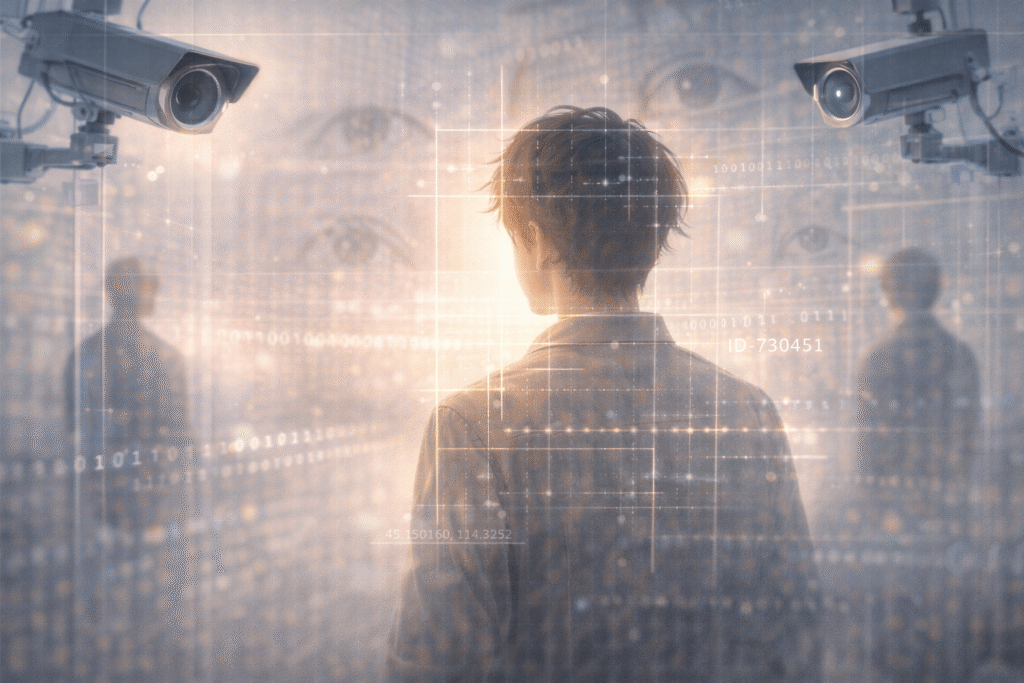
3. Democratic Ideals and the Paradox of Transparency
Transparency originally aimed to restrain power and protect citizens’ rights. Public asset disclosures, open decision-making processes, and accessible records are essential democratic mechanisms designed to prevent abuse and corruption.
Yet Han warns that when transparency expands indiscriminately, society becomes vulnerable to the violence of overexposure. In a world where every action and statement may be permanently recorded, spaces for political reflection and genuine debate shrink.
Citizens begin to practice self-censorship, choosing “safe” opinions over critical or unconventional ones. Paradoxically, excessive transparency weakens democracy by undermining pluralism, dissent, and deliberative freedom.
4. Trust or Surveillance Culture?
The belief that transparency automatically produces trust is deeply flawed. Trust does not arise from knowing everything about others; rather, it emerges from accepting uncertainty within relationships. Trust between parents and children, friends, or partners exists precisely because not everything is visible or controllable.
A society that demands total transparency risks cultivating suspicion instead of trust. Any undisclosed information becomes grounds for doubt, and individuals feel compelled to reveal more while experiencing greater anxiety. In this sense, the transparency society becomes a variation of the surveillance society.
5. The Politics of Transparency in the Digital Age
Digital platforms represent the most concrete manifestation of the transparency society. Location data, consumption habits, and social networks are constantly collected, analyzed, and monetized. Although this process appears voluntary, it is deeply embedded in the structure of surveillance capitalism.
Sharing daily life on platforms such as Facebook or Instagram is not merely self-expression; it is also a form of data production that fuels corporate profit. Transparency shifts from democratic communication to an economic instrument, expanding platform power rather than strengthening citizenship.
6. The Right to Opacity and Democratic Survival
What alternatives exist? Han argues that democracy requires a right to opacity. Informal political discussions, protected private spaces, and relational ambiguity do not signify corruption or dishonesty. Instead, they preserve freedom, creativity, and reflection.
Critiquing the transparency society does not mean rejecting transparency altogether. It means resisting its elevation into an absolute moral value. Genuine trust does not grow from total visibility but from the willingness to coexist with uncertainty.

Conclusion
Is the transparency society a foundation of trust, or has it evolved into a culture of surveillance and self-censorship? Han’s analysis offers a crucial warning. A society that demands unlimited transparency in the name of democracy risks becoming a democracy with the face of surveillance.
Respecting transparency while defending the right to opacity may be the only way to protect trust, freedom, and democratic life in the digital age.
References
- Han, B.-C. (2012). The Transparency Society. Stanford University Press.
→ This foundational work critiques the modern obsession with transparency and explains how constant visibility fosters self-surveillance rather than trust. - Foucault, M. (1975/1995). Discipline and Punish: The Birth of the Prison. Vintage Books.
→ Foucault’s concept of the panopticon provides a theoretical foundation for understanding surveillance as a mechanism of power. - Bauman, Z. (2000). Liquid Modernity. Polity Press.
→ Bauman analyzes social insecurity and fluidity, offering insights into how transparency intensifies modern anxiety. - Lyon, D. (2018). The Culture of Surveillance. Polity Press.
→ This work shows how surveillance has become normalized as a way of life, closely aligning with transparency discourse. - Zuboff, S. (2019). The Age of Surveillance Capitalism. PublicAffairs.
→ Zuboff examines how digital transparency feeds corporate control and reshapes democratic power structures.
Leave a Reply