Tag: social psychology

  • Social Attractiveness and the Psychology of Likeability

    Why We Are Drawn to Some People Beyond Physical Appearance

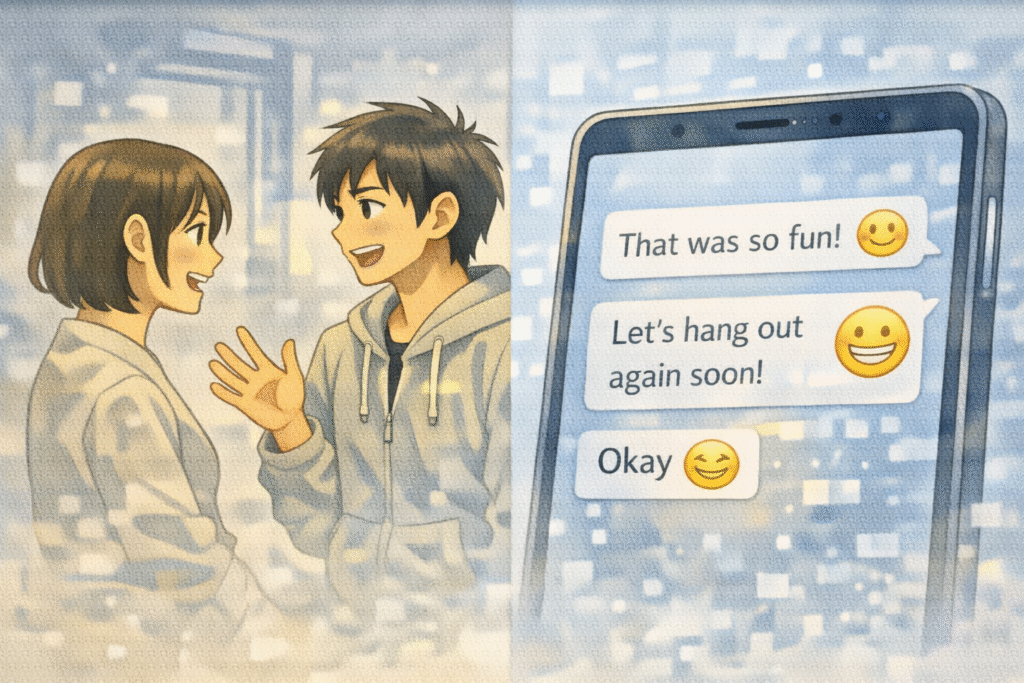
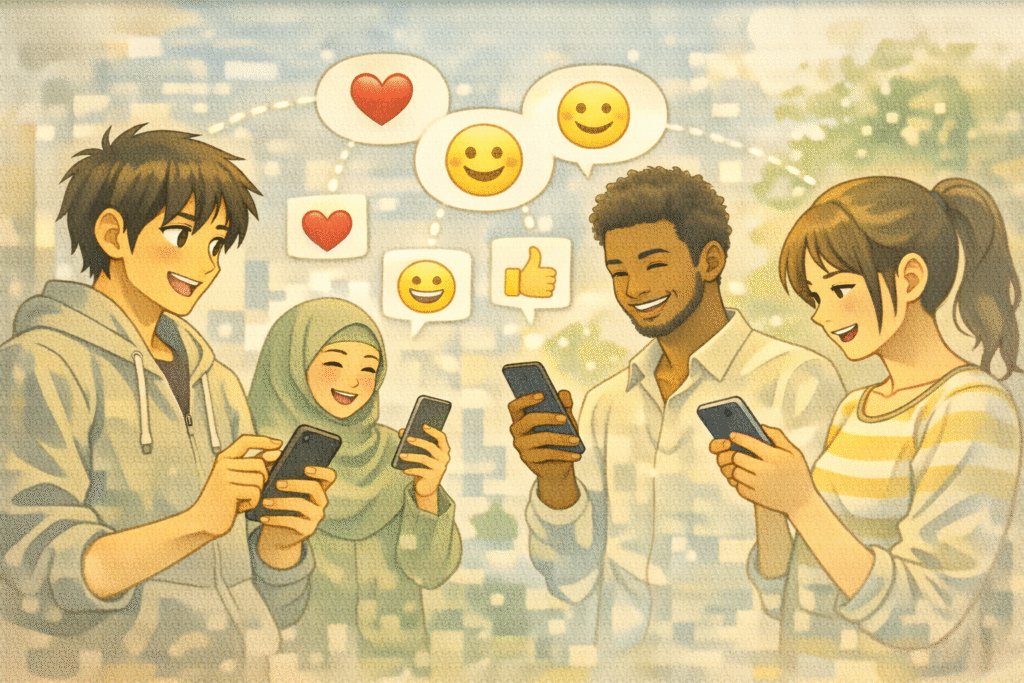
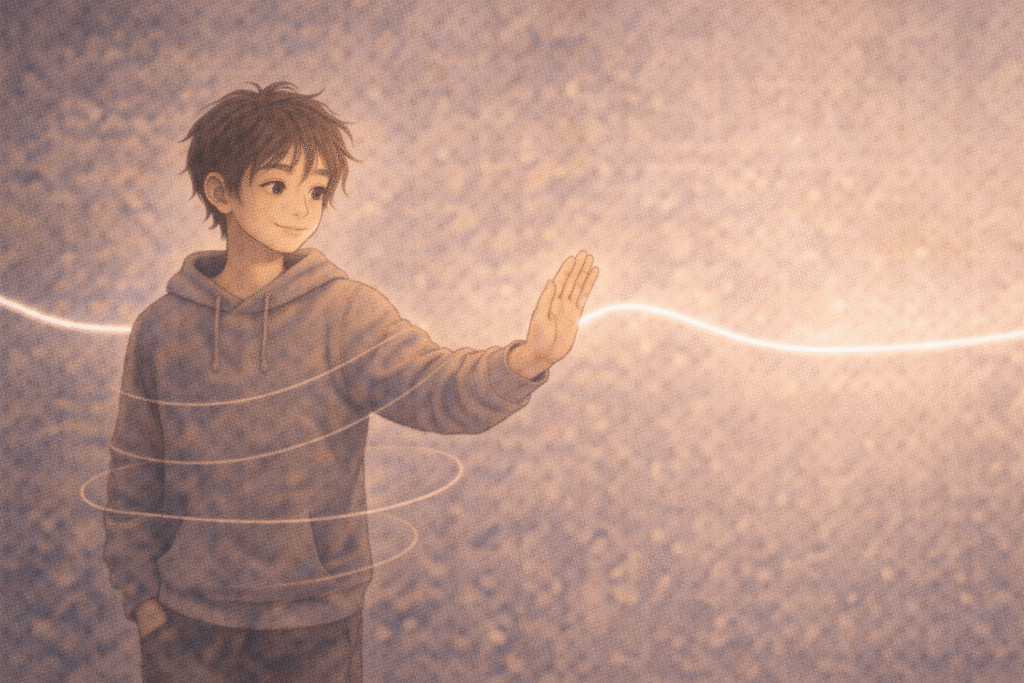
    Natural conversation reflecting social attractiveness

    Why do some people naturally draw us in?

    We meet countless individuals every day. Yet, with certain people, conversation flows more easily, emotional distance fades, and we simply enjoy being around them. This attraction rarely comes down to looks alone. Instead, it emerges from a complex psychological and social phenomenon known as social attractiveness.

    Social attractiveness refers to how much a person feels emotionally comfortable, engaging, and pleasant to be around. It is not something we are simply born with—it is shaped through everyday attitudes, behaviors, and interactions.


    1. Empathy: The Feeling of Being Truly Understood

    1.1 Emotional Attunement and Active Listening

    At the core of social attractiveness lies empathy, particularly empathetic listening. This goes beyond agreeing with someone’s words. It means sensing emotional undertones, responding with care, and showing genuine interest in another person’s inner experience.

    1.2 Why Empathy Builds Trust

    When someone responds with curiosity—“What part was most difficult for you?”—rather than quick judgment, they create emotional safety. People naturally gravitate toward those who make them feel heard and understood.

    Empathetic listening builds emotional connection

    2. Humor: Easing Tension and Creating Connection

    2.1 Humor as Social Glue

    Humor is not about being funny at all costs. Rather, it helps release tension and builds emotional closeness. Light, situational humor can make interactions feel relaxed and human.

    2.2 Emotional Flexibility and Likeability

    Research suggests that humor signals emotional flexibility and psychological resilience. People who can laugh appropriately are often perceived as more trustworthy and approachable.


    3. Self-Disclosure: Sharing Without Overexposing

    3.1 The Balance of Openness

    Socially attractive people strike a balance between being too closed and too revealing. Appropriate self-disclosure allows others to feel included without feeling burdened.

    3.2 Shared Stories, Shared Trust

    When someone gently connects their own experience to another’s—“I went through something similar once”—it creates a bridge of shared understanding. Mutual openness strengthens relational bonds.


    4. Nonverbal Communication: What Is Said Without Words

    4.1 The Power of Facial Expressions and Eye Contact

    Nonverbal cues often communicate more than words. Smiling, nodding, and maintaining eye contact convey attentiveness and respect.

    4.2 Creating Psychological Safety

    Such signals reassure others that they are welcome and valued. Importantly, these skills can be consciously practiced and refined over time.


    5. Respect and Consideration: The Foundation of Lasting Attraction

    5.1 Everyday Courtesy as Social Strength

    At the deepest level, social attractiveness rests on respect—listening without judgment, acknowledging differences, and responding thoughtfully.

    5.2 Why Quiet Consideration Lasts Longest

    Some people are not loud, witty, or charismatic, yet they remain memorable because of their consistent kindness and consideration. Social attractiveness is ultimately less about performance and more about relational quality.


    Conclusion: Social Attractiveness Can Be Cultivated

    Quiet respect creates lasting social attractiveness

    Likeability is not a fixed personality trait—it is a learnable social skill. Rather than striving to be impressive, focusing on being warm, attentive, and respectful naturally draws others closer.

    Small habits—listening sincerely, expressing care through gestures, and opening up thoughtfully—gradually shape how others experience us. Over time, these practices turn social attractiveness into something quietly but powerfully human.

    References

    1. Wilson, T. D. (2002). Strangers to Ourselves: Discovering the Adaptive Unconscious. Harvard University Press.
      → Explores unconscious processes behind social judgment and attraction, offering insight into invisible mechanisms of interpersonal appeal.
    2. Kahneman, D. (2011). Thinking, Fast and Slow. Farrar, Straus and Giroux.
      → Explains intuitive and analytical thinking systems that shape first impressions and social evaluations.
    3. Hall, E. T. (1959). The Silent Language. Anchor Books.
      → A foundational work on nonverbal communication, showing how gestures, space, and timing influence social perception across cultures.
  • The Sociology of Waiting in Line

    Why Do People Willingly Queue?

    People standing in line representing fairness and social order

    1. Why Do We Line Up So Willingly?

    We stand in lines almost every day—
    at amusement parks, popular restaurants, hospital counters, and even online shopping platforms where “waiting numbers” appear on our screens.

    At first glance, lining up looks like nothing more than inconvenient waiting.
    Yet people rarely question it. On the contrary, they often accept it willingly.
    Why do we voluntarily endure waiting instead of seeking alternatives?

    The answer lies not in patience alone, but in the social meaning embedded in queues.


    1.1. Lines as a Guarantee of Fairness

    The most fundamental function of a line is fairness.
    The rule is simple: first come, first served.

    Sociologists describe this as the first-come, first-served norm, a powerful yet easily shared social agreement.
    It reassures individuals that their turn will be respected.

    If someone cuts the line at a hospital reception desk, frustration spreads immediately.
    The anger is not about time alone—it is about the violation of fairness.
    Without lines, trust erodes quickly and social conflict intensifies.


    2. Waiting Turns Time into Meaning

    Interestingly, waiting in line does more than organize order—it reshapes experience.

    At amusement parks, waiting two hours for a roller coaster often heightens anticipation.
    People feel that the experience must be more rewarding because they invested time.

    The same applies to long restaurant lines.
    A crowded queue becomes a social signal: this place must be worth it.
    Even ordinary food can feel more valuable when framed by a visible line.

    Long queue outside a popular place signaling value and demand

    3. Lines Create Social Bonds

    Standing in line often produces a subtle sense of solidarity.
    People waiting for the same goal share space, time, and expectation.

    Fans lining up for concert tickets may begin as competitors,
    but often end up feeling like comrades.
    Small conversations, shared complaints, and mutual understanding emerge.

    Lining up is not only about waiting—it is also about belonging.


    4. Lines as Tools of Power and Control

    Despite their appearance of fairness, lines can also function as instruments of power.

    Who controls the line matters.
    VIP lanes, priority access, and exclusive queues immediately reveal inequality.

    Luxury brands deliberately create long lines to increase perceived value.
    Standing in line itself becomes a status symbol—
    a sign of inclusion in a desirable group.

    In these cases, waiting is no longer neutral; it is carefully designed.


    5. Digital Lines in the Online Age

    Lines have not disappeared in digital society—they have simply changed form.

    Online ticket platforms display messages like “You are number 10,524 in line.”
    Video games restrict access with server queues.
    Physical waiting has become virtual waiting.

    Because digital queues are invisible, trust becomes fragile.
    Platforms compensate by showing estimated wait times and live updates,
    attempting to preserve the sense of fairness that physical lines once provided.


    Digital waiting queue on a screen representing online waiting

    Conclusion

    Waiting in line is far more than idle time.

    It is a social mechanism where fairness, expectation, belonging, and power intersect.
    Within the lines we casually join each day,
    the hidden order of society quietly reveals itself.


    References

    1. Mann, L. (1969). Queue Culture: The Waiting Line as a Social System.
      American Journal of Sociology, 75(3), 340–354.
      → A foundational study analyzing queues as structured social systems that sustain order and fairness.
    2. Schweingruber, D., & Berns, N. (2005). Shaping the Social Experience of Waiting.
      Symbolic Interaction, 28(3), 347–367.
      → Examines how theme parks transform waiting into a designed experience of anticipation.
    3. Maister, D. H. (1985). The Psychology of Waiting Lines.
      Harvard Business School Service Notes.
      → Explores how perceived fairness and engagement shape satisfaction during waiting.
  • The Wall of Earphones – Why Do We Choose to Isolate Ourselves?

    Earphone wall theme, people isolated in a city scene.

    Introduction — Slipping Into a Small, Private World

    This essay explores earphone isolation in modern life.

    It was an unusually loud evening on the subway.
    Someone’s phone call, the repetitive ads, the metallic wheel noise…
    The day’s accumulated sounds filled my mind all at once.

    Without thinking, I reached into my bag, pulled out my earphones, and placed them in my ears.
    As soon as music began to flow, the world instantly grew distant.
    In that brief moment, a thin but unmistakable wall seemed to form between myself and the world.

    And then a thought emerged:

    “Escaping into sound — that is the wall of earphones.”

    Is this peaceful isolation a moment of self-care?
    Or is it a quiet form of disconnection?


    1. Earphones as a Small ‘Safety Net’

    Earphones are not just devices.
    They are psychological shields, subtle boundaries around our inner world.

    Sociologist Erving Goffman described daily life as a “stage of self-presentation.”
    In this sense, earphones function as a tool that regulates distance between performer and audience.

    In public spaces, earphones send a silent message:

    “I want to be alone right now.”

    Even without sound, simply wearing earphones becomes
    a nonverbal signal of refusal — a gentle but firm boundary.


    2. Personal Isolation or Emotional Self-Defense?

    Café scene showing earphone isolation in daily life.

    Modern life bombards us with noise and constant stimulation.
    Earphones help us regain our rhythm, process emotions,
    and briefly shut out the gaze of others.

    They are, in many ways, an emotional shield that maintains our personal world.

    Yet this small device also deepens social distance.
    We avoid eye contact, conversations fade before they begin,
    and public spaces drift into silent parallel worlds.

    Beyond the wall of earphones,
    there is always someone’s voice we no longer hear.


    3. The Identity of the Earphone Generation — ‘My Rhythm’ and ‘Social Fatigue’

    For Gen Z and Millennials, earphones are cultural markers of identity.
    White earbuds, Bluetooth headsets, noise-canceling devices —
    these are no longer audio tools but symbols of personal taste.

    Curated playlists express “today’s version of me,”
    yet the more softly the music plays,
    the thicker the wall of earphones becomes.

    Sociologist Ulrich Beck called our era a “risk society of individualization.”
    Everything is connected, yet people are more isolated than ever.

    When we put on earphones,
    we protect ourselves from overwhelming noise
    while also becoming part of the broader pattern of social withdrawal.

    Evening reflection after removing earphones.

    4. Conclusion — Opening the Heart Without Closing the Sound

    Understanding earphone isolation helps us see the balance between solitude and connection.

    Earphones are essential tools and emotional armor.
    They give us comfort, but they can also gently close the door to everyday connection.

    Sometimes we need to take them off —
    to hear the conversations, the footsteps, the subtle rhythms of the city.

    Noise can feel overwhelming,
    but within it lives the reminder that we still belong to a larger, living world.

    Closing sound does not have to mean closing the heart.
    May our earphones become windows, not walls.


    📚 References

    1. Bull, Michael. (2000). Sounding Out the City: Personal Stereos and the Management of Everyday Life.
    Berg Publishers.

    → A foundational work on how portable audio devices allow individuals to create private auditory spaces within noisy urban environments.

    2. Hosokawa, Shuhei. (1984). “The Walkman Effect.” Popular Music, 4, 165–180.
    → An early study on personal listening in public spaces and how it creates new social boundaries.

    3. Turkle, Sherry. (2011). Alone Together: Why We Expect More from Technology and Less from Each Other.
    Basic Books.

    → Explores how digital devices reshape emotional connection and human relationships, including the rise of “connected solitude.”