Tag: social psychology

  • The Fatigue of Kindness

    The Fatigue of Kindness

    Between the “Nice Person” Complex and Emotional Labor

    “I’m fine.” “I can do it.” “That’s only natural.”

    There are people who say these words almost automatically.

    They worry about making others uncomfortable.
    They fear ruining the mood.
    They hesitate to disappoint expectations.

    So they place other people’s feelings ahead of their own—again and again.

    At first, it looks like kindness.
    Over time, it becomes exhaustion.

    This quiet weariness has a name. We live in what might be called a society fatigued by kindness.

    A person smiling while surrounded by social expectations

    1. Why Does the “Nice Person” Complex Develop?

    In psychology, this pattern is often described as Nice Person Syndrome or approval addiction.

    People affected by it feel a strong urge to be liked, accepted, and seen as good. They avoid conflict, struggle to say no, and measure their self-worth through others’ reactions.

    Common signs include:

    • Constantly worrying about how others perceive you
    • Agreeing even when you feel uncomfortable
    • Offering help automatically, without checking your own limits

    Over time, kindness stops being a genuine choice and turns into a survival strategy. Emotions are suppressed, needs are postponed, and fatigue quietly accumulates.


    2. Emotional Labor Is Not Just a Workplace Issue

    The term emotional labor originally referred to service workers who must regulate or perform emotions as part of their job.

    Today, however, emotional labor extends far beyond the workplace.

    It appears in everyday life:

    • Smiling while feeling irritated
    • Replying “I’m okay” when you are not
    • Accepting unreasonable requests to avoid awkwardness

    When these moments pile up, people begin wearing a permanent mask of emotional stability. Every interaction consumes emotional energy, even when no one notices.
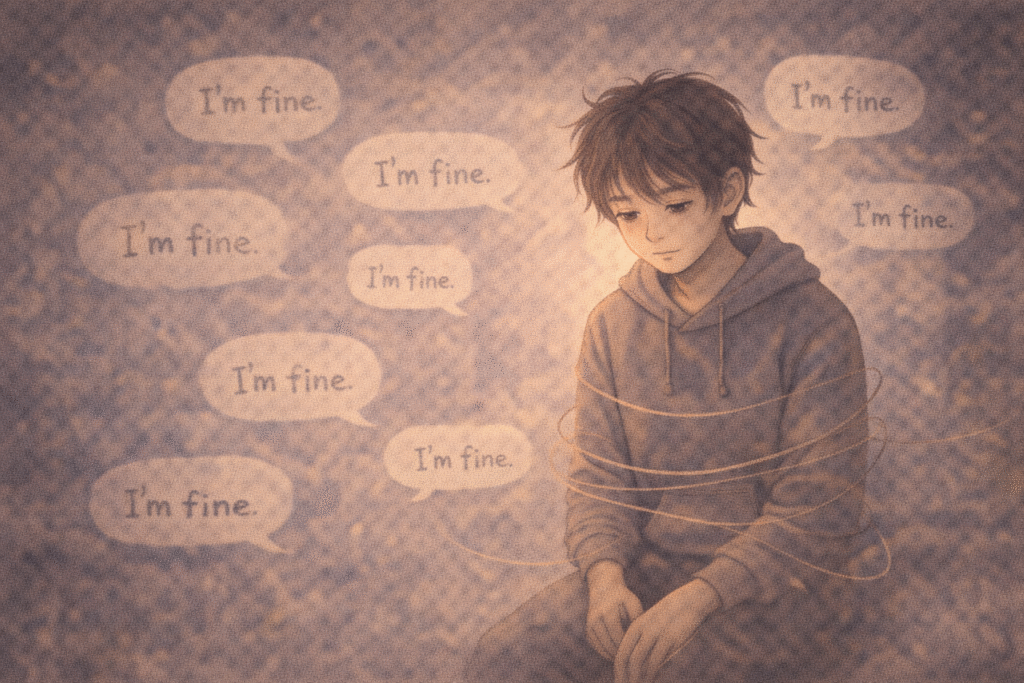
    An exhausted person carrying invisible emotional pressure

    3. When Kindness Becomes Exploited

    Ironically, the kinder someone appears, the more demands tend to follow.

    Helpful people are quickly labeled “reliable.”
    Their efforts become expected, not appreciated.
    Refusal—even once—invites disappointment.

    In this structure, kindness is no longer voluntary. It becomes a resource that others draw from repeatedly.

    As a result, many “nice” people lose touch with their own boundaries. Some grow numb. Others suppress frustration until it eventually erupts.


    4. Kindness Should Be a Strategy, Not a Sacrifice

    Does this mean we should stop being kind?

    Not at all. But kindness must be regulated, not reflexive.

    Healthy kindness includes:

    • Practicing how to say “no” without guilt
    • Expressing emotional limits honestly
    • Prioritizing your own emotional state alongside others’
    • Allowing firmness when situations require it

    True kindness does not come from depletion. It comes from self-respect.

    When kindness is a conscious choice rather than a compulsion, it becomes sustainable.
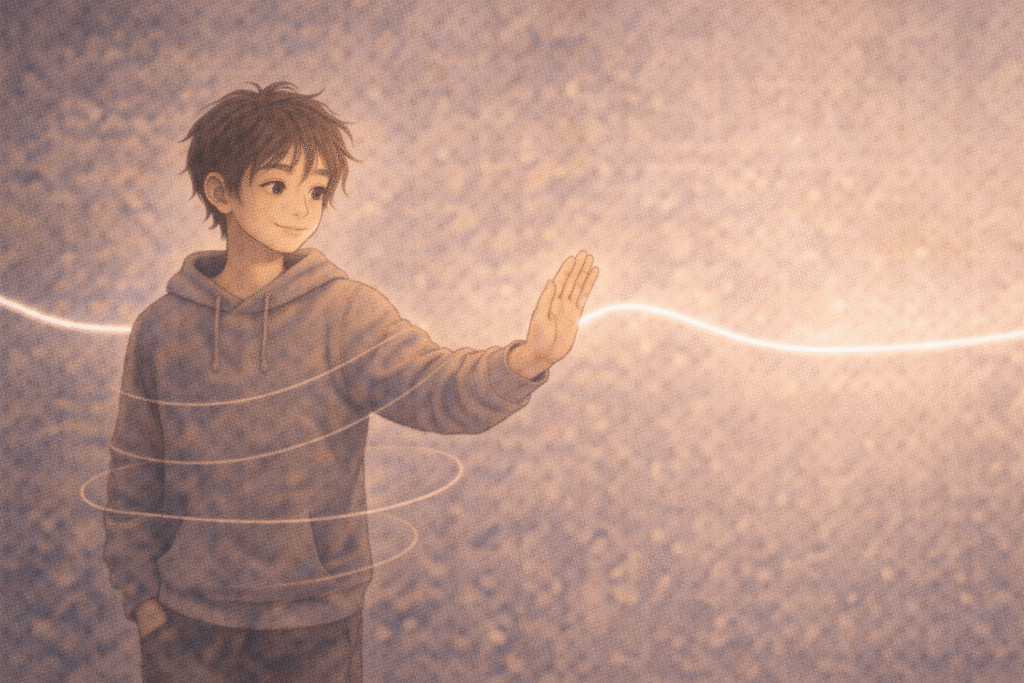
    A calm person setting healthy emotional boundaries

    Conclusion: From “Good” to Sustainable

    A fatigue-of-kindness society is one where considerate people burn out, while inconsiderate behavior often goes unchecked.

    In such a world, the goal is not to be endlessly nice—but to be emotionally sustainable.

    Smiling for others has value.
    But standing firm for yourself matters just as much.

    Genuine kindness grows best on the foundation of self-respect.

    May your days be gentle—
    without leaving you empty.

    A Question for Readers

    Have you ever continued helping others even when you felt emotionally exhausted?

    At what point does kindness stop being a genuine choice and become a burden carried for the sake of approval, expectations, or social harmony?


    Related Reading

    When emotional demands become overwhelming, people often seek temporary forms of withdrawal and self-protection.
    The Wall of Earphones examines how modern individuals create personal boundaries in increasingly demanding social environments.

    The desire to be liked often encourages people to prioritize others’ feelings over their own.
    Social Attractiveness and the Psychology of Likeability explores why approval and emotional connection play such powerful roles in human relationships.

    References

    1. Hochschild, A. R. (1983/2012). The Managed Heart: Commercialization of Human Feeling. University of California Press.
      This foundational work introduces the concept of emotional labor, showing how managing feelings—especially in service roles—can lead to psychological exhaustion. It provides the sociological basis for understanding why “being nice” can function as unpaid labor.
    2. Brown, B. (2010). The Gifts of Imperfection. Hazelden Publishing.
      Brown explores how social expectations and perfectionism pressure individuals to perform goodness. The book emphasizes self-worth, boundaries, and authenticity as alternatives to approval-driven behavior.
    3. Maslach, C., & Leiter, M. P. (1997). The Truth About Burnout. Jossey-Bass.
      This research-driven work examines burnout as a structural and relational problem, not just an individual weakness. It explains why people with high responsibility and empathy are especially vulnerable to emotional exhaustion.

  • Social Attractiveness and the Psychology of Likeability

    Social Attractiveness and the Psychology of Likeability

    Why We Are Drawn to Some People Beyond Physical Appearance

    Why do some people naturally draw us in?

    We meet countless individuals every day. Yet, with certain people, conversation flows more easily, emotional distance fades, and we simply enjoy being around them. This attraction rarely comes down to looks alone. Instead, it emerges from a complex psychological and social phenomenon known as social attractiveness.

    Social attractiveness refers to how much a person feels emotionally comfortable, engaging, and pleasant to be around. It is not something we are simply born with—it is shaped through everyday attitudes, behaviors, and interactions.

    Natural conversation reflecting social attractiveness

    1. Empathy: The Feeling of Being Truly Understood

    Emotional Attunement and Active Listening

    At the core of social attractiveness lies empathy, particularly empathetic listening. This goes beyond agreeing with someone’s words. It means sensing emotional undertones, responding with care, and showing genuine interest in another person’s inner experience.

    Why Empathy Builds Trust

    When someone responds with curiosity—“What part was most difficult for you?”—rather than quick judgment, they create emotional safety. People naturally gravitate toward those who make them feel heard and understood.

    Empathetic listening builds emotional connection

    2. Humor: Easing Tension and Creating Connection

    Humor as Social Glue

    Humor is not about being funny at all costs. Rather, it helps release tension and builds emotional closeness. Light, situational humor can make interactions feel relaxed and human.

    Emotional Flexibility and Likeability

    Research suggests that humor signals emotional flexibility and psychological resilience. People who can laugh appropriately are often perceived as more trustworthy and approachable.


    3. Self-Disclosure: Sharing Without Overexposing

    The Balance of Openness

    Socially attractive people strike a balance between being too closed and too revealing. Appropriate self-disclosure allows others to feel included without feeling burdened.

    Shared Stories, Shared Trust

    When someone gently connects their own experience to another’s—“I went through something similar once”—it creates a bridge of shared understanding. Mutual openness strengthens relational bonds.


    4. Nonverbal Communication: What Is Said Without Words

    The Power of Facial Expressions and Eye Contact

    Nonverbal cues often communicate more than words. Smiling, nodding, and maintaining eye contact convey attentiveness and respect.

    Creating Psychological Safety

    Such signals reassure others that they are welcome and valued. Importantly, these skills can be consciously practiced and refined over time.


    5. Respect and Consideration: The Foundation of Lasting Attraction

    Everyday Courtesy as Social Strength

    At the deepest level, social attractiveness rests on respect—listening without judgment, acknowledging differences, and responding thoughtfully.

    Why Quiet Consideration Lasts Longest

    Some people are not loud, witty, or charismatic, yet they remain memorable because of their consistent kindness and consideration. Social attractiveness is ultimately less about performance and more about relational quality.


    Conclusion: Social Attractiveness Can Be Cultivated

    Quiet respect creates lasting social attractiveness

    Likeability is not a fixed personality trait—it is a learnable social skill. Rather than striving to be impressive, focusing on being warm, attentive, and respectful naturally draws others closer.

    Small habits—listening sincerely, expressing care through gestures, and opening up thoughtfully—gradually shape how others experience us. Over time, these practices turn social attractiveness into something quietly but powerfully human.

    A Question for Readers

    Why do some people make us feel emotionally comfortable almost immediately, even without extraordinary appearance or status?

    And could genuine empathy and emotional safety be more attractive than outward perfection itself?

    Related Reading

    Empathy not only shapes attraction, but also determines how humans respond to the emotions and suffering of others.
    Why Do We So Easily Turn Away from Others’ Suffering? explores the psychological limits and social dynamics of empathy.

    People are often drawn to forms of expression that feel emotionally sincere and deeply human.
    The Psychology of Handwriting reflects on how imperfection and emotional authenticity create a sense of closeness between people.

    References

    1. Wilson, T. D. (2002). Strangers to Ourselves: Discovering the Adaptive Unconscious. Harvard University Press.
      → Explores unconscious processes behind social judgment and attraction, offering insight into invisible mechanisms of interpersonal appeal.
    2. Kahneman, D. (2011). Thinking, Fast and Slow. Farrar, Straus and Giroux.
      → Explains intuitive and analytical thinking systems that shape first impressions and social evaluations.
    3. Hall, E. T. (1959). The Silent Language. Anchor Books.
      → A foundational work on nonverbal communication, showing how gestures, space, and timing influence social perception across cultures.
  • The Sociology of Waiting in Line

    The Sociology of Waiting in Line

    Why Do People Willingly Queue?

    Few things seem more ordinary than standing in line.

    At supermarkets, amusement parks, airports, and even online platforms, people spend countless hours waiting for their turn.

    Yet despite the inconvenience, most people accept queues surprisingly willingly.

    Why does waiting in line feel frustrating at times—
    and fair at others?

    1. Why Do We Line Up So Willingly?

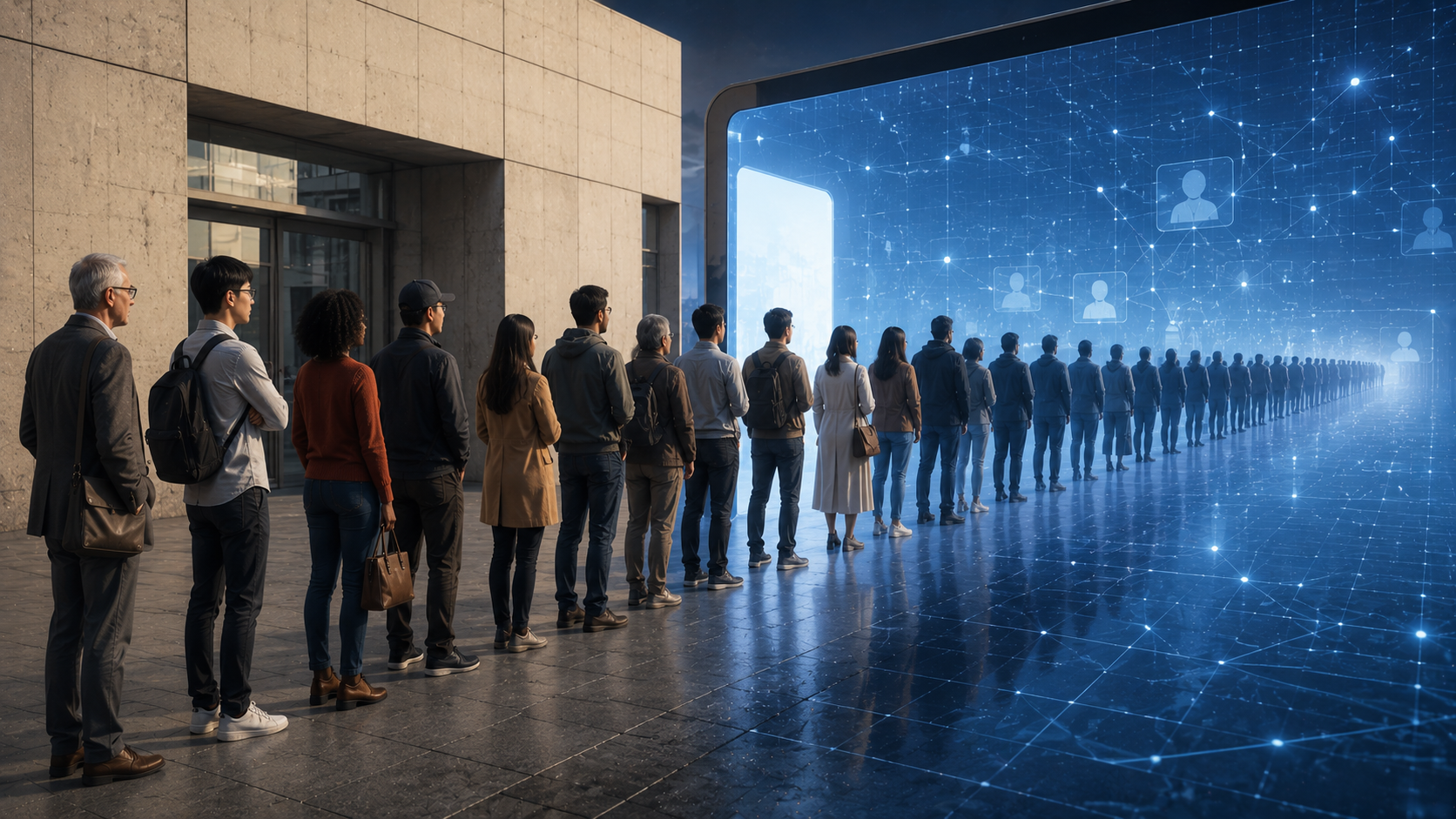
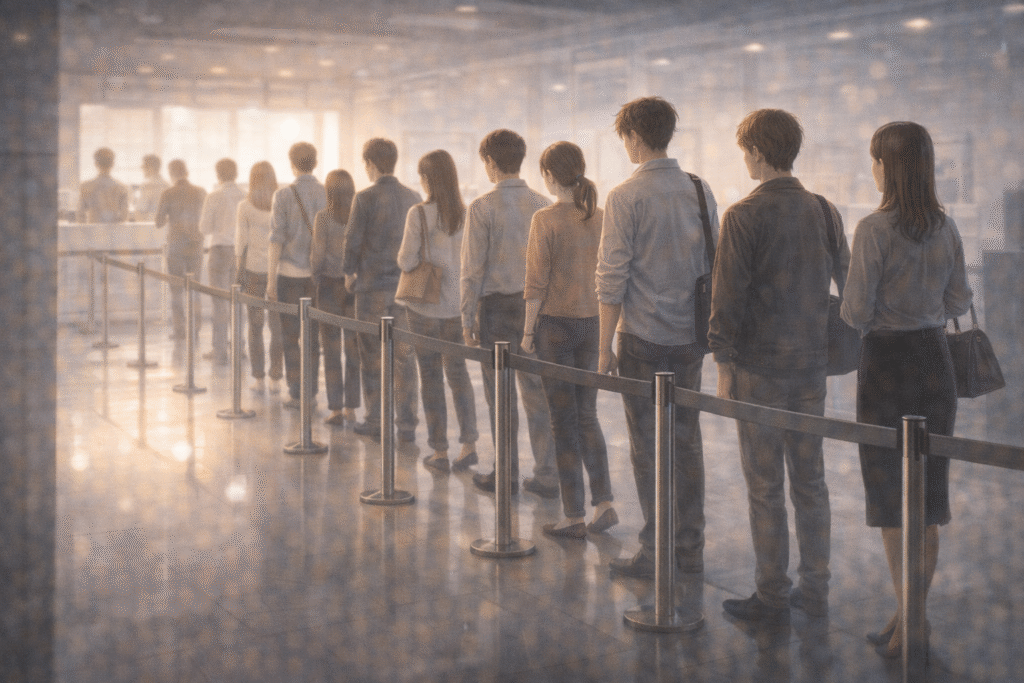
    People standing in line representing fairness and social order

    We stand in lines almost every day, from hospital counters and popular restaurants to online shopping platforms displaying digital waiting numbers.

    At first glance, queues appear to be nothing more than organized inconvenience.
    However, people rarely reject them outright.
    In many situations, they willingly accept waiting because queues carry an important social meaning beyond simple patience.

    At the center of every line lies an expectation of fairness.


    2. Waiting Turns Time into Meaning

    Interestingly, waiting in line does more than organize order—it reshapes experience.

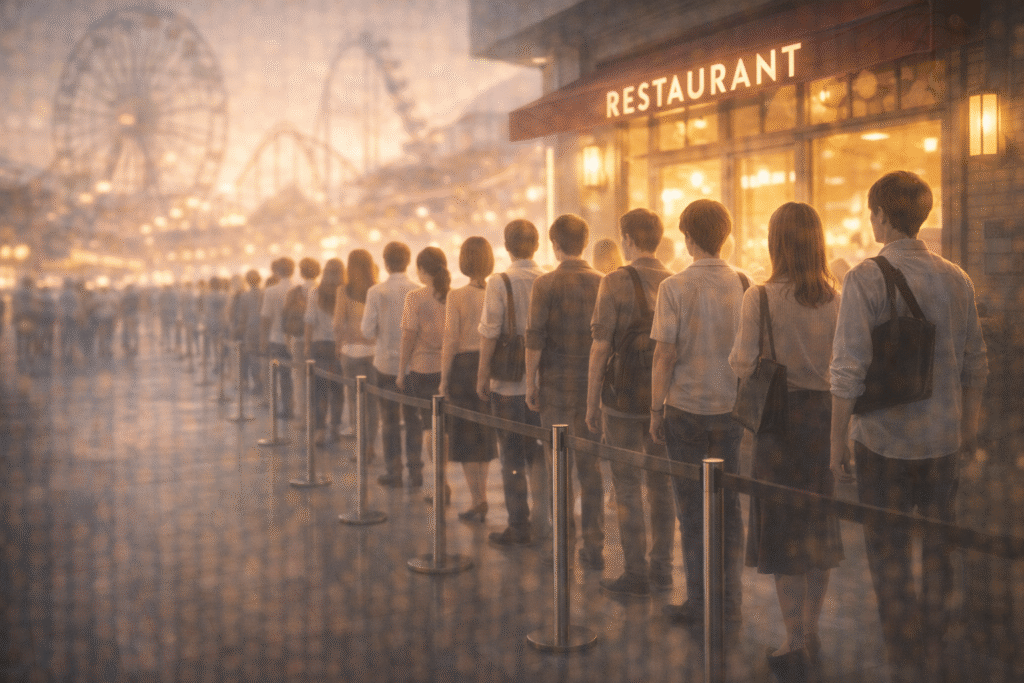
    At amusement parks, waiting two hours for a roller coaster often heightens anticipation.
    People feel that the experience must be more rewarding because they invested time.

    The same applies to long restaurant lines.
    A crowded queue becomes a social signal: this place must be worth it.
    Even ordinary food can feel more valuable when framed by a visible line.

    Long queue outside a popular place signaling value and demand

    3. Lines Create Social Bonds

    Standing in line often produces a subtle sense of solidarity.
    People waiting for the same goal share space, time, and expectation.

    Fans lining up for concert tickets may begin as competitors,
    but often end up feeling like comrades.
    Small conversations, shared complaints, and mutual understanding emerge.

    Lining up is not only about waiting—it is also about belonging.


    4. Lines as Tools of Power and Control

    Despite their appearance of fairness, lines can also function as instruments of power.

    Who controls the line matters.
    VIP lanes, priority access, and exclusive queues immediately reveal inequality.

    Luxury brands deliberately create long lines to increase perceived value.
    Standing in line itself becomes a status symbol—
    a sign of inclusion in a desirable group.

    In these cases, waiting is no longer neutral; it is carefully designed.


    5. Digital Lines in the Online Age

    Lines have not disappeared in digital society—they have simply changed form.

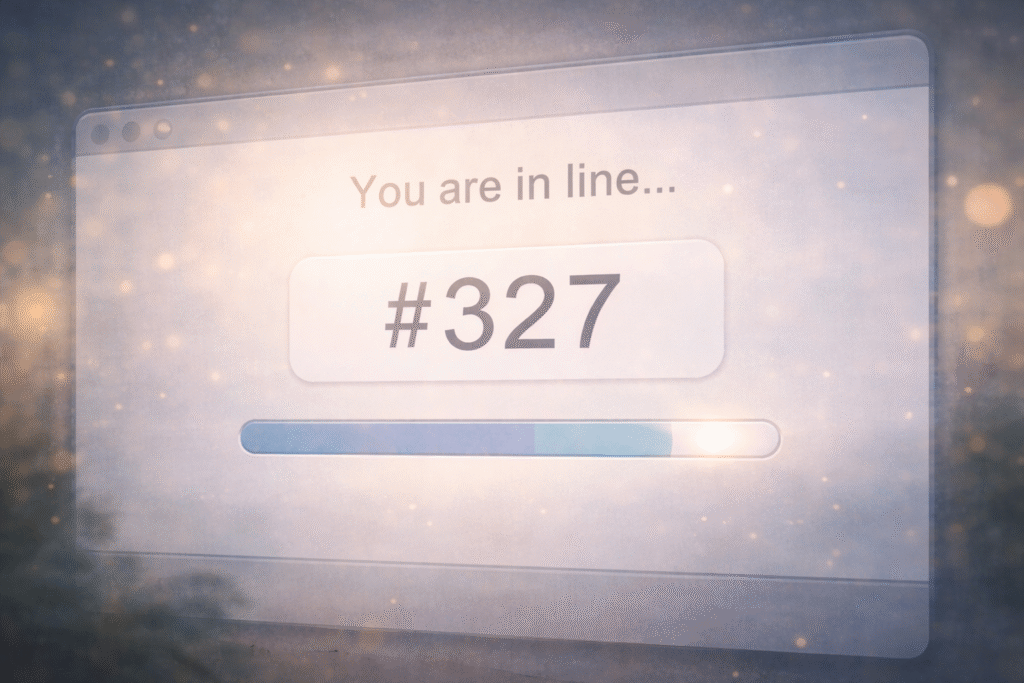
    Online ticket platforms display messages like “You are number 10,524 in line.”
    Video games restrict access with server queues.
    Physical waiting has become virtual waiting.

    Because digital queues are invisible, trust becomes fragile.
    Platforms compensate by showing estimated wait times and live updates,
    attempting to preserve the sense of fairness that physical lines once provided.


    Digital waiting queue on a screen representing online waiting

    Conclusion

    Waiting in line is far more than idle time.

    It is a social mechanism where fairness, expectation, belonging, and power intersect.
    Within the lines we casually join each day,
    the hidden order of society quietly reveals itself.

    A Question for You

    Have you ever accepted a long wait more easily
    simply because the line felt fair?

    Related Reading

    The politics of everyday space and design are examined in The Politics of Empty Space, where minimalism and structure subtly guide collective behavior.

    At a broader social level, the tension between individual freedom and shared order resurfaces in The Minimal State: An Ideal of Liberty or a Neglect of the Common Good?, questioning how fairness is negotiated within structured systems.

    Even simple social systems such as queues depend on shared rules, fairness, and collective trust.
    The broader political meaning of social order is explored in The Minimal State: An Ideal of Liberty or a Neglect of the Common Good?


    References

    1. Mann, L. (1969). Queue Culture: The Waiting Line as a Social System.
      American Journal of Sociology, 75(3), 340–354.
      → A foundational study analyzing queues as structured social systems that sustain order and fairness.
    2. Schweingruber, D., & Berns, N. (2005). Shaping the Social Experience of Waiting.
      Symbolic Interaction, 28(3), 347–367.
      → Examines how theme parks transform waiting into a designed experience of anticipation.
    3. Maister, D. H. (1985). The Psychology of Waiting Lines.
      Harvard Business School Service Notes.
      → Explores how perceived fairness and engagement shape satisfaction during waiting.
  • The Wall of Earphones – Why Do We Choose to Isolate Ourselves?

    The Wall of Earphones – Why Do We Choose to Isolate Ourselves?

    In modern cities, earphones have become more than listening devices—they often create small private worlds that separate us from the noise, and sometimes from one another.

    This essay explores earphone isolation in modern life.

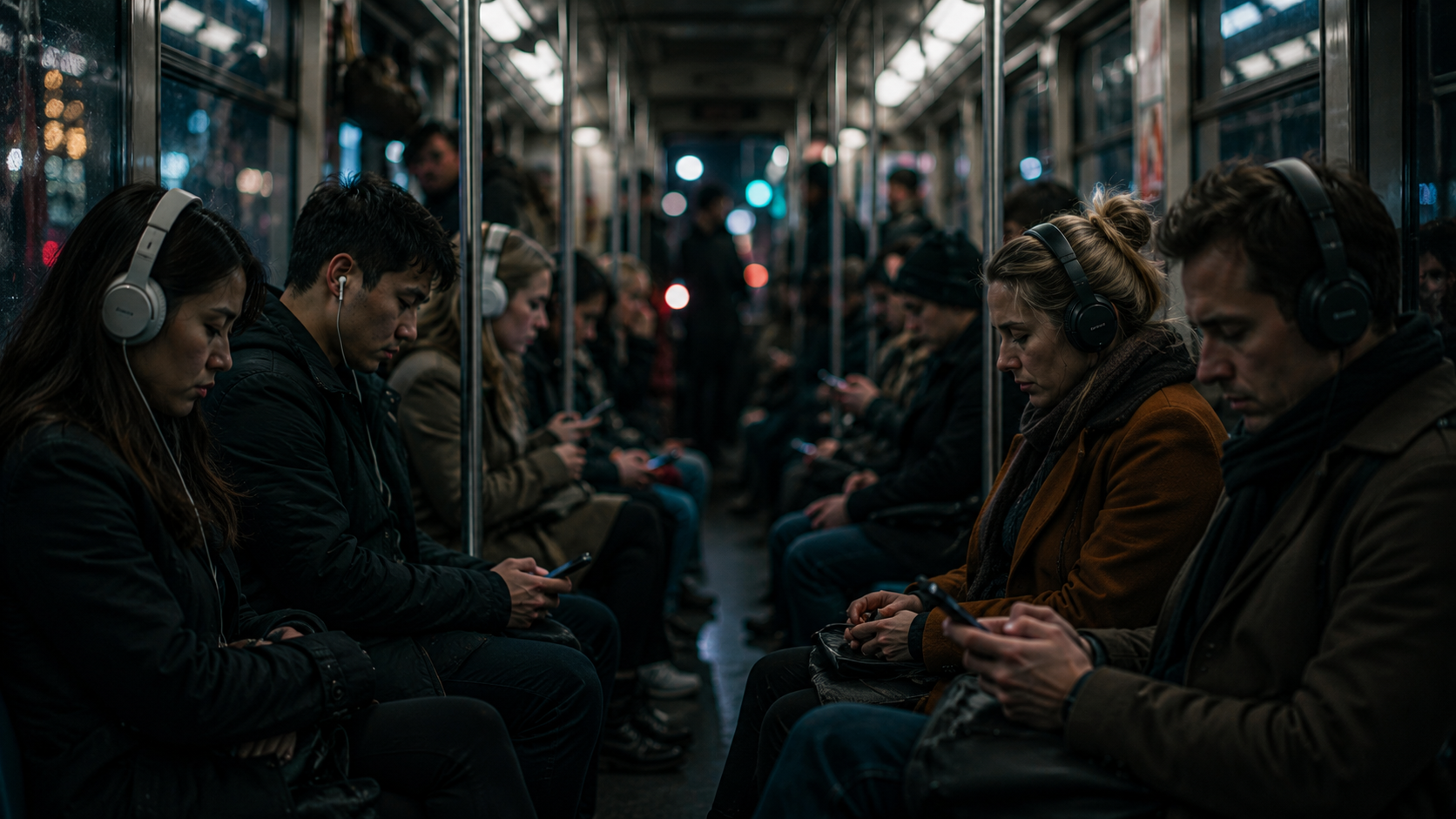
    It was an unusually loud evening on the subway.
    Someone’s phone call, the repetitive ads, the metallic wheel noise…
    The day’s accumulated sounds filled my mind all at once.

    Without thinking, I reached into my bag, pulled out my earphones, and placed them in my ears.
    As soon as music began to flow, the world instantly grew distant.
    In that brief moment, a thin but unmistakable wall seemed to form between myself and the world.

    And then a thought emerged:

    “Escaping into sound — that is the wall of earphones.”

    Is this peaceful isolation a moment of self-care?
    Or is it a quiet form of disconnection?


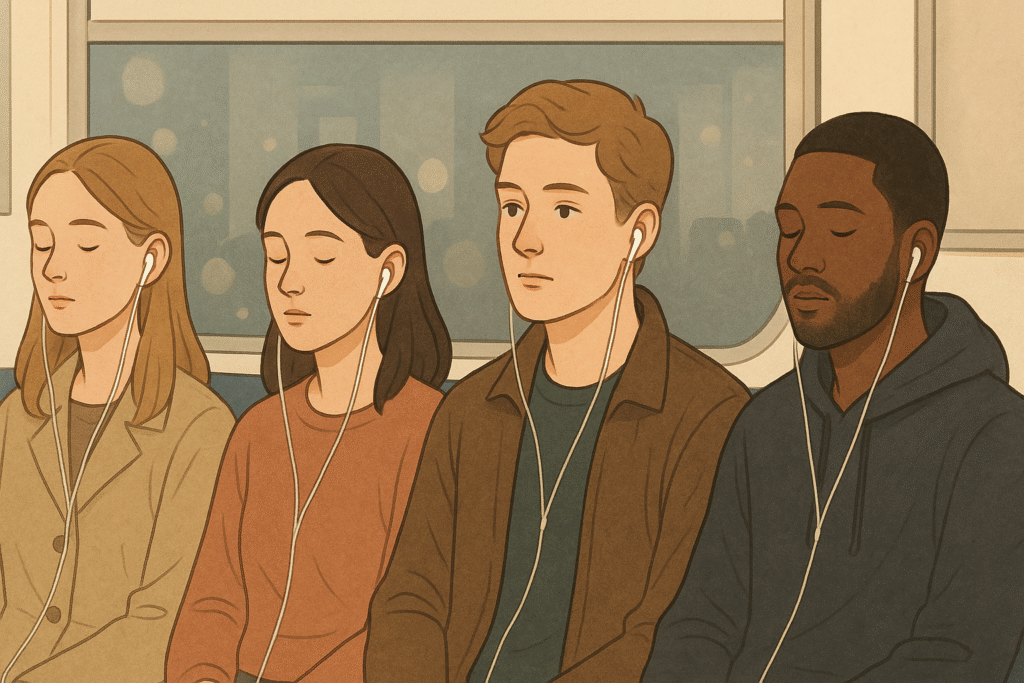
    Earphone wall theme, people isolated in a city scene.

    1. Earphones as a Small ‘Safety Net’

    Earphones are not just devices.
    They are psychological shields, subtle boundaries around our inner world.

    Sociologist Erving Goffman described daily life as a “stage of self-presentation.”
    In this sense, earphones function as a tool that regulates distance between performer and audience.

    In public spaces, earphones send a silent message:

    “I want to be alone right now.”

    Even without sound, simply wearing earphones becomes
    a nonverbal signal of refusal — a gentle but firm boundary.


    2. Personal Isolation or Emotional Self-Defense?

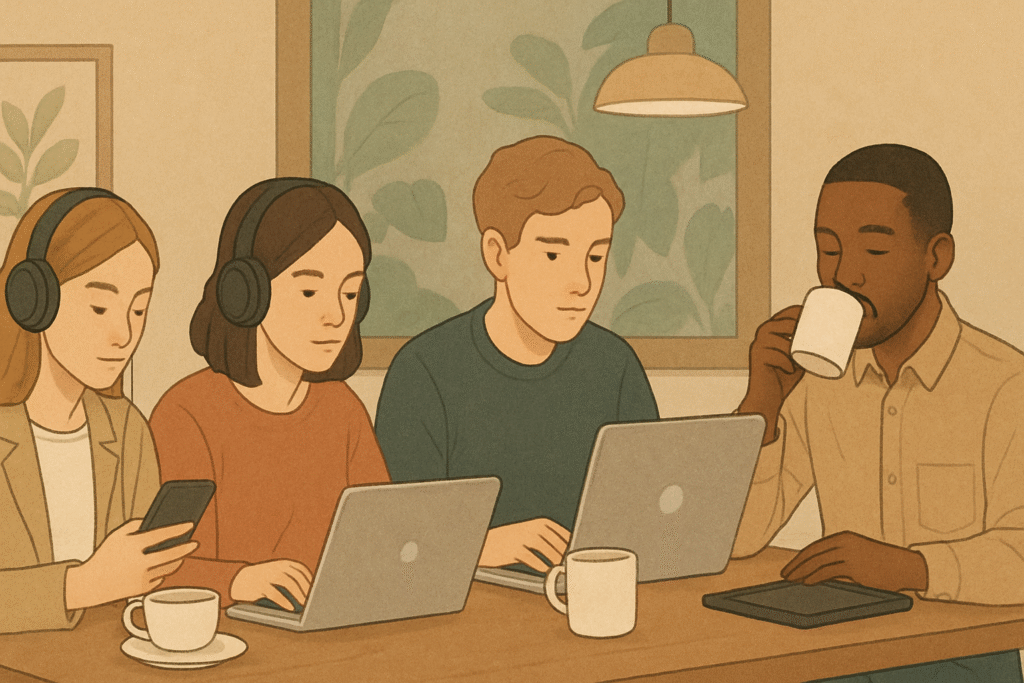
    Café scene showing earphone isolation in daily life.

    Modern life bombards us with noise and constant stimulation.
    Earphones help us regain our rhythm, process emotions,
    and briefly shut out the gaze of others.

    They are, in many ways, an emotional shield that maintains our personal world.

    Yet this small device also deepens social distance.
    We avoid eye contact, conversations fade before they begin,
    and public spaces drift into silent parallel worlds.

    Beyond the wall of earphones,
    there is always someone’s voice we no longer hear.


    3. The Identity of the Earphone Generation — ‘My Rhythm’ and ‘Social Fatigue’

    For Gen Z and Millennials, earphones are cultural markers of identity.
    White earbuds, Bluetooth headsets, noise-canceling devices —
    these are no longer audio tools but symbols of personal taste.

    Curated playlists express “today’s version of me,”
    yet the more softly the music plays,
    the thicker the wall of earphones becomes.

    Sociologist Ulrich Beck called our era a “risk society of individualization.”
    Everything is connected, yet people are more isolated than ever.

    When we put on earphones,
    we protect ourselves from overwhelming noise
    while also becoming part of the broader pattern of social withdrawal.

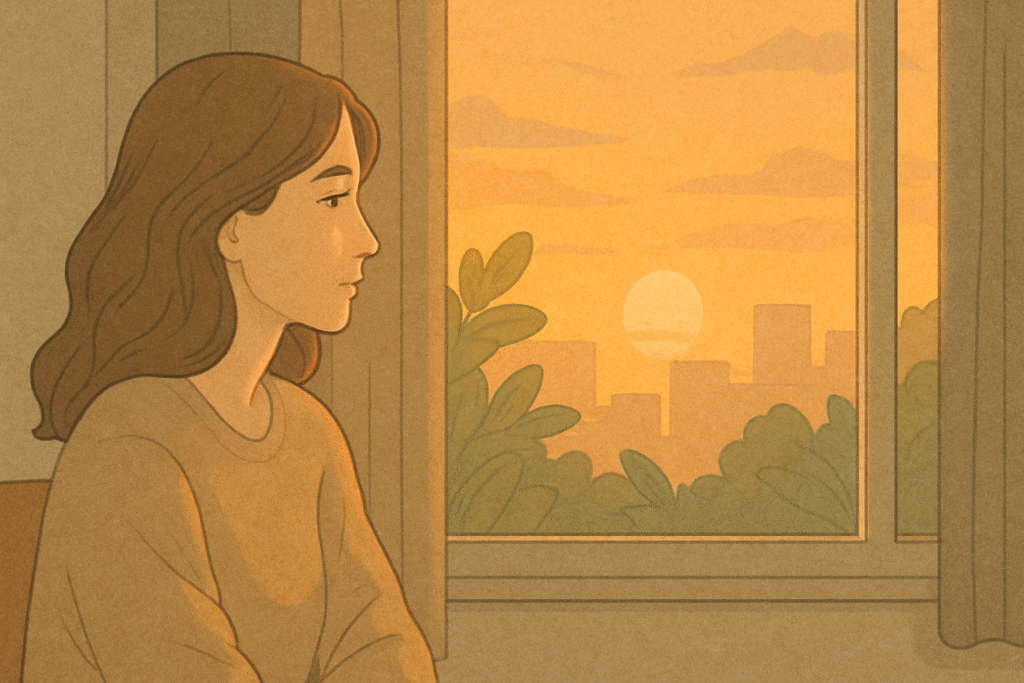
    Evening reflection after removing earphones.

    Conclusion — Opening the Heart Without Closing the Sound

    Understanding earphone isolation helps us see the balance between solitude and connection.

    Earphones are essential tools and emotional armor.
    They give us comfort, but they can also gently close the door to everyday connection.

    Sometimes we need to take them off —
    to hear the conversations, the footsteps, the subtle rhythms of the city.

    Noise can feel overwhelming,
    but within it lives the reminder that we still belong to a larger, living world.

    Closing sound does not have to mean closing the heart.
    May our earphones become windows, not walls.

    A Question for Readers

    When we put on earphones in public spaces, are we simply protecting our inner peace?

    Or are we slowly becoming more disconnected from the people and world around us?

    Related Reading

    Modern technology allows people to remain constantly connected while emotionally withdrawing into private spaces.
    Solitude in the Digital Age explores whether contemporary isolation represents meaningful self-reflection or a deeper loss of human connection.

    In modern urban life, even personal experiences are increasingly shaped by visibility, performance, and social pressure.
    When Experience Becomes Competition examines how modern individuals construct emotional boundaries while navigating social expectations and digital culture.


    References

    1. Bull, Michael. (2000). Sounding Out the City: Personal Stereos and the Management of Everyday Life.
    Berg Publishers.

    → A foundational work on how portable audio devices allow individuals to create private auditory spaces within noisy urban environments.

    2. Hosokawa, Shuhei. (1984). “The Walkman Effect.” Popular Music, 4, 165–180.
    → An early study on personal listening in public spaces and how it creates new social boundaries.

    3. Turkle, Sherry. (2011). Alone Together: Why We Expect More from Technology and Less from Each Other.
    Basic Books.

    → Explores how digital devices reshape emotional connection and human relationships, including the rise of “connected solitude.”