Tag: online identity

  • When Fans Become a Political Force: The Rise of Fandom Power

    When Fans Become a Political Force: The Rise of Fandom Power

    Digital Communities, Collective Identity, and the New Politics of Fan Culture

    Fandom was once seen as simple entertainment.

    Fans bought albums, attended concerts, collected merchandise, and passionately supported celebrities they admired.

    But in the digital age, fandom has evolved into something much larger.

    Today, online fan communities can:

    • organize global campaigns
    • raise millions of dollars
    • influence public opinion
    • dominate social media trends
    • and even participate in political activism

    Modern fandom is no longer only about consumption.

    It is becoming a form of cultural power.

    Global fan communities such as the fandom surrounding BTS have demonstrated how emotionally connected digital communities can transform into organized social forces.

    This raises an important question:

    Are fandoms still just groups of consumers—
    or are they becoming a new form of collective political identity?
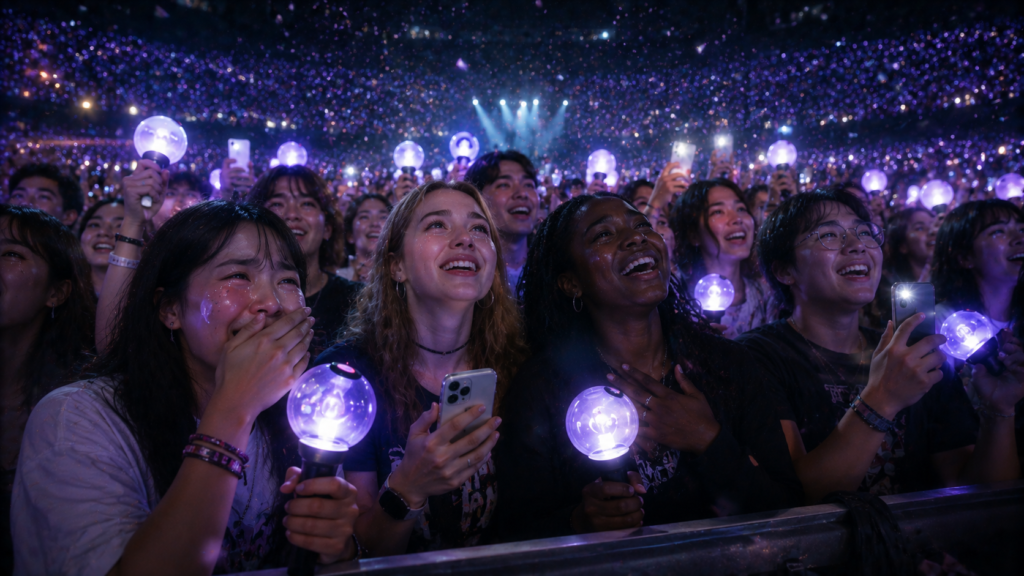
    fans emotionally connected at concert

    1. Fandom Is More Than Admiration

    From Entertainment to Civic Participation

    Modern fandoms increasingly operate beyond entertainment culture.

    One of the most visible examples emerged in 2020, when BTS donated one million dollars to the Black Lives Matter movement.

    Shortly afterward, BTS fans known as ARMY collectively matched the donation within twenty-four hours through online fundraising efforts.

    This moment revealed something significant:

    Fans were not simply supporting artists.

    They were participating in coordinated social action.


    Emotional Connection and Collective Action

    Online fandoms frequently organize:

    • charity campaigns
    • hashtag movements
    • fundraising projects
    • social awareness campaigns

    In many cases, fans mobilize faster and more efficiently than traditional organizations.

    Digital emotional connection becomes a source of collective power.

    As a result, fandom increasingly resembles a form of civic participation rather than passive consumption.


    2. Fandom as a Digital Community
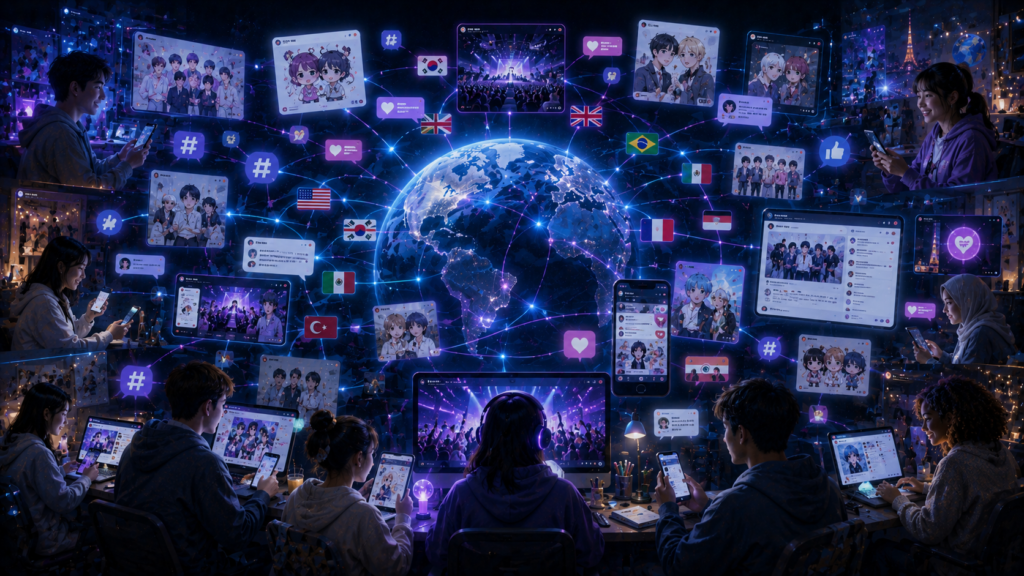
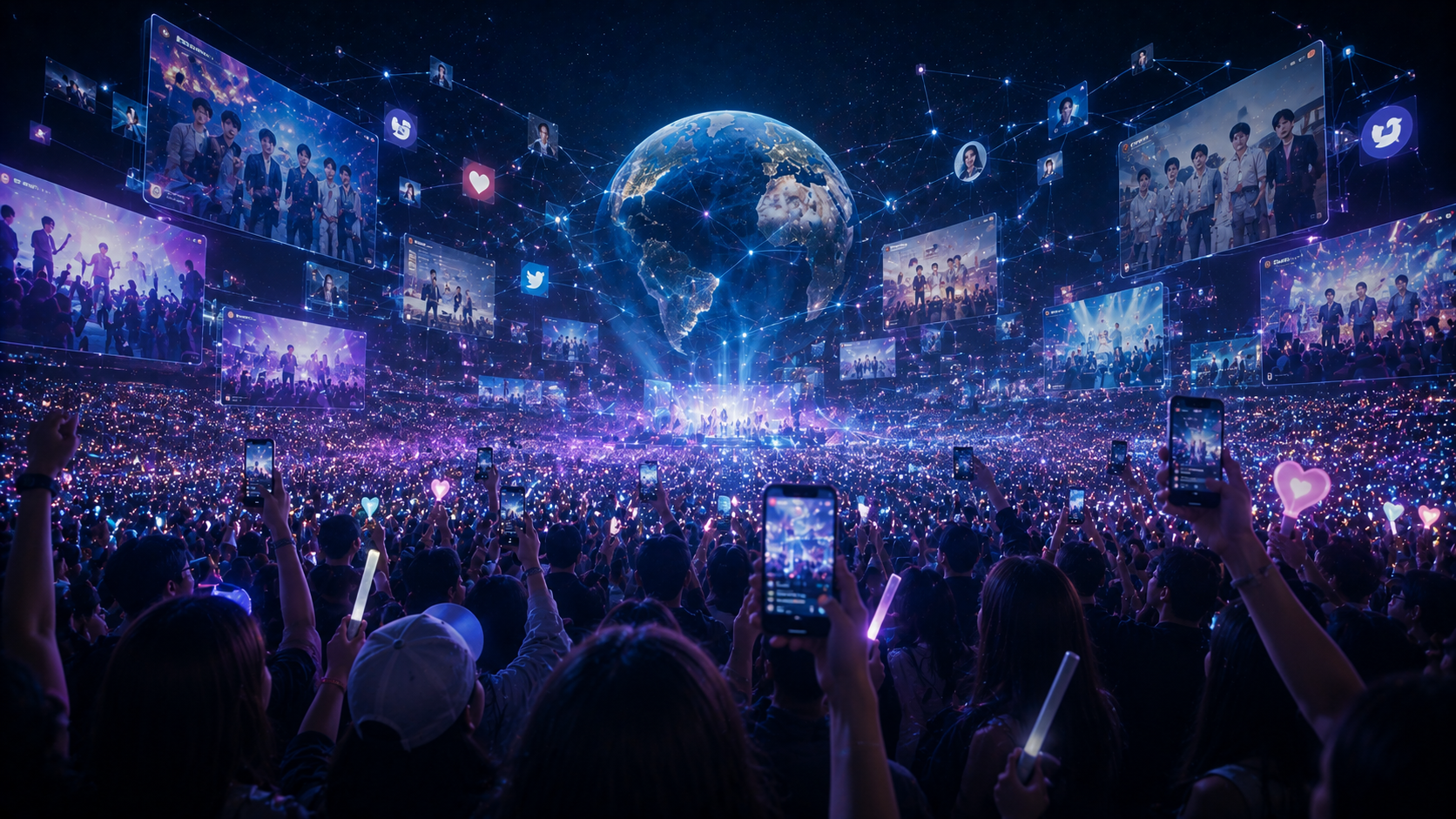
    global online fandom community

    Identity in Online Spaces

    Unlike traditional fan clubs centered on physical gatherings, modern fandoms exist primarily through digital platforms.

    Fans communicate across:

    • social media
    • streaming platforms
    • online forums
    • group chats
    • fan-created media spaces

    Through these interactions, fandom becomes part of personal identity itself.

    People do not simply follow artists.

    They belong to communities.


    Hierarchy and Internal Power

    However, fandom communities are not always equal spaces.

    Internal hierarchies often emerge.

    Long-term fans, people who attend concerts frequently, collectors of rare merchandise, and influential fan creators may gain symbolic authority within the community.

    At the same time, newer or more critical fans may become marginalized or attacked.

    This reveals that fandoms can reproduce their own systems of:

    • status
    • inclusion
    • exclusion
    • and cultural power

    Even communities built around emotional solidarity may contain hidden structures of authority.


    3. Between Politics and Entertainment

    “We Just Want to Enjoy Music”

    Some fans resist political involvement entirely.

    They argue that fandom should remain a space for enjoyment rather than ideological conflict.

    For these individuals, music functions as emotional escape rather than political expression.


    The Politicization of Fan Culture

    However, many fandoms increasingly engage with issues such as:

    • racial justice
    • climate activism
    • LGBTQ+ rights
    • disability advocacy
    • gender equality

    For example, BTS fan communities have participated in environmental campaigns, anti-discrimination movements, and global fundraising efforts connected to human rights causes.

    As a result, fandom occupies an unusual position.

    It often claims to be apolitical while simultaneously engaging in highly political actions.


    4. Are Fandoms Becoming New Social Movements?

    Politics Through Emotion and Culture

    Traditional political participation among younger generations has declined in many countries.

    However, cultural participation has expanded dramatically through digital communities.

    For many younger people, fandom provides:

    • emotional belonging
    • political expression
    • social connection
    • and collective identity

    This creates a new model of participation where culture and politics become deeply intertwined.


    A New Form of Collective Identity

    In this environment, fandom may function as a transnational social movement.

    Fans from different countries cooperate across borders through shared emotional investment rather than nationality, religion, or traditional political ideology.

    In other words, fandom transforms emotion into organized collective action.

    This may represent one of the defining political and cultural shifts of the digital age.


    Conclusion: Fandom as Cultural Power
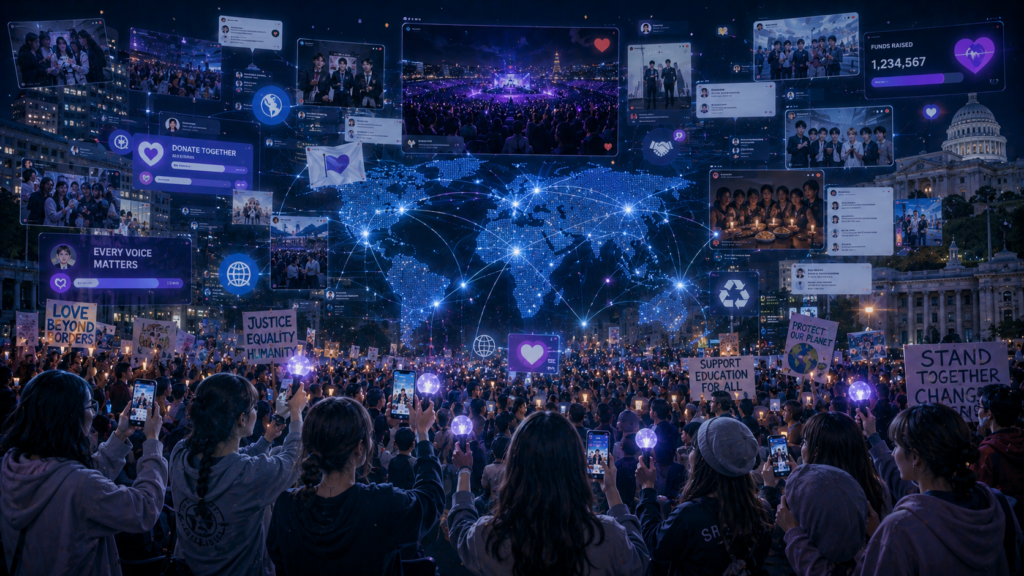
    online fandom participating in social activism

    In the past, fans were often dismissed as emotional consumers.

    Today, fandoms increasingly shape:

    • online discourse
    • political visibility
    • social activism
    • and cultural influence

    The digital age has transformed fandom into something far more powerful than entertainment alone.

    Modern fandoms connect emotion, identity, technology, and politics into massive global communities capable of real social impact.

    Ultimately, fandom may no longer simply represent admiration for artists.

    It may represent a new form of citizenship built through emotional connection and digital participation.

    And perhaps the most important question is this:

    When millions of emotionally connected people act together online,
    where does fandom end—and where does political power begin?

    Reader Question

    Have online fan communities become more than spaces for entertainment and emotional support?

    When millions of people organize, donate, campaign, and shape public opinion together through shared cultural passion—

    Does fandom remain a form of consumption, or does it become a new kind of political power?

    Related Reading

    If emotions can be socially organized and amplified through digital platforms, is fandom ultimately driven more by personal affection—or by collective emotional structures?
    In Are Our Emotions Truly Ours—or Socially Constructed?, we explore how emotions are shaped, managed, and politically amplified within modern digital society.


    If online communities increasingly shape identity, belonging, and activism across borders, are digital spaces creating entirely new forms of citizenship and collective identity?
    In Can Society Move Beyond the Gender Binary?, we examine how social identity is continuously constructed, negotiated, and performed within changing cultural environments.


    References

    1. A. N. Andini & G. N. Akhni (2021). Exploring Youth Political Participation.
      This study examines how K-pop fandoms in Indonesia and Thailand participate in digital activism through hashtags, fundraising, and political campaigns. It argues that fandom can function as an alternative model of political participation for younger generations.
    2. W. J. Chang & S. E. Park (2019). The Fandom of Hallyu: The Case of ARMY of BTS.
      This research conceptualizes BTS ARMY as a “digital tribe” shaped by emotional belonging, online hierarchy, and collective identity within global network culture.
    3. C. Kim (2023). Fandom as New Transnational Political Actor.
      Kim analyzes fandom as a transnational political actor capable of influencing democratic discourse, global activism, and social justice movements across national borders.
    4. R. Kanozia & G. Ganghariya (2021). More than K-pop Fans.
      This work explores how BTS fandom communities participated in public health campaigns, anti-hate activism, and online solidarity during the COVID-19 pandemic.
    5. J. Galvan (2021). Fans of Change.
      Galvan examines how fandom communities organize around shared ideals and social values, describing fandom as a form of aspirational collective action and community-based activism.

  • Who Owns the Data of the Dead?

    Who Owns the Data of the Dead?

    Digital Ghosts, AI Afterlives, and the Ethics of Memory in the Digital Age

    In the past, the dead remained in memories, photographs, letters, and gravestones.

    Today, they remain online.

    Even after death, people continue to exist through social media profiles, archived conversations, emails, videos, voice recordings, and vast collections of personal data stored across digital platforms. Their location histories, health records, and fragments of daily life often remain preserved silently inside cloud systems and smart devices.

    Some call this phenomenon the rise of the digital ghost.

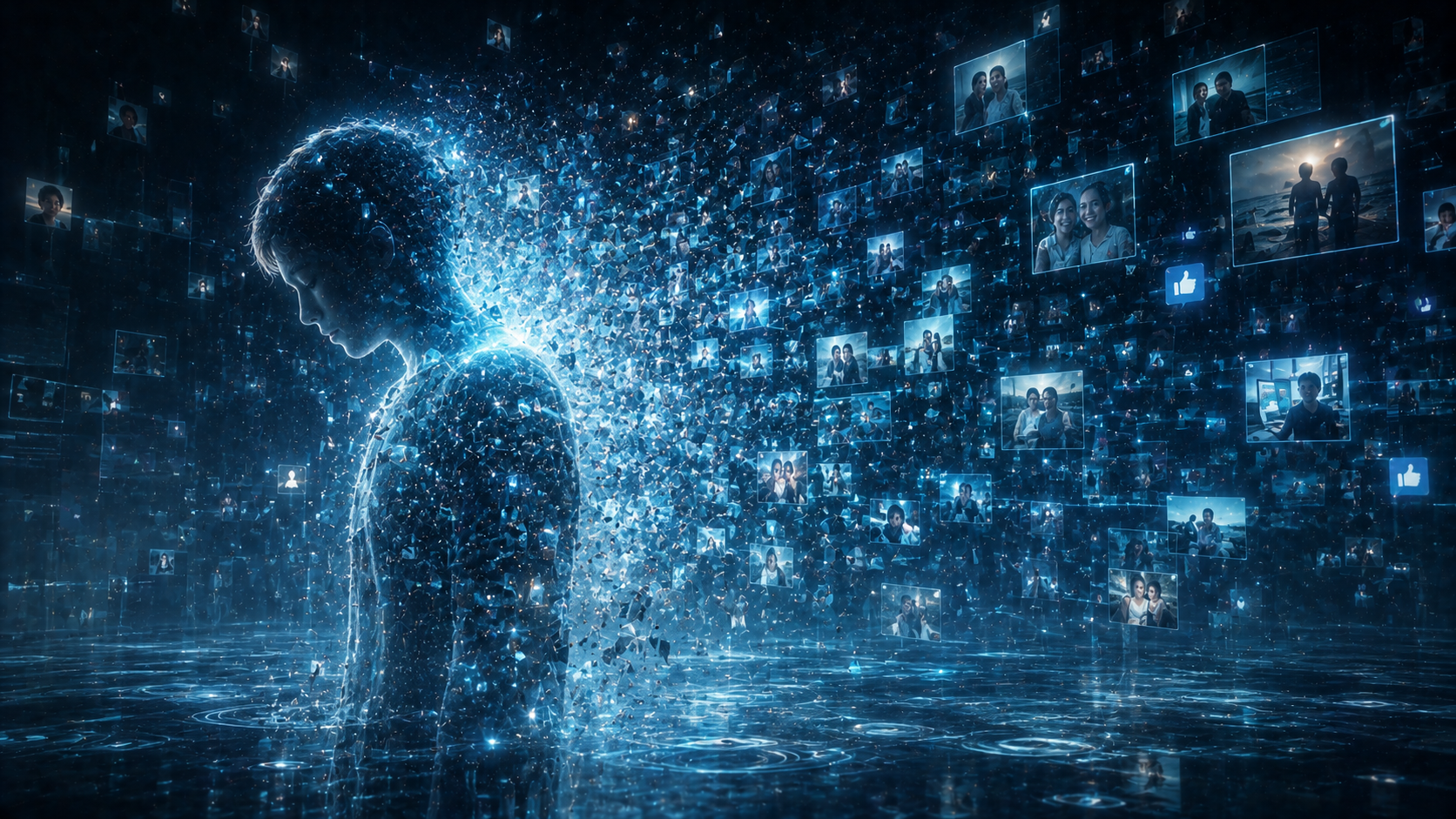
    As technology advances, the dead are no longer completely absent. Instead, traces of their identity continue circulating through algorithms, servers, and digital memories long after physical death.

    This raises difficult questions:

    Who owns the data of the dead?

    Should these digital traces be preserved, deleted, inherited, or controlled by corporations?

    In the age of digital ghosts, humanity must rethink the boundaries between memory, grief, ownership, and technology itself.

    old digital memories remaining after death

    1. The Dead Continue to Exist Digitally

    More Than Photos and Messages

    The digital traces people leave behind are far more extensive than many realize.

    Social media platforms preserve photographs, conversations, emotional expressions, and personal memories long after death. Cloud services may continue storing unfinished writing, private letters, contracts, and deeply personal records, while smartphones and wearable devices silently preserve location histories, biometric patterns, health information, and fragments of ordinary routines.

    As a result, modern technology does not merely archive information.

    It preserves pieces of human existence itself.


    The Emergence of the Digital Self

    Because of this, digital records sometimes begin functioning like extensions of identity.

    Even after physical death, parts of a person’s online presence remain active and socially visible. Friends and family continue encountering birthday reminders, old conversations, algorithmic recommendations, and archived messages connected to someone who no longer physically exists.

    In this sense, the dead may continue participating in social life through technology.

    The digital self survives even when the biological self has disappeared.

    2. Who Owns the Data of the Dead?

    Legal Uncertainty

    Legally, the situation remains unclear in many countries.

    Most legal systems still lack comprehensive rules regarding posthumous digital privacy and ownership.

    In some cases:

    • family members may request account closure
    • platforms may memorialize profiles
    • companies may retain data indefinitely on private servers

    However, relatives are not always guaranteed access to the deceased person’s digital information.


    Ethical Conflict

    The issue is not only legal—

    It is deeply emotional.

    Some families believe digital traces should be preserved as part of a loved one’s memory.

    Others feel private information should disappear after death.

    Conflicts become especially difficult when the deceased person never expressed clear wishes regarding digital inheritance.

    As a result, grief increasingly intersects with technology and data ethics.

    3. The Rise of Digital Legacy Management

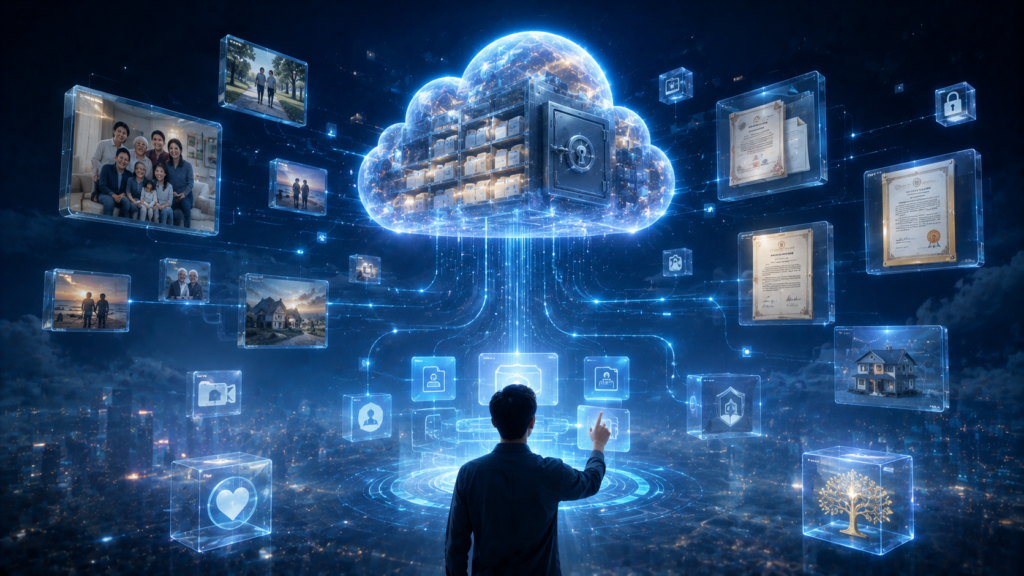
    digital legacy and online inheritance system

    Technology Companies and Digital Inheritance

    Technology companies have already begun developing systems for managing digital legacies after death.

    Apple allows users to designate Digital Legacy contacts who may access certain iCloud data after death, while Google provides inactive account management systems that can transfer or delete stored information after long periods of inactivity. Meanwhile, Meta enables some social media accounts to become memorialized spaces where the deceased continue to exist symbolically within online communities.

    These systems attempt to balance privacy, mourning, ownership, and corporate responsibility within a rapidly changing digital world.


    4. AI Avatars and the New Digital Afterlife

    Talking to the Dead Through AI

    Recent AI technologies have pushed these ethical questions even further.

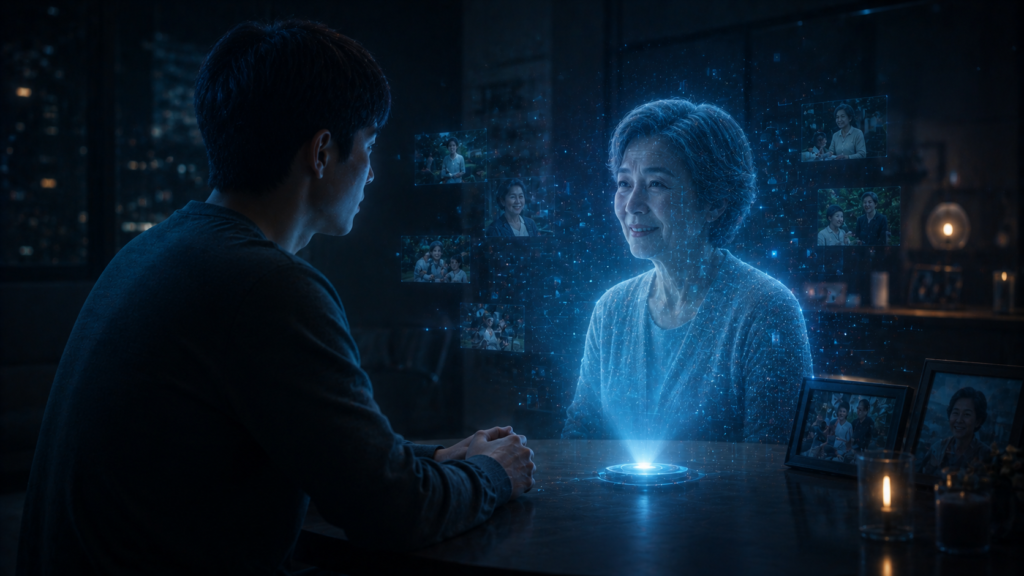
    Some companies now create AI avatars capable of imitating deceased individuals by analyzing voice recordings, chat histories, writing styles, photographs, and behavioral patterns. These systems simulate conversations with the dead, creating experiences that can feel emotionally real to surviving family members.

    As a result, death itself begins to appear less final within digital space.


    Comfort or Ethical Danger?

    For some people, these technologies provide comfort and emotional continuity.

    For others, they raise disturbing ethical concerns.

    Critics argue that AI resurrection may interfere with healthy grieving, blur the meaning of death, exploit emotional vulnerability, and create serious privacy problems involving people who can no longer give consent.

    As artificial intelligence becomes increasingly sophisticated, society may soon face a profound question:

    Should digital immortality exist at all?

    Conclusion: Memory or Ownership?

    person interacting with AI version of deceased loved one

    In the digital age, death no longer guarantees disappearance.

    Data survives.

    And because data survives, identity may continue existing in fragmented digital form.

    This means digital remains are no longer merely technical information.

    They are emotional, social, and ethical extensions of human life.

    Therefore, future discussions about digital legacy cannot rely only on law and technology.

    They must also consider:

    • grief
    • dignity
    • consent
    • memory
    • and the human need to let go

    Ultimately, we are left with one final question:

    In the age of digital ghosts,
    what traces of yourself would you want to remain—
    and who should have the right to protect them?

    Reader Question

    If your messages, photographs, voice recordings, and personal memories could continue existing online after your death—

    Would you want them to remain as part of your digital legacy,
    or disappear with you completely?

    And who should have the right to decide that?

    Related Reading

    If technology can preserve fragments of human identity long after death, can memory itself eventually become a form of digital immortality?
    In In a World Where Everything Is Recorded, Is Forgetting a Sin—or a Right?, we explore how digital systems reshape memory, identity, and the human need to forget in an age where almost nothing truly disappears.


    If AI can imitate the voices, emotions, and personalities of the dead, where should society draw the boundary between remembrance and artificial resurrection?
    In Can Experiences in Dreams Become Real Knowledge?, we examine how subjective experiences, simulations, and emotionally real perceptions challenge traditional definitions of reality itself.


    References

    1. N. Rawindaran & V. Bentotahewa (2024). Death Becomes Data.
      This work explores how digital assets of the deceased are increasingly integrated into AI and metaverse systems. It examines legal uncertainty surrounding ownership, platform responsibility, and family access rights.
    2. V. Methuku & P. K. Myakala (2025). Digital Doppelgangers.
      This study analyzes the ethical and social implications of AI-generated digital clones created before or after death, focusing on identity, consent, and possible misuse of personal data.
    3. Carl Öhman (2020). The Post-Mortal Condition.
      Öhman examines how the dead continue to coexist socially with the living through digital media. His work presents digital ghosts as a new form of social and cultural presence in online society.
    4. D. J. Bassett (2022). The Future of Digital Death.
      Bassett explores inheritance and management issues surrounding digital remains such as social media profiles, avatars, and memorial chatbots. The work proposes new legal and ethical frameworks for digital afterlives.
    5. V. J. Haneman (2024). The Law of Digital Resurrection.
      Haneman analyzes legal disputes surrounding AI avatars and digital resurrection technologies, focusing on ownership conflicts between families, corporations, and digitally recreated identities.