Tag: Knowledge and Wisdom

  • Is the Hippie Spirit Dead—or Has It Evolved?

    Is the Hippie Spirit Dead—or Has It Evolved?

    From Counterculture to Modern Lifestyles

    When we hear the word hippie, certain images come to mind.

    Flower-patterned clothes.
    Acoustic guitars.
    Anti-war protests.
    Free love.
    A rejection of materialism.

    The hippie movement, born in the 1960s and 70s in the United States, was more than a trend.

    It was a radical rethinking of how life should be lived.

    The persistence of the hippie spirit today can be seen in movements that challenge consumption, promote sustainability, and seek alternative ways of living.

    But today, the question remains:

    Has the hippie spirit disappeared—
    or has it simply taken on a new form?


    1. Beyond the Stereotype

    1960s hippie community in nature

    Over time, the image of the hippie has been reduced to a stereotype.

    To some, it represents disorder, naivety, or a romanticized past.

    But this simplification hides something deeper.

    At its core, the hippie movement was built on powerful values:

    • harmony with nature
    • peace and nonviolence
    • personal freedom
    • community-centered living
    • resistance to dominant systems

    These ideas did not vanish.

    They transformed.


    2. Where the Hippie Spirit Lives Today

    Although the original movement may seem distant, its influence is still visible in modern life.

    2.1 Environmental Movements

    The call to “return to nature” has re-emerged in:

    • zero-waste lifestyles
    • veganism
    • sustainable consumption

    These movements echo the same concern for ecological balance that hippies once advocated.


    2.2 Alternative Communities and Slow Living

    Many people today are seeking alternatives to fast-paced, urban life.

    • small-scale communities
    • local economies
    • shared resources
    • intentional living

    These reflect the ideals of the hippie communes, reinterpreted for a new era.


    2.3 Minimalism and Voluntary Simplicity

    The idea that “less is more” is now widely embraced.

    Minimalism encourages people to:

    • reduce consumption
    • focus on essentials
    • prioritize meaning over accumulation

    This, too, can be seen as a continuation of the hippie rejection of material excess.


    modern eco friendly lifestyle in city

    3. Freedom, Identity, and Relationships

    The hippie movement also challenged traditional norms around relationships and identity.

    Ideas such as:

    • sexual freedom
    • diverse relationship structures
    • self-expression without rigid norms

    have evolved into today’s conversations around:

    • LGBTQ+ rights
    • gender identity
    • alternative relationship models

    What was once radical has become part of mainstream discourse.


    4. Evolution, Not Disappearance

    Perhaps the hippies were not simply a product of their time.

    Perhaps they were early adopters of a future mindset.

    Today, we live in a world shaped by:

    • climate crisis
    • digital overload
    • social fragmentation

    In response, many people are once again asking:

    How should we live differently?

    In this sense, the hippie spirit has not disappeared.

    It has evolved — quietly, persistently, and in new forms.


    person reflecting peacefully in nature

    Conclusion: The Quiet Persistence of an Idea

    The hippie spirit did not die.

    It changed its language, its appearance, and its context.

    But its essence remains:

    • questioning dominant systems
    • seeking alternative ways of living
    • valuing connection over consumption

    So perhaps the real question is not whether hippies still exist.

    It is whether we recognize them —
    within our culture, and within ourselves.


    Question for Readers

    When you think about modern lifestyles such as minimalism, sustainability, or alternative communities, do you see them as new trends — or as a continuation of past ideals?

    If the hippie spirit still exists today,
    how does it appear in your own way of living?

    And more importantly,
    are we truly changing the system — or simply adapting within it?


    Related Reading

    The social and philosophical layers behind lifestyle choices are further explored in Is Minimalism a Lifestyle or a Privilege?, where simplicity is examined not only as an aesthetic but as a reflection of class, culture, and power.

    At a more individual level, the psychology behind everyday decisions is discussed in Why Do People Prefer the Right Side Over the Left?, revealing how deeply our behavior is shaped by unconscious patterns and inherited tendencies.


    References

    1. Roszak, T. (1969). The Making of a Counter Culture. University of California Press. This seminal work examines the intellectual and cultural foundations of the hippie movement, highlighting its critique of technocratic society and its influence on ecological and spiritual thought.

    2. Turner, F. (2006). From Counterculture to Cyberculture. University of Chicago Press. This book traces the transformation of hippie ideals into digital culture, showing how concepts like community, sharing, and self-direction evolved within technological environments.

    3. Miller, T. (1999). The 60s Communes: Hippies and Beyond. Syracuse University Press. This study provides detailed insights into communal living experiments and demonstrates how their principles continue to influence modern sustainable communities.


  • Is Minimalism a Lifestyle or a Privilege?

    Is Minimalism a Lifestyle or a Privilege?

    The Hidden Class, Aesthetics, and Power Behind Simplicity

    Minimalism is often described as a life of simplicity.

    A clean white wall.
    An empty desk.
    A wardrobe with only a few carefully chosen pieces.

    It is a life of reduction —
    keeping only what is essential and letting go of the rest.

    But here is a deeper question:

    Is minimalism truly accessible to everyone?

    Or is it, in some ways, a privilege disguised as simplicity?

    This raises a deeper question about minimalism and privilege, and whether simplicity is truly accessible to everyone.


    1. The Aesthetic of Less

    clean minimalist room with simple objects

    At first glance, minimalism promotes restraint.

    It encourages us to:

    • remove excess
    • focus on essentials
    • create clarity in our environment

    It appears to be a rejection of consumerism.

    However, critics have raised an important question:

    Is minimalism truly about “having less,”
    or is it about consuming differently?


    2. When Simplicity Becomes a Symbol of Status

    In many cases, minimalism is not the absence of consumption —
    but its transformation.

    Consider the following:

    • a nearly empty room, yet furnished with expensive designer pieces
    • a wardrobe of only a few items, each from premium brands
    • fewer objects, but stronger brand identity

    In this context, minimalism becomes a refined form of display.

    Not a display of quantity,
    but a display of taste, control, and distinction.


    3. The Hidden Conditions of “Living with Less”

    minimalism with hidden signs of wealth

    Living minimally often requires invisible resources:

    • time to organize, curate, and maintain simplicity
    • financial stability to choose “quality over quantity”
    • a secure lifestyle that reduces the need for accumulation

    This reveals an important paradox:

    Even the act of “having less”
    may depend on having enough.

    Minimalism, therefore, is not entirely neutral.

    It reflects social and economic conditions.


    4. Minimalism as Cultural Power

    Sociologist Pierre Bourdieu argued that taste is not simply personal.

    It is shaped by social class and used to reproduce it.

    In this light, minimalism can be understood as a form of cultural capital.

    To appear minimal is not to appear lacking,
    but to appear deliberate.

    Some critics even suggest:

    Minimalism looks like the absence of display,
    but it is actually a highly sophisticated form of display.


    5. A New Ethics — or a Hidden Hierarchy?

    Despite these critiques, minimalism still holds value.

    It can:

    • reduce mental overload
    • encourage mindful consumption
    • support environmentally conscious living

    The key question is not whether minimalism is right or wrong.

    It is how we understand it.

    Who is it for?
    What does it reveal?
    And what might it conceal?

    contrast between chosen and forced minimalism

    6. A Question of Perspective

    The moment we begin to ask these questions,
    minimalism transforms.

    It is no longer just an interior style.

    It becomes a philosophical lens
    through which we examine society, identity, and value.


    Conclusion: Between Emptiness and Meaning

    A minimalist life can be beautiful.

    But for some, it is a choice.
    For others, it may resemble forced scarcity.

    True minimalism may not be about having less.

    It may be about seeing more clearly.

    Not reducing life,
    but focusing on what truly matters.


    Question for Readers

    When you think about minimalism, do you see it as freedom — or as a form of privilege?

    Is choosing less always a personal decision,
    or can it reflect deeper social and economic structures?

    If simplicity becomes a symbol of status,
    what does that say about the society we live in?


    Related Reading

    The hidden structures behind everyday choices are further explored in Why Do People PWhy Do People Prefer the Right Side Over the Left?refer the Right Side Over the Left?, where unconscious patterns reveal how deeply human behavior is shaped by biological and cultural influences.

    At a more introspective level, the emotional weight of decision-making is examined in Why Do We Remember Regret Longer Than Failure?, where the mind’s tendency to revisit alternative possibilities highlights how perception shapes meaning and value.


    References

    Bourdieu, P. (1984). Distinction: A Social Critique of the Judgement of Taste. Harvard University Press. This foundational work explains how aesthetic preferences function as markers of social class, demonstrating how taste is used to reproduce cultural and economic hierarchies.

    Sennett, R. (1998). The Corrosion of Character: The Personal Consequences of Work in the New Capitalism. W. W. Norton. This book explores how modern capitalism reshapes identity and personal values, offering insight into how lifestyle choices like minimalism may reflect deeper economic pressures.

    Loos, A. (1998). Ornament and Crime. Ariadne Press. This classic essay traces the philosophical roots of minimalism, linking simplicity with moral and cultural ideals while also revealing its connection to ideas of refinement and superiority.

  • Why Do People Prefer the Right Side Over the Left?

    Why Do People Prefer the Right Side Over the Left?

    The Psychology of Spatial Bias and Human Behavior

    Have you ever noticed which direction you naturally choose?

    When walking down a street, entering a store, or pressing an elevator button, many people unconsciously turn to the right.

    This is not just a coincidence.

    Studies suggest that a large majority of people tend to favor the right side when making quick, unconscious decisions.

    But why does this happen?

    Is it simply because most people are right-handed, or is there something deeper at work within the human mind?


    1. The Subtle Bias in Everyday Life

    people unconsciously moving to the right side

    Right-side preference appears in many aspects of daily life:

    • People often browse the right side of store displays first
    • Queue designs in public spaces frequently guide movement to the right
    • In debates or visual layouts, right-positioned individuals are sometimes perceived more positively

    These patterns suggest that our choices are not always fully conscious.

    Instead, they are influenced by underlying cognitive tendencies.

    This tendency reflects a deeper pattern known as right side bias psychology, where the brain and body shape our unconscious directional preferences.


    2. The Brain and Body Connection

    One explanation lies in the asymmetry of the brain.

    The left hemisphere of the brain controls the right side of the body and is typically associated with:

    • language
    • logic
    • analytical thinking

    Since most people are right-handed, actions on the right side feel more natural, efficient, and comfortable.

    This familiarity reinforces a subtle bias toward the right.


    3. Evolution and Habit

    brain asymmetry influencing right side preference

    From an evolutionary perspective, right-handedness may have provided advantages in tool use and coordination.

    Over time, these tendencies became ingrained in human behavior.

    As a result, cultural systems and environments began to reflect and reinforce this bias.

    What starts as a biological tendency gradually becomes a social norm.


    4. Language and Cultural Symbolism

    Language also plays a powerful role.

    In English, the word “right” means both:

    • a direction
    • something correct or morally good

    In contrast, “left” has historically been associated with less favorable meanings.

    For example, the Latin word sinister originally meant “left” but later came to imply something negative.

    These linguistic patterns subtly influence how we perceive directions.

    Over time, “right” becomes associated with correctness, trust, and preference.


    5. A Surprising Reversal: When Left Feels More Emotional

    Interestingly, the left side is not always disadvantaged.

    In emotional and expressive contexts, the left side may be more powerful.

    Research suggests that:

    • the left side of the face often conveys emotion more vividly
    • visual compositions place emotional elements on the left side for stronger impact

    This indicates a fascinating balance:

    • the right side → associated with action, control, and decision-making
    • the left side → associated with emotion and expression
    person reflecting on left and right choices

    Conclusion: The Invisible Direction of Choice

    The next time you reach for something or choose a direction, pause for a moment.

    Are you choosing consciously, or following a deeply embedded pattern?

    Preferring the right side may not be a simple habit.

    It may reflect a complex interaction between the brain, the body, culture, and language.

    And sometimes, choosing the left
    may be a small but meaningful way to step outside of automatic thinking.


    Question for Readers

    When you make quick, everyday choices, do you notice a preference for one side over the other?

    Is your sense of comfort shaped by habit, or by deeper patterns in your mind and culture?

    If we are influenced by such subtle biases,
    how many of our “free choices” are truly our own?


    Related Reading

    The hidden patterns behind everyday decision-making are further explored in Why Do We Remember Regret Longer Than Failure?, where the role of cognitive processes and imagined possibilities reveals how the mind shapes our perception of past experiences.

    At a deeper level, the structure of human thought itself is examined in 0 and 1 in the Age of Artificial Intelligence, where binary systems reflect not only digital logic but also the way humans simplify complex realities into directional or categorical choices.


    References

    Corballis, M. C. (2014). The Wandering Mind: What the Brain Does When You’re Not Looking. University of Chicago Press. This book explores brain asymmetry and cognitive processes, explaining how lateralization influences attention, behavior, and directional preference in everyday life.

    Kinsbourne, M. (1978). Asymmetries of the Brain. Scientific American, 239(3), 128–139. This classic article examines spatial attention biases and explains why human perception and movement often show directional asymmetry, particularly toward the right.

    Chatterjee, A. (2001). Language and Space: Some Interactions. Trends in Cognitive Sciences, 5(2), 55–61. This paper investigates how language and spatial cognition interact, highlighting how cultural and linguistic structures influence directional preferences and perception.

  • Why Do We Remember Regret Longer Than Failure?

    Why Do We Remember Regret Longer Than Failure?

    The Psychology of Memory, Emotion, and Decision-Making

    We often forget our failures.

    The disappointment of failing an exam fades with time.
    The pain of a lost opportunity slowly weakens.

    Yet regret remains.

    “I should have tried harder.”
    “I shouldn’t have said that.”
    “I should have taken that chance.”

    Why does regret stay with us longer than failure?

    The answer lies not only in emotion, but in how the human mind processes possibility. The difference between regret vs failure psychology lies in how the brain processes imagined possibilities rather than completed events.


    1. Failure Fades, but Regret Persists

    contrast between failure fading and regret lasting

    Failure is an event that has already happened.

    It belongs to the past — fixed, unchangeable, and eventually processed by the brain as a completed experience.

    Regret, however, is different.

    Regret is not about what happened.
    It is about what could have happened.

    This difference makes regret far more persistent.

    Instead of closing a memory, regret keeps it open.


    2. Regret Lives in “What If”

    Think about common experiences of regret:

    • words spoken in anger during an argument
    • a missed opportunity that never returned
    • a decision not taken at a crucial moment

    Regret does not come from reality alone.
    It comes from imagined alternatives.

    The mind constantly asks:

    • What if I had acted differently?
    • What if I had chosen another path?

    These imagined scenarios are replayed again and again.

    This repetition is what makes regret last longer than failure.


    3. The Brain Replays Possibilities

    Psychologist Daniel Gilbert explains regret as the brain’s attempt to “edit the past.”

    This process is known as counterfactual thinking — imagining alternative outcomes to real events.

    The human brain, particularly the prefrontal cortex, actively simulates these “what if” scenarios.

    What is remarkable is this:

    The brain responds to imagined possibilities almost as strongly as it does to real events.

    This means that regret is not just a memory —
    it is a continuously recreated emotional experience.

    Research also suggests that regrets about inaction often last longer than regrets about actions.

    In other words, what we did not do may stay with us longer than what we did.

    person imagining alternative life scenarios

    4. Can Regret Be Useful?

    At first glance, regret seems like a negative emotion.

    But from an evolutionary perspective, regret serves an important function.

    It helps us:

    • learn from past decisions
    • adjust future behavior
    • reflect on moral and social actions

    Regret is a form of cognitive feedback.

    It allows us to simulate better choices without actually reliving the situation.

    In this sense, regret is not just pain.
    It is a tool for growth.


    Conclusion: Learning to Live with Regret

    Regret is not something we need to erase.

    It is something we need to understand.

    Failure ends.
    Regret continues.

    But that continuation also gives us direction.

    Instead of saying,
    “I should have done that,”

    we can learn to say,
    “Next time, I will do it differently.”

    A life without regret may not be possible.
    But a life that knows how to use regret wisely —
    that is a life shaped by reflection and growth.

    Question for Readers

    When you think about your past, do you remember your failures — or your regrets more clearly?

    Are there moments where you find yourself replaying what could have been, rather than what actually happened?

    In a world shaped by constant choices, we might ask a deeper question:

    Is regret something we should avoid, or something we can learn to use as a guide for better decisions?

    Related Reading

    The tension between emotion and judgment is further examined in Why We Excuse Ourselves but Blame Others, where the way we interpret our own actions and others’ mistakes reveals how memory and bias shape our sense of responsibility and regret.

    From a broader perspective on emotional awareness, Why It Feels Like Everyone Is Watching You: The Spotlight Effect explores how our perception of being observed amplifies emotional experiences, suggesting that the intensity of self-consciousness can make certain memories—especially those tied to regret—linger longer than others.


    References

    1. Gilbert, D. T. (2006). Stumbling on Happiness. New York: Knopf. This book explores how humans predict and mispredict their emotional futures, offering key insights into the psychology of regret and counterfactual thinking. Gilbert explains how the mind continuously reconstructs past experiences, which helps explain why regret lingers over time.
    2. Zeelenberg, M., & Pieters, R. (2007). A Theory of Regret Regulation 1.0. Journal of Consumer Psychology, 17(1), 3–18. This paper presents regret as a regulatory emotion that influences decision-making and behavior. It highlights how regret functions as a cognitive mechanism for evaluating choices and guiding future actions.
    3. Camille, N., Coricelli, G., Sallet, J., Pradat-Diehl, P., Duhamel, J. R., & Sirigu, A. (2004). The Involvement of the Orbitofrontal Cortex in the Experience of Regret. Science, 304(5674), 1167–1170. This neuroscientific study identifies the brain regions associated with regret, showing how the orbitofrontal cortex processes alternative outcomes and emotional responses tied to decision-making.
  • What Can Nature Teach Us About Ethics?

    What Can Nature Teach Us About Ethics?

    When people discuss morality or ethics, they often look to religion, philosophy, law, or social agreements.

    But there is another question worth asking:

    Could nature itself offer ethical guidance for human life?

    If human beings are part of nature, then perhaps the patterns we observe in the natural world—balance, cycles, restraint, and coexistence—can provide subtle hints about how we should live.

    Nature may not speak in words, but it often teaches through patterns.


    1. Where Do Human Moral Standards Come From?

    Ethical standards have traditionally been derived from philosophical reasoning, religious teachings, or social rules.

    However, long before formal moral systems existed, humans lived within ecosystems that already followed certain patterns of order.

    The natural world operates through cycles—birth and decay, growth and renewal, balance and limitation.

    Observing these patterns raises an intriguing possibility: perhaps ethical reflection can also emerge from the structure of nature itself.


    2. Ethical Clues Hidden in Everyday Nature

    forest ecosystem showing balance and coexistence Insert Position

    Nature quietly demonstrates several principles that resemble ethical ideas.

    The sun rises in the morning and sets at night.
    Trees grow leaves in spring and release them in autumn without resistance.
    Animals hunt for survival, not for endless accumulation.

    From these patterns we may notice ideas such as restraint, balance, and coexistence.

    Imagine a wolf in a forest that begins hunting far beyond what it needs for survival.
    If it were to eliminate large numbers of deer without restraint, the ecosystem would collapse.

    Nature functions through equilibrium.
    When one part of the system exceeds its limits, the entire system becomes unstable.

    In this sense, nature silently warns against excess.


    3. How Natural Ethics Differ from Human Ethics

    Nature does not issue moral commands.

    It does not tell us directly what we “should” do.

    Instead, it reveals consequences.

    When humans exploit natural resources without limits—through deforestation, pollution, or excessive consumption—the results appear in the form of climate change and ecological disruption.

    It can almost feel as if nature is saying:

    “You have taken more than the system can sustain.”

    The American philosopher and naturalist Henry David Thoreau believed that nature could teach humans how to live more wisely.

    Through his time living near Walden Pond, Thoreau argued that simplicity and closeness to nature could help humans rediscover moral clarity beyond material excess.


    4. Natural Harmony as an Ethical Model

    One of the most powerful lessons in nature is coexistence.

    Bees collect nectar while pollinating flowers.
    Forests grow through networks of cooperation among plants, fungi, and animals.

    Each organism survives while contributing to the stability of the whole system.

    In modern society, many ethical discussions revolve around balancing individual benefit with collective well-being.

    Nature has been demonstrating such balance for millions of years.

    Movements such as Zero Waste reflect attempts to imitate nature’s cycles.
    Instead of producing endless waste, these philosophies encourage human systems to function more like ecosystems—where outputs from one process become inputs for another.


    5. Are Humans Part of Nature—or Opposed to It?

    person walking in city disconnected from nature

    Interestingly, humans possess the ability to understand nature deeply and even imitate its systems.

    Yet modern societies often organize life in ways that move against natural rhythms.

    Nature moves slowly, but modern life emphasizes speed.
    Nature is interconnected, while modern culture often prioritizes individualism.

    These differences sometimes lead to consequences such as environmental crises, social isolation, and psychological burnout.

    Some environmental philosophers therefore argue that ethics must move beyond purely human-centered thinking.

    Instead of seeing humans as rulers of nature, they propose redefining humanity as participants within an ecological community.

    From that perspective, ethical living may mean learning to live as a part of nature rather than above it.

    person reflecting quietly beside a lake in nature Insert Position

    Conclusion

    Nature rarely speaks in words.

    Yet over long stretches of time, it communicates through patterns and consequences.

    It quietly suggests moderation, balance, and coexistence.

    If humans are willing to listen, nature can become a profound ethical teacher.

    Perhaps the most important lesson is simple:

    We are not masters of nature.
    We are part of it.

    Related Reading

    The search for ethical guidance in everyday life is explored further in Why Lighting a Candle Feels Like a Ritual — The Cultural Meaning of Candlelight, where simple human practices reveal how symbolic acts and natural elements help people reflect on values such as humility, reflection, and moral awareness. Just as candlelight invites quiet contemplation, nature itself often serves as a silent teacher of balance, restraint, and interconnectedness.

    At a broader philosophical level, questions about how human systems interact with larger forces are examined in Fusion Culture: Creative Exchange or Cultural Imperialism?, where debates about cultural exchange reveal tensions between cooperation and dominance in global society. Similar to ecosystems in nature, human cultures constantly interact, adapt, and influence one another—raising deeper questions about responsibility, power, and ethical coexistence.

    Question for Readers

    Do you think nature can teach humans ethical lessons?

    For example, can ideas like balance, restraint, and coexistence in nature guide how we live and make decisions?

    Or do you believe that ethics should come only from human culture, philosophy, and social agreements?

    Share your thoughts in the comments.


    References

    1. Thoreau, H. D. (1854). Walden; or, Life in the Woods. Boston: Ticknor and Fields.
    → In this classic work, Thoreau reflects on simple living in natural surroundings near Walden Pond. He argues that modern society’s obsession with wealth and speed distracts people from deeper moral reflection. By reconnecting with nature, individuals can rediscover simplicity, self-awareness, and ethical clarity.

    2. Leopold, A. (1949). A Sand County Almanac. Oxford University Press.
    → Leopold introduces the influential concept of the “land ethic,” which expands ethical consideration to include soils, waters, plants, and animals. He argues that humans should see themselves as members of an ecological community rather than conquerors of it, forming one of the foundations of modern environmental ethics.

    3. Carson, R. (1962). Silent Spring. Boston: Houghton Mifflin.
    → Carson’s groundbreaking book exposed the ecological damage caused by pesticides such as DDT. By revealing the interconnectedness of ecosystems, the work sparked the modern environmental movement and emphasized the ethical responsibility humans have toward the natural world.

  • Why Small Mistakes Feel So Embarrassing in Public

    — Understanding Self-Presentation

    Have you ever noticed how a small mistake suddenly feels much more embarrassing when someone else is watching?

    You might trip slightly on the stairs or spill coffee in a café.
    If you were alone, you would probably laugh it off. But when others see it, your face turns red almost instantly.

    Why do such small moments feel so humiliating in public?

    Psychologists explain this reaction through a concept called self-presentation—our tendency to care about how we appear to others.

    Person spilling coffee in a café under others’ gaze

    1. What Is Self-Presentation?

    1.1 The Social Self

    Self-presentation refers to the part of ourselves that is aware of how we appear to other people.
    It is the social self—the version of us that exists in the eyes of others.

    Most people want to be seen as capable, intelligent, and likable.
    Because of this, we constantly manage the image we present to the world.


    1.2 Managing Our Image

    When we feel that others are watching us, we naturally become more cautious.

    We choose our words carefully.
    We behave a little more politely.
    We try not to make mistakes.

    But when that carefully managed image is suddenly threatened, we may feel embarrassment, awkwardness, or even anxiety.


    2. “If No One Saw It, It Would Be Fine”

    Many people have said something like this:

    “If I had been alone, I would have just laughed it off.”

    In reality, people often worry less about the mistake itself and more about who witnessed it.

    Imagine slipping slightly on a bus.

    If no one notices, you simply stand up and move on.
    But if several people turn their heads to look at you, your face may instantly feel hot.

    This reaction occurs because our social self has been disrupted.

    The embarrassment is not just about the mistake—it is about how the mistake affects how others perceive us.

    This feeling becomes even stronger when we are in front of strangers, authority figures, or people whose opinions matter to us.


    3. Life as a Social Stage

    Sociologist Erving Goffman famously compared social life to a theater performance.

    According to Goffman, people behave like actors on a stage.
    We perform roles depending on the social situation we are in.

    For example:

    • speaking politely to a restaurant server
    • behaving more formally during a job interview
    • acting confidently during a presentation

    All of these are forms of social role performance.

    But when something unexpected happens—such as forgetting what we planned to say—it can feel like an actor forgetting their lines on stage.

    The performance suddenly breaks, and embarrassment appears.


    4. Caring About Others’ Opinions Is Natural

    Sometimes people criticize others by saying:

    “Why do you care so much about what others think?”

    However, paying attention to social perception is not a weakness.

    It is actually a fundamental human trait.

    Humans are social beings who depend on relationships, cooperation, and reputation.

    Being aware of how others see us helps us maintain social harmony and build trust.

    For instance, when someone’s voice trembles during a presentation, it is often not because the topic is difficult.

    It is because the speaker worries:

    “What if I make a mistake in front of everyone?”

    This anxiety is simply the pressure of being seen.


    5. Learning to Tolerate Small Embarrassments

    Although self-presentation is natural, excessive concern about it can lead to social anxiety or avoidance.

    For that reason, psychologists sometimes recommend practicing tolerance for small embarrassments.

    Some exercises include:

    • asking a small question in an unfamiliar place
    • intentionally making a harmless minor mistake
    • speaking up briefly in a public setting

    These experiences help people realize something important:

    Most people are far less focused on our mistakes than we imagine.

    Learning this gradually reduces the pressure of self-presentation and allows us to feel more comfortable in social situations.

    Person walking calmly after an embarrassing public moment

    Conclusion

    We cannot completely escape the gaze of others.

    Feeling embarrassed after making a mistake does not mean we are weak.
    It simply means that we care about how we relate to other people.

    Rather than rejecting that feeling, we can learn to treat ourselves with a little more kindness.

    After all, we are all actors on the same stage—
    and everyone occasionally forgets their lines.

    Related Reading

    The psychological dynamics behind social awareness and perceived judgment are further explored in Why It Feels Like Everyone Is Watching You: The Spotlight Effect, where the human tendency to overestimate how much others notice our behavior reveals how internalized observation shapes embarrassment, anxiety, and self-presentation.

    At a broader societal level, the pressures created by visibility in modern life are examined in The Transparency Society: Foundation of Trust or Culture of Surveillance?, where growing expectations of openness and constant observation raise deeper debates about whether transparency strengthens accountability—or quietly intensifies social pressure.

    References

    1. Goffman, E. (1959). The Presentation of Self in Everyday Life. Garden City, NY: Doubleday Anchor Books.
    → This classic work laid the foundation for the theory of self-presentation. Erving Goffman describes everyday social interaction as a theatrical performance, where individuals consciously or unconsciously manage how they appear to others. His concepts of “front stage” and “backstage” behavior explain why people act differently in public settings compared to private situations.


    2. Leary, M. R. (1995). Self-Presentation: Impression Management and Interpersonal Behavior. Boulder, CO: Westview Press.
    → This book provides a comprehensive psychological analysis of impression management and interpersonal behavior. Leary explains how individuals attempt to control the impressions others form about them and why social evaluation is such a powerful influence on human behavior. The work also explores the emotional dynamics of embarrassment, shyness, and social anxiety.


    3. Scheff, T. J. (2000). Shame and the Social Bond: A Sociological Theory. Sociological Theory, 18(1), 84–99.
    → In this influential article, Scheff argues that shame is a key emotion regulating social relationships. Rather than viewing shame as purely negative, he suggests that it plays an essential role in maintaining social bonds and guiding self-awareness in social contexts. This perspective helps explain why embarrassment often emerges when our social image is threatened.

  • Why Hypocrisy Persists in Modern Society

    Why Hypocrisy Persists in Modern Society

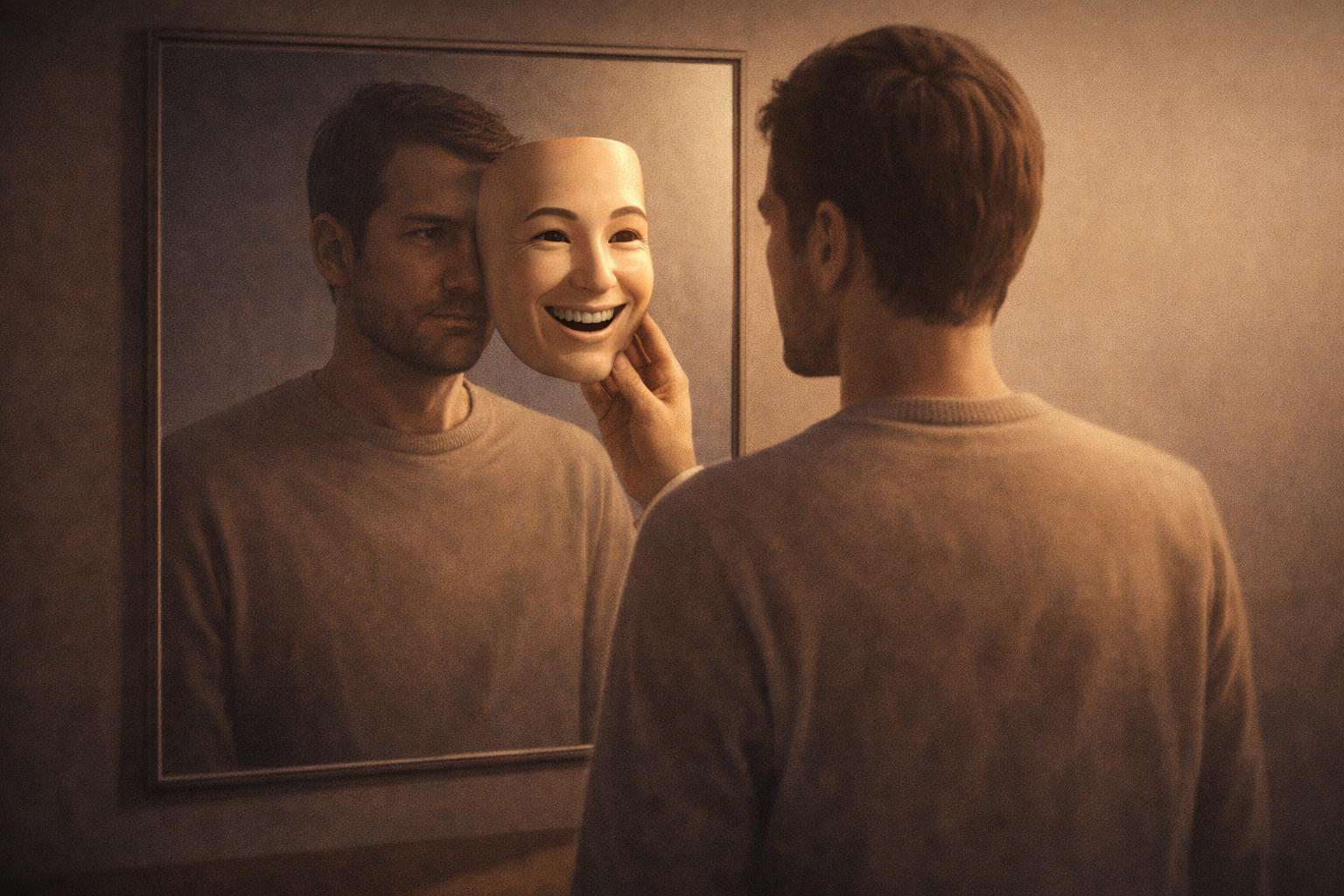
    — Social Masks in the Age of Social Media

    Hypocrisy is something most people dislike.

    We criticize politicians whose promises differ from their actions.
    We question celebrities whose charity work turns out to be a marketing strategy.
    And we feel uncomfortable when acquaintances show sympathy in public but criticize behind someone’s back.

    Yet hypocrisy is not simply someone else’s problem.

    In modern society, it may be more accurate to say that everyone lives under the shadow of hypocrisy in one way or another. Interestingly, hypocrisy is not always a simple moral failure—it can also function as a complex social survival strategy.


    1. Hypocrisy Is Not a New Problem

    1.1 The Discomfort We Feel

    When we hear the word “hypocrisy,” our instinctive reaction is often negative.

    We tend to associate it with dishonesty, manipulation, or moral weakness. But hypocrisy has existed throughout human history. Social norms, expectations, and reputations have always shaped how people present themselves to others.


    1.2 More Than a Moral Flaw

    What makes hypocrisy complicated is that it often emerges from the tension between who we are and who we believe we should be.

    Modern life constantly places individuals in situations where ideals and reality do not perfectly match. In this gap between the ideal self and the real self, hypocrisy often appears.


    2. Everyday Hypocrisy: How Honest Can We Really Be?

    contrast between reusable tumbler and disposable cups

    Hypocrisy often appears in very ordinary situations.

    Someone carries a reusable tumbler to show concern for the environment but uses disposable cups during a busy company dinner.

    Someone advises a colleague that “health is the most important thing,” yet continues to work excessive overtime while coping with stress through unhealthy habits.

    On social media, people promote the idea of “being authentic,” while carefully selecting filters, editing captions, and crafting the most appealing version of themselves.

    These examples may feel familiar.

    Most people constantly balance between who they want to be and who they actually are. Hypocrisy often emerges in that balancing act.

    Importantly, this does not always mean malicious intent.


    3. Social Media: A Mirror That Produces Hypocrisy

    contrast between real self and social media selfie

    In modern society, one of the places where hypocrisy appears most frequently is social media.

    Platforms that promise freedom of self-expression also create an environment of constant comparison and performance.

    For example:

    • A post saying “I’m happy with my life as it is” may appear alongside dozens of carefully edited travel photos.
    • Messages encouraging people to “love their true selves” often coexist with metrics such as follower counts and “likes.”

    These structures encourage people to live for the audience, not just for themselves.

    Psychologists sometimes describe this phenomenon as mask culture—a social environment in which individuals construct an idealized version of themselves online while feeling a growing distance from their real identities.


    4. The Social Consequences of Hypocrisy

    The real problem emerges when hypocrisy becomes widespread.

    Repeated exposure to inconsistency between words and actions can gradually erode social trust.

    People may begin to distrust political promises.
    Corporate social responsibility initiatives may be dismissed as public relations strategies.
    Even genuine kindness from acquaintances may be interpreted as calculated behavior.

    This dynamic creates what some scholars call moral fatigue—a growing sense of exhaustion and cynicism toward ethical claims.

    If hypocrisy becomes normalized, sincerity itself may be treated with suspicion. In such a society, truly honest people may appear naïve or unrealistic.


    5. What Can We Do About It?

    person reflecting quietly after putting phone aside

    Completely eliminating hypocrisy is probably impossible.

    Human beings are emotional, contextual, and imperfect. No one can remain perfectly consistent at all times.

    However, it is possible to reduce the influence of hypocrisy in everyday life through small practices:

    • asking ourselves whether we can truly live up to what we say
    • avoiding the need to appear perfect
    • reflecting on our own contradictions before criticizing others
    • recognizing that apparent hypocrisy may sometimes reflect a person’s attempt to grow or change

    Understanding hypocrisy as part of the complexity of human life allows us to approach it with self-awareness rather than denial.


    Conclusion

    Hypocrisy is a shadow that quietly follows modern life.

    Social media often intensifies it, encouraging people to present carefully constructed versions of themselves. Yet the presence of hypocrisy does not necessarily mean that sincerity has disappeared.

    Reducing hypocrisy does not require perfection.

    It begins with reflection—recognizing the contradictions within ourselves and choosing honesty whenever possible.

    Perhaps the simple effort to be a little more sincere today than yesterday is where genuine authenticity begins.

    Related Reading

    The psychological mechanisms behind how people judge themselves and others are explored further in Why We Excuse Ourselves but Blame Others: Understanding the Actor–Observer Bias, where differences in perspective reveal why individuals often justify their own behavior while criticizing the actions of others. These cognitive patterns help explain why social hypocrisy can persist even when people believe they are acting consistently with their values.

    At a broader societal level, similar questions about public behavior and digital identity appear in Clicktivism in Digital Democracy: Participation or Illusion?, where debates about online activism examine whether digital participation reflects genuine civic engagement or merely symbolic expression. In an era of social media visibility, the boundaries between authentic action and performative behavior become increasingly blurred.

    Question for Readers

    Do you think hypocrisy is an unavoidable part of modern life?

    Or do you believe people can live authentically even within social expectations?

    Share your thoughts in the comments.


    References

    Goffman, E. (1959). The Presentation of Self in Everyday Life. New York: Anchor Books.
    → This classic sociological work analyzes how individuals present themselves in everyday interactions. Goffman compares social life to theatrical performance, suggesting that people adopt different roles depending on the expectations of their audience. The concept helps explain why individuals often wear “social masks” and why hypocrisy can emerge as part of impression management.

    Turkle, S. (2011). Alone Together: Why We Expect More from Technology and Less from Each Other. New York: Basic Books.
    → Turkle explores how digital technologies and social media reshape human relationships. She argues that online platforms encourage individuals to construct curated identities while simultaneously increasing feelings of loneliness and social distance. Her analysis helps explain why modern communication environments can intensify performative behavior and perceived hypocrisy.

    Baumeister, R. F. (1984). Choking Under Pressure: Self-consciousness and Paradoxical Effects of Incentives on Skillful Performance. Journal of Personality and Social Psychology, 46(3), 610–620.
    → Baumeister’s research examines how heightened self-consciousness and external expectations can undermine natural behavior and performance. The study highlights how social evaluation pressures influence human actions, offering insight into why individuals sometimes engage in impression management or contradictory behavior in public settings.

  • Why Lighting a Candle Feels Like a Ritual

    — The Cultural Meaning of Candlelight

    Physically speaking, a candle is simple.

    It is only wax, a wick, and a small flame.

    Yet when someone lights a candle in a quiet space,
    the moment rarely feels ordinary.

    A birthday candle before making a wish,
    a candle in prayer,
    or a candle held during a public vigil.

    Across cultures, candlelight often signals the beginning of something meaningful.

    Why does such a small flame carry such emotional weight?


    Person lighting a candle in a quiet room

    1. Everyday Candlelight and the Feeling of Transition

    Have you ever noticed how a room changes when a candle is lit?

    The light is softer than electric lamps.
    The flame moves gently.
    The atmosphere becomes calmer.

    In moments like birthday celebrations,
    people often grow quiet as the candles are lit.

    Even before the wish is made,
    everyone senses that the moment matters.

    Lighting a candle subtly tells our minds:

    something meaningful is about to happen.


    2. The Psychology of Moving Light

    Candlelight creating calm reflective atmosphere

    From a scientific perspective, candlelight affects perception.

    Studies on environmental psychology suggest that warm and flickering light can influence mood, attention, and relaxation.

    Unlike static electric light, a candle flame moves.

    This movement captures our visual attention and encourages slower, more reflective states of mind.

    Lower lighting levels also stimulate relaxation responses in the body.

    As a result, candlelight often encourages introspection, memory recall, and emotional awareness.


    3. Candles as Symbols of the Sacred

    Historically, candles have been deeply connected to religious and spiritual rituals.

    In ancient cultures, fire was associated with divine presence.

    In Judaism, the Hanukkah candles symbolize miracle and memory.
    In Christianity, candles mark sacred time during Advent and prayer.
    In Buddhism, lanterns and candles symbolize enlightenment.

    Across traditions, lighting a flame represents a bridge between the ordinary and the sacred.


    4. Candlelight and Collective Expression

    People holding candles during a candlelight vigil

    In modern societies, candles also appear in civic rituals.

    Candlelight vigils and public gatherings often use candles as symbols of solidarity, remembrance, or peaceful protest.

    A single flame becomes a quiet statement:

    “We are present.”
    “We remember.”
    “We stand together.”

    In this way, candlelight transforms from personal symbolism into collective meaning.


    Conclusion: What Candlelight Reveals About Human Ritual

    Candles are more than sources of light.

    They are tools that reshape how we experience time and space.

    A candle marks a boundary between the ordinary and the meaningful.

    It invites pause, reflection, and shared attention.

    Perhaps this is why people continue lighting candles even in an age of electricity.

    Not because we need more light,
    but because we need moments that feel significant.

    Sometimes, the smallest flame
    creates the deepest sense of ritual.


    Related Reading

    The cultural power of symbols and the meanings societies attach to everyday acts are further explored in The Power of Naming: Is Naming an Act of Control?, where the relationship between language, symbols, and social meaning reveals how seemingly simple practices can shape collective perception and cultural identity.

    At a broader societal level, the role of symbolic gestures in public life is examined in Clicktivism in Digital Democracy: Participation or Illusion?, where debates about symbolic participation raise deeper questions about whether collective expressions—both online and offline—create real change or primarily function as shared social rituals.

    References

    1. Bille, M., Hastrup, F., & Sørensen, T. F. (2010). An Anthropology of Luminosity: Light, Vision and the Experience of the Everyday. Routledge.
    → This work examines how humans experience light culturally and sensorially, showing how illumination shapes emotion, perception, and everyday spatial meaning.

    2. Eliade, M. (1959). The Sacred and the Profane: The Nature of Religion. Harcourt.
    → Eliade explores how symbolic acts, including fire and light, separate sacred time from ordinary life, explaining why ritual gestures feel meaningful.

    3. Taylor, C. (2007). A Secular Age. Belknap Press of Harvard University Press.
    → Taylor discusses how modern societies continue to create meaning through symbolic practices even in secular contexts, highlighting the persistence of ritual-like behaviors.

  • When Being Good Becomes Exhausting

    — Understanding Moral Fatigue

    “I stayed patient again.”
    “I gave in again.”
    “So why do I feel more tired?”

    Have you ever felt drained not because you did something wrong,
    but because you tried to do the right thing?

    In a culture that constantly praises kindness, empathy, and self-restraint,
    we often forget that goodness also requires energy.

    Psychologists refer to this state as moral fatigue
    a psychological exhaustion caused by sustained moral self-regulation.


    Person suppressing emotion in social situation

    1. The Cost of Staying Good

    Most people want to see themselves as morally decent.

    We hold doors open.
    We forgive.
    We stay silent to avoid conflict.
    We help even when inconvenient.

    But each act of self-control consumes mental energy.

    Over time, repeated self-restraint can lead to emotional depletion.

    Imagine someone who always volunteers for extra work.
    At first, they feel proud.
    Later, they begin to feel resentful.

    That quiet resentment is often moral fatigue.


    2. Self-Control Has Limits

    Emotional exhaustion from constant self-restraint

    Research on willpower suggests that self-regulation draws from finite cognitive resources.

    Repeatedly suppressing anger, prioritizing others, or making “ethical” choices
    requires ongoing internal effort.

    When that effort accumulates,
    small requests begin to feel overwhelming.

    This does not mean the person has become selfish.

    It means the emotional system is asking for rest.


    3. The Link to Compassion Fatigue

    Moral fatigue is closely related to compassion fatigue —
    a state often experienced by caregivers, teachers, medical workers, and helpers.

    When one is constantly responsible for being patient, understanding, and supportive,
    empathy itself becomes tiring.

    Ironically, the more responsible and caring a person is,
    the more vulnerable they may be to moral exhaustion.


    4. The Trap of the “Good Person” Identity

    Sometimes the fatigue does not come from action,
    but from identity.

    If someone feels they must always be the understanding one,
    the forgiving one,
    the mature one,

    they may begin to suppress their own needs.

    At that point, morality shifts from choice to obligation.

    And obligation drains faster than choice.


    5. Balancing Goodness and Well-Being

    How can we respond to moral fatigue?

    • Choose sustainable kindness over constant sacrifice.
    • Practice saying “no” without guilt.
    • Extend compassion inward, not only outward.

    Being good does not require self-erasure.

    Sometimes the most ethical act
    is protecting your own emotional boundaries.


    Conclusion: A Gentle Recalibration

    Setting healthy boundaries to prevent moral fatigue

    Moral fatigue is not proof of failure.

    It is proof that you have been trying.

    Perhaps the goal is not to stop being kind,
    but to redefine kindness
    so that it includes yourself.

    Goodness without rest becomes pressure.
    Goodness with boundaries becomes strength.

    Related Reading

    The emotional cost of constant kindness and blurred boundaries is further explored in The Many Faces of Self-Love: Where Healthy Self-Esteem Ends and Toxic Narcissism Begins, where the tension between self-respect and self-sacrifice is examined in depth.

    At a broader social level, the question of how environments silently shape behavior and inclusion is examined in Uncomfortable by Design: How Spaces Are Built to Exclude, where structural expectations and hidden norms reveal how pressure is embedded into everyday life.


    References

    1. Baumeister, R. F., & Tierney, J. (2011). Willpower: Rediscovering the Greatest Human Strength. Penguin Press.
    → This work explores self-control and ego depletion, explaining how repeated acts of regulation can drain psychological resources and lead to fatigue.

    2. Bloom, P. (2016). Against Empathy: The Case for Rational Compassion. HarperCollins.
    → Bloom argues that emotional empathy, when unchecked, can produce burnout and distorted moral decisions, advocating for balanced and sustainable compassion.

    3. Figley, C. R. (1995). Compassion Fatigue. Brunner/Mazel.
    → Figley analyzes how sustained caregiving and emotional labor lead to compassion fatigue, expanding understanding of moral exhaustion in professional and personal contexts.

  • Why Is Candy a Symbol of Reward for Children?

    — The Psychology of Sweetness and Behavioral Conditioning

    “Be brave and you’ll get candy.”
    “Finish your homework and here’s a treat.”
    “Don’t cry at the doctor, and you can have one.”

    Across many cultures, candy has become the universal symbol of reward for children.

    But why candy?
    Why not toys, books, or something else?

    Why has a small, sweet object become the emotional shorthand for praise?


    1. Sweetness Is Biologically Rewarding

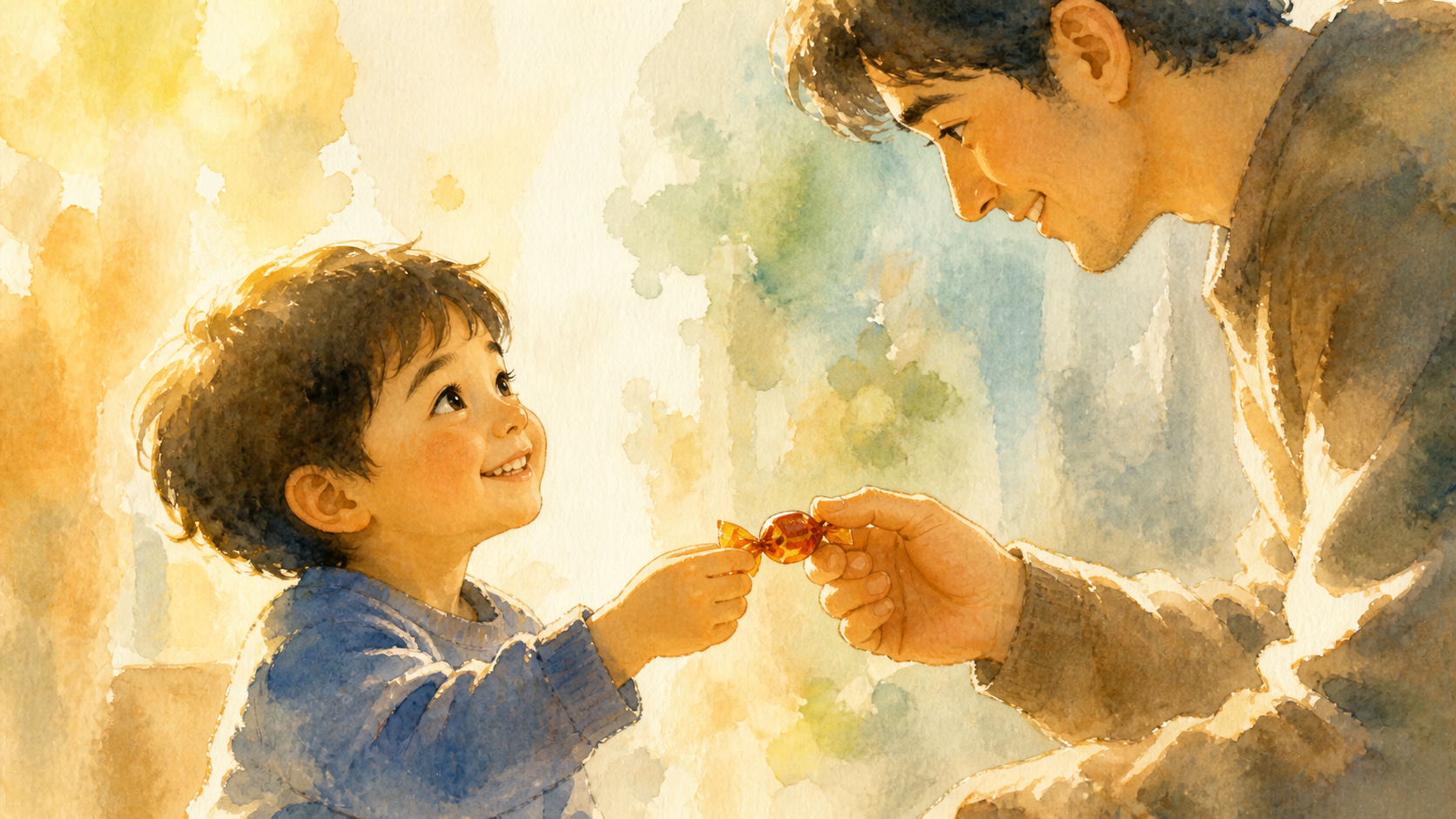
    Child enjoying sweetness as instant reward

    Humans are wired to prefer sweetness from birth.

    Breast milk itself is sweet, and infants quickly show a strong positive reaction to sugary tastes.

    From an evolutionary perspective, sweetness signals energy-rich carbohydrates — a valuable resource in harsh environments.

    In other words, sweetness equals survival.

    Candy, therefore, triggers immediate pleasure responses in the brain’s reward system.

    For children, whose emotional regulation is still developing, such immediate reinforcement is especially powerful.


    2. From Luxury to Behavioral Tool

    Sugar was once rare and expensive.

    But after industrialization made sugar widely available in the 19th century, candy transformed from a luxury item into a mass-produced consumer good.

    At the same time, modern childhood emerged as a protected and emotionally significant stage of life.

    Candy began to function not merely as food, but as a behavioral incentive.

    “Good behavior = sweet reward.”

    This simple formula reinforced compliance, courage, and discipline.

    Over time, candy became embedded in parenting, schooling, and even medical routines.


    3. Candy as Emotional Recognition

    When adults give candy, they are not only giving sugar.

    They are giving acknowledgment.

    “You did well.”
    “I see your effort.”
    “You were brave.”

    Candy becomes a tangible symbol of recognition.

    For a child, this small object carries emotional meaning far beyond its size.

    It marks a moment of approval and belonging.


    4. Cultural Ritual and Symbolic Memory

    Today, candy is deeply woven into childhood rituals:

    Halloween trick-or-treating
    Birthday parties
    Doctor’s office reward baskets
    Holiday celebrations

    Through repetition, candy has become ritualized.

    It is no longer simply sweet.
    It is symbolic.

    It represents courage, obedience, growth, and celebration.

    These associations become part of early emotional memory.


    Conclusion: A Small Object, A Big Meaning

    Candy is not merely sugar.

    It is a compact emotional language.

    It links biology (reward circuits),
    economics (mass production of sugar),
    and culture (ritualized childhood practices).

    For children, candy often means:

    “You did well.”
    “You are loved.”
    “You belong.”

    Perhaps that is why its sweetness lingers far beyond taste.


    Related Reading

    The subtle emotional layering behind childhood memories and symbolic objects is further explored in The Texture of Time — How the Mind Shapes the Weight of Our Moments, where lived experience gradually transforms simple sensations into lasting meaning.

    In the digital age, the way small pleasures evolve into social comparison is examined in How Social Media Amplifies Feelings of Lack and Comparison, where personal satisfaction can quietly shift into a metric of visibility and validation.

    References

    1. Mintz, S. W. (1985). Sweetness and Power: The Place of Sugar in Modern History. Viking Penguin.
    → Mintz explores how sugar became embedded in systems of power, consumption, and social meaning, showing how sweetness evolved from luxury to everyday reward.

    2. Allison, A. (2006). Millennial Monsters: Japanese Toys and the Global Imagination. University of California Press.
    → Allison examines how children’s consumer culture connects toys, treats, and reward structures, highlighting how material goods mediate emotion and identity.

    3. Zelizer, V. A. (1994). Pricing the Priceless Child. Princeton University Press.
    → Zelizer analyzes the changing cultural value of children in modern society, explaining how material tokens such as gifts and treats became expressions of emotional recognition.