Tag: human emotions

  • The Nature of Love: Is It Biological Instinct or a Psychological and Social Experience?

    The Nature of Love: Is It Biological Instinct or a Psychological and Social Experience?

    Why Biology Alone Cannot Explain One of Our Most Powerful Emotions

    Love is one of the most familiar human experiences—and one of the hardest to explain.

    People fall in love, form lasting relationships, experience heartbreak, care for children and families, and sometimes make extraordinary sacrifices for those they love. Across cultures and throughout history, love has inspired poetry, music, philosophy, religion, and art.

    Yet a surprisingly difficult question remains:

    What actually causes us to love another person?

    Biology offers one answer. Attraction and attachment involve the brain, hormones, reward systems, and evolutionary processes that help human beings form bonds and reproduce.

    Psychology offers another. Our experiences of love are influenced by attachment, emotional security, memory, personality, and the desire to belong.

    Society and culture add yet another layer. Ideas about romance, marriage, intimacy, family, and acceptable relationships vary dramatically across societies and historical periods.

    So is love fundamentally a biological instinct that culture merely reshapes?

    Or is what we call “love” something far more complex—a combination of biology, psychology, culture, and personal experience?


    1. Is Love a Biological Instinct?
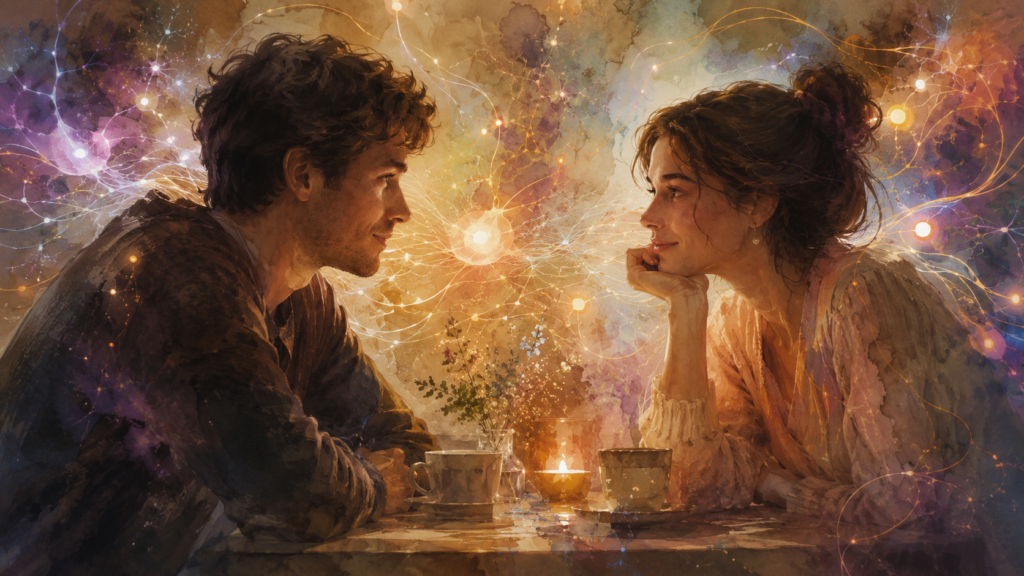
    biological processes involved in romantic attraction and human bonding

    The Brain and the Chemistry of Attraction

    There is little doubt that biology plays an important role in love.

    Human beings are social creatures whose survival has long depended on cooperation, caregiving, reproduction, and enduring relationships. From an evolutionary perspective, mechanisms that encourage attraction and attachment can help people form bonds that support both partners and offspring.

    The brain is deeply involved in these processes.

    Romantic attraction has been associated with neural reward systems involving dopamine, a neurotransmitter connected with motivation, reward, and reinforcement. This can help explain the intense attention and excitement people sometimes experience during the early stages of romantic attraction.

    Oxytocin is also associated with social bonding and attachment. It is involved in childbirth and breastfeeding but also participates more broadly in social interaction and bonding.

    Other neurochemical systems, including serotonin and vasopressin, have also been investigated in relation to attraction, attachment, and social behavior.

    But describing these biological mechanisms does not necessarily explain love completely.

    Knowing that dopamine participates in reward does not tell us why one particular person becomes emotionally meaningful to us.

    Knowing that oxytocin is involved in bonding does not explain why some relationships endure for decades while others disappear.

    Biology helps explain the machinery of love.

    It may not, by itself, explain its meaning.


    2. What Does Psychology Tell Us About Love?

    attachment, trust and emotional security shaping adult romantic relationships

    Attachment, Security, and the Need to Belong

    Psychology shifts the question from what happens inside the brain to how people experience relationships.

    Human beings have a powerful need for connection, belonging, recognition, and emotional security. Love can satisfy these needs, but the way people form close relationships is influenced by their earlier experiences.

    Attachment theory provides one influential framework.

    Beginning with the work of John Bowlby and later expanded through research by Mary Ainsworth and others, attachment theory examines how early relationships with caregivers can influence patterns of emotional connection.

    A person who experiences reliable and responsive caregiving may develop expectations that close relationships can be safe and trustworthy. Someone whose early relationships are inconsistent or emotionally unavailable may approach intimacy differently.

    These patterns are not absolute destinies.

    People change, relationships differ, and adult experiences can reshape how individuals understand intimacy and trust.

    Nevertheless, attachment research illustrates an important point:

    We do not enter love as blank biological organisms.

    We bring memories, expectations, fears, emotional habits, and previous relationships with us.

    Two people can therefore experience the same relationship very differently.

    Love is not merely something that happens to the body.

    It is also something interpreted by the mind.


    3. Is Romantic Love Shaped by Culture?

    different cultural expressions of romantic love, affection and commitment

    Why Love Does Not Look the Same Everywhere

    If love were purely biological, we might expect it to appear in essentially the same form in every society.

    Yet cultures differ greatly in how they understand relationships.

    In many contemporary societies, romantic love is considered a central reason for choosing a marriage partner. Individuals are often expected to find someone they personally love and then decide whether to build a life together.

    Historically—and still today in some communities—marriage may involve broader considerations.

    Family relationships, economic security, religion, social status, community expectations, and obligations between families can influence partner selection.

    This does not mean that people in such societies do not experience romantic affection.

    Rather, it shows that love and marriage are not always understood as identical things.

    Cultures also differ in how affection should be expressed. Public displays of intimacy may be ordinary in one society and discouraged in another. Some cultures emphasize verbal expressions of love; others may place greater importance on responsibility, sacrifice, caregiving, or fulfilling family obligations.

    A multicultural perspective therefore complicates any attempt to define a single “natural” form of love.

    Human beings may share biological capacities for attraction and attachment, but societies help teach us what love should look like, whom we may love, how it should be expressed, and what commitments should follow from it.

    Culture does not necessarily create love from nothing.

    But it gives love a language.


    4. Why Can’t Biology, Psychology, or Culture Explain Love Alone?

    The most convincing explanation may be that these dimensions constantly interact.

    Imagine two people meeting for the first time.

    Physical attraction may create initial interest. The brain’s reward systems may strengthen the desire to spend more time together.

    But attraction alone does not guarantee a lasting relationship.

    As the relationship develops, psychological factors become increasingly important. Can the partners trust one another? Do they feel emotionally safe? Can they resolve disagreements? Do they feel understood and respected?

    At the same time, social expectations shape the relationship.

    What does commitment mean? Is marriage expected? How should responsibilities be divided? What role should families play? How do religion, gender expectations, work, money, and community affect the couple?

    Over time, love may change again.

    The intense excitement of early attraction can become companionship, trust, familiarity, caregiving, and shared memory.

    This does not necessarily mean that love has weakened.

    It may mean that it has changed form.

    A relationship lasting several decades cannot be understood simply by measuring the intensity of its first months. Long-term love often involves something less dramatic but perhaps equally important:

    choosing to remain connected through ordinary life.


    5. If Love Has Biological Causes, Is It Still Meaningful?

    This is where the scientific question becomes philosophical.

    Suppose science eventually explained every biological process involved in attraction and attachment.

    Would that make love less meaningful?

    Probably not.

    Understanding the biology of hunger does not make a shared meal meaningless. Understanding the neural mechanisms of music does not eliminate the beauty of listening to it. Explaining how memory works does not make our memories less important.

    The same may be true of love.

    A biological explanation tells us how certain experiences become possible. It does not necessarily tell us what those experiences mean within a human life.

    Love becomes meaningful through relationships.

    It acquires significance through memories, promises, disappointments, forgiveness, intimacy, responsibility, and time.

    This also helps explain why reducing love to “brain chemistry” feels incomplete.

    The chemistry is real.

    But so is the story people build around it.


    6. Has Modern Society Changed the Meaning of Love?

    Modern life has expanded the possibilities for relationships while creating new complications.

    Dating apps allow people to meet potential partners beyond their immediate social circles. Social media makes relationships more visible and sometimes more comparable. Greater individual freedom has enabled many people to choose relationships outside traditional expectations involving class, religion, nationality, gender roles, or family arrangements.

    These developments can expand personal autonomy.

    But they can also transform love into something that sometimes resembles a marketplace of choices.

    When people are constantly presented with alternative partners, does commitment become more difficult?

    When relationships are displayed online, do people begin comparing their private lives with idealized versions of other people’s relationships?

    And when individual fulfillment becomes a central expectation of romantic relationships, do we ask one partner to provide too much—romance, friendship, emotional security, personal growth, sexual fulfillment, and lifelong companionship all at once?

    Technology may change how we meet, communicate, and maintain relationships, but it does not remove the older human needs for attachment, trust, recognition, and belonging.

    In that sense, love continues to change while remaining deeply familiar.


    Conclusion: So What Is Love?

    Love is unlikely to have a single explanation.

    It is biological because our brains and bodies make attraction, bonding, and attachment possible.

    It is psychological because we experience love through individual histories, emotional needs, attachment patterns, expectations, and memories.

    And it is social because cultures teach us how relationships should be formed, expressed, recognized, and maintained.

    None of these explanations needs to defeat the others.

    They describe different dimensions of the same human experience.

    Perhaps the mistake is to ask whether love is either biology or psychology or culture.

    A better understanding begins when we recognize that human beings are simultaneously biological organisms, psychological selves, and social beings.

    Love emerges where these dimensions meet.

    Biology may create the capacity for connection. Psychology shapes how we experience that connection. Culture gives it forms, expectations, and meanings. And through our choices and shared experiences, each relationship develops a history that belongs to the people within it.

    That may be why love remains difficult to define even after centuries of philosophy and decades of scientific research.

    We can increasingly explain how love happens.

    But the deeper question—what love comes to mean in a human life—cannot be answered by chemistry alone.

    Reader Question

    Science can explain many of the biological and psychological processes involved in love, but relationships also acquire meaning through culture, memory, and personal experience.

    If we could fully explain the biology of love, would that change what love means to us—or would its deepest meaning still come from the relationships we choose to build?

    Related Reading

    If love is one of our most powerful emotions, a broader question follows: why do emotions matter so deeply in shaping our relationships, decisions, and everyday lives?

    In Why Emotions Matter, we explore how emotions influence human behavior, relationships, judgment, and the ways we understand ourselves and others.

    If culture and social expectations influence how we experience and express love, we must also ask whether our emotions themselves are entirely personal or partly shaped by the societies around us.

    In Are Our Emotions Truly Ours—or Socially Constructed?, we examine how biology, personal experience, culture, and social norms interact to shape the emotions we often assume are entirely our own.

    References

    1. Bowlby, J. (1969). Attachment and Loss: Vol. 1. Attachment. Basic Books.

    Bowlby established attachment theory as a framework for understanding the emotional bonds human beings form with important others. His work provides a foundation for understanding how early relationships may influence later patterns of intimacy, trust, and emotional security.

    2. Hazan, C., & Shaver, P. (1987). Romantic Love Conceptualized as an Attachment Process. Journal of Personality and Social Psychology, 52(3), 511–524.

    This influential study extended attachment theory into adult romantic relationships. It helped establish the idea that patterns of security, anxiety, and avoidance can influence how adults experience intimacy and romantic attachment.

    3. Fisher, H. E. (2004). Why We Love: The Nature and Chemistry of Romantic Love. Henry Holt and Company.

    Fisher examines romantic love through neuroscience, anthropology, and evolutionary theory. The book is particularly useful for understanding the biological systems associated with attraction, reward, attachment, and pair bonding.

    4. Sternberg, R. J. (1986). A Triangular Theory of Love. Psychological Review, 93(2), 119–135.

    Sternberg proposes that love can be understood through three interacting components: intimacy, passion, and commitment. The theory helps explain why different relationships can take different forms and why romantic love may change over time.

    5. Jankowiak, W. R., & Fischer, E. F. (1992). A Cross-Cultural Perspective on Romantic Love. Ethnology, 31(2), 149–155.

    This cross-cultural research examines romantic love across a wide range of societies. It is especially relevant to the article’s argument that the capacity for romantic attachment may be widespread while cultural norms shape how love is understood, expressed, and incorporated into marriage and social life.


  • Why Emotions Matter

    Why Emotions Matter

    How Feelings Shape the Way We Think, Decide, and Live

    Emotions are among the most fundamental aspects of being human. From the moment we wake up until we fall asleep, our lives are guided by a constantly changing landscape of feelings—joy, sadness, fear, anger, surprise, gratitude, love, disappointment, and hope.

    For centuries, emotions were often viewed as obstacles to clear thinking. Today, however, psychology and neuroscience tell a different story. Emotions are not simply irrational reactions that interfere with reason. They are essential biological and psychological signals that help us survive, build relationships, make decisions, and understand ourselves.

    Whether pleasant or uncomfortable, every emotion carries valuable information. Learning to recognize and understand our emotions is one of the most important steps toward living a healthier, wiser, and more meaningful life.


    1. What Are Emotions?

    An emotion is our mind and body’s immediate response to an event, situation, or experience. It involves not only thoughts but also physical changes such as increased heart rate, facial expressions, hormonal responses, and behavioral reactions.

    Imagine hearing a loud noise behind you while walking alone at night. Before you consciously analyze the situation, your heart begins beating faster and your muscles become tense. This rapid response is an emotion preparing your body to react.

    Psychologists often distinguish between emotions, feelings, and moods.

    An emotion is an immediate biological and psychological response to a stimulus.

    A feeling is our conscious awareness and interpretation of that emotional response.

    A mood is a more general emotional state that may last for hours or even days without a single obvious cause.

    Although these terms are often used interchangeably in everyday conversation, understanding their differences helps us better understand ourselves.

    Emotions are not random events. They evolved because they improved our ancestors’ chances of survival and social cooperation.


    2. Basic and Complex Emotions

    people expressing basic human emotions

    Researchers have identified several basic emotions that appear across cultures.

    Psychologist Paul Ekman proposed six universal emotions:

    • Happiness
    • Sadness
    • Fear
    • Anger
    • Surprise
    • Disgust

    These emotions appear early in life and are recognized through similar facial expressions across many cultures.

    Each serves an important purpose.

    Fear encourages us to avoid danger.

    Anger motivates us to defend ourselves against injustice or threats.

    Sadness helps us process loss and encourages support from others.

    Joy reinforces behaviors that improve our well-being and strengthen social bonds.

    Surprise prepares us to pay attention to unexpected events.

    Disgust protects us from contamination and harmful substances.

    As people mature, emotions become increasingly complex.

    Feelings such as guilt, pride, jealousy, embarrassment, gratitude, nostalgia, and compassion combine multiple emotional experiences with personal values and social understanding.

    For example, guilt often combines sadness with responsibility, while jealousy may involve fear, sadness, and anger simultaneously.

    These complex emotions play essential roles in maintaining relationships and navigating society.


    3. Why Positive and Negative Emotions Both Matter

    Many people naturally prefer positive emotions.

    Happiness, love, gratitude, curiosity, and hope make life enjoyable and strengthen psychological well-being.

    Research in positive psychology shows that positive emotions broaden our thinking, improve creativity, strengthen resilience, and encourage cooperation with others.

    When people regularly experience gratitude or optimism, they often become more flexible in solving problems and more capable of adapting to life’s challenges.

    Positive emotions also contribute to better physical health by reducing stress and supporting the immune system.

    However, this does not mean negative emotions are harmful or unnecessary.

    Fear warns us about danger.

    Anger signals that something feels unfair or threatens our values.

    Sadness gives us time to recover after disappointment or loss.

    Even anxiety can encourage careful preparation before important events.

    Modern psychology increasingly views emotions as information rather than labels of “good” or “bad.”

    Every emotion asks a different question.

    Fear asks,

    “Am I safe?”

    Anger asks,

    “Has something crossed an important boundary?”

    Sadness asks,

    “What have I lost?”

    Joy asks,

    “What makes life meaningful?”

    Understanding these messages is often more valuable than trying to suppress them.


    4. How Emotions Shape Our Daily Lives

    human emotions influencing everyday life and relationships

    Whether we realize it or not, emotions influence almost every decision we make.

    They affect how we interpret situations, communicate with others, solve problems, and remember important experiences.

    A person who feels confident before an interview is more likely to communicate clearly.

    Someone overwhelmed by anxiety may struggle to think objectively even when fully prepared.

    Emotions also influence memory.

    Events connected with strong emotions—such as graduation, marriage, the birth of a child, or the loss of a loved one—often remain vivid for many years.

    This close relationship between emotion and memory helps explain why emotionally meaningful experiences shape our personal identities.

    Relationships are also deeply influenced by emotions.

    Empathy, trust, compassion, and forgiveness allow people to build meaningful social connections.

    Without emotional understanding, even excellent communication skills become less effective.

    Our emotional lives shape not only how we experience the world but also how we connect with one another.


    5. Emotional Intelligence: Understanding Rather Than Controlling Emotions

    Many people believe emotional maturity means never becoming angry, sad, or afraid.

    In reality, emotional intelligence is something quite different.

    Psychologist Daniel Goleman describes emotional intelligence as the ability to recognize, understand, manage, and appropriately express emotions while also understanding the emotions of others.

    Emotionally intelligent people do not eliminate negative emotions.

    Instead, they learn how to respond wisely.

    Rather than reacting impulsively, they pause, reflect, and choose actions that align with their long-term values.

    Simple habits can strengthen emotional intelligence.

    Taking a few moments to identify what we are feeling, listening carefully to others, practicing gratitude, and reflecting before reacting all help us build healthier emotional habits.

    Emotional intelligence is therefore less about controlling emotions than about learning from them.


    6. Every Emotion Has Something to Teach Us

    One of the greatest misconceptions about emotions is that some should be welcomed while others should be avoided.

    In reality, every emotion serves a purpose.

    Without fear, we might ignore genuine dangers.

    Without sadness, we might never fully appreciate love or meaningful relationships.

    Without anger, injustice might go unchallenged.

    Without joy, life would lose much of its motivation and hope.

    Emotions are not obstacles to wisdom.

    They are guides that help us understand both ourselves and the world around us.

    The challenge is not to eliminate difficult emotions but to respond to them thoughtfully.

    When we become curious about our emotions instead of judging them, they become valuable teachers rather than overwhelming enemies.


    Conclusion: Listening to What Our Emotions Tell Us

    person reflecting on emotions and personal growth

    Emotions are far more than temporary feelings. They influence our decisions, shape our relationships, and help define how we experience the world. Whether joyful or painful, every emotion offers valuable insight into our needs, values, and experiences.

    Learning to understand our emotions does not mean avoiding sadness, fear, or anger. Instead, it means recognizing that every emotion has a purpose and learning how to respond with awareness rather than impulse.

    Perhaps emotional well-being is not about feeling happy all the time. It is about learning to listen to what our emotions are trying to tell us—and allowing that understanding to guide us toward wiser decisions, stronger relationships, and a richer, more meaningful life.

    A Question for Readers

    Think about an emotion you experienced recently—whether it was joy, anger, fear, or sadness.

    Instead of asking whether it was a “good” or “bad” emotion, what might it have been trying to teach you about yourself or your situation?


    Related Reading

    Our emotions influence not only how we feel but also how we remember our experiences and build our identity over time. This connection is explored further in Can AI Remember Like Humans?, which examines how human memory is shaped by emotion, experience, and meaning in ways that differ fundamentally from artificial intelligence.

    At the same time, emotions also affect the way we interpret information and make important decisions. This psychological perspective continues in Confirmation Bias in Investing, which shows how feelings, past experiences, and cognitive biases often shape our judgments more than we realize.

    References

    1. Goleman, Daniel. Emotional Intelligence: Why It Can Matter More Than IQ. Bantam Books, 1995.

    A groundbreaking book that introduced the concept of emotional intelligence (EQ) to a global audience. Goleman explains how recognizing and managing emotions contributes to better decision-making, stronger relationships, and greater success in both personal and professional life.


    2. Ekman, Paul. Emotions Revealed: Recognizing Faces and Feelings to Improve Communication and Emotional Life. 2nd ed., Times Books, 2007.

    Ekman explores the science of universal human emotions and facial expressions. His research demonstrates that basic emotions are shared across cultures and play essential roles in communication and survival.


    3. Fredrickson, Barbara L. Positivity. Crown Publishers, 2009.

    Based on the Broaden-and-Build Theory, Fredrickson explains how positive emotions expand our thinking, strengthen resilience, and improve creativity, relationships, and long-term psychological well-being.


    4. Damasio, Antonio. Descartes’ Error: Emotion, Reason, and the Human Brain. G. P. Putnam’s Sons, 1994.

    Damasio challenges the traditional belief that reason and emotion operate separately. Through neuroscience, he demonstrates that emotions are essential for rational thinking and effective decision-making.


    5. Barrett, Lisa Feldman. How Emotions Are Made: The Secret Life of the Brain. Houghton Mifflin Harcourt, 2017.

    Barrett presents a modern view of emotion, arguing that emotions are actively constructed by the brain rather than simply triggered automatically. The book offers a fresh perspective on how emotions influence perception, memory, and behavior.

  • Can Happiness Ever Be Measured Objectively?

    Can Happiness Ever Be Measured Objectively?

    The Relativity of Happiness in Psychology, Culture, and Modern Society

    Almost everyone wants happiness.

    Governments pursue it through economic growth. Individuals search for it through relationships, success, health, or personal meaning. Entire industries are built around helping people become happier.

    But despite humanity’s obsession with happiness, one difficult question remains:

    Can happiness actually be measured objectively?

    Today, international organizations publish happiness rankings comparing countries around the world. Psychologists analyze subjective well-being through surveys and behavioral studies. Economists attempt to connect happiness with income and social stability.

    Yet happiness often resists measurement.

    Some people living in wealthy societies feel emotionally exhausted and disconnected. Others living in difficult circumstances still report deep satisfaction and meaning in life.

    This suggests that happiness may not simply be a measurable condition.

    It may be something far more relative, cultural, emotional, and deeply human.

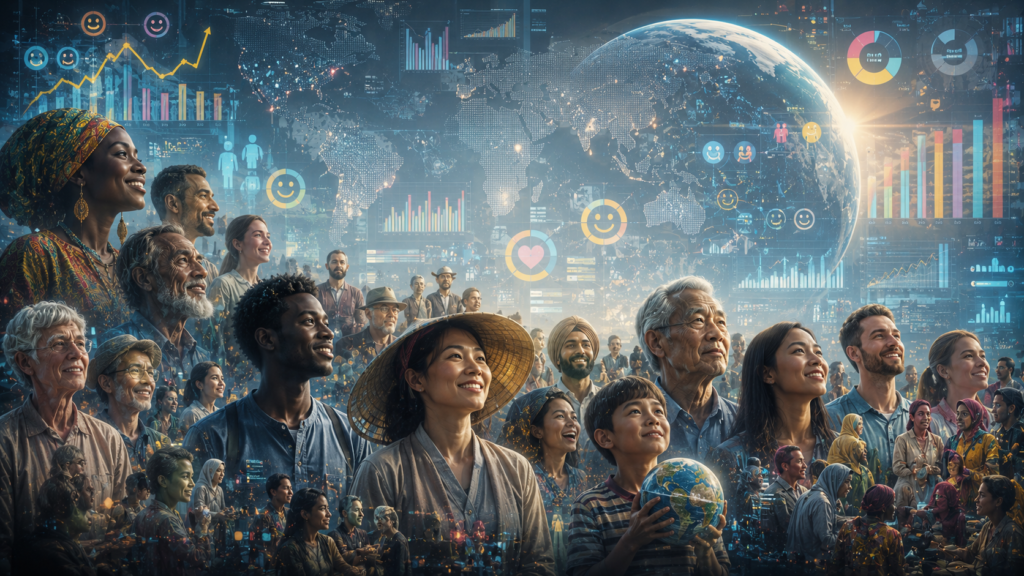
    global happiness measurement and human emotion

    1. Can Happiness Be Objectively Measured?

    The Rise of Happiness Indexes

    One of the most widely known attempts to measure happiness is the United Nations World Happiness Report.

    This report evaluates national well-being using factors such as:

    • income levels
    • social support
    • life expectancy
    • political freedom
    • trust in institutions
    • and perceptions of corruption

    Countries such as Finland, Denmark, and Switzerland frequently rank near the top due to strong welfare systems and social stability.

    These rankings suggest happiness can be analyzed scientifically.

    But the reality may be more complicated.


    The Gap Between Statistics and Experience

    Economic stability certainly affects well-being.

    However, happiness is not determined by material conditions alone.

    Some people living in affluent societies experience:

    • loneliness
    • anxiety
    • burnout
    • and emotional emptiness

    Meanwhile, others living in financially difficult environments may still find happiness through:

    • family relationships
    • spirituality
    • community belonging
    • or personal meaning

    This reveals an important limitation of happiness indexes:

    Objective conditions and subjective experience do not always match.


    2. Culture Changes How Humans Understand Happiness

    Individual Happiness vs Collective Harmony

    Different cultures define happiness differently.

    In many Western societies, happiness is often associated with:

    • personal achievement
    • freedom of choice
    • self-expression
    • and individual fulfillment

    In many East Asian cultures, however, happiness may be more strongly connected to:

    • social harmony
    • family relationships
    • emotional balance
    • and collective stability

    As a result, people from different cultures may answer happiness surveys very differently—even when living under similar conditions.


    Cultural Bias in Measuring Well-Being

    Researchers also note that cultural communication styles affect self-reporting.

    For example, people in countries such as South Korea or Japan may understate their happiness due to cultural norms emphasizing modesty and emotional restraint.

    In contrast, cultures encouraging emotional openness may produce higher self-reported happiness scores.

    This means happiness measurement is never fully culturally neutral.

    Even the language used to ask “Are you happy?” may carry different meanings across societies.


    3. Happiness Changes Across Time

    person reflecting on happiness across time

    Why the Past Often Feels Happier

    Humans frequently remember the past more positively than it actually was.

    Psychologists call this tendency retrospective bias.

    People often soften painful memories while preserving emotionally meaningful moments.

    A difficult childhood may later feel nostalgic because memories of family warmth or emotional connection become more emotionally powerful over time.

    This explains why happiness is not simply experienced—

    It is also reconstructed through memory.


    The Hedonic Treadmill

    Humans also tend to sacrifice the present while pursuing future happiness.

    Students may believe happiness will arrive after entering university. Workers may postpone rest while chasing financial success. Many people assume happiness exists somewhere ahead of them.

    However, psychology suggests people rapidly adapt to improved circumstances.

    This phenomenon is known as the hedonic treadmill.

    After reaching one goal, humans often normalize it and begin pursuing another.

    As a result, happiness can become an endless moving target.


    4. Is Happiness a Number—or a Meaning?

    Beyond Economic Measurement

    Modern societies often attempt to quantify happiness through:

    • productivity
    • income
    • health statistics
    • and social indicators

    These measurements are useful.

    But they cannot fully capture:

    • emotional meaning
    • inner peace
    • love
    • purpose
    • grief
    • or spiritual fulfillment

    Some of the most meaningful human experiences resist numerical evaluation entirely.


    Happiness as a Human Relationship

    Perhaps happiness is not something humans possess individually.

    It may emerge through relationships:

    • with other people
    • with memory
    • with meaning
    • and with the present moment itself

    In this sense, happiness may be less like a measurable object—

    And more like an ongoing human process.


    Conclusion: The Difficulty of Measuring Human Happiness

    people sharing meaningful moments together

    Happiness indexes and psychological studies can reveal important patterns about well-being.

    However, no system can fully measure the complexity of human happiness.

    People interpret happiness differently across:

    • cultures
    • generations
    • emotional histories
    • and personal values

    Humans also distort happiness through memory, expectation, and comparison.

    This means happiness may never become entirely objective.

    And perhaps that is not a weakness.

    Perhaps the impossibility of perfectly measuring happiness reflects something essential about being human.

    Ultimately, the most important question may not be:

    “How happy are we?”

    But rather:

    What kind of life feels meaningful enough
    to be experienced as happiness at all?

    The answer may differ for every individual—

    And that diversity itself may be part of what makes human happiness meaningful.

    Reader Question

    If happiness can be measured through statistics, income, health, and social stability—

    Why do some people still feel emotionally empty despite living in “successful” societies?

    And perhaps more importantly:

    Are we spending too much time trying to measure happiness,
    instead of asking what kind of life truly feels meaningful to us?

    Related Reading

    If emotions are shaped not only by individuals but also by social expectations and digital environments, could happiness itself also be socially constructed rather than purely personal?
    In Are Our Emotions Truly Ours—or Socially Constructed?, we examine how modern societies influence emotional behavior, emotional expression, and collective emotional norms.


    If humans constantly sacrifice the present while chasing future success, are modern societies redefining happiness as endless achievement rather than meaningful existence?
    In Will AI and Automation Trigger the Next Social Revolution?, we explore how productivity, work, technology, and economic systems increasingly shape human identity and life satisfaction.


    References

    1. Ed Diener et al. (2018). Advances in Subjective Well-Being Research.
      This work explores the concept of subjective well-being and analyzes the gap between objective indicators of happiness and personal emotional experience.
    2. Daniel Kahneman & Alan B. Krueger (2006). Developments in the Measurement of Subjective Well-Being.
      This study examines various methods of measuring happiness and explains why traditional economic indicators alone cannot fully capture human well-being.
    3. John F. Helliwell et al. (2023). World Happiness Report 2023.
      This global report analyzes how income, health, trust, freedom, and social relationships contribute to national happiness levels.
    4. Daniel Gilbert (2006). Stumbling on Happiness.
      Gilbert investigates how humans predict future happiness and why people often misjudge what will actually make them happy.
    5. Richard Easterlin (1974). Does Economic Growth Improve the Human Lot?
      This influential work introduced the “Easterlin Paradox,” arguing that increased income does not always produce proportional increases in happiness.