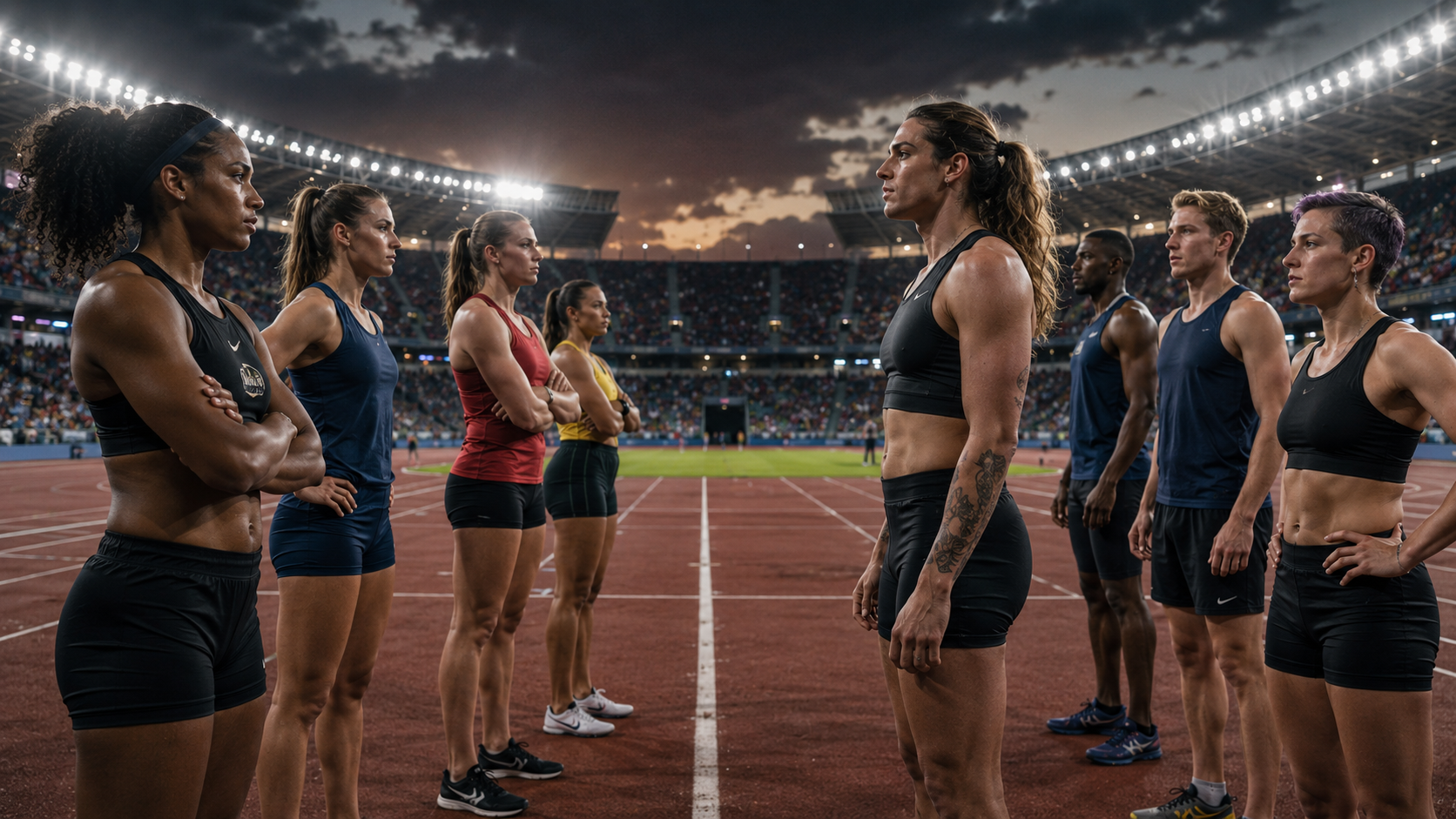
Can Competitive Fairness and Gender Inclusion Coexist in Modern Sports?
Sports are often described as spaces of fairness, discipline, and equal competition. At the same time, modern societies increasingly recognize the importance of diversity, inclusion, and respect for personal identity.
These two values sometimes collide.
One of the clearest examples appears in the debate surrounding transgender athletes in competitive sports. The issue became globally visible during the 2021 Tokyo Olympics, when transgender weightlifter Lauren Hubbard competed in the women’s category. Supporters viewed her participation as an important recognition of gender identity and inclusion. Critics argued that biological differences might create unfair competitive advantages.
As a result, transgender participation in sports has become one of the most emotionally complex debates in contemporary society.
The controversy is not simply about sports. It reflects deeper questions about fairness, identity, biology, rights, and the meaning of equality itself.
1. Why Has This Debate Become So Important?

Sports as More Than Competition
For many people, sports are not simply physical contests. They are spaces of belonging, recognition, identity, and social participation.
Transgender athletes often wish to compete in categories that align with their gender identity because participation itself represents dignity and social inclusion.
Supporters argue that excluding transgender athletes entirely may reinforce discrimination and social isolation.
At the same time, opponents argue that competitive sports are fundamentally built around biological differences. They believe physical advantages related to muscle mass, bone structure, lung capacity, and testosterone exposure may remain even after hormone treatment.
This creates a difficult tension between two important principles:
- inclusion
and - competitive fairness
Why Certain Sports Face Greater Controversy
The debate tends to become more intense in sports where physical performance differences strongly influence outcomes.
Swimming, athletics, weightlifting, cycling, combat sports, and rugby often receive the most public attention because speed, strength, endurance, and power are central to competition.
In contrast, sports emphasizing strategy or technical precision sometimes experience less controversy regarding transgender participation.
As a result, many experts argue that policies may need to vary by sport rather than applying one universal rule to every competition.
2. Arguments Supporting Transgender Participation
Inclusion and Human Rights
Supporters of transgender inclusion argue that sports should remain accessible to everyone regardless of gender identity.
They emphasize that participation in sports provides:
- social belonging
- mental well-being
- confidence
- and equal opportunity
From this perspective, excluding transgender athletes may violate principles of dignity and human rights.
The International Olympic Committee (IOC) has generally supported inclusion while encouraging sports organizations to develop scientifically informed policies.
Hormone-Based Regulations
Some organizations attempt to balance inclusion and fairness through hormone regulations.
For example, previous IOC guidelines allowed transgender women to compete in women’s categories if testosterone levels remained below specific thresholds for a certain period of time.
Supporters argue that hormone suppression significantly reduces physical advantages and creates more balanced competition.
However, scientific research remains ongoing, and experts continue debating how much performance advantage may persist after transition.
This uncertainty contributes to the continuing controversy.
3. Arguments Focused on Competitive Fairness
Biological Advantages and Physical Performance
Critics of unrestricted transgender participation often focus on biological differences developed during male puberty.
They argue that certain physical traits may remain even after hormone therapy, including:
- greater muscle mass
- larger skeletal structure
- cardiovascular advantages
- grip strength and explosiveness
From this perspective, fairness in women’s sports could be undermined if transgender women retain advantages unavailable to cisgender female athletes.
This concern becomes especially sensitive in elite sports, where small physical differences can determine medals, rankings, scholarships, and careers.
Concerns from Female Athletes
Some female athletes argue that women’s sports categories were historically created precisely because biological differences affect competition.
They fear that unclear participation rules may unintentionally weaken opportunities for cisgender women in professional sports.
These concerns are often framed not as hostility toward transgender individuals, but as debates about maintaining fair athletic structures.
At the same time, critics of these arguments warn that fairness discussions can sometimes become politically weaponized against transgender communities more broadly.
As a result, the debate frequently becomes emotionally polarized.
4. How Are Sports Organizations Responding?

Different Policies Across Different Organizations
Sports organizations around the world have adopted different approaches.
World Athletics introduced stricter regulations for transgender women competing in elite female categories, especially regarding puberty-related development.
FINA (World Aquatics) announced policies limiting participation in women’s swimming events based on developmental criteria.
Meanwhile, some organizations continue supporting broader inclusion policies while emphasizing case-by-case scientific evaluation.
The lack of international consensus shows how difficult the issue remains.
The Search for New Categories
Some experts have proposed alternative competition models.
Suggestions include:
- open categories
- mixed categories
- or sport-specific participation systems
These proposals aim to reduce conflict between inclusion and fairness, though practical implementation remains difficult.
Critics worry that separate categories could unintentionally stigmatize transgender athletes. Others believe such systems may protect fairness while still allowing participation.
The discussion therefore remains unresolved.
5. Beyond Sports: A Larger Social Debate
Identity, Science, and Politics
The debate over transgender athletes reflects larger cultural tensions in modern society.
Questions about:
- gender identity
- biological sex
- scientific evidence
- social equality
- and institutional fairness
are increasingly influencing politics, education, healthcare, and public discourse.
Sports become highly visible battlegrounds because competition creates clear winners and losers. This visibility intensifies emotional reactions on all sides.
The Challenge of Balancing Values
One reason the debate remains so difficult is that both sides appeal to legitimate values.
Supporters emphasize:
- dignity
- inclusion
- human rights
- equal participation
Critics emphasize:
- fairness
- biological reality
- competitive integrity
- protection of women’s categories
Modern societies therefore face a difficult challenge:
How can institutions respect identity while also maintaining trust in fair competition?
There is no universally accepted answer yet.
Conclusion
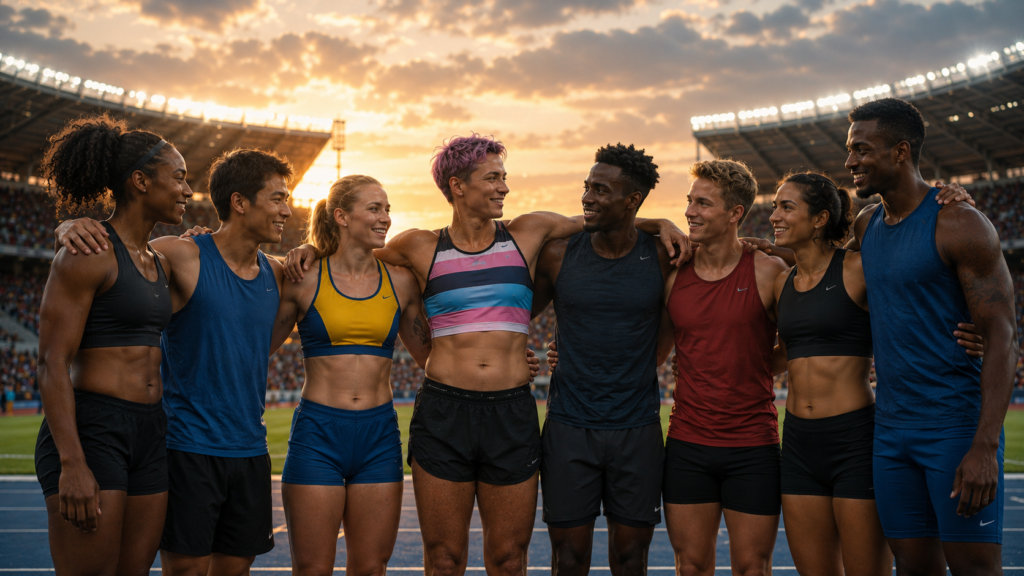
The debate over transgender athletes is one of the most complex ethical and social questions in contemporary sports.
It is not simply a conflict between right and wrong. Instead, it reflects the challenge of balancing multiple important values simultaneously.
Sports organizations, scientists, athletes, and societies continue searching for policies that protect both inclusion and competitive fairness.
As scientific understanding evolves and social attitudes continue changing, future policies may also continue to adapt.
What remains important is the ability to discuss the issue thoughtfully rather than reducing it to hostility or political slogans.
In the end, the debate asks a deeper question that extends far beyond sports itself:
How should modern societies balance equality, identity, fairness, and human dignity in increasingly diverse communities?
Reader Question
Should competitive sports prioritize biological fairness above all else, or should inclusion and gender identity hold equal importance in athletic participation?
Related Reading
The broader debate over identity, recognition, and social inclusion is explored further in Gender and Identity: Can Society Move Beyond the Binary?, which examines how changing understandings of gender challenge traditional social categories while raising new questions about equality, fairness, and belonging. This wider perspective provides an essential framework for discussions about participation in competitive sports.
Questions about fairness are also shaped by the ways societies define and value human diversity. AI Beauty Standards and Human Diversity explores how technological systems influence perceptions of identity, normality, and inclusion. Together, these discussions show that debates over gender and sports are ultimately part of a broader conversation about how societies recognize difference while striving for fairness.
References
1. International Olympic Committee (IOC). (2015). IOC Consensus Meeting on Sex Reassignment and Hyperandrogenism.
This document outlines IOC guidelines regarding transgender athlete participation and attempts to balance inclusion with competitive fairness through hormone-based criteria.
2. Harper, J., et al. (2021). How does hormone suppression affect sporting performance in transwomen? British Journal of Sports Medicine.
This research examines how hormone suppression may influence athletic performance among transgender women and contributes to ongoing scientific debates about fairness.
3. World Athletics. (2020). Eligibility Regulations for Transgender Athletes.
World Athletics explains the scientific and policy reasoning behind eligibility standards for transgender athletes in elite track and field competition.
4. Buzuvis, E. E. (2016). Transgender Student-Athletes and Sex-Segregated Sport: Developing Policies of Inclusion for Intercollegiate and Interscholastic Athletics.
This study analyzes legal and educational challenges surrounding transgender inclusion policies in school and university sports systems.
5. Carlson, A. (2019). The Inclusion of Transgender Athletes in Competitive Sports: An Ethical and Policy Analysis. Journal of the Philosophy of Sport.
This article explores the ethical tensions between fairness, inclusion, biological differences, and policy-making in competitive athletics.