Clothing is never just about style.
What we wear reflects the spirit of an era—
and at times, it becomes a powerful tool of political expression.
Throughout history, certain styles have carried messages of resistance,
challenging authority and redefining identity.
From the French Revolution to modern social movements,
fashion has not only mirrored change—
it has helped create it.
So how does clothing become a symbol of revolution?
1. The French Revolution: The Rise of the Sans-Culottes
Fashion has long been tied to class and power.
1.1. What Does “Sans-Culottes” Mean?
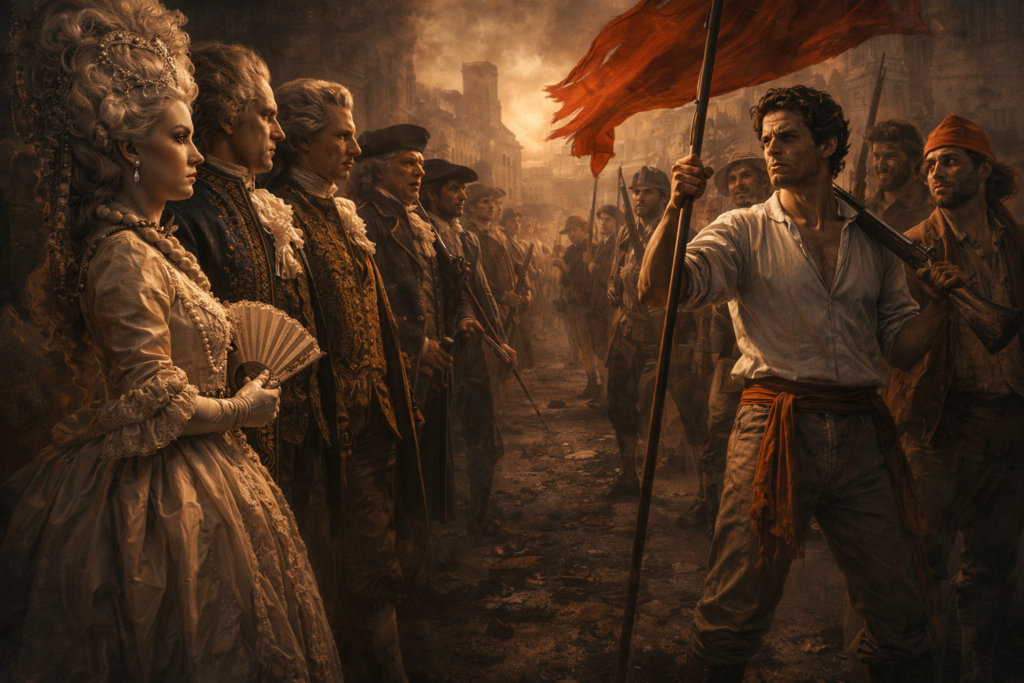
“Sans-Culottes” literally means “without knee-breeches.”
In pre-revolutionary France, aristocrats wore short, tight trousers
(culottes) paired with stockings—symbols of privilege and status.
In contrast, working-class revolutionaries wore long trousers.
This difference became political.
1.2. Clothing as a Revolutionary Identity
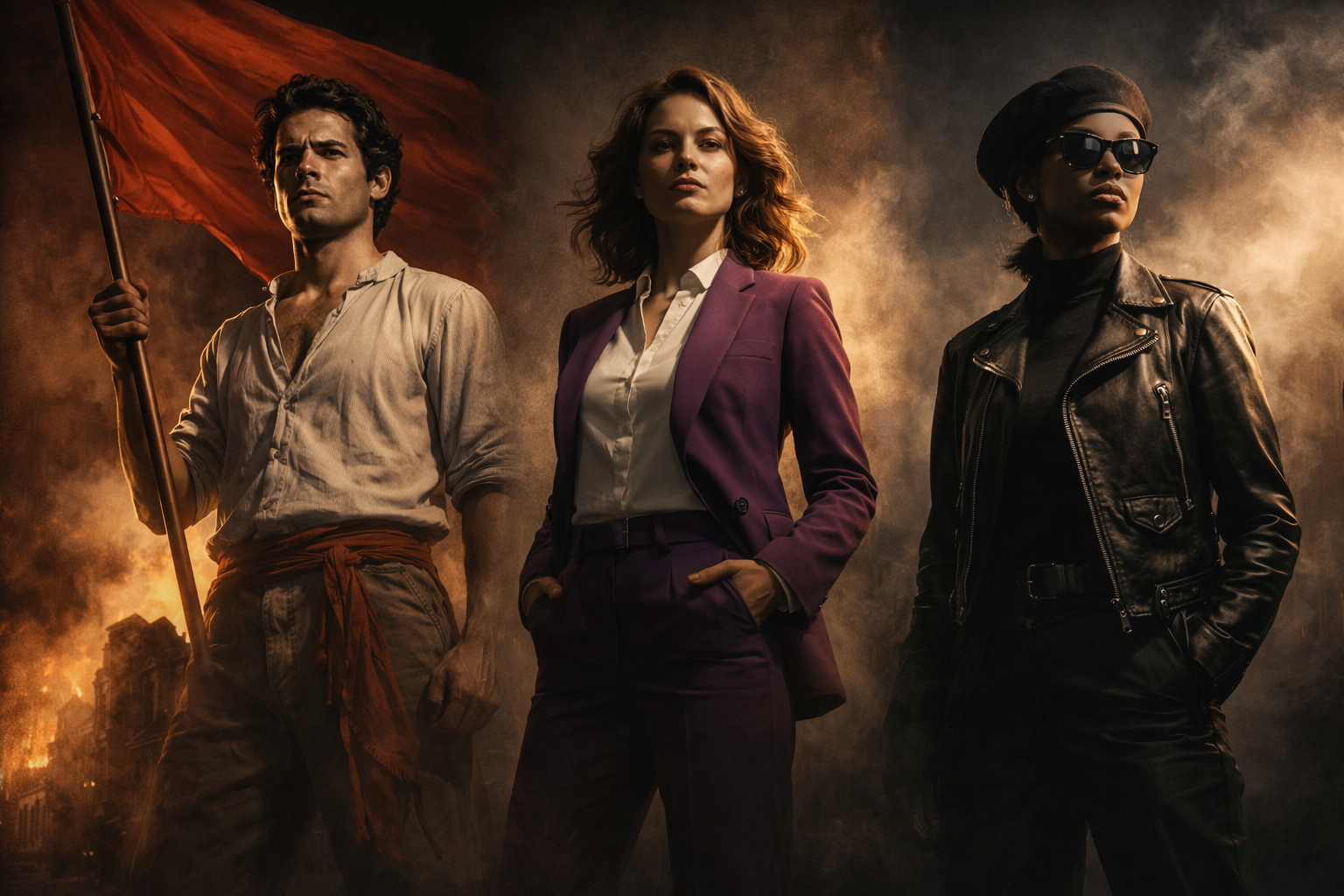
Revolutionaries adopted:
- Long trousers
- Dark jackets
- The Phrygian cap (a symbol of liberty)
This was not simply a fashion choice.
It was a visual rejection of aristocracy—
and a declaration of equality.
The Sans-Culottes became one of the most recognizable symbols
of the French Revolution.
2. Feminism and Fashion: Rewriting Gender Through Clothing
Fashion has also played a crucial role in gender politics.
2.1. The Miniskirt: Freedom and Body Autonomy
In the 1960s, the miniskirt emerged as more than a trend.
It symbolized a woman’s right
to control her own body and identity.
Designer Mary Quant helped popularize the miniskirt,
encouraging women to break free from restrictive norms.
Wearing a miniskirt became a statement:
“I choose how I present myself.”
2.2. The Pantsuit: Entering Spaces of Power
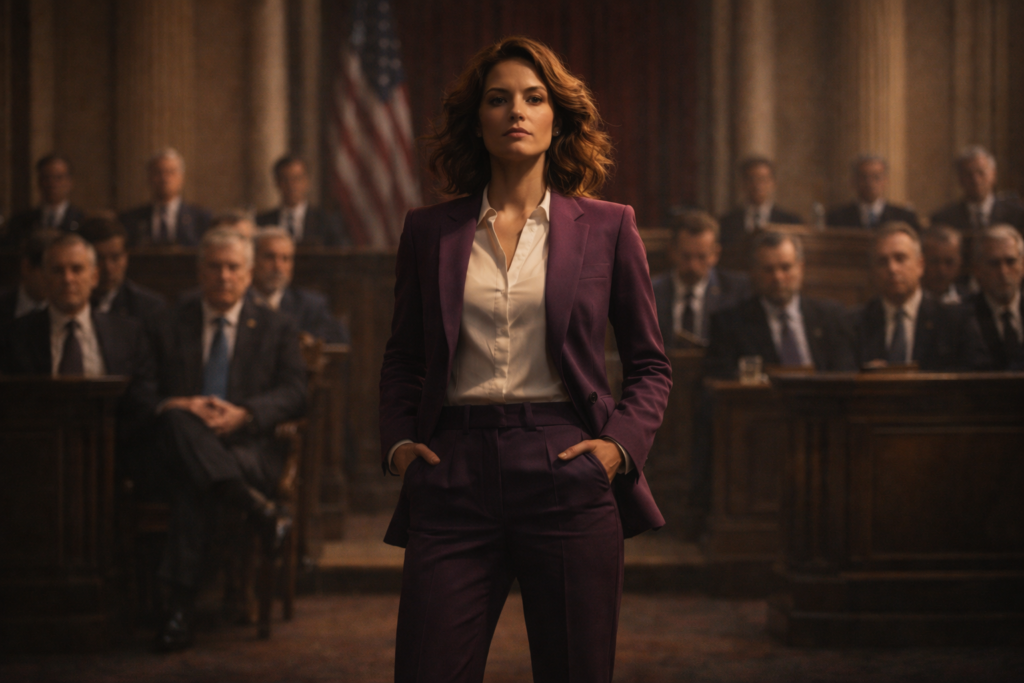
For much of history, women wearing trousers was taboo.
But the pantsuit changed that.
Early adopters like Marlene Dietrich challenged norms,
and later, Yves Saint Laurent’s Le Smoking (1966)
redefined women’s formal wear.
In modern politics, figures like Hillary Clinton
used the pantsuit as a visual symbol of authority and equality.
Clothing here was not decoration—
it was a negotiation of power.
3. Black Identity and Resistance: Style as Statement
Fashion has been central to racial identity and resistance.
3.1. Black Style and Political Expression
During the Civil Rights era,
African American communities embraced styles
that reflected pride and identity.
The Black Panther Party adopted:
- Black leather jackets
- Berets
- Sunglasses
This uniform communicated unity, strength, and resistance.
It was both fashion and political language.
3.2. Hip-Hop Fashion: From the Streets to the World
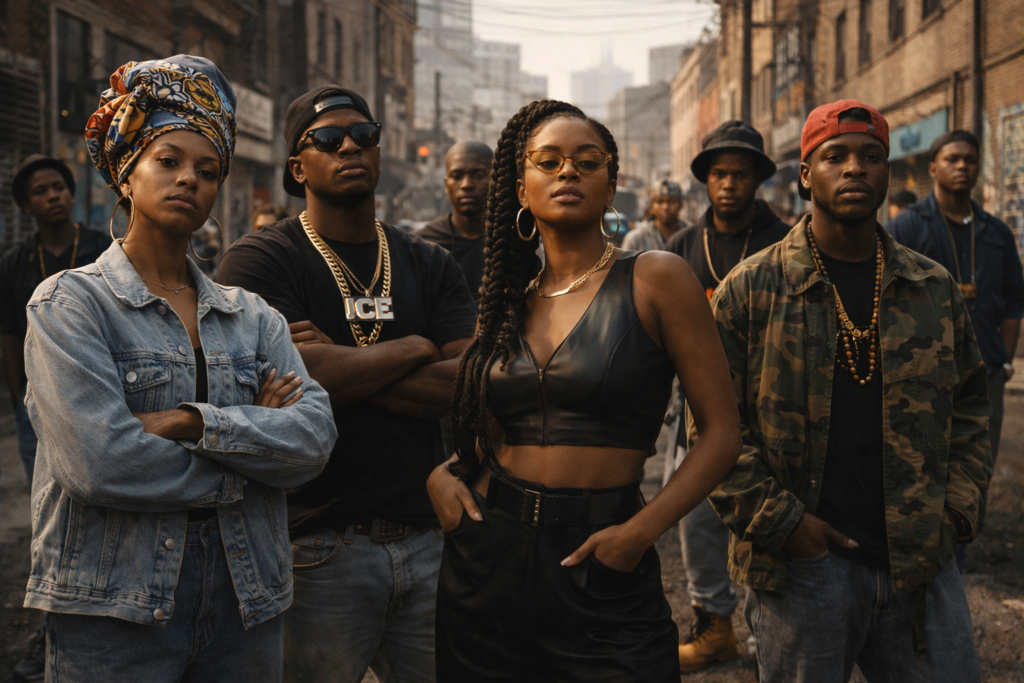
In the 1980s and 1990s, hip-hop culture introduced a new aesthetic:
- Oversized clothing
- Sneakers
- Gold chains
Artists like Tupac Shakur and The Notorious B.I.G.
used fashion to express social realities.
What began as street culture
eventually became a global fashion movement.
Hip-hop style transformed resistance into influence.
4. Why Does Fashion Become Political?
Clothing is visible, immediate, and universal.
4.1. Fashion as a Language of Identity
Unlike speech or writing,
fashion communicates instantly.
It signals:
- Who we are
- Where we belong
- What we believe
This makes it a powerful tool for resistance.
4.2. The Power of Symbolism
A single garment can carry layered meanings:
- Trousers → equality
- Miniskirt → autonomy
- Black clothing → unity and protest
These symbols transcend language and culture.
4.3. Fashion in the Digital Age
Today, fashion spreads faster than ever.
Through social media,
a single image can turn clothing into a global statement overnight.
Fashion is no longer just worn—
it is shared, amplified, and politicized in real time.
Conclusion
Fashion is not just about appearance.
It is a reflection of power, identity, and resistance.
Throughout history, clothing has been used to challenge authority,
redefine norms, and express collective struggle.
What we wear may seem personal—
but it often carries social meaning.
So the next time you choose an outfit, consider this:
Are you simply getting dressed—
or are you making a statement?
Question for Readers
Do you think your clothing expresses your identity—or your beliefs?
Related Reading
If clothing can become a symbol of resistance, can it also shape who we are—and how society defines us?
In Fashion and Gender: How Clothing Shapes Identity and Social Roles, we explore how what we wear goes beyond style, influencing identity, expectations, and power structures—revealing that clothing is not just expression, but a social language.
What if the most ordinary clothes we wear today once carried the spirit of rebellion and transformation?
In How Did Blue Jeans Conquer the World?, we trace how a simple piece of workwear evolved into a global symbol of culture, freedom, and identity—showing how fashion can move from practicality to powerful meaning across time.
References
- Steele, V. (1997). Fashion, Theory, and Politics. Oxford University Press.
This work examines how fashion operates as a political and cultural system, analyzing how clothing reflects resistance and social transformation across different historical contexts. - Crane, D. (2000). Fashion and Its Social Agendas: Class, Gender, and Identity in Clothing. University of Chicago Press.
Crane explores how clothing shapes social identity, including class, gender, and political expression. The book provides a framework for understanding fashion as a tool of symbolic communication. - Lipovetsky, G. (1994). The Empire of Fashion: Dressing Modern Democracy. Princeton University Press.
This book investigates the relationship between fashion and modern democratic societies, highlighting how fashion both reflects and influences cultural and political change.