Tag: digital ethics

  • Portrait Rights vs. Freedom of Photography: Who Owns the Public Image?

    Portrait Rights vs. Freedom of Photography: Who Owns the Public Image?

    How Street Photography, Social Media, and Digital Culture Are Redefining Privacy in Public Spaces

    The famous street photographer Henri Cartier-Bresson once described photography as the art of capturing “the decisive moment.” His philosophy emphasized spontaneity, movement, and authentic human expression. In traditional street photography, people were often photographed naturally without staged poses or formal consent.

    However, the digital age has transformed the meaning of photography.

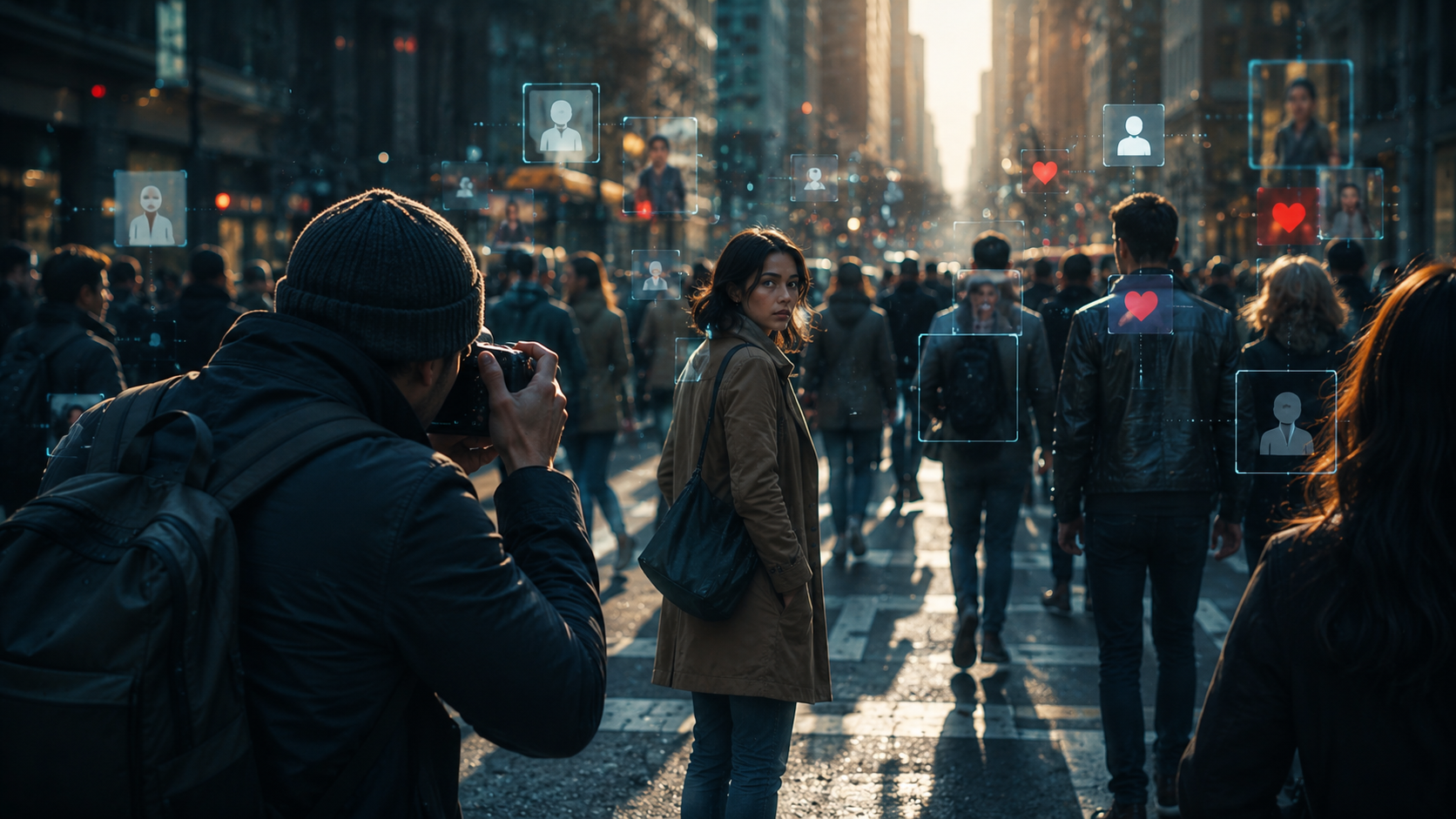
    Today, a single image taken in public can spread across social media within minutes, attracting millions of views and permanently shaping someone’s online identity. A photograph that once existed as artistic documentation may now become viral content, public entertainment, or even a source of harassment.

    This creates a difficult question:

    If a photographer captures someone in a public space without permission, who ultimately owns that image—the subject or the photographer?

    The answer lies within one of the most complex ethical tensions of the digital era:

    the conflict between portrait rights and freedom of expression.


    1. Portrait Rights and Freedom of Photography
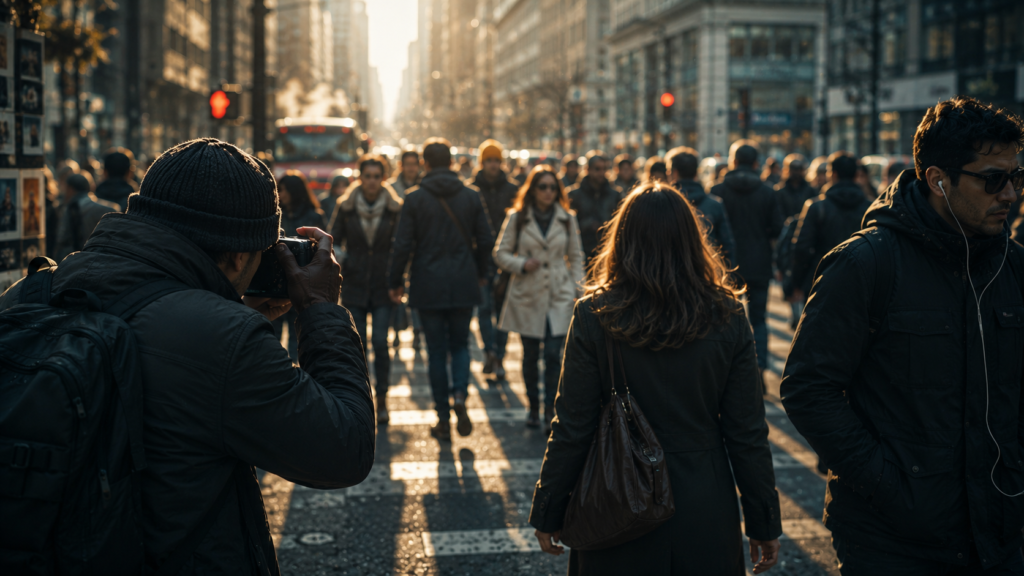
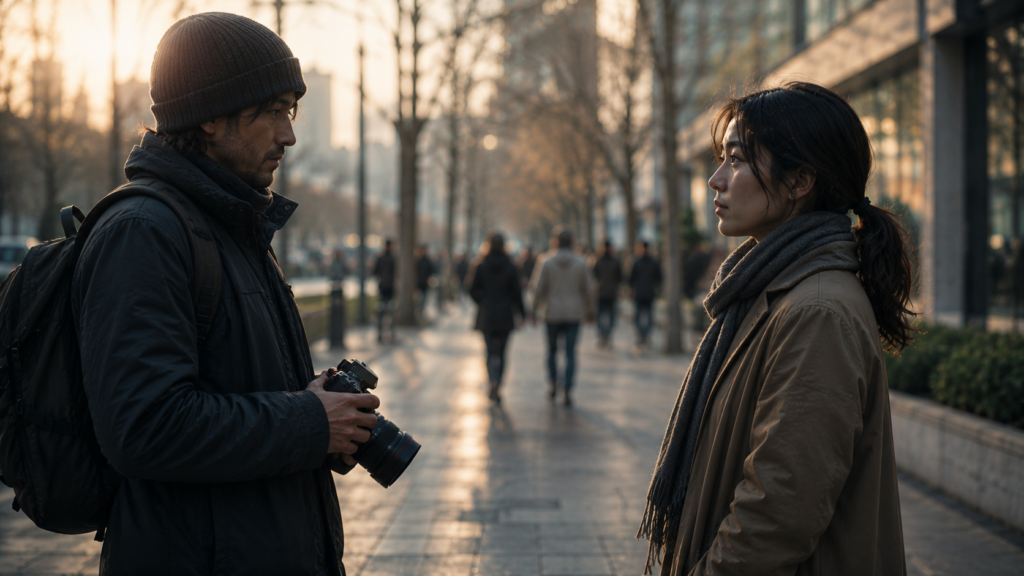
    street photographer capturing everyday life

    What Are Portrait Rights?

    In modern society, nearly everyone carries a smartphone capable of taking and sharing photographs instantly. Because of this, questions surrounding privacy and image ownership have become increasingly important.

    Portrait rights generally refer to an individual’s right to control how their face, body, or recognizable appearance is photographed, used, or distributed. These rights are closely connected to personal dignity, privacy, and autonomy.

    At the same time, photography itself is often protected as a form of artistic expression and free speech. Photographers argue that public spaces are essential environments for documenting society, culture, and human life.

    Street photography in particular has historically served as a visual record of everyday reality. Many iconic photographs that shaped public memory were taken spontaneously in public places without formal permission.

    This is where the tension begins.


    Why Public Spaces Create Legal and Ethical Gray Areas

    In many countries, photographing people in public spaces is generally legal. However, legal permission to take a photograph does not always mean unlimited freedom to distribute or commercialize it.

    The distinction between:

    • taking a photograph
      and
    • publishing or profiting from it

    often determines whether legal or ethical conflicts arise.

    For example, a person photographed on the street may later become the target of unwanted online attention if the image spreads widely on social media. Even if the original photograph was taken legally, the consequences for the subject may still be harmful.

    As a result, modern debates about photography increasingly focus not only on legality, but also on consent, dignity, and digital responsibility.


    2. Different Countries Approach Portrait Rights Differently

    The United States and Freedom of Expression

    In the United States, public photography is generally protected under freedom of expression laws. Photographers are usually allowed to photograph people in public spaces without explicit permission.

    However, legal restrictions become stronger when photographs are used for commercial purposes such as advertising or product promotion. In these cases, subjects may claim violations of publicity or privacy rights.

    American law therefore tends to prioritize artistic and journalistic freedom while placing limits on commercial exploitation.


    France and Stronger Privacy Protections

    France is known for stronger protections of personal image rights.

    French courts often place greater emphasis on individual dignity and privacy, even in public settings. Publishing identifiable images without consent can sometimes lead to legal disputes, particularly if the subject experiences reputational or emotional harm.

    This reflects a broader European tradition that views personal privacy as a fundamental human right.


    South Korea and Digital Reputation Concerns

    In South Korea, public photography is generally allowed, but online distribution may become problematic if it damages someone’s reputation or invades personal privacy.

    Because digital culture in Korea is highly networked and fast-moving, unauthorized images can spread rapidly through online communities and social media platforms. This has increased public sensitivity toward portrait rights and digital ethics.

    As a result, legal debates increasingly involve not only privacy itself, but also online humiliation, cyberbullying, and reputational harm.


    3. Portrait Rights vs. Freedom of Expression
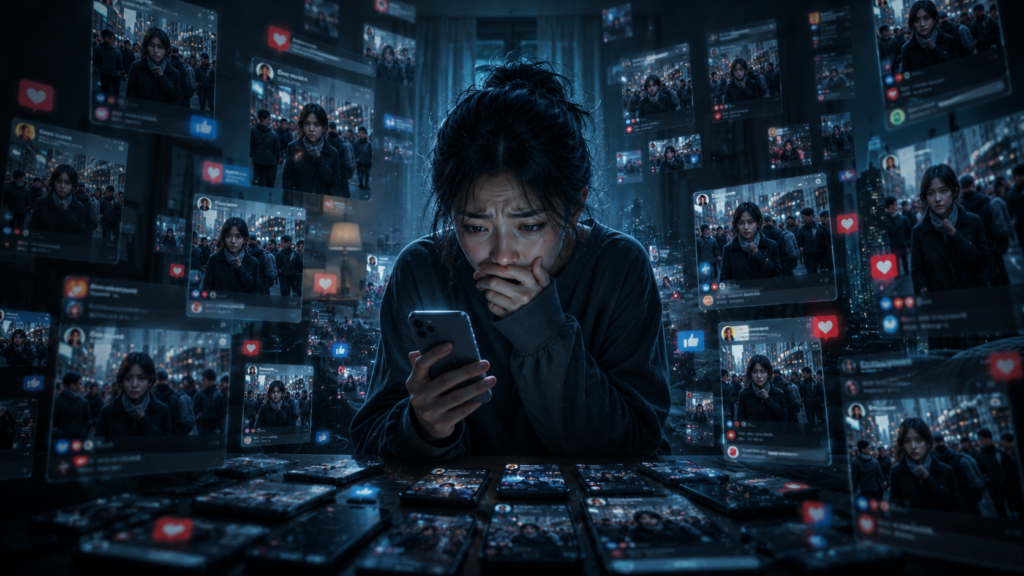
    online exposure and digital privacy anxiety

    The Argument for Privacy and Consent

    Supporters of stronger portrait rights argue that individuals should maintain control over how their appearance is used in digital environments.

    They emphasize that:

    • online exposure can become permanent
    • viral images may cause psychological harm
    • and individuals often lose control over their identity once photographs spread online

    From this perspective, even public spaces should not eliminate basic expectations of dignity and consent.

    Critics also point out that social media platforms amplify photographs far beyond their original context. An image intended as artistic documentation can quickly become entertainment, ridicule, or mass surveillance.


    The Argument for Artistic and Documentary Freedom

    On the other hand, photographers and journalists argue that excessive restrictions on public photography may threaten artistic freedom and public documentation.

    Street photography has historically captured:

    • political movements
    • urban life
    • social inequality
    • protests
    • and cultural change

    Many iconic historical photographs were taken spontaneously without formal consent.

    Supporters of photographic freedom therefore argue that public life itself must remain photographable if societies wish to preserve journalism, documentary work, and artistic expression.

    The challenge lies in finding a balance between protecting human dignity and preserving creative freedom.


    4. The Digital Age Changes Everything

    Social Media and the Loss of Context

    The rise of social media has dramatically intensified these debates.

    In the past, a photograph taken in public might appear only in a gallery, newspaper, or printed collection. Today, however, images can circulate globally within seconds.

    Digital platforms remove context from photographs. A moment captured artistically may later be interpreted mockingly, politically, or aggressively by online audiences.

    As a result, photographers today carry not only artistic responsibility, but also ethical responsibility for how images may function in unpredictable digital environments.


    The Growing Importance of Ethical Photography

    Because of these risks, many photographers now emphasize ethical practices alongside legal rights.

    Some common approaches include:

    • requesting consent whenever possible
    • avoiding humiliating or vulnerable subjects
    • blurring identifiable faces in sensitive situations
    • and considering the long-term impact of online publication

    These practices recognize that legality alone does not always resolve ethical concerns.

    In the digital age, responsible photography increasingly depends on empathy as much as artistic freedom.


    Conclusion: Who Owns the Public Image?
    balance between photography freedom and dignity

    Photography has always existed between art, documentation, and human observation. Public spaces naturally create opportunities for spontaneous visual storytelling, and freedom of photography remains an important part of democratic and artistic culture.

    At the same time, however, digital technology has changed the scale and permanence of image distribution. A photograph is no longer simply a moment frozen in time. It can become part of someone’s lifelong digital identity.

    This is why modern societies continue struggling to balance two important values:

    • the freedom to document public life
      and
    • the right to personal dignity and privacy

    Ultimately, the debate over portrait rights is not only about law. It is about how humans choose to see—and respect—one another in an age where every image can travel infinitely.

    Perhaps the most important question is no longer:

    “Can we photograph people in public?”

    But rather:

    How should we ethically treat the people we photograph once those images enter the digital world?

    Reader Question

    Do people lose part of their freedom when every public moment can be photographed and shared online?

    Related Reading

    If modern society increasingly records and monitors everyday life through smartphones, cameras, and digital platforms, how much privacy can individuals realistically expect in public spaces?
    In How Much Surveillance Is Too Much?, we explore how surveillance technologies are reshaping freedom, privacy, and human behavior in modern society.


    If digital memory allows images and personal information to remain online indefinitely, should individuals have the right to control or erase their public image over time?
    In In a World Where Everything Is Recorded, Is Forgetting a Sin—or a Right?, we examine how digital permanence is changing memory, identity, privacy, and the ethics of online exposure.


    References

    1. The Right to Privacy by Samuel D. Warren and Louis D. Brandeis
      This foundational legal article established early concepts of privacy rights and continues to influence modern discussions about portrait rights and personal dignity.
    2. Clive N. Davies. Street Photography and the Right to Privacy: A Comparative Study.
      This study compares how different legal systems balance street photography with individual privacy protections.
    3. Emily R. Thompson. Public Places, Private Faces: The Regulation of Street Photography.
      Thompson explores the legal and ethical tensions between public photography and personal image rights.
    4. Privacy and Freedom by Alan F. Westin
      This influential work examines the importance of privacy in modern democratic societies.
    5. The Photographer’s Right by Bert P. Krages II
      This legal guide explains photographers’ rights and limitations in public spaces.

  • Who Owns the Data of the Dead?

    Who Owns the Data of the Dead?

    Digital Ghosts, AI Afterlives, and the Ethics of Memory in the Digital Age

    In the past, the dead remained in memories, photographs, letters, and gravestones.

    Today, they remain online.

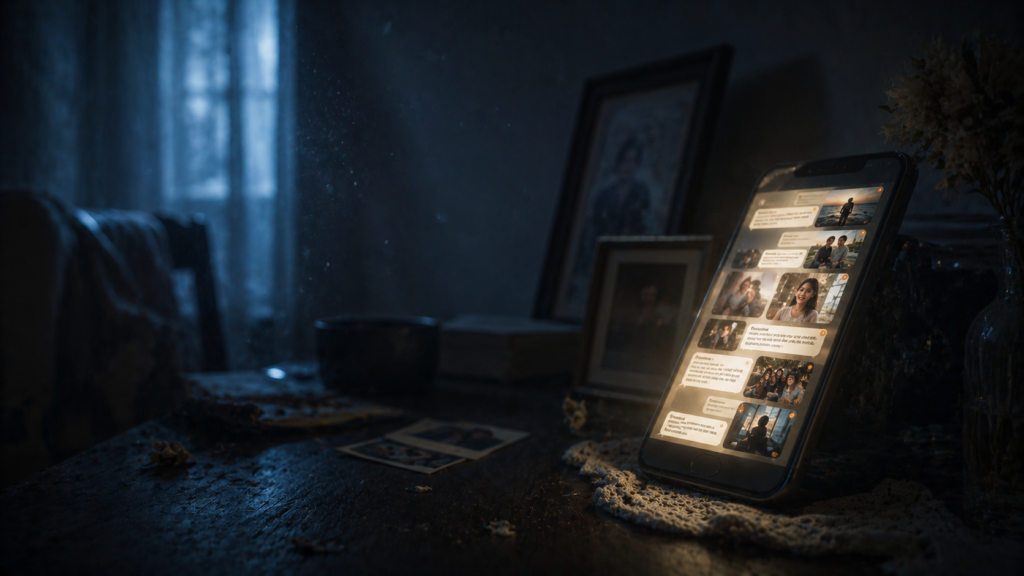
    Even after death, people continue to exist through social media profiles, archived conversations, emails, videos, voice recordings, and vast collections of personal data stored across digital platforms. Their location histories, health records, and fragments of daily life often remain preserved silently inside cloud systems and smart devices.

    Some call this phenomenon the rise of the digital ghost.

    As technology advances, the dead are no longer completely absent. Instead, traces of their identity continue circulating through algorithms, servers, and digital memories long after physical death.

    This raises difficult questions:

    Who owns the data of the dead?

    Should these digital traces be preserved, deleted, inherited, or controlled by corporations?

    In the age of digital ghosts, humanity must rethink the boundaries between memory, grief, ownership, and technology itself.

    old digital memories remaining after death

    1. The Dead Continue to Exist Digitally

    More Than Photos and Messages

    The digital traces people leave behind are far more extensive than many realize.

    Social media platforms preserve photographs, conversations, emotional expressions, and personal memories long after death. Cloud services may continue storing unfinished writing, private letters, contracts, and deeply personal records, while smartphones and wearable devices silently preserve location histories, biometric patterns, health information, and fragments of ordinary routines.

    As a result, modern technology does not merely archive information.

    It preserves pieces of human existence itself.


    The Emergence of the Digital Self

    Because of this, digital records sometimes begin functioning like extensions of identity.

    Even after physical death, parts of a person’s online presence remain active and socially visible. Friends and family continue encountering birthday reminders, old conversations, algorithmic recommendations, and archived messages connected to someone who no longer physically exists.

    In this sense, the dead may continue participating in social life through technology.

    The digital self survives even when the biological self has disappeared.

    2. Who Owns the Data of the Dead?

    Legal Uncertainty

    Legally, the situation remains unclear in many countries.

    Most legal systems still lack comprehensive rules regarding posthumous digital privacy and ownership.

    In some cases:

    • family members may request account closure
    • platforms may memorialize profiles
    • companies may retain data indefinitely on private servers

    However, relatives are not always guaranteed access to the deceased person’s digital information.


    Ethical Conflict

    The issue is not only legal—

    It is deeply emotional.

    Some families believe digital traces should be preserved as part of a loved one’s memory.

    Others feel private information should disappear after death.

    Conflicts become especially difficult when the deceased person never expressed clear wishes regarding digital inheritance.

    As a result, grief increasingly intersects with technology and data ethics.

    3. The Rise of Digital Legacy Management

    digital legacy and online inheritance system

    Technology Companies and Digital Inheritance

    Technology companies have already begun developing systems for managing digital legacies after death.

    Apple allows users to designate Digital Legacy contacts who may access certain iCloud data after death, while Google provides inactive account management systems that can transfer or delete stored information after long periods of inactivity. Meanwhile, Meta enables some social media accounts to become memorialized spaces where the deceased continue to exist symbolically within online communities.

    These systems attempt to balance privacy, mourning, ownership, and corporate responsibility within a rapidly changing digital world.


    4. AI Avatars and the New Digital Afterlife

    Talking to the Dead Through AI

    Recent AI technologies have pushed these ethical questions even further.

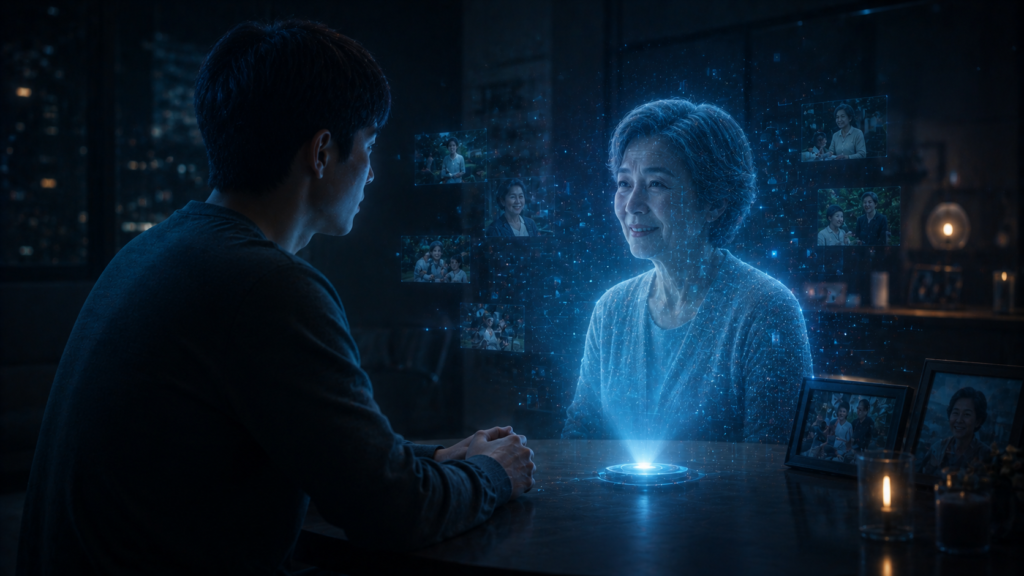
    Some companies now create AI avatars capable of imitating deceased individuals by analyzing voice recordings, chat histories, writing styles, photographs, and behavioral patterns. These systems simulate conversations with the dead, creating experiences that can feel emotionally real to surviving family members.

    As a result, death itself begins to appear less final within digital space.


    Comfort or Ethical Danger?

    For some people, these technologies provide comfort and emotional continuity.

    For others, they raise disturbing ethical concerns.

    Critics argue that AI resurrection may interfere with healthy grieving, blur the meaning of death, exploit emotional vulnerability, and create serious privacy problems involving people who can no longer give consent.

    As artificial intelligence becomes increasingly sophisticated, society may soon face a profound question:

    Should digital immortality exist at all?

    Conclusion: Memory or Ownership?

    person interacting with AI version of deceased loved one

    In the digital age, death no longer guarantees disappearance.

    Data survives.

    And because data survives, identity may continue existing in fragmented digital form.

    This means digital remains are no longer merely technical information.

    They are emotional, social, and ethical extensions of human life.

    Therefore, future discussions about digital legacy cannot rely only on law and technology.

    They must also consider:

    • grief
    • dignity
    • consent
    • memory
    • and the human need to let go

    Ultimately, we are left with one final question:

    In the age of digital ghosts,
    what traces of yourself would you want to remain—
    and who should have the right to protect them?

    Reader Question

    If your messages, photographs, voice recordings, and personal memories could continue existing online after your death—

    Would you want them to remain as part of your digital legacy,
    or disappear with you completely?

    And who should have the right to decide that?

    Related Reading

    If technology can preserve fragments of human identity long after death, can memory itself eventually become a form of digital immortality?
    In In a World Where Everything Is Recorded, Is Forgetting a Sin—or a Right?, we explore how digital systems reshape memory, identity, and the human need to forget in an age where almost nothing truly disappears.


    If AI can imitate the voices, emotions, and personalities of the dead, where should society draw the boundary between remembrance and artificial resurrection?
    In Can Experiences in Dreams Become Real Knowledge?, we examine how subjective experiences, simulations, and emotionally real perceptions challenge traditional definitions of reality itself.


    References

    1. N. Rawindaran & V. Bentotahewa (2024). Death Becomes Data.
      This work explores how digital assets of the deceased are increasingly integrated into AI and metaverse systems. It examines legal uncertainty surrounding ownership, platform responsibility, and family access rights.
    2. V. Methuku & P. K. Myakala (2025). Digital Doppelgangers.
      This study analyzes the ethical and social implications of AI-generated digital clones created before or after death, focusing on identity, consent, and possible misuse of personal data.
    3. Carl Öhman (2020). The Post-Mortal Condition.
      Öhman examines how the dead continue to coexist socially with the living through digital media. His work presents digital ghosts as a new form of social and cultural presence in online society.
    4. D. J. Bassett (2022). The Future of Digital Death.
      Bassett explores inheritance and management issues surrounding digital remains such as social media profiles, avatars, and memorial chatbots. The work proposes new legal and ethical frameworks for digital afterlives.
    5. V. J. Haneman (2024). The Law of Digital Resurrection.
      Haneman analyzes legal disputes surrounding AI avatars and digital resurrection technologies, focusing on ownership conflicts between families, corporations, and digitally recreated identities.

  • Everyday Automation: Smart Homes, Auto-Payments, and the Hidden Cost of Convenience

    “Alexa, turn off the lights.”
    “Siri, what’s the weather today?”
    “No need for your wallet — it’s an automatic payment.”

    Lights respond to voices, music plays without touch, and refrigerators reorder groceries on their own.
    Automation has quietly become the background of everyday life.

    It feels effortless.
    But in this growing familiarity, are there costs we no longer recognize?


    1. Automation Saves Time — and Silently Reduces Awareness

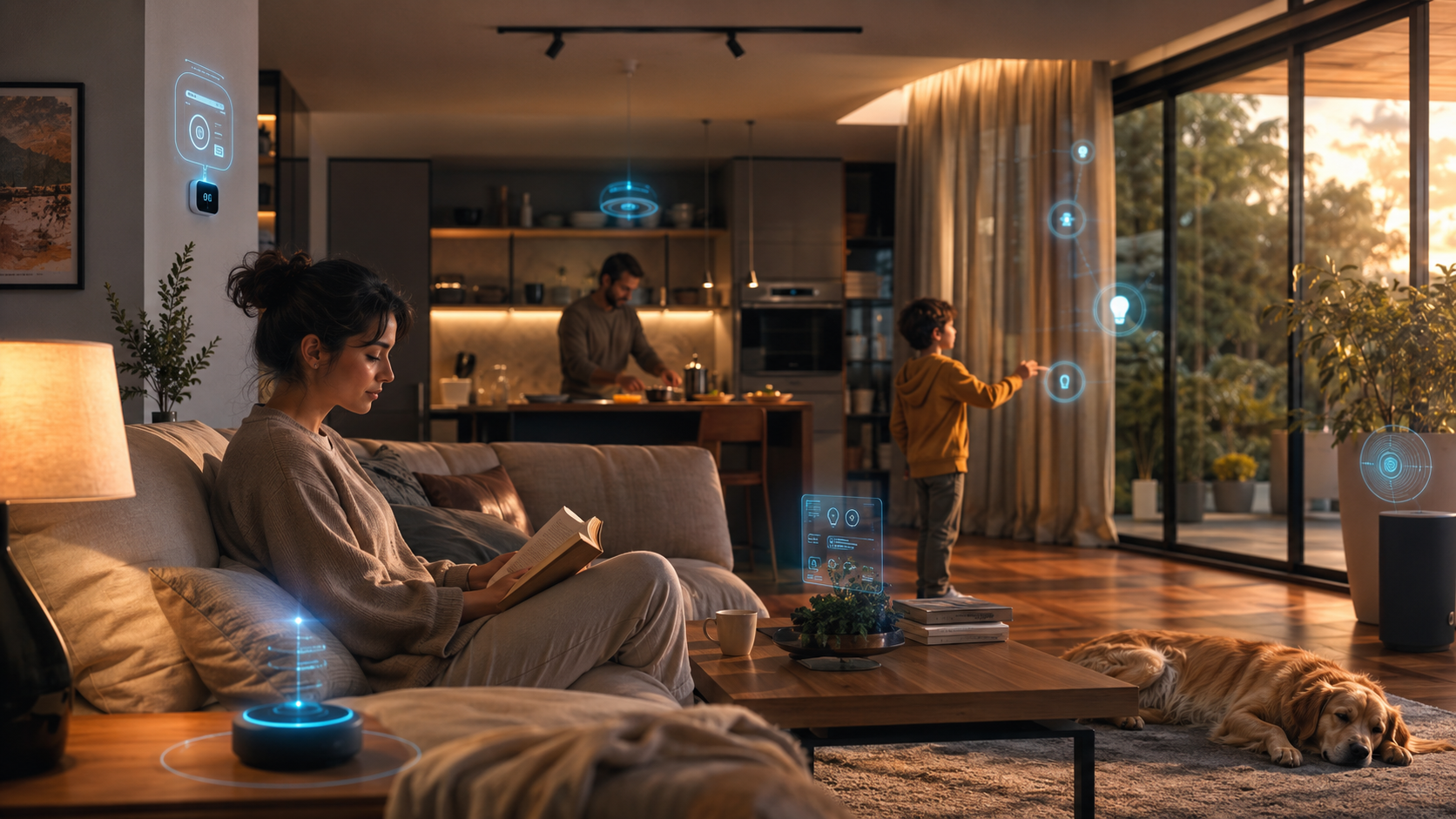
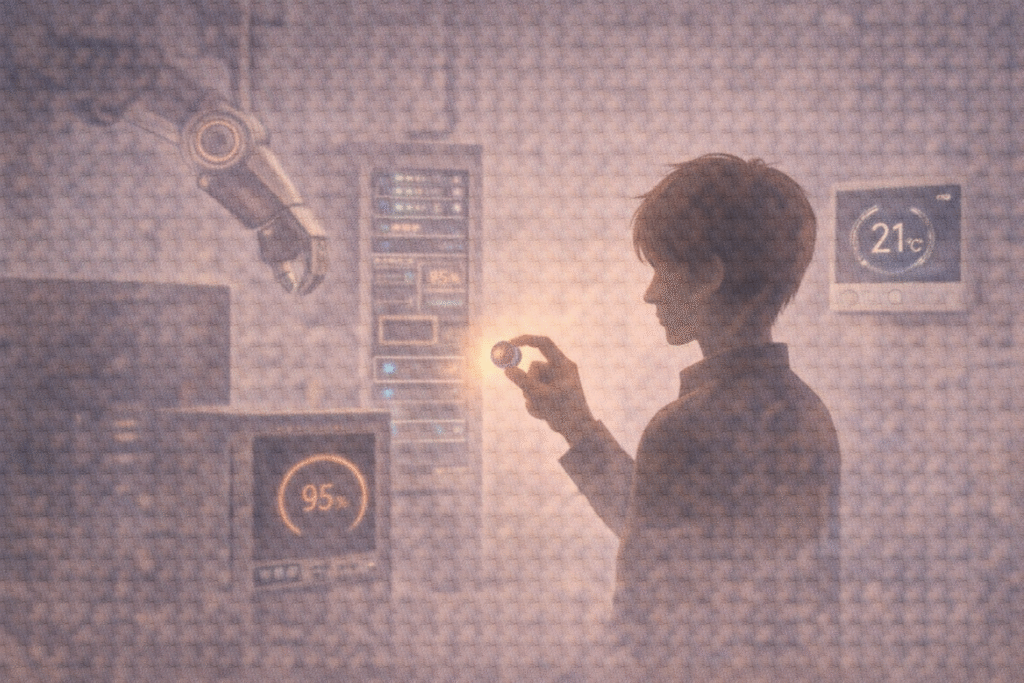
    Automated smart home adjusting daily life without human action

    Everyday life is shaped by countless small decisions.
    What to eat. When to turn off the lights. Whether to lock the door.

    Automation now handles many of these choices without requiring our attention.

    Smart thermostats adjust themselves.
    Lights turn on and off automatically.
    Payments are completed before we consciously register them.

    Nothing is forced.
    Yet something subtle changes.

    Decisions still happen — but we no longer experience ourselves as the ones deciding.
    Convenience replaces deliberation, and ease gradually weakens our sense of agency.

    Automation does not take control away.
    It simply makes control feel unnecessary.


    2. When Algorithms Choose With Us — and For Us

    Algorithmic recommendations shaping personal choices

    Recommendations now guide much of daily life.
    Music, movies, products, even news are selected before we actively search.

    This feels personal.
    But personalization also narrows experience.

    When choices are filtered through the same algorithms, novelty declines.
    We encounter what aligns with our past behavior — not what challenges or surprises it.

    Over time, preference becomes repetition.
    We grow comfortable inside systems that teach us what to want — and then confirm it.

    Convenience, here, quietly transforms freedom into predictability.


    3. Who Is the Automated Home Really For?

    Smart homes promise comfort, efficiency, and security.
    Yet automation does not serve everyone equally.

    Older adults may struggle with unfamiliar interfaces.
    Visually impaired users face touch-screen barriers.
    For some households, smart technology remains inaccessible.

    Automation expands possibility for some —
    while creating new forms of exclusion for others.


    4. Who Owns the Data Behind Convenience?

    Automation relies on constant data collection.

    Smart appliances track habits.
    Voice assistants store speech patterns.
    Location services monitor movement.

    Most of this information is stored beyond users’ direct control.
    We benefit from convenience without fully knowing how our data circulates.

    The hidden cost of automation may not be money —
    but intimacy without transparency.


    5. Familiarity Dulls Reflection

    What once felt innovative now feels normal.

    “It’s just easier.”
    “Everyone uses it.”
    “I couldn’t go back.”

    Familiarity discourages questioning.

    Automation is a tool — but tools shape those who rely on them.
    Without reflection, convenience quietly becomes governance.

    Human agency within an automated technological environment

    Conclusion: Convenience Should Not Replace Conscious Choice

    Smart homes, auto-payments, algorithmic recommendations —
    automation now frames everyday life.

    The question is not whether automation is useful.
    It is whether the things done for us still align with what we value.

    Technology should support human judgment, not quietly replace it.

    Convenience works best when paired with awareness.

    References

    Carr, N. (2014). The Glass Cage: How Our Computers Are Changing Us. W. W. Norton & Company.
    Carr critically examines how automation affects human judgment, attention, and agency. Through examples ranging from aviation to everyday technology, he shows how convenience can weaken our capacity for active decision-making.

    Zuboff, S. (2019). The Age of Surveillance Capitalism: The Fight for a Human Future at the New Frontier of Power. PublicAffairs.
    Zuboff exposes how automated services rely on large-scale data extraction and behavioral prediction. Her work reveals the hidden economic logic behind “smart” technologies and their implications for autonomy and democracy.

    Parisi, L. (Ed.). (2016). Automate This: How Algorithms Came to Rule Our World. Princeton Architectural Press.
    This collection explores how algorithms reshape decision-making, perception, and social life. It provides philosophical insight into how automated systems subtly transform freedom into designed choice.