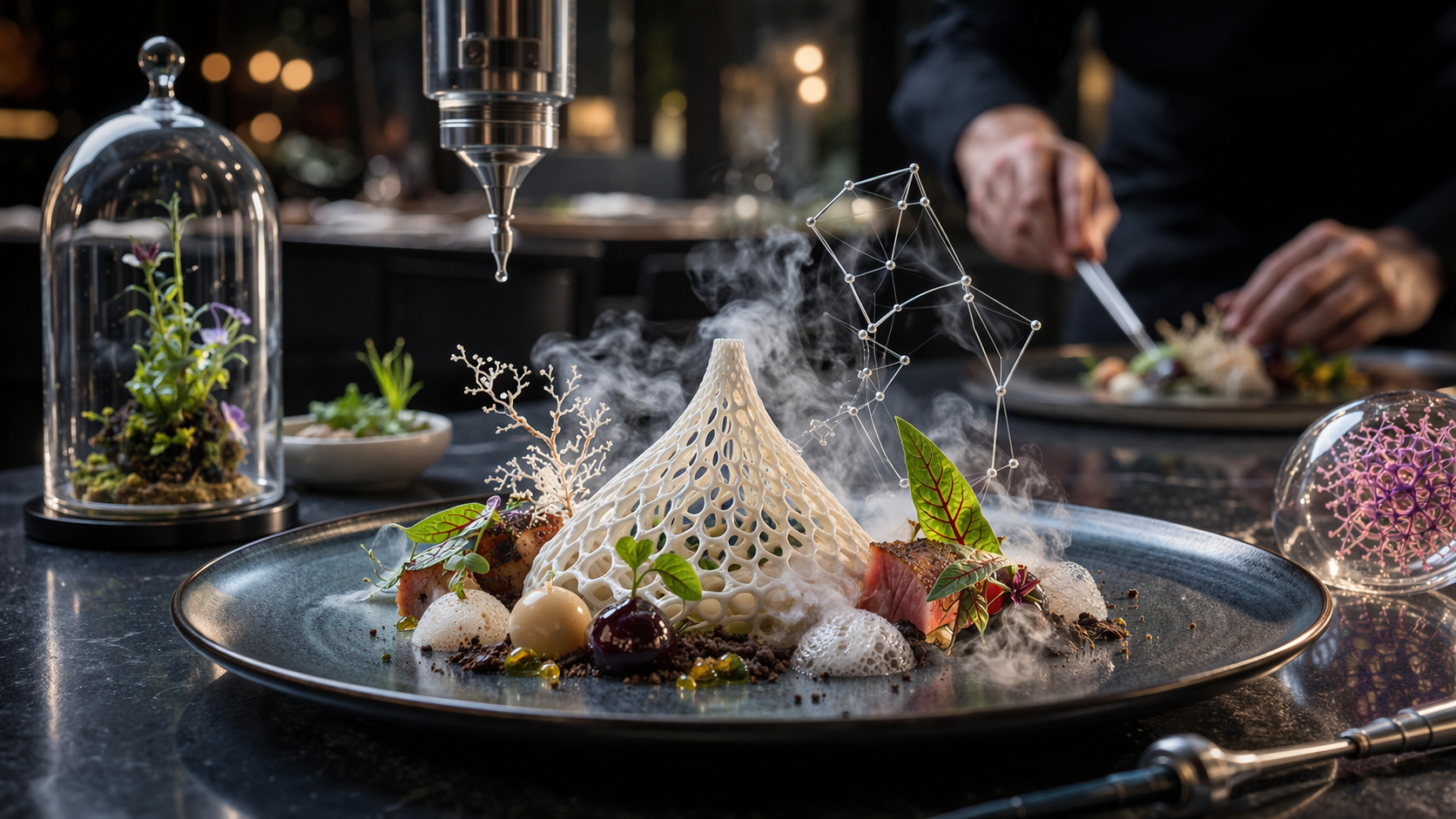
From Molecular Gastronomy to 3D Food Printing
Food is no longer just something we taste.
Today, dining has become a multi-sensory experience—
engaging not only the palate, but also sight, touch, and even sound.
Plating, once considered a matter of visual presentation,
has evolved into a sophisticated fusion of art, science, and technology.
From molecular gastronomy to 3D food printing,
technology is reshaping not just how food looks—
but how we experience it.
1. Molecular Gastronomy: Cooking with Science
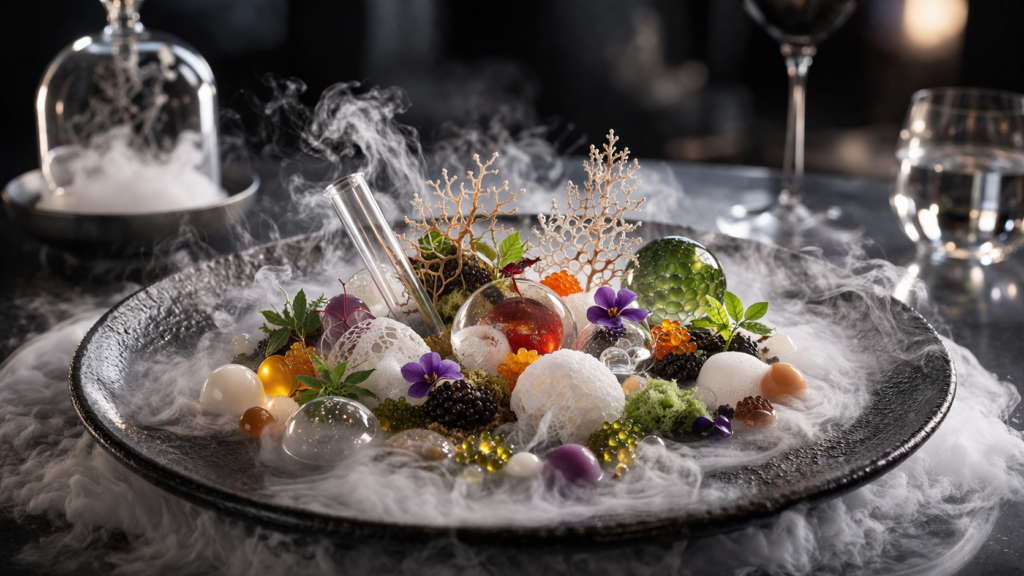
Modern plating often begins with scientific innovation.
1.1. What Is Molecular Gastronomy?
Molecular gastronomy applies scientific principles
to manipulate the structure and properties of food.
It goes beyond traditional cooking
by transforming texture, temperature, and form.
1.2. Key Techniques
- Spherification → Liquids are transformed into pearl-like spheres
that burst in the mouth like caviar. - Foams → Air-infused textures that deliver flavor lightly and intensely.
- Dry Ice Effects → Visual vapor enhances presentation
while amplifying aroma perception.
1.3. Real-World Example
Renowned chef Ferran Adrià introduced dishes
where aroma precedes taste—
such as citrus foam served over seafood.
In many modern restaurants,
liquid nitrogen is used at the table
to create dramatic, interactive desserts.
Molecular gastronomy turns plating
into a scientific performance—
expanding the very definition of food.
2. 3D Food Printing: Designing Edible Structures
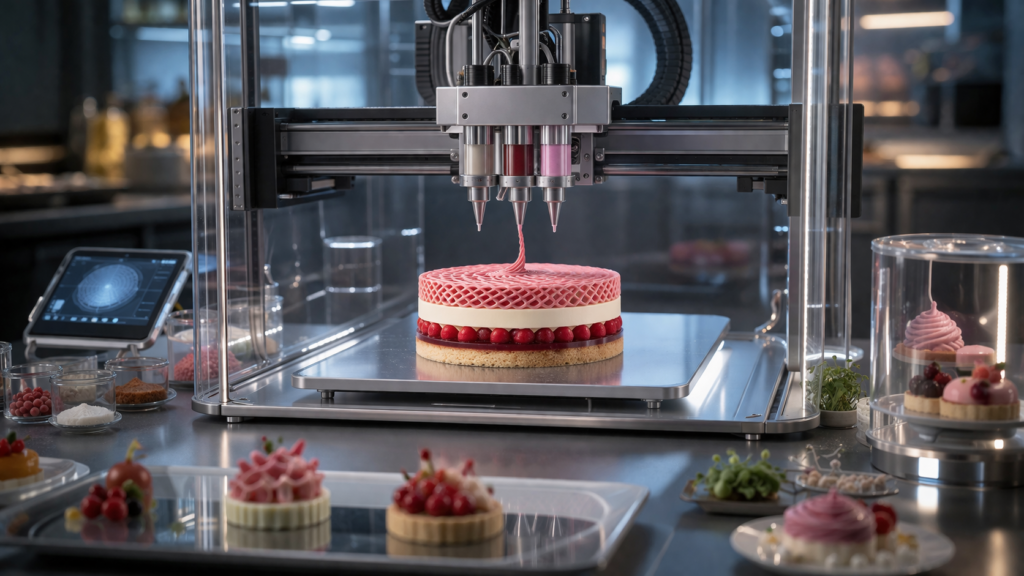
Technology is now directly shaping food creation.
2.1. Can Food Be Printed?
3D food printing uses edible materials—
such as chocolate, dough, or purée—
as “ink” to construct precise shapes.
This allows chefs to design
complex, customized plating structures.
2.2. Practical Applications
- Personalized desserts with names or messages
- Nutritionally optimized meals for elderly people
- Intricate geometric food designs impossible by hand
Some companies are already using this technology
to improve both aesthetics and accessibility in food.
3D food printing transforms plating
into programmable design—
where creativity meets precision.
3. Interactive Plating: Dining as Participation
Food is no longer just presented—
it is experienced.
3.1. What Is Interactive Plating?
Interactive plating invites the diner
to participate in the creation or completion of a dish.
It turns dining into a form of performance art.
3.2. Immersive Experiences
In some restaurants:
- Guests apply sauces themselves
- Colors or elements are added during the meal
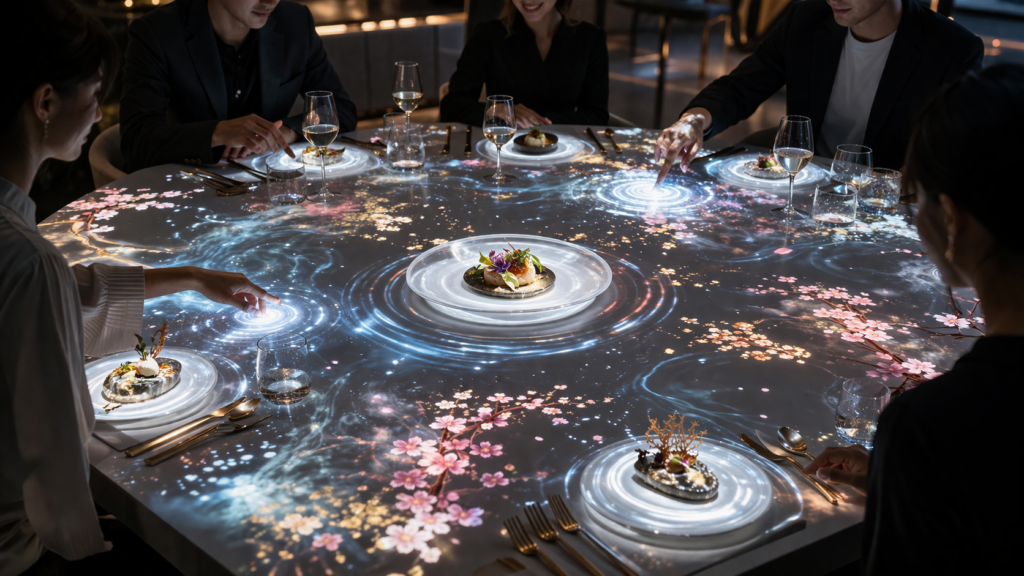
- Projection mapping creates animated visuals on the table
In the Netherlands, for example,
digital projection transforms plates into storytelling environments.
The dish becomes dynamic—
responding to both the food and the diner.
Interactive plating shifts food
from something we observe
to something we actively experience.
4. The Philosophy of Technological Plating
Why is technology merging with food in this way?
4.1. Beyond Taste
Modern consumers seek more than flavor.
They want:
- Shareable visual experiences
- Personalized dining moments
- Emotional and narrative engagement
Technology enables all of this.
4.2. Advantages of Tech-Driven Plating
- Precision → Highly detailed visual expression
- Consistency → Reproducible quality at scale
- Interaction → Enhanced engagement and immersion
4.3. Potential Concerns
There is also a risk.
If technology becomes too dominant,
it may overshadow taste and human touch.
However, technology is ultimately a tool—
not the essence of cuisine.
The emotional impact of a dish
still depends on the chef’s intention
and the diner’s experience.
Conclusion
Plating is no longer decoration.
It is a medium of experience—
where art, science, and technology converge.
From vapor effects to digital projection,
food is evolving into something immersive and interactive.
Yet one truth remains unchanged:
No matter how advanced technology becomes,
the most memorable meals are still those
that connect with us emotionally.
The next dish you encounter
may not just be food—
but a glimpse into the future of experience.
Question for Readers
Do you think technology enhances the dining experience—or takes away from its authenticity?
Related Reading
What if the food you eat is no longer just about taste—but about how it makes you feel, see, and even interact? In Can What You Wear Change Your Mind?, we explore how everyday elements like clothing quietly shape perception and behavior—just as modern plating transforms dining into a psychological and sensory experience.
And if technology is redefining something as intimate as eating, where else is it reshaping human experience without us realizing it? 0 and 1 in the Age of Artificial Intelligence: The Symbolic Philosophy of the Digital World examines how invisible systems and simple structures evolve into powerful forces that redefine how we perceive reality—much like technology is now redefining the meaning of food itself.
6. References
- This, H. (2006). Molecular Gastronomy: Exploring the Science of Flavor. Columbia University Press.
This book introduces the scientific foundations of cooking, explaining how chemical reactions influence taste, texture, and presentation. It provides essential insights into how molecular techniques transform both cooking and plating. - Godoi, F. C., Prakash, S., & Bhandari, B. (2018). 3D Printing of Foods. Springer.
This work explores how 3D printing technology is applied in food production, including structural design, customization, and nutritional optimization. It highlights the role of technology in shaping the future of edible design. - Spence, C., & Piqueras-Fiszman, B. (2014). The Perfect Meal: The Multisensory Science of Food and Dining. Wiley-Blackwell.
This book examines how sensory elements—visual, auditory, and tactile—affect the perception of food. It provides a scientific framework for understanding immersive dining experiences and interactive plating.
Leave a Reply