
The Allure of the Impossible
As children, many of us once reached out toward the night sky, stretching our hands toward distant stars.
Even knowing they were unreachable, we reached anyway—driven by a quiet what if.
This impulse does not disappear with age.
We imagine perfect discipline, flawless happiness, or the possibility of turning time backward, despite knowing such dreams are unattainable.
Why do humans continue to imagine what they know cannot be realized?
Why does the impossible exert such a powerful pull on the human mind?
1. A Philosophical Perspective: The Ontological Power of the Impossible
Immanuel Kant described the limits of human knowledge through the concept of the thing-in-itself (Ding an sich)—that which cannot be fully known by human reason.
Paradoxically, it is precisely this boundary of impossibility that stimulates philosophical reflection.
Jacques Derrida went further, arguing that true justice is something we must endlessly pursue despite knowing it can never be fully achieved.
For him, the impossible is not a barrier but an ethical horizon.
In this sense, impossibility is not a dead end.
It is a condition that keeps human thought open, restless, and alive.
2. A Psychological Perspective: Desire, Comfort, and Inner Survival
From a psychological standpoint, imagining the impossible allows humans to cope with the limitations of reality.
Sigmund Freud viewed dreams as expressions of wish fulfillment—many of which involve desires that cannot be realized in waking life.
Far from being mere escapism, such imagination helps regulate inner tension and emotional conflict.
Dreams of eternal love or perfect happiness may never come true, but they provide emotional direction and motivation.
The impossible, psychologically speaking, offers comfort not by being achievable, but by being imaginable.
3. A Historical Perspective: Utopia as a Motor of Change
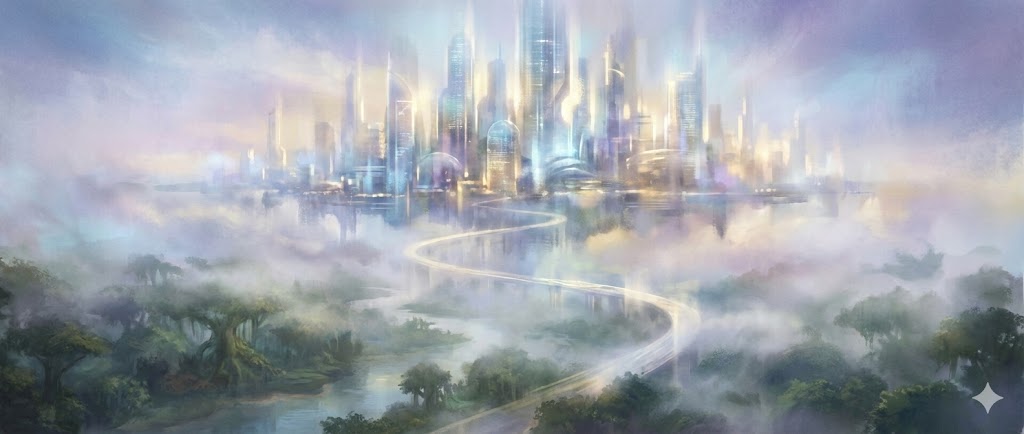
Since Thomas More’s Utopia, human societies have repeatedly imagined ideal worlds—egalitarian communities, peaceful global orders, and societies without oppression.
Though these visions were often dismissed as unrealistic, they played a crucial role in shaping real historical change.
Movements for civil rights, women’s suffrage, and universal human rights all began as ideas widely considered impossible.
History suggests that imagining the unattainable is often the first step toward redefining what is achievable.
4. Art and Culture: Imagining Beyond Human Limits
Art and literature have long served as laboratories for the impossible.
Dante’s Divine Comedy mapped realms no human could visit, while science fiction imagined time travel, artificial intelligence, and alien civilizations.
These works are not mere fantasy.
They allow societies to explore ethical dilemmas, future possibilities, and human limitations in symbolic form.
By engaging with the impossible, art expands the scope of collective imagination.
5. Science and Technology: Turning the Impossible into Reality
Scientific progress often begins where impossibility is assumed.
Electric light, global communication, and space travel were once inconceivable.
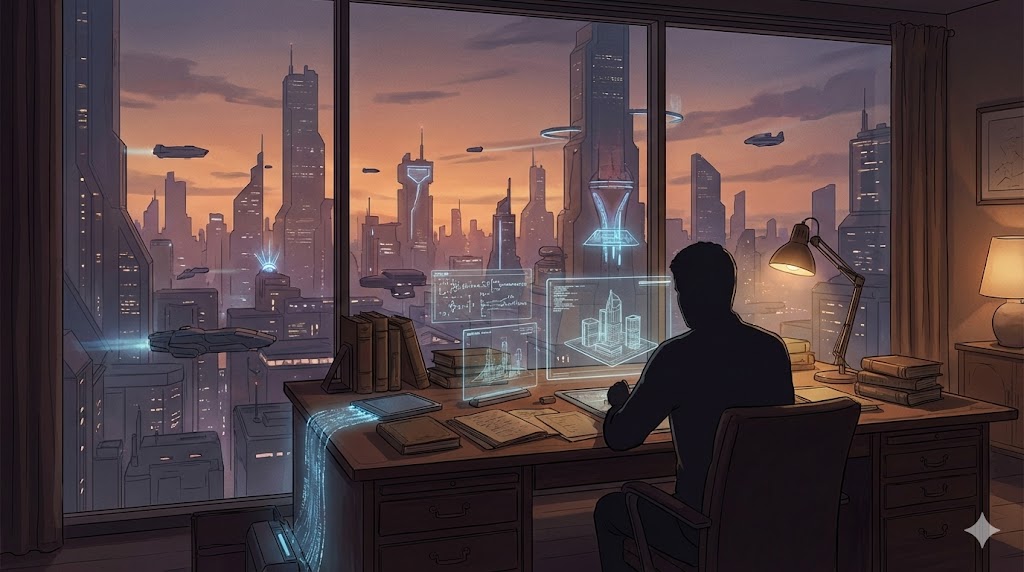
Today, artificial intelligence, brain–computer interfaces, and artificial organs occupy a similar space—hovering between speculation and realization.
Science advances not by accepting limits, but by questioning them.
6. Ethical Dilemmas: Should Every Impossibility Become Possible?
Yet not every imagined possibility should be realized.
Human cloning, radical life extension, and superintelligent AI raise serious ethical concerns.
Imagination without restraint can become dangerous.
The challenge lies not in dreaming less, but in developing ethical frameworks capable of guiding technological ambition.
Humanity must learn to navigate between aspiration and responsibility.
Conclusion: The Impossible as the Wing of the Human Spirit
The impossible is not an illusion to be discarded.
It is a defining feature of the human condition.
By imagining what cannot be achieved, humans acknowledge their limits while simultaneously reaching beyond them.
Philosophy, art, science, and history all begin with this tension.
Even if we never arrive at the impossible, the journey toward it deepens life and widens the world.
In that sense, the impossible is not a failure—but the very proof of human imagination.
References
- Kant, I. (1998). Critique of Pure Reason. Cambridge University Press.
Explores the limits of human reason and how the unknowable shapes philosophical inquiry. - Derrida, J. (1992). Force of Law: The “Mystical Foundation of Authority”. Routledge.
Argues that justice remains an unattainable ideal that nonetheless guides ethical action. - More, T. (1516/2012). Utopia. Yale University Press.
A foundational text demonstrating how imagined impossibility can provoke political and social reflection. - Bloch, E. (1986). The Principle of Hope. MIT Press.
A philosophical analysis of hope and utopian imagination as driving forces of human history. - Jameson, F. (2005). Archaeologies of the Future. Verso.
Examines utopian thought and science fiction as expressions of cultural desire for alternative futures.
Leave a Reply