Tag: philosophy

  • Is Memory a Container of Truth, or a Story Constantly Rewritten?

    Unforgettable memories, returning in unfamiliar forms

    We often treat memory as a reliable archive of facts.
    A childhood scene, a defining relationship, a historical moment—
    we assume these memories are stored somewhere inside us, intact and unchanged, like photographs preserved over time.

    Yet memory behaves strangely.
    With the passing years, details blur. Emotions shift.
    The same event resurfaces with altered meanings, missing pieces, or unexpected additions.
    When two people recall the same moment, their accounts rarely align perfectly.

    So what, then, is memory?
    Is it a container holding the truth of the past,
    or a story that is rewritten each time it is told?

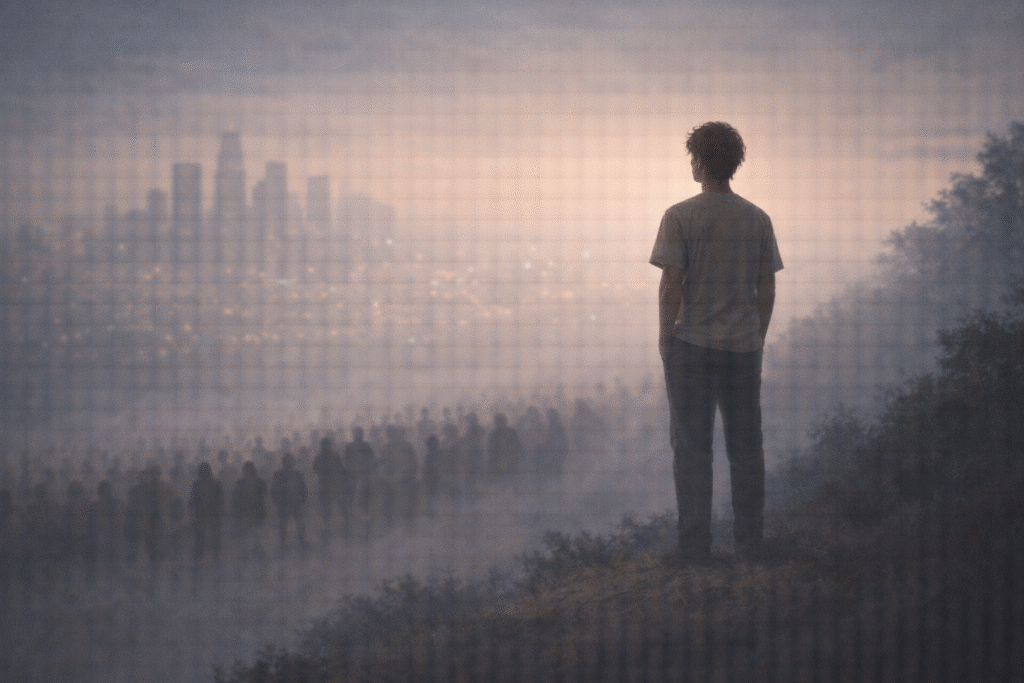
    Memory represented as a container holding fixed moments from the past

    1. The Nature of Memory: Not Recording, but Reconstruction

    Psychological research has long shown that memory is not a passive recording device.
    It is an active, reconstructive process.

    The work of Elizabeth Loftus demonstrated how easily memories can be altered by suggestion.
    Eyewitnesses exposed to subtly different questions recalled different details of the same event.
    Over time, confidence in false memories often increased rather than diminished.

    Memory, then, does not simply retrieve facts.
    It rebuilds the past using fragments, emotions, expectations, and present-day perspectives.
    What we remember is shaped as much by who we are now as by what happened then.

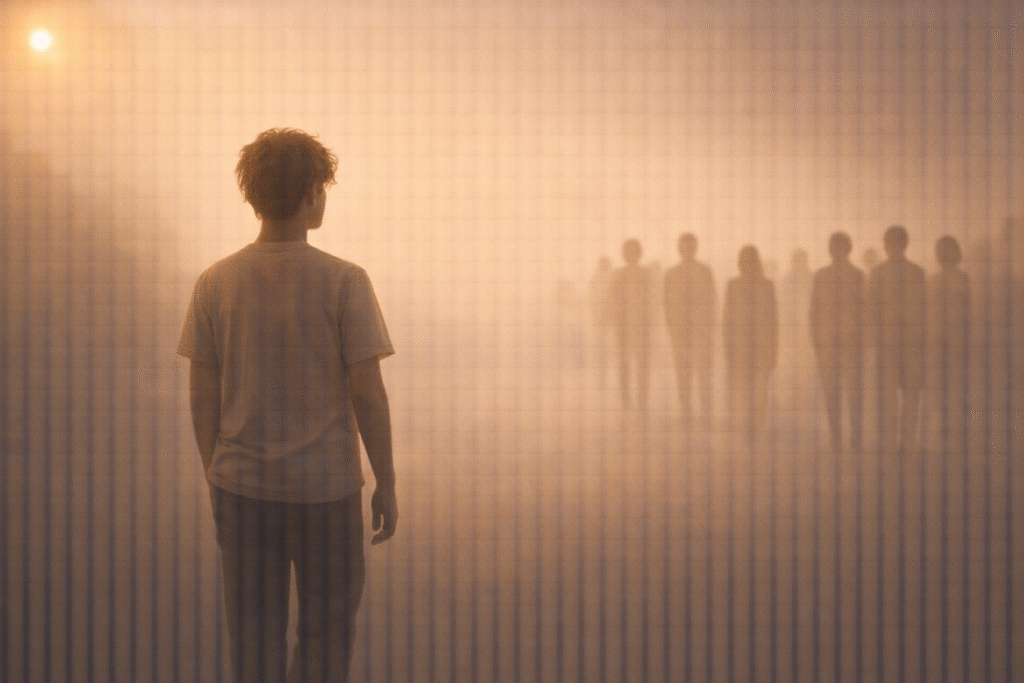
    Human memory shown as a constantly reconstructed narrative rather than a fixed record

    2. Philosophical Perspectives: Truth or Interpretation?

    Philosophically, memory sits at the intersection of truth and interpretation.

    Rather than preserving objective reality, memory interprets the past from the standpoint of the present.
    Friedrich Nietzsche famously suggested that memory depends on forgetting—that selective remembrance is what allows life to continue.

    From this view, memory is not a failure of accuracy but a condition of meaning.
    The past becomes intelligible only when filtered, organized, and narrated.

    Truth in memory is therefore not absolute correspondence with facts,
    but coherence within a lived narrative shaped by time, identity, and perspective.


    3. Collective Memory and History: Who Decides What Is Remembered?

    If individual memory is fragile, collective memory is even more complex.

    Societies remember through monuments, anniversaries, textbooks, and museums.
    Yet remembrance is never neutral. Some events are emphasized, others erased.

    Wars are remembered differently by victors and the defeated.
    What one group calls liberation, another may record as rebellion.
    These narratives do not simply describe the past—they legitimize present identities and power structures.

    Collective memory, then, is not merely shared recollection.
    It is a political and cultural construction shaped by authority, ideology, and selection.


    4. Neuroscience: Memory as a Dynamic Process in the Brain

    Neuroscience reinforces this view of memory as fluid rather than fixed.

    When a memory is recalled, neural networks are reactivated and modified.
    The act of remembering itself changes the memory.

    Rather than retrieving a static file, the brain reconstructs an experience anew,
    strengthening some connections while weakening others.

    This explains why memories can feel vivid yet unreliable—
    they are living processes, not stored objects.


    5. Memory in the Digital Age: Permanent Records vs. Human Forgetting

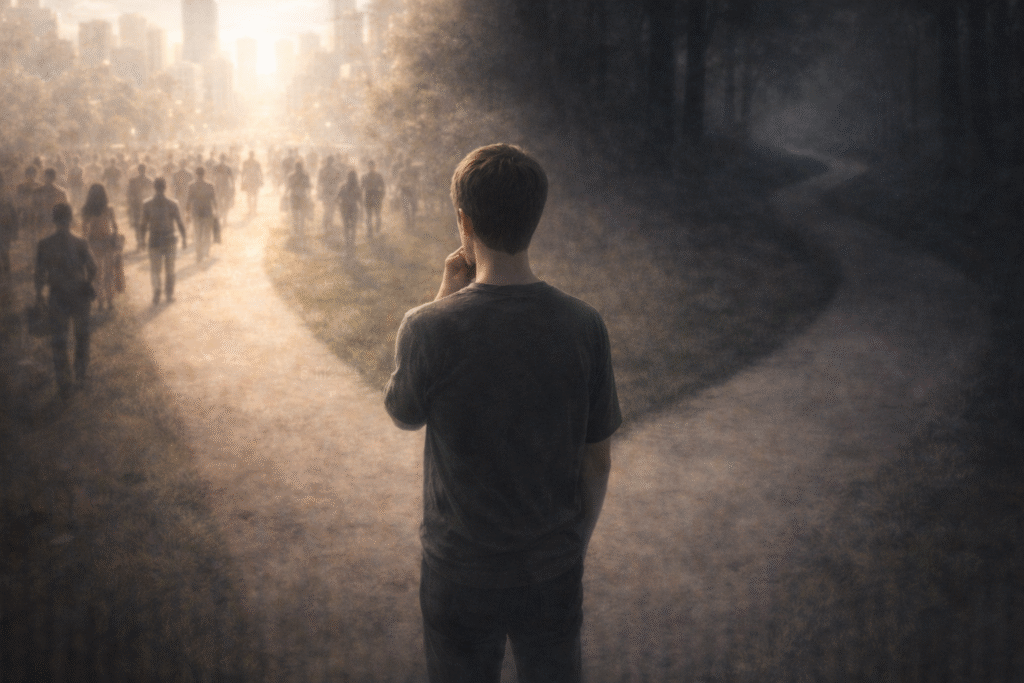
    The tension between truth and meaning in human memory

    Digital technology introduces a new tension.

    Photos, videos, messages, and social media archives preserve moments indefinitely.
    Unlike human memory, digital memory does not forget.

    Yet forgetting plays a crucial role in psychological healing and growth.
    Human memory softens pain, reshapes meaning, and allows renewal.

    Digital permanence, by contrast, can trap individuals in past versions of themselves.
    This is why debates around the “right to be forgotten” have emerged—
    not as a rejection of truth, but as a defense of human dignity and temporal change.


    Conclusion: Memory as Both Container and Story

    Memory is neither a flawless container of truth nor mere fiction.
    It is both archive and narrative—holding traces of reality while continuously reshaping them.

    Its value lies not in perfect accuracy, but in meaning-making.
    Memory forms identity, connects individuals to communities, and binds past to present.

    Recognizing the fragility of memory does not weaken truth.
    Instead, it invites humility, reflection, and responsibility in how we remember.

    Memory is not simply how we hold on to the past.
    It is how the past continues to speak—through stories we are always, inevitably, rewriting.


    Related Reading

    Questions about memory and truth overlap with cultural interpretations discussed in A Cultural History of Dream Interpretation.

    Everyday experiences of narrative reconstruction are also reflected in The Sociology of Waiting in Line.

    If personal memory is constantly rewritten, collective history may be rewritten as well.
    In Is There a Single Historical Truth, or Many Narratives?, we explore how historians, societies, and communities turn past events into competing narratives of truth.

    References

    1. Loftus, E. F. (2005). Planting Misinformation in the Human Mind: A 30-Year Investigation of the Malleability of Memory. Learning & Memory, 12(4), 361–366.
    This landmark study demonstrates how easily human memory can be distorted by external information. Loftus shows that memory is highly malleable, challenging the assumption that recollection reliably reflects objective truth.

    2. Schacter, D. L. (2001). The Seven Sins of Memory: How the Mind Forgets and Remembers. Boston: Houghton Mifflin.
    Schacter categorizes common memory errors and explains why forgetting and distortion are not flaws but functional features of human cognition. The book reframes memory as an adaptive, reconstructive system.

    3. Halbwachs, M. (1992). On Collective Memory. Chicago: University of Chicago Press.
    Halbwachs introduces the concept of collective memory, arguing that individual remembrance is always shaped by social frameworks. This work remains foundational for understanding memory as a social and cultural process.

    4. Neisser, U. (1981). John Dean’s Memory: A Case Study. Cognition, 9(1), 1–22.
    By comparing personal testimony with archival records, Neisser illustrates how confident recollection can diverge from documented facts, highlighting the narrative nature of memory.

    5. Conway, M. A. (2009). Episodic Memories. Neuropsychologia, 47(11), 2305–2313.
    Conway explains how episodic memory is continuously reconstructed in relation to the self and current goals. The study bridges cognitive psychology and neuroscience in explaining memory’s dynamic structure.

  • Solitude in the Digital Age: Recovery or a Deeper Loss?

    In the digital age, we are more connected than ever.
    Messages arrive instantly, notifications never stop, and silence has become rare.

    Yet paradoxically, many people report feeling more exhausted, distracted, and internally fragmented than before.
    This raises a deeper philosophical question:

    Is solitude being recovered in new forms, or are we losing it altogether?

    To approach this question, we revisit Arthur Schopenhauer’s reflections on solitude and examine how they resonate—or fail to resonate—within today’s hyper-connected society.


    1. Schopenhauer on Solitude and the Modern Question

    1.1 Solitude as Intellectual Freedom

    For Arthur Schopenhauer, solitude was not a form of social withdrawal but a deliberate act of intellectual autonomy.
    He believed that solitude allowed individuals to think independently, free from the pressures of public opinion and social conformity.

    In his view, constant immersion in society often diluted thought, while solitude enabled clarity, creativity, and philosophical depth.

    1.2 A Radically Changed Environment

    However, the 21st century presents a fundamentally different context.
    Digital platforms ensure that individuals are almost permanently connected, transforming social interaction into a continuous background condition.

    This leads us to a crucial question:
    Can Schopenhauerian solitude still exist in a world of constant connectivity?


    2. Hyper-Connectivity and the Erosion of Solitude

    An isolated individual surrounded by digital notifications in a hyperconnected world

    2.1 The Illusion of Belonging

    Social media, instant messaging, and streaming platforms offer a persistent sense of connection and belonging.
    Yet these connections are often shallow, fragmented, and rapidly replaceable.

    What appears as social intimacy may, in reality, be a sequence of fleeting interactions.

    2.2 Psychological Fatigue and the Loss of Inner Space

    Endless notifications and scrolling routines leave little room for introspection.
    Moments once reserved for reflection are now filled with external stimuli.

    As a result, solitude as a space for inner dialogue is replaced by reactive attention and surface-level engagement.

    2.3 The Commodification of Solitude

    Even solitude itself has become a marketable experience.
    “Healing playlists,” “solo exhibitions,” and “lonely cafés” package solitude as a consumable aesthetic.

    While comforting, such forms risk replacing genuine self-reflection with curated experiences.


    3. Reclaiming Solitude: New Possibilities

    A person practicing intentional solitude away from digital distractions

    Despite these challenges, the digital age does not necessarily eliminate solitude.
    Rather, it reshapes the conditions under which solitude can exist.

    3.1 The Practice of Selective Disconnection

    Turning off notifications, practicing digital detox, or intentionally limiting online engagement can restore moments of solitude.
    Here, technology becomes a tool rather than a master.

    3.2 Personalized Spaces for Reflection

    Digital journals, meditation apps, and private note-taking platforms can also support inward exploration.
    Modern solitude may involve not physical isolation, but deliberate inward orientation.

    3.3 Shared Solitude

    Interestingly, online communities dedicated to mindfulness, reflection, or quiet practices suggest a paradoxical form of solitude—
    one that is respected within loose forms of connection rather than absolute isolation.


    4. Freedom of Solitude vs. the Risk of Isolation

    4.1 Solitude as a Scarce Resource

    In an age of constant connectivity, solitude becomes rare—and therefore valuable.
    It enables creative thought, identity formation, and psychological recovery.

    Solitude, in this sense, is not an escape from society but a condition for meaningful participation within it.

    4.2 The Danger of Enforced Isolation

    However, solitude imposed rather than chosen carries serious risks.
    For elderly populations and digitally marginalized groups, enforced disconnection can lead to social isolation and declining well-being.

    The challenge, therefore, lies in distinguishing chosen solitude from structural exclusion.


    5. Redefining Solitude in the Digital Age

    5.1 Beyond “Being Alone”

    Modern solitude can no longer be defined simply as being physically alone.
    It must be understood as the freedom to regulate one’s relationship with connection and disconnection.

    5.2 A Contemporary Schopenhauerian Solitude

    Schopenhauer’s ideal remains relevant, but its form has changed.
    Today, solitude requires the ability to manage boundaries within an environment of constant digital presence.


    6. Reclaiming Solitude: A Small Reflective Action

    Solitude does not require abandoning technology altogether.
    Instead, it can begin with a minimal, intentional pause.

    Today’s small action:

    • Choose one 15-minute window with no digital input.
      No phone, no music, no reading. Simply sit, walk, or think.

    Afterward, ask yourself:

    Was this moment of emptiness uncomfortable—or quietly restoring?

    This is not a productivity exercise.
    It is an experiment in reclaiming inner space within a connected world.

    A figure standing between connection and solitude, symbolizing conscious choice

    Conclusion: Solitude as an Active Choice

    In the digital age, solitude is no longer a passive absence of others.
    It has become an active and intentional resource that must be consciously reclaimed.

    The essential question therefore shifts:

    Are we losing solitude—or are we learning how to recover it differently?

    The answer depends on how deliberately we navigate the balance between connection and withdrawal in our everyday lives.

    Related Reading

    This modern solitude recalls an older philosophical question about withdrawal and wisdom, explored further in The Solitude of the Wise: Withdrawal from the Masses or Intellectual Elitism?

    The emotional mechanisms behind digital loneliness are also examined in everyday contexts in How Social Media Amplifies Feelings of Lack and Comparison.

    Related Reading

    The emotional texture of chosen solitude is quietly portrayed in Familiar Solitude — The Quiet Comfort of Being Alone, where aloneness becomes a space for reflection rather than absence.

    The technological reshaping of intimacy is further explored in Living with Virtual Beings: Companionship, Comfort, or Replacement?, examining whether digital companionship deepens or replaces human connection.

    References

    1. Schopenhauer, A. (1851/2004). Parerga and Paralipomena (E. F. J. Payne, Trans.). Oxford University Press.
    → This work presents Schopenhauer’s direct reflections on solitude as a form of intellectual independence. It offers a philosophical foundation for understanding solitude not as social withdrawal, but as a condition for autonomous thought and self-reflection.

    2. Turkle, S. (2011). Alone Together: Why We Expect More from Technology and Less from Each Other. Basic Books.
    → Turkle critically examines how digital connectivity paradoxically deepens loneliness and emotional fragmentation. The book is central to understanding solitude’s transformation in the age of constant technological presence.

    3. Cacioppo, J. T., & Patrick, W. (2008). Loneliness: Human Nature and the Need for Social Connection. W. W. Norton.
    → Drawing on neuroscience and psychology, this work analyzes how the absence or distortion of social connection affects the human brain and emotional well-being, providing empirical grounding for discussions of modern solitude.

    4. Bauman, Z. (2003). Liquid Love: On the Frailty of Human Bonds. Polity Press.
    → Bauman explores the instability and superficiality of relationships in late modern societies, helping to explain how hyper-connectivity weakens emotional depth and reflective solitude.

    5. Carr, N. (2010). The Shallows: What the Internet Is Doing to Our Brains. W. W. Norton.
    → Carr investigates how digital environments reshape attention, cognition, and sustained thinking, highlighting structural obstacles to deep reflection and solitude in the internet age.

  • The Solitude of the Wise: Withdrawal from the Masses or Intellectual Elitism?

    A solitary figure standing apart from a distant crowd, symbolizing chosen intellectual solitude

    1. Schopenhauer on Solitude: A Privilege of the Wise

    1.1 Solitude as a Chosen State of Wisdom

    Arthur Schopenhauer regarded solitude as one of the noblest conditions of human life.
    In his view, while the majority live amid noise, crowds, and superficial desires, the truly wise retreat into solitude in order to immerse themselves in thought and self-reflection.

    Here, solitude is not mere social isolation.
    It is a conscious and autonomous choice—a state reserved for those capable of intellectual depth and inner independence.
    For Schopenhauer, solitude was a mental privilege available only to the wise.

    1.2 Growth of the Great Mind

    Schopenhauer famously claimed that great minds grow in solitude.
    By distancing themselves from the values and distractions of the masses, the wise can pursue truth through inner contemplation.

    In this sense, solitude is presented as a necessary condition for philosophical and intellectual achievement.


    2. Solitude and the Masses: A Point of Tension

    2.1 Distance from Society

    When solitude is framed as a privilege of the wise, it can easily be interpreted as deliberate distance from the masses.
    Yet social relationships are fundamental to human life.
    Shared values, collective experiences, and communal bonds enrich individual existence.

    An excessive glorification of solitude risks turning into social withdrawal—or even an elitist posture.

    2.2 The Wise versus the Many

    Schopenhauer’s distinction implicitly ranks individuals according to intellectual capacity.
    If only the wise are capable of solitude, the majority may be dismissed as mere “noise.”

    Such a hierarchy risks devaluing social interaction and undermining the worth of communal life.

    2.3 The Need for Community

    As Aristotle famously described humans as political animals, meaning-seeking creatures who thrive in relationships, an exclusive emphasis on solitude may ignore a fundamental dimension of human nature.

    A lone thinker seated at one end of a long table facing distant silhouettes, representing tension between solitude and elitism

    3. Critiques of Elitism

    Schopenhauer’s solitude has therefore been criticized on several grounds.

    3.1 Justifying Social Inequality

    Claiming solitude as a privilege of the wise can appear to legitimize social exclusion, particularly for those lacking educational or cultural resources.

    3.2 Avoidance of Moral Responsibility

    Retreating into solitude may also be seen as evading responsibility toward social injustice and collective suffering.

    3.3 Intellectual Authoritarianism

    Idealizing solitude risks reinforcing the idea that only intellectual elites have access to truth, reflection, and moral insight.


    4. The Positive Value of Solitude

    Despite these criticisms, solitude itself cannot be dismissed.

    Modern psychology suggests that periods of solitude can foster creativity, emotional stability, and self-reflection.

    4.1 Creativity and Intellectual Achievement

    Many of history’s great achievements—across philosophy, science, and literature—emerged from solitary reflection.
    Figures such as Shakespeare, Newton, and Gandhi demonstrate the generative power of solitude.

    4.2 Formation of Identity

    Solitude allows individuals to step outside social comparison and confront their inner selves, contributing to a mature sense of identity.

    4.3 Inner Freedom

    Freedom from social judgment enables deeper moral reflection and personal growth.


    5. Reconciling Solitude and Social Solidarity

    The core problem lies in treating solitude and social engagement as opposites.

    5.1 From Solitude to Social Contribution

    Reflection in solitude can prepare individuals for meaningful social participation.
    Many public intellectuals and artists translate solitary thought into social critique and responsibility.

    5.2 From Society Back to Solitude

    Conversely, experiences within society—conflict, failure, injustice—often demand solitary reflection to be understood and transformed into wisdom.

    True wisdom, then, lies not in withdrawal but in balance.


    Conclusion: Is Solitude a Privilege or a Responsibility?

    A figure walking back toward others in an open space, symbolizing solitude as preparation for social responsibility

    Schopenhauer’s solitude may appear as an exclusive privilege of the wise.
    Yet it need not collapse into elitism.

    Solitude can be understood as a space of preparation—
    a freedom for reflection that ultimately enables deeper engagement with society.

    Thus, the question may be reframed:

    Is solitude not a withdrawal from the masses, but a precondition for a more responsible return to the community?

    The value of solitude is fully realized only when it reconnects with social solidarity.


    References

    1. Schopenhauer, A. (1851/2004). Parerga and Paralipomena (E. F. J. Payne, Trans.). Oxford University Press.
    → A foundational text for understanding Schopenhauer’s view of solitude as an intellectual and moral condition.

    2.Nietzsche, F. (1878/2006). Human, All Too Human. Cambridge University Press.
    → Reinterprets solitude as a space for creative transformation, while critically engaging with Schopenhauer’s legacy.

    3.Weiss, R. S. (1973). Loneliness: The Experience of Emotional and Social Isolation. MIT Press.
    → Distinguishes reflective solitude from pathological loneliness through a social-psychological lens.

    4.Putnam, R. D. (2000). Bowling Alone: The Collapse and Revival of American Community. Simon & Schuster.
    → Explores the societal consequences of isolation and the erosion of communal life.

    5.Cacioppo, J. T., & Patrick, W. (2008). Loneliness: Human Nature and the Need for Social Connection. W. W. Norton.
    → Examines the dual nature of solitude, highlighting both its cognitive benefits and psychological risks.

  • Is Ignorance a Sin or a Shield?

    The Boundary Between the Right to Know and the Right Not to Know

    The Dual Nature of Not Knowing

    A solitary figure surrounded by unread books

    We often accept the saying “knowledge is power” as an unquestionable truth. Knowledge helps us understand the world, make informed decisions, and design better lives. In this sense, ignorance appears to be nothing more than a deficiency—something to be overcome.

    Yet there are moments when not knowing protects us. Sometimes, hearing a harsh truth is more damaging than remaining unaware. In an age of information overload, excessive knowledge can intensify anxiety rather than reduce it. This raises a fundamental question: Is ignorance always a moral failure, or can it function as a psychological and ethical shield?


    1. Philosophical Perspectives — Ignorance as a Deficiency to Overcome

    1.1 Ignorance and the Beginning of Wisdom

    In the philosophical tradition, ignorance has often been defined as a condition to be overcome. Socrates famously claimed that wisdom begins with recognizing one’s own ignorance. However, this acknowledgment was not a celebration of ignorance itself but a necessary step toward truth. For Socrates, ignorance was never a virtue; it was a starting point for philosophical inquiry.

    1.2 Enlightenment and Moral Responsibility

    Enlightenment thinkers reinforced this critical stance. Immanuel Kant described immaturity as the inability to use one’s own reason without guidance. In this framework, remaining ignorant is not merely unfortunate—it becomes morally problematic. Ignorance allows domination, sustains inequality, and obstructs freedom. From this perspective, ignorance can resemble a civic failure rather than a neutral condition.


    2. Religious Perspectives — Ignorance as Humility and Protection

    2.1 Acceptance of Human Limits

    Religious traditions often interpret ignorance differently. In Buddhism, acknowledging the limits of human understanding is central. Liberation is achieved not by knowing everything, but by releasing attachment to certainty and control. Ignorance here is not condemned but recognized as part of the human condition.

    2.2 Faith, Mystery, and Trust

    Similarly, in Christian thought, human ignorance can signify humility before divine mystery. Not knowing is not always sinful; it can express trust in something beyond human comprehension. In this sense, ignorance functions as a spiritual shield rather than a moral failure.


    3. Psychological Perspectives — Between the Right to Know and the Right Not to Know

    A calm figure protected from surrounding data noise

    3.1 Selective Ignorance as a Coping Strategy

    Modern psychology recognizes that individuals sometimes choose ignorance deliberately. For example, some people decline genetic testing even when it could reveal serious health risks. Knowing such information may overwhelm their emotional capacity to cope.

    3.2 Ignorance and Mental Well-being

    This leads to the ethical recognition of a right not to know. Excessive information can increase stress, fear, and paralysis. In certain contexts, ignorance operates as a defensive mechanism that preserves psychological stability rather than undermining rational agency.


    4. Social Perspectives — Ignorance, Power, and Inequality

    4.1 Information Asymmetry and Structural Power

    Ignorance becomes ethically troubling when it is socially produced. When information is concentrated in the hands of a few, ignorance reinforces power imbalances. Democratic societies depend on informed citizens; widespread ignorance weakens collective decision-making.

    4.2 Manufactured Ignorance

    In the era of misinformation, ignorance is not always accidental. It can be deliberately produced and exploited through propaganda, disinformation, and algorithmic manipulation. In such cases, ignorance ceases to be a personal shield and becomes a systemic vulnerability.


    5. Ignorance in the Age of Technology — Choosing Not to Know

    5.1 Data Abundance and Cognitive Overload

    Digital technology has exponentially expanded access to information. Ironically, this abundance often leads to confusion rather than clarity. Knowing more does not always mean understanding better.

    5.2 Toward “Wise Ignorance”

    In response, some degree of intentional ignorance becomes necessary. Choosing what not to know can help maintain focus, mental health, and ethical balance. This is not avoidance, but a form of practical wisdom—what might be called “wise ignorance” in a hyper-informed world.

    A figure pausing at a crossroads of knowledge

    Conclusion — Finding Balance Between Sin and Shield

    Ignorance is neither purely a sin nor purely a shield. Its meaning depends on context. When ignorance supports oppression, misinformation, or civic irresponsibility, it must be challenged. When it protects psychological well-being or acknowledges human limits, it can serve a legitimate and even necessary role.

    Ultimately, ignorance is an unavoidable condition of human existence. The ethical task is not to eliminate ignorance entirely, but to discern when it must be confronted and when it deserves protection. This tension itself reflects a deeply human struggle—one that unfolds between knowledge, responsibility, and care for the self.


    References (WordPress / Global Academic Format)

    1. Plato. (1997). Apology (in Complete Works, edited by J. Cooper). Indianapolis: Hackett.
      → Plato’s account of Socrates establishes the foundational philosophical link between ignorance, self-awareness, and the pursuit of wisdom.
    2. Berlin, I. (1969). Four Essays on Liberty. Oxford: Oxford University Press.
      → Explores the ethical tension between freedom, responsibility, and the limits of human knowledge, offering insight into ignorance as both risk and protection.
    3. Kant, I. (1996). An Answer to the Question: What Is Enlightenment? (edited by J. Schmidt). Berkeley: University of California Press.
      → A key Enlightenment text arguing that overcoming ignorance is essential for autonomy and moral maturity.
    4. Smithson, M. (1989). Ignorance and Uncertainty: Emerging Paradigms. New York: Springer.
      → Treats ignorance as an analytical category, showing how it functions socially and psychologically rather than merely as a lack of knowledge.
    5. Proctor, R., & Schiebinger, L. (Eds.). (2008). Agnotology: The Making and Unmaking of Ignorance. Stanford: Stanford University Press.
      → Introduces the study of ignorance as a product of power, politics, and institutional design.
  • Dreams, Utopia, and the Impossible: Why Humans Are Drawn to What Cannot Be Real

    Human imagination reaching toward the impossible

    The Allure of the Impossible

    As children, many of us once reached out toward the night sky, stretching our hands toward distant stars.
    Even knowing they were unreachable, we reached anyway—driven by a quiet what if.

    This impulse does not disappear with age.
    We imagine perfect discipline, flawless happiness, or the possibility of turning time backward, despite knowing such dreams are unattainable.

    Why do humans continue to imagine what they know cannot be realized?
    Why does the impossible exert such a powerful pull on the human mind?


    1. A Philosophical Perspective: The Ontological Power of the Impossible

    Immanuel Kant described the limits of human knowledge through the concept of the thing-in-itself (Ding an sich)—that which cannot be fully known by human reason.
    Paradoxically, it is precisely this boundary of impossibility that stimulates philosophical reflection.

    Jacques Derrida went further, arguing that true justice is something we must endlessly pursue despite knowing it can never be fully achieved.
    For him, the impossible is not a barrier but an ethical horizon.

    In this sense, impossibility is not a dead end.
    It is a condition that keeps human thought open, restless, and alive.


    2. A Psychological Perspective: Desire, Comfort, and Inner Survival

    From a psychological standpoint, imagining the impossible allows humans to cope with the limitations of reality.
    Sigmund Freud viewed dreams as expressions of wish fulfillment—many of which involve desires that cannot be realized in waking life.

    Far from being mere escapism, such imagination helps regulate inner tension and emotional conflict.
    Dreams of eternal love or perfect happiness may never come true, but they provide emotional direction and motivation.

    The impossible, psychologically speaking, offers comfort not by being achievable, but by being imaginable.

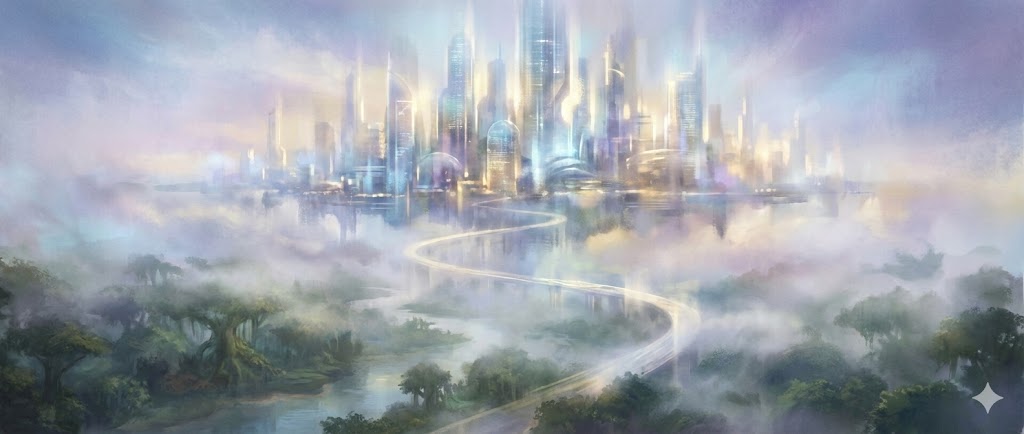
    Utopia as an imagined human future

    3. A Historical Perspective: Utopia as a Motor of Change

    Since Thomas More’s Utopia, human societies have repeatedly imagined ideal worlds—egalitarian communities, peaceful global orders, and societies without oppression.

    Though these visions were often dismissed as unrealistic, they played a crucial role in shaping real historical change.
    Movements for civil rights, women’s suffrage, and universal human rights all began as ideas widely considered impossible.

    History suggests that imagining the unattainable is often the first step toward redefining what is achievable.


    4. Art and Culture: Imagining Beyond Human Limits

    Art and literature have long served as laboratories for the impossible.
    Dante’s Divine Comedy mapped realms no human could visit, while science fiction imagined time travel, artificial intelligence, and alien civilizations.

    These works are not mere fantasy.
    They allow societies to explore ethical dilemmas, future possibilities, and human limitations in symbolic form.

    By engaging with the impossible, art expands the scope of collective imagination.


    5. Science and Technology: Turning the Impossible into Reality

    Scientific progress often begins where impossibility is assumed.
    Electric light, global communication, and space travel were once inconceivable.

    Today, artificial intelligence, brain–computer interfaces, and artificial organs occupy a similar space—hovering between speculation and realization.

    Science advances not by accepting limits, but by questioning them.


    6. Ethical Dilemmas: Should Every Impossibility Become Possible?

    Yet not every imagined possibility should be realized.
    Human cloning, radical life extension, and superintelligent AI raise serious ethical concerns.

    Imagination without restraint can become dangerous.
    The challenge lies not in dreaming less, but in developing ethical frameworks capable of guiding technological ambition.

    Humanity must learn to navigate between aspiration and responsibility.

    Ethical reflection on the impossible and responsibility

    Conclusion: The Impossible as the Wing of the Human Spirit

    The impossible is not an illusion to be discarded.
    It is a defining feature of the human condition.

    By imagining what cannot be achieved, humans acknowledge their limits while simultaneously reaching beyond them.
    Philosophy, art, science, and history all begin with this tension.

    Even if we never arrive at the impossible, the journey toward it deepens life and widens the world.
    In that sense, the impossible is not a failure—but the very proof of human imagination.

    A Question for You

    What is the “impossible” that you continue to imagine—
    even knowing it may never come true?

    Related Reading

    The relationship between human desire and technological possibility is further explored in
    If AI Can Predict Human Desire, Is Free Will an Illusion?,
    which examines how human intention may be reshaped in algorithmic systems.

    The tension between imagination and reality also appears in
    Is Freedom an Expansion of Choice — or an Expansion of Anxiety?,
    highlighting how the pursuit of possibility can both liberate and burden human life.


    References

    1. Kant, I. (1998). Critique of Pure Reason. Cambridge University Press.
      Explores the limits of human reason and how the unknowable shapes philosophical inquiry.
    2. Derrida, J. (1992). Force of Law: The “Mystical Foundation of Authority”. Routledge.
      Argues that justice remains an unattainable ideal that nonetheless guides ethical action.
    3. More, T. (1516/2012). Utopia. Yale University Press.
      A foundational text demonstrating how imagined impossibility can provoke political and social reflection.
    4. Bloch, E. (1986). The Principle of Hope. MIT Press.
      A philosophical analysis of hope and utopian imagination as driving forces of human history.
    5. Jameson, F. (2005). Archaeologies of the Future. Verso.
      Examines utopian thought and science fiction as expressions of cultural desire for alternative futures.
  • Can Humans Be the Moral Standard?

    Rethinking Anthropocentrism in a Changing World

    1. Can Humans Alone Be the Measure of All Things?

    Human-centered worldview with nature and technology marginalized

    For centuries, human dignity, reason, and rights have stood at the center of philosophy, science, politics, and art.
    The modern world, in many ways, was built on the assumption that humans occupy a unique and privileged position in the moral universe.

    Yet today, that assumption feels increasingly fragile.

    Artificial intelligence imitates emotional expression.
    Animals demonstrate pain, memory, and cooperation.
    Ecosystems collapse under human-centered development.
    Even the possibility of extraterrestrial life forces us to question long-held hierarchies.

    At the heart of these shifts lies a single question:
    Is anthropocentrism—a human-centered worldview—still ethically defensible?


    2. The Critical View: Anthropocentrism as an Exclusive and Risky Framework

    2.1 Ecological Consequences

    The planet is not a human possession.
    Yet history shows that humans have treated land, oceans, and non-human life primarily as resources for extraction.

    Mass extinctions, deforestation, polluted seas, and climate crisis are not accidental outcomes.
    They are the logical consequences of placing human interests above all else.

    From this perspective, anthropocentrism appears less like moral leadership and more like systemic neglect of interdependence.

    2.2 Reason as a Dangerous Monopoly

    Human exceptionalism has often rested on language and rationality.
    But today, AI systems calculate, predict, and even create.
    Non-human animals—such as dolphins, crows, and primates—use tools, learn socially, and exhibit emotional bonds.

    If rationality alone defines moral worth, the boundary of “the human” becomes unstable.
    Anthropocentrism risks turning non-human beings into mere instruments rather than moral participants.

    2.3 The Fragility of “Human Dignity”

    Even within humanity, dignity has never been evenly distributed.
    The poor, the sick, the elderly, children, and people with disabilities have repeatedly been treated as morally secondary.

    This internal hierarchy raises an uncomfortable question:
    If anthropocentrism struggles to secure equal dignity among humans, can it credibly claim moral authority over all other beings?

    Questioning anthropocentrism through human, animal, and AI coexistence

    3. The Defense: Anthropocentrism as the Foundation of Moral Responsibility

    3.1 Humans as Moral Agents

    Only humans, so far, have developed moral languages, legal systems, and ethical institutions.
    We are the ones who debate responsibility, regulate technology, and attempt to reduce suffering.

    Without a human-centered framework, it becomes unclear who is accountable for ethical decision-making.

    Anthropocentrism, in this view, is not about superiority—but about responsibility.

    3.2 Responsibility, Not Domination

    A human-centered ethic does not necessarily imply exclusion.
    On the contrary, environmental protection, animal welfare, and AI regulation have all emerged within anthropocentric moral reasoning.

    Humans protect others not because we are above them, but because we recognize our capacity to cause harm—and our obligation to prevent it.

    3.3 An Expanding Moral Horizon

    History shows that the category of “the human” has never been fixed.
    Once limited to a narrow group, it gradually expanded to include women, children, people with disabilities, and non-Western populations.

    Today, that expansion continues—toward animals, ecosystems, and potentially artificial intelligences.

    Anthropocentrism, then, may not be a closed doctrine, but an evolving moral platform.


    4. Voices from the Ethical Frontier

    An Ecological Philosopher

    “We have long classified the world using human language and values.
    Yet countless silent others remain. Ethics begins when we learn how to listen.”

    An AI Ethics Researcher

    “The key issue is not whether non-humans ‘feel’ like us,
    but whether we are prepared to take responsibility for the systems we create.”


    Conclusion: From Human-Centeredness to Responsibility-Centered Ethics

    Human responsibility within interconnected ethical relationships

    Anthropocentrism has shaped human civilization for millennia.
    It enabled rights, laws, and moral reflection.

    But it has also justified exclusion, exploitation, and ecological collapse.

    The challenge today is not to abandon anthropocentrism entirely,
    but to redefine it—from a doctrine of human superiority into a language of responsibility.

    When we question whether humans should remain the moral standard,
    we are already stepping beyond ourselves.

    And perhaps, in that very act of self-questioning,
    we come closest to what it truly means to be human.

    References

    1. Singer, P. (2009). The Expanding Circle: Ethics, Evolution, and Moral Progress. Princeton, NJ: Princeton University Press.

    This book traces how moral concern has gradually expanded beyond kin and tribe to include all humanity and, potentially, non-human beings. It provides a key framework for understanding ethical progress beyond strict anthropocentrism.


    2. Singer, P. (1975). Animal Liberation. New York: HarperCollins.

    A foundational work in animal ethics, this book challenges human-centered morality by arguing that the capacity to suffer—not species membership—should guide ethical consideration. It remains central to debates on anthropocentrism and moral inclusion.


    3. Haraway, D. (2003). The Companion Species Manifesto: Dogs, People, and Significant Otherness. Chicago, IL: University of Chicago Press.

    Haraway rethinks human identity through interspecies relationships, arguing that ethics emerges from co-existence rather than human superiority. The work offers a relational alternative to traditional human-centered worldviews.


    4. Malabou, C. (2016). Before Tomorrow: Epigenesis and Rationality. Cambridge: Polity Press.

    This philosophical work critiques the dominance of rationality as the defining human trait and explores how biological and cognitive plasticity reshape ethical responsibility. It supports a reconsideration of human exceptionalism in contemporary thought.


    5. Braidotti, R. (2013). The Posthuman. Cambridge: Polity Press.

    Braidotti presents a systematic critique of anthropocentrism and proposes posthuman ethics grounded in responsibility, interdependence, and ecological awareness. The book is essential for understanding ethical frameworks beyond human-centered paradigms.

  • Is Perfect Happiness Possible?

    Is Perfect Happiness Possible?

    A philosophical examination of why perfect happiness cannot exist—
    and what this impossibility reveals about the human condition.

    Man walking along a golden-hour hillside path.

    Section 1. Introduction — The Desire for Completion

    Human beings have long pursued the idea of a complete and final state of happiness—a condition in which nothing is lacking, nothing threatens to change, and everything essential has been secured once and for all. This imagined form of happiness promises immunity from uncertainty and emotional fragility. Yet such an ideal immediately raises a deeper question: Can happiness ever be complete?

    To explore this question is to confront the tension between what the human imagination desires and what the human condition permits. Perfect happiness implies permanence, stability, and closure; human life, by contrast, is temporal, contingent, and continually unfolding. This fundamental mismatch is the starting point of our inquiry.

    Section 2. Conceptual Analysis — Perfection and Human Temporality

    Perfection presupposes two conditions:

    1. the absence of lack, and
    2. the cessation of change.

    A perfect state is static by definition—once attained, nothing further must be sought.

    Happiness, however, is inherently dynamic. It is shaped by evolving circumstances, shifting desires, and emotional variability. To impose the ideal of perfection upon the experience of happiness is thus conceptually incoherent.

    Modern psychology reinforces this view:

    • Hedonic adaptation shows that emotional highs fade quickly.
    • The paradox of choice reveals that abundance often increases dissatisfaction.
    • Expectation–reality gaps produce chronic disappointment even when conditions improve.

    These mechanisms demonstrate that the psyche itself resists a fixed, perfected happiness. Happiness moves; it cannot remain still.
    Life changes; no emotional state can be preserved.
    Thus, perfect happiness collapses under conceptual scrutiny.

    Hands balancing joy and anxiety on a symbolic scale.

    Section 3. Philosophical Frameworks — Three Perspectives on Imperfection

    3.1 Aristotle: Happiness as Activity, Not Completion

    Aristotle’s eudaimonia is often mistaken for a perfected state of flourishing. Yet Aristotle insists that happiness is an activity, not an achievement frozen in time. A flourishing life requires continued exercise of virtue, adaptation to circumstances, and meaningful engagement with the world.

    Happiness is therefore dynamic—a movement, not a monument.


    3.2 Spinoza: Joy Through Understanding, Not Emotional Perfection

    Spinoza locates happiness in rational clarity. For him, suffering does not disappear; rather, it becomes integrated through adequate understanding of one’s emotions and their causes.

    Happiness, in this sense, is the product of insight,
    not the elimination of negative emotions.

    Thus, Spinoza replaces the fantasy of perfect happiness with the practice of intellectual freedom.


    3.3 Buddhism: Abandoning the Illusion of Completion

    Buddhist thought offers a radical critique of perfection.
    The desire to maintain a permanent emotional state—whether happiness or peace—is the very root of suffering.

    Because all things are impermanent (anicca),
    the attempt to preserve happiness becomes a form of attachment (tanha),
    which inevitably leads to dissatisfaction.

    Happiness emerges not by fulfilling desire,
    but by releasing the demand that happiness remain unchanged.

    Section 4. Contemporary Implications — Happiness in an Age of Measurement

    Modern society converts happiness into a measurable commodity:

    • Governments publish well-being indices.
    • Corporations market “wellness” as a lifestyle product.
    • Individuals track emotions, productivity, and satisfaction.

    What results is a world where happiness becomes a performance.

    The neoliberal logic of self-optimization demands:

    • constant emotional positivity,
    • efficiency in self-management,
    • elimination of discomfort.

    But when happiness becomes an obligation,
    ordinary life becomes insufficient.
    Comparison intensifies.
    Imperfection becomes unacceptable.

    In this environment, the ideal of perfect happiness becomes not only unattainable but oppressive—an expectation that erodes genuine well-being.

    Section 5. Conclusion — The Necessity of Imperfection

    Perfect happiness does not exist—not because human beings fail to achieve it, but because the very concept contradicts the structure of human life. To be human is to be vulnerable, changing, unfinished.

    Happiness, then, is not a final emotional destination.
    It is the practice of engaging meaningfully with an imperfect world.

    Imperfection is not the enemy of happiness.
    It is the condition that makes happiness possible.

    Soft morning light entering through an open window

    📚 References


    Reference 1 — Philosophies of Happiness

    Lobel, D. (2014). Philosophies of Happiness: A Global, Cross-Cultural Introduction. New York, NY: Columbia University Press.

    This volume explores happiness as a form of human flourishing across diverse philosophical and cultural traditions. It helps contextualize happiness not as a singular ideal but as a varied conceptual landscape shaped by different civilizations. This supports the article’s theme that “perfect happiness” is inherently plural and culturally contingent.


    Reference 2 — Interdisciplinary Perspectives on Happiness

    Besser, P. (2017). The Philosophy of Happiness: An Interdisciplinary Introduction. London: Routledge.

    Besser integrates philosophy, psychology, and sociology to examine happiness from multiple angles. The text expands theoretical discussions found in this article by offering a broader comparative framework for thinkers such as Aristotle, Spinoza, and non-Western schools.


    Reference 3 — Ancient Wisdom Meets Modern Science

    Haidt, J. (2006). The Happiness Hypothesis: Finding Modern Truth in Ancient Wisdom. New York, NY: Basic Books.

    Haidt draws connections between ancient philosophical insights and contemporary psychological findings. It aligns closely with the article’s argument that happiness is not a state of perfection but a dynamic negotiation rooted in human nature and cognitive patterns.


    Reference 4 — Happiness as Inner Work

    Dalai Lama, & Cutler, H. (1998). The Art of Happiness. New York, NY: Riverhead Books.

    This book emphasizes happiness as an internal practice grounded in awareness and emotional discipline. Its approach resonates with the article’s perspective that accepting impermanence and embracing emotional imperfection is central to sustainable well-being.


    Reference 5 — The Commodification of Well-Being

    Davies, W. (2015). The Happiness Industry: How Government and Big Business Sold Us Well-Being. London: Verso.

    Davies critiques how modern institutions quantify, commercialize, and regulate happiness. His analysis directly reinforces the article’s examination of today’s measurement-driven culture, where happiness becomes a competitive metric rather than an authentic interior experience.