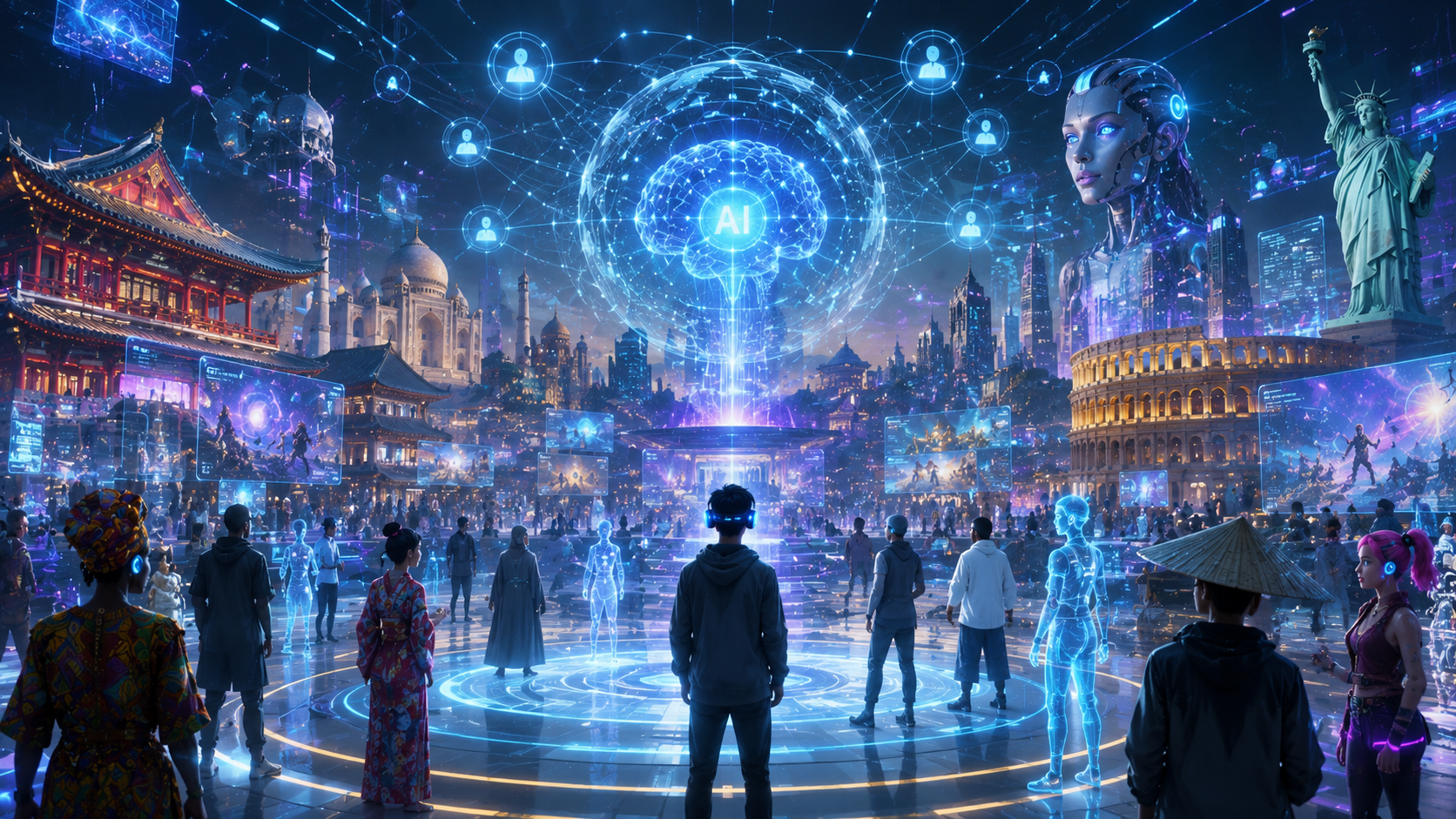
Digital Colonialism, Algorithmic Power, and the Future of Cultural Identity
In the past, cultural domination often emerged through military conquest, colonial expansion, or economic influence.
Today, however, culture is increasingly shaped through algorithms, platforms, and digital environments.
Artificial intelligence recommends what people watch, read, listen to, and believe. Metaverse platforms design virtual worlds where millions of users interact, socialize, and build identity. Global technology companies now influence cultural experience on a scale once reserved for governments or empires.
This creates a new question for the digital age:
If AI and virtual platforms shape human imagination itself,
could digital technology become the next form of cultural imperialism?
And in a future dominated by algorithms and virtual worlds, will smaller cultures survive—or slowly disappear inside globally standardized systems?
1. AI Is Already Influencing Global Culture
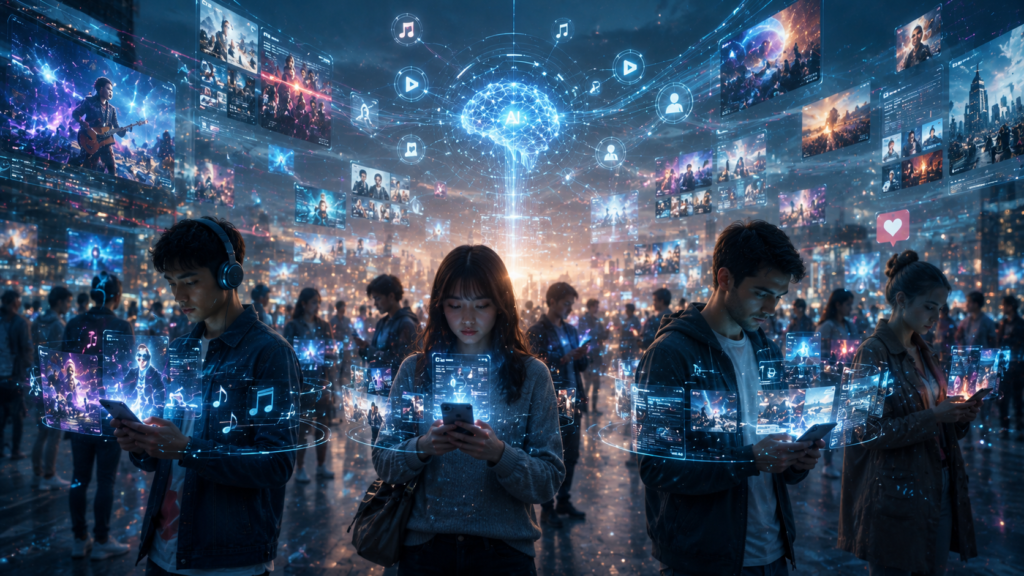
Algorithms as Cultural Gatekeepers
AI systems increasingly function as invisible cultural gatekeepers.
Recommendation algorithms shape:
- music consumption
- film exposure
- news visibility
- beauty standards
- artistic trends
- and political narratives
Rather than people actively searching for culture, algorithms now decide what culture becomes visible.
This gives enormous influence to the companies controlling AI systems and digital platforms.
The Problem of Cultural Bias
AI does not create content independently.
It generates patterns based on training data.
The problem is that much of this data reflects dominant cultural perspectives, especially those originating from large Western technology ecosystems.
As a result, AI-generated content may unintentionally prioritize:
- Western beauty ideals
- English-language communication
- Euro-American narratives
- and globally dominant consumer culture
For example, some AI image-generation systems have been criticized for associating “beauty,” “professionalism,” or “luxury” primarily with Western facial features and lifestyles.
When algorithms repeatedly reproduce the same cultural assumptions, diversity may gradually narrow.
2. The Metaverse and the Future of Cultural Identity
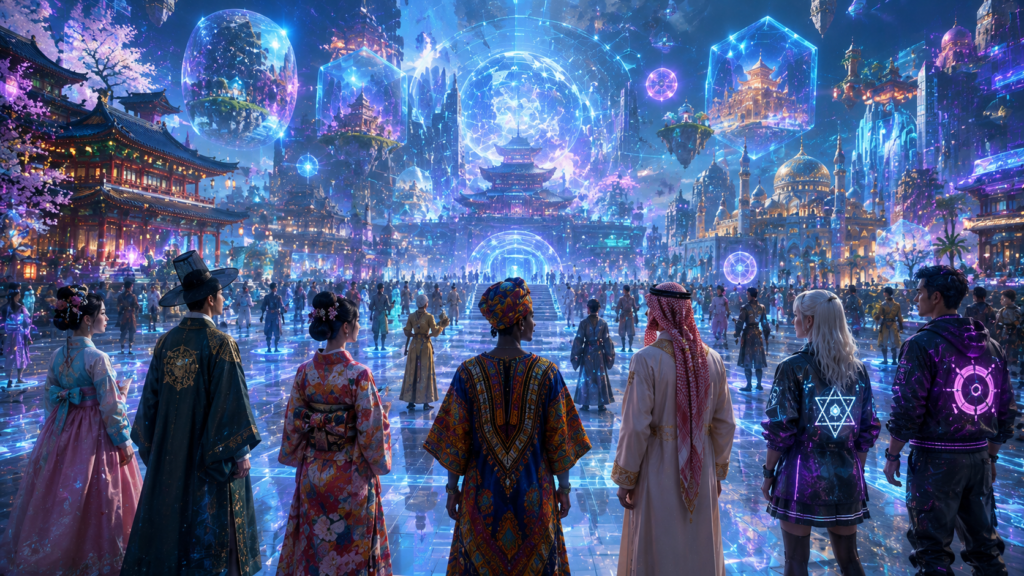
Virtual Worlds Are Not Culturally Neutral
The metaverse is often presented as an open and borderless digital future.
However, virtual environments are designed by corporations, developers, and platform owners who make decisions about:
- language systems
- avatar design
- social interaction
- economic rules
- and visual aesthetics
This means digital worlds are never culturally neutral.
The structure of virtual space itself can privilege certain identities while marginalizing others.
Whose Culture Dominates Virtual Space?
Many major metaverse platforms are currently led by large technology companies based in the United States and other economically powerful nations.
As a result:
- English often becomes the default communication language
- Western fashion dominates avatar markets
- global luxury brands shape virtual aesthetics
- and digital environments frequently reflect Western cultural assumptions
Smaller cultural traditions may struggle to gain visibility inside platform-driven economies.
In this sense, metaverse platforms may reproduce older forms of global inequality within digital space.
3. Digital Colonialism in the AI Era
From Territorial Control to Algorithmic Control
Traditional colonialism controlled land and resources.
Digital colonialism may instead control:
- data
- visibility
- attention
- and cultural influence
Rather than occupying territory physically, powerful technology systems shape how people perceive reality itself.
This creates a new form of cultural dependency.
If a small number of corporations control global recommendation systems, virtual infrastructure, and AI-generated narratives, cultural diversity may become increasingly fragile.
The Risk of Cultural Standardization
One major concern is that AI systems reward content that is:
- globally marketable
- visually standardized
- emotionally optimized
- and commercially profitable
Over time, this may pressure creators and communities to adapt their cultural expression to algorithmic preferences.
Traditional languages, local storytelling styles, regional aesthetics, and minority identities could gradually lose visibility online.
Ironically, digital globalization may create unprecedented connection while simultaneously reducing cultural uniqueness.
4. Can Local Cultures Survive in Virtual Space?
Resistance Through Digital Creativity
Despite these risks, digital technology can also empower local cultures.
Some communities are actively bringing:
- traditional clothing
- regional languages
- indigenous storytelling
- and local artistic traditions
into virtual environments.
Digital spaces can allow smaller cultures to reach global audiences without relying entirely on traditional media systems.
The Importance of Cultural Balance
Maintaining cultural diversity in AI systems and metaverse platforms will likely require:
- more diverse training datasets
- multilingual digital infrastructure
- transparent algorithms
- local cultural investment
- and ethical platform governance
Without these efforts, digital environments may increasingly favor the cultures with the greatest technological and economic power.
The future of cultural diversity may therefore depend not only on creativity—
But also on technological justice.
Conclusion: Who Owns Culture in the Digital Future?
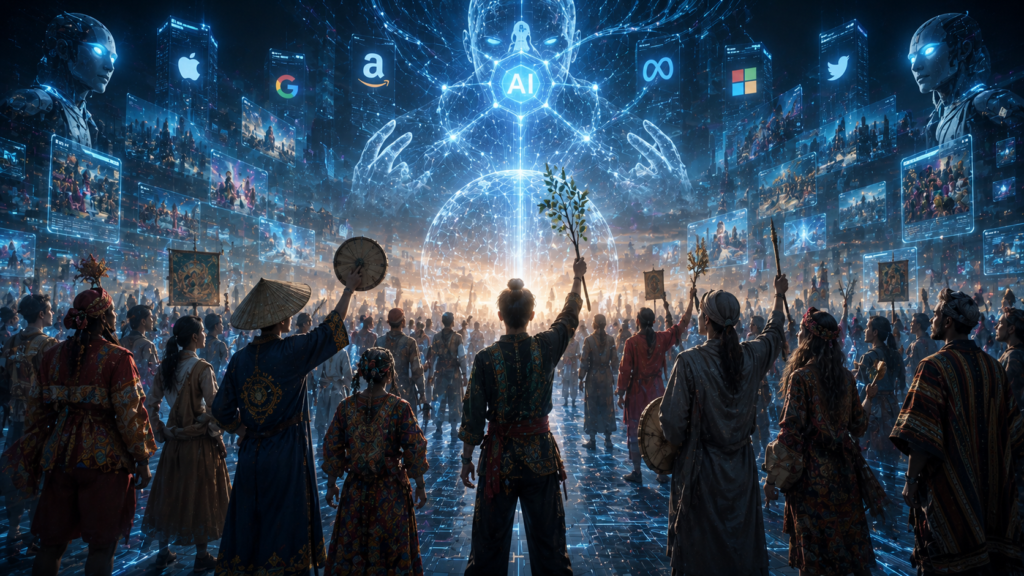
Artificial intelligence and the metaverse are not simply technological tools.
They are becoming environments where culture itself is produced, distributed, and normalized.
This means future cultural power may belong not only to nations—
But also to algorithms, platforms, and corporations capable of shaping digital reality.
The most important challenge of the AI era may therefore be this:
Can humanity build global digital spaces
without allowing a single cultural perspective to dominate them?
If virtual worlds become the primary space where future generations socialize, learn, and imagine identity, protecting cultural diversity may become one of the most important ethical responsibilities of the digital age.
The future of culture may no longer be decided only in schools, museums, or governments.
It may increasingly be decided inside algorithms.
Reader Question
If artificial intelligence and virtual platforms increasingly decide what people watch, wear, admire, and remember—
Are we still freely shaping culture,
or are algorithms quietly shaping it for us?
And in a future dominated by global digital platforms,
how can smaller cultures preserve their identity without disappearing into standardized virtual worlds?
Related Reading
If digital systems increasingly shape emotions, identity, and collective behavior, could cultural influence in virtual spaces become even more powerful than traditional political influence?
In Are Our Emotions Truly Ours—or Socially Constructed?, we explore how social systems and digital platforms regulate emotional expression and shape collective consciousness.
If online communities increasingly form collective identities through digital interaction, could virtual platforms also become powerful spaces for cultural influence and social mobilization?
In When Fans Become a Political Force: The Rise of Fandom Power, we examine how digital communities evolve from entertainment spaces into influential cultural and political actors.
References
- M. S. Kim (2024). Ethics Beyond Ethics: AI, Power, and Colonialism.
This work analyzes how AI systems may reinforce Western-centered values and contribute to new forms of digital colonialism and cultural dominance. - S. E. Bibri (2022). The Social Shaping of the Metaverse.
This study explores how metaverse platforms may reshape global culture through data-driven systems and centralized digital environments. - J. Hutson (2024). Art and Culture in the Multiverse of Metaverses.
Hutson examines how virtual cultural experiences may unintentionally standardize artistic expression through dominant technological frameworks. - N. Grincheva (2023). Cultural Diplomacy in the Age of Artificial Intelligence and the Metaverse.
This research investigates how AI and metaverse technologies may strengthen global cultural influence through digital diplomacy and platform power. - O. Kulesz (2024). Artificial Intelligence and International Cultural Relations.
Kulesz discusses how non-Western cultures may face reduced visibility in AI-driven digital environments and proposes strategies for maintaining cultural diversity.
Leave a Reply