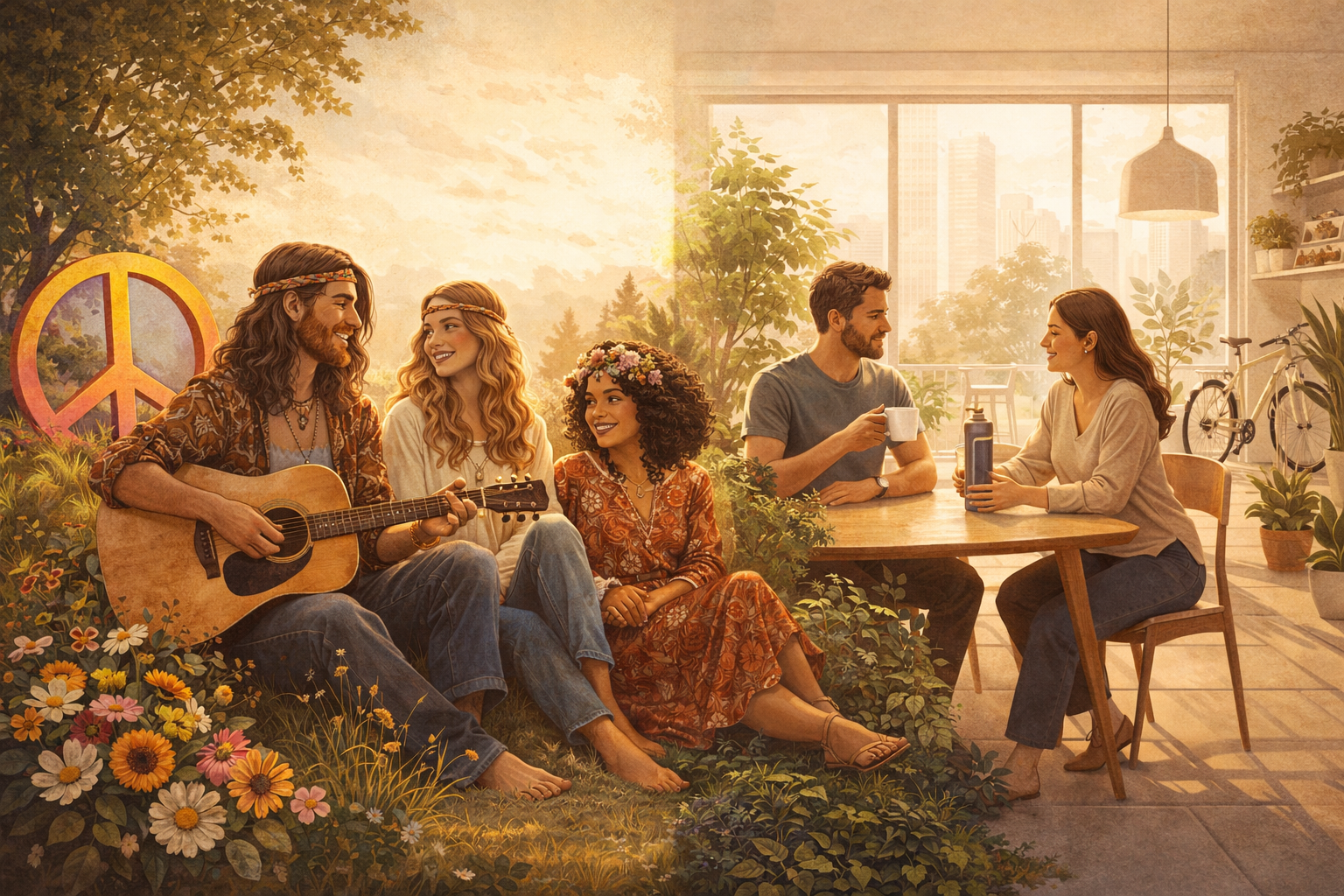
From Counterculture to Modern Lifestyles
When we hear the word hippie, certain images come to mind.
Flower-patterned clothes.
Acoustic guitars.
Anti-war protests.
Free love.
A rejection of materialism.
The hippie movement, born in the 1960s and 70s in the United States, was more than a trend.
It was a radical rethinking of how life should be lived.
The persistence of the hippie spirit today can be seen in movements that challenge consumption, promote sustainability, and seek alternative ways of living.
But today, the question remains:
Has the hippie spirit disappeared—
or has it simply taken on a new form?
1. Beyond the Stereotype
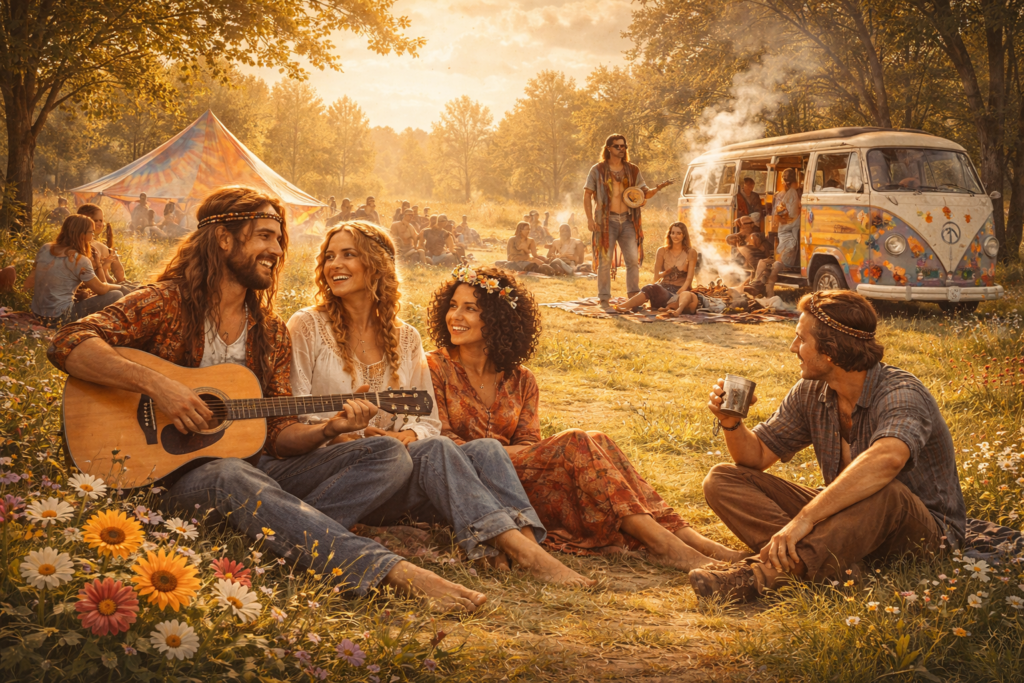
Over time, the image of the hippie has been reduced to a stereotype.
To some, it represents disorder, naivety, or a romanticized past.
But this simplification hides something deeper.
At its core, the hippie movement was built on powerful values:
- harmony with nature
- peace and nonviolence
- personal freedom
- community-centered living
- resistance to dominant systems
These ideas did not vanish.
They transformed.
2. Where the Hippie Spirit Lives Today
Although the original movement may seem distant, its influence is still visible in modern life.
2.1 Environmental Movements
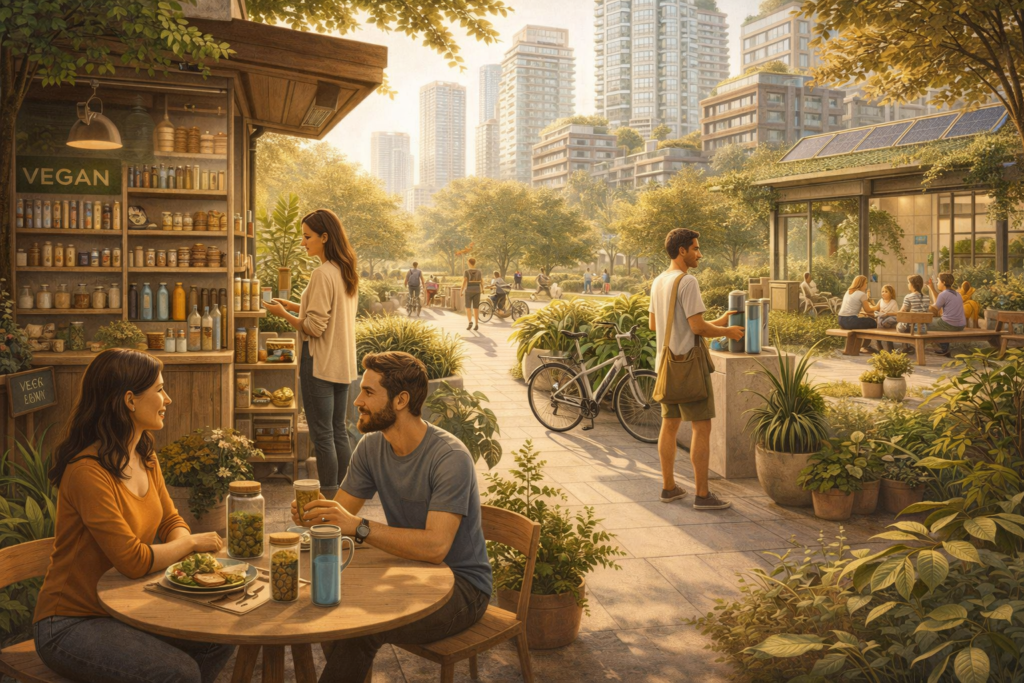
The call to “return to nature” has re-emerged in:
- zero-waste lifestyles
- veganism
- sustainable consumption
These movements echo the same concern for ecological balance that hippies once advocated.
2.2 Alternative Communities and Slow Living
Many people today are seeking alternatives to fast-paced, urban life.
- small-scale communities
- local economies
- shared resources
- intentional living
These reflect the ideals of the hippie communes, reinterpreted for a new era.
2.3 Minimalism and Voluntary Simplicity
The idea that “less is more” is now widely embraced.
Minimalism encourages people to:
- reduce consumption
- focus on essentials
- prioritize meaning over accumulation
This, too, can be seen as a continuation of the hippie rejection of material excess.
3. Freedom, Identity, and Relationships
The hippie movement also challenged traditional norms around relationships and identity.
Ideas such as:
- sexual freedom
- diverse relationship structures
- self-expression without rigid norms
have evolved into today’s conversations around:
- LGBTQ+ rights
- gender identity
- alternative relationship models
What was once radical has become part of mainstream discourse.
4. Evolution, Not Disappearance
Perhaps the hippies were not simply a product of their time.
Perhaps they were early adopters of a future mindset.
Today, we live in a world shaped by:
- climate crisis
- digital overload
- social fragmentation
In response, many people are once again asking:
How should we live differently?
In this sense, the hippie spirit has not disappeared.
It has evolved — quietly, persistently, and in new forms.
Conclusion: The Quiet Persistence of an Idea
The hippie spirit did not die.
It changed its language, its appearance, and its context.
But its essence remains:
- questioning dominant systems
- seeking alternative ways of living
- valuing connection over consumption
So perhaps the real question is not whether hippies still exist.
It is whether we recognize them —
within our culture, and within ourselves.
Question for Readers
When you think about modern lifestyles such as minimalism, sustainability, or alternative communities, do you see them as new trends — or as a continuation of past ideals?
If the hippie spirit still exists today,
how does it appear in your own way of living?
And more importantly,
are we truly changing the system — or simply adapting within it?
Related Reading
The social and philosophical layers behind lifestyle choices are further explored in Is Minimalism a Lifestyle or a Privilege?, where simplicity is examined not only as an aesthetic but as a reflection of class, culture, and power.
At a more individual level, the psychology behind everyday decisions is discussed in Why Do People Prefer the Right Side Over the Left?, revealing how deeply our behavior is shaped by unconscious patterns and inherited tendencies.
References
1. Roszak, T. (1969). The Making of a Counter Culture. University of California Press. This seminal work examines the intellectual and cultural foundations of the hippie movement, highlighting its critique of technocratic society and its influence on ecological and spiritual thought.
2. Turner, F. (2006). From Counterculture to Cyberculture. University of Chicago Press. This book traces the transformation of hippie ideals into digital culture, showing how concepts like community, sharing, and self-direction evolved within technological environments.
3. Miller, T. (1999). The 60s Communes: Hippies and Beyond. Syracuse University Press. This study provides detailed insights into communal living experiments and demonstrates how their principles continue to influence modern sustainable communities.
Leave a Reply