Tag: visual culture

  • Classical and Modern Art

    Classical and Modern Art

    How Artists Have Expressed Human Emotion Across the Ages

    Art has always been more than decoration.

    Long before written history, people painted on cave walls, carved figures from stone, and created symbols that reflected fear, hope, love, and faith. Across every civilization, art has served as one of humanity’s oldest languages—a language capable of expressing emotions that words alone often cannot capture.

    Although artistic styles have changed dramatically over thousands of years, one purpose has remained remarkably constant: to explore the inner world of human experience.

    Classical art sought harmony, balance, and timeless beauty. Modern art, by contrast, embraced uncertainty, individuality, and emotional complexity.

    At first glance, these two artistic worlds appear completely different.

    Yet both ask the same timeless question:

    What does it mean to be human?


    1. Classical Art: The Pursuit of Ideal Beauty and Universal Emotion
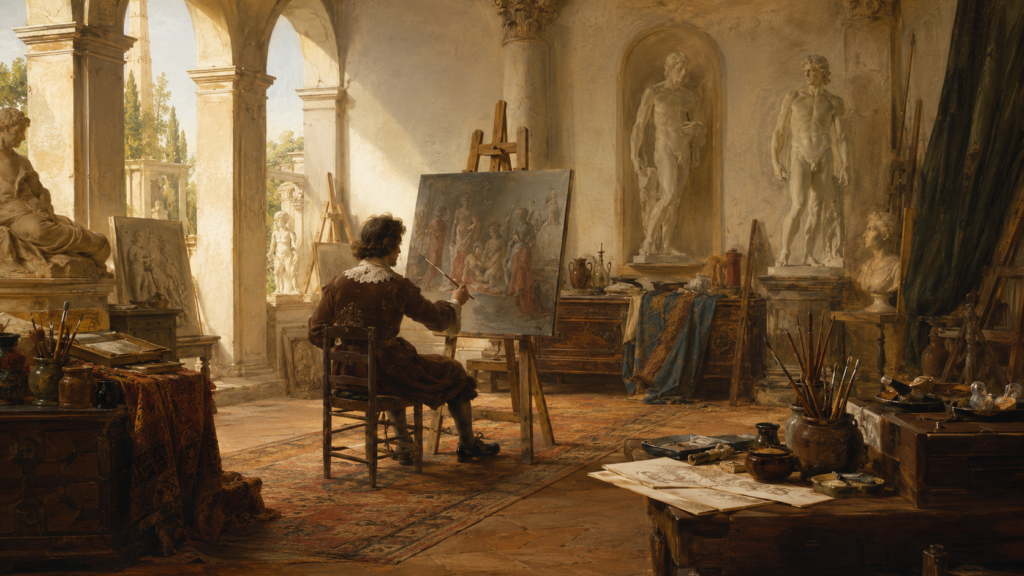
    classical artist creating harmonious and idealized human beauty

    Classical art, particularly in ancient Greece, Rome, and later during the Renaissance, emphasized harmony, proportion, and idealized human beauty.

    Artists believed that beauty reflected order, and that order revealed deeper truths about humanity and nature.

    Rather than portraying temporary emotions, classical artists often sought to express universal human virtues such as courage, compassion, wisdom, dignity, and love.

    Michelangelo’s David is one of the finest examples.

    Although the sculpture depicts the biblical hero before his battle with Goliath, it is not merely a representation of physical strength. David’s calm expression and poised body communicate confidence, determination, and self-control.

    Similarly, Leonardo da Vinci’s Mona Lisa continues to fascinate audiences because of its subtle emotional ambiguity.

    Her mysterious smile seems to shift between serenity, warmth, confidence, and melancholy depending on how each viewer interprets it.

    The painting reminds us that even quiet emotions can possess extraordinary depth.

    Rather than overwhelming viewers with dramatic feelings, classical art invites contemplation through balance and elegance.


    2. From Ideal Beauty to Personal Experience

    As society changed, so did artistic priorities.

    The nineteenth century marked an important transition.

    Instead of portraying idealized perfection, artists increasingly focused on individual perception and personal experience.

    The Impressionists, including Claude Monet and Pierre-Auguste Renoir, were less concerned with precise realism than with capturing fleeting moments of light, atmosphere, and emotion.

    A sunrise, reflections on water, or sunlight passing through trees became worthy artistic subjects.

    These paintings suggested that emotion does not always emerge from dramatic events.

    Sometimes it appears quietly—in ordinary moments that pass almost unnoticed.

    This shift prepared the way for modern art, where personal experience would become even more central.


    3. Modern Art: Exploring the Inner Mind
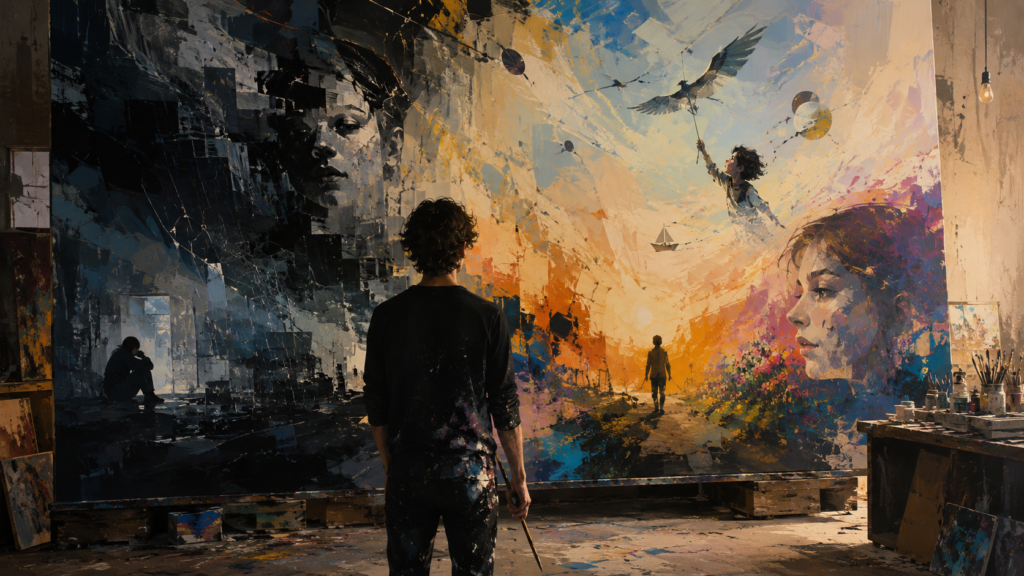
    artist expressing complex human emotions through modern painting

    Modern art expanded the emotional range of artistic expression far beyond classical ideals.

    Rather than searching for universal perfection, many modern artists explored anxiety, loneliness, fear, identity, and psychological conflict.

    The goal was no longer simply to create beauty.

    It was to reveal emotional truth.

    Edvard Munch’s The Scream remains one of the most recognizable examples.

    The distorted figure, swirling sky, and intense colors do not represent physical reality.

    Instead, they visualize inner psychological distress.

    Viewers often recognize something deeply human within the painting because fear and uncertainty are emotions shared across cultures.

    Modern artists increasingly accepted that emotional honesty could be more important than visual perfection.


    4. Pablo Picasso: A Bridge Between Classical and Modern Art

    Few artists transformed art as dramatically as Pablo Picasso.

    Although famous for Cubism, Picasso received rigorous classical training during his youth.

    Rather than rejecting tradition entirely, he reimagined it.

    His masterpiece Guernica demonstrates how modern artistic techniques can express timeless human emotions.

    Created in response to the bombing of the Spanish town of Guernica during the Spanish Civil War, the painting does not depict war realistically.

    Instead, fragmented forms, distorted faces, and broken bodies communicate chaos, suffering, and despair.

    The emotional impact comes not from accurate representation, but from psychological intensity.

    In this way, Picasso connected classical themes—human tragedy and moral reflection—with modern visual language.

    His work reminds us that while artistic styles evolve, human suffering and compassion remain constant.


    5. Abstract Expressionism: When Emotion Became the Subject

    As the twentieth century progressed, some artists moved even further away from recognizable images.

    Abstract Expressionists believed that emotion itself could become the artwork.

    Jackson Pollock’s famous action paintings abandoned traditional composition altogether.

    Instead of carefully arranging subjects, Pollock allowed movement, rhythm, and spontaneous gestures to become central elements of creation.

    At first glance, these paintings may appear chaotic.

    Yet many viewers experience powerful emotional responses precisely because there is no predetermined story.

    Each person is invited to interpret the work through personal memories, emotions, and imagination.

    Modern art increasingly shifted from providing answers to encouraging questions.

    Instead of asking,

    “What is this painting about?”

    it asks,

    “What do you feel when you look at it?”


    6. Different Artistic Languages, Shared Human Questions

    Classical and modern art often appear to stand at opposite ends of artistic history.

    One celebrates order.

    The other embraces uncertainty.

    One searches for timeless ideals.

    The other welcomes individuality and emotional complexity.

    Yet beneath these differences lies a remarkable similarity.

    Both seek to understand human existence.

    Whether through the graceful proportions of Renaissance painting or the fragmented forms of modern expressionism, artists continue exploring love, fear, hope, loss, courage, loneliness, and joy.

    The artistic language changes.

    Human emotion does not.

    Throughout history, art has served as a mirror reflecting not only society, but also the emotional landscape within ourselves.


    Conclusion: Art as the Memory of Human Emotion
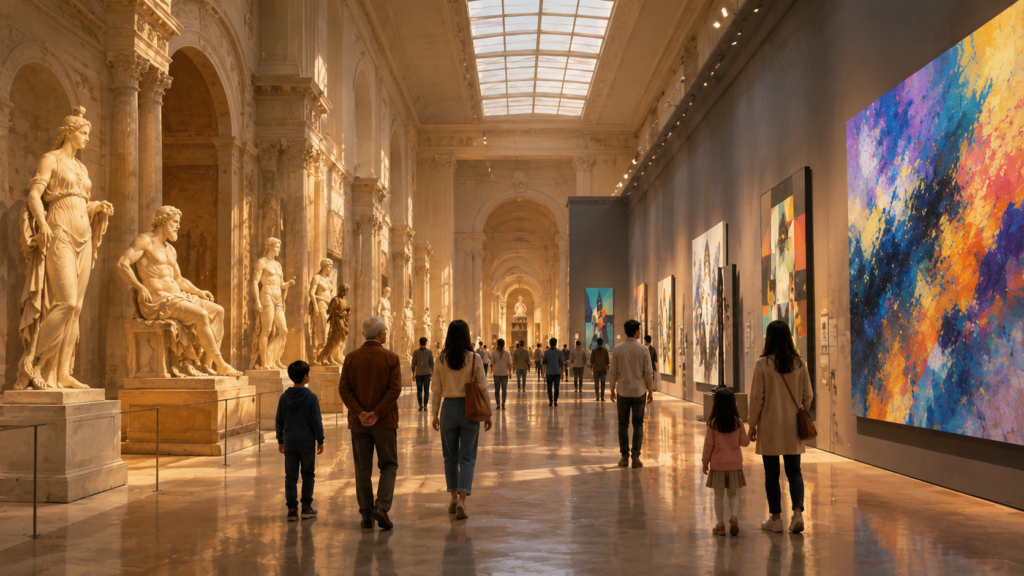
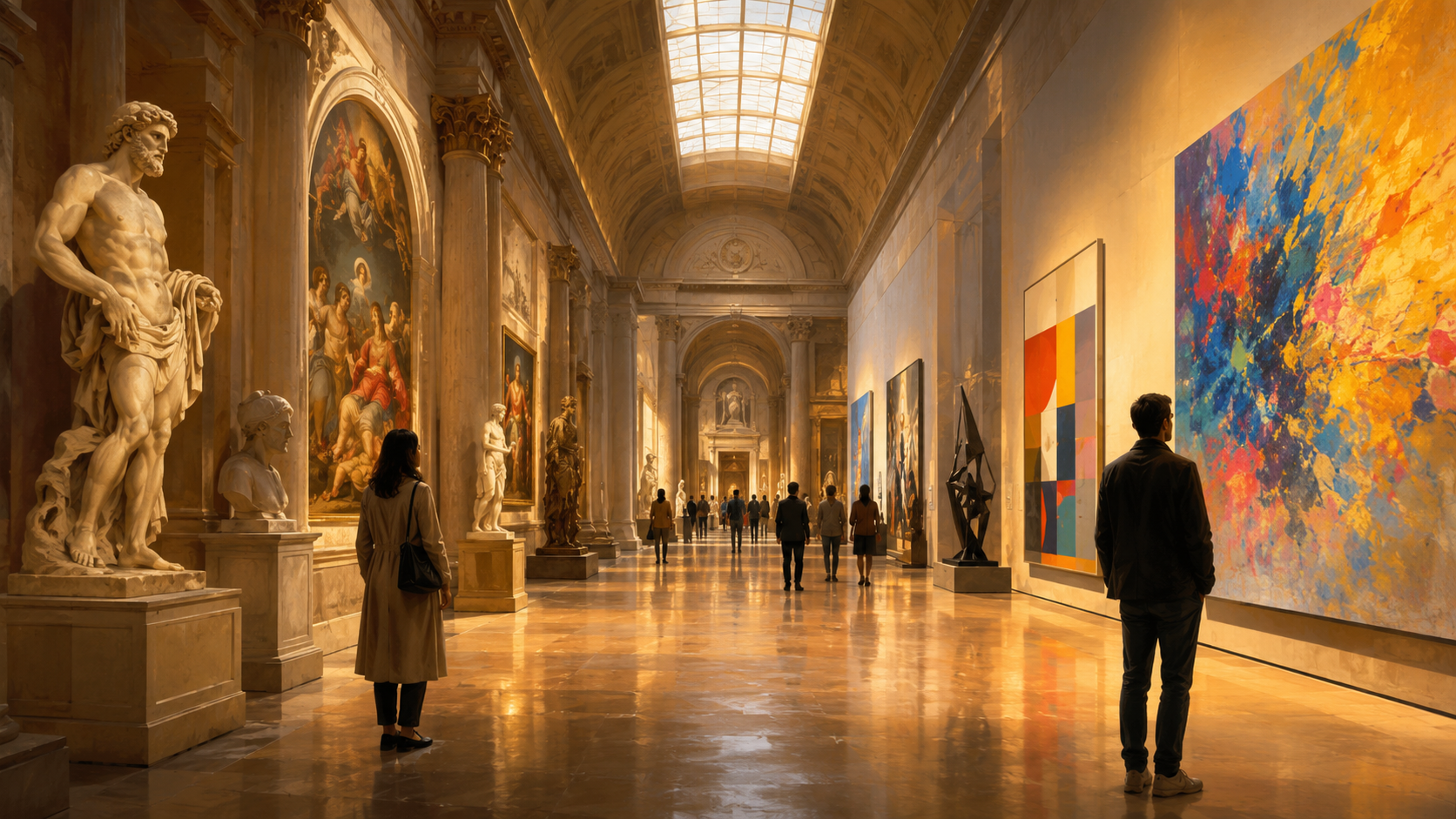
    people exploring the evolution of art across different historical periods

    Every civilization leaves behind monuments, buildings, and written records.

    Perhaps its greatest legacy, however, is the art through which it expressed its emotions.

    Classical art teaches us the beauty of harmony, dignity, and timeless ideals.

    Modern art reminds us that vulnerability, uncertainty, and emotional honesty are equally meaningful parts of being human.

    Together, they tell a continuous story.

    The story is not merely about changing artistic styles.

    It is about humanity’s endless attempt to understand itself.

    As cultures evolve and technologies transform the way we live, art continues to preserve something that remains unchanged:

    our desire to express what cannot always be spoken.

    Perhaps that is why great works of art never truly become old.

    Although created centuries apart, they continue speaking to people across generations because the emotions they portray are, ultimately, our own.

    A Question for Readers

    When you stand before a great work of art, what moves you more—the harmony and balance of classical masterpieces, or the emotional honesty and bold experimentation of modern art?

    Perhaps the answer says as much about our own experiences as it does about the artwork itself.


    Related Reading

    Related Reading

    Art has always reflected humanity’s search for meaning, beauty, and a deeper understanding of life. This enduring pursuit of human wisdom connects naturally with The Origins of Medicine, which explores how different ancient civilizations sought to understand the human body, health, and the relationship between people and the natural world.

    At the same time, works of art often invite viewers to interpret reality from different perspectives rather than offering a single definitive answer. This philosophical dimension is further explored in The Nature of Truth, which examines how perception, interpretation, and context shape the way we understand both truth and the world around us.
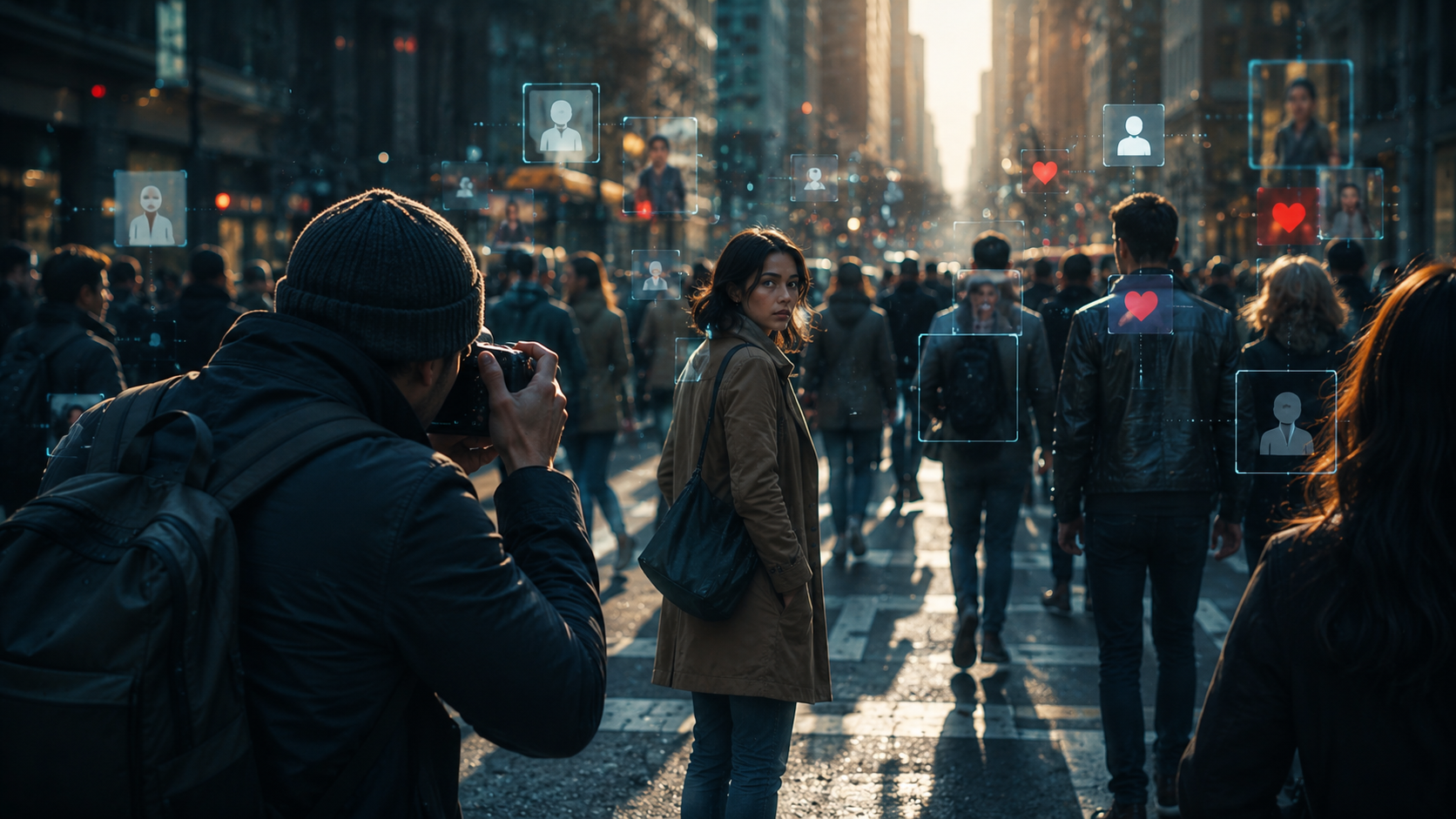
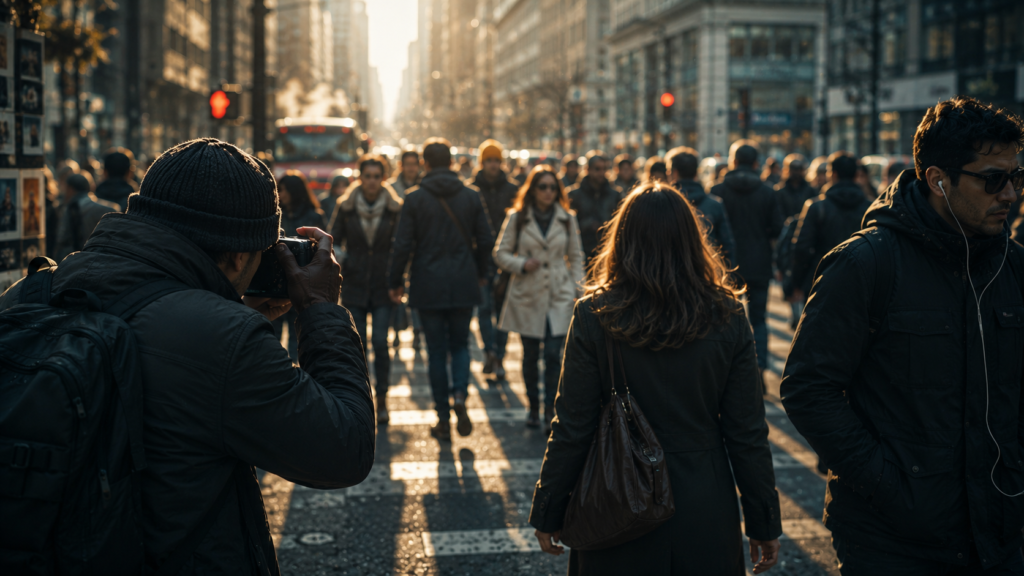
  • Portrait Rights vs. Freedom of Photography: Who Owns the Public Image?

    Portrait Rights vs. Freedom of Photography: Who Owns the Public Image?

    How Street Photography, Social Media, and Digital Culture Are Redefining Privacy in Public Spaces

    The famous street photographer Henri Cartier-Bresson once described photography as the art of capturing “the decisive moment.” His philosophy emphasized spontaneity, movement, and authentic human expression. In traditional street photography, people were often photographed naturally without staged poses or formal consent.

    However, the digital age has transformed the meaning of photography.

    Today, a single image taken in public can spread across social media within minutes, attracting millions of views and permanently shaping someone’s online identity. A photograph that once existed as artistic documentation may now become viral content, public entertainment, or even a source of harassment.

    This creates a difficult question:

    If a photographer captures someone in a public space without permission, who ultimately owns that image—the subject or the photographer?

    The answer lies within one of the most complex ethical tensions of the digital era:

    the conflict between portrait rights and freedom of expression.


    1. Portrait Rights and Freedom of Photography

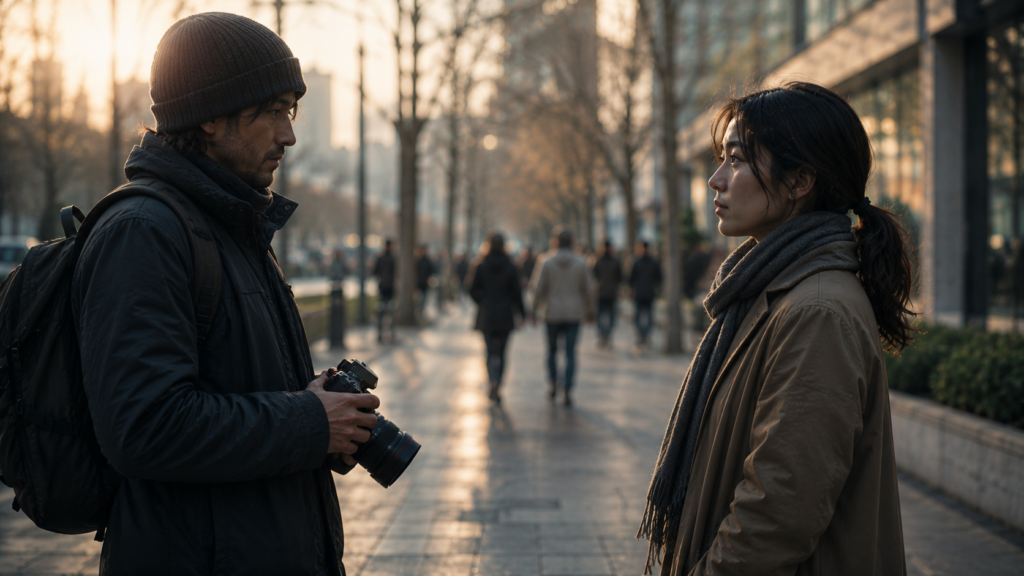
    street photographer capturing everyday life

    What Are Portrait Rights?

    In modern society, nearly everyone carries a smartphone capable of taking and sharing photographs instantly. Because of this, questions surrounding privacy and image ownership have become increasingly important.

    Portrait rights generally refer to an individual’s right to control how their face, body, or recognizable appearance is photographed, used, or distributed. These rights are closely connected to personal dignity, privacy, and autonomy.

    At the same time, photography itself is often protected as a form of artistic expression and free speech. Photographers argue that public spaces are essential environments for documenting society, culture, and human life.

    Street photography in particular has historically served as a visual record of everyday reality. Many iconic photographs that shaped public memory were taken spontaneously in public places without formal permission.

    This is where the tension begins.


    Why Public Spaces Create Legal and Ethical Gray Areas

    In many countries, photographing people in public spaces is generally legal. However, legal permission to take a photograph does not always mean unlimited freedom to distribute or commercialize it.

    The distinction between:

    • taking a photograph
      and
    • publishing or profiting from it

    often determines whether legal or ethical conflicts arise.

    For example, a person photographed on the street may later become the target of unwanted online attention if the image spreads widely on social media. Even if the original photograph was taken legally, the consequences for the subject may still be harmful.

    As a result, modern debates about photography increasingly focus not only on legality, but also on consent, dignity, and digital responsibility.


    2. Different Countries Approach Portrait Rights Differently

    The United States and Freedom of Expression

    In the United States, public photography is generally protected under freedom of expression laws. Photographers are usually allowed to photograph people in public spaces without explicit permission.

    However, legal restrictions become stronger when photographs are used for commercial purposes such as advertising or product promotion. In these cases, subjects may claim violations of publicity or privacy rights.

    American law therefore tends to prioritize artistic and journalistic freedom while placing limits on commercial exploitation.


    France and Stronger Privacy Protections

    France is known for stronger protections of personal image rights.

    French courts often place greater emphasis on individual dignity and privacy, even in public settings. Publishing identifiable images without consent can sometimes lead to legal disputes, particularly if the subject experiences reputational or emotional harm.

    This reflects a broader European tradition that views personal privacy as a fundamental human right.


    South Korea and Digital Reputation Concerns

    In South Korea, public photography is generally allowed, but online distribution may become problematic if it damages someone’s reputation or invades personal privacy.

    Because digital culture in Korea is highly networked and fast-moving, unauthorized images can spread rapidly through online communities and social media platforms. This has increased public sensitivity toward portrait rights and digital ethics.

    As a result, legal debates increasingly involve not only privacy itself, but also online humiliation, cyberbullying, and reputational harm.


    3. Portrait Rights vs. Freedom of Expression

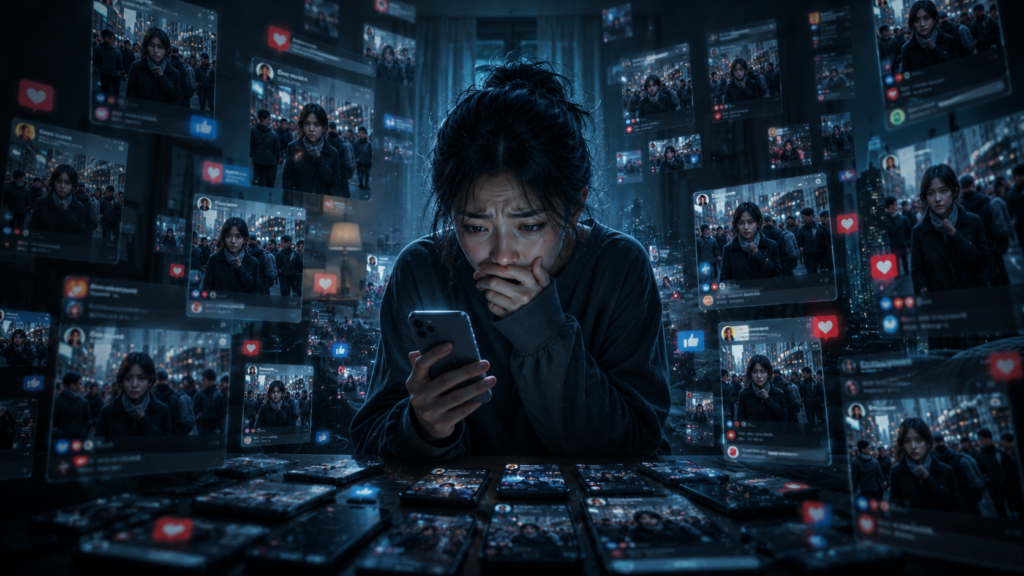
    online exposure and digital privacy anxiety

    The Argument for Privacy and Consent

    Supporters of stronger portrait rights argue that individuals should maintain control over how their appearance is used in digital environments.

    They emphasize that:

    • online exposure can become permanent
    • viral images may cause psychological harm
    • and individuals often lose control over their identity once photographs spread online

    From this perspective, even public spaces should not eliminate basic expectations of dignity and consent.

    Critics also point out that social media platforms amplify photographs far beyond their original context. An image intended as artistic documentation can quickly become entertainment, ridicule, or mass surveillance.


    The Argument for Artistic and Documentary Freedom

    On the other hand, photographers and journalists argue that excessive restrictions on public photography may threaten artistic freedom and public documentation.

    Street photography has historically captured:

    • political movements
    • urban life
    • social inequality
    • protests
    • and cultural change

    Many iconic historical photographs were taken spontaneously without formal consent.

    Supporters of photographic freedom therefore argue that public life itself must remain photographable if societies wish to preserve journalism, documentary work, and artistic expression.

    The challenge lies in finding a balance between protecting human dignity and preserving creative freedom.


    4. The Digital Age Changes Everything

    Social Media and the Loss of Context

    The rise of social media has dramatically intensified these debates.

    In the past, a photograph taken in public might appear only in a gallery, newspaper, or printed collection. Today, however, images can circulate globally within seconds.

    Digital platforms remove context from photographs. A moment captured artistically may later be interpreted mockingly, politically, or aggressively by online audiences.

    As a result, photographers today carry not only artistic responsibility, but also ethical responsibility for how images may function in unpredictable digital environments.


    The Growing Importance of Ethical Photography

    Because of these risks, many photographers now emphasize ethical practices alongside legal rights.

    Some common approaches include:

    • requesting consent whenever possible
    • avoiding humiliating or vulnerable subjects
    • blurring identifiable faces in sensitive situations
    • and considering the long-term impact of online publication

    These practices recognize that legality alone does not always resolve ethical concerns.

    In the digital age, responsible photography increasingly depends on empathy as much as artistic freedom.


    Conclusion: Who Owns the Public Image?

    balance between photography freedom and dignity

    Photography has always existed between art, documentation, and human observation. Public spaces naturally create opportunities for spontaneous visual storytelling, and freedom of photography remains an important part of democratic and artistic culture.

    At the same time, however, digital technology has changed the scale and permanence of image distribution. A photograph is no longer simply a moment frozen in time. It can become part of someone’s lifelong digital identity.

    This is why modern societies continue struggling to balance two important values:

    • the freedom to document public life
      and
    • the right to personal dignity and privacy

    Ultimately, the debate over portrait rights is not only about law. It is about how humans choose to see—and respect—one another in an age where every image can travel infinitely.

    Perhaps the most important question is no longer:

    “Can we photograph people in public?”

    But rather:

    How should we ethically treat the people we photograph once those images enter the digital world?

    Reader Question

    Do people lose part of their freedom when every public moment can be photographed and shared online?

    Related Reading

    If modern society increasingly records and monitors everyday life through smartphones, cameras, and digital platforms, how much privacy can individuals realistically expect in public spaces?
    In How Much Surveillance Is Too Much?, we explore how surveillance technologies are reshaping freedom, privacy, and human behavior in modern society.


    If digital memory allows images and personal information to remain online indefinitely, should individuals have the right to control or erase their public image over time?
    In In a World Where Everything Is Recorded, Is Forgetting a Sin—or a Right?, we examine how digital permanence is changing memory, identity, privacy, and the ethics of online exposure.


    References

    1. The Right to Privacy by Samuel D. Warren and Louis D. Brandeis
      This foundational legal article established early concepts of privacy rights and continues to influence modern discussions about portrait rights and personal dignity.
    2. Clive N. Davies. Street Photography and the Right to Privacy: A Comparative Study.
      This study compares how different legal systems balance street photography with individual privacy protections.
    3. Emily R. Thompson. Public Places, Private Faces: The Regulation of Street Photography.
      Thompson explores the legal and ethical tensions between public photography and personal image rights.
    4. Privacy and Freedom by Alan F. Westin
      This influential work examines the importance of privacy in modern democratic societies.
    5. The Photographer’s Right by Bert P. Krages II
      This legal guide explains photographers’ rights and limitations in public spaces.
  • The Politics of Empty Space

    The Politics of Empty Space

    How Absence Shapes Power in Advertising and Design

    Modern life is filled with constant noise.

    Screens overflow with information,
    advertisements compete for attention,
    and silence itself has become increasingly rare.

    Yet sometimes, what feels most powerful
    is not what is added—
    but what is deliberately left empty.

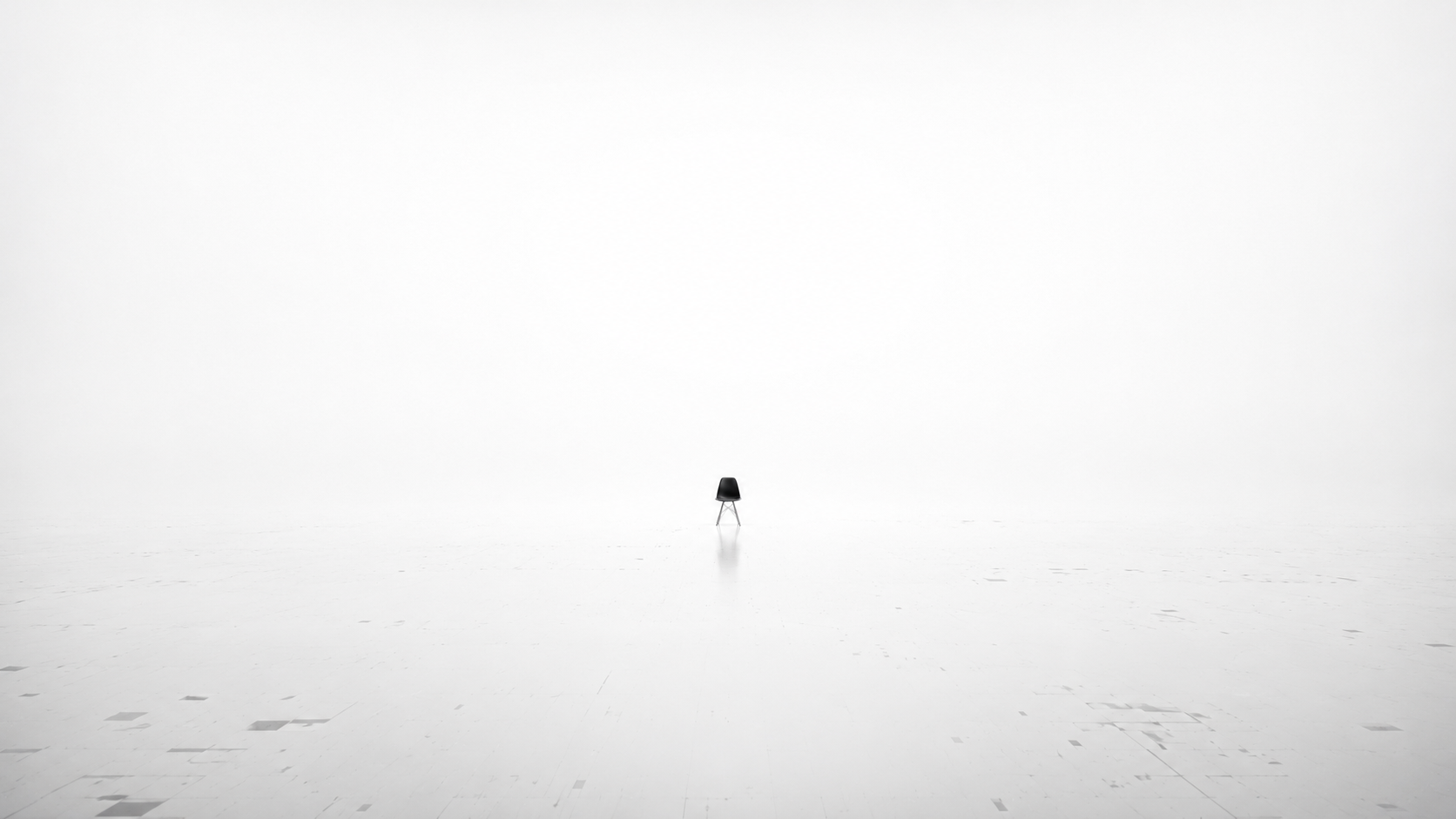
    Minimal composition showing power of empty space in design

    1. White Space as Silent Communication

    Visual Silence That Commands Attention

    When we look at advertisements or posters, our eyes are usually drawn to bold images and striking slogans.
    Yet many designers argue the opposite: empty space, or white space, often carries the strongest message.

    White space functions like silence in conversation.
    It appears to say nothing, yet that very absence forces the viewer to pause, slow down, and focus.

    Less Information, Stronger Impact

    Apple’s advertising offers a clear example.
    A single product is placed at the center, surrounded by vast empty space.
    Nothing distracts the viewer—attention naturally converges on the object itself.

    In poster design, the same principle applies.
    By intentionally removing excess elements, the remaining message becomes sharper and more memorable.
    White space, then, is not “nothing”; it is a strategic choice for emphasis.


    2. Cultural Meanings of White Space

    East Asian Aesthetics: Emptiness as Possibility

    Perceptions of white space differ across cultures.
    In East Asian aesthetics, empty space has long been treated as an essential artistic element.

    In ink painting, wide blank areas do not represent absence or lack.
    They invite imagination, symbolize nature, and allow meaning to emerge indirectly.
    Here, emptiness is not deficiency—it is potential.

    Western Design and the Rediscovery of Minimalism

    Western commercial design historically favored filling space with information.
    More text, more images, more explanation were believed to increase persuasion.

    Today, however, global visual culture has shifted.
    Minimalist layouts and generous white space now signal refinement, confidence, and sophistication.
    White space has become a shared visual language across cultures.


    3. White Space as a Language of Power

    The Authority of Not Explaining

    The ability to use white space often reflects privilege.
    Leaving large areas empty—especially in expensive advertising spaces—signals the freedom to waste resources.

    White space suggests a position where explanation is unnecessary.
    It communicates confidence: this needs no justification.

    White space used as a symbol of authority and power

    Luxury Branding and Symbolic Distance

    Luxury brands frequently display a single product against a blank background.
    The message is subtle but powerful:
    “We do not need to persuade you—our value is self-evident.”

    In this sense, white space operates not only as a design technique but as a symbol of status and authority.


    4. White Space in the Digital Age

    Information Overload

    Smartphone screens, social media feeds, and digital ads bombard users with endless content.
    The result is cognitive fatigue and fragmented attention.

    White Space as Psychological Relief

    In this environment, white space becomes a form of relief.
    Google’s minimal homepage or clean interface designs demonstrate how emptiness can restore calm.

    Amid digital excess, white space signals clarity, trust, and stability.
    It functions as a psychological pause, not merely a visual one.


    5. From Design to Everyday Life

    White Space Beyond Graphics

    The logic of white space extends beyond design:

    • White space in conversation: allowing silence instead of constant speech
    • White space in time: leaving unscheduled moments in daily life
    • White space in relationships: accepting distance without anxiety

    The Question of What to Remove

    White space ultimately asks a deeper question—not about what to add, but what to remove.
    It challenges the assumption that fullness equals value.


    Empty space as visual pause in digital overload

    Conclusion

    White space is not absence—it is a deliberate strategy and a form of power.
    In advertising and graphic design, it sharpens messages, signals authority, and reflects cultural values.

    In an age of digital overload, white space becomes more than a visual choice.
    It offers psychological balance and social meaning.

    The politics of white space ultimately asks us one simple question:

    What must we remove for what truly matters to become visible?

    A Question for You

    In a world overflowing with information,
    what would happen if we deliberately chose to leave more space empty?

    Related Reading

    The relationship between structure, control, and freedom extends beyond politics into visual culture itself.
    The Minimal State: An Ideal of Liberty or a Neglect of the Common Good? explores how systems of authority shape the balance between individual freedom and collective order.

    The management of visibility is deeply connected to power in modern society.
    How Much Surveillance Is Too Much? examines how control increasingly operates not only through force, but through observation, design, and the shaping of attention itself.

    References

    1. Lupton, E. (2014). Graphic Design Thinking: Beyond Brainstorming.
      Explores how reduction, simplicity, and empty space function as tools for visual thinking and strategic communication in design.
    2. Heller, S., & Vienne, V. (2012). 100 Ideas That Changed Graphic Design.
      Traces major turning points in graphic design history, including the rise of white space as a powerful visual principle.
    3. Hollis, R. (2001). Graphic Design: A Concise History.
      Provides historical context for minimalism and the evolving role of empty space in modern visual culture.