Urban Growth, Power, and the Hidden Divides of Modern Life
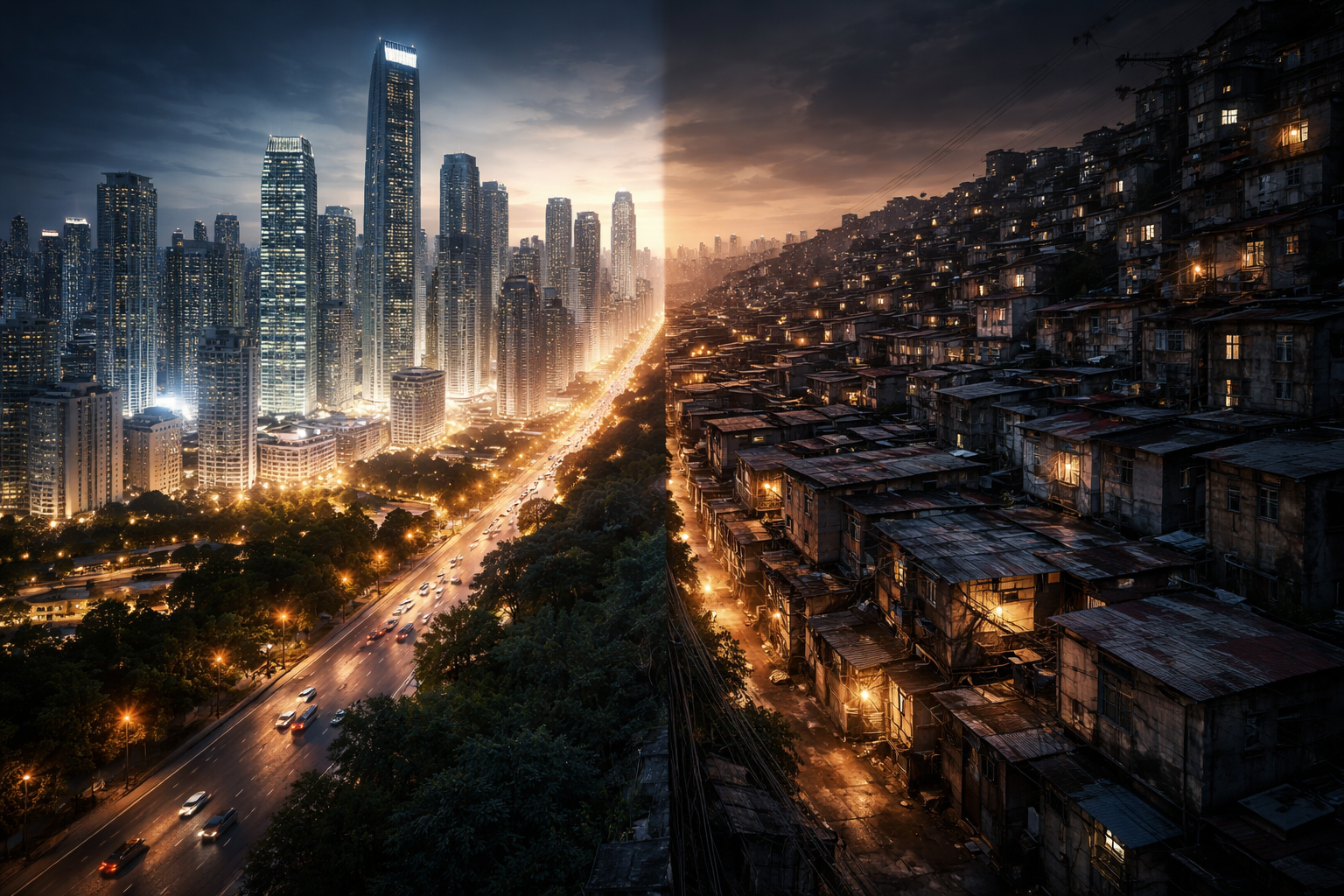
Cities have long been celebrated as the pinnacle of human civilization.
From the Industrial Revolution to today’s smart cities, urbanization has brought economic growth, cultural diversity, technological innovation, and expanded opportunities.
Skylines filled with glass towers and networks of digital infrastructure present cities as symbols of progress and the future.
But beneath this image lies a more complex reality.
Do cities truly benefit everyone equally—
or do they also produce new forms of inequality and exclusion?
1. Cities as Engines of Progress
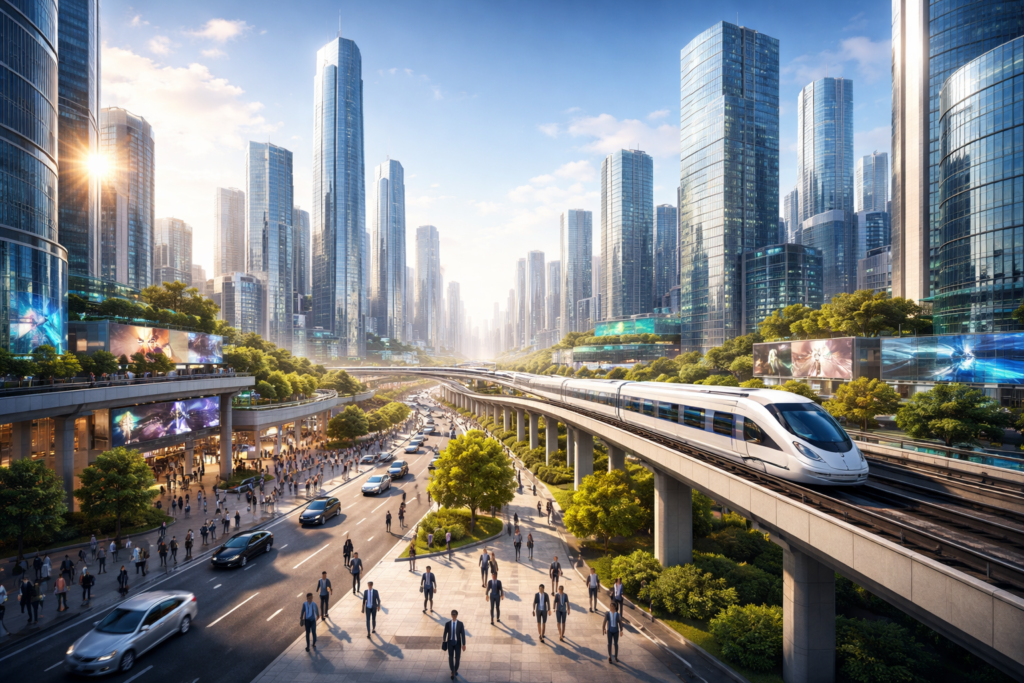
Urbanization has historically been associated with advancement.
Cities concentrate knowledge, talent, and capital, enabling innovation and economic growth. As urban economist Edward Glaeser argues, cities are places where ideas collide, interact, and evolve, making them powerful drivers of human development.
Urban environments also create opportunities:
- Job creation and economic mobility
- Access to education and healthcare
- Cultural exchange and diversity
- Infrastructure for transportation and communication
From this perspective, cities are not just places to live—they are platforms for progress.
2. The Other Face of Urbanization: Inequality and Exclusion
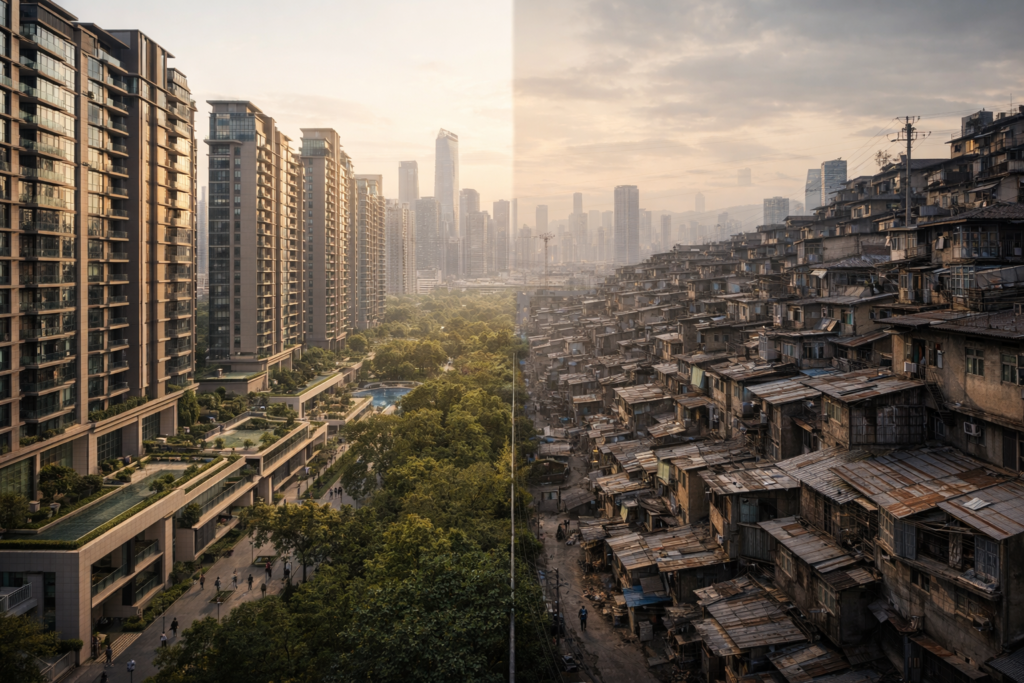
Yet urbanization also produces spatial inequality.
As cities expand, wealth and resources tend to concentrate in certain areas, while marginalized populations are pushed to the periphery. This process, often described as the spatialization of inequality, creates invisible boundaries within cities.
Historically, cities such as London, Paris, and New York have shown patterns of spatial segregation, where socioeconomic status is closely tied to geography.
The sociologist Henri Lefebvre argued that urban space is not neutral—it is shaped by power, capital, and social relations.
In this sense, cities are not only physical spaces but also political and economic structures that determine who belongs—and who does not.
3. A Global Pattern: Uneven Cities Everywhere
This phenomenon is not limited to one country.
Across the world, cities reveal stark contrasts:
- In Rio de Janeiro, luxury high-rises stand next to sprawling favelas
- In Mumbai, financial districts coexist with some of the largest slums in the world
- In Johannesburg, economic inequality is deeply embedded in urban geography
According to UN-Habitat, over one billion people worldwide live in informal settlements, and this number continues to rise.
Cities, therefore, are not only engines of growth—they are also sites where inequality becomes visible and intensified.
4. A Case Study: Seoul as a Divided City
The dynamics of urban inequality can also be seen in Seoul, a global megacity often associated with rapid modernization and technological advancement.
Since the 1960s, Seoul has transformed into a highly developed urban center. However, this growth has also produced internal divides.
The contrast between Gangnam and other districts reflects how urban space can embody social hierarchy:
- Concentration of wealth, education, and infrastructure in certain areas
- Disparities in housing, public services, and opportunities
- The emergence of “address-based inequality,” where location shapes life chances
This pattern is not unique to Seoul—it mirrors similar dynamics in cities around the world.
5. Rethinking the City: Toward Inclusive Urban Futures
In response to these challenges, scholars and policymakers are increasingly advocating for the concept of the inclusive city.
An inclusive city is not defined solely by infrastructure or economic output, but by how well it supports the lives of all its residents.
Key approaches include:
- Expanding affordable housing and reducing spatial inequality
- Ensuring equitable access to education, healthcare, and public services
- Promoting participatory urban governance
- Preserving cultural diversity and community identity
These efforts aim to transform cities from spaces of division into spaces of shared belonging.
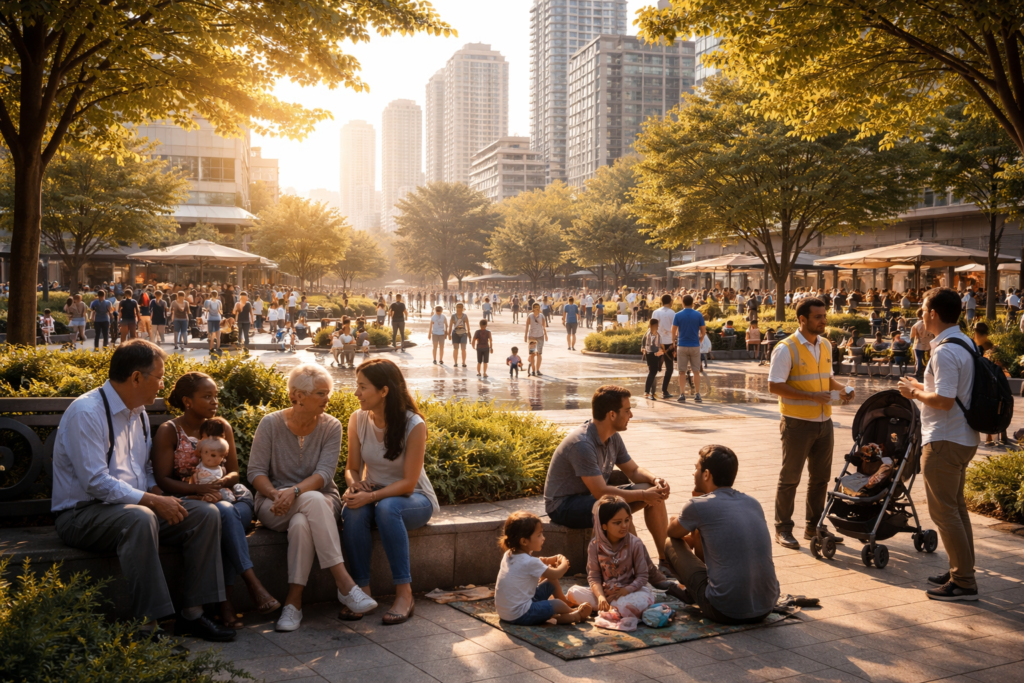
Conclusion: Who Is the City For?
Cities can indeed be symbols of progress.
But progress only matters when it is shared.
When cities become spaces of exclusion, they risk turning into showcases of wealth rather than environments for human life.
The essential question remains:
Who is the city built for?
Urban development must go beyond growth—it must embrace justice, equity, and inclusion.
Only then can cities fulfill their promise—not just as centers of progress, but as spaces where diverse human lives can truly coexist.
💬 A Question for Readers
Do you see your city as a place of opportunity—
or as a space where inequality is quietly built into everyday life?
Related Reading
The structural foundations of inequality in modern societies are further explored in Is There a Single Historical Truth, or Many Narratives?, where the role of power, perspective, and interpretation reveals how dominant narratives can shape not only our understanding of the past, but also the inequalities embedded in present social structures.
At a more individual and psychological level, the lived experience of inequality is reflected in Am I Falling Behind? — How Comparison Distorts Our Sense of Time, where everyday perceptions of success and failure demonstrate how invisible hierarchies influence human emotion, motivation, and self-understanding.
References
- Harvey, D. (2012). Rebel Cities: From the Right to the City to the Urban Revolution. London: Verso.
Harvey analyzes how capitalist urban development shapes inequality and social division, introducing the concept of the “right to the city” as a form of resistance and democratic claim over urban space.
- Glaeser, E. (2011). Triumph of the City. New York: Penguin Press.
Glaeser presents cities as engines of innovation and economic growth, while also addressing the challenges of inequality and the need for effective urban policy.
- Florida, R. (2017). The New Urban Crisis. New York: Basic Books.
Florida examines how the concentration of the creative class has intensified inequality within cities, revealing the paradox of urban success and social fragmentation.
- Jacobs, J. (1961). The Death and Life of Great American Cities. New York: Random House.
Jacobs critiques top-down urban planning and emphasizes the importance of community, diversity, and human-scale urban environments.
- Davis, M. (2006). Planet of Slums. London: Verso.
Davis exposes the global expansion of slums and the structural inequalities embedded in rapid urbanization, particularly in developing regions.