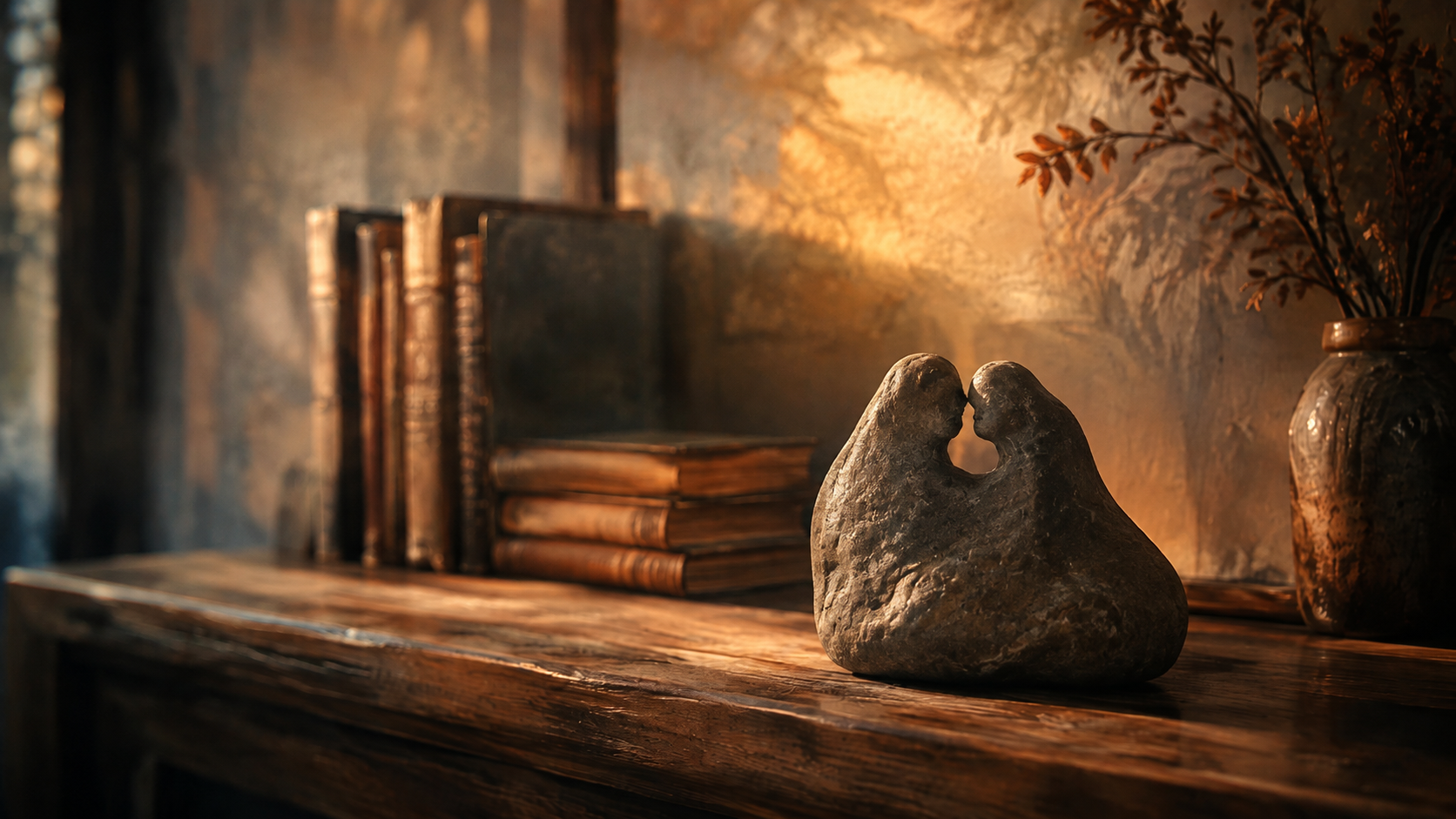
When a Stone Begins to Tell a Love Story
There is a small stone on my bookshelf.
It is only about 2.4 inches wide, 2.4 inches deep, and 4.3 inches tall.
Yet it has been with me for more than thirty years.
It is a naturally shaped viewing stone—an object collected not because it has been carved into something beautiful, but because nature itself seems to have given it a form worth contemplating.
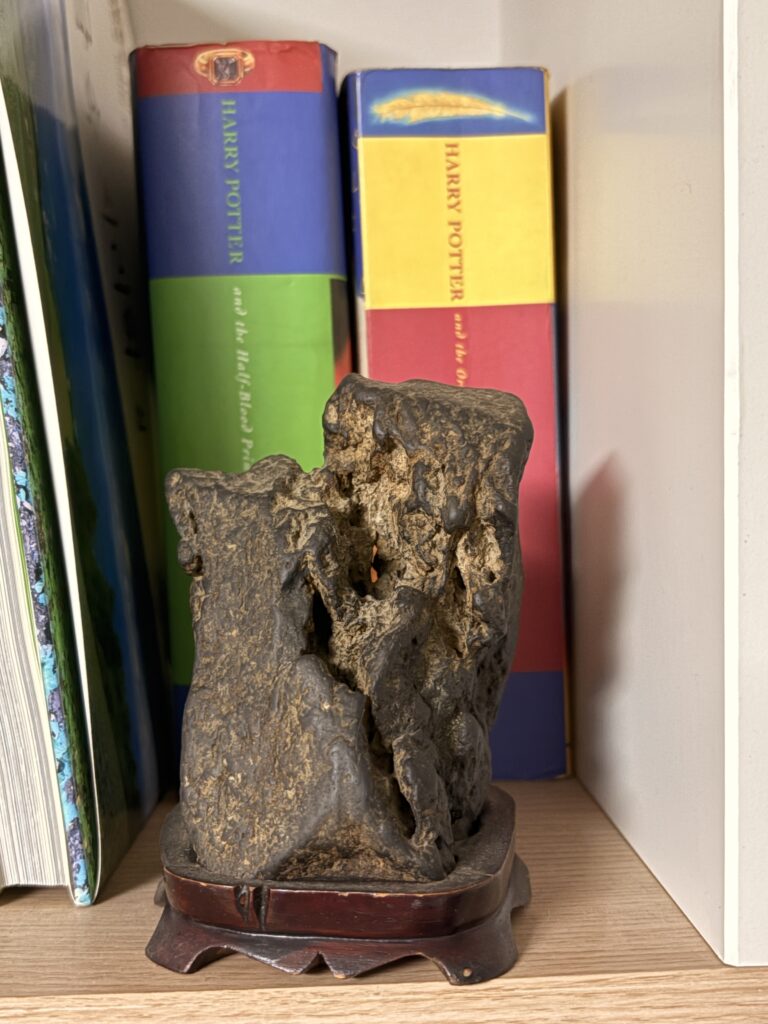
I gave this one a name:
A Thousand-Year Kiss.
Someone seeing it for the first time might notice nothing more than an unusual curve in an old stone.
But whenever I look at it, I see two forms leaning gently toward one another.
Almost touching.
Almost kissing.
As though a single moment of tenderness had somehow been held still inside the stone.
When Nature Resembles Art
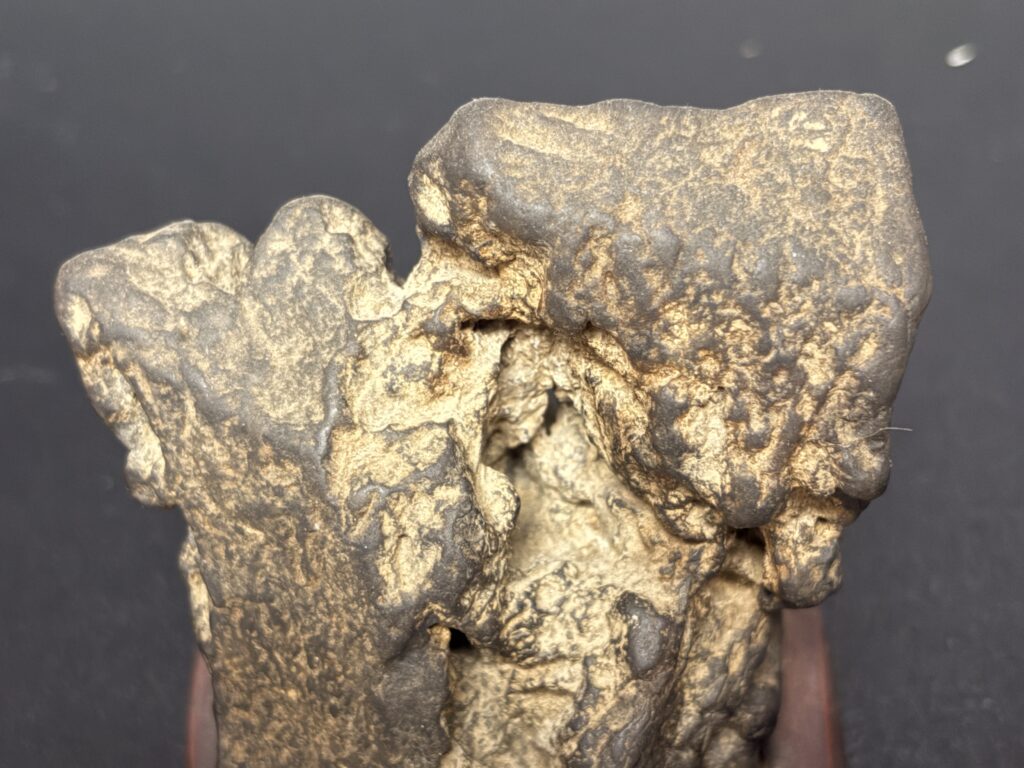
Over the years, its shape began to remind me of Auguste Rodin’s The Kiss.
Rodin transformed stone into two human bodies drawn toward one another. Their embrace is intimate and immediate, capturing a moment in which desire, tenderness, and time seem to meet.
My little stone is something entirely different.
No sculptor shaped its contours.
No human hand decided where one form should end and another begin.
Its surface was shaped by processes far older and slower than any artist’s touch—water, weather, pressure, movement, and time.
And yet, when I place the image of Rodin’s sculpture beside this small stone in my imagination, I sense an unexpected resemblance.
One is a human attempt to carve love into stone.
The other seems, at least to my eyes, as though time itself accidentally discovered the same gesture.
Perhaps that is why I have kept looking at it for more than three decades.
Two Kinds of Love
Love is often described as something sudden.
A spark.
A glance.
A moment when two people unexpectedly recognize one another.
Rodin’s The Kiss seems to belong to that world—the intensity of a moment made permanent.
But the stone on my bookshelf tells me another story.
Its imagined kiss does not feel like the beginning of love.
It feels like what remains after a very long time.
The excitement of first meetings has passed.
Words have been spoken and forgotten.
Years have accumulated.
Sharp edges have softened.
And still, somehow, two forms remain turned toward one another.
When I hold the stone in my palm, its kiss feels less like passion than a promise:
the promise of not turning away.
Perhaps enduring love is not always about holding someone tightly.
Sometimes it is simply about continuing to face one another as time changes everything else.
What Time Leaves Behind
People who appreciate viewing stones often notice shape, texture, color, balance, and suggestion.
But what moves me most about this stone is something that cannot really be measured.
Time.
A stone carries time differently from us.
Human beings count years by birthdays, calendars, photographs, wrinkles, arrivals, and goodbyes.
A stone says nothing.
It simply remains.
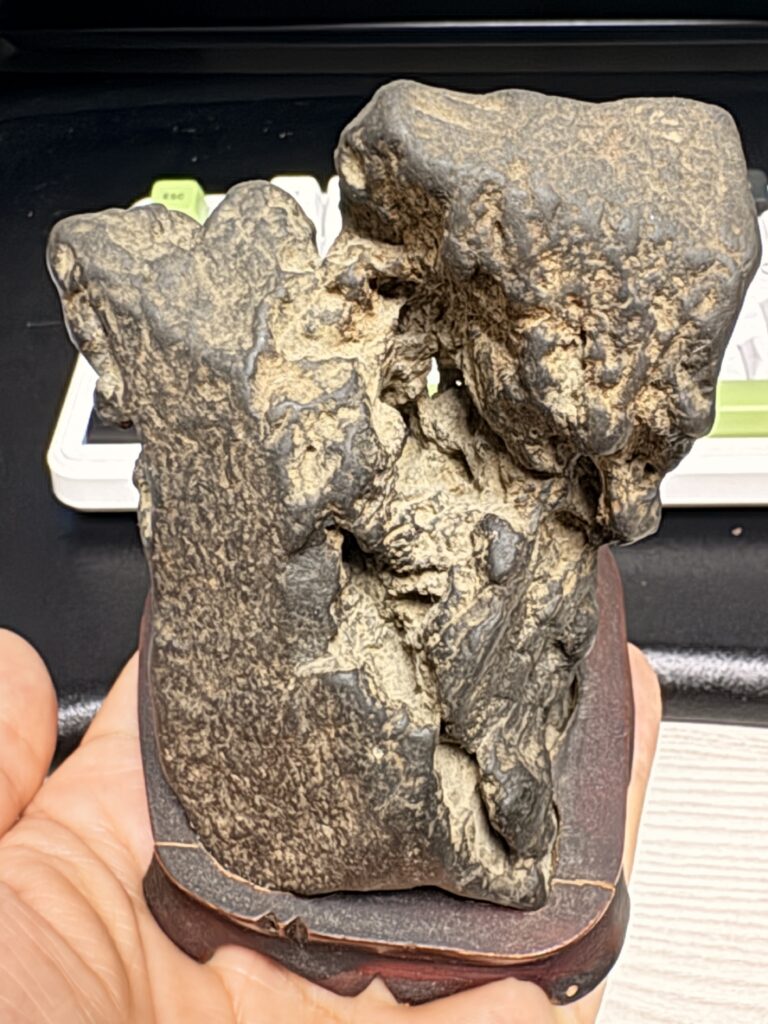
Its surface bears the quiet consequences of forces that worked upon it long before it reached my bookshelf.
And perhaps that is why we sometimes see our own stories in stones.
We know what it means to be changed slowly.
We know what it means to lose sharp edges.
We know what it means to endure weather we did not choose.
And if we are fortunate, we may also know what it means to remain beside someone through all of it.
The Love I See in a Stone
Of course, the stone itself knows nothing about love.
The kiss exists because I see it there.
Someone else might see two mountains, two faces, or nothing recognizable at all.
But perhaps this is part of the beauty of ordinary objects.
We do not simply look at them.
Over time, we place pieces of ourselves inside them.
Memory gives them meaning.
Imagination gives them stories.
And years of living beside them give them a kind of emotional weight that cannot be bought or reproduced.
This little stone has traveled with me for more than thirty years.
It has sat silently through changing rooms, changing seasons, and changing chapters of life.
And somehow, I have changed while it has remained almost exactly the same.
That may be another reason its quiet embrace feels different to me now than it did years ago.
Perhaps I have finally lived long enough to understand what I once only imagined.
Conclusion — A Thousand-Year Kiss
I sometimes pick up the stone and turn it slowly in my hand.
From one angle, it is simply a piece of nature.
From another, two figures appear.
They lean toward each other without urgency.
No dramatic embrace.
No declaration.
Just closeness.
And I find myself thinking that perhaps the longest-lasting forms of love are often like that.
They do not always burn brightly.
They endure.
Through silence.
Through change.
Through ordinary days.
Through time.
Nature may never have intended to create a kiss in this small stone.
But after more than thirty years of looking at it, I still see one.
And perhaps that is enough.
A thousand-year kiss does not need to last a thousand years.
It only needs to remind us that some forms of love become more beautiful because they have learned how to remain.
Reader Question
Is there an ordinary object in your life that has come to mean something deeper with the passing of time?
Related Reading
The meaning we discover in ordinary objects is also explored in The Beatles’ Yellow Submarine Compass – A Small Object That Still Points Toward Dreams, where an old compass becomes a quiet reminder of memory, imagination, and the directions we carry within us.
A similar reflection on time and meaning can be found in A Pebble by the Sea – Seeing the Moon Within a Small Stone, where a simple stone reveals how patience, time, and quiet observation can transform the way we see both nature and ourselves.