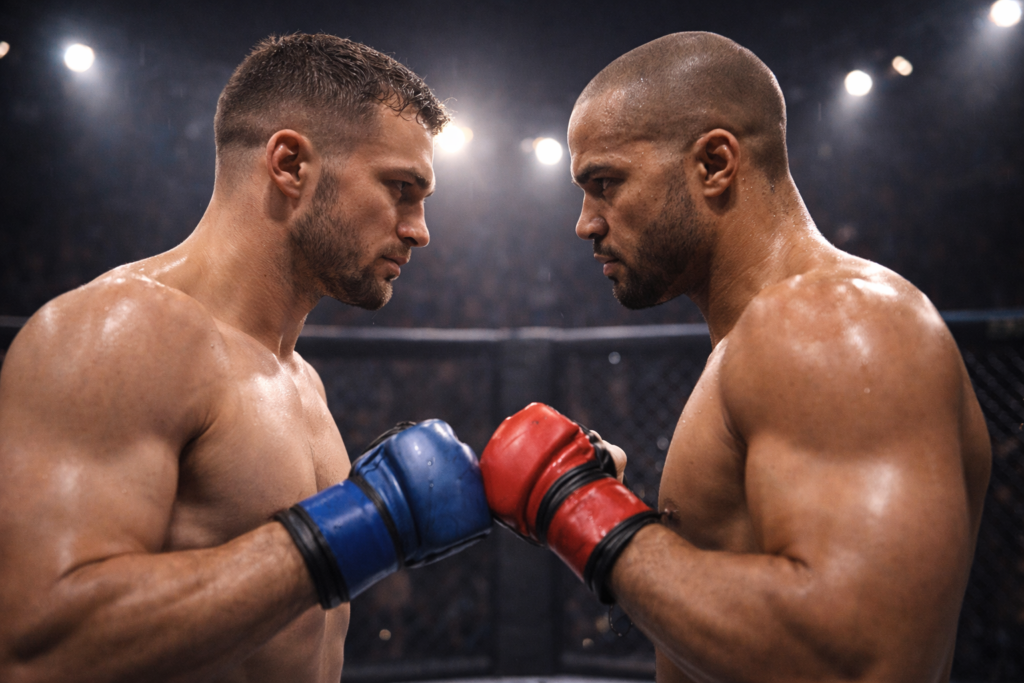
Mixed Martial Arts (MMA) has become one of the most visible forms of combat sport in contemporary popular culture.
Inside the cage, fighters clash using punches, kicks, elbows, knees, and grappling techniques drawn from multiple martial arts traditions.
Although MMA is governed by strict rules and safety regulations, the spectacle often evokes a deeper question:
Is mixed martial arts a legitimate sport—or the institutionalization of violence?
This debate lies at the intersection of sport, entertainment, ethics, and human psychology.
1. Mixed Martial Arts as Sport
Supporters of MMA argue that it should be understood primarily as a modern combat sport.
1.1 Institutional Rules and Safety Measures
Professional MMA competitions are governed by detailed rules.
Weight classes, referees, medical supervision, and mandatory protective equipment—such as gloves and mouthguards—are designed to protect fighters and reduce risk.
These regulations distinguish MMA from uncontrolled street violence.
1.2 Technical Complexity
MMA integrates techniques from a wide range of martial arts traditions:
- Wrestling
- Judo
- Boxing
- Brazilian Jiu-Jitsu
- Muay Thai
Fighters must combine strength, endurance, tactical thinking, and technical mastery.
For supporters, this complexity demonstrates that MMA is far more than raw violence—it is a highly sophisticated athletic discipline.
1.3 Discipline and Self-Mastery
Professional fighters undergo years of disciplined training.
Success requires not only physical strength but also psychological control, strategic intelligence, and resilience.
In this sense, MMA continues a long historical lineage of combat sports—from ancient pankration in the Greek Olympics to modern martial arts competitions.
2. The Critique: Institutionalized Violence
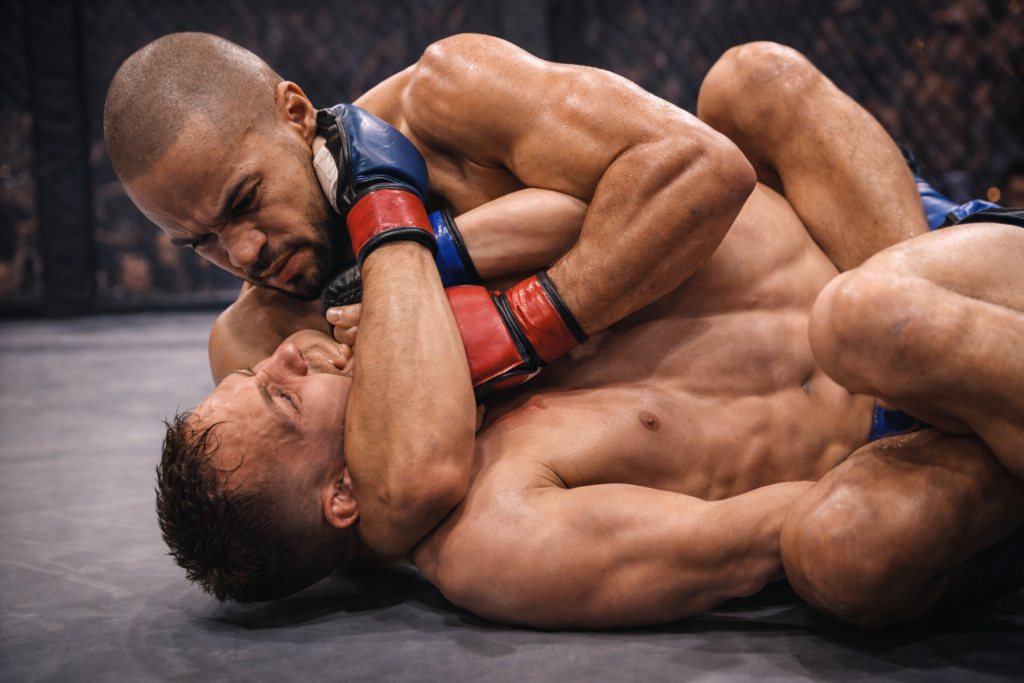
Critics, however, argue that MMA represents a troubling normalization of violence.
2.1 The Spectator’s Pleasure
Spectators often react most intensely when fighters are knocked out or visibly injured.
From this perspective, MMA satisfies a deep human fascination with violence.
The sport may therefore function as a socially acceptable channel for primitive aggressive impulses.
2.2 Commercial Exploitation
Major promotions such as the Ultimate Fighting Championship (UFC) generate enormous revenue through broadcasting rights, sponsorships, and pay-per-view events.
Critics argue that the physical risks faced by fighters are transformed into commercial spectacle.
In this view, MMA becomes less a sport and more a commodified form of violence.
2.3 Ethical Concerns
Repeated head trauma and long-term neurological damage—such as chronic traumatic encephalopathy (CTE)—raise serious ethical questions.
Even when fighters voluntarily participate, society must still ask whether encouraging such risks is morally defensible.
3. Cultural Context: Civilization and Controlled Violence
The sociologist Norbert Elias provides a useful framework for understanding this phenomenon.
3.1 The Civilizing Process
According to Elias, modern societies gradually regulate and restrain violence.
Instead of eliminating violent impulses entirely, societies often institutionalize and control them through rules and social norms.
MMA can be interpreted as an example of this process:
- Violence becomes regulated rather than chaotic
- Spectators experience aggression indirectly
- Primitive impulses coexist with modern social order
3.2 Legalized Primitivism
In this sense, MMA may represent what could be called legalized primitivism.
The sport is highly structured and regulated, yet it still evokes humanity’s ancient fascination with physical confrontation.
Civilization and primal instinct coexist within the same spectacle.
4. Media, Commercialization, and Spectacle
The rise of MMA cannot be separated from the role of global media.
4.1 Media Amplification
Television broadcasting and digital platforms amplify the emotional intensity of fights.
Slow-motion replays, dramatic commentary, and carefully edited highlights transform the competition into a powerful spectacle.
Fighters are often portrayed as modern gladiators.
4.2 The Modern Coliseum
This dynamic has historical echoes.
Ancient Roman gladiatorial games also combined athletic skill, spectacle, and political entertainment.
In many ways, MMA can be understood as a globalized, media-driven version of the modern coliseum.
5. Searching for a Balance
Reducing MMA to either “sport” or “violence” oversimplifies a complex cultural phenomenon.
The real challenge lies in how societies manage the tension between entertainment, athletic competition, and ethical responsibility.
Several key issues remain crucial:
- strengthening medical protection for fighters
- reducing sensationalized portrayals of violence
- emphasizing technique, discipline, and strategy over brutality
Conclusion: Between Civilization and Primal Instinct
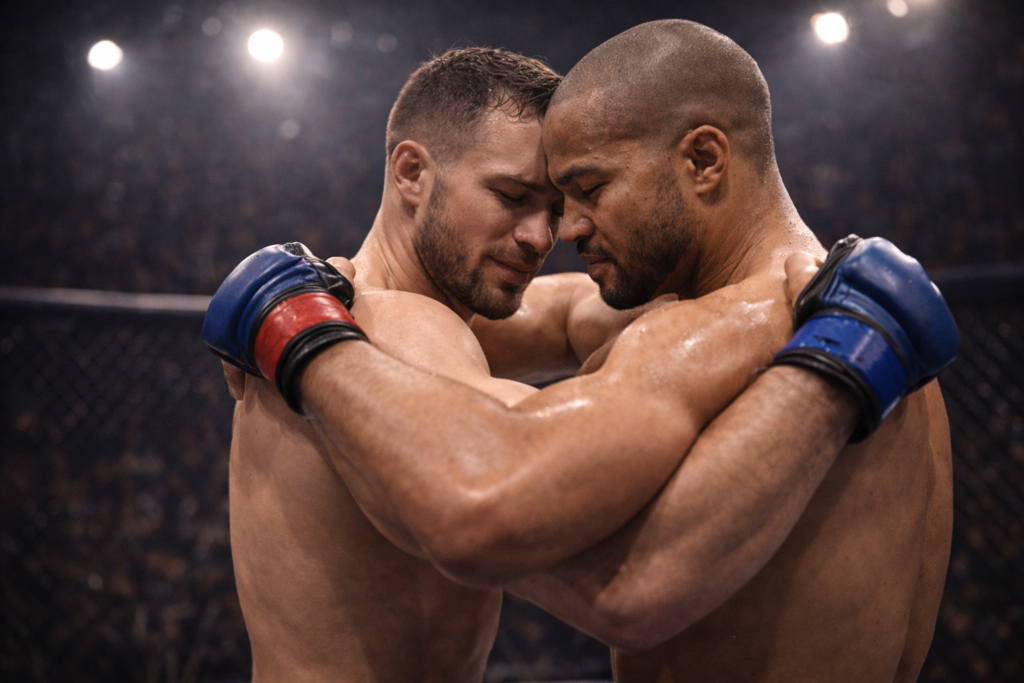
Mixed martial arts reflects a deep paradox within modern society.
We live in highly regulated and civilized environments, yet we remain fascinated by displays of raw physical confrontation.
MMA exists precisely at this intersection.
Whether it is interpreted as a sophisticated sport or a form of institutionalized violence ultimately depends on how societies choose to regulate, represent, and understand it.
The debate surrounding MMA therefore reveals something fundamental about humanity itself:
our enduring tension between civilization and primal instinct.
Related Reading
The ethical tension surrounding violence within socially accepted systems is further explored in The Lottery: Equal Opportunity or Unequal Probability?, where debates about fairness, risk, and institutional legitimacy raise deeper questions about how societies justify systems that can produce both winners and harm.
At a psychological level, the complex dynamics of human judgment and moral perception are reflected in Why We Excuse Ourselves but Blame Others, where the tendency to interpret actions differently depending on perspective reveals how easily humans rationalize behavior within competitive or conflict-driven environments.
References
- Spencer, D. C. (2009). Habit(us), Body Techniques and Body Callusing: An Ethnography of Mixed Martial Arts. Body & Society, 15(4), 119–143.
→ This ethnographic study explores how MMA fighters develop bodily discipline through repeated training and physical conditioning, offering sociological insight into the boundary between sport and violence. - Downey, G. (2007). Producing Pain: Techniques and Technologies in No-Holds-Barred Fighting. Social Studies of Science, 37(2), 201–226.
→ Downey analyzes how pain is strategically produced, managed, and interpreted in MMA competitions, highlighting how violence becomes structured within technological and social systems. - Green, K. (2011). It Hurts So It Is Real: Sensing the Seduction of Mixed Martial Arts. Social & Cultural Geography, 12(4), 377–396.
→ This research examines the sensory and cultural appeal of MMA, explaining why audiences perceive the sport not simply as violence but as a powerful embodied experience. - Maguire, J., & Matthews, J. (2014). Are We All Fighters Now? Modern Sport, Media and the Martial Arts. Sport in Society, 17(9), 1233–1247.
→ The authors explore how modern media systems transform martial arts into global entertainment, contributing to the commercialization and popularization of MMA. - Kim, S. H., & Kim, M. S. (2017). Mixed Martial Arts in Korea: Between Sportization and Commercialization. International Journal of the History of Sport, 34(10), 945–962.
→ This study investigates the development of MMA in South Korea, analyzing the tension between institutional sport regulation and commercial entertainment structures.