Tag: Social Norms

  • Why Do Taboo Words Exist?

    — Language, Power, and Social Control

    We often choose our words carefully.

    Some words feel uncomfortable to say out loud,
    even when they describe reality accurately.

    Profanity, sexual expressions, references to death, illness, religion, or politics —
    many societies treat certain expressions as taboo words.

    But why do these words become forbidden?

    Is it simply because they are offensive?

    In reality, taboo language reveals something deeper:
    how societies regulate emotion, maintain order, and exercise power.


    1. Language Is a Form of Power

    People speaking with blurred taboo words

    Language is not merely a tool for communication.

    It also reflects the structure of social authority.

    Who is allowed to speak certain words —
    and who is discouraged or forbidden from using them —
    often reveals underlying power relations.

    For example, insulting terms targeting social groups
    can damage dignity and reinforce hierarchy.

    By restricting such words, societies attempt to maintain stability and reduce conflict.

    In this sense, taboo words function as informal systems of social regulation.


    2. Euphemisms: Saying Without Saying
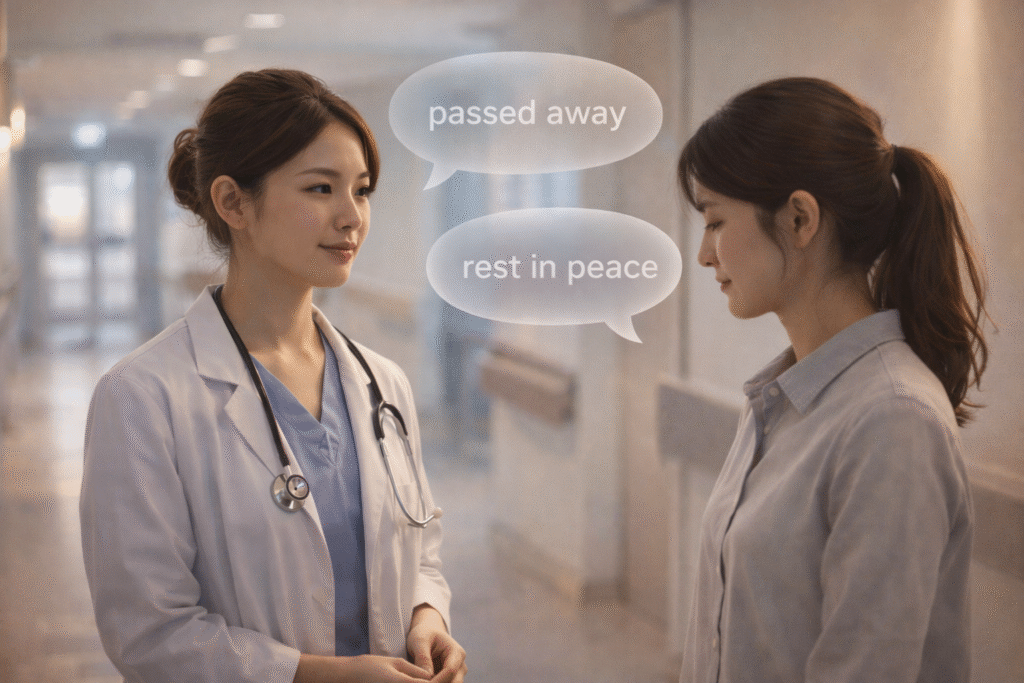
    People using euphemisms to soften difficult words

    When people avoid taboo words,
    they often replace them with euphemisms.

    Instead of saying someone “died,”
    we say they “passed away.”

    Instead of describing harsh realities directly,
    language softens them.

    Linguists sometimes call this process linguistic sanitization.

    The purpose is not merely politeness.

    It is a cultural strategy to reduce emotional shock
    and maintain social harmony.


    3. Taboo Words Change Over Time
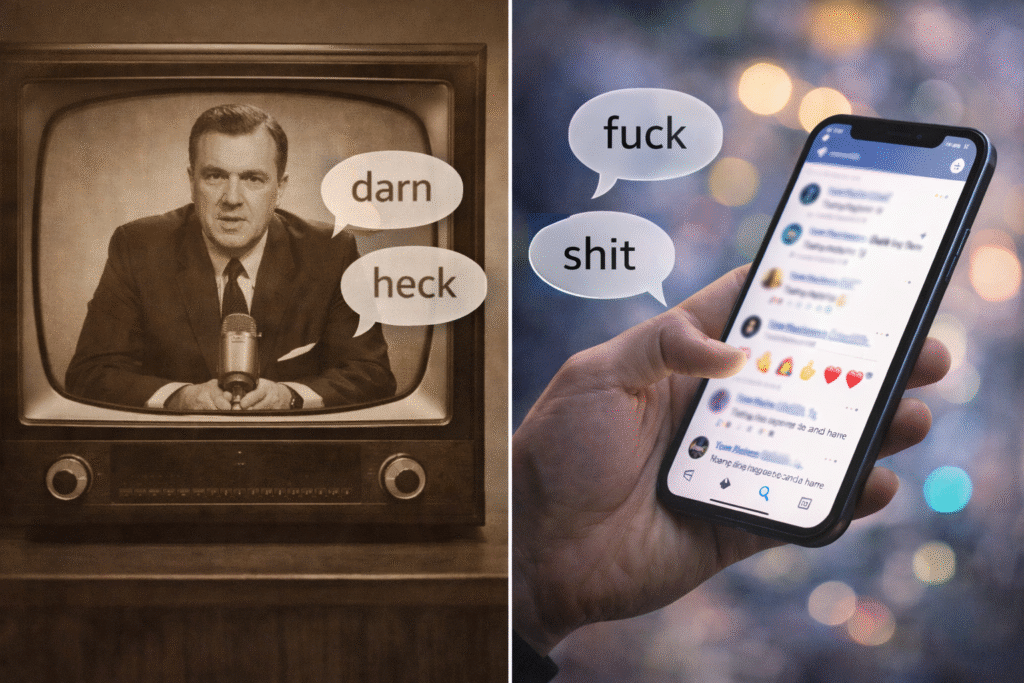
    Changing boundaries of taboo language over time

    One fascinating aspect of taboo language
    is that it is never permanent.

    Words once considered unspeakable
    can later become normal.

    For example, topics related to mental health, sexuality, or reproductive health
    were often avoided in public discourse in earlier decades.

    Today, many of these topics are discussed openly.

    Taboo words therefore act as indicators of social boundaries —
    showing what a culture is ready to confront and what it still prefers to avoid.


    4. When Language Becomes Harmful

    Some taboo words are not merely uncomfortable.

    They can reinforce discrimination and social exclusion.

    Terms targeting race, gender, disability, or sexual orientation
    can perpetuate harmful stereotypes.

    Avoiding such language is not simply about censorship.

    It reflects a collective effort
    to protect dignity and foster respect within communities.

    Language always carries responsibility.


    Conclusion: What Taboo Words Reveal About Society

    Taboo words are more than simply forbidden expressions.
    They reflect the values, fears, and power structures that shape a society.

    Taboo words are more than forbidden expressions.

    They act as mirrors of cultural values.

    The words a society restricts reveal
    what it fears,
    what it respects,
    and what it is still struggling to confront.

    Choosing our words carefully is not weakness.

    It is a form of awareness —
    an acknowledgment that language shapes how we see one another.

    Related Reading

    The relationship between language and symbolic meaning is further reflected in The Power of Naming: Is Naming an Act of Control?, where the act of naming itself is explored as a subtle form of authority—shaping perception, identity, and the boundaries of what society recognizes as acceptable or unacceptable.

    At a broader societal level, the power of words and symbols within collective discourse appears in Clicktivism in Digital Democracy: Participation or Illusion?, where digital expressions and simplified forms of political language raise deeper questions about whether communication empowers genuine participation or merely creates the appearance of engagement.


    References

    1. Allan, K., & Burridge, K. (2006). Forbidden Words: Taboo and the Censoring of Language. Cambridge University Press.
    → Allan and Burridge provide one of the most comprehensive studies of taboo language, examining how societies regulate profanity, sexual language, and insults through censorship and euphemism.

    2. Foucault, M. (1978). The History of Sexuality, Volume 1: An Introduction. Pantheon Books.
    → Foucault analyzes how power structures shape what can and cannot be spoken about, showing how silence and taboo are often produced through systems of knowledge and authority.

    3. Pinker, S. (2007). The Stuff of Thought: Language as a Window into Human Nature. Viking.
    → Pinker explains how taboo words trigger strong emotional responses and explores the cognitive and social mechanisms that give language its psychological force.

  • Why Elevator Silence Feels So Uncomfortable: Unspoken Social Rules

    Morning rush hour.
    An elevator packed with strangers.

    No one speaks, yet the space feels strangely tense.
    A sigh, a cough, or the sound of a phone screen lighting up subtly shifts the atmosphere. Someone checks their phone, and others instinctively glance away — or glance too much.

    The elevator is small and quiet, but rarely comfortable.

    Why does such a brief, silent moment feel so awkward?


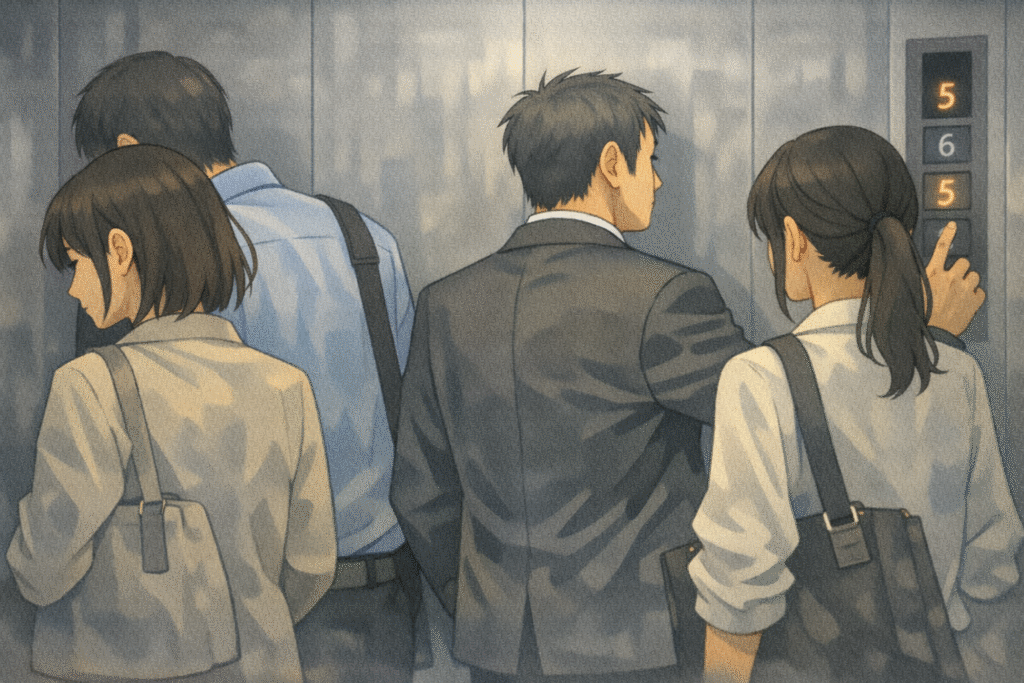
    Awkward silence among strangers in an elevator

    1. Physical Closeness and Psychological Distance

    1.1 When Personal Space Disappears

    Elevators force strangers into close physical proximity within a confined space. According to psychological research on personal space, people feel most comfortable when a certain distance from others is maintained.

    In elevators, this distance collapses.

    When physical closeness is not accompanied by social interaction, the brain registers tension. We are close to others, yet socially disconnected — a combination that easily produces discomfort.

    1.2 The Brain Never Stops Noticing Others

    Even in silence, our minds continuously monitor those around us. When someone stands too close, we may feel irritation or defensiveness without knowing why.

    Elevators create a paradox: physical intimacy without emotional familiarity. This imbalance places quiet strain on both body and mind.

    Lack of personal space in a crowded elevator

    2. When Silence Becomes a Rule

    2.1 Silence as an Unspoken Norm

    Most people do not speak in elevators.
    Over time, this absence of speech becomes an implicit rule.

    Sociologist Erving Goffman described such patterns as “interaction frames” — shared expectations that guide behavior in specific situations.

    2.2 Breaking the Frame

    In elevators, silence is treated as politeness.
    Someone who speaks loudly on the phone or initiates casual conversation is often perceived as violating the situation’s frame.

    The silence, then, is not neutral.
    It is a collectively maintained form of self-regulation and mutual monitoring.


    3. A Space of Nonverbal Communication

    Nonverbal social rules inside an elevator

    3.1 Communication Without Words

    Interestingly, elevators are full of communication — just not verbal.

    A brief glance
    A slight turn of the body toward the wall
    The careful extension of a hand to press a button
    A small nod to someone holding the door

    3.2 Cooperation Through Gesture

    These gestures help reduce tension and signal cooperation.
    Because words are absent, nonverbal actions become more visible — and more meaningful.

    At the same time, this heightened sensitivity makes the space vulnerable to awkwardness. Small missteps feel amplified.


    4. Why Elevators Feel Especially Intense

    4.1 The Pressure of No Escape

    In cafés or parks, we can leave whenever we want.
    Elevators offer no such freedom.

    Once inside, we must wait until the doors open again.

    4.2 Silence Under Confinement

    This temporary lack of exit heightens awareness.
    Sounds feel louder. Movements feel heavier. Silence feels thicker.

    The discomfort of elevator silence is not just about quiet — it is about being enclosed in a shared social situation with no way out.


    Related Reading

    The psychological mechanisms behind self-perception and social visibility are further explored in TThe Sociology of Selfieshe Sociology of Selfies, where digital identity and performative presence are analyzed.
    From a structural and philosophical perspective, TThe Age of Overexposure: Why Do We Turn Ourselves into Products?he Age of Overexposure: Why Do We Turn Ourselves into Products? expands this discussion by examining how social systems amplify the feeling of constant exposure.

    Conclusion

    The silence in elevators feels uncomfortable because it is not empty.
    It is filled with social rules, psychological tension, and silent coordination.

    Within that small space, we constantly adjust ourselves — our gaze, posture, and presence — in response to others, even without speaking.

    If you feel awkward in an elevator, it is not a personal flaw.
    It is a shared response to a space governed by unspoken norms.

    The discomfort is not yours alone.
    It belongs to all of us, quietly standing together in silence.


    References

    1.Goffman, E. (1959). The Presentation of Self in Everyday Life. New York: Anchor Books.
    Goffman analyzes how individuals manage impressions in social settings. Elevator silence can be understood as a form of “front-stage” behavior, where individuals carefully regulate their actions under the gaze of others.

    2.Hall, E. T. (1966). The Hidden Dimension. New York: Doubleday.
    This classic work introduces the concept of proxemics, explaining how physical distance influences psychological comfort. It is essential for understanding discomfort in confined spaces like elevators.

    3.Argyle, M. (1988). Bodily Communication (2nd ed.). London: Methuen.
    Argyle explores nonverbal communication, offering insight into how gestures, posture, and eye contact function as silent social signals in situations where speech is absent.