Tag: slow living

  • A Small Hair Salon at the End of the Alley

    A Small Hair Salon at the End of the Alley

    The Quiet Touch That Changes More Than Hair

    At the end of a narrow alley,
    on the first floor of an old brick building,
    there is a small hair salon.

    The sign is modest, with faded gold lettering on the glass door.
    Warm light slips through the curtains,
    and when the door opens,
    the familiar hum of a hairdryer fills the air.

    The hairdresser has worked here for over thirty years.

    She often says:

    “Cutting hair is never just about appearance.
    It’s about helping someone begin their day again.”


    Where Stories Flow Between Strands of Hair

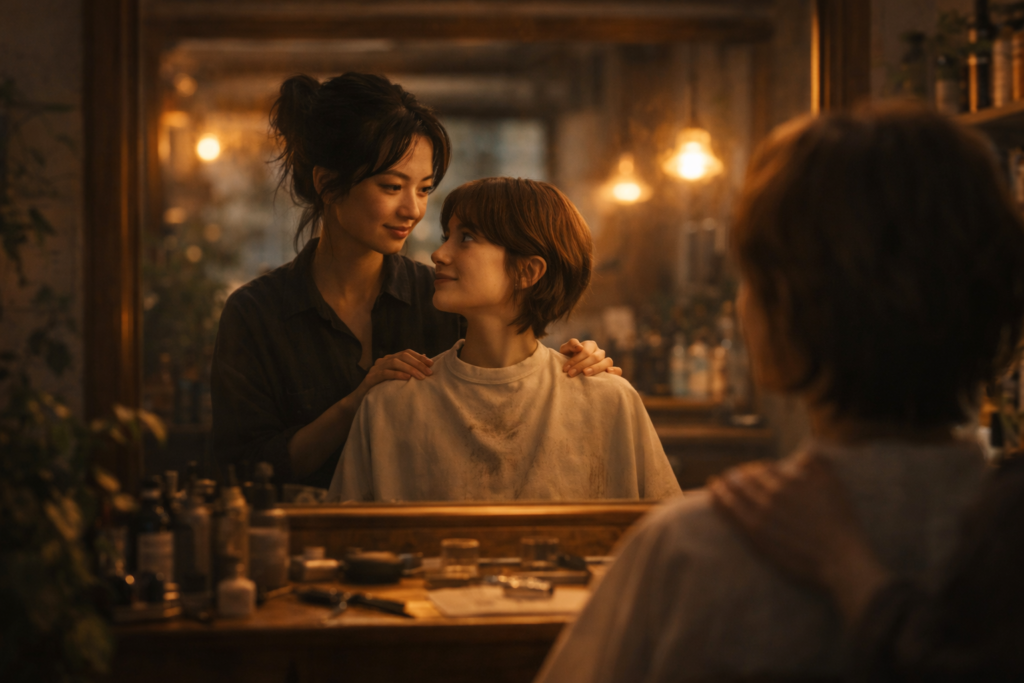
    hairdresser cutting hair softly

    Inside the salon, stories are always present.

    As their hair is trimmed, people begin to speak.

    “My child has been going through a difficult time lately.”
    “My husband just started working again.”
    “Today… I just wanted to feel different.”

    The hairdresser listens quietly,
    moving her scissors with calm precision.

    Strands of hair fall gently to the floor.

    But perhaps they are not just hair—
    perhaps they are fragments of fatigue, worry,
    and the invisible weight carried through the day.

    When the warm air of the dryer lifts them away,
    something in the room feels lighter.

    Here, change happens softly.


    The Art of Care, The Temperature of the Heart

    hair salon mirror emotional connection

    A day in this salon is not simply a service.

    The hairdresser does not shape only hair—
    she shapes expressions, moods, and moments.

    “Hair never lies,” she says.
    “You can feel someone’s state of mind through your hands.”

    With the scissors in her hand,
    she knows how to handle another person’s life
    with quiet care.

    Regular customers call this place
    “a refuge for the heart.”

    Here, differences fade.

    Doctor or delivery worker,
    parent or student—
    once the cape is placed around the shoulders,
    everyone becomes simply human.


    The Moment of Change

    At first, customers sit quietly,
    their heads slightly lowered.

    Tired faces.
    Heavy expressions.

    But as the hair is shaped,
    and the final touches are made,
    something begins to shift.

    The hairdresser gently asks:

    “Does this feel better?”

    And often, the answer comes with a smile:

    “Yes… I feel like I can start again.”

    Within that brief exchange,
    something deeper than appearance has changed.

    A few centimeters of hair—
    and yet, a subtle renewal of the self.


    The Light Behind a Closed Door

    As night falls and the alley grows quiet,
    the last customer leaves.

    The door closes.

    The hairdresser sweeps the floor,
    gathering the day into small, silent motions.

    There is tiredness,
    but also a sense of order.

    Standing before the mirror,
    she looks at herself and whispers:

    “You did well today.”

    It is both a compliment
    and a quiet promise.

    A day spent shaping others
    becomes a moment of shaping oneself.

    The light from the salon
    spills softly into the alley.

    And beneath that light,
    someone walks home—
    carrying a small, unseen change.

    small salon light night alley

    Conclusion — What It Means to Transform

    A small hair salon is not just a place for cutting hair.

    It is a place where relationships continue,
    where quiet healing occurs,
    where people imagine a new version of themselves.

    And sometimes,
    that imagination becomes real.

    As the hairdresser once said:

    “As hair grows, so does the human heart.”

    Our lives, too,
    are shaped—slowly, gently—
    through the hands we encounter along the way.

    A Question for Readers

    When was the last time a small, simple change made you feel like starting again?

    Sometimes, it’s not a big decision—but a quiet moment, a gentle touch, or a small shift in your routine that brings renewal.
    What was that moment for you?

    Related Reading

    The quiet transformation that unfolds in a small hair salon resonates with a deeper reflection found in The Rhythm of Wood, The Tempo of My Mind, where the steady rhythm of a metronome becomes a metaphor for finding balance and pace within one’s inner life.

    A similar perspective on personal renewal can be found in Am I Falling Behind? — How Comparison Distorts Our Sense of Time, where the illusion of “being late” reveals how comparison reshapes our sense of progress—and how reclaiming our own timing can restore a sense of calm.


    References

    Gilligan, C. (1982). In a Different Voice: Psychological Theory and Women’s Development. Cambridge, MA: Harvard University Press.
    → This work explores ethics through the lens of care and relationships, offering insight into how emotional connection and attentive listening shape human growth, much like the quiet interactions within the salon.

    Noddings, N. (2003). Caring: A Relational Approach to Ethics and Moral Education. Berkeley: University of California Press.
    → Noddings emphasizes the importance of relational care as a foundation for ethical life, helping us understand everyday spaces—like a hair salon—as meaningful sites of human connection.

    Bourdieu, P. (1984). Distinction: A Social Critique of the Judgement of Taste. Cambridge, MA: Harvard University Press.
    → Bourdieu interprets everyday practices such as grooming and appearance as forms of social expression, revealing how even small acts of self-care reflect deeper structures of identity and belonging.

  • The Rhythm of Wood, The Tempo of My Mind

    The Rhythm of Wood, The Tempo of My Mind

    How a Simple Metronome Taught Me About Time and Life

    1. A Quiet Machine on the Shelf

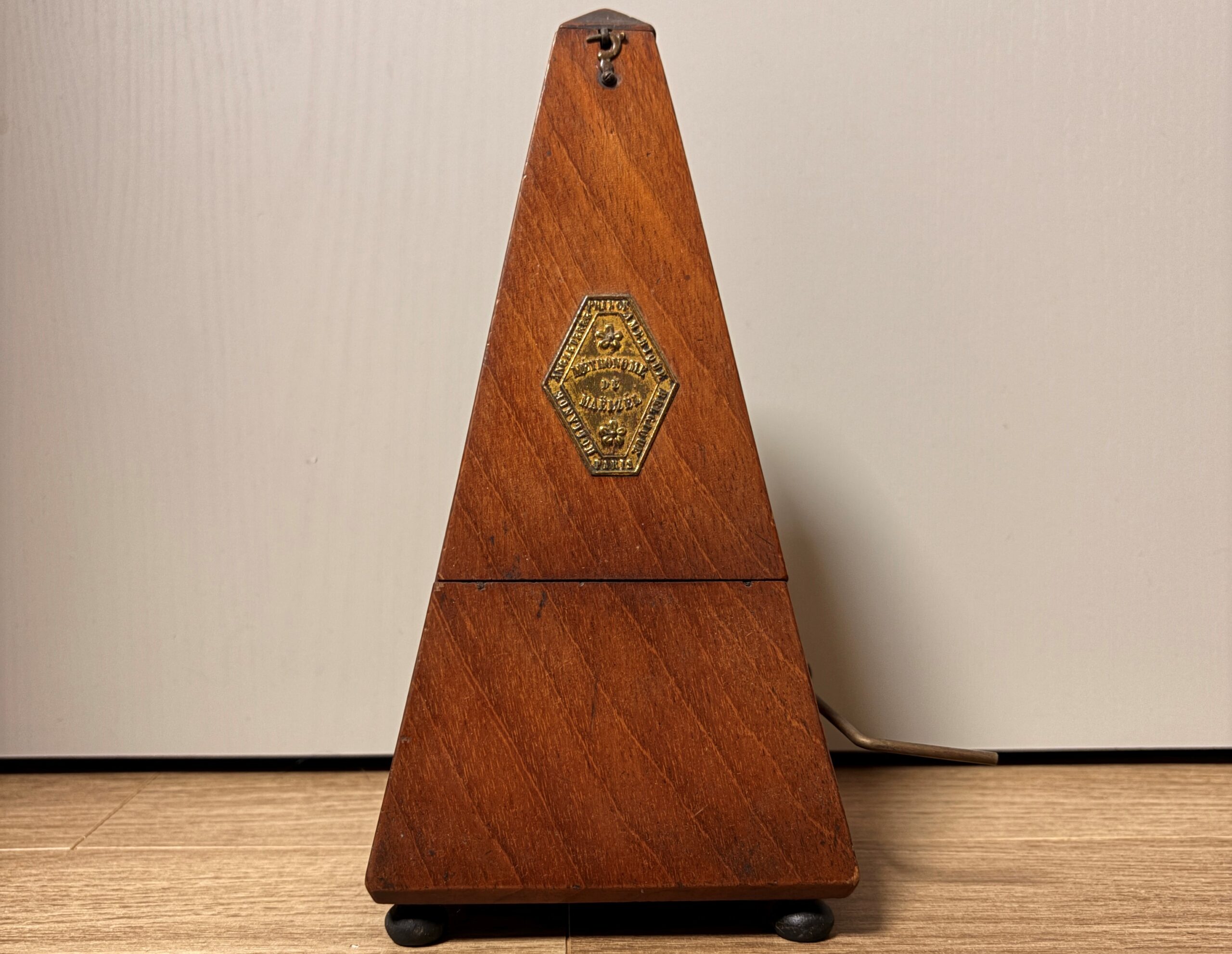
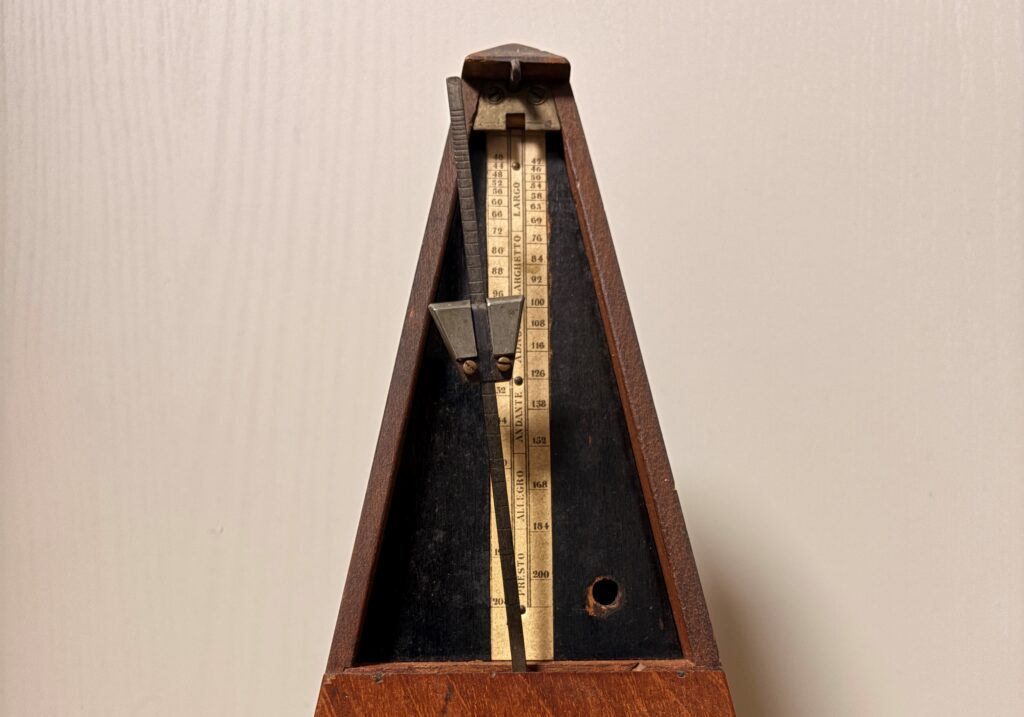
    On the corner of my bookshelf sits a small wooden object—
    about about 4 inches wide and 8.7 inches tall,
    shaped like a simple pyramid.

    It is a handmade mechanical metronome.

    I have kept it by my side for more than twenty years.

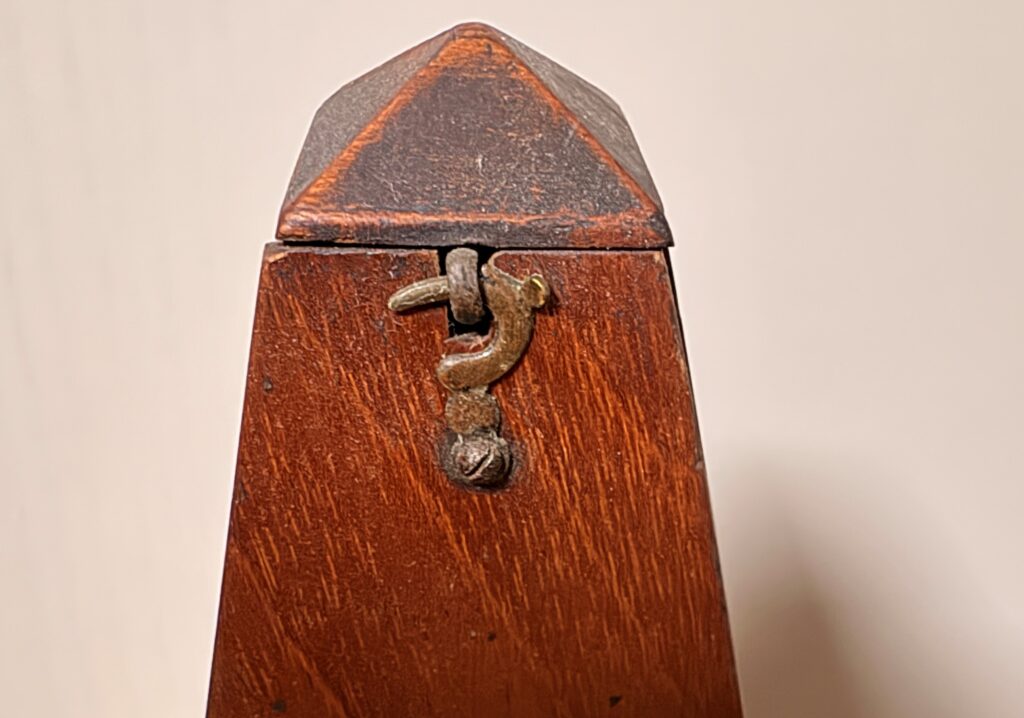
    metronome metal latch detail


    2. Learning to Follow Time

    When I first began learning the saxophone,
    I realized something unexpected—

    keeping time was harder than playing notes.

    I could read the sheet music,
    but my body was always slightly ahead or behind the rhythm.

    Whenever that happened,
    I would wind the metronome
    and watch the pendulum swing.

    Tick—tock.
    Tick—tock.

    Inside that small machine,
    there was nothing but balance and rhythm.


    3. Why I Chose Wood Over Precision

    Electronic metronomes are more precise,
    more convenient, and easier to use.

    But I always reached for this wooden one first.

    The sound was different.

    Not just a mechanical beat,
    but something softer—
    a resonance that seemed to linger in the air.

    That quiet repetition
    did not push me.

    It calmed me.


    4. A Small Ritual of Memory

    There was something else I loved about it—
    the delicate metal latch at the top.

    A small click,
    like opening a quiet, hidden box.

    Inside,
    a vertical scale marked in careful numbers,
    and a pendulum that could be adjusted up and down.

    Its structure was simple.
    Honest.

    Almost like a piece of time itself.


    metronome pendulum tempo scale

    5. The Tempo That Remains

    I no longer practice the saxophone every day.

    But the metronome is still there,
    on my desk.

    Sometimes,
    I wind it once or twice
    and let it move again.

    And in between those steady ticks,
    memories return—

    the tension in my fingers,
    the careful breath before each note,
    the quiet determination of learning something new.

    And I find myself thinking:

    “Rhythm is the time of music,
    and music is the time of life.”


    Conclusion – Finding Our Own Tempo

    What if our lives had a rhythm,
    like a metronome?

    Not too fast.
    Not too slow.

    Just enough to stay in harmony
    with ourselves.

    Like a small pendulum,
    moving back and forth—

    each of us
    keeping time
    in our own way.


    💬 A Question for You

    When was the last time you truly followed your own rhythm,
    instead of trying to match the pace around you?

    Related Reading

    The idea of moving at your own pace is further explored in Am I Falling Behind? — How Comparison Distorts Our Sense of Time, where the pressure of comparison reshapes how we perceive progress and timing in life.

    A similar reflection on quiet inner strength can be found in A Pebble by the Sea – Seeing the Moon Within a Small Stone, where a simple object reveals how patience and time shape who we become.

  • A Seaside Bus Stop – The Landscape of Waiting

    Practicing stillness in the same place, at the same hour

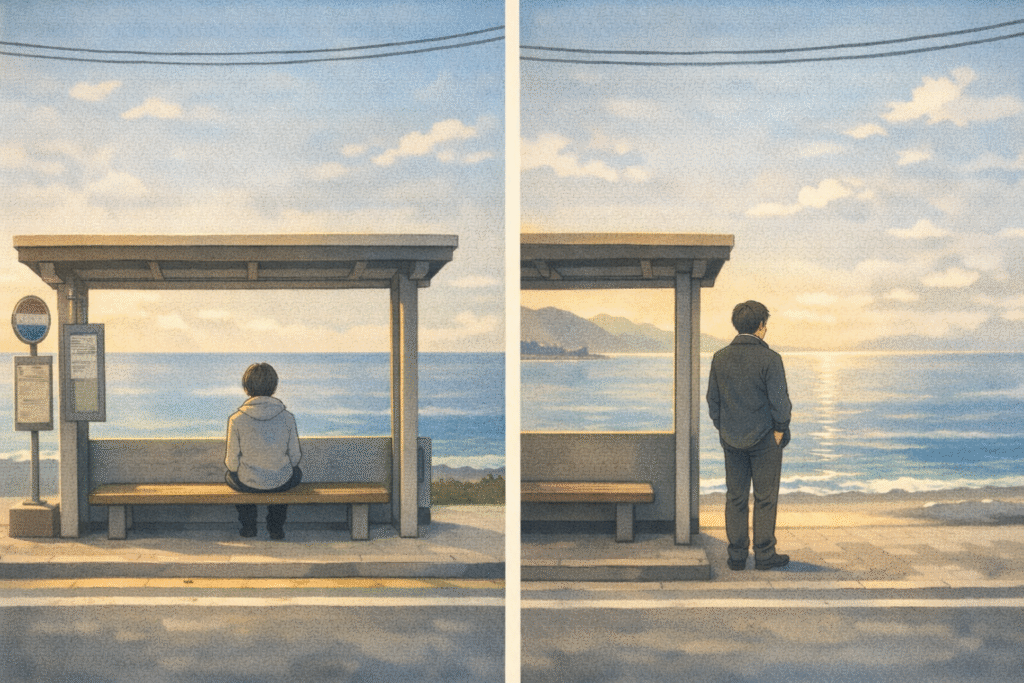
    Quiet seaside bus stop with a person waiting by the sea

    At a seaside bus stop,
    waiting quietly becomes a form of daily meditation.

    People arrive at the same hour,
    sit in the same seats,
    and slowly empty their minds.


    1. The Bus Stop by the Sea

    The seaside bus stop holds the same scene every day.

    Waves roll in and retreat without urgency.
    An old bench catches the shadow of a passing seagull.
    The rhythm never changes, yet the meaning always does.

    Each morning, different people arrive.
    Some are on their way to work.
    Others come simply to sit and think.

    The sea repeats the same movement beneath their feet,
    but the hearts standing above it are never quite the same.


    2. The Comfort of Repetition

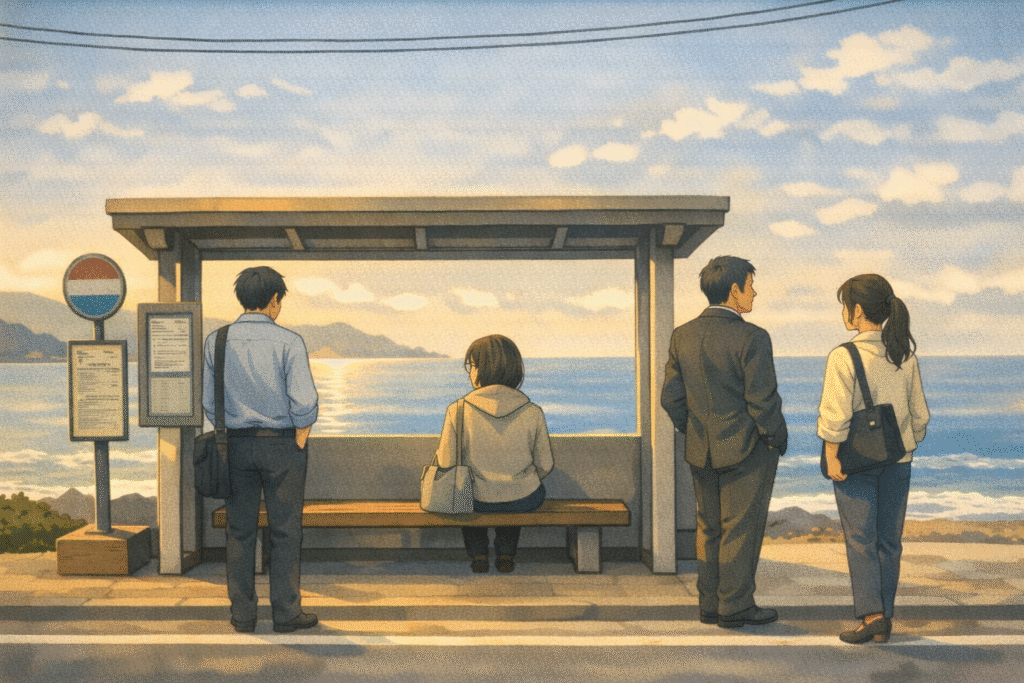
    People quietly waiting together at a seaside bus stop

    Those who sit there regularly begin to recognize one another
    without saying much.

    “Here again today.”

    The greeting is brief,
    but it carries an unexpected sense of reassurance.

    Repetition can feel dull,
    yet within it lives a quiet strength.

    The same hour.
    The same place.
    The same sound of waves.

    These ordinary repetitions form the rhythm
    that gently holds our days together.


    3. What Waiting Really Means

    Waiting for the bus is not an empty pause.

    It is a short moment of reflection—
    a small meditation tucked into daily life.

    Perhaps we are not waiting for transportation at all.
    Perhaps we are waiting for calm.

    When impatience gives way to gratitude—
    “At least I get to see the sea right now”
    waiting becomes rest.


    4. A Brief Encounter

    Some days, a stranger sits beside you.

    No introductions.
    No conversation.

    Just two people sharing the same view
    as the wind passes between them.

    In that silence, warmth travels without words.

    Simply standing in the same place,
    at the same time,
    creates a quiet bond.

    Waiting slowly makes us resemble one another.


    Conclusion: Where Waiting Turns into Healing

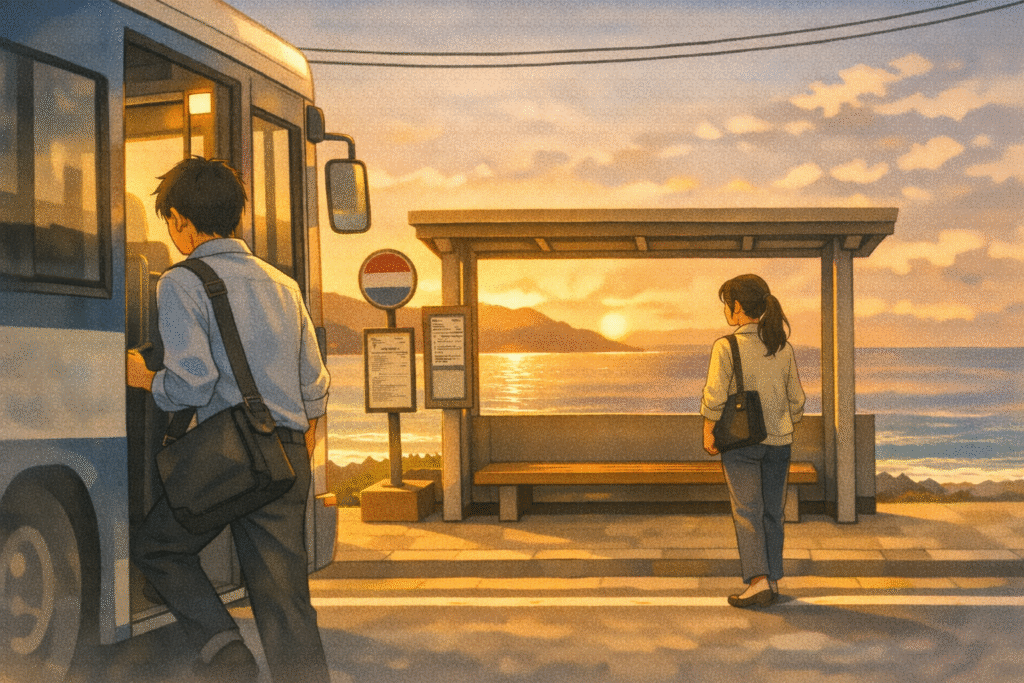
    Evening light at a seaside bus stop as waiting becomes healing

    When the bus arrives, everyone leaves
    in different directions.

    But the bus stop remains.

    For one person, it was a place of transit.
    For another, a moment of rest.

    Like the sea breeze,
    our waiting passes through someone else’s day
    and leaves behind a small, unnoticed comfort.


    One quiet truth to carry:
    Waiting does not always delay us.
    Sometimes, it gently puts us back together.

  • The Psychology of Handwriting

    The Warmth of the Human Touch in an Age Without Pens

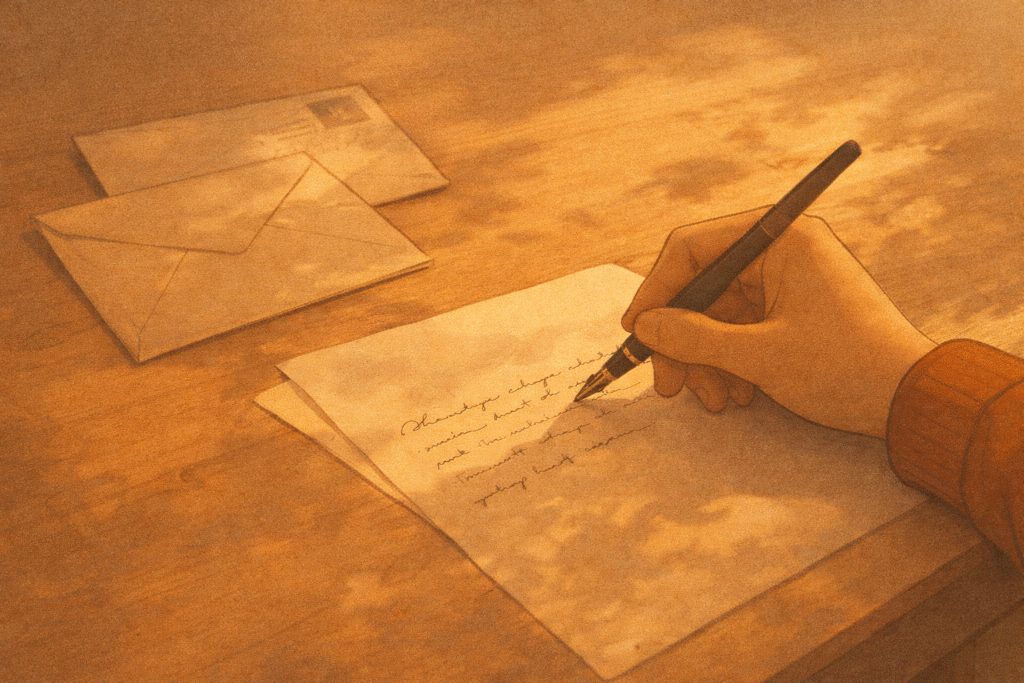
    Handwritten letter and fountain pen on a sunlit wooden desk

    1. When Was the Last Time You Wrote a Letter by Hand?

    When was the last time you wrote a letter by hand?

    A few days ago, I found myself holding a pen again.
    After hours of typing on a keyboard, my hand felt strangely unfamiliar with the weight of ink and paper.
    Yet as the pen moved across the page, there was a quiet satisfaction—
    a subtle texture that no digital font could reproduce.

    The handwriting was imperfect, even clumsy at times,
    but each letter seemed to carry intention.
    I could have sent an email.
    Instead, I chose to write by hand because I wanted to send something warmer than words alone.

    Sometimes, when we look at old letters, we recognize the person before we read the message.
    In the curves and pressure of the writing, we sense their presence.
    Handwriting is not merely text—it is a trace of a human moment.


    2. Handwriting as Language: Movement That Holds Emotion

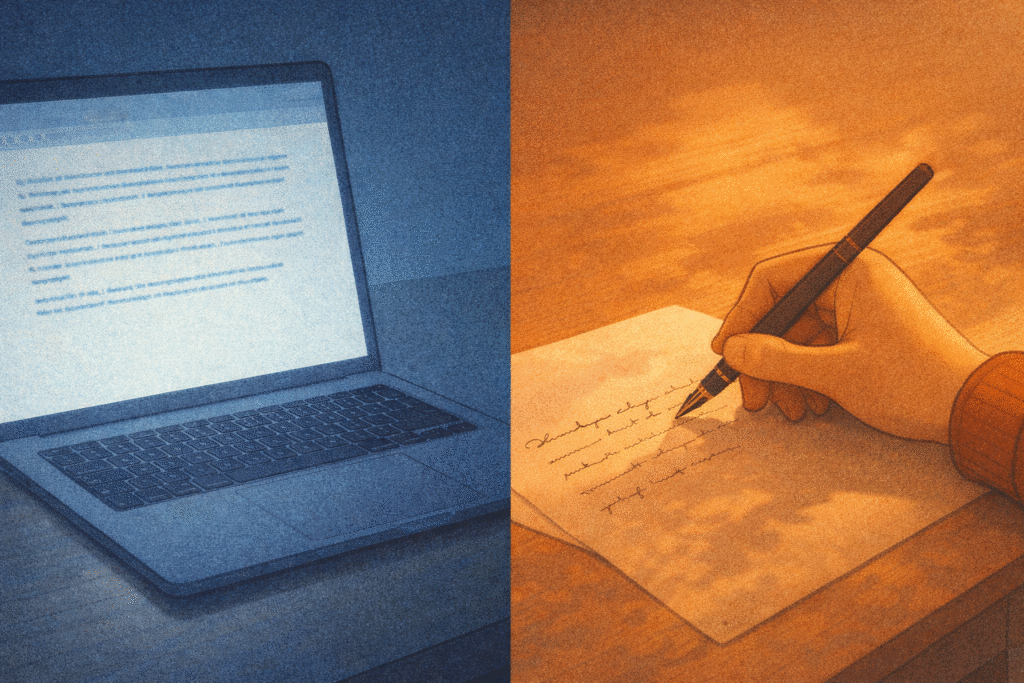
    Handwritten notes beside a laptop and smartphone

    Handwriting has often been called a mirror of the mind.

    Psychologist Ludwig Klages once wrote that “writing is not done by the hand, but by the soul.”
    Tension appears in tight, rigid letters.
    Calmness flows through generous, open strokes.

    Unlike typing—where emotion is flattened into uniform fonts—
    handwriting records the body’s rhythm, hesitation, and emotional state.
    The tremble of a line, the uneven spacing, the sudden pressure of ink
    all become part of the message.

    That is why we often feel closer to handwritten words.
    Even when the writing is messy, it feels honest.
    Its imperfection makes it unmistakably human.


    3. The Digital Paradox: Speed Without Intimacy

    In the digital age, handwriting is slowly disappearing.

    Schools rely less on handwritten assignments.
    Workplaces replace signatures with digital approvals.
    Efficiency dominates communication.

    And yet, the longing for handwriting remains.

    People photograph handwritten notes and share them online,
    as if trying to reinsert warmth into a cold medium.
    We instinctively trust handwritten words more than typed ones,
    because speed cannot replace sincerity.

    The paradox is clear:
    the faster communication becomes,
    the more we crave signs of slowness.


    4. Handwriting as a Vessel of Memory

    Handwriting is also a carrier of memory.

    Letters, notebooks, and postcards left behind
    preserve more than information—they preserve presence.
    They hold the movement of a person’s hand,
    a silent echo of how they once existed in the world.

    People pass away, but their handwriting remains.
    Long after voices fade, written traces continue to testify:
    someone was here.

    In this sense, handwriting becomes an emotional artifact—
    a human imprint that time does not easily erase.


    5. Conclusion: Writing by Hand Is Writing the Self

    In a world driven by speed, handwriting returns as an act of resistance.

    Keyboards offer convenience,
    but the warmth of meaning still emerges from the hand.

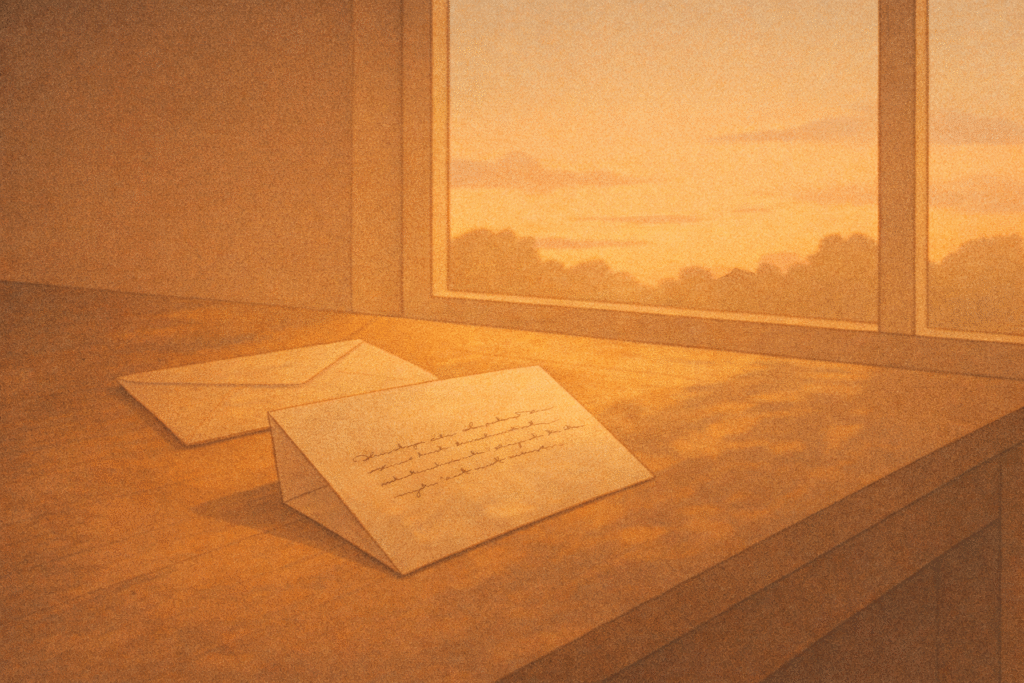
    Writing a handwritten letter in warm window light

    When you wish to convey care rather than efficiency,
    consider writing a single line by hand.

    Ink fades slowly.
    Paper ages gently.
    And the words you write today may one day carry your presence
    long after the moment has passed.

    Handwriting is not about nostalgia.
    It is about leaving behind something unmistakably human.

    📚 References

    Sennett, Richard. (2008). The Craftsman. Yale University Press.
    → Sennett examines how manual practices shape self-formation and human dignity. Handwriting can be understood within this framework as a bodily language through which identity and presence are expressed.

    Varnhagen, Vera. (2006). “Handwriting and Personality: An Analysis of Expressive Movement.” Journal of Nonverbal Behavior, 30(2), 91–107.
    → This study explores how emotional states and personality traits are reflected in handwriting through movement, pressure, and rhythm, offering a psychological basis for interpreting handwritten expression.

    Baron, Naomi S. (2000). Alphabet to Email: How Written English Evolved and Where It’s Heading. Routledge.
    → Baron traces the evolution of written communication and analyzes how digital writing alters emotional expression and interpersonal connection, providing essential context for understanding the loss of handwriting’s affective depth.

  • The Texture of Time: How the Mind Shapes the Weight of Our Moments

    How psychological time expands, contracts, and gives meaning to our lives.

    Abstract flowing ribbon of light symbolizing the texture of time.

    Two Kinds of Time: Measured vs. Experienced

    We often say, “Today felt so long” or “This week went by in a flash.”
    Interestingly, these statements have nothing to do with physical time.
    Physics tells us that time flows at a constant rate—24 hours a day, without exception.

    Yet human beings do not live inside clocks.
    We live inside perceived time, or what psychologist Daniel Zakay called “experienced time.”

    Zakay distinguishes between:

    • Measured time — the objective ticking of the clock
    • Experienced time — the subjective feeling of duration shaped by attention, emotion, and memory

    The gap between these two creates what we might call the texture of time.
    This texture is not a mere feeling—it emerges from the brain’s information-processing, emotional state, and social environment.

    In other words:

    The quality of our time mirrors the quality of our perception.


    When Time Slows Down

    Some moments stretch endlessly: waiting for exam results, entering a new environment, or standing in an unfamiliar place. Slow time appears in three main situations:

    1. Novelty — a world rich in unfamiliar details

    The brain works harder to process new information, which creates the sensation of longer time.
    A first-time trip feels longer than a daily commute because novelty increases mental recording.

    2. Anxiety and hyper-awareness

    Before an interview, during turbulence on a plane, or in moments of threat, the mind becomes highly alert.
    This heightened attention makes even seconds feel elongated.

    3. Waiting — the pressure of the expected future

    Waiting is not an empty pause.
    It is a psychological space where expectation and uncertainty weigh on the present.
    This emotional tension stretches time.

    In slow time, the brain is collecting more data—hence the long, heavy texture.


    When Time Speeds Up

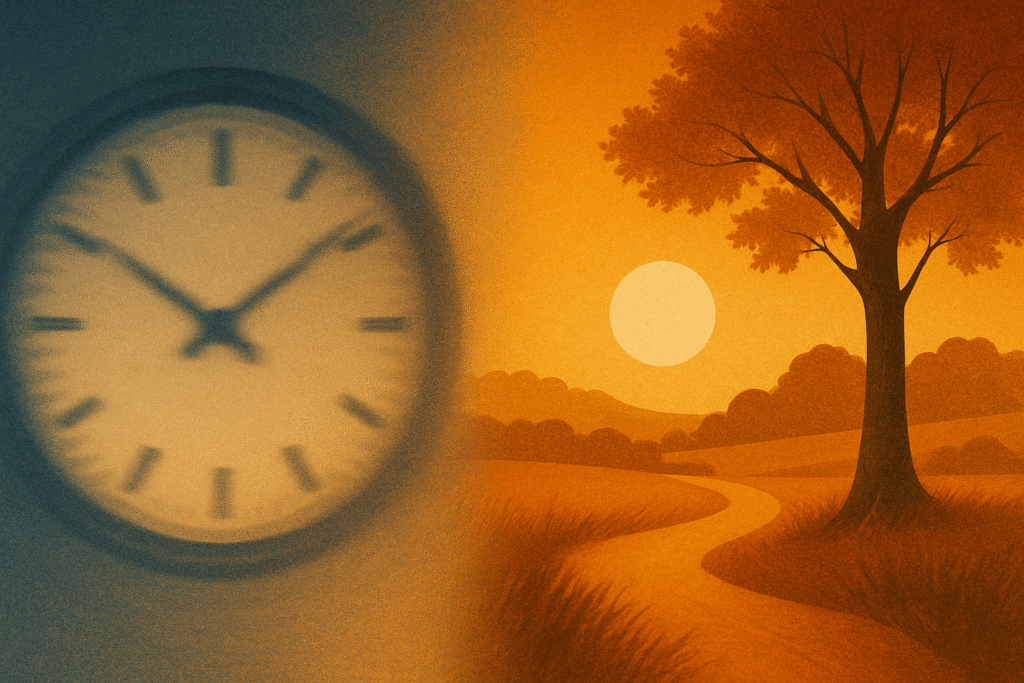
    Contrast of fast-blurred clock and slow-detailed landscape showing measured vs experienced time.

    Other times, a whole day slips through our fingers before we notice.

    1. Flow — when the self momentarily disappears

    In deep concentration, the brain’s time-tracking function weakens.
    Artists, athletes, and writers often describe the sensation of timelessness during full absorption.

    2. Routine — the unrecorded hours

    Repetition and familiarity reduce memory formation.
    When the brain doesn’t “save” the moment, the duration feels shorter.

    This explains why:

    • Children experience long, expansive time (full of new stimuli)
    • Adults feel time accelerating with age (reduced novelty = reduced memory density)

    Fast time is not a sign of aging itself—it is a sign of decreased newness.


    Time Is a Social Experience

    Time is not only psychological—it is also social.
    Sociologist Norbert Elias argued that time is a symbolic tool societies use to coordinate life.

    1. Modern society demands speed

    Efficiency has become a virtue, and the pressure to be fast creates a culture of urgency.
    This accelerates our inner tempo.

    2. The smartphone era fragments our time

    Notifications, updates, and alerts constantly break our attention.
    Our day becomes a series of small interruptions—fast, jagged, and thin.

    3. The best days aren’t the busiest—they are the densest

    A day feels meaningful not because it was filled with tasks,
    but because it contained a memorable moment.

    The value of time is measured not in quantity, but in density.


    How to Change the Texture of Your Time

    We cannot control time’s speed, but we can change how we experience it.

    1. Create memorable moments — the art of novelty

    Try a new café, walk a different street, listen to unfamiliar music.
    Small variations build richer memories.

    2. Practice intentional pauses — the art of stillness

    A few minutes of silence, deep breathing, or opening a window resets the mind.

    3. Record your experiences — the art of memory

    Write, photograph, or journal.
    Recorded moments gain texture and depth.

    4. Cultivate flow — the art of immersion

    Engage fully in one activity.
    Flow compresses time but enriches meaning.


    Conclusion: Time Is Not Managed—It Is Felt

    Physical time flows steadily.
    Psychological time flows according to meaning, emotion, and attention.

    • Pleasant experiences pass quickly—but their resonance is long.
    • Anxious moments drag—but leave shallow memory.

    What truly matters is not how much time we have,
    but how deeply we live inside the time we experience.

    The texture of time is shaped by how we see, feel, and remember our days.

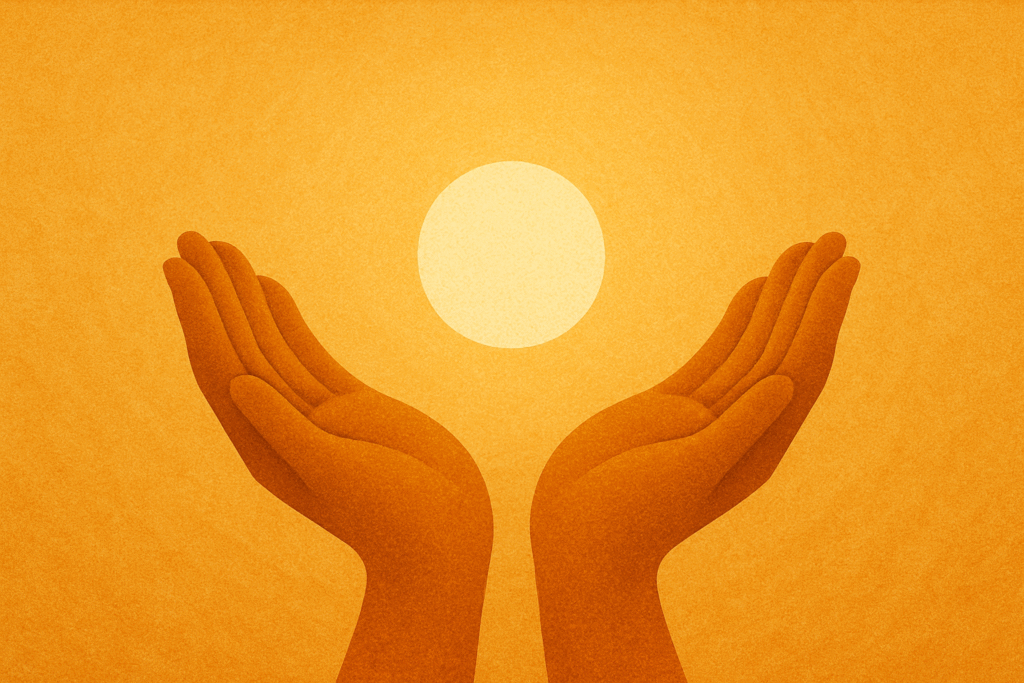
    Hands gently holding a warm glowing moment symbolizing meaningful time.

    References

    Zakay, D., & Block, R. (1997). Temporal Cognition. Annual Review of Psychology.
    → A foundational study explaining the difference between measured time and experienced time, and how attention and emotion shape time perception.

    Csikszentmihalyi, M. (1990). Flow: The Psychology of Optimal Experience. Harper & Row.
    → Explores how deep immersion alters our sense of time and how flow enriches lived experience.

    Bergson, H. (1911). Time and Free Will. Macmillan.
    → Introduces the concept of “duration,” distinguishing clock time from the qualitative, subjective dimension of psychological time.

  • Walking as a Way of Thinking

    How a simple walk becomes a quiet conversation with the self.

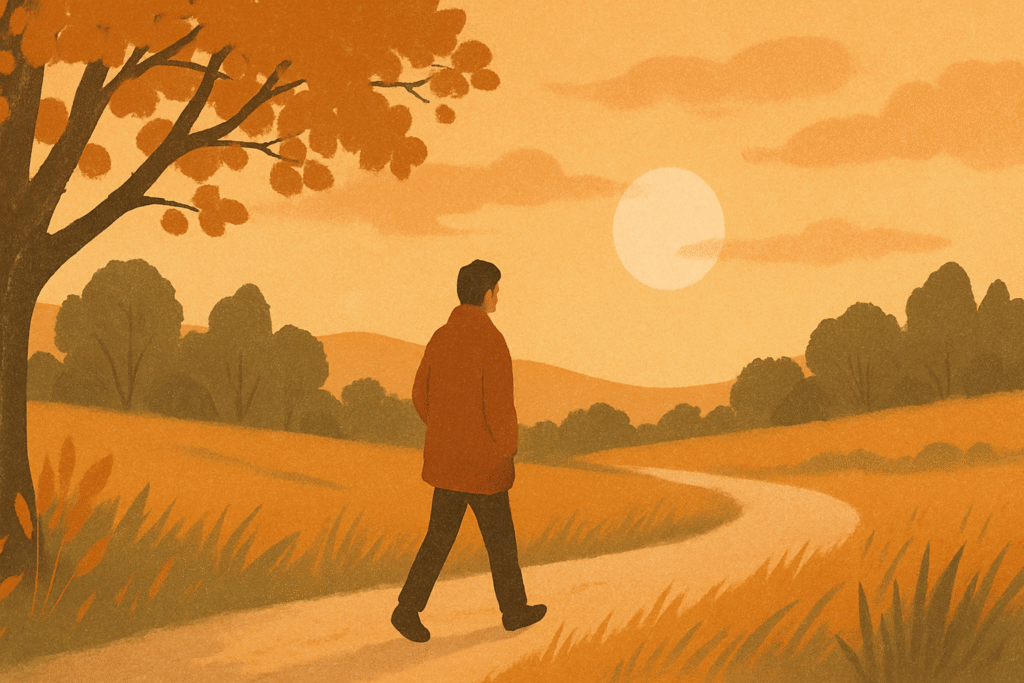
    How a simple walk becomes a quiet conversation with the self

    Opening – A Walk That Slows the Mind

    Walking has a quiet power.
    It doesn’t force answers, yet it softens the questions we carry.

    Some paths slow us down just enough to hear the thoughts we’ve been ignoring.
    Today’s walk was one of those rare moments when movement becomes reflection.


    Sunlit forest path winding through a quiet autumn field

    A Small Moment of Humor

    “When a good idea comes to me while walking… is that exercise, or is it studying?”

    Maybe it’s both.
    Walking might be the only workout that strengthens the heart and clears the mind at the same time.


    When Thoughts Begin to Walk Too

    With each steady step, the inner noise began to fade.
    Not because solutions arrived, but because the questions felt less urgent—
    as if they finally had space to breathe.

    Walking never demands a conclusion.
    It simply offers a quieter place for thoughts to wander.

    Sometimes the ideas that surface mid-stride
    are the ones we’ve postponed the longest.
    Today felt like the right day to let them speak.


    A Simple Practice for the Day

    The 10-Minute Reflective Walk
    Take a short walk with no destination.
    Choose one guiding question:

    • What thought has been weighing on me?
    • What emotion does this path bring up?
    • If I could choose freely, where would I go next?

    If one clear sentence emerges, capture it before it drifts away.


    A Moment of Presence

    A soft breeze brushed the face.
    Light filtered gently through the leaves.
    Breathing slowed.

    Walking is not merely moving forward—
    it is quietly returning to oneself.


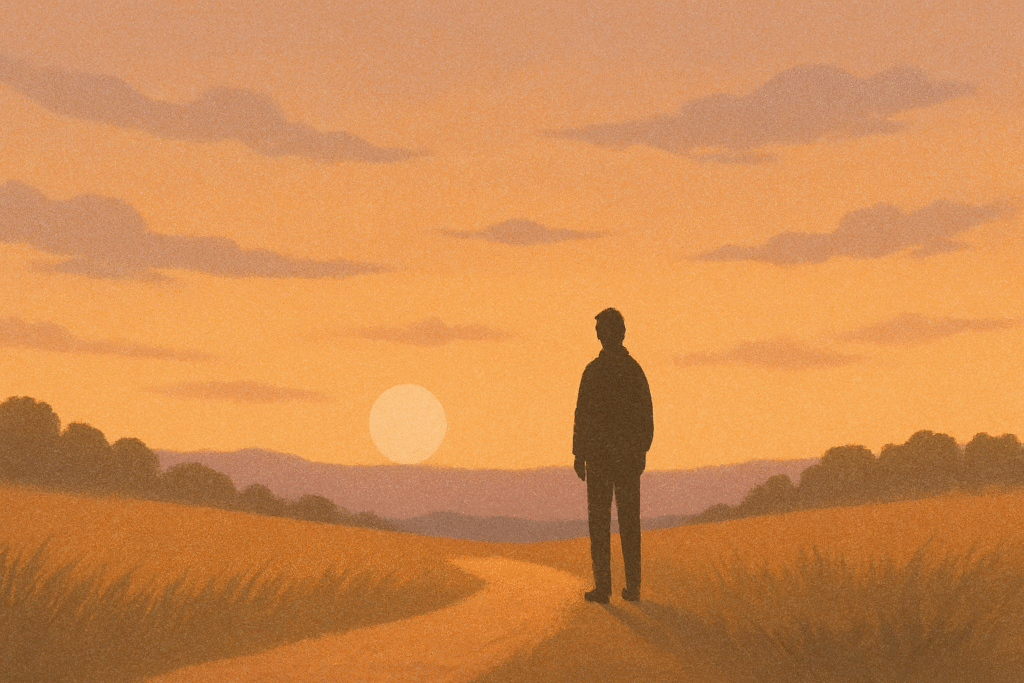
    A lone figure facing a calm sunset horizon

    Quote of the Day

    All truly great thoughts are conceived while walking.
    — Friedrich Nietzsche


    Closing Insight

    In the rhythm of our steps, we rediscover the rhythm of our thoughts.

    Walking clears space without demanding effort—
    a small ritual,
    a mental reset,
    a return to clarity.


    Today’s Insight (Science Notes)

    Studies from Stanford and the American Psychological Association highlight that walking significantly boosts divergent thinking and emotional clarity.

    Neuroscientific research shows that walking:

    • increases activity in the prefrontal cortex,
    • boosts creativity and emotional regulation,
    • reduces stress hormones,
    • and raises serotonin levels.

    This is why ideas often arrive precisely when we aren’t trying to find them.


    Summary Sentence

    “Walking is not a physical act, but a quiet conversation with the mind.”