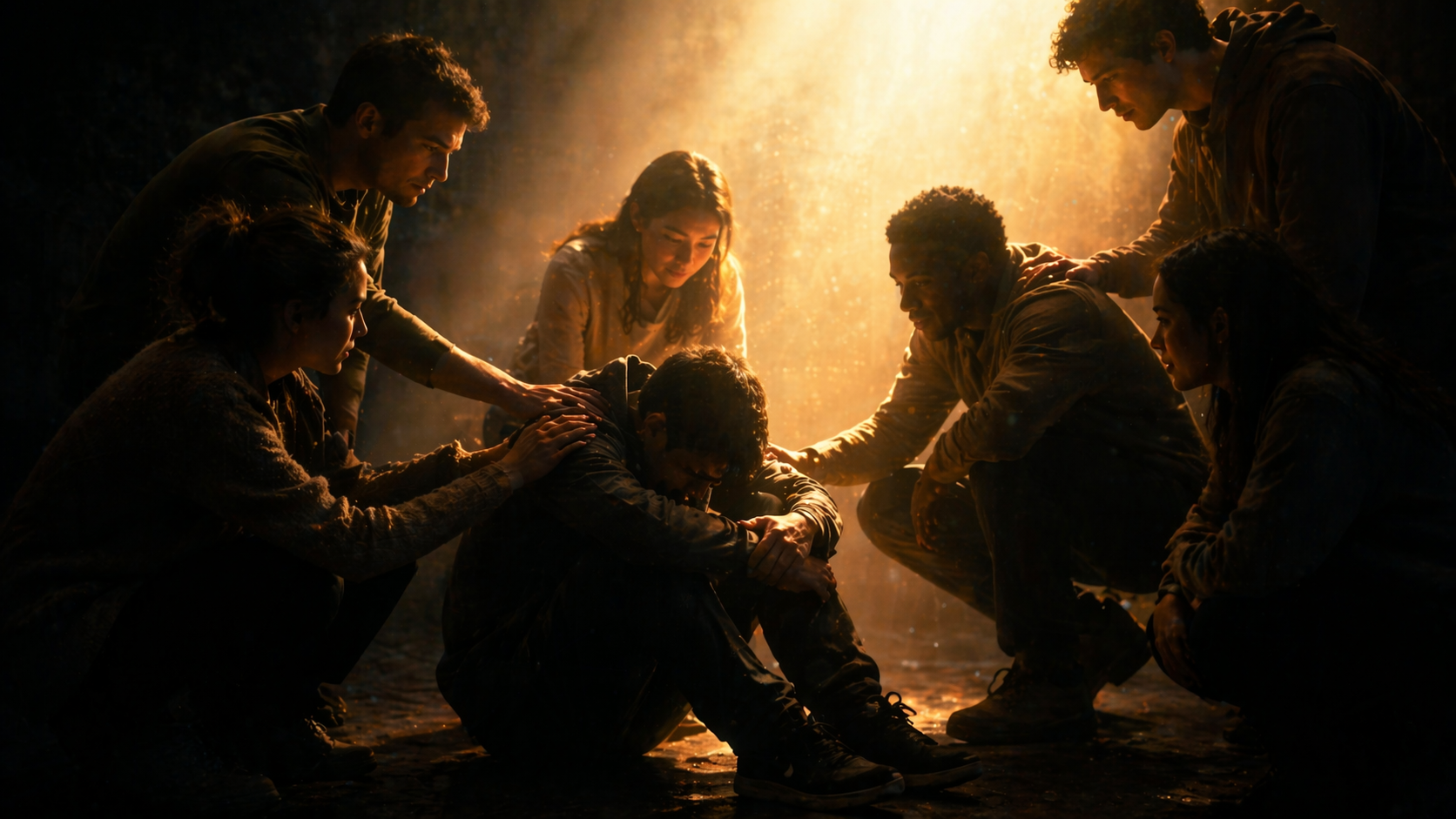
No one suffers entirely alone.
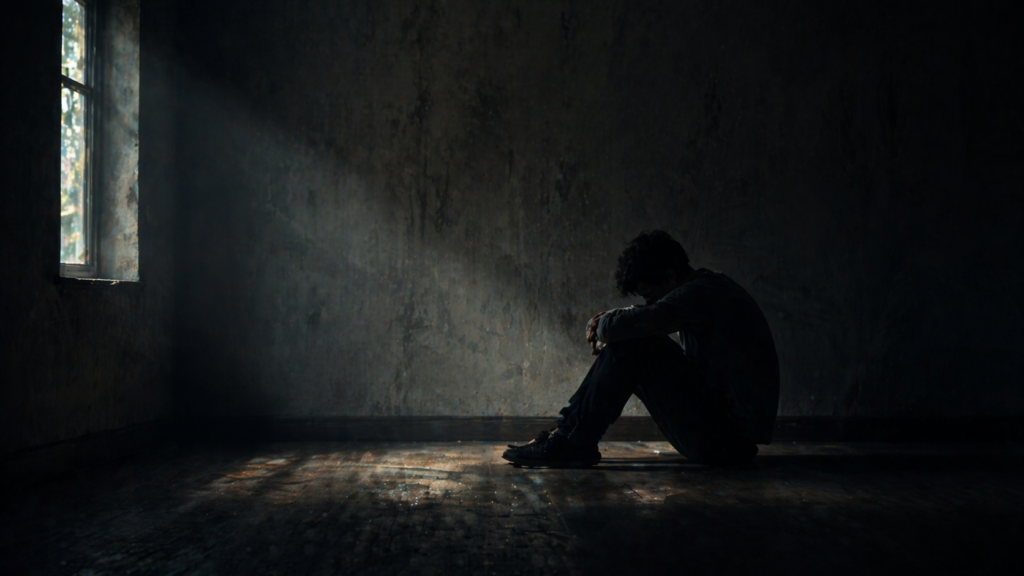
We often think of pain as something deeply personal—
a private burden carried in silence.
Yet behind every individual struggle
lies a broader social context.
Loss, illness, trauma, and emotional distress
do not exist in isolation.
They are shaped, amplified,
or eased by the world around us.
So the question is not only how individuals heal—
but how societies choose to respond.
1. When Pain Becomes a Social Issue
Personal suffering becomes transformative
when it is recognized as a shared concern.
Mental Health and Public Systems
Mental health challenges—such as depression, anxiety, and PTSD—
affect millions of people worldwide.
When treated as private weakness,
they isolate individuals.
But when recognized as public issues,
they open pathways for collective solutions.
Countries like Finland and Denmark
have integrated mental health into public welfare systems:
- Free access to counseling
- Workplace mental health programs
These policies reflect a shift:
From individual blame → to collective responsibility
Reducing Stigma Through Visibility
Stigma often prevents people from seeking help.
However, public conversations are changing.
When public figures speak openly about mental health,
they normalize vulnerability.
This shift transforms suffering:
From something hidden → to something acknowledged
And acknowledgment is the first step toward healing.
2. Trauma and Collective Recovery

Some forms of suffering cannot be addressed individually.
They require collective response.
Shared Trauma in Crisis
War, disasters, and large-scale tragedies
create collective trauma.
After events like 9/11,
community-based recovery programs
helped individuals process grief together.
Healing, in these contexts,
is not just psychological—
it is social.
Art as a Space for Healing
Art provides a language for pain
when words are not enough.
In post-disaster communities in Japan,
survivors engaged in collective art practices
to express and process trauma.
Similarly, artistic projects
have allowed marginalized voices
to transform personal pain into shared narratives.
Through art, suffering becomes:
- Visible
- Meaningful
- Shared
3. When Personal Pain Becomes a Social Voice
Pain can also become a form of communication.
Literature and Shared Experience
Many literary works transform individual suffering
into collective understanding.
Stories allow readers to:
- Recognize themselves
- Understand others
- Build empathy
Through narrative, pain is no longer isolated—
it becomes relational.
Cultural Movements and Emotional Connection
Modern culture also reflects this shift.
Films, music, and campaigns
increasingly address mental health and identity.
These expressions do more than represent pain—
they create communities around it.
And in community,
healing begins.
4. Strengthening Social Solidarity
If healing is collective,
then solidarity must be intentional.
Expanding Public Support
Access to mental health care
should not depend on income or status.
Equitable systems are essential.
Building Community-Based Care
Local networks—families, communities, institutions—
play a crucial role.
Healing is often relational,
not individual.
Supporting Cultural Expression
Art, storytelling, and dialogue
must be encouraged.
They turn private pain
into shared understanding.
Conclusion

Personal suffering may begin individually—
but it does not have to end there.
When societies recognize pain,
support it,
and respond to it collectively,
healing becomes possible.
Not as an isolated journey,
but as a shared process.
So perhaps the deeper question is:
When someone suffers,
do we stand as observers—
or as participants in their recovery?
Question for Readers
When someone around you is suffering, do you see it as their struggle—or something we all share responsibility for?
Related Reading
If personal suffering calls for collective healing, why do we sometimes turn away from others’ pain?
In Why Do We So Easily Turn Away from Others’ Suffering?, we explore the psychological and social mechanisms behind indifference—revealing that social solidarity begins not with systems, but with our willingness to face discomfort and respond to it.
What if the strength of a society is not measured by power—but by how deeply its members are connected?
In The Sociology of Waiting in Line, we examine how everyday social behaviors reflect deeper structures of trust, fairness, and shared experience—suggesting that even small interactions reveal the foundation of collective solidarity.
References
- Durkheim, É. (1897). Suicide: A Study in Sociology. The Free Press.
Durkheim demonstrates how individual suffering, such as suicide, is deeply connected to levels of social integration and solidarity. His work highlights the importance of collective structures in shaping personal well-being. - Frankl, V. E. (1946). Man’s Search for Meaning. Beacon Press.
Frankl explores how individuals can endure extreme suffering by finding meaning, emphasizing the role of purpose and connection in psychological resilience. - Putnam, R. D. (2000). Bowling Alone: The Collapse and Revival of American Community. Simon & Schuster.
Putnam analyzes the decline of social capital and its impact on individual well-being, arguing that strong communities are essential for both social and emotional health.