Tag: self reflection

  • What Did Socrates Think About Marriage? A Philosophical Perspective

    What Did Socrates Think About Marriage? A Philosophical Perspective

    Is marriage simply about love—or can it be a path to wisdom?

    When we think of marriage today, we often associate it with emotional connection, companionship, and personal fulfillment. But for the ancient Greek philosopher Socrates, marriage meant something deeper. It was not merely a romantic bond—it was a space for self-examination, growth, and philosophical insight.

    Interestingly, Socrates’ own marriage to Xanthippe was far from peaceful. Yet instead of avoiding conflict, he embraced it as part of the human experience. To him, even difficulty had meaning.
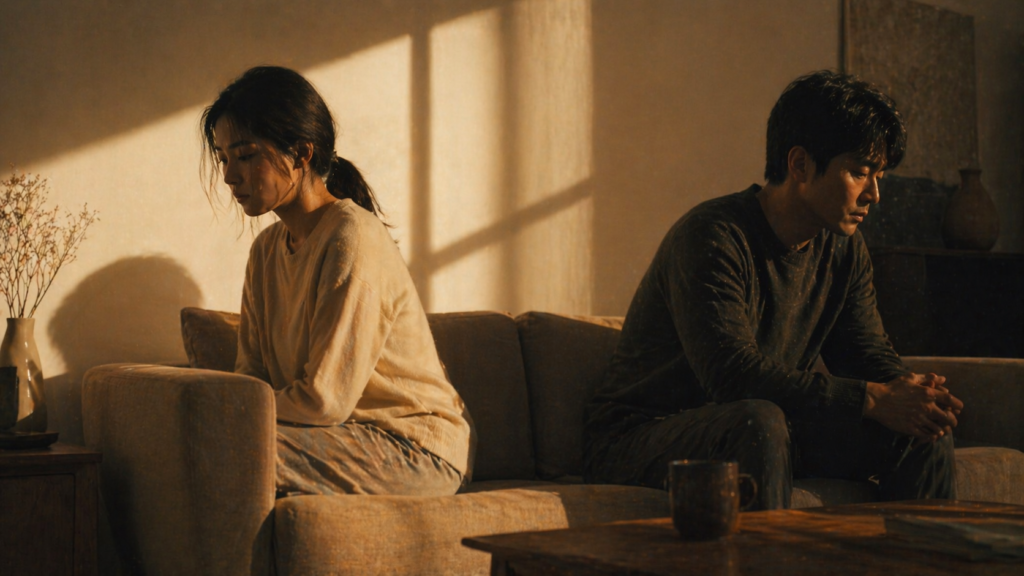
    relationship conflict introspective moment

    1. Marriage as a Training Ground for Character

    Socrates believed that the most important task in life was self-knowledge. His famous idea—“Know thyself”—applied not only to abstract thinking, but to everyday relationships.

    Marriage, in this sense, becomes a powerful environment for self-development.

    Xanthippe, often described as strong-willed and temperamental, is frequently mentioned in historical anecdotes. Rather than viewing this as misfortune, Socrates saw it as an opportunity to practice patience and resilience.

    He is famously quoted as saying:

    “Marry. If you get a good wife, you’ll be happy. If you get a bad one, you’ll become a philosopher.”

    Whether humorous or serious, this statement reflects a deeper belief:
    every experience—pleasant or difficult—can teach us something.


    2. Marriage as a Social Responsibility

    In ancient Greece, marriage was not purely a personal choice—it was a civic duty.

    Socrates, like many thinkers of his time, saw family life as essential to the stability of society. Through marriage, individuals contributed to the upbringing of future citizens and the continuation of social order.

    According to Xenophon’s writings, Socrates encouraged young men to marry not just for personal happiness, but to fulfill their role within the community.

    Even today, this perspective still resonates:

    Marriage is not only about two individuals—it also shapes families, communities, and social structures.


    3. Marriage as a Space for Dialogue
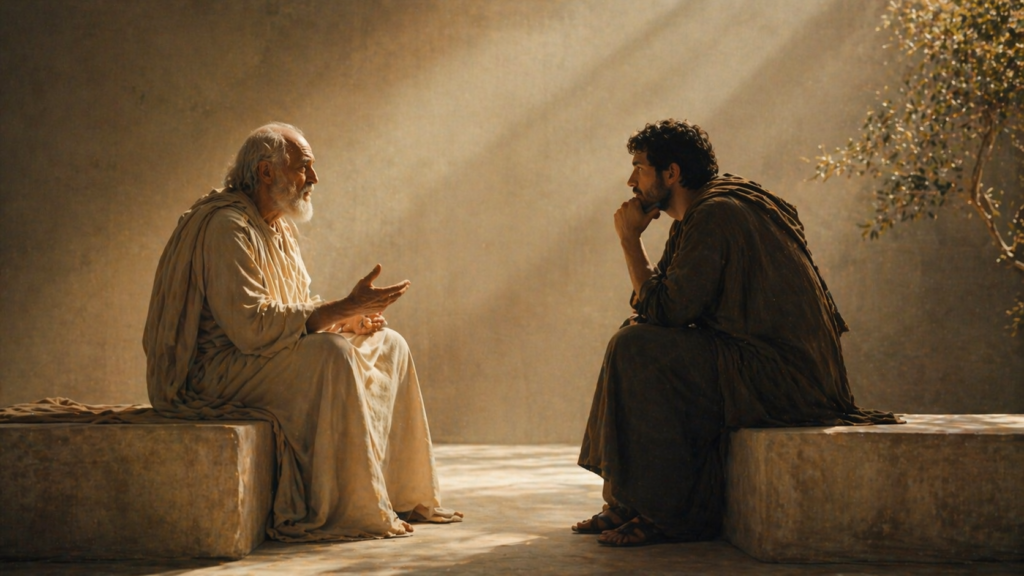
    philosophical dialogue reflection scene

    Socrates is best known for his method of questioning—what we now call the Socratic method.

    He believed that truth emerges through dialogue, challenge, and reflection.

    This philosophy extended into his personal life. Even arguments with his wife could be seen as opportunities for deeper understanding.

    Rather than avoiding disagreement, Socrates valued it.

    👉 In this sense, marriage becomes:

    • A place of conversation
    • A space for intellectual exchange
    • A mirror reflecting our own assumptions

    Modern relationships often struggle not because of differences—but because of the inability to discuss them.


    4. Marriage as an Inevitable Reality

    Socrates also approached marriage with realism.

    He did not idealize it as perfect harmony. Instead, he acknowledged its challenges as natural and unavoidable.

    A famous anecdote illustrates this well:

    After a heated argument, Xanthippe allegedly poured water over Socrates. He calmly responded:

    “After thunder comes rain.”

    Rather than reacting emotionally, he accepted conflict with humor and perspective.

    👉 His attitude suggests:
    Marriage is not about avoiding difficulty—but learning how to respond to it.


    Conclusion
    relationship growth and understanding scene

    For Socrates, marriage was far more than a personal relationship. It was:

    • A training ground for character
    • A social responsibility
    • A space for dialogue
    • A reality to be understood, not escaped

    In a world that often seeks comfort and ease, Socrates offers a different view:

    Growth often comes through tension, not harmony.

    So perhaps the question is not:
    “Is marriage supposed to make us happy?”

    But rather:
    “What kind of person does marriage help us become?”

    Reader Question

    Is marriage meant to make us happy—or to make us wiser?

    Do you think conflict in relationships is something to avoid—or something to learn from?

    Related Reading


    If relationships are meant to shape who we become, why do they so often expose our contradictions instead?
    In Why Hypocrisy Persists in Modern Society, we explore how human beings struggle between ideals and reality—revealing that tension within relationships is not failure, but part of moral and personal growth.


    If solitude helps us reflect, can true self-understanding exist without distance from others?
    In The Solitude of the Wise: Withdrawal from the Masses or Intellectual Elitism?, we examine whether stepping away from relationships deepens wisdom—or whether human connection itself is essential for becoming who we are.


    References

    1. Plato, Symposium. Oxford University Press.
    Although not directly about marriage, this work explores love, desire, and human relationships through Socratic dialogue. It provides philosophical insight into how Socrates understood connection beyond simple emotion.

    2. Xenophon, Memorabilia. Harvard University Press.
    This text offers a more personal look at Socrates’ life and character, including his views on family, responsibility, and daily interactions. It helps contextualize his perspective on marriage within real life.

    3. Xenophon, Oeconomicus. Oxford University Press.
    This dialogue examines household management and marital roles, presenting Socrates’ thoughts on marriage as a social and ethical institution.

  • A Small Hair Salon at the End of the Alley

    A Small Hair Salon at the End of the Alley

    The Quiet Touch That Changes More Than Hair

    At the end of a narrow alley,
    on the first floor of an old brick building,
    there is a small hair salon.

    The sign is modest, with faded gold lettering on the glass door.
    Warm light slips through the curtains,
    and when the door opens,
    the familiar hum of a hairdryer fills the air.

    The hairdresser has worked here for over thirty years.

    She often says:

    “Cutting hair is never just about appearance.
    It’s about helping someone begin their day again.”


    Where Stories Flow Between Strands of Hair

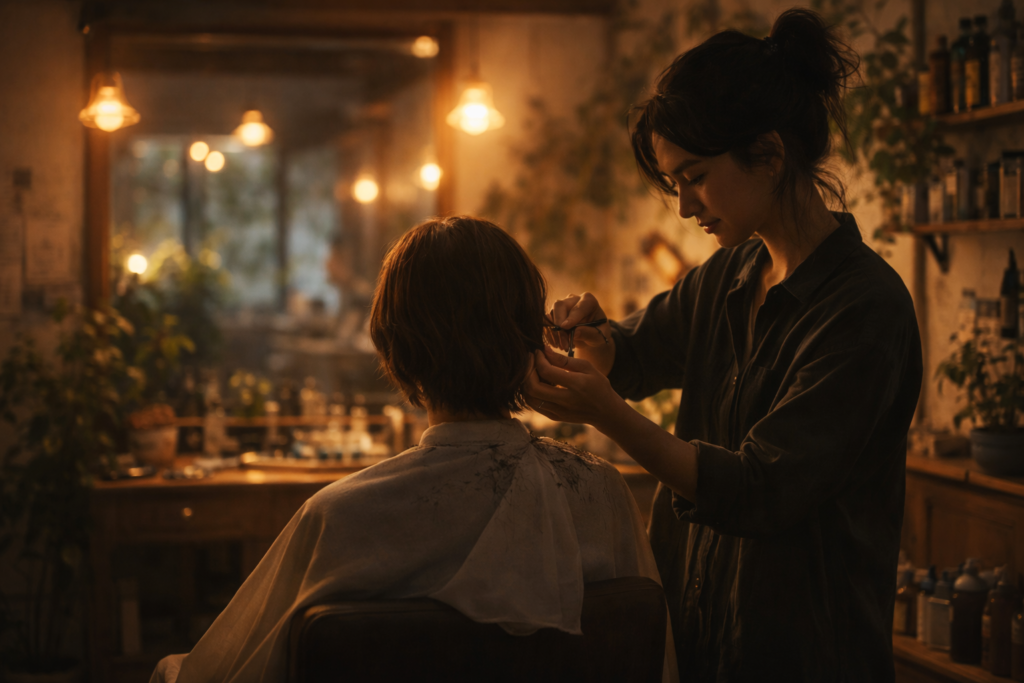
    hairdresser cutting hair softly

    Inside the salon, stories are always present.

    As their hair is trimmed, people begin to speak.

    “My child has been going through a difficult time lately.”
    “My husband just started working again.”
    “Today… I just wanted to feel different.”

    The hairdresser listens quietly,
    moving her scissors with calm precision.

    Strands of hair fall gently to the floor.

    But perhaps they are not just hair—
    perhaps they are fragments of fatigue, worry,
    and the invisible weight carried through the day.

    When the warm air of the dryer lifts them away,
    something in the room feels lighter.

    Here, change happens softly.


    The Art of Care, The Temperature of the Heart

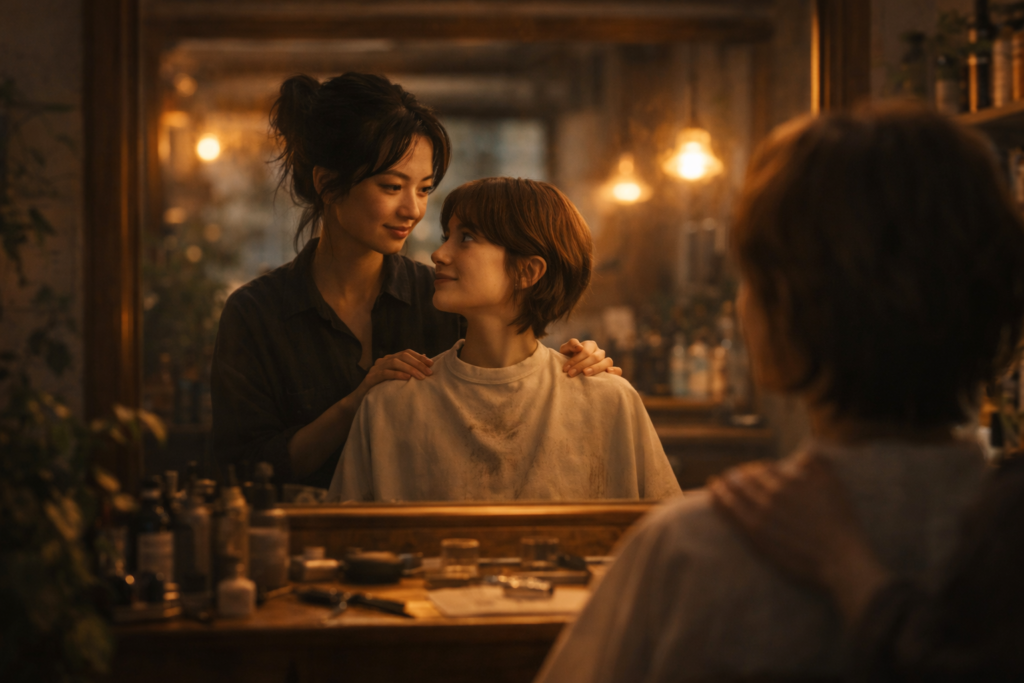
    hair salon mirror emotional connection

    A day in this salon is not simply a service.

    The hairdresser does not shape only hair—
    she shapes expressions, moods, and moments.

    “Hair never lies,” she says.
    “You can feel someone’s state of mind through your hands.”

    With the scissors in her hand,
    she knows how to handle another person’s life
    with quiet care.

    Regular customers call this place
    “a refuge for the heart.”

    Here, differences fade.

    Doctor or delivery worker,
    parent or student—
    once the cape is placed around the shoulders,
    everyone becomes simply human.


    The Moment of Change

    At first, customers sit quietly,
    their heads slightly lowered.

    Tired faces.
    Heavy expressions.

    But as the hair is shaped,
    and the final touches are made,
    something begins to shift.

    The hairdresser gently asks:

    “Does this feel better?”

    And often, the answer comes with a smile:

    “Yes… I feel like I can start again.”

    Within that brief exchange,
    something deeper than appearance has changed.

    A few centimeters of hair—
    and yet, a subtle renewal of the self.


    The Light Behind a Closed Door

    As night falls and the alley grows quiet,
    the last customer leaves.

    The door closes.

    The hairdresser sweeps the floor,
    gathering the day into small, silent motions.

    There is tiredness,
    but also a sense of order.

    Standing before the mirror,
    she looks at herself and whispers:

    “You did well today.”

    It is both a compliment
    and a quiet promise.

    A day spent shaping others
    becomes a moment of shaping oneself.

    The light from the salon
    spills softly into the alley.

    And beneath that light,
    someone walks home—
    carrying a small, unseen change.

    small salon light night alley

    Conclusion — What It Means to Transform

    A small hair salon is not just a place for cutting hair.

    It is a place where relationships continue,
    where quiet healing occurs,
    where people imagine a new version of themselves.

    And sometimes,
    that imagination becomes real.

    As the hairdresser once said:

    “As hair grows, so does the human heart.”

    Our lives, too,
    are shaped—slowly, gently—
    through the hands we encounter along the way.

    A Question for Readers

    When was the last time a small, simple change made you feel like starting again?

    Sometimes, it’s not a big decision—but a quiet moment, a gentle touch, or a small shift in your routine that brings renewal.
    What was that moment for you?

    Related Reading

    The quiet transformation that unfolds in a small hair salon resonates with a deeper reflection found in The Rhythm of Wood, The Tempo of My Mind, where the steady rhythm of a metronome becomes a metaphor for finding balance and pace within one’s inner life.

    A similar perspective on personal renewal can be found in Am I Falling Behind? — How Comparison Distorts Our Sense of Time, where the illusion of “being late” reveals how comparison reshapes our sense of progress—and how reclaiming our own timing can restore a sense of calm.


    References

    Gilligan, C. (1982). In a Different Voice: Psychological Theory and Women’s Development. Cambridge, MA: Harvard University Press.
    → This work explores ethics through the lens of care and relationships, offering insight into how emotional connection and attentive listening shape human growth, much like the quiet interactions within the salon.

    Noddings, N. (2003). Caring: A Relational Approach to Ethics and Moral Education. Berkeley: University of California Press.
    → Noddings emphasizes the importance of relational care as a foundation for ethical life, helping us understand everyday spaces—like a hair salon—as meaningful sites of human connection.

    Bourdieu, P. (1984). Distinction: A Social Critique of the Judgement of Taste. Cambridge, MA: Harvard University Press.
    → Bourdieu interprets everyday practices such as grooming and appearance as forms of social expression, revealing how even small acts of self-care reflect deeper structures of identity and belonging.

  • Why Do We Remember Regret Longer Than Failure?

    Why Do We Remember Regret Longer Than Failure?

    The Psychology of Memory, Emotion, and Decision-Making

    We often forget our failures.

    The disappointment of failing an exam fades with time.
    The pain of a lost opportunity slowly weakens.

    Yet regret remains.

    “I should have tried harder.”
    “I shouldn’t have said that.”
    “I should have taken that chance.”

    Why does regret stay with us longer than failure?

    The answer lies not only in emotion, but in how the human mind processes possibility. The difference between regret vs failure psychology lies in how the brain processes imagined possibilities rather than completed events.


    1. Failure Fades, but Regret Persists

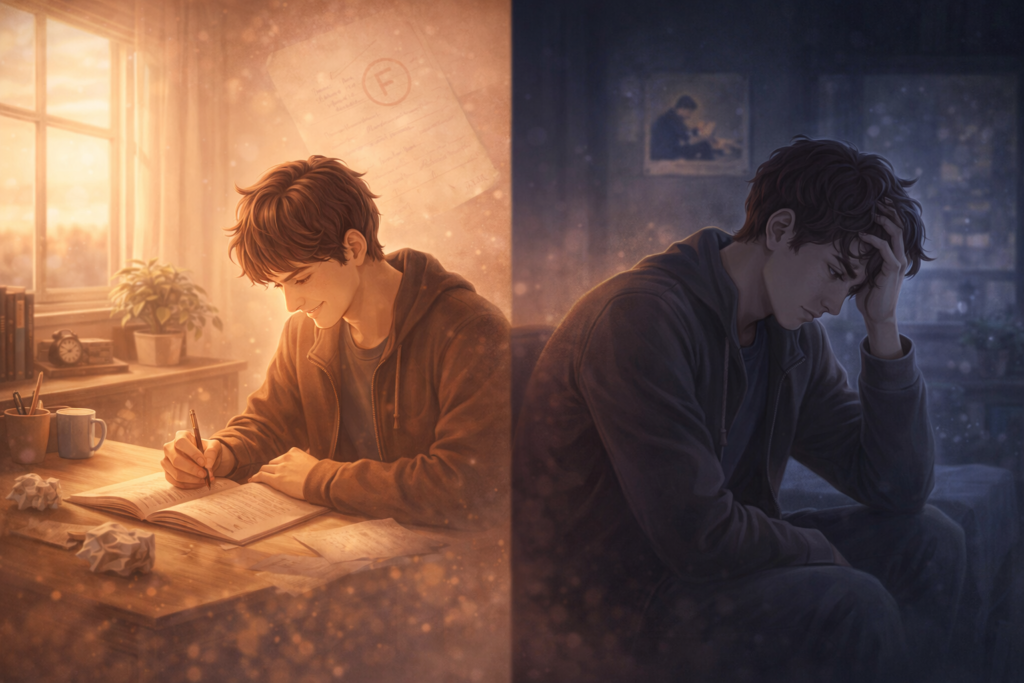
    contrast between failure fading and regret lasting

    Failure is an event that has already happened.

    It belongs to the past — fixed, unchangeable, and eventually processed by the brain as a completed experience.

    Regret, however, is different.

    Regret is not about what happened.
    It is about what could have happened.

    This difference makes regret far more persistent.

    Instead of closing a memory, regret keeps it open.


    2. Regret Lives in “What If”

    Think about common experiences of regret:

    • words spoken in anger during an argument
    • a missed opportunity that never returned
    • a decision not taken at a crucial moment

    Regret does not come from reality alone.
    It comes from imagined alternatives.

    The mind constantly asks:

    • What if I had acted differently?
    • What if I had chosen another path?

    These imagined scenarios are replayed again and again.

    This repetition is what makes regret last longer than failure.


    3. The Brain Replays Possibilities

    Psychologist Daniel Gilbert explains regret as the brain’s attempt to “edit the past.”

    This process is known as counterfactual thinking — imagining alternative outcomes to real events.

    The human brain, particularly the prefrontal cortex, actively simulates these “what if” scenarios.

    What is remarkable is this:

    The brain responds to imagined possibilities almost as strongly as it does to real events.

    This means that regret is not just a memory —
    it is a continuously recreated emotional experience.

    Research also suggests that regrets about inaction often last longer than regrets about actions.

    In other words, what we did not do may stay with us longer than what we did.

    person imagining alternative life scenarios

    4. Can Regret Be Useful?

    At first glance, regret seems like a negative emotion.

    But from an evolutionary perspective, regret serves an important function.

    It helps us:

    • learn from past decisions
    • adjust future behavior
    • reflect on moral and social actions

    Regret is a form of cognitive feedback.

    It allows us to simulate better choices without actually reliving the situation.

    In this sense, regret is not just pain.
    It is a tool for growth.


    Conclusion: Learning to Live with Regret

    Regret is not something we need to erase.

    It is something we need to understand.

    Failure ends.
    Regret continues.

    But that continuation also gives us direction.

    Instead of saying,
    “I should have done that,”

    we can learn to say,
    “Next time, I will do it differently.”

    A life without regret may not be possible.
    But a life that knows how to use regret wisely —
    that is a life shaped by reflection and growth.

    Question for Readers

    When you think about your past, do you remember your failures — or your regrets more clearly?

    Are there moments where you find yourself replaying what could have been, rather than what actually happened?

    In a world shaped by constant choices, we might ask a deeper question:

    Is regret something we should avoid, or something we can learn to use as a guide for better decisions?

    Related Reading

    The tension between emotion and judgment is further examined in Why We Excuse Ourselves but Blame Others, where the way we interpret our own actions and others’ mistakes reveals how memory and bias shape our sense of responsibility and regret.

    From a broader perspective on emotional awareness, Why It Feels Like Everyone Is Watching You: The Spotlight Effect explores how our perception of being observed amplifies emotional experiences, suggesting that the intensity of self-consciousness can make certain memories—especially those tied to regret—linger longer than others.


    References

    1. Gilbert, D. T. (2006). Stumbling on Happiness. New York: Knopf. This book explores how humans predict and mispredict their emotional futures, offering key insights into the psychology of regret and counterfactual thinking. Gilbert explains how the mind continuously reconstructs past experiences, which helps explain why regret lingers over time.
    2. Zeelenberg, M., & Pieters, R. (2007). A Theory of Regret Regulation 1.0. Journal of Consumer Psychology, 17(1), 3–18. This paper presents regret as a regulatory emotion that influences decision-making and behavior. It highlights how regret functions as a cognitive mechanism for evaluating choices and guiding future actions.
    3. Camille, N., Coricelli, G., Sallet, J., Pradat-Diehl, P., Duhamel, J. R., & Sirigu, A. (2004). The Involvement of the Orbitofrontal Cortex in the Experience of Regret. Science, 304(5674), 1167–1170. This neuroscientific study identifies the brain regions associated with regret, showing how the orbitofrontal cortex processes alternative outcomes and emotional responses tied to decision-making.
  • A Pebble by the Sea – Seeing the Moon Within a Small Stone

    A Pebble by the Sea – Seeing the Moon Within a Small Stone

    Sometimes the smallest objects carry the deepest reflections.

    1. The Weight of Small Things

    Sometimes, the smallest things stay with us the longest.

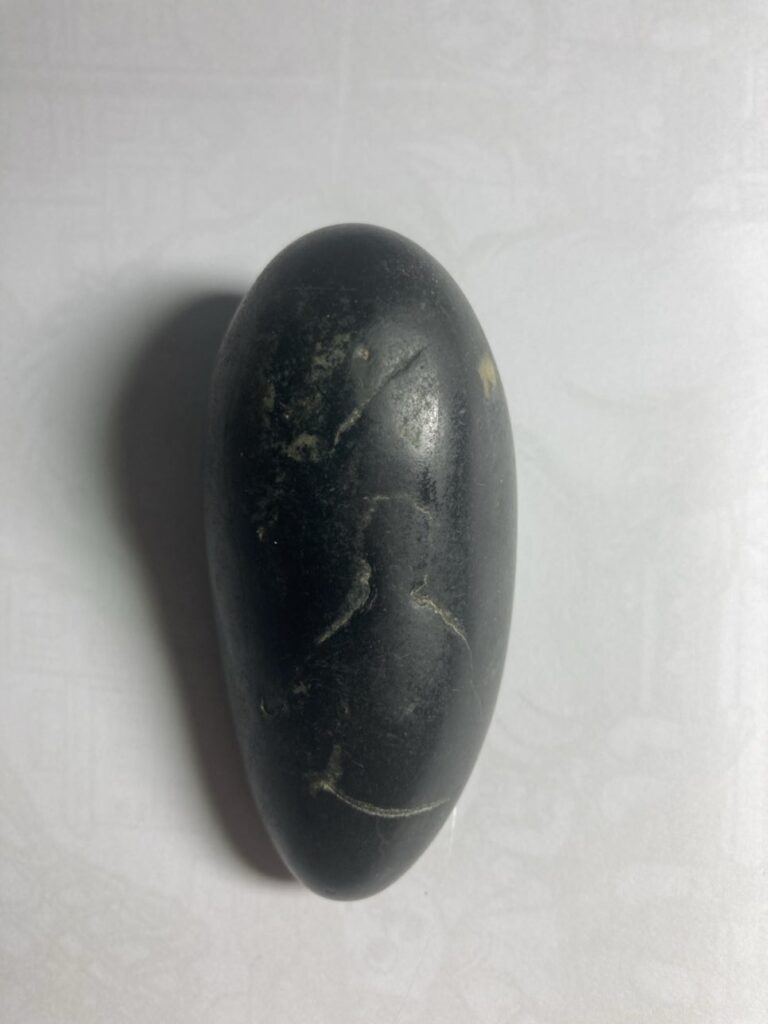
    I picked up this quiet pebble without any clear reason,
    almost as if it had been waiting for me before I even noticed it.

    It does not speak, yet it feels like it carries the weight of something 오래된 시간—
    a quiet presence shaped by time, pressure, and patience.

    Like the moon, the bamboo forest, and the wind that passes through them,
    this small object seems to hold something much larger than itself.

    And somehow, in its silence, it feels a little like me.

    dark pebble symbolizing quiet reflection and inner strength

    2. A Small Object, A Long Story

    pebbles being shaped by gentle ocean waves

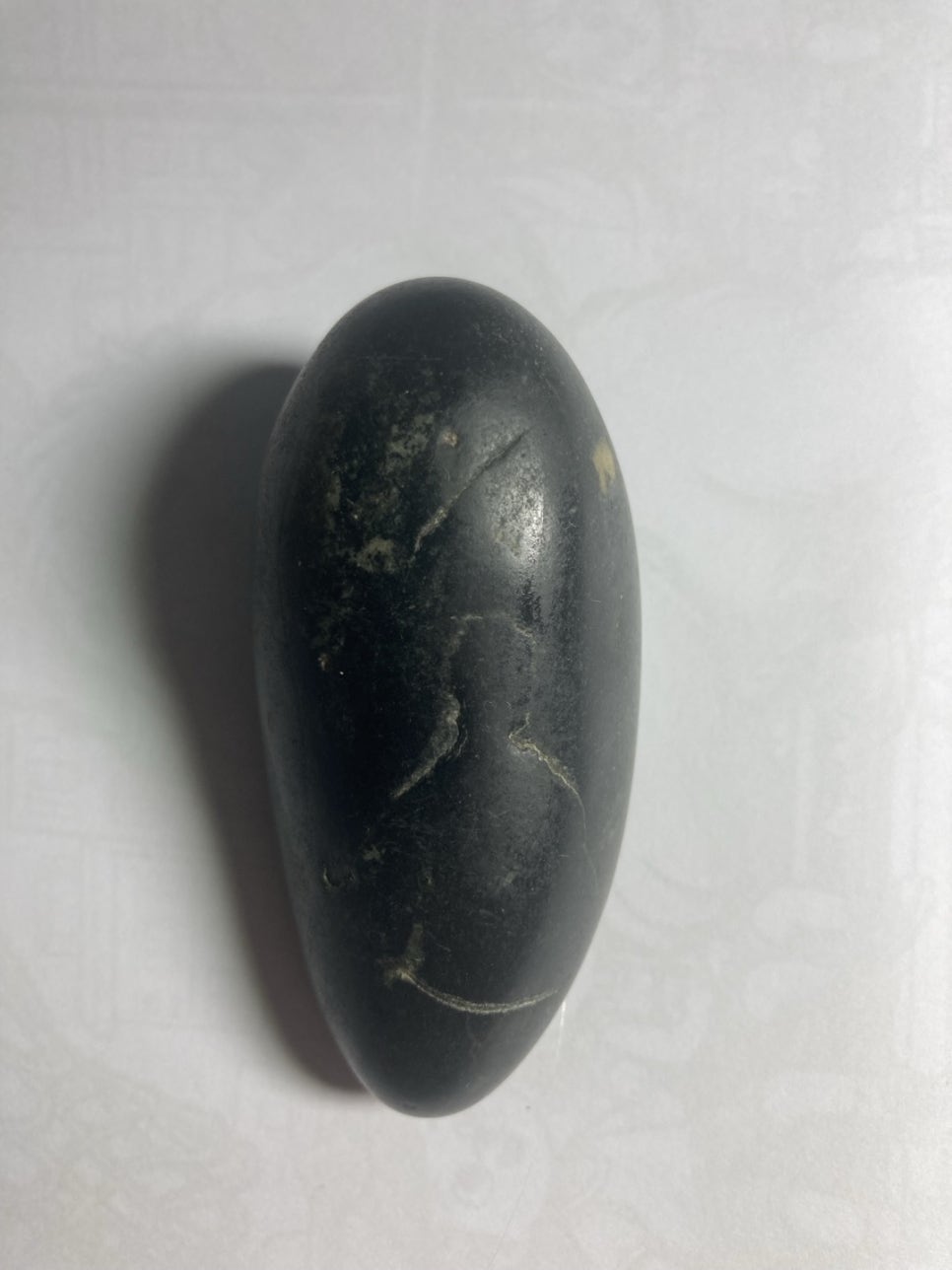
    At first glance, it is just a pebble.
    Smooth, dark, and easily overlooked.

    But if you look closely, you begin to notice the marks—
    fine cracks, worn edges, and subtle textures.

    These are not flaws.
    They are traces of time.

    The pebble did not become this way overnight.
    It was shaped slowly—
    by water, by friction, by countless unseen moments.

    In that sense, it is not so different from us.


    3. The Strength That Does Not Announce Itself

    We often think strength must be loud.
    Visible. Recognized.

    But there is another kind of strength—
    one that does not demand attention.

    It simply endures.

    Like the bamboo that bends but does not break,
    like the moon that remains even when unseen,
    like the wind that moves quietly yet persistently.

    This pebble carries that same quiet strength.

    Not dramatic, not overwhelming—
    but steady.


    4. Learning to Remain

    There are moments when we feel small.
    Unnoticed. Uncertain.

    In those moments, we often try to become something bigger,
    something more visible, more defined.

    But perhaps that is not always necessary.

    Perhaps there is value in simply remaining—
    in being shaped by time without losing form.

    The pebble does not resist its path.
    It becomes what it is through the journey.

    And maybe, we are allowed to do the same.


    Conclusion: Where Stillness Becomes Meaning

    person holding a pebble with the moon in the background

    In the end, this small pebble does not teach loudly.
    It does not offer clear answers.

    But it reminds us of something simple:

    That not all strength needs to be seen.
    That not all growth needs to be fast.

    And that sometimes,
    just remaining—quietly, steadily—
    is already enough.


    💬 Quote

    “Silence is a source of great strength.”
    — Lao Tzu


    One-line Reflection

    In a small pebble, I found not just the sea—
    but a reflection of time, patience, and myself.

    A Question for the Reader

    Have you ever held something small in your hand—and felt as if it contained more than its size could explain?

    If so, what did it reveal about the way you see the world?

    Related Reading

    The quiet presence of unnoticed moments is further reflected in A Seaside Bus Stop – The Landscape of Waiting, where ordinary spaces reveal deeper emotional layers through stillness, anticipation, and the subtle passage of time.

    From a psychological perspective, the meaning we assign to small experiences appears in Why Lighting a Candle Feels Like a Ritual, which explores how simple actions can carry symbolic depth and shape our sense of calm, focus, and inner awareness.