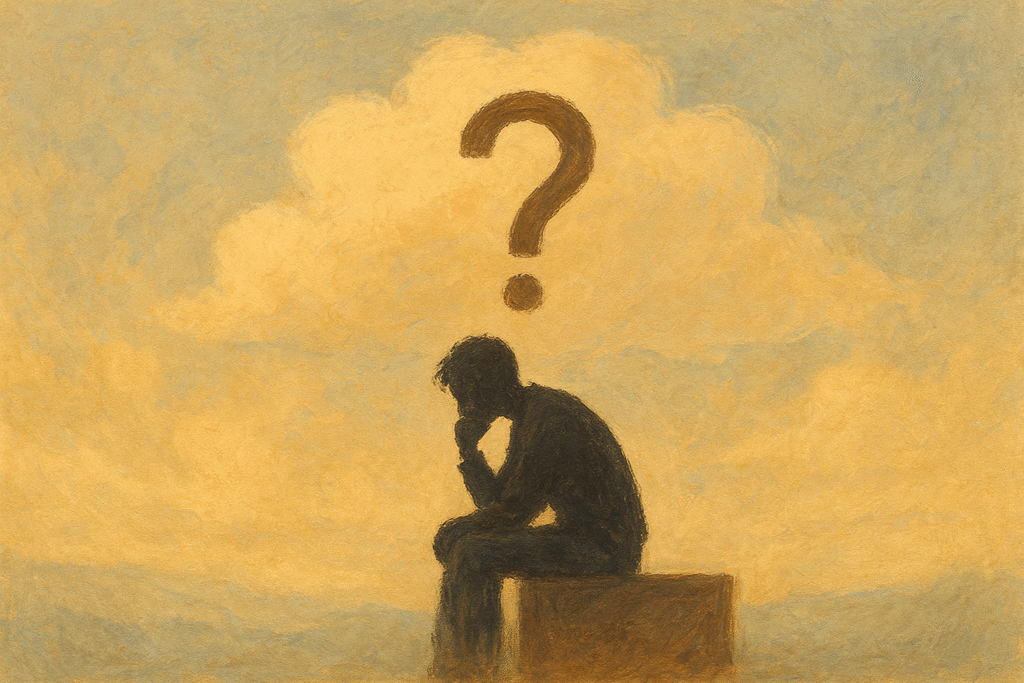
The Ambivalence of Solitude
Solitude has always occupied an uneasy position in human life.
At times, it is praised as a space of freedom and self-reflection.
At others, it is feared as a sign of isolation and social breakdown.
In a world saturated with constant connection, solitude appears both desirable and dangerous.
Is solitude a path toward inner autonomy, or does it quietly erode our social bonds?
This inquiry explores solitude as a space of freedom—and as a potential risk.
1. The Philosophical Meaning of Solitude: Schopenhauer’s Perspective
1.1 Solitude as a Noble State
The 19th-century German philosopher Arthur Schopenhauer regarded solitude as one of the highest conditions a human being could attain.
For him, solitude was not mere loneliness or social withdrawal.
It was a deliberate withdrawal from social noise and collective pressure in order to engage deeply with one’s own thinking.
Schopenhauer famously argued that “a wise man finds satisfaction in solitude.”
Only in isolation from social comparison and public opinion, he believed, could individuals achieve genuine intellectual freedom.
1.2 Inner Autonomy and Self-Mastery
Solitude, in Schopenhauer’s thought, was the foundation of inner autonomy.
Freed from the constant gaze of others, individuals could confront themselves honestly.
Philosophy, art, and scholarship, he argued, emerge not from crowds but from quiet reflection.
2. Solitude as Freedom: A Space for Reflection and Creation

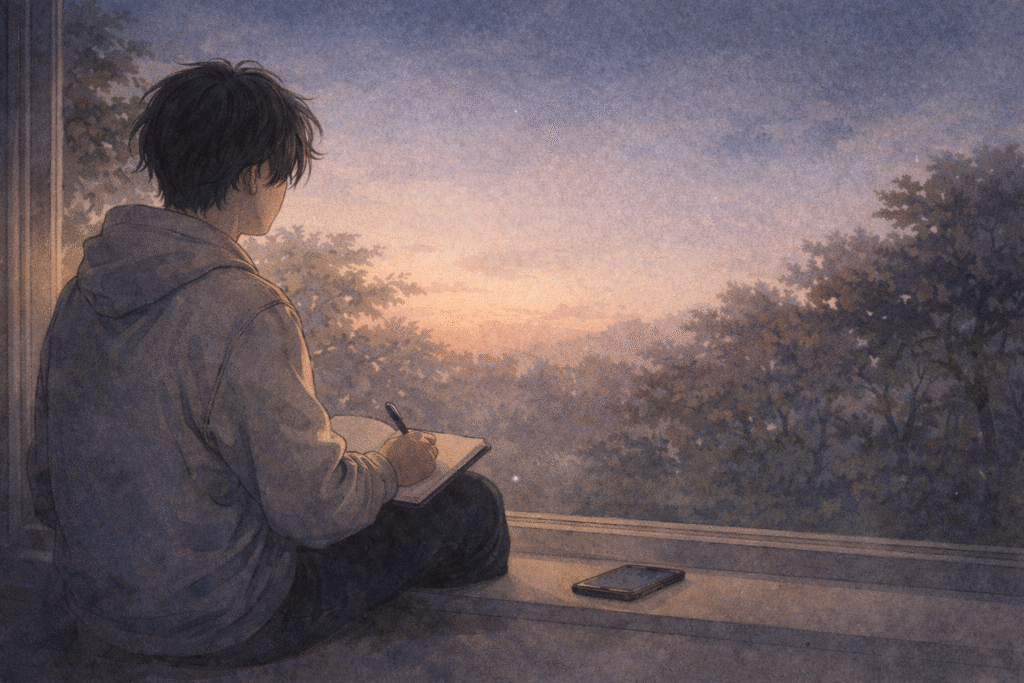
Solitude offers more than philosophical abstraction—it shapes creativity and personal growth.
2.1 The Source of Creative Thought
Many writers, composers, and thinkers have relied on solitude as a condition for creation.
Goethe’s reflective writings and Beethoven’s isolated compositional periods exemplify how solitude can function as a mental laboratory for innovation.
By suspending external expectations, solitude allows ideas to unfold freely.
2.2 Self-Reflection and Psychological Growth
In social life, individuals often perform roles shaped by others’ expectations.
Solitude provides an opportunity to examine one’s own emotions, desires, and fears without interruption.
Psychological research suggests that moderate, voluntary solitude can foster emotional resilience and self-awareness.
2.3 Experiencing Inner Freedom
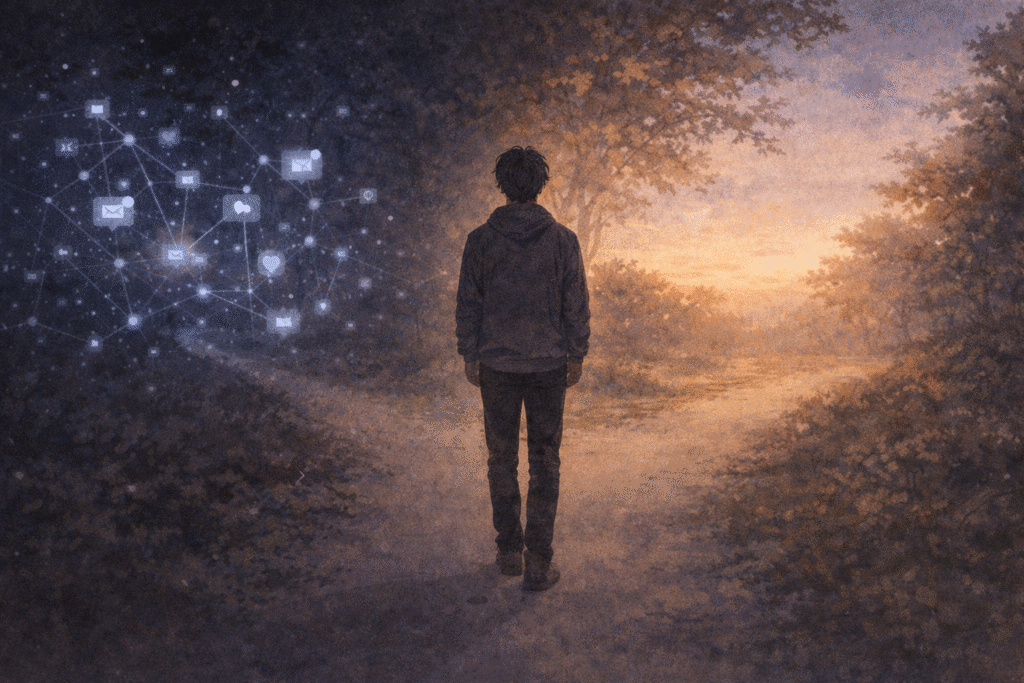
In the digital age, constant connectivity has become exhausting.
Notifications, messages, and social media create a permanent sense of being observed.
Paradoxically, solitude—often seen as deprivation—can become a rare experience of freedom:
a space where one exists without explanation or performance.
3. The Shadow of Solitude: Risks of Social Disconnection
Solitude, however, is not inherently virtuous.
When extended or imposed, it can become harmful.
3.1 Loneliness and Psychological Risk
Social psychology distinguishes between solitude and loneliness, yet the boundary is fragile.
Prolonged solitude can transform into loneliness, which has been linked to depression, anxiety, and even physical health risks.
When solitude ceases to be chosen, it often becomes a burden.
3.2 The Erosion of Social Capital
Sociologist Robert Putnam famously described the decline of communal life in Bowling Alone.
Excessive isolation weakens trust, cooperation, and shared responsibility.
While solitude may benefit individual reflection, its expansion at the social level can fragment communities.
3.3 The Digital Paradox
Digital platforms promise connection but frequently intensify isolation.
Online relationships often remain superficial, lacking the depth of embodied interaction.
As a result, hyper-connectivity can paradoxically deepen psychological solitude rather than alleviate it.
4. Two Faces of Solitude: Finding Balance
Solitude is neither purely liberating nor inherently destructive.
Its meaning depends on how and why it is experienced.
4.1 Chosen Solitude vs. Enforced Isolation
Voluntary solitude can nourish creativity and reflection.
Enforced isolation—caused by social exclusion or structural inequality—often produces psychological harm.
The key distinction lies in agency.
4.2 The Cycle of Solitude and Connection
Human development often follows a rhythm:
withdrawal for reflection, followed by re-engagement with others.
Solitude and sociality need not be opposites; they can function as complementary phases of maturity.
4.3 Reframing Solitude in Contemporary Life
Practices such as digital detox, meditation, and solitary walking reflect modern attempts to reclaim solitude intentionally.
These practices reinterpret solitude not as abandonment, but as rest and renewal.
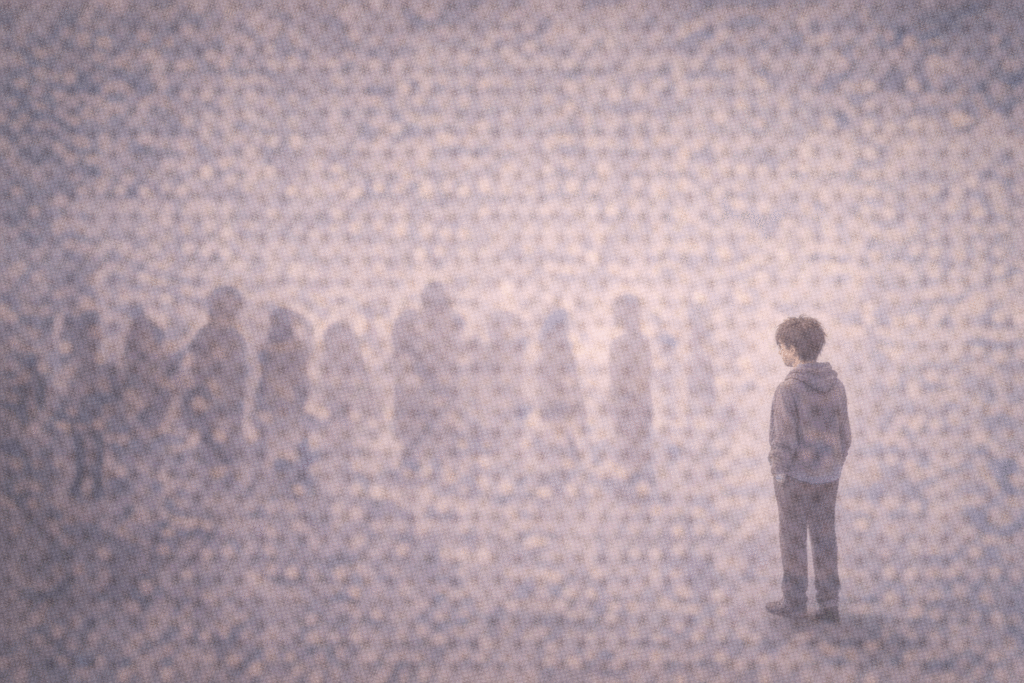
Conclusion: Freedom or Disconnection?
Solitude cannot be judged through a simple binary.
As Schopenhauer suggested, it may open a space for wisdom and inner freedom.
Yet when excessive or imposed, it risks becoming social disconnection and psychological isolation.
The more meaningful question is not whether solitude is good or bad, but how we relate to it.
When chosen consciously and balanced with social connection, solitude can become a vital resource.
When neglected or imposed, it may quietly erode both personal well-being and collective life.
Solitude, then, is not an escape from society—but a mirror through which we learn how to return to it more fully.
References
- Schopenhauer, A. (1851/2004). Parerga and Paralipomena. Oxford: Oxford University Press.
→ This work contains Schopenhauer’s reflections on solitude, wisdom, and intellectual freedom, offering a philosophical foundation for understanding solitude as a condition of self-mastery rather than mere isolation. - Weiss, R. S. (1973). Loneliness: The Experience of Emotional and Social Isolation. Cambridge, MA: MIT Press.
→ A classic psychological study distinguishing solitude from loneliness, analyzing how social isolation produces distinct emotional and structural consequences. - Baumeister, R. F., & Leary, M. R. (1995). The Need to Belong. Psychological Bulletin, 117(3), 497–529.
→ This influential paper argues that the need for social connection is a fundamental human motivation, clarifying the limits of solitude as a positive resource. - Putnam, R. D. (2000). Bowling Alone. New York: Simon & Schuster.
→ Putnam analyzes the decline of social capital and communal life, illustrating how widespread isolation undermines democratic and social cohesion. - Cacioppo, J. T., & Patrick, W. (2008). Loneliness: Human Nature and the Need for Social Connection. New York: W. W. Norton.
→ Integrating neuroscience and psychology, this work explains the biological and emotional costs of prolonged loneliness, highlighting the fragile boundary between solitude and isolation.