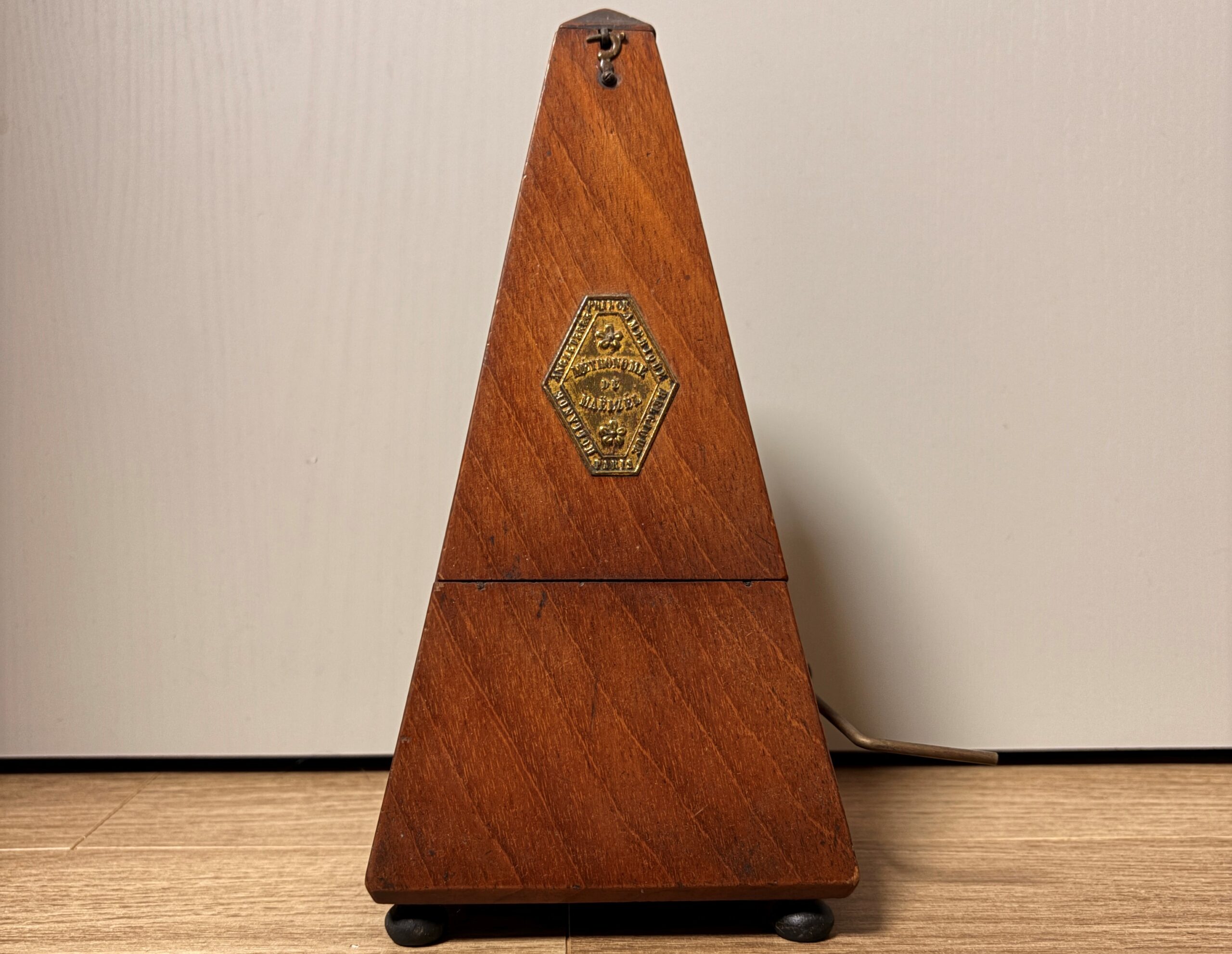
When life feels slow, it may just be a matter of perspective.
One day, I put my phone down and found myself thinking:
“Why does it feel like I’m the only one falling behind?”
A friend’s promotion, someone else’s wedding photos, another person starting something new—
It seemed like the whole world was moving forward.
And in the middle of it all, I felt as if I was standing still.
Today’s Humor
I once said to a friend, “Everyone seems to be living so fast these days.”
My friend smiled and replied, “No, we’re all just being late in different ways.”
For a moment, I laughed.
Because in truth, no one is perfectly ahead of life.
Insight
There are moments when we feel like we are behind.
But more often than not, that feeling does not come from our own life— it comes from comparing it to others.
When someone succeeds earlier, we feel late.
When someone reaches a milestone first, we feel left behind.
But life is not a race.
Some people begin quickly, while others grow slowly and deeply.
Some flowers bloom in spring, others reveal their fragrance in autumn.
The feeling of being “late” is often nothing more than an illusion created by comparison.
Today’s Hobby
Take a slow walk today.
Put your phone away for a while and simply observe what surrounds you.
As you walk, you may begin to notice something—
not the pace of others, but your own rhythm.
Concrete Action
When you catch yourself comparing your life to someone else’s, pause for a moment and say:
“I am moving at my own pace.”
This simple sentence has a quiet way of calming the mind.
Quote
“The trouble is, you think you have time.” — Jack Kornfield
We often believe we feel rushed because we lack time. But in reality, we feel rushed because we measure our time against others.
Closing
That evening, as I walked slowly, a thought came to me—
Maybe I am not late. Maybe I am simply moving at a different pace.
The moment comparison fades, time returns to where it belongs.
And life is no longer a race, but a journey.
Today’s Knowledge
In psychology, the tendency to evaluate one’s life by comparing it to others is known as Social Comparison.
This concept was introduced by Leon Festinger in 1954.
Humans often rely on others as reference points to judge their own progress, ability, or status.
When this comparison becomes excessive, it can distort how we perceive our own time and life.
Summary
You are not behind.
It is comparison that has been distorting your sense of time.
A Question for You
Are you truly behind— or are you just measuring your life by someone else’s clock?
Related Reading
The emotional weight of comparison is further explored in Why Do We Remember Regret Longer Than Failure?, where the lingering impact of self-evaluation reveals how our perception of time is shaped not only by events, but by how we interpret them.
The broader question of how we measure our lives is examined in Is There a Single Historical Truth, or Many Narratives?, where the idea that “truth” itself can be shaped by perspective parallels how we construct and compare our own timelines.
Feelings of recognition and emotional reward often begin in childhood experiences. Why Is Candy a Symbol of Reward for Children? examines how simple rewards become deeply tied to approval and belonging.
You get a new haircut, and suddenly it feels strange. You sit alone in a café and become aware of every movement. You stumble slightly on the subway and feel as if all eyes are on you.
Have you ever had that feeling — that people around you are paying unusually close attention to you?
Psychology has a name for this experience. It is called the spotlight effect—the tendency to overestimate how much other people notice our appearance, behavior, and mistakes.
1. We See the World From the Center of Ourselves
The Natural Focus on the Self
From birth, we experience the world from a first-person perspective. This makes self-awareness a natural part of being human.
We constantly monitor how we look, how we sound, and how we appear to others. This sensitivity helps us navigate social life — but it also creates distortions.
When Self-Awareness Becomes Overestimation
Because we are so aware of ourselves, we often assume others are just as focused on us. In reality, this is rarely the case.
The result is an illusion: we feel as if our actions and appearance stand out far more than they actually do.
2. A Classic Experiment: “No One Noticed My Shirt”
The Classic T-Shirt Experiment
In a well-known experiment published by Thomas Gilovich, Victoria Medvec, and Kenneth Savitsky in 2000, participants were asked to enter a room wearing an embarrassing T-shirt and then estimate how many other people had noticed it.
Participants consistently overestimated how much attention the shirt attracted. The experiment became one of the best-known demonstrations of what the researchers called the spotlight effect—our tendency to believe that our appearance and behavior are more noticeable to others than they actually are.
The Gap Between Feeling and Reality
This experiment clearly shows the gap between perceived attention and actual attention. We dramatically overestimate how much others notice us.
What feels like a spotlight is often just a dim light.
3. How the Bias Fuels Anxiety
When the Effect Becomes Stronger
The spotlight effect intensifies in situations such as:
Being in unfamiliar environments
Making mistakes
Feeling insecure about appearance or behavior
Being evaluated (presentations, interviews)
From Awareness to Anxiety
In these moments, excessive self-focus can increase tension, embarrassment, and the desire to withdraw. For people who already feel highly self-conscious in social situations, the sense of being watched can make ordinary public experiences feel far more threatening than they actually are.
4. The Truth: Everyone Else Is Busy Being Themselves
Others Are Not Watching — They Are Thinking
The irony is simple: just as you are focused on yourself, others are absorbed in their own concerns.
Your small mistake feels significant to you — but to others, it is often unnoticed or quickly forgotten.
We Are All Main Characters in Our Own Stories
Most people are not observers of your life. They are protagonists in their own.
This does not mean that other people’s opinions never matter. Human beings are social creatures, and being seen and understood by others is part of meaningful relationships. The problem begins when imagined judgment becomes more powerful than actual judgment—and when the fear of being watched prevents us from acting naturally.
Conclusion
Feeling watched, judged, or remembered can be deeply uncomfortable. But often, the intensity of this feeling does not match reality — our minds tend to overestimate how visible we are to others.
People notice you far less than you imagine. Your mistakes rarely leave lasting impressions.
So when that familiar anxiety appears, try this reminder:
The spotlight is mostly in your head.
And perhaps, that realization itself can be a quiet relief.
Perhaps freedom from the spotlight effect does not mean becoming indifferent to how others see us. It means learning to distinguish between genuine social attention and the audience our own minds create. Sometimes, the courage to be ourselves begins with realizing that the world is watching us far less closely than we imagine.
A Question for Readers
Have you ever avoided doing something because you were afraid other people would notice or judge you?
Looking back, were they really paying as much attention as you imagined?
Related Reading
The broader psychology of social judgment and cognitive bias is explored further in Why We Excuse Ourselves but Blame Others: Understanding the Actor–Observer Bias, which examines how people systematically interpret their own actions differently from those of others. This wider perspective provides an essential framework for understanding why we often overestimate how closely other people observe and evaluate us.
The influence of social comparison on self-perception is explored further in Am I Falling Behind? — How Comparison Distorts Our Sense of Time, which examines how comparing ourselves with others can intensify self-consciousness, anxiety, and distorted perceptions of personal progress. Together, these discussions show that the feeling of being constantly observed often grows from the way we evaluate ourselves rather than from the attention of others.
References
1.Gilovich, T., Medvec, V. H., & Savitsky, K. (2000). “The Spotlight Effect in Social Judgment: An Egocentric Bias in Estimates of the Salience of One’s Own Actions and Appearance.” Journal of Personality and Social Psychology, 78(2), 211–222. This seminal study introduced the concept of the spotlight effect, demonstrating experimentally that people greatly overestimate how much others notice them.
2.Baumeister, R. F., & Bushman, B. J. (2021). Social Psychology and Human Nature (5th ed.). Boston: Cengage Learning. This textbook provides a comprehensive explanation of self-awareness, self-presentation, and cognitive biases, offering a broader framework for understanding self-relevance bias.
3.Leary, M. R. (2007). The Curse of the Self: Self-Awareness, Egotism, and the Quality of Human Life. Oxford: Oxford University Press. Leary explores how excessive self-focus affects well-being, showing how heightened self-awareness can amplify social sensitivity and unnecessary anxiety.
One afternoon, I decided it was time for a long-overdue deep cleaning.
Unfinished books were stacked on the desk. Clothes from different seasons were tangled together in the closet. As I sorted through these small messes, a quiet thought surfaced:
Perhaps my mind has become much the same.
I opened the window to let fresh air in. Soft sunlight filled the room, and something inside felt lighter. That was when I realized that cleaning is not only about space— it is also about letting air move through the mind.
A Small Moment of Humor
“Even the mind needs cleaning,” someone once joked. “Then what is the dust?” “Perhaps,” came the answer, “unattended emotions.”
Insight – The Rooms We Carry Inside
Inside each of us are many rooms.
A room of joy. A room of sorrow. A room of regret we hesitate to enter.
We often live with these doors closed. Yet emotions left untouched do not disappear. They quietly accumulate, making the inner air heavy.
To organize the mind is not to erase feelings, but to become honest with oneself.
When an old wound is gently brought into the light, it transforms—from a burden into understanding.
The essence of inner organization is not to discard emotions, but to find the courage to revisit them with honesty.
Today’s Practice – Creating an Emotional Storage Map
Take a sheet of paper and name the rooms of your inner house.
For example: The Room of Joy The Room of Regret The Room of Gratitude
Write down, in a single line, what each room contains. Then choose one room to tend to today.
When emotions are given structure, what once felt overwhelming begins to take shape.
A Small Act of Courage
Later that afternoon, with a warm cup of tea nearby, I opened a page labeled The Room of Regret.
Slowly, I wrote what I had long postponed: “Why wasn’t I kinder then?”
Tears welled up—not from regret, but from understanding. When the page was complete, the weight inside had eased.
“This room,” I thought, “can finally breathe.”
Quote of the Day
“The unexamined life is not worth living.” — Socrates
Closing Reflection – Letting Light In
Organizing the inner house is not about removing emotions. It is about returning them to their rightful place.
As scattered thoughts are gently arranged, new feelings find space to enter.
Everyone carries at least one room that remains unorganized. Today, consider opening its door— and letting in a line of sunlight and a breath of air.
A Thought from Psychology
Psychologist D. W. Winnicott emphasized that reconnecting with the True Self begins by recognizing one’s inner emotional space.
This process is not about meeting external expectations, but about noticing what is genuinely felt within.
To care for the rooms of the mind is to begin finding one’s way back to the self.
One-Sentence Takeaway
“Caring for the inner house is the quietest way of loving who you are today.”
Reader Question
If your mind were a house, which room would you choose to open today—and why?
Perhaps it is a room of gratitude, regret, hope, or quiet healing. Share your thoughts in the comments. Your reflection may encourage someone else to begin caring for their own inner house.
Related Reading
A peaceful inner life begins with accepting yourself, even on difficult days. Small Self-Esteem explores how quiet self-trust grows through everyday moments of patience, compassion, and gentle resilience.
Many people hide their true emotions behind constant kindness and the desire to please others. The Fatigue of Kindnessexamines how emotional boundaries help us reconnect with our authentic selves instead of losing ourselves in others’ expectations.