Morality has long served as the invisible framework that sustains human societies.
Questions of right and wrong have shaped not only individual choices, but also the survival of entire communities.
Today, artificial intelligence systems are trained on legal documents, philosophical texts, and countless ethical dilemma scenarios. They increasingly participate in decisions that resemble moral judgment.
If AI can learn moral rules and produce ethical outcomes, should we continue to see it as a mere calculating machine—or must we begin to recognize it as an ethical agent?
1. The Technical Possibility of Moral Learning

1.1. Simulating Ethical Judgment
AI systems already demonstrate the capacity to produce decisions that appear morally informed.
Autonomous vehicles, for instance, simulate scenarios resembling the classic trolley problem, calculating how to minimize harm in unavoidable accidents.
From the outside, such behavior may look like moral reasoning.
1.2. Rules Without Experience
Yet these systems do not understand right and wrong.
They do not feel guilt, hesitation, or moral conflict.
They optimize outcomes based on probabilities and predefined constraints, not lived ethical experience.
2. Criteria for Ethical Agency: Intention and Responsibility
2.1. Philosophical Standards
In moral philosophy, ethical agency typically requires two conditions:
intentionality and responsibility.
An ethical agent acts with intention and can be held accountable for the consequences of its actions.
2.2. The Responsibility Gap
Even when AI systems generate morally aligned outcomes, responsibility does not belong to the system itself.
It remains distributed among designers, developers, institutions, and users.
Without self-generated intention or reflective accountability, AI cannot yet meet the criteria of ethical subjecthood.
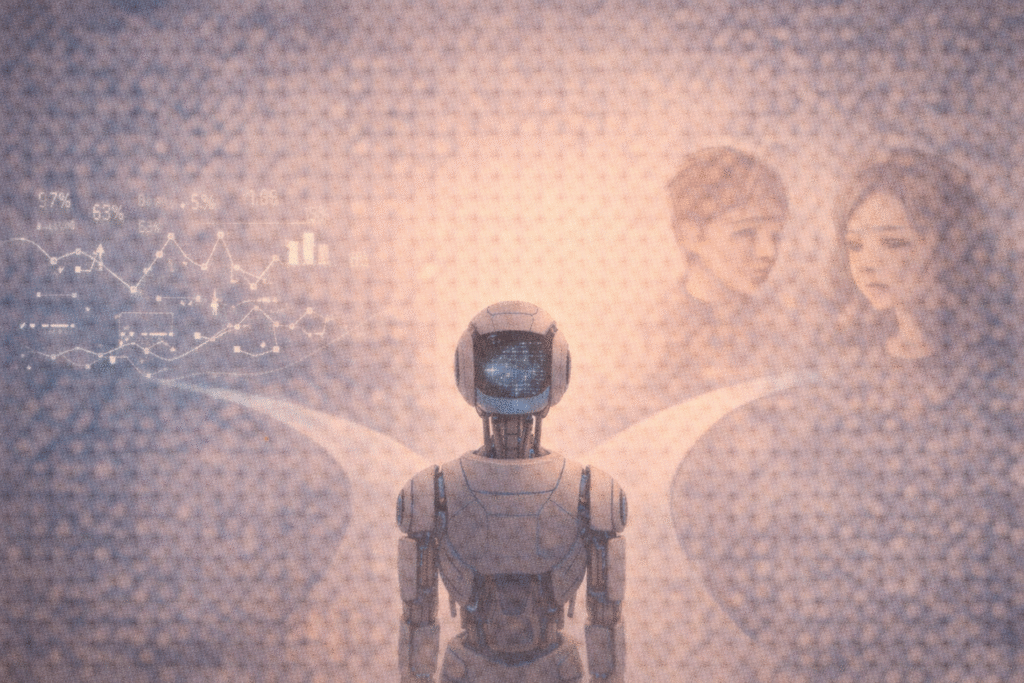
3. Imitating Morality vs. Experiencing Morality
3.1. The Role of Moral Experience
Human morality is not mere rule-following.
It is grounded in empathy, vulnerability, remorse, and the capacity to suffer alongside others.
An algorithm can replicate decisions—but not the inner experience that gives those decisions moral weight.
3.2. A Crucial Distinction
Even if AI reaches identical conclusions to humans, the origin of those decisions remains fundamentally different.
A data-driven outcome is not the same as a morally lived action.
Can an act still be called “ethical” if it is detached from moral experience?
4. Social Experiments and Emerging Definitions
4.1. The Value of Moral AI
Despite these limitations, AI-driven ethical systems are not meaningless.
They can help reduce human bias, increase consistency, and support decision-making in areas such as law, medicine, and governance.
In some cases, AI may function as a corrective mirror—revealing the inconsistencies and prejudices embedded in human judgment.
4.2. Human Responsibility Remains Central
What matters most is where final responsibility resides.
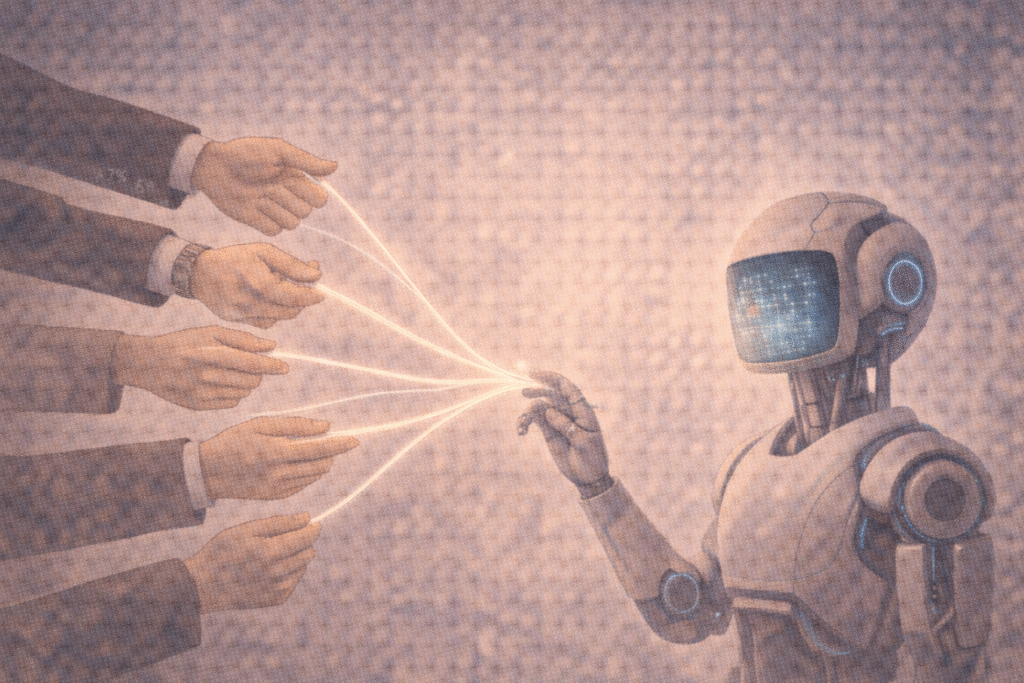
AI may assist, recommend, or simulate ethical reasoning—but accountability must remain human.
Rather than ethical agents, AI systems may be better understood as ethical instruments.
Conclusion: A Shift in the Question
Teaching morality to machines does not automatically transform them into ethical subjects.
Ethical agency requires intention, reflection, and responsibility—qualities that current AI does not possess.
Yet AI’s engagement with moral frameworks forces humanity to reexamine its own ethical standards.
Perhaps the more pressing question is no longer:
Can AI become an ethical agent?
But rather:
How will AI’s moral learning reshape human ethics, responsibility, and decision-making?
That question remains open—and it belongs to all of us.
References
- Wallach, W., & Allen, C. (2009). Moral Machines: Teaching Robots Right From Wrong. Oxford University Press.
→ A foundational work on designing moral reasoning in machines, outlining both the promise and limits of artificial ethical systems. - Floridi, L., & Sanders, J. W. (2004). On the Morality of Artificial Agents. Minds and Machines, 14(3), 349–379.
→ A rigorous philosophical analysis of whether artificial agents can be considered moral actors, focusing on responsibility and agency. - Gunkel, D. J. (2018). Robot Rights. MIT Press.
→ Explores the extension of moral and legal consideration to non-human agents, challenging traditional definitions of ethical subjecthood. - Bryson, J. J. (2018). Patiency Is Not a Virtue: AI and the Design of Ethical Systems. Ethics and Information Technology, 20(1), 15–26.
→ Argues against attributing moral status to AI, emphasizing the importance of maintaining clear distinctions between tools and subjects. - Bostrom, N., & Yudkowsky, E. (2014). The Ethics of Artificial Intelligence. In The Cambridge Handbook of Artificial Intelligence (pp. 316–334). Cambridge University Press.
→ A comprehensive overview of ethical challenges posed by AI, including moral agency, risk, and societal impact.