Tag: reflection

  • The Rhythm of Wood, The Tempo of My Mind

    The Rhythm of Wood, The Tempo of My Mind

    How a Simple Metronome Taught Me About Time and Life

    1. A Quiet Machine on the Shelf

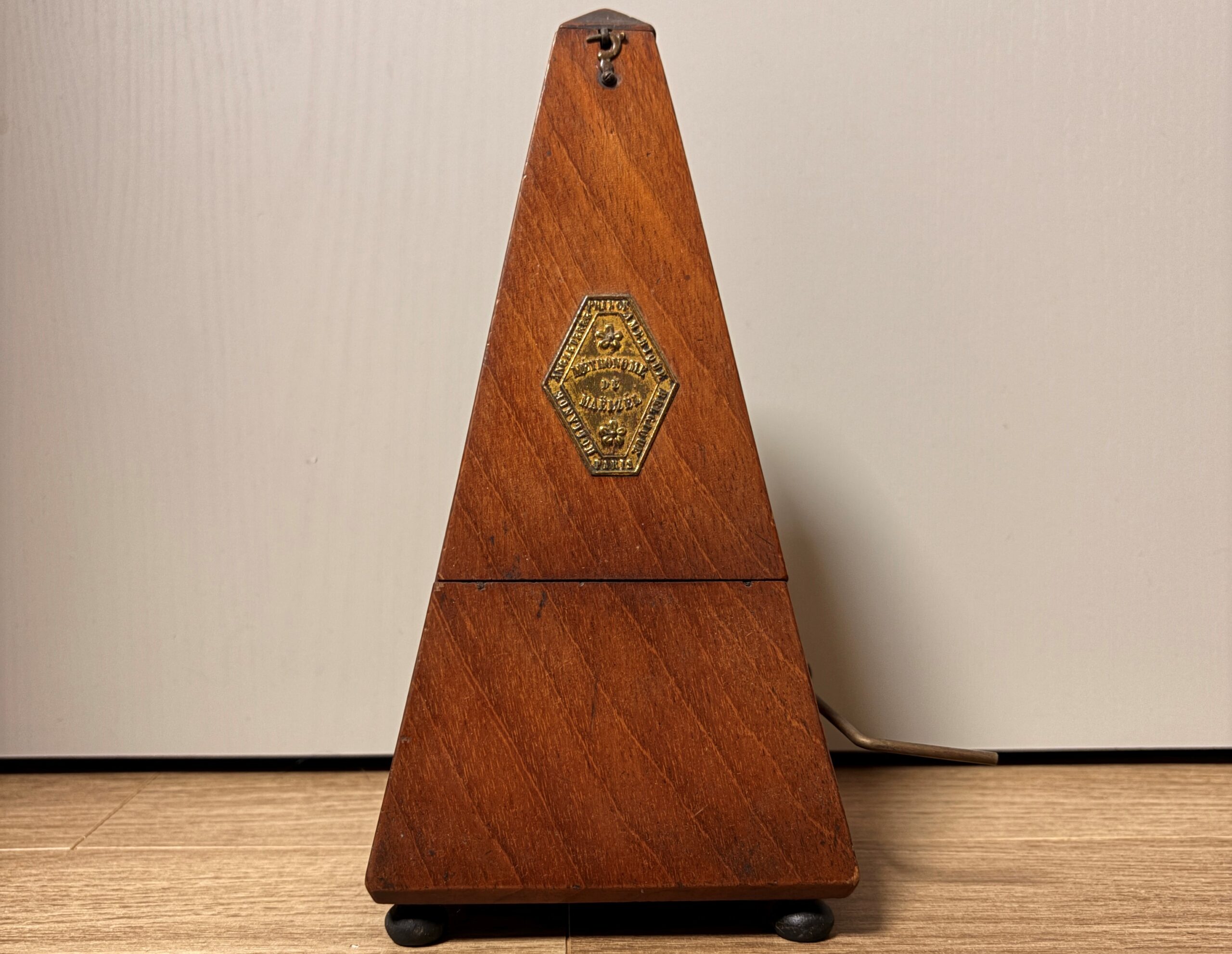
    On the corner of my bookshelf sits a small wooden object—
    about about 4 inches wide and 8.7 inches tall,
    shaped like a simple pyramid.

    It is a handmade mechanical metronome.

    I have kept it by my side for more than twenty years.
    metronome metal latch detail


    2. Learning to Follow Time

    When I first began learning the saxophone,
    I realized something unexpected—

    keeping time was harder than playing notes.

    I could read the sheet music,
    but my body was always slightly ahead or behind the rhythm.

    Whenever that happened,
    I would wind the metronome
    and watch the pendulum swing.

    Tick—tock.
    Tick—tock.

    Inside that small machine,
    there was nothing but balance and rhythm.


    3. Why I Chose Wood Over Precision

    Electronic metronomes are more precise,
    more convenient, and easier to use.

    But I always reached for this wooden one first.

    The sound was different.

    Not just a mechanical beat,
    but something softer—
    a resonance that seemed to linger in the air.

    That quiet repetition
    did not push me.

    It calmed me.


    4. A Small Ritual of Memory

    There was something else I loved about it—
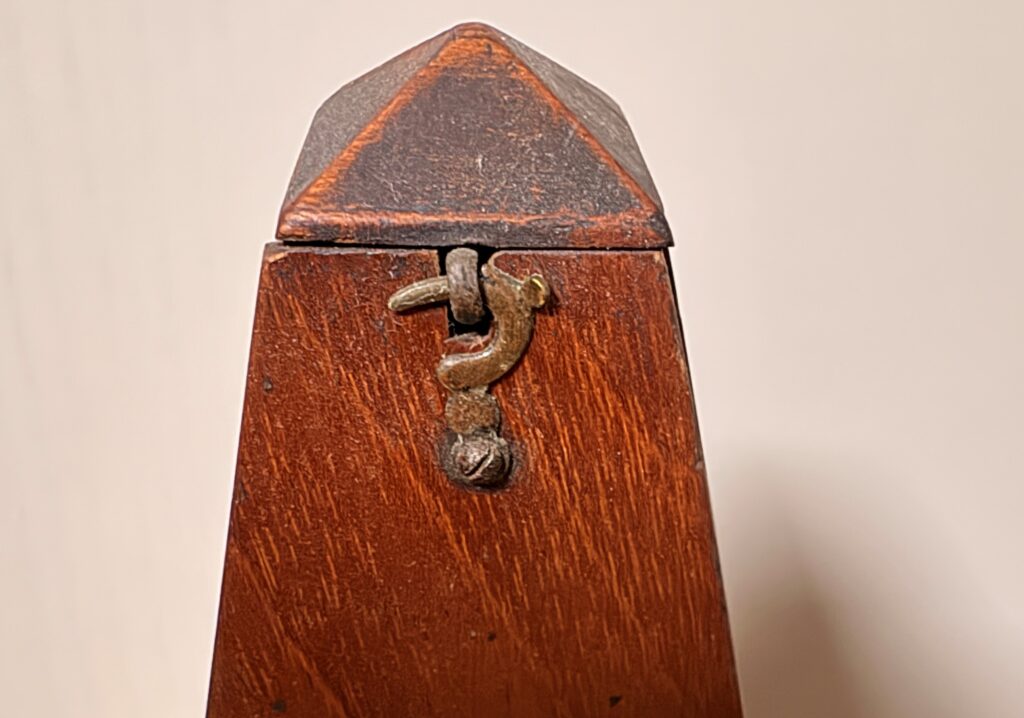
    the delicate metal latch at the top.

    A small click,
    like opening a quiet, hidden box.

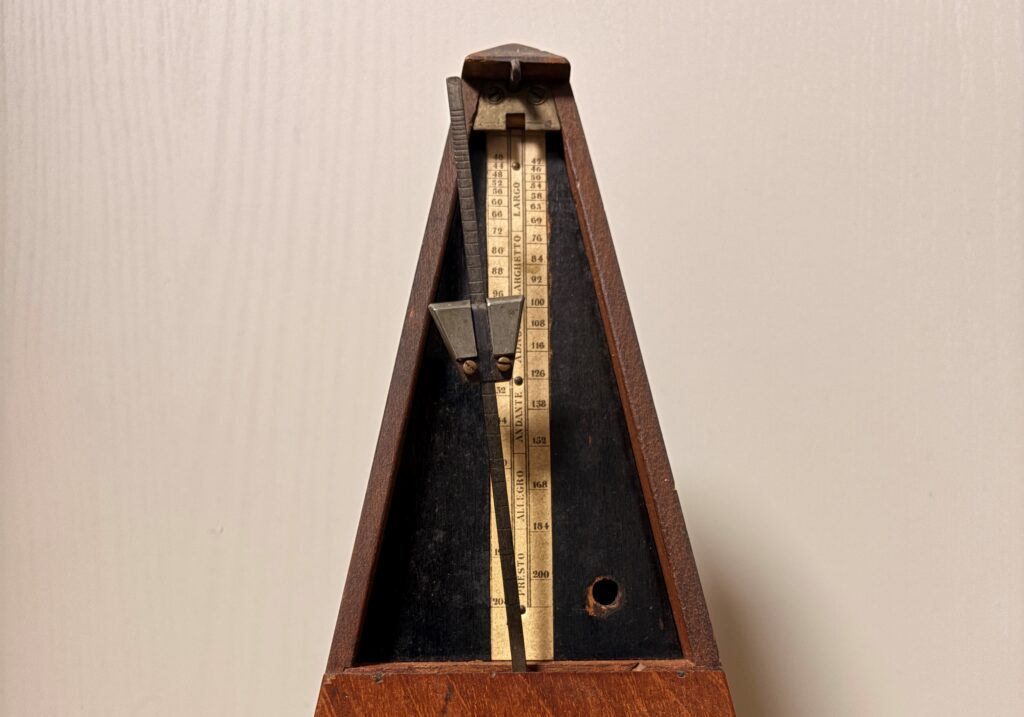
    Inside,
    a vertical scale marked in careful numbers,
    and a pendulum that could be adjusted up and down.

    Its structure was simple.
    Honest.

    Almost like a piece of time itself.

    metronome pendulum tempo scale

    5. The Tempo That Remains

    I no longer practice the saxophone every day.

    But the metronome is still there,
    on my desk.

    Sometimes,
    I wind it once or twice
    and let it move again.

    And in between those steady ticks,
    memories return—

    the tension in my fingers,
    the careful breath before each note,
    the quiet determination of learning something new.

    And I find myself thinking:

    “Rhythm is the time of music,
    and music is the time of life.”


    Conclusion – Finding Our Own Tempo

    What if our lives had a rhythm,
    like a metronome?

    Not too fast.
    Not too slow.

    Just enough to stay in harmony
    with ourselves.

    Like a small pendulum,
    moving back and forth—

    each of us
    keeping time
    in our own way.


    💬 A Question for You

    When was the last time you truly followed your own rhythm,
    instead of trying to match the pace around you?

    Related Reading

    The idea of moving at your own pace is further explored in Am I Falling Behind? — How Comparison Distorts Our Sense of Time, where the pressure of comparison reshapes how we perceive progress and timing in life.

    A similar reflection on quiet inner strength can be found in A Pebble by the Sea – Seeing the Moon Within a Small Stone, where a simple object reveals how patience and time shape who we become.

  • Walking as a Way of Thinking

    How a simple walk becomes a quiet conversation with the self.

    How a simple walk becomes a quiet conversation with the self

    Opening – A Walk That Slows the Mind

    Walking has a quiet power.
    It doesn’t force answers, yet it softens the questions we carry.

    Some paths slow us down just enough to hear the thoughts we’ve been ignoring.
    Today’s walk was one of those rare moments when movement becomes reflection.


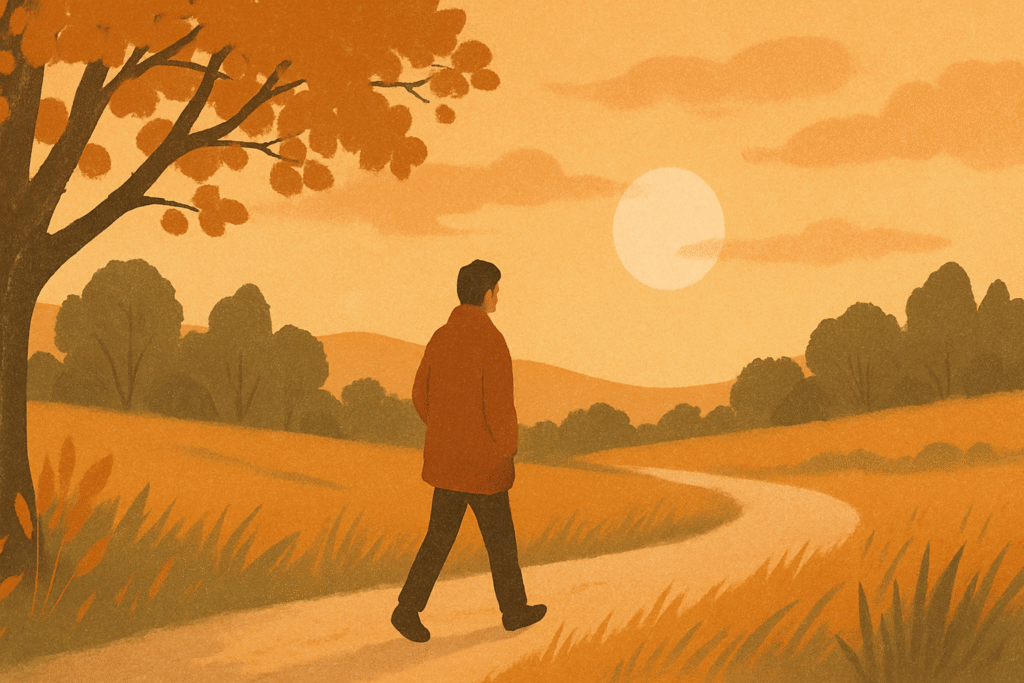
    Sunlit forest path winding through a quiet autumn field

    A Small Moment of Humor

    “When a good idea comes to me while walking… is that exercise, or is it studying?”

    Maybe it’s both.
    Walking might be the only workout that strengthens the heart and clears the mind at the same time.


    When Thoughts Begin to Walk Too

    With each steady step, the inner noise began to fade.
    Not because solutions arrived, but because the questions felt less urgent—
    as if they finally had space to breathe.

    Walking never demands a conclusion.
    It simply offers a quieter place for thoughts to wander.

    Sometimes the ideas that surface mid-stride
    are the ones we’ve postponed the longest.
    Today felt like the right day to let them speak.


    A Simple Practice for the Day

    The 10-Minute Reflective Walk
    Take a short walk with no destination.
    Choose one guiding question:

    • What thought has been weighing on me?
    • What emotion does this path bring up?
    • If I could choose freely, where would I go next?

    If one clear sentence emerges, capture it before it drifts away.


    A Moment of Presence

    A soft breeze brushed the face.
    Light filtered gently through the leaves.
    Breathing slowed.

    Walking is not merely moving forward—
    it is quietly returning to oneself.


    A lone figure facing a calm sunset horizon

    Quote of the Day

    All truly great thoughts are conceived while walking.
    — Friedrich Nietzsche


    Closing Insight

    In the rhythm of our steps, we rediscover the rhythm of our thoughts.

    Walking clears space without demanding effort—
    a small ritual,
    a mental reset,
    a return to clarity.


    Today’s Insight (Science Notes)

    Studies from Stanford and the American Psychological Association highlight that walking significantly boosts divergent thinking and emotional clarity.

    Neuroscientific research shows that walking:

    • increases activity in the prefrontal cortex,
    • boosts creativity and emotional regulation,
    • reduces stress hormones,
    • and raises serotonin levels.

    This is why ideas often arrive precisely when we aren’t trying to find them.


    Summary Sentence

    “Walking is not a physical act, but a quiet conversation with the mind.”