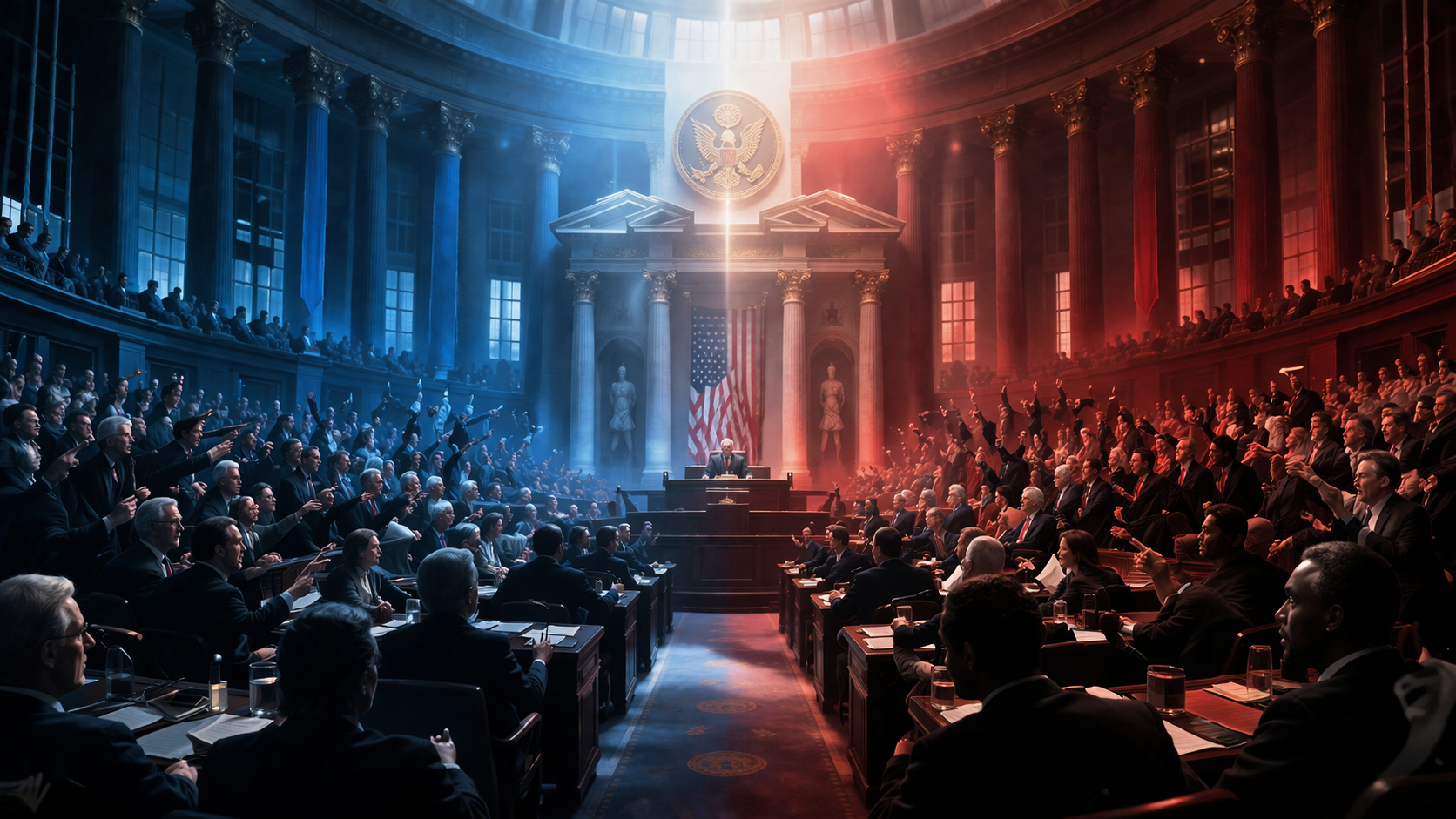
Struggle, Mediation, and the Paradox of Political Life
When we turn on the news, politics often appears as noise—
raised voices, accusations, and endless division.
Yet behind every conflict, there is always a promise:
to solve problems, to serve the public, to move society forward.
This contradiction raises a deeper question:
If politics is meant to resolve problems,
why does it so often begin by creating conflict?
1. Politics as the Institutionalization of Conflict
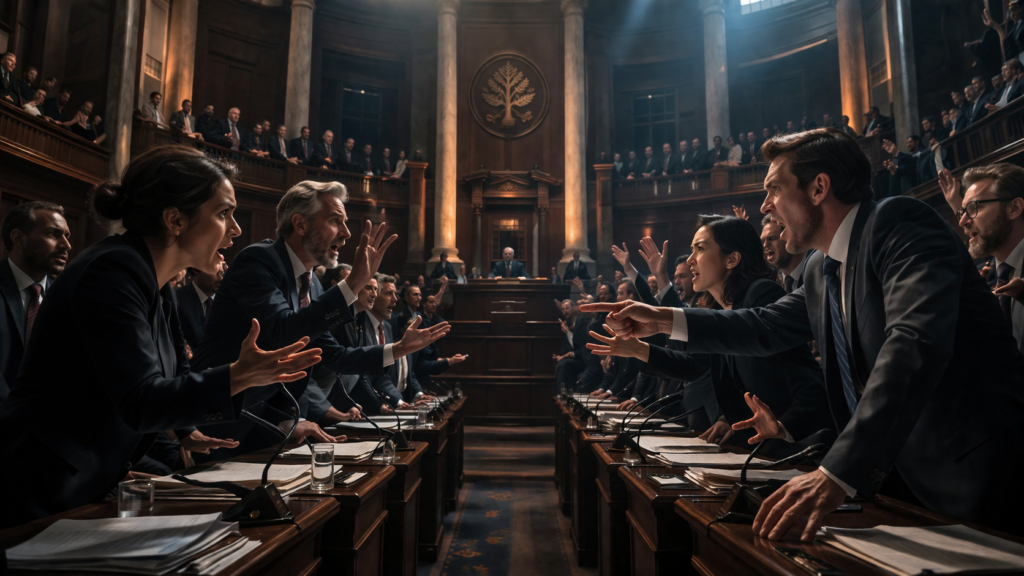
1.1. A Plural Society Cannot Avoid Disagreement
No society operates with a single voice.
Individuals and groups hold different values, interests, and priorities.
Politics exists precisely because of these differences—
it provides a structured way to manage conflict rather than eliminate it.
1.2. Conflict Without Violence
Political theorist Bernard Crick described politics as
“the art of resolving conflict without violence.”
In this sense, conflict is not a failure of politics,
but its very starting point.
The real issue is not whether conflict exists,
but how it is handled.
2. Why Politics Often Creates “Enemies”
2.1. Visibility and Mobilization
Politics depends on attention and support.
However, peaceful and stable governance often goes unnoticed.
Conflict, on the other hand, captures public attention.
As a result, some political actors deliberately frame issues
in terms of “us versus them.”
2.2. The Simplicity of Division
This strategy simplifies complex policies into emotional narratives.
By defining an opponent,
politicians can unite supporters and present themselves as problem-solvers.
Yet this approach comes at a cost:
it deepens polarization and weakens dialogue.
3. Politics as Continuous Adjustment, Not Final Resolution
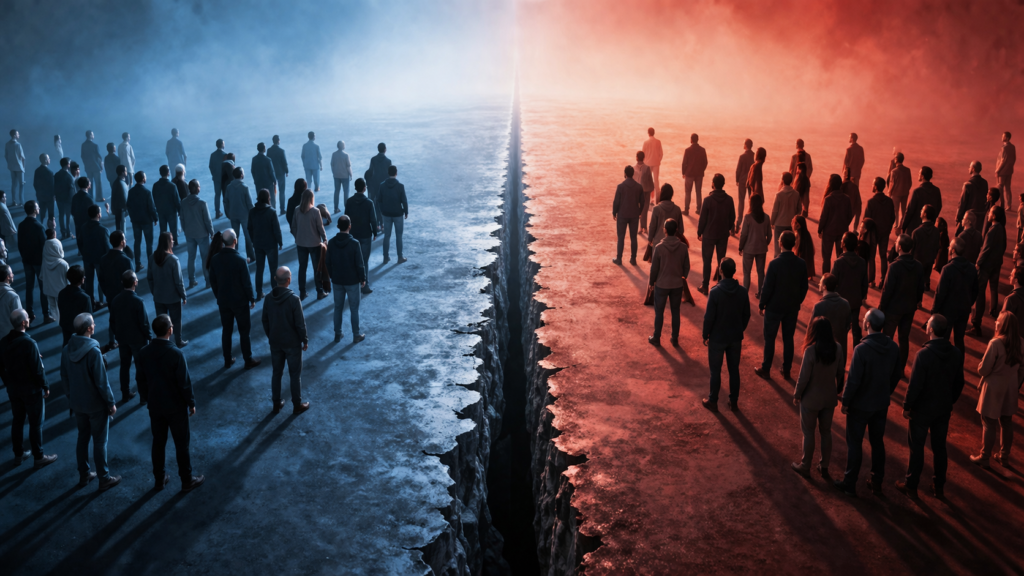
3.1. The Myth of Complete Solutions
We often expect politics to deliver definitive answers.
In reality, politics is built on compromise.
In a society with competing interests,
a perfect solution is rare.
3.2. The Cycle of Temporary Agreements
What is resolved today
may return as conflict tomorrow.
Politics, therefore, is not a destination
but an ongoing process of negotiation and adjustment.
This explains the paradox:
politics promises solutions,
yet continuously revisits problems.
4. The Productive Role of Conflict
4.1. Conflict as a Driver of Change
Not all conflict is destructive.
Debates between ideological positions,
generational disagreements, and policy disputes
can help societies refine their direction.
4.2. Politics as an Alternative to Force
Without political processes,
conflicts might be resolved through coercion or violence.
Politics allows disagreement to be expressed,
contested, and reshaped within a shared framework.
The question, then, is not whether politics involves conflict—
but whether that conflict is productive.
Conclusion: Between Division and Cooperation
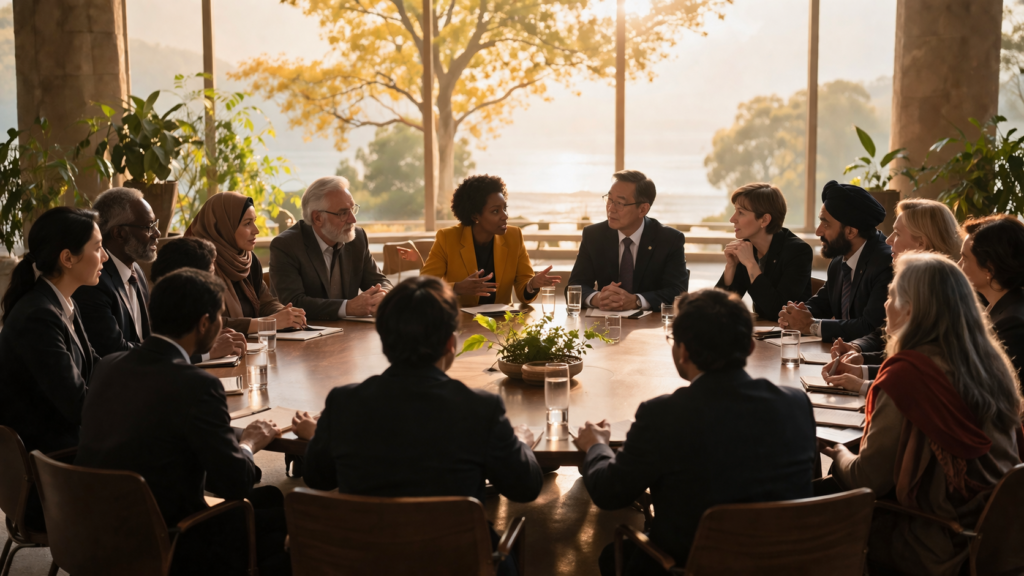
Politics is a constant balancing act
between conflict and resolution.
At times, conflict is amplified for strategic purposes.
At others, it reflects genuine attempts to reconcile differences.
We become disillusioned
when this balance appears insincere—
when conflict feels like performance rather than necessity.
Yet politics remains the space
where collective life is negotiated.
Conflict is its starting point.
Adjustment is its method.
So perhaps the real question is not:
“Why does politics create conflict?”
But rather:
Where does that conflict lead us—and who does it ultimately serve?
A Question for Readers
Do you believe political conflict is a necessary part of democracy— or has it become a tool that undermines it?
Related Reading
The role of conflict in politics becomes even more complex when we consider how societies construct shared meaning despite disagreement.
In Is There a Single Historical Truth—or Many Narratives?, the dynamics of collective memory reveal how competing perspectives shape what communities accept as truth.
At a more psychological level, the instinct to defend our own side while judging others more harshly appears in Why We Excuse Ourselves but Blame Others, where cognitive bias helps explain why political conflict so easily hardens into division rather than dialogue.
References
1. ReferencesArendt, H. (1969). On Violence. New York: Harcourt, Brace & World.
→ Arendt distinguishes between power and violence, arguing that genuine political authority relies on collective agreement rather than coercion, highlighting how conflict can signal both vitality and breakdown in politics.
2. Lasswell, H. D. (1936). Politics: Who Gets What, When, How. New York: Whittlesey House.
→ Lasswell frames politics as the distribution of resources and power, showing how conflict is embedded in the very structure of political decision-making.
3. Mouffe, C. (2000). The Democratic Paradox. London: Verso.
→ Mouffe argues that democracy necessarily involves ongoing tension and disagreement, proposing that conflict should be transformed into productive “agonism” rather than eliminated.
4. Habermas, J. (1984). The Theory of Communicative Action. Boston: Beacon Press.
→ Habermas emphasizes rational dialogue and communication as mechanisms for resolving conflict, presenting politics as a space for deliberative coordination.
5. Tilly, C. (2003). The Politics of Collective Violence. Cambridge: Cambridge University Press.
→ Tilly analyzes how political conflict can escalate into collective violence, offering insights into how in