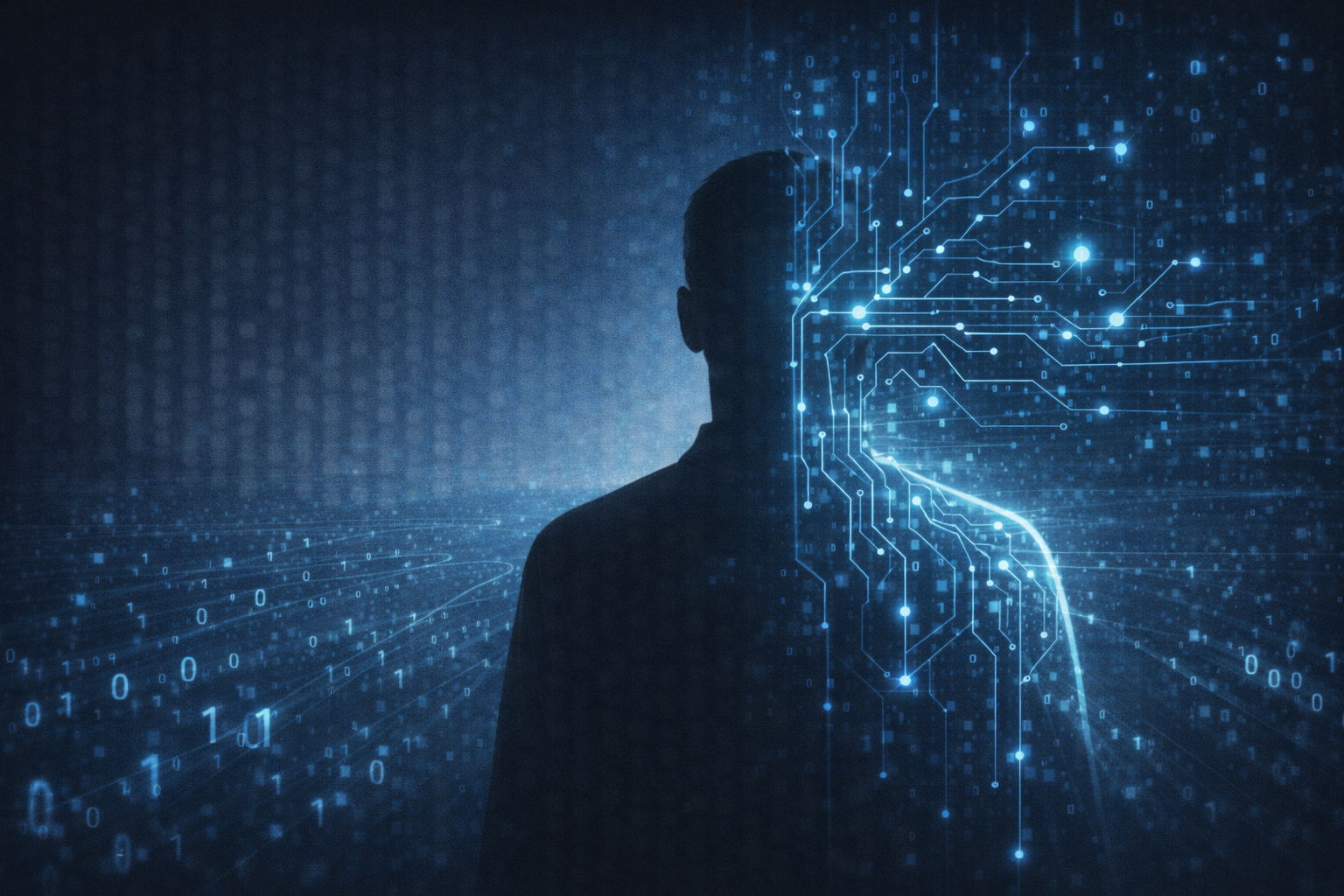
The Symbolic Philosophy of the Digital World
“Only two numbers — 0 and 1 — are enough to move the modern world.”
Every smartphone, internet service, artificial intelligence algorithm, and even digital art ultimately relies on the combination of just two numbers: 0 and 1.
At first glance, the binary system appears to be nothing more than a technical language used by computers. However, beneath this simple structure lies a deeper philosophical question about human thought, reality, and the boundary between the physical and digital worlds.
In the age of artificial intelligence, these two numbers have become more than mathematical tools. They have evolved into symbolic representations of how humans attempt to understand and structure reality.
1. Are 0 and 1 Just Numbers?

Computers process information through two electrical states:
- 1 — electricity flows
- 0 — electricity does not flow
Through this binary logic, all digital information is constructed.
Interestingly, this simple distinction resembles philosophical traditions that have existed for centuries. Many cultures interpret the world through similar dual structures:
- light and darkness
- good and evil
- presence and absence
- yin and yang
From this perspective, binary logic is not merely a technical system. It reflects a deeper human tendency to interpret the world through contrasts and oppositions.
2. Why Does the Digital World Use Binary?
From an engineering perspective, binary is efficient.
Digital circuits can easily distinguish between two states, which makes systems stable and reliable.
However, the philosophical dimension is also intriguing. Humans constantly attempt to organize the complexity of reality into understandable patterns.
Binary logic allows us to transform an infinite range of possibilities into structured information.
In this sense, the digital world can be understood as ordered complexity — a mathematical system that converts chaos into meaningful structure.
3. Can Artificial Intelligence Go Beyond 0 and 1?
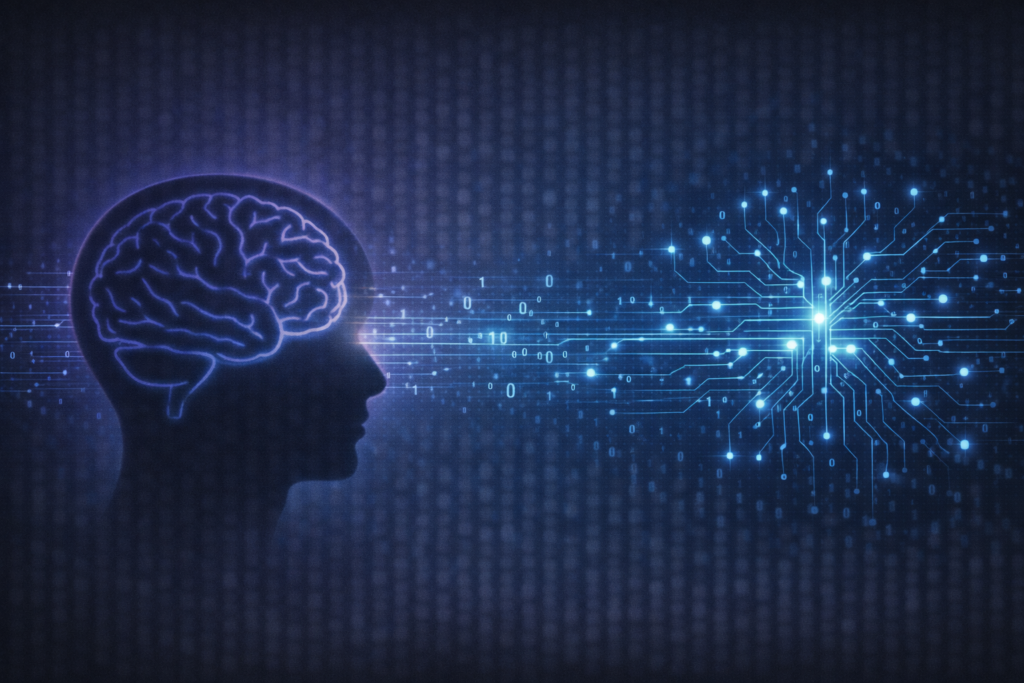
Modern artificial intelligence systems are built upon billions of calculations using binary logic.
Through neural networks and machine learning, AI systems are now capable of simulating human language, recognizing emotions, and even generating creative content.
Yet several philosophical questions remain:
- Can emotions truly be explained through combinations of 0 and 1?
- Can creativity emerge purely from mathematical computation?
- Can ethical judgment be encoded into algorithms?
These questions lead us to a deeper debate: whether artificial intelligence can move beyond numerical calculation to understand meaning and consciousness.
Some philosophers argue that digital systems, despite their complexity, may never fully capture the depth of human experience.
4. Are 0 and 1 Symbols of Being and Nothingness?

Interestingly, the numbers 0 and 1 can also be interpreted symbolically.
- 0 may represent nothingness, emptiness, or possibility
- 1 may represent existence, realization, or manifestation
This interpretation moves the binary system beyond mathematics into the realm of philosophy.
Similar ideas appear in various intellectual traditions:
- the concept of emptiness (空) in Buddhist philosophy
- the idea of being and non-being in Western ontology
- mathematical explorations of infinity and existence
Through this lens, binary numbers can be seen as symbolic expressions of fundamental questions about existence itself.
Conclusion: Digital Numbers Reflect Human Philosophy
0 and 1 are not merely components of computer code.
They represent deeper concepts such as presence and absence, order and chaos, potential and realization.
In the age of artificial intelligence, the digital world built from these two numbers surrounds us everywhere.
Perhaps the real philosophical challenge is not understanding computers, but understanding ourselves within the digital reality we have created.
Related Reading
The psychological dimensions of human judgment in modern society are explored further in Why Hypocrisy Persists in Modern Society — Social Masks in the Age of Social Media, where the tension between public identity and private behavior reveals how human communication operates far beyond simple logical structures. While digital systems rely on binary distinctions such as 0 and 1, human social life is filled with ambiguity, contradiction, and strategic self-presentation.
At a broader cultural and technological level, similar questions about the interaction between technology and human values appear in Fusion Culture: Creative Exchange or Cultural Imperialism?, where debates about cultural blending reveal how modern global systems—often accelerated by digital technology—reshape identities, traditions, and power relations across societies.
Question for Readers
If the entire digital world is built from just two numbers — 0 and 1 — what does that say about the way humans understand reality?
Do you think emotions, creativity, and ethical judgment can truly be reduced to mathematical patterns, or is there something in human experience that always remains beyond computation?
As artificial intelligence continues to evolve, we may need to ask ourselves an even deeper question:
Are we simply teaching machines to imitate human thinking, or are we discovering something fundamental about how human thought itself works?
References
- Wiener, Norbert. (1948). Cybernetics: Or Control and Communication in the Animal and the Machine. Cambridge, MA: MIT Press. This classic work introduced the field of cybernetics and explored the parallels between human cognition and machine communication. Wiener’s theory of information processing provides a foundational framework for understanding digital signals, including the binary structure of 0 and 1 that underlies modern computing systems.
- Floridi, Luciano. (2011). The Philosophy of Information. Oxford: Oxford University Press. Floridi’s influential book examines the philosophical foundations of information and argues that information itself may be understood as an ontological entity. His work helps explain how binary data structures can be interpreted not only technically but also philosophically in the context of artificial intelligence and digital reality.
- Gleick, James. (2011). The Information: A History, a Theory, a Flood. New York: Vintage. Gleick presents a historical and conceptual exploration of information theory, tracing how information became a central concept in modern science and technology. The book offers valuable insights into how binary logic evolved into a universal language of the digital world.