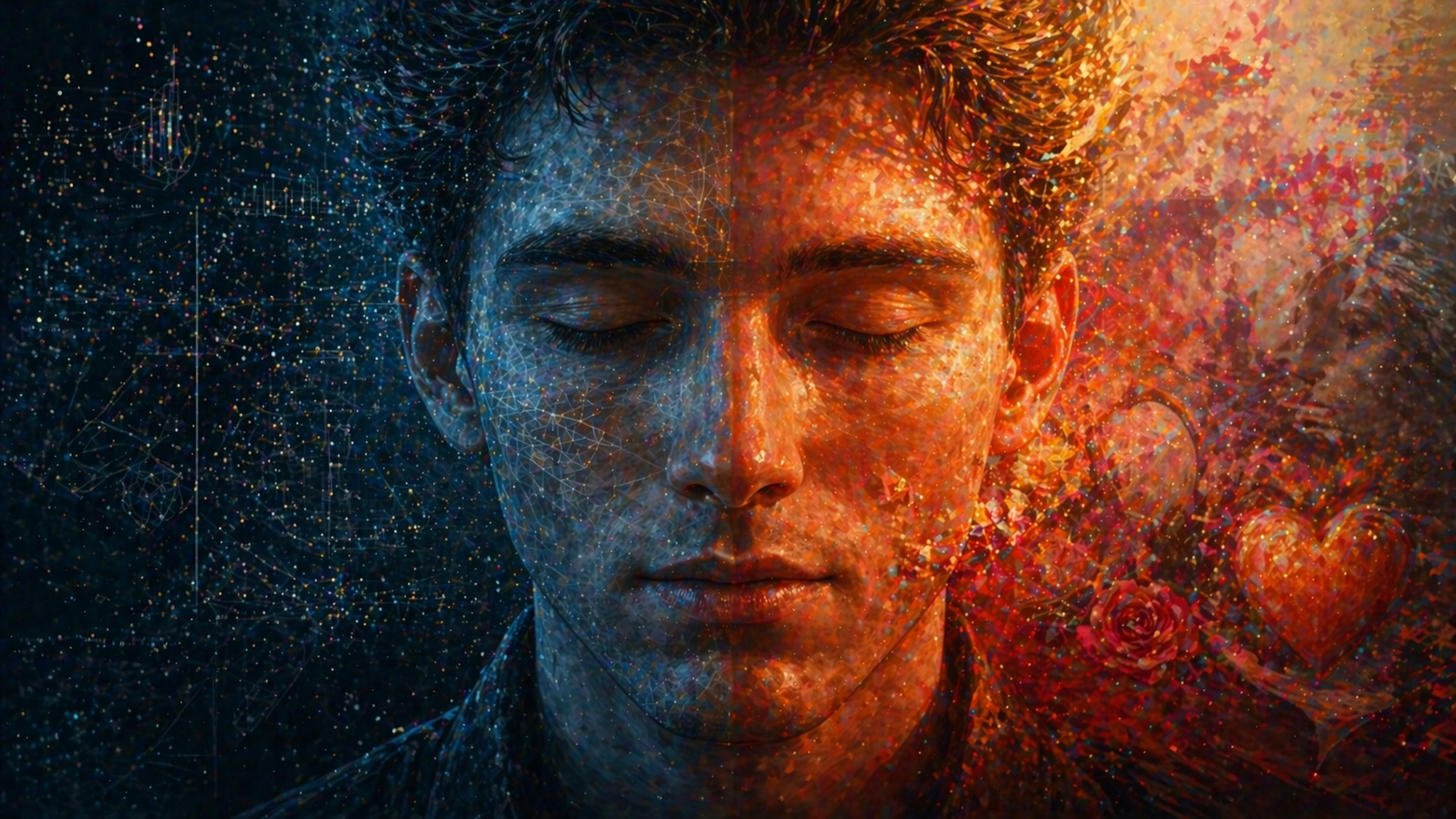
Reason, Feeling, and the Ethics of Human Decision-Making
Imagine seeing someone ignore an elderly person in need.
You feel anger.
Then you watch someone offer help to a stranger—
and you feel something entirely different.
These reactions come before any deliberate reasoning.
They raise a fundamental question:
Are emotions obstacles that distort moral judgment—
or are they the very source of it?

1. Kant: Morality Without Emotion
Immanuel Kant argued that morality must be grounded in reason alone.
For him, actions driven by emotion—such as sympathy or compassion—
lack true moral worth.
Only actions performed out of duty, guided by rational principles,
can be considered genuinely moral.
Emotion, in this view, is unreliable.
It fluctuates, biases judgment, and risks distorting universal principles.
A promise should be kept—not because we feel sympathy,
but because it is rationally right.
2. Hume and Nussbaum: Emotion as the Core of Morality
David Hume famously reversed this logic.
“Reason is the slave of the passions,” he argued.
According to Hume, moral judgments arise not from abstract reasoning,
but from feelings—especially empathy.
Martha Nussbaum extends this idea in modern philosophy.
She argues that emotions are not irrational forces,
but forms of intelligent judgment about what matters to us.
Compassion, in this sense, is not weakness—
it is a recognition of another’s humanity.
3. Neuroscience: The Emotional Brain Decides

Contemporary neuroscience offers powerful insight.
Research by Antonio Damasio shows that individuals with impaired emotional processing
struggle to make even simple decisions.
Moral reasoning, too, activates emotional regions of the brain.
This suggests that emotion is not a disturbance to judgment—
but a necessary condition for making decisions at all.
Without emotion, there may be logic—
but no direction.
4. When Emotion Distorts—and When It Deepens
Emotion can both enrich and distort moral judgment.
A jury overwhelmed by anger may deliver unjust punishment.
In such cases, emotion undermines fairness.
But purely emotionless systems—such as algorithmic decision-making—
can produce outcomes that feel cold, detached, and unjust.
Justice without empathy risks becoming inhuman.
The challenge is not to eliminate emotion—
but to understand and guide it.
5. Beyond the Dichotomy: Toward Integration
Modern ethical thought increasingly rejects the strict divide between reason and emotion.
John Rawls suggests that fairness requires both rational structure
and sensitivity to others’ experiences.
Virtue ethics emphasizes the cultivation of emotional character—
not its suppression.
Emotion and reason are not enemies.
They are partners that must be trained to work together.
Conclusion: Morality Needs Both Mind and Heart
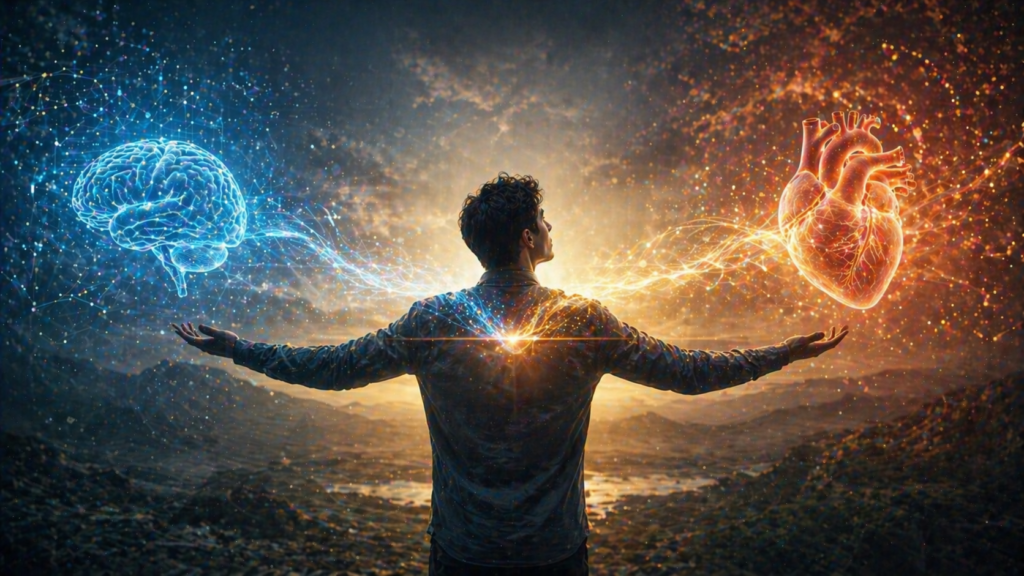
Emotion can mislead—but it can also awaken us.
It is through emotion that we feel injustice,
recognize suffering,
and choose to act.
Moral judgment may begin in the mind—
but it does not move forward without the heart.
So the question remains:
Can morality exist without emotion—
or does it only become real when we feel it?
A Question for Readers
Think about a moment when you judged something as “right” or “wrong.”
Was it your reasoning that led you there—
or your feelings?
And if the two ever conflicted,
which one did you choose to trust?
Related Reading
The broader debate over the foundations of moral judgment is explored further in Can Humans Be the Moral Standard?, which examines whether morality should be grounded solely in human reason or whether ethical responsibility extends beyond human-centered perspectives. This wider discussion provides an essential framework for understanding the role of emotion in moral decision-making.
The relationship between emotion, moral responsibility, and human enhancement continues in Is Gene Editing a Leap Forward—or a Dangerous Overreach?, where advances in biotechnology raise difficult questions about whether ethical decisions should be guided only by scientific capability or also by empathy, humility, and respect for human dignity. Together, these discussions suggest that moral judgment requires both rational reflection and emotional understanding.
References
1. Haidt, Jonathan. (2012). The Righteous Mind: Why Good People Are Divided by Politics and Religion. Pantheon Books.
Haidt argues that moral judgment is rooted primarily in intuition and emotion, with reasoning often serving to justify decisions after they have already been made. The book is one of the most influential works in contemporary moral psychology.
2. Nussbaum, Martha C. (2001). Upheavals of Thought: The Intelligence of Emotions. Cambridge University Press.
Nussbaum challenges the traditional opposition between emotion and reason, arguing that emotions are forms of evaluative judgment that play an essential role in ethical reasoning and human flourishing.
3. Greene, Joshua. (2013). Moral Tribes: Emotion, Reason, and the Gap Between Us and Them. Penguin Press.
Drawing on neuroscience and psychology, Greene explores how emotional instincts and rational thinking interact in moral decision-making, particularly in conflicts between individuals and groups.
4. Damasio, Antonio. (1994). Descartes’ Error: Emotion, Reason, and the Human Brain. G.P. Putnam’s Sons.
Damasio demonstrates through neurological research that emotion is not an obstacle to rationality but an indispensable component of effective decision-making and moral judgment.
5. Aristotle. Nicomachean Ethics.
Aristotle’s classic work argues that moral virtue is cultivated through habit, practical wisdom (phronesis), and the balanced development of both reason and emotion. It remains a foundational text in virtue ethics and contemporary discussions of moral character.